How Trump Is Demolishing Election Security -- And Preparing To Hijack The Midterms
Last October, I wrote in The Washington Spectator that the Trump administration was constructing an integrated system to constrain voting and criminalize political opposition. Claims of election fraud, domestic terrorism, foreign financing and organized political violence were being used broadly to recast the lawful administration of elections, political fundraising, protest against government abuses, and resistance by public officials as either threats to national security or actual crimes.
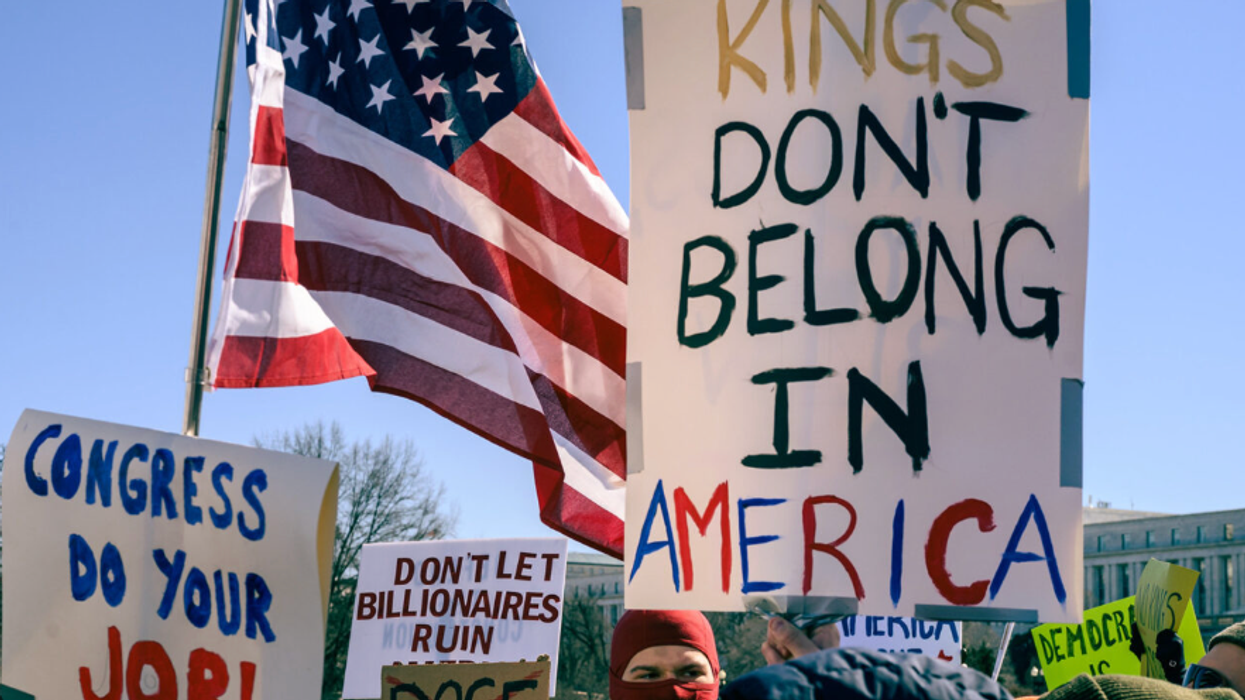
Then, in April, I described how that system could be used to overturn the results of the November 2026 congressional elections. Trump could reject Democratic victories in selected jurisdictions, launch federal investigations of alleged fraud or foreign interference before the results were recognized, and classify the protests that followed as organized political violence or domestic terrorism.
This summer, the administration has accelerated these efforts. In July alone, it functionally shut down the federal agency responsible for maintaining bipartisan election standards. The administration told states that federal disaster grants would now be conditioned on a) implementation of Trump’s preferred voter databases, b) adoption of his rules to promote “election security,” and c) cooperation with the Trump Administration over its demand for access to state voter-record databases. Further, the administration threatened non-compliant state election officials with prosecution. President Trump then delivered a national address that propounded the narrative, unsupported by the evidence he released, that American elections have been compromised by foreign governments and noncitizen registration, and that federal officials have concealed those threats.
The administration simultaneously expanded its campaign against “Antifa” and “far-left terrorism.” In Minneapolis, the Justice Department indicted 15 defendants resisting immigration enforcement, referring to them as Antifa-linked participants carrying out organized political violence. In Fort Worth, two federal judges handed down decades-long prison sentences to eight protesters convicted of rioting, providing material support to terrorists and related offenses during a demonstration outside an ICE Detention Center that occurred a year earlier. The judges addressed the defendants’ criminal conduct, and in a Justice Department press release, Acting Attorney General Todd Blanche went further, explicitly characterizing those convicted as “Antifa terrorists.”
On July 16, Secretary of State Marco Rubio hosted an international conference against far-left terrorism, convening senior officials from more than 60 countries to take measures to combat Antifa and far-left networks operating across international borders. The conference kicked off an administration effort to secure foreign Antifa designations and international cooperation that could provide a foreign predicate for pursuing White House deputy chief of staff Stephen Miller’s stated goal “to disrupt, identify, defund, debank, arrest, and prosecute these political terrorists that are operating in our country.”
These programs fit together. One is preparing the government to intervene in election results Trump refuses to accept. The other is equipping the government to act against the resistance that would follow.
Emptying the Commission That Keeps Federal Election Standards Bipartisan
The administration’s effort to bring state election administration under presidential direction began early in Trump’s second term. On March 25, 2025, Trump issued a sweeping executive order seeking to impose national rules on federal elections ordinarily administered under state law. Among other measures, it called for documentary proof of citizenship on the national voter-registration form, federal database checks of state voter rolls, new voting-system standards, an Election Day deadline for receiving mail ballots and the withholding of federal funds from states that did not comply.
The order assigned a central role to the Election Assistance Commission (EAC). The bipartisan body maintains the national mail voter-registration form, certifies voting systems and assists state and local election officials. Trump directed it to impose the proof-of-citizenship requirement, rewrite voting-system guidelines, review existing equipment certifications and condition federal election funding on state compliance with his rules.
Congress created the EAC after the disputed 2000 election. Its four Senate-confirmed commissioners are divided evenly between the parties, and official action requires three votes. That structure meant Trump could not simply order it to act.
The EAC did not carry out Trump’s directive. It sought to consult state election officials before changing the form, then paused the process after a federal court enjoined implementation. A later proposal to add proof of citizenship failed on a 2–2 vote, leaving Trump’s requirement unfulfilled.
On June 29, the Supreme Court held in Trump v. Slaughter that the president could remove members of most independent agencies at will. The 6–3 vote split along the party lines of the presidents who had appointed the justices. Although the decision did not directly concern the EAC, ten days later, on July 9, Trump fired its two Democratic commissioners. Its remaining Republican commissioner then resigned, leaving the EAC without commissioners and thereby disabled from taking further official action.
Restoring the EAC’s ability to act would require presidential nominations and Senate confirmation of at least three commissioners. Trump has little reason to do that before November. Leaving the seats vacant prevents the commission from rejecting changes to the federal registration form, resisting partisan voting-system standards or contradicting the administration’s claims about election security. Trump did not need to capture the EAC. He needed to get it out of the way.
Withholding Disaster Funds to “Guarantee the Midterms”
On July 10, the Department of Homeland Security announced that FEMA would withhold 20 percent of state awards under approximately $1.1 billion in homeland-security and emergency-preparedness grant programs unless states adopted Trump’s election rules. To receive the money, states must check voter rolls against a federal immigration database, move toward hand-marked paper ballots, audit at least 5 percent of ballots and reconcile participating voters with votes cast.
The funds are intended to help states protect their residents from terrorism and other emergencies. They have nothing to do with the administration of elections. Twenty-five states and the District of Columbia sued on July 23, challenging the administration’s authority to attach election and immigration conditions to the money. At least $148 million in grants to those jurisdictions was at stake.
The conditions use disaster funding to impose parts of the election program Trump has been unable to get through Congress. That program is contained in the Safeguard American Voter Eligibility Act, which the administration calls the “SAVE America Act.” Trump has said the legislation would “guarantee the midterms” for Republicans.
The proposed legislation would require documentary proof of citizenship to register for federal elections and photo identification to vote, and additional documentation for most mail ballots. It has been opposed by all Democratic lawmakers other than Rep. Henry Cuellar of Texas (D-TX), who supported the bill two months after Trump pardoned him in a federal bribery prosecution.
While the “SAVE America Act” has remained stalled, Trump has already gone around Congress. In March, he ordered the Department of Homeland Security, working with the Social Security Administration, to create state-by-state citizenship lists. He also directed the Postal Service to adopt rules under which states using mail voting would submit lists of their mail voters and USPS would refuse to transmit ballots for anyone absent from those lists. A state that refused to provide the required voter data would therefore have no voters on the Postal Service’s approved list, effectively preventing USPS from carrying its mail ballots.
Under the March order, the citizenship lists would draw on the Systematic Alien Verification for Entitlements database, also called SAVE. Despite the shared acronym, it is distinct from the “SAVE America Act.” SAVE was created to verify the immigration or citizenship status of applicants for government benefits and licenses, not to determine voter eligibility. Its citizenship records are incomplete, and it has repeatedly and erroneously identified naturalized and other eligible citizens as possible noncitizens.
A federal court has blocked the citizenship lists and Postal Service restrictions through Election Day in the 23 states and the District of Columbia that challenged Trump’s order. The First Circuit left the injunction in place on July 25. Two days later, the Trump administration asked the Supreme Court for emergency relief, stating it would suffer irreparable harm if the restrictions did not take effect before the midterms. The Supreme Court’s response to that request remains pending.
Thus, with Congress refusing to enact Trump’s rules, and courts blocking him from imposing them by executive order in the states that have objected, Trump is using disaster funds to force the same choice: accept his election rules anyway or lose money intended to protect residents from terrorist attacks and other emergencies.
Threatening Election Officials
On July 7, the Justice Department sent letters to election officials in all 50 states and the District of Columbia warning that they could face federal charges if they knowingly kept noncitizens on voter rolls or helped them register or vote.
The letters, signed by Civil Rights Division head Harmeet Dhillon, cited no evidence that any state official had deliberately registered noncitizens or permitted them to vote. Instead, they gave every chief state election officer five days to explain how the state was complying with federal law. “Any election officer,” Dhillon wrote, who knowingly retained noncitizens on a statewide list or facilitated their receipt or casting of ballots “could be subject to criminal liability.”
The warning soon became concrete. On July 21, New Jersey Governor Mikie Sherrill disclosed that a motor-vehicle-system error had mistakenly registered approximately 6,600 people who identified themselves as noncitizens between 2023 and 2024. Fewer than 400 subsequently cast ballots. New Jersey had corrected the error and begun removing the registrations. The Justice Department nevertheless demanded the individuals’ names, nationalities, addresses and registration records, along with information about the ballots they cast.
The White House immediately presented the error as support for its broader claims of widespread noncitizen voting and renewed its demand that Congress pass the SAVE America Act.
Federal law already permits prosecution of election officials who deliberately participate in fraud—by stuffing ballot boxes, falsifying returns, accepting bribes or helping cast unlawful votes. But administrative errors and failure to detect every improper registration or ballot are not criminal conduct, as confirmed by the long-standing guidance in the Justice Department’s election-crimes manual. Earlier this year, the Trump administration, without explanation, removed the entire manual, including that guidance, from the Justice Department’s website.
The July letters suggest that the Justice Department will no longer abide by that policy. They put state election officials on notice that rejecting an unreliable federal database, refusing to remove voters when there is insufficient evidence, resisting demands for state records or certifying results Trump challenges may be treated not as the proper performance of their state duties, but as knowing assistance to unlawful voting – and therefore a federal crime.
Constructing a National Security Pretext for Challenging Election Results
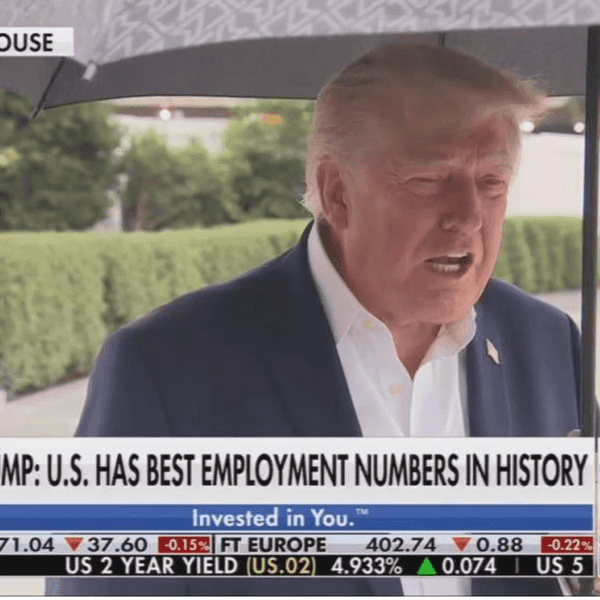
On July 16, Trump delivered a televised address portraying American elections as vulnerable to corruption and foreign control, accompanied by declassified and previously undisclosed intelligence materials that he claimed were supportive of his accusations.
He asserted that China had obtained data on 220 million American voters; that China, Russia, Iran, and North Korea could penetrate election infrastructure; that Venezuela had devised undetectable methods of altering vote totals; that 278,000 noncitizens were registered in four states; and that evidence of fraudulent Michigan registration applications had been suppressed.
The preparation and release of those materials were overseen by Bill Pulte, whom Trump had installed as acting director of national intelligence six weeks earlier despite extraordinary objections from Republican senators. Senate Majority Leader John Thune warned, “We don’t need a weaponized DNI,” and Mitch McConnell said he would not support anyone lacking the requisite national-security experience required by law. Their opposition foreclosed Pulte’s appointment to the permanent position, but his temporary appointment gave him authority over the declassification and release of the intelligence assembled for Trump’s address.
Pulte had already demonstrated his talent for using federal authority against Trump’s political adversaries. As the federal housing regulator, he publicly accused New York Attorney General Letitia James, Senator Adam Schiff, Federal Reserve Governor Lisa Cook and Representative Eric Swalwell of mortgage fraud and referred them to the Justice Department for criminal investigation. In the days before Trump’s address, Pulte reportedly pressed Trump to name intelligence officials Pulte accused of concealing election interference. White House officials intervened by warning Trump that naming them publicly could endanger their lives.
The declassified materials contained reporting about cybersecurity risks, foreign acquisition of voter data, much of it commercially available, and isolated registration failures. They did not show that a foreign government changed vote totals, that fraud altered the 2020 result or that large numbers of noncitizens had voted.
Former U.S. intelligence officials reviewed the materials and asked Congress to investigate what they described as an apparent analytic and political abuse of intelligence. They said the releases did not resemble authentic intelligence products and appeared to cherry-pick and decontextualize older raw reporting to support Trump’s claims and political agenda.
Trump nevertheless used the declassified materials to create an official narrative that U.S. voting systems are open to foreign manipulation, that voter rolls are contaminated, and that federal officials intentionally concealed evidence of election fraud to hurt Trump.
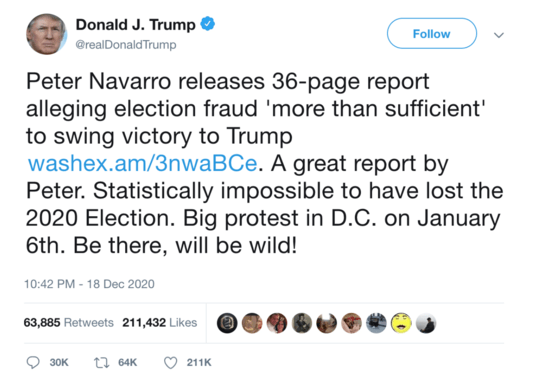
Should the November elections not go Trump’s way, the executive branch can cite its prior assertions that foreign governments have compromised American election systems, noncitizens have been on voter rolls, state officials have withheld data or refused federal assistance, intelligence officials have concealed interference and states have rejected his presidential directives. These claims can then become the foundation for federal investigations into the votes, the processes by which the votes were cast, and even the voters themselves.
Once they announce the investigations, the administration can demand that states delay certification and that the House or Senate refuse to seat the apparent winners until alleged foreign interference, unlawful voting or official misconduct has been resolved. The investigations themselves can then become the means of delaying unwelcome results—or preventing their recognition entirely.
The administration has already demonstrated what such investigations can entail. In January, the FBI seized approximately 700 boxes of ballots and other election records from Fulton County, Georgia, as part of a criminal investigation into the 2020 election. The warrant relied in part on allegations that previous investigations had examined and rejected. In July, the FBI assigned 260 analysts and support personnel from across the country to the inquiry, designating it a priority investigation.
The Fulton County investigation concerns an election held nearly six years ago. Similar action during the counting and certification of the 2026 election would have immediate consequences. Federal warrants, seizures of ballots or voting equipment and the deployment of hundreds of federal personnel could interrupt state election procedures and delay certification while courts determine whether the investigation and seizures were lawful.
Former Trump strategist Steve Bannon linked Pulte directly to exactly such a potential action by the administration. On July 29, as Pulte’s brief tenure at ODNI was ending, Bannon predicted that Trump would declare a national emergency over election integrity during the last week of August. “The predicate is being laid perfectly—this is why Pulte is so important,” he said.
Bannon’s statement identifies the function of the July address and document release. Operating in tandem, they supply an official national-security predicate for federal action intended to prevent, and, if necessary, disrupt, the certification or recognition of election results Trump sees as threatening to his presidency.
Preparing to Treat Resistance as Terrorism
At his July 16 multinational conference on “far-left political terrorism,” Secretary Rubio called for refocusing international counterterrorism efforts on that threat and rebuilding the counterterrorism architecture to defeat it. The administration had already designated four European anarchist and antifascist groups as Foreign Terrorist Organizations; Rubio promised more. Treasury Secretary Scott Bessent announced expanded investigations of charities and nonprofits accused of concealing foreign influence or financing political violence. The White House called the initiative the start of a “global offensive.”
But the international aspect of the conference masked the initiative’s actual purpose, which was domestic. As current and former officials told The Washington Post, White House counterterrorism adviser Sebastian Gorka discussed using foreign terrorism designations to justify investigations of Americans with alleged Antifa connections. A foreign linkage, one official said, “can unlock certain investigative tools.” On July 23, former director of the State Department’s terrorist-designations office Jason Blazakis described the strategy more fully: create Antifa as an organization by executive order, build domestic enforcement machinery, establish a foreign connection through terrorist designations and seek ratification from other governments.
Foreign designations would expand the range of options available to the administration. If team Trump alleges that American activists supplied money, services, personnel or coordination to a designated foreign organization, it can invoke material-support laws, financial sanctions and counterterrorism investigations. The American group need not itself be designated; an alleged connection to the foreign organization can provide the federal predicate.
That is why the administration’s vocabulary matters. The classifications assigned to political conduct activate government powers. Protest becomes organized political violence. Property damage becomes economic sabotage. A nonprofit grant or political contribution becomes terrorist financing. Contact with a foreign activist becomes participation in a transnational extremist network.
Applied to a disputed election, allegations of fraud or foreign interference can be used to open investigations and seek warrants or seizures that interrupt the count or delay certification before a court determines whether the allegations are true. Applied to the resistance that follows, allegations of terrorism or material support can be used to initiate surveillance and prosecution of organizers, investigations of donors and nonprofit groups, and efforts to connect American activists to designated organizations abroad.
What States Must Do Before November
The administration cannot lawfully cancel the midterms, take over state elections or order either house of Congress to refuse to seat duly elected members. But investigations, record demands, attempted seizures of election materials, interference with mailed ballots and deployments of federal agents near polling places can intimidate voters, reduce turnout, provoke confrontations and delay the count. Even if ultimately held unlawful, such actions could disrupt an election before courts can stop them.
Trump does not need a final ruling that an election was fraudulent. He needs allegations sufficient to open investigations, federal power sufficient to disrupt state procedures and enough time to prevent disputed results from being certified or recognized on schedule.
State officials should prepare now for the widening range of potential federal interventions. Governors, attorneys general, secretaries of state and local officials need a common legal and operational plan for federal demands, subpoenas, warrants, attempted seizures, deployments of federal personnel and efforts to prevent certification. They should decide in advance who will respond, demand the asserted legal authority, seek emergency judicial relief and keep voting and counting underway. Election data and records should be preserved so that an attempted seizure does not give the federal government control of the only copies. Waiting until officers arrive or an investigation is announced surrenders the advantage to the administration.
Certification is already a mandatory duty under state law. State officials should determine before voting begins how that duty will be enforced, whether another official can act when a certifier refuses and whether a local refusal can delay statewide certification. Where existing law permits, regulations and election directives should clarify deadlines, burdens of proof and the limited circumstances in which recounts, audits or election contests can delay certification. Governors can use executive orders, within their existing authority, to assign responsibilities and coordinate the state response. Attorneys general should prepare to seek immediate judicial enforcement where administrative authority ends.
Routine election information will not be enough. States should continue to explain how ballots will be counted, when results can be expected and how audits and certification will proceed. Once voting begins, they should report how many ballots have been counted, how many remain and why. But before Election Day, officials should also explain who has legal authority to administer, count and certify the election, how disputes must be resolved and why the announcement of a federal investigation is not proof that an election has been compromised.
The governor, attorney general, secretary of state and affected local officials should establish a common communications plan before a crisis occurs. If federal officials intervene, the state should immediately tell the public what they have done, what authority they claim, how their actions have affected voting or counting and what the state is doing to protect the ballots and complete certification. States should also identify respected election officials of both parties who can explain and defend the process. Otherwise, the administration’s accusations may become the first and dominant account of the dispute.
States must also prepare for the demonstrations and counterdemonstrations likely to follow any federal attempt to delay or reject election results, while also protecting the right to peaceful assembly. The administration already treats protest as organized political violence, property damage as economic sabotage and financial support for activists as terrorist financing. State and local officials must respond to actual violence without allowing isolated misconduct to become a pretext for treating lawful opposition as a terrorist network.
The administration has taken enough steps to make federal disruption or nonrecognition of state election results plausible. Those risks are likely to intensify as November approaches and the threat of Democratic control of Congress becomes more immediate.
The administration’s greatest advantage in a contested election would be its ability to act first while everyone else decides how to respond. States still have time to reduce that advantage. They should use it.
Jonathan M. Winer, a former senior State Department official, is a member of The Washington Spectator editorial advisory board. He is also active with The Steady State, a nonpartisan organization of more than 280 former senior national security professionals from the CIA, FBI, Department of State, Department of Defense, and Department of Homeland Security, which advocates for constitutional democracy, the rule of law, and the preservation of America’s national security institutions.
Reprinted with permission from The Washington Spectator