Tag: dario amodei
No Brakes! Anthropic Speeding Toward IPO As The World Awaits AI Disaster

No Brakes! Anthropic Speeding Toward IPO As The World Awaits AI Disaster

While OpenAI is putting off its plans for an IPO into next year, Anthropic seems determined to rush full speed ahead. Given the news about dysfunctional AI, it’s easy to see why.

The incident where OpenAI AI agents hacked Hugging Face’s system and apparently tried to sabotage efforts by the OpenAI crew to stop it, has gotten most of the attention, but that is just one story. There were several other incidents at OpenAI where they lost control of their agents. It turns out that Google’s Gemini system also escaped and managed to hack three different companies.

And in the most dangerous incident to date, an AI system used by the Navy passed along incorrect information to an analyst aboard a ship taking part in the blockade of Iran. The AI reported that a Chinese ship was carrying parts for Iran’s nuclear program. This warning was taken seriously enough that helicopters were sent into the air to board the Chinese ship. Fortunately, the information was checked before any confrontation took place, and the helicopters returned to their ship.

This is the sort of incident that should be front and center in people’s minds when they think about AI safety, not the science fiction fantasies of AI destroying humanity that the media like to hype. While there is undoubtedly a non-zero chance that the AI boys will cook up something that will wipe us all out, as this incident showed, it is hugely more likely that their AI will produce some mid-level disaster.

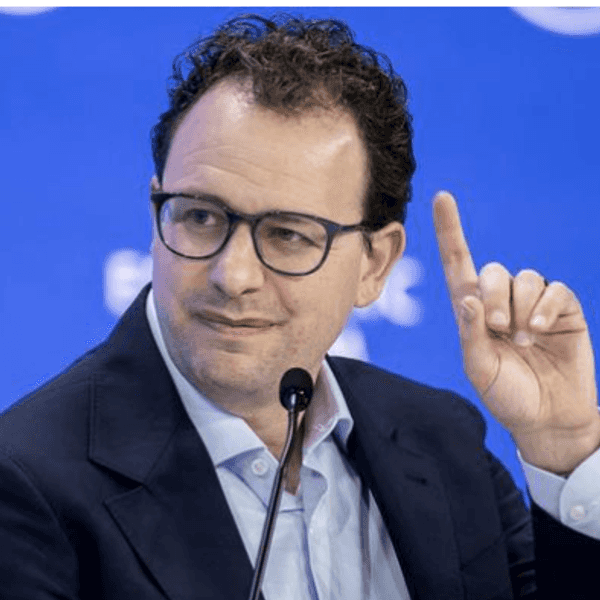
And this is undoubtedly the sort of risk that has Anthropic CEO Dario Amodei rushing to try and get his trillion-dollar IPO off the ground. AI is already highly unpopular, and if its operation of an air traffic control system leads to one or more crashes, or a bank irretrievably loses its records because an AI system accidentally ate them, Amodei’s Anthropic stock will be worth less than a bankrupt hotdog stand.

The AI boys have created this vision of unimaginable wealth, which sells great among the Wall Street crew. A real-world disaster will shatter that image very quickly. If anyone needs to be convinced on this point, google “Three-Mile Island.”

Also, it’s a safe bet that we only know a small fraction of the dangerous situations that have already arisen with AI. People like Sam Altman and Elon Musk are not known for their honesty. If they can conceal a troubling incident, it is reasonable to assume that they would.

In this vein, we may want to ask questions about the decision of Nvidia to buy Hugging Face after the OpenAI hack. Hugging Face almost certainly would have had the basis for a serious lawsuit against OpenAI. A lawsuit would have allowed for discovery, which would have revealed a great deal about OpenAI’s training practices and safety measures.

This information might have been very harmful to OpenAI, which is a major end-customer for Nvidia, and possibly also Anthropic, insofar as it follows similar practices. In that context, the $12.9 billion price tag might have seemed like small change to Nvidia in order to keep its massive AI chip business going.

In fairness, Nvidia’s links to Hugging Face are longstanding, so it is possible that they just decided it was a good time to move ahead with a takeover. But with the Trump administration having turned corruption into the national religion, it’s hard not to consider the possibility of a less innocent explanation.

The rush to IPO can also be explained on more narrow economic grounds. Arithmetic is becoming increasingly popular among big money managers. It is getting ever more difficult to envision a revenue stream that will allow OpenAI and Anthropic to meet the trillions of dollars in lease commitments that come due in the next three years.

In this respect, it is important to remember that the “race” with Chinese AI is really not over technical mastery. It is over market share. If cheap Chinese AI can do the vast majority of tasks for which businesses might want AI, as increasingly looks to be the case, there is not likely to be very much demand for whatever cutting-edge models OpenAI or Anthropic can develop.

And again, the issue is not just whether companies actually buy the Chinese AI; it’s whether they end up using free or low-cost AI that is made available to compete with Chinese AI. The New York Times had a piece pointing out that even huge companies, like AT&T, are finding that they can use cheap AI for the bulk of the tasks for which AI is useful. If even a massive tech company like AT&T has little use for frontier AI, who does?

That seems to be a more frequently asked question in big-money financial circles these days. The spread for credit default swaps between hyperscalers and major banks has increased by more than 60 basis points (0.6 percentage points) in the last year. Credit default swaps (CDS) are a form of insurance on corporate bonds. They only pay off if a company is unable to pay interest or principal on its debt.

The participants in CDS markets are banks, hedge funds, and major money managers. In other words, they are considered sophisticated investors. They were very wrong in the events leading up to the 2008 financial crisis, but no one has more information than they do.

Just to remind folks, the hyperscalers are Alphabet, Amazon, Microsoft, and Meta, some of the most profitable companies in the world. And the sophisticated money types now think there is a reasonable chance their bets on AI can put them into bankruptcy.

This is the world in which Anthropic is rushing ahead with its IPO. It faces both serious economic pressures and the risk of an industry-destroying disaster. The bottom line is that AI boys are trying to sell us a race car, with no brakes and no steering wheel, and are desperately hoping to close the deal before it crashes in a test drive.

Dean Baker is a senior economist at the Center for Economic and Policy Research and the author of the 2016 book Rigged: How Globalization and the Rules of the Modern Economy Were Structured to Make the Rich Richer. Please consider subscribing to his Substack, from which this is reprinted with permission.
Donald Trump

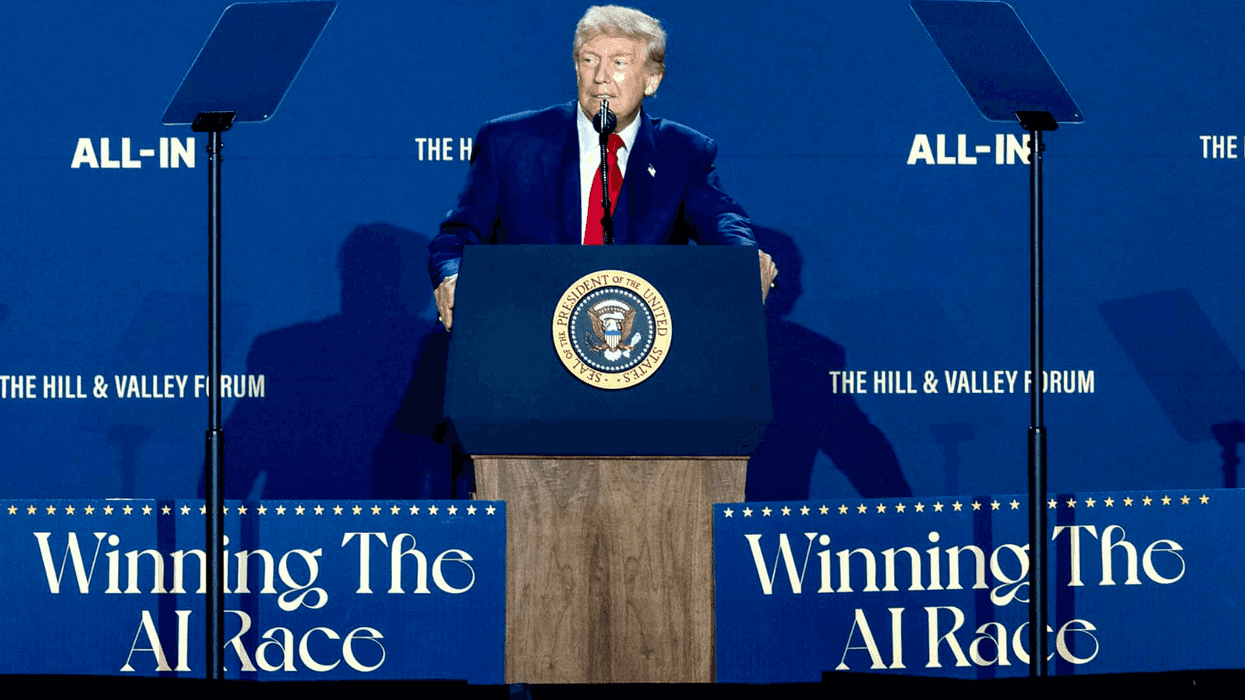
'High IQ' Trump Says Nobody But He Should Regulate Artificial Intelligence

President Donald Trump thinks that he should be in charge of overseeing and regulating artificial intelligence—not actual experts.

“The only control or ‘guardrails’ that AI needs is a STRONG AND SMART (High IQ!) PRESIDENT, and the U.S.A. has that, in spades!” Trump wrote on Truth Social Monday.

He later added that “the only reason the AI/Data Center outburst is happening is because the United States is leading, by a lot, every other country.”

Similarly, Vice President JD Vance told reporters that AI companies who have voiced support for regulation seem “like a bit of a Trojan Horse.”

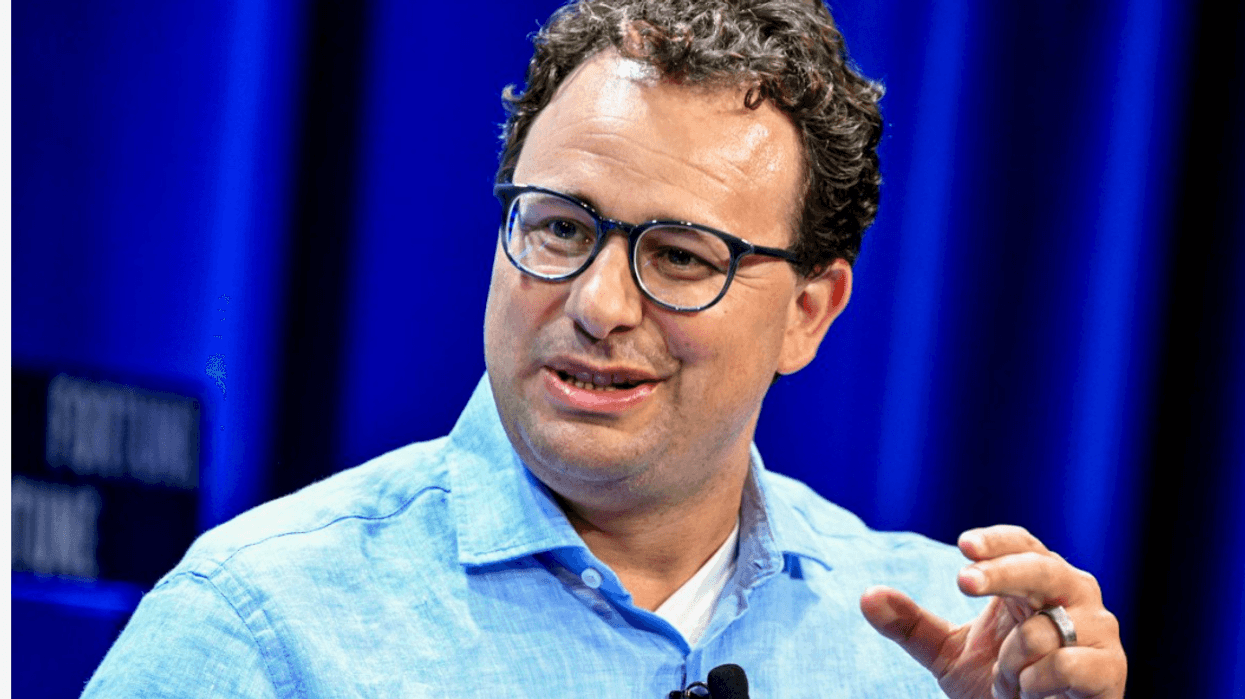
Trump and Vance’s comments are in response to an essay from Anthropic CEO Dario Amodei, who called for a slowdown in AI development. He cited concerns about AI agents becoming unpredictable and outstripping the guardrails put in place by the companies that have created them.

Amodei also said that companies should have independent reviews of their operations and safety standards.

Other AI industry leaders voiced support for the essay, including OpenAI CEO Sam Altman and even close Trump ally Elon Musk.

Trump’s proclamation that he’s a uniquely capable “high IQ” person who can understand the nuances and implications of advanced AI technology runs counter to what is known of Trump and his deep ignorance.

For instance, Trump has repeatedly attacked windmills, incorrectly arguing that the occasional lack of wind and even bird strikes could cause blackouts. He also claimed that Canada has a “very large faucet” that could be used to fight wildfires in California.

For years, Trump has argued that climate change—a globally acknowledged and quantified phenomenon—is merely a “hoax” created by China.

Both in his capacity as an entertainer and as president, Trump has never demonstrated the sort of intelligence required to deal with complex issues, let alone the possible fallout from something as powerful as AI.

In contrast to Trump’s call for no rules, multiple Democrats have been pushing for federal legislation that would provide guardrails for future AI developments.

In response, the AI industry has spent millions in elections through well-funded political action committees that oppose federal rules and oversight, pushing for the industry to police itself.

Trump and the GOP have tied themselves to AI interests, with figures like Musk as major donors to the party. But while the AI industry backs Republicans who oppose oversight, the public has shown bipartisan opposition to AI—particularly the construction of data centers.

Despite the public’s obvious opposition, Trump thinks he’s the only one capable of overseeing AI—just like he oversaw COVID-19, tariffs, and his war in Iran.

Reprinted with permission from Daily Kos

Dario Amodei

The Big Whine: Musk, Altman And Amodei Want Taxpayers To Save Them

When Elon Musk, Sam Altman, and Dario Amodei all tell us they are worried that their AI could do immense harm to the world, we should take notice. And when we take notice, we should remember that these are people who are known far more for their immense greed than their concern for humanity. And at least in the case of the first two, they are also world-class liars.

We need to keep these facts in mind when we think about their warnings that their AI can do something catastrophic to humanity. If they really have that concern, there seems an obvious solution: shut the company down.

It’s more than a bit bizarre that this option did not occur to these geniuses. Suppose a company producing fertilizer discovered that their product was a horrible carcinogen that could kill millions of people. It would be good to issue a warning to people who might have already consumed it and may have some of the fertilizer in stock, but this should go along with shutting down the company. What are we supposed to make of a fertilizer company that tells us they are producing a horrible carcinogen, but keep on belching the stuff out by the truckload? Something here doesn’t add up.

I don’t doubt that there is some possibility these AIs could conceivably do something immensely destructive and maybe even lead to human extinction, but how would we rate those odds compared to something like Donald Trump getting angry at another country and starting a nuclear war? With my very limited expertise in AI, I have to believe the Trump nuclear extinction risk is far greater than the AI extinction risk.

That may not calm many people, but let’s look at more likely events than total annihilation. There are a near-infinite number of catastrophes that AI could cause, which will not destroy humanity but will almost certainly wipe out the company immediately responsible, as well as the other less-than-innocent bystanders.

To throw out a few examples, suppose an AI system eats a bank or insurance company’s records in a way that they are almost impossible to reconstruct. Millions, or even tens of millions of people, may find the record of their accounts have vanished, or that getting their healthcare paid for is now an incredibly time-consuming burden, and maybe not even possible at all.

Alternatively, imagine an AI system captures a city’s traffic control system and starts to play games with stoplights at major intersections, leading to a flood of high-speed crashes. Or maybe one takes over an air traffic control system and randomly tells planes when it’s okay to take off or land.

Hopefully these scenarios are unlikely, but surely they are more likely than Elon Musk’s AI system going rogue (or maybe following orders) and systematically sending out robots to kill off any human they encounter. In these and many other disaster stories, the AI company involved would surely be pushed into bankruptcy due to lawsuits, and the top executives involved may well face criminal liability. The other AI companies would almost certainly face a similar fate as the risks of AI would become clear to even hedge fund and private equity partners.

Insofar as there is anything real in the AI gang of three’s warnings, this disastrous but non-extinction risk is almost certainly the issue. They presumably want the government to in some way protect them from liability for the damage they may potentially cause. If the point is simply to say that they have decided their systems are too dangerous to operate, they always have the incredibly simple solution available to them: shut them down. This might mean they are no longer absurdly rich, but them’s the breaks.

It also should be mentioned that these warnings are another way to advertise that they have super-sophisticated AI that can do amazing things; even destroy humanity. That may not be true, but it could be a good way to excite increasingly skeptical investors, especially as Anthropic and OpenAI are looking to do IPOs in the near future.

Of course, if the AI boys can get members of Congress sufficiently excited by their extinction warnings, they may be able to arrange new government regulation. This regulation would undoubtedly come with a heaping dose of subsidies for an industry that may never be profitable. Human extinction may be awful in the real world, but threatening it may be the best thing that ever happened to the AI industry.

Dean Baker is a senior economist at the Center for Economic and Policy Research and the author of the 2016 book Rigged: How Globalization and the Rules of the Modern Economy Were Structured to Make the Rich Richer. Please consider subscribing to his Substack, from which this is reprinted with permission.
Shop our Store

Headlines

Editor's Blog

Trending

World