Tag: drug cartels
'Stupid Rules': Hegseth Endorsed Summary Execution Of Military Captives In 2019

'Stupid Rules': Hegseth Endorsed Summary Execution Of Military Captives In 2019

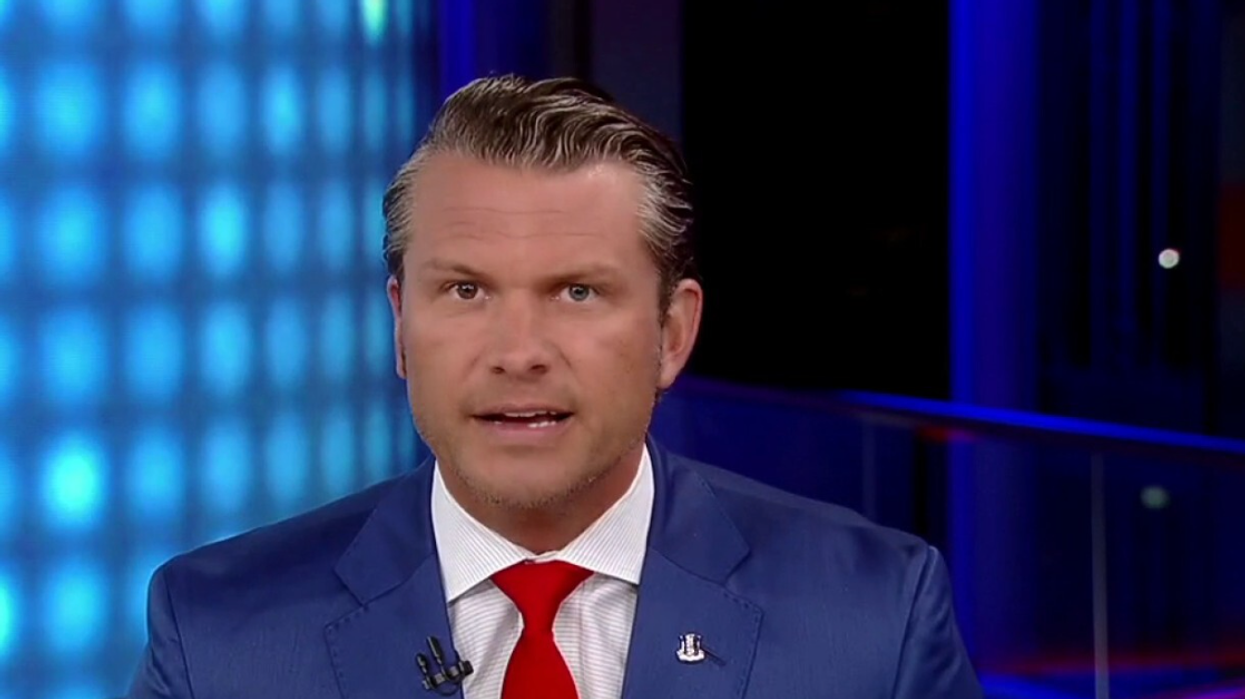
Defense Secretary Pete Hegseth, currently under scrutiny for reportedly overseeing “at best” an alleged war crime in the Caribbean, argued from his Fox News perch in 2019 of an American soldier who admitted to the extrajudicial execution of an alleged Taliban bombmaker: “If he committed premeditated murder … then I did as well. What do you think you do in war?”

The Washington Post reported Friday that on September 2, Hegseth gave a spoken order “to kill everybody” on board a boat that U.S. intelligence analysts suspected was carrying drugs off the coast of Trinidad. After confirmation that the first strike left two survivors “clinging to the smoldering wreck,” the Navy special operations commander overseeing the action “ordered a second strike to comply with Hegseth’s instructions,” according to the Post’s sources. The paper further reported that “current and former officials within the U.S. military and DEA have expressed doubt that all 11 people aboard the first vessel were complicit in trafficking.”

The bipartisan leaders of the House and Senate Armed Services Committees quickly issued statements promising investigations into the report. Legal experts argue the ordered killings would constitute “at best, a war crime under federal law,” as Hegseth’s former Fox colleague Andy McCarthy put it.

“Even if you buy the untenable claim that they are combatants, it is a war crime to intentionally kill combatants who have been rendered unable to fight,” McCarthy wrote Saturday at National Review. “It is not permitted, under the laws and customs of honorable warfare, to order that no quarter be given — to apply lethal force to those who surrender or who are injured, shipwrecked, or otherwise unable to fight.”

Indeed, “orders to fire upon the shipwrecked” are the textbook example of “Clearly Illegal Orders to Commit Law of War Violations” provided in the Department of Defense’s Law of War Manual.

(McCarthy further states that beyond Hegseth’s specific alleged order, “the attacks on these suspected drug boats — without congressional authorization, under circumstances in which the boat operators pose no military threat to the United States, and given that narcotics trafficking is defined in federal law as a crime rather than as terrorist activity, much less an act of war — are lawless and therefore that the killings are not legitimate under the law or armed conflict.”)

Hegseth said Friday that the Post’s story was “fabricated” and that the U.S. operations in the Caribbean “are lawful under both U.S. and international law, with all actions in compliance with the law of armed conflict,” but also bragged that “Biden coddled terrorists, we kill them,” and subsequently appeared to make light of the allegations. On Sunday, President Donald Trump said he “wouldn’t have wanted … a second strike” and claimed Hegseth “said he didn’t do it.”

Such weak denials are not terribly credible given Hegseth’s infamous support for U.S. service members accused of war crimes in his previous job as co-host of Fox’s weekend editions of its Fox & Friends morning show.

“Put us all in jail”: Hegseth rejects war crimes as a legitimate category

Hegseth, in one particularly striking example, vigorously defended Army Maj. Mathew Golsteyn during a February 2019 Fox & Friends appearance.

Golsteyn, who had been charged with murdering a captured Afghan man who was allegedly a Taliban bombmaker during a 2010 deployment, had “allegedly told CIA interviewers that he and another soldier took the alleged bomb-maker off base, shot him and buried his remains,” and replied “yes” during a 2016 Fox interview when asked if he had killed the man.

Referring to Rep. Duncan Hunter (R-CA), a fellow veteran who supported Golsteyn, Hegseth said: “If he committed premeditated murder, then Duncan did as well, then I did as well. What do you think you do in war?” He added: “Put us all in jail.”
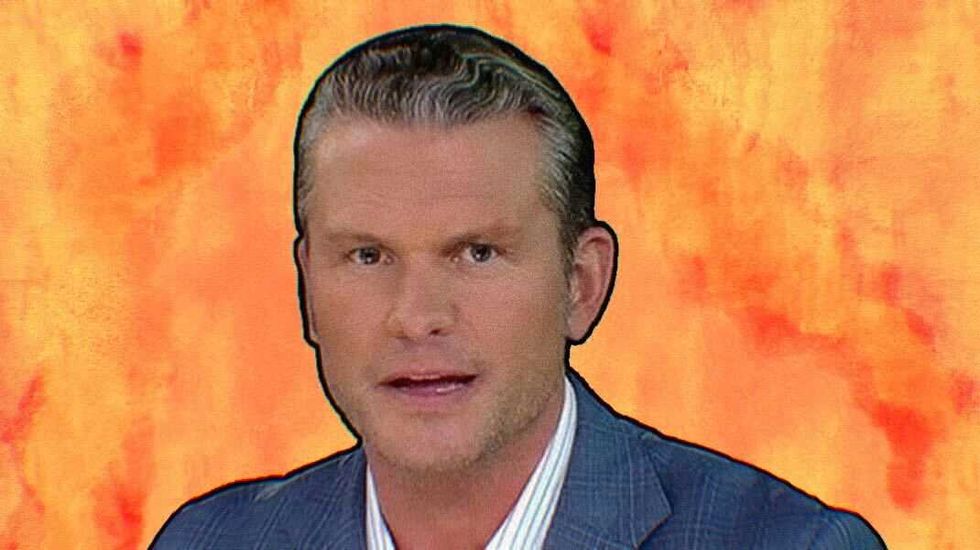
When Pete Hegseth endorsed soldiers executing captured alleged combatants www.mediamatters.org

Hegseth repeatedly used his Fox post to endorse presidential pardons for Golsteyn and other U.S. service members accused or convicted of war crimes, hosting their family members or lawyers for softball interviews and vigorously defending their conduct. (At one point, he expressed his disdain for describing such individuals as “service members accused of war crimes,” saying, “They’re not war criminals. They’re warriors who have now been accused of certain things that are under review.”)

- YouTube youtu.be

The Fox & Friends Weekend co-host also lobbied Trump directly behind the scenes, and the president issued pardons for several of the individuals Hegseth championed and even forced out the secretary of the Navy over his handling of one of their cases.

Hegseth also questioned whether the U.S. military should adhere to international law in his 2024 book, The War on Warriors: Behind the Betrayal of the Men Who Keep Us Free, musing that doing so constituted “fighting with one hand behind our back.”

“Should we follow the Geneva Conventions?” Hegseth wrote. “What if we treated the enemy the way they treated us? Would that not be an incentive for the other side to reconsider their barbarism?”

“Makes me wonder, in 2024 — if you want to win — how can anyone write universal rules about killing other people in open conflict?” he continued. “Especially against enemies who fight like savages, disregarding human life in every single instance.”

Hegseth had the opportunity to implement this strategy after Trump plucked him from Fox’s green room and appointed him to lead the Pentagon and his right-wing media allies helped muscle him through Senate confirmation. Amid the chaos that resulted from putting a wildly underqualified individual in charge of the Defense Department, Hegseth has made clear that he views any restrictions of the ability of service members to kill “the enemies of our country” as “politically correct.”

“We also don't fight with stupid rules of engagement,” he said in his September 30 speech to the country’s assembled military leaders. “We untie the hands of our warfighters to intimidate, demoralize, hunt and kill the enemies of our country. No more politically correct and overbearing rules of engagement, just common sense, maximum lethality and authority for warfighters.”

“Today is another liberation day, the liberation of America's warriors, in name, in deed and in authorities,” he added. “You kill people and break things for a living. You are not politically correct and don't necessarily belong always in polite society.”

The address came just four weeks after Hegseth reportedly committed “at best” a war crime.

Reprinted with permission from Media Matters
The Trump Administration Is Giving Cops Unprecedented Power

The Trump Administration Is Giving Cops Unprecedented Power

Reprinted with permission from AlterNet.

The Donald Trump administration is off to a rocky start, with multiple damaging reports emerging from the White House alleging disorganization, incompetence, and infighting—but that hasn’t stopped the new president from making good on his pledges to the country’s police officers. By branding himself the law-and-order candidate who would use his bully pulpit to take down criminals and fight crime, Trump earned himself the support of several police groups, most notably the Fraternal Order of Police, the country’s largest police union, which boasts more than 330,000 members.

Trump has already met with several law enforcement groups to make it clear where his priorities lie. Recently, while speaking to the Major Cities Chiefs Police Association (and after whining about a federal judge ruling that blocked his Muslim ban), Trump launched into a speech about what he believes cops in this country care about: crime in cities populated with black people, Mexican drug cartels, undocumented immigrants, and his desire to build a wall along the Mexican border. During the speech he claimed that undocumented immigrants in gangs cause the problems in Chicago and that building a wall along our southern border would stop drugs from “pouring” into our country.

Two weeks after signing two orders on immigration, President Trump signed three orders on crime and law enforcement, including one that targeted transnational drug cartels. Although immigration and drug enforcement have their own federal agencies, many cops seemed eager to jump into the fray, setting the stage to begin rolling back modest gains made in holding police accountable.

One of President Trump’s first executive orders on immigration revived a program dubbed Secure Communities and promised to defund jurisdictions known as sanctuary cities that choose not to enforce federal immigration laws. (Notably, law enforcement officials would be exempt from losing funds.) Under Secure Communities, local authorities—like jail officials—would share fingerprints of the individuals arrested in their cities and towns with the FBI, who would then send the information along to the Department of Homeland Security to check if that person is eligible for deportation using Immigration and Customs Enforcement’s database. If ICE determines that the individual is eligible, the local authorities are instructed to hold that person in jail until ICE can transfer him or her to a detention center.

The federal government stated that the intent of the program was to target the most serious offenders, but the program was disbanded in 2014 after it led to widespread racial profiling of Latinos, arrests of people who committed low-level offenses and people without criminal records. During the course of Secure Communities, multiple cities chose to opt out.

But despite widespread criticism of the program, some police officers are applauding its revival and the crackdown on sanctuary cities. The Fraternal Order of Police praised the administration’s actions, including the revocation of federal funds, alleging that communities are safer when local authorities comply with federal immigration officials.

While police unions appear eager to partner up with federal immigration officials, their relationship with the federal agency that handles investigations into police departments is much rockier. Ramping up Department of Justice investigations into police departments that violate the civil rights of the citizens they have sworn to protect is perhaps Obama’s greatest police reform achievement. Investigations usually end with court-ordered agreements dedicated to reform, sometimes called consent decrees. While these investigations are not a cure-all, it was a welcome change for many activists. But just days after the election, police departments started making noise about DOJ-mandated reforms.

The Cleveland Police Department entered into an agreement with the Department of Justice in 2015 after the DOJ issued a damning report on the police department the previous year; the head of the city’s police union, Steve Loomis, was not part of the agreement, but that hasn’t stopped him from inferring that Trump will help make changes to the consent decree. Loomis said that the Trump administration is “cognizant of the false narrative that’s out there and [will] be hesitant to make major decisions based on false narratives.” Days before the report was released, a white officer shot and killed 12-year-old Tamir Rice, who was playing with a toy gun in a park. No one was charged for his death.

But now the DOJ will be led by Jeff Sessions, the former Alabama attorney general and U.S. senator, who was deemed too racist to be a federal judge in 1986. The new attorney general voiced concerns about consent decrees at his Senate hearing for the position. Sessions seemed to play into the “few bad apples” rhetoric despite reports from Ferguson, Chicago, and Baltimore pointing to the opposite. “These lawsuits undermine the respect for police officers,” he said, “and create an impression that the entire department is not doing their work consistent with fidelity to law and fairness.”

Since the inauguration, Americans across the country have taken to the streets to protest Donald Trump’s actions. While some law enforcement leaders want to see the Trump administration tackle mass incarceration and enhance community policing, many more cops are embracing the Trump era. The National Sheriffs’ Association and Major County Sheriffs’ Association released a joint statement after President Trump signed the three executive orders related to law enforcement. “We thank the President and welcome the nation’s re-awakening of support for law enforcement, the rule of law, and the need to protect our borders and enhance the nation’s criminal justice system.”

Cheering moves that enable cops to crack down on undocumented immigrants and alleged gang members, but balking at the federal agency designed to rein in unaccountability, signals deeper trouble up ahead.

Nathalie Baptiste is a freelance writer based in Washington, D.C. Follow her on Twitter: @nhbaptiste.

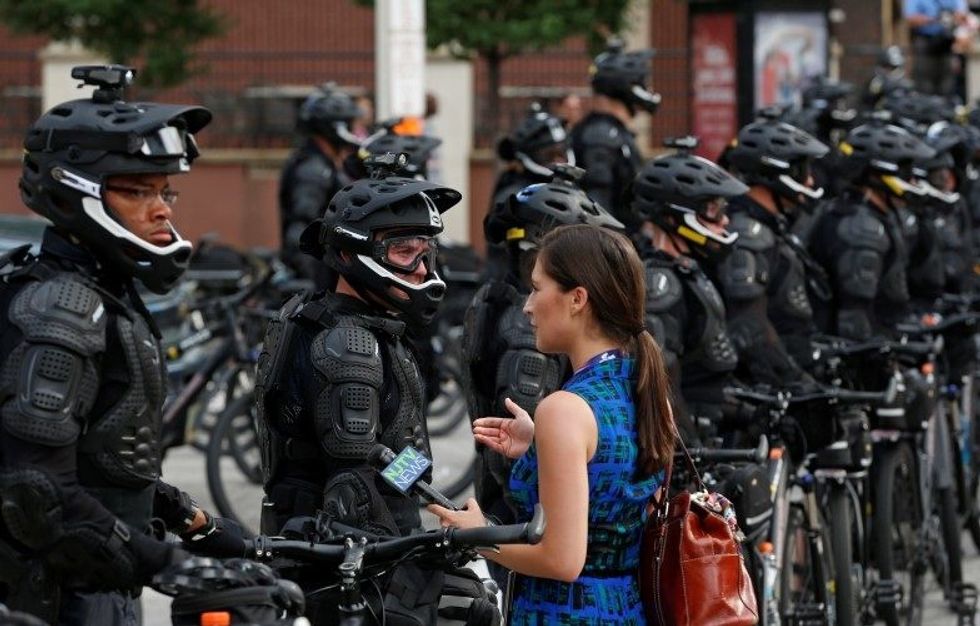
IMAGE: A reporter talks to police dressed in tactical gear as they block a downtown street during a march by various groups, including “Black Lives Matter” and “Shut Down Trump and the RNC”. REUTERS/Lucas Jackson

Judge Attacked By Trump Has Long History of Serving His Country

Judge Attacked By Trump Has Long History of Serving His Country

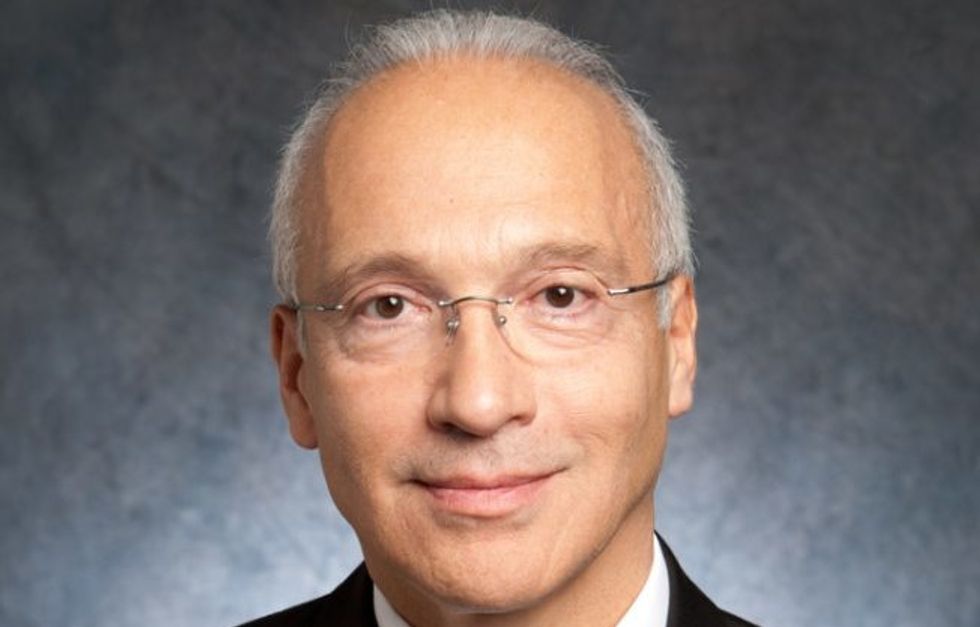
Donald Trump’s blatantly racially motivated denunciation of Gonzalo Curiel, the presiding judge over a pair of Trump University lawsuits, draws attention away from Curiel’s distinguished career serving the nation’s judiciary.

The Indiana-born judge first entered the public consciousness during a recent rally held by Trump, in which he devoted 15 minutes to bashing Curiel and the “rigged” system that landed his scam “university” in court — it was a blatant attack on the nation’s independent judiciary.

“The judge, who happens to be, we believe, Mexican, which is great, I think that’s fine,” said Trump. “You know what? I think the Mexicans are going to end up loving Donald Trump when I give all these jobs, OK?”

Trump’s questioning of Curiel’s loyalty to the country of his birth is a disservice to the long career Curiel has had in the American justice system.

As Slate’s William Saletan wrote shortly after the attack, “This isn’t a complaint about illegal immigrants. It’s not even a dog whistle. It’s a straight-up appeal to prejudice. It’s about the color of your skin, the sound of your last name, and where your ancestors came from.”

Curiel is no normal judge. Appointed by President Barack Obama, he has led the way in cracking down on the drug cartels operating between the Mexican-American border.

That’s not an easy job, especially considering that Mexican cartels often rely on lawlessness and the absence of state power to exercise free reign in the areas they control. An imaginary line on the map doesn’t change those goals.

From 1989 until to 2002, Curiel served as an assistant U.S. attorney in southern California. As the deputy chief, and later, chief of the Narcotics Enforcement Division, he aided his Mexican counterparts in dealing with narcotics distribution and the drug cartels. In 2002, The New York Times named Curiel as one of the central figures in weakening the power of the Arellano Félix cartel, once one of the most notoriously violent cartels in Mexico.

“The trusted assassins the Arellanos had, like La Rana, are gone. The money launderers, taken out,” said Curiel to the newspaper at the end of the efforts to bring down the cartel. “There’s been so much corrosion, so much dismantling of the network…much of the structure is gone.”

As far back as 1997, Curiel was reported to have been taking on Mexican drug cartels. He lived under tight security for fear of assassination, a favorite tool of cartels. At the time, Emilio Valdez Mainero, a member of the Arellano Félix cartel, said in a bugged conversation with a inmate-turned-informant that he wanted to kill Curiel. Threats at the time were taken seriously, especially given the high profile murders of Tijuana’s police chief in February 2000, followed shortly by the murder of Jose Patiño, a prosecutor who Curiel had personally worked with in stopping the cartels.

The fact that Curiel, and the rest of the task force aimed at helping stop the drug cartels, were of Mexican descent further increased cooperation between the Mexican and American governments. “We were working without the disconnect of interpreters and barriers of culture. When it comes down to it, this involves the country of our parents,” said Curiel.

The imperious contempt Trump has for Mexican immigrants would surely prevent any similar collaboration from taking place.

U.S. Investigators Focus On Money Laundering Linked To Border Crisis

U.S. Investigators Focus On Money Laundering Linked To Border Crisis

By Brian Bennett, Los Angeles Times

WASHINGTON — The increasingly costly and divisive border crisis is pushing federal investigators to crack down on money-laundering schemes they say are being used to smuggle thousands of Central American children into the United States.

Agents from the Department of Homeland Security and the Treasury Department’s Financial Crimes Enforcement Network, or FinCEN, are targeting suspicious patterns of deposits and withdrawals through “funnel accounts” held at U.S. banks, according to two federal law enforcement officials who were not authorized to speak publicly about the topic. Human-smuggling rings are using such bank transactions to fund their activities, officials said.

In recent months, the arrests of several low-level money launderers, drivers, scouts, and guides have bolstered and expanded the government’s ongoing effort, the officials said.

Nearly 57,000 unaccompanied children, mostly from El Salvador, Guatemala, and Honduras, have been apprehended crossing into the U.S. since Oct. 1, overwhelming Border Patrol stations and social services. As a result, federal anti-money-laundering agents who once focused on dismantling violent drug cartels are turning their investigative firepower to human-smuggling networks.

Although smaller and less lucrative than the billion-dollar narcotics syndicates, human-smuggling rings have fueled a humanitarian crisis in several border states and created a political headache for the Obama administration.

“The agency is starting to put more energy toward dismantling these groups than they had in the past,” said Alonzo Pena, former deputy director of Immigration and Customs Enforcement from 2008 to 2010, in a telephone interview from San Antonio. The flood of children over the Southwestern border and the torrent of cash being collected to transport them have made human-smuggling rings a higher political priority, he said. “Before, making a great narcotics seizure was always looked at as much more career-enhancing than getting a load of aliens,” Pena said.

Last month, Homeland Security Secretary Jeh Johnson sent 60 additional human smuggling investigators to field offices in Houston and San Antonio. As part of its $3.7-billion request to Congress to help deal with the influx of child migrants, the White House asked for an additional $109 million to expand Homeland Security’s anti-smuggling operations.

Homeland Security officials declined to comment Monday on the money-laundering campaign, but announced that Johnson would hold a news conference Tuesday to announce progress in enforcement efforts to target human-smuggling networks in Texas’ Rio Grande Valley.

Human-smuggling networks have been difficult to uncover because the dollar amounts involved are usually smaller than those involving drugs. Smugglers, also known as coyotes, typically charge $3,000 to $12,000 to bring a child from Central America to the United States.

In May, FinCEN issued an advisory to U.S. banks on the “increased use of funnel accounts” by money launderers. It identified six red flags for identifying suspicious financial transactions, including accounts in Southwest border states receiving multiple cash deposits of less than $10,000 from bank branches in other parts of the country; people making deposits to the account who don’t know the account owner; and checks or wire transfers moving money from such accounts into Mexican banks.

Working with Homeland Security investigators, financial analysts from FinCEN can perform sophisticated data analysis to link bank transactions, wire transfer information, names of associates, and phone numbers to generate evidence and provide additional investigative leads, experts say.

In March, Joel Mazariegos-Soto, a Guatemalan who worked at a dairy farm in upstate New York, was sentenced to five years in prison for operating an illegal funnel account for a human-smuggling ring. In the four months before his arrest last year, investigators tracked $70,000 in payments going into the account from individuals paying to have their family members smuggled into the country, according to court documents.

Drug cartels are not directly running the human-smuggling operations, but they get a cut of the business by charging smugglers a fee for bringing people through areas under their control, said a senior U.S. law enforcement official who leads investigations into human-smuggling operations.

The Gulf cartel, one of Mexico’s oldest drug-running organizations, controls most border crossing points directly south of the Rio Grande Valley, which has seen the biggest surge in children from Central America, the official said. The Zetas, the ruthless drug and extortion paramilitary force, also operates in that section of northern Mexico and controls key portions of the journey north from Mexico’s southern border with Guatemala, said the official, who was not authorized to speak publicly on the issue.

The cartels use scouts, makeshift checkpoints, and payoffs to corrupt police officers to control their territories, which are known as “plazas.” When a smuggler brings a group of immigrants through cartel-controlled land, they must pay a fee per person. Smugglers call it paying the plaza. The cartels’ toll is included in the price of the journey.

The cartels’ “main line of business is drug trafficking, but of course they are profit driven, and any activity they can make a buck from, they will seize that opportunity,” the law enforcement official said.

With the number of children being smuggled north from Guatemala, Honduras, and El Salvador estimated to reach 90,000 this year, the fees taken from smugglers moving children is a growing part of the cartels’ revenue, he said.

Photo: K38 Rescue via Flickr

Interested in national news? Sign up for our daily email newsletter!

Shop our Store

Headlines

Editor's Blog

Corona Virus

Trending

World