Tag: iowa republicans
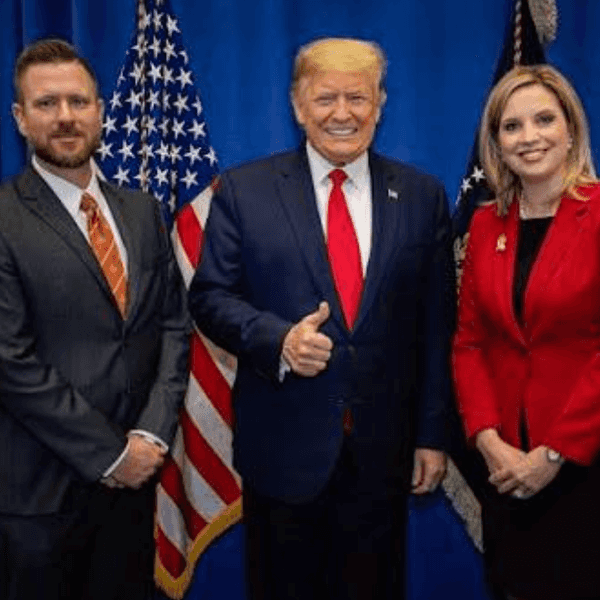
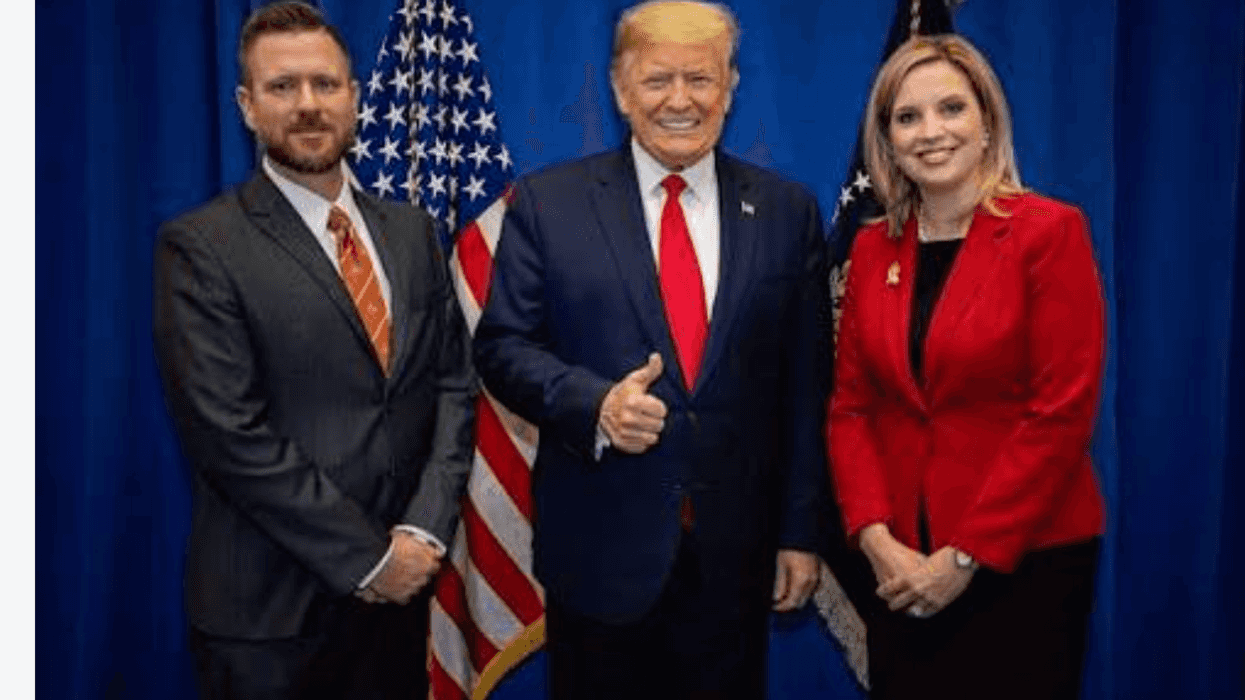
Ashley Hinson and Trump

Iowa Republicans Now Fleeing From Trump To Save Themselves In Midterm

Staring down an electoral wipeout, members of Iowa’s all-Republican congressional delegation are desperately trying to distance themselves from President Donald Trump.

On Monday, Rep. Ashley Hinson—the GOP nominee for Iowa’s open U.S. Senate seat—called for an “immediate end” to the war, which she blamed for the skyrocketing diesel prices that are hurting Iowa’s farmers.

“Iowans are being squeezed and shouldn’t have to foot the bill at the pump or the checkout line for the war in Iran,” Hinson wrote in a post on X, saying that aside from ending the war, Congress should suspend the gas tax, ban diesel exports, and create a “diesel relief program to help our farmers and truckers being crushed by the high costs.”

She added, “I am working every day to deliver bipartisan results for Iowans and I will work with anyone who is ready to tackle this challenge immediately.”

Of course, Hinson has voted four times against ending Trump’s war, including a vote just last week against a war powers resolution. So her attempt to paint herself as a bipartisan warrior who wants this war to end is face-saving bullshit, which her Democratic opponent Josh Turek has pointed out.

“[I]t’s easy to send a tweet but when you had the chance to vote to end this war, you chose not to. You voted seven times to continue it, including just last week,” Turek wrote in a post on X, addressing Hinson. “It’s time to actually end the forever wars and put Iowa and Iowans first.”

What’s more, Hinson calling for a relief program for farmers and truckers is the kind of government welfare she and other Republicans typically condemn.

Meanwhile, two of Hinson’s Republican House colleagues from Iowa—Reps. Mariannette Miller-Meeks and Zach Nunn—voted for the war powers resolution for the first time last week, a sign that they, too, believe the conflict is hindering their reelection bids. Nunn and Miller-Meeks are in toss-up races this fall, even though Trump carried both of their seats in 2024.

Like Hinson, both Miller-Meeks and Nunn called for the same policy changes to try to bring down the cost of fuel.

“We must immediately suspend the federal and state gas tax, sell American diesel to Americans first, and get relief to the farmers and truckers who cannot wait,” Miller-Meeks wrote in a post on X. “Then we fix the cause by drilling more here, selling E15 year-round, and ending the open-ended war. Last week I voted with Republicans and Democrats to do exactly that.”

“We have to bring down the price of diesel,” Nunn also wrote in a post on X. “My plan: Sell American energy to Americans first. Pass my Iowa-led biofuel bill = bring down gas 50 cents. Hold Big Oil accountable for gouging.”

The fact that Iowa Republicans are trying to distance themselves from Trump and his war is a telling sign of how badly things are going for the GOP six weeks out from Election Day.

A Marist poll released on Tuesday found Hinson trailing Turek in the Senate race by a stunning eight percentage points. The poll showed that a whopping 13 percent of Republican voters plan to defect and vote for Turek.

As for the lawmakers’ ideas to lower fuel prices, none of this would happen until after the election anyway. Republicans fled Washington, D.C., early to campaign.

On top of that, experts say their ideas are unlikely to work—and may even cause more harm than good.

“U.S. diesel prices are determined not by a U.S. supply and demand balance, but a global one,” gas prices expert Patrick De Haan wrote in a post on X. “Keeping distillates and diesel home does not change the world price that reference our prices. You can’t fence off a globally traded commodity by executive order and expect the global price to stop applying to it.”

De Haan added that an export ban could backfire, causing countries that purchase diesel fuel from the U.S. to go elsewhere permanently and actually cause refinery closures.

“The U.S. spent years becoming the world’s backstop for diesel supply. Telling every buyer from South America to Europe that American supply is politically conditional pushes them to diversify away from U.S. refineries and U.S. supplies, softening long-term demand for U.S. product and foregoing political leverage,” De Haan wrote. “This will be painful if this trend continues.”

At the end of the day, Hinson, Nunn, and Miller-Meeks are just as responsible as Trump for the war and its consequences. For months, all three Iowa lawmakers refused to use their constitutionally granted powers to stop the president. And now that the war has spiraled out of control, they’re throwing out bad ideas in a last-ditch effort to try to fix the damage they helped create.

Reprinted with permission from Daily Kos
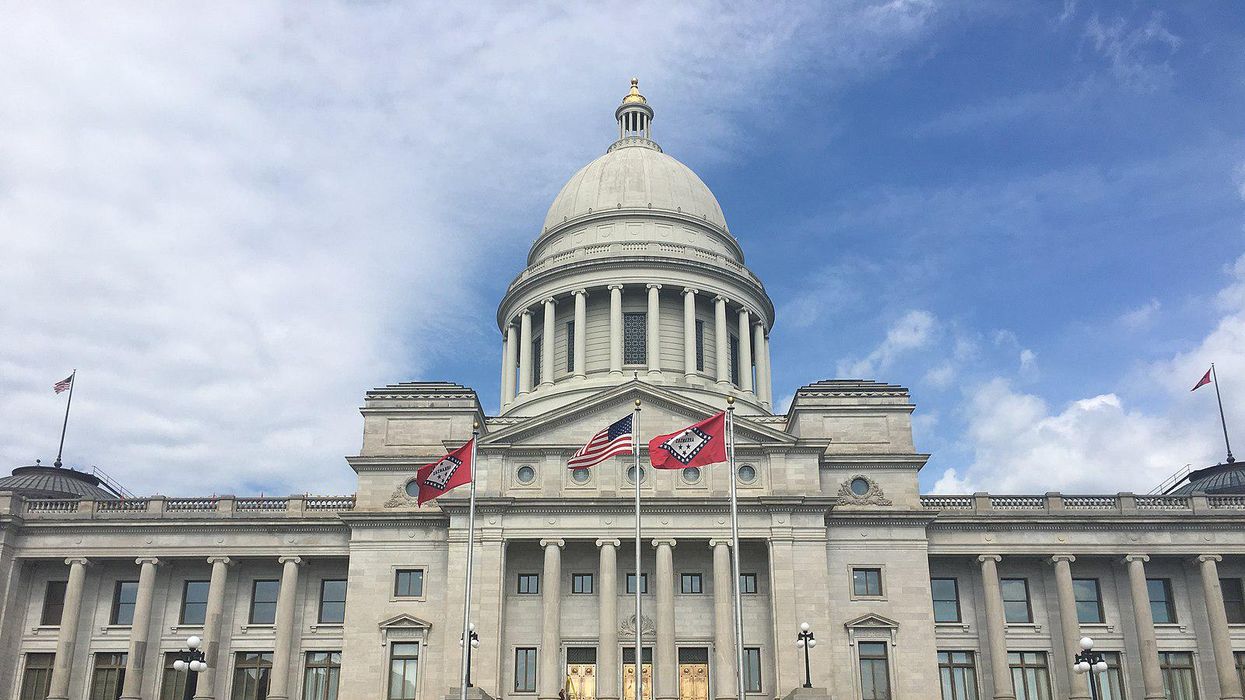

Arkansas State Capitol in Little Rock

How That ‘Blue State Bailout’ Is Rescuing The Reddest States

Reprinted with permission from Daily Kos
Since May 10, the federal government has dispersed $105 billion of the $350 billion included in the American Rescue Plan to state and local governments. The Treasury Department says 1,500 entities have received that funding, the funding Sen. Mitch McConnell adamantly opposed for the entirety of the pandemic, calling it a "blue state bailout."

"This state and local aid program is going to provide transformative funding to communities across the country, and our Treasury team is focused on getting relief to these communities as quickly as possible," Treasury Secretary Janet Yellen said in a statement announcing the progress of the funding thus far. "In the past 11 days, almost a third of the funding has gone out the door, and I'm hopeful communities will be able to rehire teachers and help businesses re-open much sooner than otherwise."

Tens of thousands of state, local, territorial, and tribal governments can request funding. The Treasury Department details the uses of the relief: "Support urgent COVID-19 response efforts to continue to decrease spread of the virus and bring the pandemic under control; Replace lost revenue for eligible state, local, territorial, and Tribal governments to strengthen support for vital public services and help retain jobs; Support immediate economic stabilization for households and businesses; Address systemic public health and economic challenges that have contributed to the inequal impact of the pandemic."

Let's check in on how that "blue state bailout" funding is going so far. Arkansas' Republican Gov. Asa Hutchinson has $1.57 billion for the state, and at the Arkansas American Rescue Plan Steering Committee Wednesday said that they could do a lot with it, from vaccine distribution to expanding broadband. "It is unique in history. It's a unique opportunity to improve the infrastructure in our state from broadband to health care to cybersecurity, from IT to water projects," Hutchinson said. Arkansas received a total of $5 billion, with the remaining $3.5 billion going to local governments and other projects.

"We need all the help we can get. It wasn't until vaccines rolled out that we rounded the corner. I think money allocated for vaccines, not just vaccines, but the education of the public about the safety of the vaccines, is essential to continuing to solve what has been a really long year-plus problem," Rogers, Arkansas Fire Chief Tom Jenkins, a COVID-19 response force member, said. The steering committee chair, Larry Walther, agreed: "COVID response, decreasing the spread of the virus, getting the pandemic under control, vaccinations, contact tracing, those sort of the things are the number one," Walther said.

This week, Muncie, Indiana, Mayor Dan Ridenour, a Republican, announced the city's preliminary plans for using the first tranche of the $32 million his city is getting. Just over $2.7 million will help the city overcome a budget shortfall; another $2 million will help the city's restaurants recover; $2 million each will help small businesses and nonprofit organizations; and over $4 million will go to hotels. There's also funding for substance abuse and behavioral health treatment, public art, and neighborhood assistance.

In another not-blue state, Iowa, "both the city of Des Moines and Polk County are receiving nearly $100 million in aid, the most of any Iowa city or county. Twelve Iowa cities are receiving aid, and all 99 counties are receiving at least $600,000." That means each county is getting about $200 per resident, based on 2019 census data. The state as a whole is getting $1.48 billion in American Rescue Plan money.

Idaho is going to get $1.1 billion, and state officials have said it will be used to "substantially bolster the state's water, sewer and broadband infrastructure." Alex Adams, Republican Gov. Brad Little's budget chief, touted the five-year window for completing projects with the funding. "That's a huge benefit for a rural state like ours where it's going to take years for some of these large sewer, water and broadband projects to come to fruition," Adams said. Idaho's largest cities in the state are getting a total of $124 million, smaller cities $108 million, and counties another $314 million.

McConnell's home state of Kentucky is getting $2.183 billion. "Our economy is surging and strong," Gov. Andy Beshear (a Democrat) said. "We are in a strong position to sprint out of this pandemic with continued positive economic indicators and with this funding that will create jobs, momentum and a better quality of life in every corner of the commonwealth." The state had already planned to use "use 1.3 million to boost the state's economy, expanding broadband, delivering clean drinking water and building new schools," and is "expected to create more than 14,500 new jobs." The state's general fund will be shored up.

The Tennessee Comptroller, Jason Mumpower, talked to one county's leaders this week to tout the projects available with the funding. "This could include helping workers, households, small businesses, nonprofits and impacted industries, such as tourism, travel and hospitality industry. Yes. You can use this money to make grants to individuals and small businesses," Mumpower said. "We look out across the landscape of Tennessee on a daily basis and think, 'Where does the greatest financial peril lie?' It lies in water and sewer. It lies underground," Mumpower told the Wilson county officials, who are expecting $28 million in relief funds.

All these Republican states getting all that funding passed solely by Democrats in the Senate, benefitting from the commitment to good governance -- and acting like they're goddamned adults like Democrats continue to model.

Shop our Store

Headlines

Editor's Blog

Trending

World