Tag: irs
How Do We Make Billionaires Pay Their Fair Share Of Taxes? Beef Up The IRS

How Do We Make Billionaires Pay Their Fair Share Of Taxes? Beef Up The IRS

"The rich should pay their fair share of taxes." Who can argue with that? But then we must decide who is rich and what is meant by fair. Neither political party has distinguished itself in making such distinctions.

But Republicans play an especially outrageous game in portraying the Internal Revenue Service as the working stiff's enemy. For salaried workers, taxes come straight out of paychecks, meaning most are already paying what they owe. Owners of small businesses have more deductions at their disposal, but the neighborhood bakery that tries to follow the rules doesn't have much to fear.

When Joe Biden's Inflation Reduction Act funded the hiring of about 15,000 IRS employees, however, Republicans played the public for boobs. "Are they (the IRS) going to have a strike force that goes in with AK-15s already loaded, ready to shoot some small-business person in Iowa?" Sen. Chuck Grassley, the Iowa Republican, asked on Fox News.

In reality, criminal investigation special agents go only after serious tax cheats, and just 2,000 of them are armed. These cases involve destroying records, double-bookkeeping and the like. They aren't persecuting taxpayers whose math was innocently off or were even negligent.

And so to address Grassley's complaint: If some small business person in Iowa is engaged in money laundering, narcotics trafficking or major league fraud, then yes, armed IRS agents may come to visit.

The IRS employed about 102,000 people at the beginning of Donald Trump's second term. Staffing has been cut down to about 74,000. Not only are there fewer agents going after tax dodgers, but there are also fewer customer support workers able to answer ordinary people's tax questions.

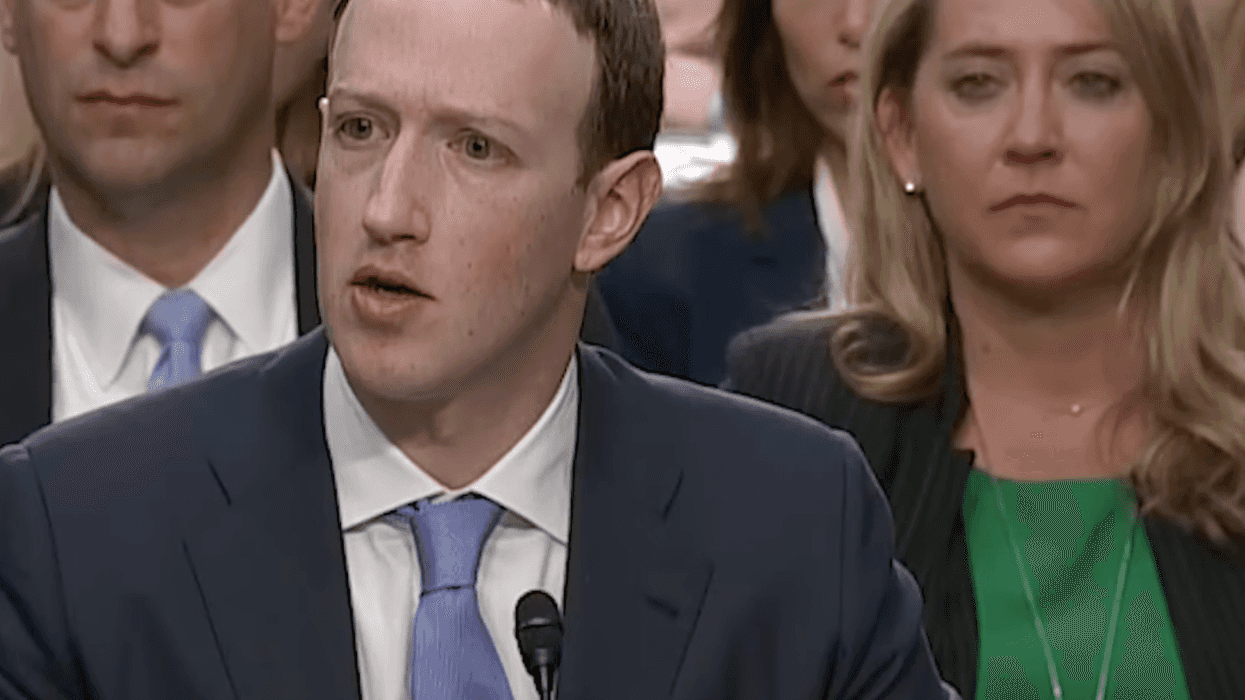
The chief beneficiaries of lax tax enforcement are the rich who employ squads of accountants to hide income or manufacture unlawful deductions. The tax code already favors them. For example, capital-gains taxes — which are paid after selling stock or other assets — can pay taxes at a lower rate than wages. That's why Meta magnate Mark Zuckerberg has himself paid a salary of only a dollar a year. He is lavishly compensated through a cargo-ship-sized pile of securities and other assets taxed at the lower capital-gains rate.

There are reasons for treating capital gains differently from earned income, but must the tax advantage for the former be so big?

Democrats crusading for more tax "fairness" have this foolish habit of targeting their own rich residents. The proposal in Democratic-controlled California to slap a one-time five percent tax on everything a billionaire owns is nuts. Democratic Gov. Gavin Newsom wisely opposes this utterly complicated scheme, which it seems would force some Californians to add up the value of their vintage watches, boats and paintings for tax purposes. New York City Mayor Zohran Mamdani, meanwhile, weaves myriad proposals for raising taxes in ways that would seep deep into the middle class.

What the California and New York tax proposals have in common is providing an incentive for the rich to move elsewhere. It's not like these places don't already tax the top incomes. Many very rich people have continued to live in these jurisdictions for their economic vitality, schools, cultural institutions and other amenities. And they pay almost all the income taxes.

But they have limits. It's one thing to tax them. It's another to portray taxing them as a means of punishment. Tax reform that closes loopholes and special deals benefiting the super-rich much be done at the national level.

The IRS doesn't make tax laws. It is federal agency that collects taxes and enforces the laws. Middle-income and "merely affluent" Americans should recognize this: The taxes that the richest among us don't pay are taxes that they pay.

Froma Harrop is an award winning journalist who covers politics, economics and culture. She has worked on the Reuters business desk, edited economics reports for The New York Times News Service and served on the Providence Journal editorial board.

Reprinted with permission from Creators.

Are There Frauds Worse Than That Minnesota Case? Let's Look Again At Donald Trump

Are There Frauds Worse Than That Minnesota Case? Let's Look Again At Donald Trump

The Trump administration has decided to make fraud in government programs in Minnesota into a national crisis requiring massive intervention by ICE and Border Patrol (don’t ask) because it was done in part by Black immigrants from Somalia. While Trump and his Republican minions have been hyperventilating over this fraud, it is worth using a little arithmetic to try to put in perspective.

Of course, arithmetic is not popular in elite circles. Even many liberals have yelled that we have to be very concerned about the Minnesota fraud, apparently because some of it was done by Black people and the Republicans are yelling about it. But I’ll confess to being an old-fashioned type who doesn’t think fraud by Black people is any worse than fraud by white people, even if Republicans yell about it. So, let’s do the numbers.

As best we can tell the amount of fraud in Minnesota in the federal pandemic-related programs the Trump gang is yelling about came to $250 million. (The ringleader was actually white.) There undoubtedly is additional fraud that will be found, but this is what we know about to date.

Trump has touted a figure of $20 billion, but there is no obvious basis in reality for this number. Remember, Trump has repeated boasted about $18 trillion in foreign investment coming into the country, that he won the 2020 election by millions of votes and that he will bring drug prices down by 1500 percent. Trump’s numbers often have nothing to do with the real world.

Let’s just ignore the Trump craziness and go with the $250 million figure of known fraud. By comparison, the inspector general of the Small Business Administration, Hannibal Ware, estimated fraud in the Paycheck Protection Program initiated in Trump’s first term was $200 billion. That would be equal to 800 Minnesota frauds.

In case you’re wondering how this fraud was dealt with, Trump didn’t send in ICE. Instead, Trump fired Mr. Ware, who is Black. He promoted the director of the Small Business Administration, Linda McMahon, to be education secretary in his current term.

There are other cases of much larger fraud that don’t seem to draw as much attention, much less the involvement of ICE, as the Minnesota fraud. For example, the Medicare Payments Advisory Commission estimates that Medicare loses about $40 billion a year to private insurers in the Medicare Advantage program because insurers exaggerate the severity of their patients’ healthcare conditions. This would be equal to 160 Minnesota frauds, also apparently without bringing the involvement of ICE.

We can also look to Donald Trump’s whack-job lawsuits. He has discovered that he can bring any lawsuit he wants against the government, for any amount, and then tell his lackeys to settle. He brought a $230 million case against the Justice Department because it prosecuted him for trying to overthrow the government and stealing classified government. He is apparently directing Attorney General Bondi to hand him the cash. This payment would be a bit more than 0.9 Minnesota frauds.

He is also suing the Internal Revenue Service for $10 billion because it allowed his tax returns for two years to leak. (Prior presidents have made their tax returns public, which Trump promised to do as well.) While it’s not clear what damages Trump could claim (a suit by another leak victim was settled with an apology), he apparently is ordering the IRS to also hand over the cash. While this settlement will have to be reviewed by a judge, it would be equal to 40 Minnesota frauds. (The Justice Department case is an administrative proceeding and requires no judicial review.)

One other item to throw into the mix, just so people can know where the money goes, is Trump’s plan to increase annual military spending by $500 billion. This would add more than $5 trillion to the debt over a decade, for those keeping score on such things. It seems the rationale is that we need more money to protect ourselves from the new enemies Trump has made. Anyhow, this increase in the military budget of 50 percent would be equal to 2000 Minnesota frauds.

To be clear, we absolutely should take seriously fraud in public social welfare programs, like what happened in Minnesota. This money is effectively being stolen from people who badly need it. Most of these programs are underfunded and the money going to fraudsters comes out of the pockets of the people standing in line who don’t get support they need.

However, we also need to keep the amount of fraud in context. Most of our tax dollars are not going to fraudsters from Somalia. In fact, if there had never been a penny of fraudulent payments to people from Somalia, it would not even be a rounding error in our budget data.

We know that Republicans, and especially Trump, exploit racism at every opportunity. Arithmetic may not be an adequate weapon to combat racism, but it can be a useful one. And decent people should use it.

Dean Baker is a senior economist at the Center for Economic and Policy Research and the author of the 2016 book Rigged: How Globalization and the Rules of the Modern Economy Were Structured to Make the Rich Richer. Please consider subscribing to his Substack.

Reprinted with permission from Dean Baker.

Right-Wing Media Figures Defamed IRS To Benefit The Super-Rich

Right-Wing Media Figures Defamed IRS To Benefit The Super-Rich

Right-wing media figures have spent years attacking the Internal Revenue Service, including spreading conspiracy theories about armed agents targeting conservatives. Now, President Donald Trump is gutting the agency in a move that experts say will benefit the richest of the rich in the United States.

According to The Washington Post, the IRS’ “burgeoning efforts to more closely inspect the taxes of some of the country’s richest people and most powerful companies are stalling because of layoffs imposed by the Trump administration."

The Post went on to report that the IRS had fired “7 percent of its roughly 100,000-person workforce in February, including at least 5,000 in the enforcement and collections divisions,” and that “tax experts say the cuts undermine the agency’s much-touted effort to crack down on wealthier Americans — who for years have faced slimmer and slimmer odds of being audited."

The Trump administration’s hobbling of the agency follows years of attacks on the IRS by right-wing media — most notably by spreading a myth that the Biden administration was planning to hire 87,000 armed agents to investigate and persecute conservatives. A Biden-era law did increase funding for the IRS, but didn’t specify the number of new employees and certainly didn’t mandate that they carry weapons. The false number comes from a Treasury Department report that suggested how many total employees the IRS could hire over 10 years to “maintain current levels,” according to PolitiFact. And, crucially, the new hires were tasked with investigating high-income tax avoiders.

Right-wing media attacked Biden-era funding for IRS to go after wealthy tax cheats

In August 2022, Biden signed the Inflation Reduction Act into law, adding $80 billion to the IRS’ budget to go after wealthy tax cheats. That month, Fox News repeated the falsehood that the IRA added 87,000 IRS agents more than 200 times, including at least 40 instances of falsely saying the agents would be armed.

Host Laura Ingraham said the IRS was the “new Gestapo,” and host Brian Kilmeade claimed “Joe Biden’s new army” is going to “hunt down and kill middle class taxpayers.” (In fact, then-Treasury Secretary Janet Yellin instructed the IRS not to increase audits for filers making less than $400,000 annually.)

Former Fox News marquee star Tucker Carlson repeated the armed-agents conspiracy theory at least nine times, in one instance telling his audience Biden was hiring “87,000 armed IRS agents to make sure you obey.” Earlier that month, Carlson falsely claimed that the IRS was being used “as a military agency."

Turning Point USA founder and MAGA influencer Charlie Kirk said on his radio show that the “87,000 new IRS agents will be used to go after mom-and-pop restaurants, donors to MAGA candidates, people like you,” and that their assignment was to target “dissidents."

Fox ignored IRS collection of back taxes from the wealthy — while demonizing immigrants

The attacks continued throughout the rest of Biden’s term. In January 2023, right-wing outlets rehashed the 87,000 armed-agents myth as House Republicans voted to slash IRS funding. That fall, conservative pundits cheered on newly minted Speaker of the House Mike Johnson’s attempts to cut IRS funding. On November 20, Ingraham again accused the IRS of “targeting conservative groups."

In February 2024, Fox News almost entirely ignored a report from the IRS and the Treasury Department that found the agency was “poised to take in hundreds of billions of dollars more in overdue and unpaid taxes than previously anticipated,” according to The Associated Press. As Media Matters reported at the time, Fox spent only 5 minutes discussing the report — which estimated the government would be able to collect $56 billion per year over 10 years — and 55 minutes criticizing a New York City program to provide migrants with prepaid credit cards that cost $53 million.

Right-wing media pushed tax avoidance for the ultra-rich, austerity for the working class

The long-running right-wing media campaign against the IRS has always had one clear goal: to protect the ultrawealthy from IRS enforcement. The Trump administration is now realizing that goal. The recent Washington Post article reported that a West Virginia revenue agent said some of the recently “laid-off employees had about 40 cases between them, each looking at people making $400,000 or more.” Some reports now estimate that the Trump administration could ultimately fire half of the IRS’ 100,000 person workforce.

The programs that Trump is eviscerating have already been successful. As of last July, the IRS had collected more than $1 billion in back taxes from wealthy individuals and families. Right-wing media figures have cheered on these cuts, which will primarily benefit rich tax cheats, as they simultaneously push for austerity measures for the working class.

Reprinted with permission from Media Matters.

'A Tax Cut For Tax Cheats': DOGE's IRS Firings Burn Hundreds Of Millions In Revenue

'A Tax Cut For Tax Cheats': DOGE's IRS Firings Burn Hundreds Of Millions In Revenue

Dave Nershi was finalizing a report he’d worked on for months when an ominous email appeared in his inbox.

Nershi had worked as a general engineer for the Internal Revenue Service for about nine months. He was one of hundreds of specialists inside the IRS who used their technical expertise — Nershi’s background is in chemical and nuclear engineering — to audit byzantine tax returns filed by large corporations and wealthy individuals. Until recently, the IRS had a shortage of these experts, and many complex tax returns went unscrutinized. With the help of people like Nershi, the IRS could recoup millions and sometimes more than a billion dollars on a single tax return.

But on February 20, three months shy of finishing his probationary period and becoming a full-time employee, the IRS fired him. As a Navy veteran, Nershi loved working in public service and had hoped he might be spared from any mass firings. The unsigned email said he’d been fired for performance, even though he had received high marks from his manager.

As for the report he was finalizing, it would have probably recouped many times more than the low-six-figure salary he earned. The report would now go unfinished.

Nershi agreed that the federal government could be more lean and efficient, but he was befuddled by the decision to fire scores of highly skilled IRS specialists like him who, even by the logic of Elon Musk’s Department of Government Efficiency initiative, were an asset to the government. “By firing us, you’re going to cut down on how much revenue the country brings in,” Nershi said in an interview. “This was not about saving money.”

Since taking office, President Donald Trump and his billionaire top adviser Musk have launched an all-out blitz to cut costs and shrink the federal government. Trump, Musk and other administration leaders not only say the U.S. government is bloated and inefficient, but they also see it as a bastion of political opposition, calling it the “deep state.”

The strategy used by the Trump administration to reduce the size of government has been indiscriminate and far-reaching, meant to oust civil servants as fast as possible in as many agencies as possible while demoralizing the workers that remain on the job. As Russell Vought, director of the Trump White House’s Office of Management and Budget and an architect of Project 2025, put it in a speech first reported by ProPublica and Documented: “We want the bureaucrats to be traumatically affected. When they wake up in the morning, we want them to not want to go to work because they are increasingly viewed as the villains.”

One tactic used by the administration is to target probationary workers who are easier to fire because they have fewer civil service protections. Probationary, in this context, means only that the employees are new to their roles, not that they’re newbies or underperformers. ProPublica found that the latest IRS firings swept up highly skilled and experienced probationary workers who had recently joined the government or had moved to a new position from a different agency.

In late February, the Trump administration began firing more than 6,000 IRS employees. The agency has been hit especially hard, current and former employees said, because it spent 2023 preparing to hire thousands of new enforcement and customer service personnel and had only started hiring and training those workers at any scale in 2024, meaning many of those new employees were still in their probationary period. Nershi was hired as part of this wave, in the spring of last year. The boost came after Congress had underfunded the agency for much of the past decade, which led to chronic staffing shortages, dismal customer service, and plummeting audit rates, especially for taxpayers who earned $500,000 or more a year.

The administration doesn’t appear to want to stop there. It is drafting plans to cut its entire workforce in half, according to reports.

Unlike with other federal agencies, cutting the IRS means the government collects less money and finds fewer tax abuses. Economic studies have shown that for every dollar spent by the IRS, the agency returns between $5 and $12, depending on how much income the taxpayer declared. A 2024 report by the nonpartisan Government Accountability Office found that the IRS found savings of $13,000 for every additional hour spent auditing the tax returns of very wealthy taxpayers — a return on investment that “would leave Wall Street hedge fund managers drooling,” in the words of the Institute on Taxation and Economic Policy.

John Koskinen, who led the IRS from 2013 to 2017, said in an interview that the widespread cuts to the IRS make no sense if Trump and Musk genuinely care about fiscal responsibility and rooting out waste, fraud and abuse. “What I’ve never understood is if you’re interested in the deficit and curbing it, why would you cut back on the revenue side?” Koskinen said.

Neither the IRS nor the White House responded to requests for comment. Last month, Musk asked his followers on X, the platform he owns, whether they would “like @DOGE to audit the IRS,” referring to the U.S. DOGE Service team of lawyers and engineers led by him. DOGE employees have sought to gain access to IRS taxpayer data in an attempt to “shine a light on the fraud,” according to a White House spokesman.

For this story, ProPublica interviewed more than a dozen current and former IRS employees. Most of those people worked in the agency’s Large Business and International (LB&I) division, which audits companies with more than $10 million in assets and high-income individuals. Within the IRS, the LB&I division has the highest return on investment, and the widespread cuts there put in stark relief the human and financial cost of the Trump administration’s approach to slashing government functions in the name of saving money and combating waste and fraud.

According to current and former LB&I employees, the taxpayers they audited included pharmaceutical companies, oil and gas companies, construction firms and major technology corporations, as well as more obscure private corporations and high-net-worth individuals. None of the IRS employees who spoke to ProPublica would disclose specific taxpayer information, citing privacy laws.

With the recent influx in funding, employees said, the leadership of LB&I had pushed to hire not only more revenue agents and appraisers but also specialized employees such as petroleum engineers, computer scientists and experts in corporate partnerships. These employees, usually known internally as general engineers, consulted on complicated tax returns and helped determine whether taxpayers properly claimed certain credits or other tax breaks.

This work happened in cases where major companies claimed a hefty research tax credit, which is a legitimate avenue for seeking tax relief but can also be improperly used. Highly skilled appraisers have also recouped huge savings in cases involving notorious tax schemes, such as what’s known as a syndicated conservation easement — a break abused so often that both congressional Democrats and Republicans have criticized it, while the IRS has included it on its list of the “Dirty Dozen” tax scams.

“These are cases where revenue agents don't have the technical expertise,” said one IRS engineer who is still employed at the agency and who, like other IRS employees, wasn’t authorized to speak to the media. “That’s what we do. We are working on things where expertise is absolutely necessary.”

Current and former IRS employees told ProPublica that the agency had expended a huge amount of resources to recruit and train new specialists in recent years. Vanessa Rollins, an engineer in the IRS’ Chicago office who was recently fired, said probationary employees in LB&I outnumbered full-time staffers in her office. Much of her team’s work centered on training and mentorship for the waves of new employees — most of whom were recently fired. “The entire office had been oriented around bringing us in and getting us trained,” Rollins said.

These specialists said they earned higher salaries compared with many other IRS employees. But the money these specialists recouped as a result of their work was orders of magnitude greater than what they cost. The current engineer told ProPublica that they estimated their team of less than 10 people had brought in $5 billion in adjusted tax returns over the past four years. (By contrast, a Wall Street Journal analysis published on February 22 found that DOGE had found savings of $2.6 billion over the next year, far less than the $55 billion claimed by DOGE itself.)

A former LB&I revenue agent added that their work didn’t always lead to the IRS recouping money from a taxpayer; sometimes, they audited a return only to find that the taxpayer was owed more money than they had expected.

“The IRS’ mission is to treat taxpayers fairly so they pay the tax they legally owe, including making sure they’re not paying any more than legally required,” the former revenue agent said.

Notwithstanding its return on investment and the sense of duty espoused by its employees, LB&I was hit especially hard by the most recent wave of firings, employees said. According to the current IRS engineer, the Trump administration appears to have eliminated the jobs of about 120 LB&I engineers out of a total of roughly 260. The person said they had heard more terminations were expected soon. The acting IRS chief and a longtime agency leader, Doug O’Donnell, announced his retirement amid the firings.

Several LB&I employees told ProPublica that the mass layoffs had been ordered from a very high level and that several layers of managers had no idea they were coming or what to expect. The cuts, employees said, did not appear to distinguish between employees with certain specialties or performance levels, but instead focused solely on whether they were on probationary status. “It didn't matter the skill set. If they were under a year, they got cut,” another current LB&I employee told ProPublica.

The current and former IRS employees said the firings and the administration’s deferred resignation offer led to situations that have wiped out decades of experience and institutional knowledge that can’t easily be replaced. Jack McCumber was an LB&I senior appraiser in Seattle who got fired about six weeks before the end of his probationary status. He said not only did he lose his job, but the veteran appraiser who was his mentor took early retirement. McCumber and his mentor often worked on syndicated conservative easement cases that could recoup tens and even hundreds of millions of dollars. “They’re pushing out the experienced people, and they’re pushing out people like me,” McCumber said. “It’s a double whammy.”

The result, employees and experts said, will mean corporations and wealthy individuals face far less scrutiny when they file their tax returns, leading to more risk-taking and less money flowing into the U.S. treasury.

“Large businesses and higher-wealth individuals are where you have the most sophisticated taxpayers and the most sophisticated tax preparers and lawyers who are attuned to pushing the envelope as much as they can,” said Koskinen, the former IRS commissioner. “When those audits stop because there isn't anybody to do them, people will say, ‘Hey, I did that last year, I'll do it again this year.’”

“When you hamstring the IRS,” Koskinen added. “it’s just a tax cut for tax cheats.”

ProPublica is a nonprofit newsroom that investigates abuses of power. Sign up to receive our biggest stories as soon as they’re published.

Reprinted with permission from ProPublica

Shop our Store

Headlines

Editor's Blog

Corona Virus

Trending

World