Tag: jeanine pirro
How A Corrupt And Incompetent Justice Department Is Damaging Public Safety

How A Corrupt And Incompetent Justice Department Is Damaging Public Safety

We have focused, for good reason, on a series of cases brought by the Trump Justice Department in rank violation of the most basic principles of due process and federal prosecutorial practice. The attorneys general who green-lighted them will live in infamy when the history of the Department of Justice’s corrupt work during Trump 2.0 is written.

Reprisal prosecutions brought for nakedly political reasons, like against James Comey and Letitia James, or “talking point prosecutions” against innocent defendants like David Hearn, brought to bolster a false public narrative, or outrageous surrenders of taking care of responsibilities for lawless sweetheart deals to Trump buddies will themselves mark this Department as the most corrupt in history.

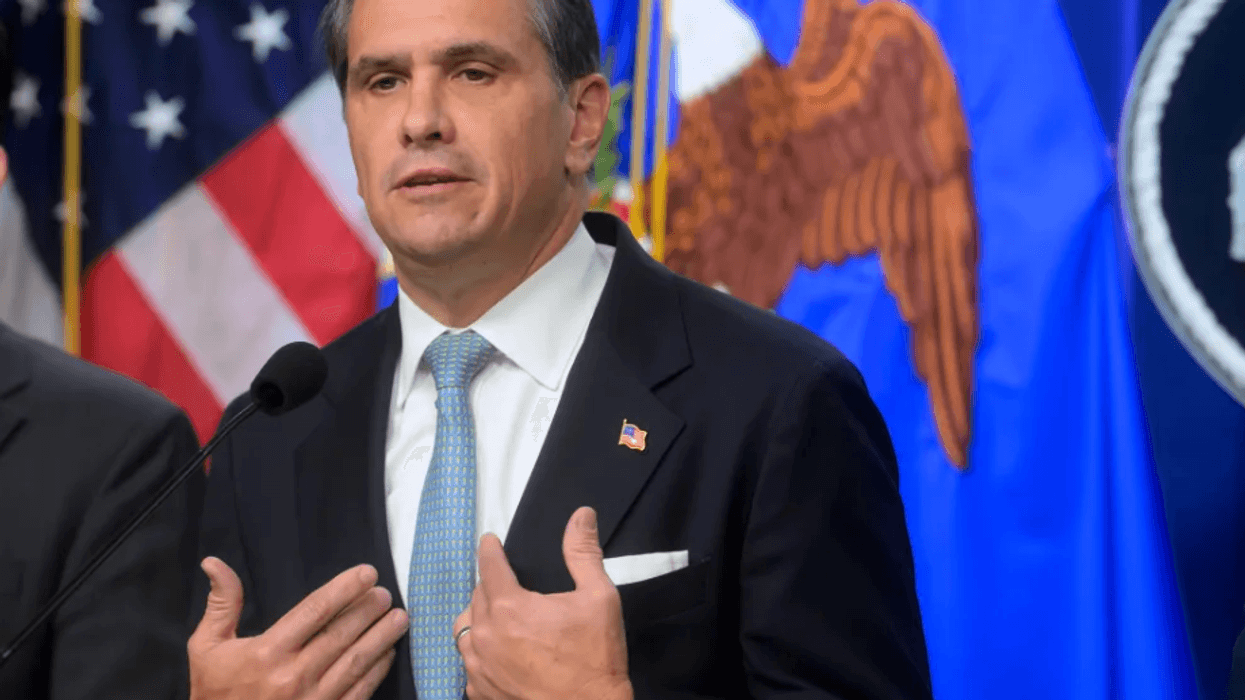
It’s only gotten worse in the transition from Pam Bondi to Todd Blanche, who has been out front defending the 180-degree reversal of long-honored Department practice.

These cases have exacted outrageous costs on Trump’s enemies and bestowed outrageous benefits on Trump’s allies. All of them have brought great dishonor to the Department of Justice. All of them are characteristic of the sort of counterfeit justice found in authoritarian societies, not democratic societies governed by the rule of law.

The administration’s conversion of the Department of Justice into a law firm to further the personal interests and grievances of Donald Trump has deeply eroded credibility, built up over generations, since at least Watergate. The so-called presumption of regularity, basically a matter of trust and confidence that the Department was doing the right thing, is now in tatters.

But there is yet another downside to these systematic derelictions, and in some ways it is even more damaging.

The damage comes home to roost in other righteous cases that have always been the hallmark of the DOJ. We’re seeing cases that likely would have and should have proceeded to conviction coming up short, with tangible costs borne by the public.

Case in point: The trial earlier this year in a Washington courtroom of Moises Rivera-Luna, which for a second time ended in a hung jury.

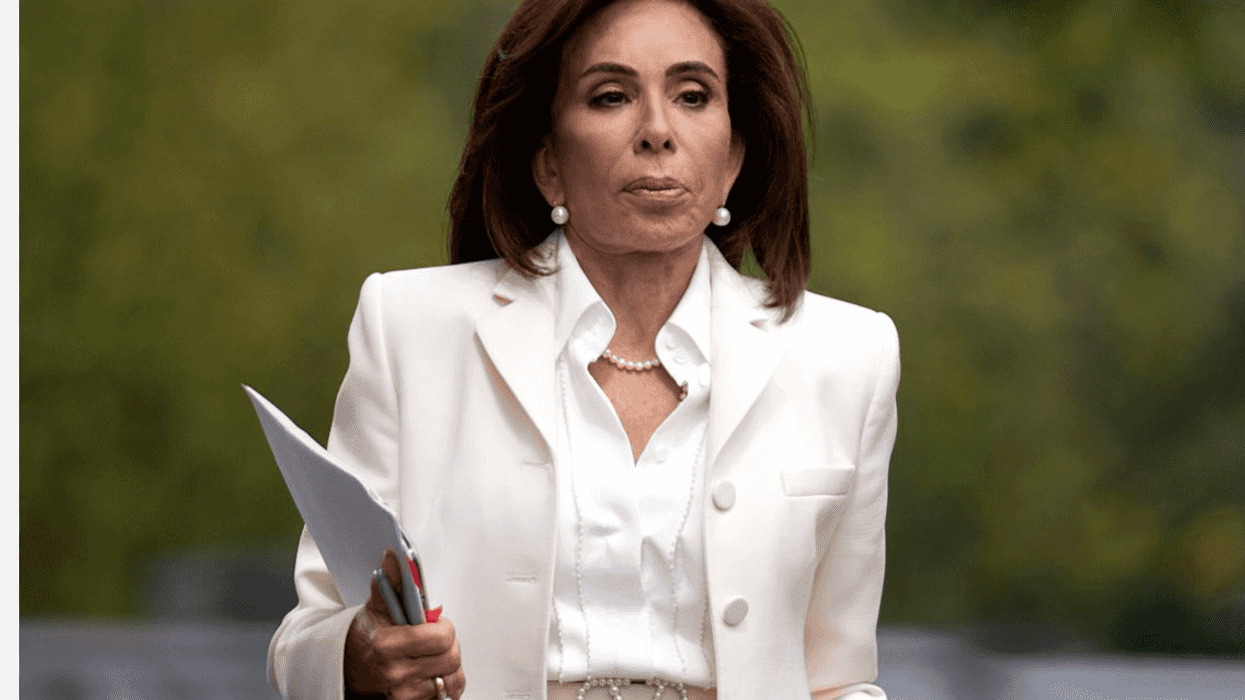
Rivera-Luna is no sandwich-thrower. The Justice Department says he’s a ringleader of MS-13 who ordered murders in the United States from inside a Salvadoran jail cell more than a decade ago—the shootings and stabbings of young men in the D.C. area who had breached the gang’s codes. He is, in other words, exactly the kind of defendant a United States Attorney’s Office exists to convict, and twice now Jeanine Pirro’s office could not do it.

Cases like this, against ringleaders of interstate or international gangs, are among the most important that the Department brings. The DOJ is uniquely positioned to combat large organizations, and Congress has supplied the legal tools to do so.

I believe in the presumption of innocence, so the point here is not to insist that justice wasn’t done—it was the jury’s call whether the government proved its case beyond a reasonable doubt, and two juries declined to make it.

But I have spent a lot of time around DOJ prosecutions of organized crime, including in D.C., and everything about this one carries the presumption of credibility that MS-13 conspiracy cases have always carried. The defendant is very likely a very bad man, properly charged. The lead prosecutor, Nihar Mohanty, is a veteran who won convictions of Rivera-Luna’s co-conspirators in the same case back in 2013. These are, as one defense attorney who has tried nearly a dozen of them put it, cases that come with a playbook—cases that the Department has learned to bring successfully.

So how do you lose twice?

You lose it the way Pirro’s office is now losing a great many things. Before the MS-13 case was retried in April, the D.C. U.S. Attorney’s Office had won convictions in only four of eight federal trials before Washington juries since January. In the roughly dozen cases since, two defendants were acquitted outright, and four more juries hung, deadlocked and hopeless, reporting to the judge that they had reached an impasse. Roughly half.

That against the national numbers: Jurors convict at a rate of about ninety percent. I have practiced and taught in this field for decades, and I have never encountered a record remotely like this one—not in any office, state or federal, anywhere in the country. Judge Royce Lamberth, after nearly forty years on the bench, was similarly struck, remarking on the second MS-13 trial that he had never seen one quite like it.

It is important to understand why that ninety percent figure exists. It’s not because the system is rigged, and not because the juries are pushovers. It exists because a well-functioning Department of Justice charges prudently. Prosecutors, in the ordinary run of things, have enormous discretion over which cases to bring. In normal times, it is axiomatic that they may not and will not bring cases that don’t satisfy the Principles of Federal Prosecution. That means that—and these are two separate requirements—the prosecutors and supervisors have concluded that the defendant did the offense and that it is likely that the government will prove it beyond a reasonable doubt at trial.

That rock-bottom test is the foundation of every criminal trial in this country. Accumulated over fifty years of practice, it has meant that the Department of Justice goes into battle with a certain presumption of regularity and overall credibility with at least the run of jurors.

No more.

Pirro’s office has spent the presumption down to nothing, and that means that a generic juror in the district may well take their seat already jaundiced. They know about the sandwich guy. They know about the indictments that collapsed, the prosecutions the president openly demanded, the office convulsed by Trump-prompted firings and departures. So when a defense lawyer stands up and suggests that a witness shaded the truth or that the government has overreached, that juror is a more receptive audience than they would have been two years ago—because they have been given every reason to wonder whether this office plays by the same rules. It broke the rules in the cases the president wanted. Why would a juror assume it kept them here?

These are the hidden costs of the Justice Department’s corruption and fecklessness, and it is the part few people are talking about. The DOJ’s outrageous cases—the Comeys, the sandwich guys—are largely being lost. There is a rough justice in that (although I emphasize, it is “rough” because the defendants are still being subjected to completely unjust financial, emotional, and reputational harm). The cost lands somewhere else entirely: it is born one hundred percent by the public.

When Rivera-Luna walks out of that courtroom because the jury could not bring itself to trust the government that charged him, the price is not paid by Jeanine Pirro or by the president who installed her. It is paid on the streets of Washington—in the possibility of more violence, more victims from a man the Justice Department insists, with very good reason, is a ruthless killer.

The office says it will try him a third time in September, running the same script that failed twice. Perhaps a third jury will convict, but the deeper problem does not go away with one verdict, because a transnational gang’s ringleader is far from the last hard case they will face.

Here’s a case coming down the pike in the same courthouse, which would be hugely challenging and important for any DOJ: a conspirator in the 1988 bombing of Pan Am Flight 103. The Department has worked the case indefatigably, and it is a critical test of the U.S. criminal justice system, but the prosecutors are going to stand before jurors who have every reason to squint and with the equivalent of one hand tied behind their backs.

The responsibility and dishonor rest squarely with Jeanine Pirro and a Department led by Todd Blanche that is proud to champion the abrogation of the norms of generations of DOJ prosecutors. But make no mistake: it’s the public that pays the wages of the corruption.

Harry Litman is a former United States Attorney and the executive producer and host of the Talking Feds podcast. He has taught law at UCLA, Berkeley, and Georgetown and served as a deputy assistant attorney general in the Clinton Administration. Please consider subscribing to Talking Feds on Substack.

Reprinted with permission from Talking Feds

The Only Promise Todd Blanche Can Honestly Make Is More Dishonesty

The Only Promise Todd Blanche Can Honestly Make Is More Dishonesty

Todd Blanche was Donald Trump's personal attorney, so it was natural that when he was elevated to attorney general, a journalist asked whether he would "pledge that the Justice Department will always act independently of the White House?"

The correct answer to such a question is obvious: The Justice Department and I are committed to the impartial administration of justice. We will always make prosecution decisions based solely upon the facts and the law after a fair evaluation of the evidence.

But Blanche said something a little different:

"No, I'm not going to pledge that. And no attorney general should ever pledge that. The president, I mean, if I were to pledge I will be independent of the White House, what that means is that if President Trump says, 'I want the Department of Justice to go after every violent criminal in this country,' which is what he has said, what you're saying to me is I should say, 'No, sir, I'm not going to do it.'"

What jumps out first about Blanche's answer is the blithe refusal even to mouth (however disingenuously) the expected platitude. This is the Trumpian way. They don't just break the rules behind closed doors; they shatter the rules in broad daylight. It's not enough, for example, that the Trump Justice Department is denying resources to the team that investigates and prosecutes foreign corrupt practices; Trump issued an executive order pausing all such prosecutions. So it's not news that Trump's new attorney general will fail to seek impartial justice, but the refusal to even feign regard for impartial justice is new.

The substance of Blanche's justification is also fatuous. Pledging to act independently of the White House doesn't mean acting in every instance in direct opposition to the president. That's absurd and it's not what independence requires. Nor could the president order the attorney general to "go after every violent criminal in this country," since more than 98% of violent crimes are state offenses, not federal ones, and in any case the combined forces of the state and federal governments don't have the resources to go after every violent criminal.

So much for deflection. The coffee-spitting moment came later, when Blanche was asked whether he would carry out an order that "crossed a legal or ethical line" and he proclaimed, "The president will never ask me to do something unethical or legal — or illegal. He never has. He never will."

Let's let the Freudian slip pass, but in fact the president had demanded that the Justice Department do something unethical that very week — namely, reconsider the decision to drop spurious vandalism charges against David Hearn. Jeanine Pirro's own motion to the court acknowledged that the original indictment was based upon false information provided by the Department of the Interior.

Nevertheless, Trump fumed that Pirro had "choked." This week, we learned that she was convening a special grand jury for some unknown purpose. If I were Hearn, I'd keep my lawyer close.

And that perversion of justice is only a ripple in the flood of plainly politicized acts and forbearances by this administration. This is a president who sent a DM to his attorney general demanding the prosecution of his political opponents. It's hard to think of how you could more comprehensively upend the idea of blind justice.

Trump's apologists do have a valid point when they note that the Manhattan district attorney's case against Trump in the Stormy Daniels case was also a form of lawfare. I said at the time that the case was flimsy and almost certainly would never have been brought if Trump were not the target. Trump's flagrant lawbreaking did present a quandary: How do you hold him responsible for his crimes without unintentionally validating the idea in the minds of his supporters that all justice is corruptly motivated?

There are no easy answers. Still, the Bragg prosecution was a local case, not the federal government seeking to punish a political foe. Ditto for the civil case Letitia James brought. At the federal level, Attorney General Merrick Garland was actually extremely reluctant to pursue federal charges against Trump despite the gravity of his conduct before and on January 6. It was only after Trump announced his reelection bid that Garland felt compelled to appoint a special prosecutor (precisely to avoid the appearance of a conflict of interest).

Nor is it the case that President Joe Biden's administration used the Justice Department to settle political scores. To repeat, Garland was widely criticized for moving slowly against Trump's obvious lawbreaking in the Mar-a-Lago documents case as well as the January 6 insurrection. One can understand his hesitation.

One administration prosecuting another opens the possibility of a dangerous tit-for-tat, but whatever your view about the wisdom of going slow against Trump, it's preposterous to "whatabout" this. Under Garland's leadership, the department brought indictments against Rep. Henry Cuellar, Sen. Bob Menendez, Rep. T.J. Cox, Illinois Speaker Michael Madigan, Mayor Eric Adams (and we know how that turned out when Trump returned), Mayor Andrew Gillum, and Hunter Biden — all Democrats.

Trump's second-term Department of Justice, by contrast, has been a nonstop cavalcade of corruption, featuring blatantly political prosecutions, attempted prosecutions or investigations of Jerome Powell, Lisa Cook, Mark Kelly, Miles Taylor, Christopher Krebs, James Comey, "sandwich guy," Adam Schiff, Letitia James, Kilmar Abrego Garcia, Alex Padilla, John Brennan, John Bolton, Sean Dunn, Ras Baraka, Jacob Frey, anti-ICE protesters in Minnesota including the widow of Renee Good, and many more.

Biden made poor decisions in pardoning his family at the end, but that was trivial compared with the mass pardons for the January 6 criminals, the pardons for cronies, donors, other corrupt public figures, the firings of any official who participated in the January 6 or Mar-a-Lago investigations, the kid-glove treatment for Ghislaine Maxwell, and of course, the putrid attempt to create a $1.7 billion slush fund for so-called victims of lawfare along with a get-out-of-jail-free card for Trump and his insatiable family regarding past tax evasion.

The aptly named Blanche (because he should, but doesn't, blush) was along for all of it. He personally visited Maxwell in prison and has yet to provide an explanation for that highly unusual visit, nor for her promotion to a more comfortable prison. He was at the Department of Justice as 3,400 lawyers resigned in protest rather than engage in the kinds of unethical and unprofessional conduct Pam Bondi and Blanche were demanding. He has defended with a straight face James Comey's indictment for threatening the president with an Instagram photo of seashells.

This ethical flexibility was enough to make even some Republican senators hesitate about confirming him. But in the end, all but Collins and Murkowski voted yes, presumably because they fear that if it's not Blanche it will be someone even worse. Thus does Trump extort his party — by threatening to get even dirtier.

But this tactic only succeeds because of learned helplessness by Republican office holders. In fact, when Trump gets pushback, he backs down. Ask Iran. Or consider the first utterly horrific attorney general candidate he proposed, Matt Gaetz. Enough Republicans balked that Trump withdrew his name. He didn't nominate someone even worse after that (admittedly a tall order). He went with Pam Bondi, a smidge less awful.

It seems the tactic of standing up to Trump is just crazy enough to work. But, no, the GOP has not learned that lesson. They've chosen spinelessness instead, and even after a decade of this, I still cannot understand why.

Mona Charen is policy editor of The Bulwark and host of the "Beg to Differ" podcast. Her new book, Hard Right: The GOP's Drift Toward Extremism, is available now.

Reprinted with permission from Creators


Forced Retreat From Reflecting Pool Case Didn't Make Hero Of Unethical Pirro

Forced Retreat From Reflecting Pool Case Didn't Make Hero Of Unethical Pirro

It’s hard to imagine a more consummate and humiliating debacle than the complete retreat that the Department of Justice was forced to execute in the Reflecting Pool case.

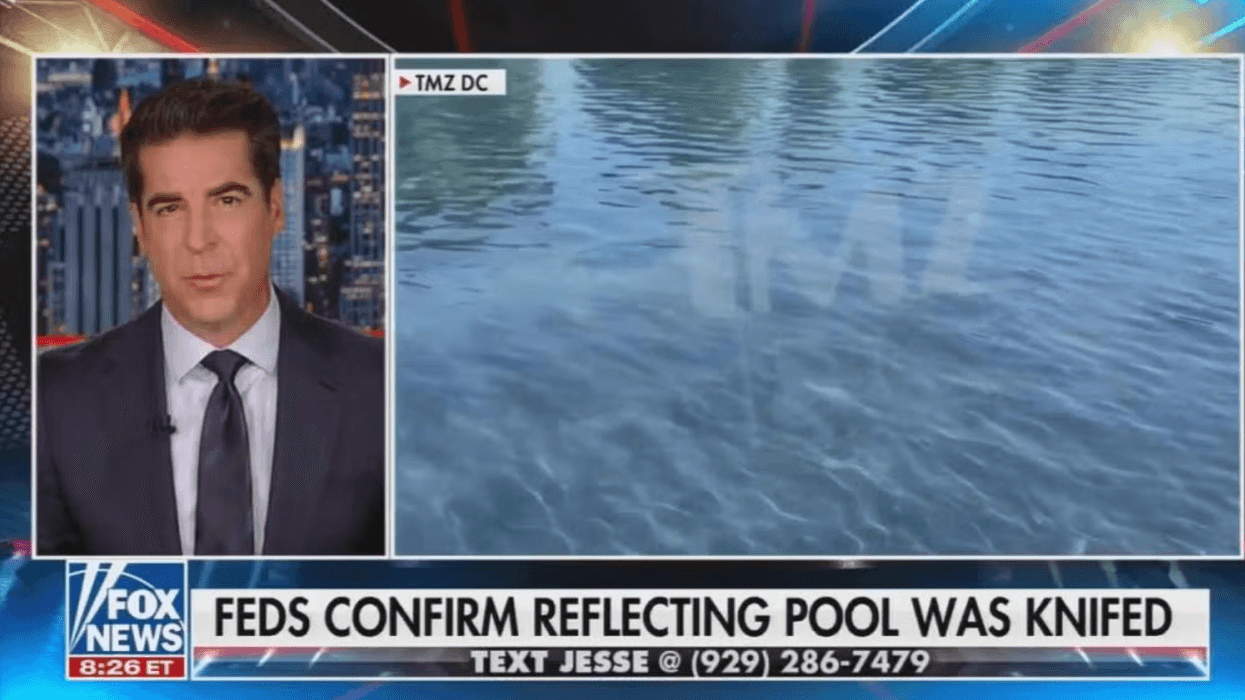
It would loom even larger if the Department’s reputation were not already in tatters. Having staked a large portion of its remaining credibility on the charges against David Hearn, the 67-year-old former Olympic canoeist whom her office had accused of vandalizing the Reflecting Pool, U.S. Attorney Jeanine Pirro was reduced on Friday evening to confessing, in a twenty-page filing, that its whole theory was false: the Lincoln Memorial Reflecting Pool had been ruined not by vandals but by the administration’s own botched, rushed renovation.

Some observers gave the DOJ credit for belatedly doing the right thing, taking Pirro at her word: diligent prosecutors misled by a careless sister agency, who moved to dismiss the moment they learned the truth. In fact, Pirro had zero choice. A grenade had been hurled into her office, and she was forced to fall on it. No points here for virtue.

Pirro’s motion did not just fold quietly. It took the Interior Department to task for withholding what it knew, insisting that had the agency “been forthcoming with the information clearly in its possession, the government would not have sought a grand jury indictment.” And it repudiated the prosecution’s own theory, conceding that the damage “was the result of a botched installation and not vandalism,” and that “it is difficult to attribute the widespread damage to the Reflecting Pool to vandalism, let alone to establish that fact beyond a reasonable doubt.”

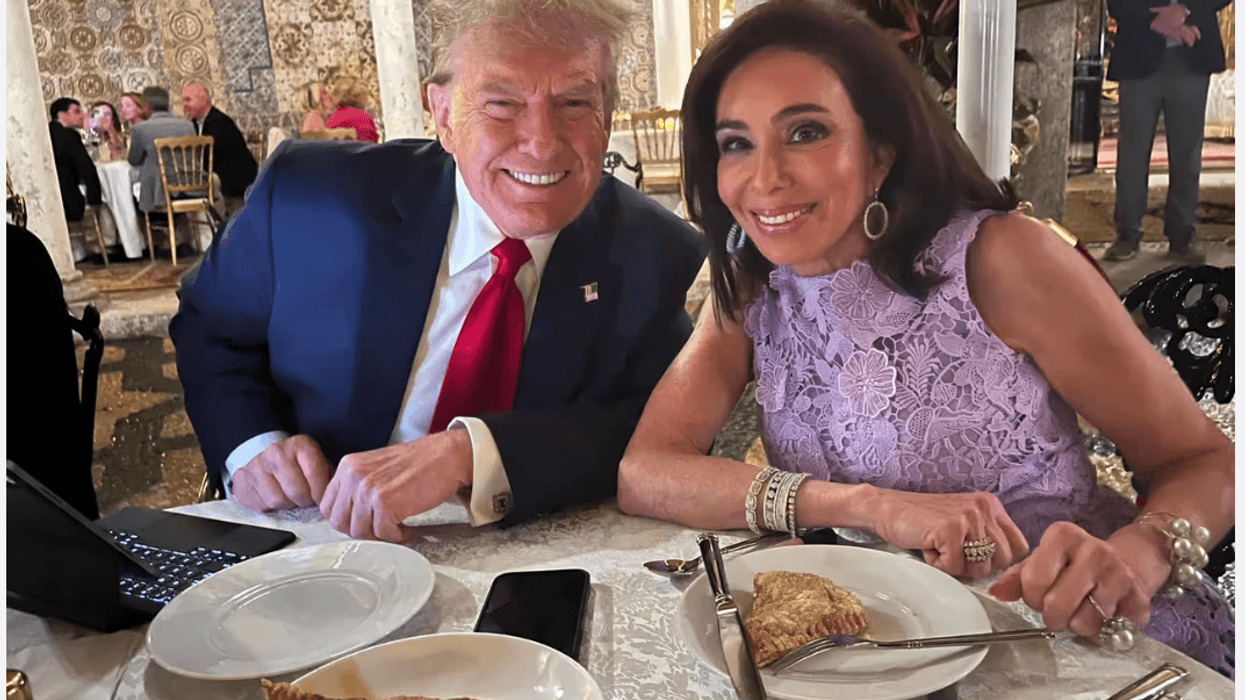
Pirro even put herself crosswise with the president, a friend and ally since the 1980s, who to this hour insists the pool was slashed with knives and box cutters and wants the case pressed. “I disagree 100% with Jeanine Pirro,” Trump fumed on Truth Social. “I don’t know what she was thinking?” For a prosecutor who has spent this administration as one of Donald Trump’s most reliable instruments, dismissing his pet case and blaming his renovation looks like a rare act of conscience.

The move that forced Pirro’s hand was the receipt of documents from the Department of the Interior demonstrating that the pool’s lining was peeling because of a rushed, failed installation—in other words, not because David Hearn tugged at a flap of it. That revelation is classic Brady material: evidence that supports the defendant’s innocence. Such material has to be turned over to the defense right away. Pirro’s own motion piously recites the point, reminding the court that “prosecutors have an affirmative obligation pursuant to Brady v. Maryland“ to produce such evidence to the defense—which takes some nerve, given that the reason she was writing was that the Brady bomb had just gone off in her hands.

So once those documents surfaced, Pirro found herself, like Odysseus, between Scylla and Charybdis. She could dismiss on her own terms, spinning the story as diligent prosecutors misled by a careless agency. Or she could turn the material over to Hearn’s lawyers and let them present it to Judge Todd Edelman—a former career public defender who, a week earlier, had already warned the government it was “operating at its own peril” in the case. Handed the Interior documents, he would have blown his top and dismissed the indictment himself, and potentially referred Pirro for disciplinary proceedings to her state bar.

Pirro’s hand was forced. The dismissal was not an unlikely visitation of virtue. It was damage control and cutting her losses. Her motion nonetheless drapes the retreat in principle, reciting that under “the Department of Justice’s Principles of Federal Prosecution, a criminal prosecution should only be maintained if the defendant ‘will more likely than not be found guilty beyond a reasonable doubt by an unbiased trier of fact and that the conviction will be upheld on appeal.’” She invokes the Department’s high charging standard as though walking away were an act of conscience rather than the only move left on the board.

Pirro’s immediate surrender served other, self-interested purposes. The prosecution was already so slapdash and improper that it raised the prospect of two looming train wrecks. The hasty dismissal is designed to avoid them both. We should hope some reckoning is still ahead.

The first is the distinct prospect of yet another gross impropriety in the grand jury. Hearn filed a motion on July 27, alleging that the government failed to present the grand jury with any evidence of damages. The administration had elevated what elsewhere were misdemeanor charges to a felony on the strength of a single statutory element: $1,000 or more in damage. Yet it apparently had no proof to offer of that amount of damages, or any amount. It is no different from charging a felon in possession and never introducing evidence of the gun.

And the hole was not incidental; the grand jurors saw it themselves. They questioned the government’s witness about the cost of the damage, and he could not quantify it. He testified, moreover, that the repairs would have been necessary regardless of anything Hearn did—the pool was already leaking more than a million gallons of water a week, its expansion joints past their service life, the liner already torn.

On that record, the grand jury somehow returned a felony indictment. Hearn accordingly moved for the full transcript and the instructions the jurors were given—a motion that, if granted, would have exposed how the prosecution steered a grand jury to a felony it had no evidence to support, and whether DOJ had once again committed misconduct behind those closed doors. Dismissing the case makes the question go away. For now.

The second glaring problem Pirro may hope to circumvent is her own flagrantly unethical conduct. When the indictment came down on July 2, Pirro did not let the charging document speak for itself, as DOJ norms require. She called a news conference and went well outside the record. “This is not only a priority for the president, but for myself,” she announced—publicly welding her office to Trump’s political grievance—and vowed, “We will prove beyond a reasonable doubt that Hearn willfully destroyed property at the Lincoln Memorial Reflecting Pool.” For good measure, she added that she had witnesses who saw him pull the lining up and destroy it, and that he faced up to ten years.

Making prejudicial, extrajudicial statements about a defendant is improper in itself, because it can taint the jury pool. It violates both DOJ policy and the state ethics rules that bind prosecutors. But it is far worse when the out-of-school statements are, as these sure now seem to be, whopping lies. A bar complaint over her handling of the Hearn case has already been filed in New York. Pirro can hope the spotlight on her conduct dims now that she has dismissed the case behind a skein of bromides about the Department’s high standards and the diligence of her prosecutors. She should not get that reprieve.

Which brings us to the telling gaps in Pirro’s own motion. Her defense, in essence, is that Interior misled her—that had she known the truth, she never would have charged. The first question that provokes is how the hell she rushed through a felony indictment without first checking with the responsible agency about the actual evidence.

And Interior does not concede that it left her in the dark. Interior Secretary Doug Burgum took to social media to contradict her outright, insisting his department “provided the U.S. Attorney’s office expert and eyewitness testimony to the damage done by vandals and provided every piece of evidence they asked for.” So the two arms of the government are now blaming each other in public—Pirro says Interior stiffed her; Interior says it handed her everything. It hardly matters which is lying: either way, Pirro charged a man with a felony she could not support.

And what about the witnesses she assured the public had seen Hearn tear up the pool? If they existed and were prepared to say he caused the widespread damage, they were prepared to perjure themselves—the government’s own records show that damage predated Hearn by weeks. So is the Department pursuing them? Were they friendly partisans, massaged into saying what the case required? Or did they never exist at all? The dismissal aims to bury those inconvenient, glaring questions.

A pedantic aside that I can’t resist. Pirro’s motion complains that Interior gave her office “less than fulsome” information—using “fulsome” to mean abundant. That usage has become common enough that the dictionaries now grudgingly allow it, but the older and better meaning is nearly the opposite: excessive to the point of being offensive or insincere, as in fulsome praise or fulsome flattery (more on the etymology of the word here). And that sense is almost too perfect here, because it was precisely the fulsome reinforcement of Trump’s false talking point—the swaggering, the boasts of tremendous evidence, the ten years—that produced this injustice in the first place.

All of this bluster and sloppiness gives the episode an element of farce. There is a Keystone Cops quality to the whole affair: Burgum insisting he could “absolutely” prove vandalism from the drained pool’s photographs, a president raving about a 300-foot slit cut with a box cutter, a U.S. Attorney promising tremendous evidence—all of it collapsing into a filing that concedes the pool fell apart due to the administration’s own botched renovation.

But the farce shouldn’t obscure the gravity—perhaps the purest instance of totalitarian abuse of the Trump years: the government cast a private citizen with no quarrel with Trump and no connection to the pool as the villain of a fiction, and moved to put him in prison for years.

The leader tells a lie everyone knows is a lie, and the machinery of the state sets about forcing the rest of us to repeat it, all the way to felony prosecution of a totally innocent bystander. That is what makes it the most perfectly Kafkaesque prosecution I can remember outside of the annals of fiction.

David Hearn went for a bike ride, stopped to touch a flap of coating that was already peeling, and put it back when a park employee asked him to. For that, the government of the United States tried to take ten years of his life. He is owed more than a dismissal. He is owed an apology—and the rest of us are owed an accounting of how the Justice Department came to be a willing and corrupt instrument of the president’s vanity.

Harry Litman is a former United States Attorney and the executive producer and host of the Talking Feds podcast. He has taught law at UCLA, Berkeley, and Georgetown and served as a deputy assistant attorney general in the Clinton Administration. Please consider subscribing to Talking Feds on Substack.

Reprinted with permission from Talking Feds.

Comical Feud Erupts Between Pirro And Burgum Over Reflecting Pool Fiasco

Comical Feud Erupts Between Pirro And Burgum Over Reflecting Pool Fiasco

U.S. Attorney for the District of Columbia Jeanine Pirro, who is now feuding with Interior Secretary Doug Burgum over his role in failed prosecutions for the alleged vandalism of the Lincoln Memorial Reflecting Pool, previously touted Burgum as a “straight shooter” and endorsed him to become Donald Trump’s 2024 running mate in her prior role as a Fox News host.

Pirro said that Trump’s pick would come down to one of JD Vance, Marco Rubio, and Burgum during a discussion of his vice presidential shortlist on the June 6, 2024, edition of Fox panel show The Five.

“Trump actually got more Hispanic votes in Florida than Rubio did,” she said. “And you know, JD Vance is good but I really think it's Burgum. I do.” Noting that she had “met him several times,” she claimed that “there's something about him that he just seems like a straight shooter.”

Two years later, Pirro, who was once described by her own executive producer as “nuts” and a “reckless maniac,” is no longer a Fox host — she’s a top federal prosecutor. And rather than a “straight shooter,” she now reportedly thinks Burgum is “an incompetent liar.”

Pirro slammed the Interior Department in her motion to dismiss charges on Friday against David Hearn — the only person to face a felony charge over damage to the Reflecting Pool — effectively blaming Burgum’s agency for both slow-walking the production of evidence showing the damage “was the result of flawed installation by the contractor … and the rush to complete the project” rather than of vandalism.

Since her decision undermined Trump’s previous claims that the damage had been the work of “Deranged Vandals,” the president publicly claimed Pirro was “100%” wrong, reiterated that it had been a “pure case of VANDALISM,” maligned her for having “choked,” and reportedly considered replacing her. Burgum, meanwhile, dismissed Pirro’s argument, saying on social media, “The evidence is clear, vandals have repeatedly caused damage to the Reflecting Pool.”

The feud came to a head on Monday during what The New York Times described as an “Oval Office showdown” attended by Trump, Pirro, and Burgum.

“During the meeting on Monday, Ms. Pirro, her voice raised at times, directly confronted Mr. Burgum, accusing him of misleading the president,” the Times reported. “She made the case that Mr. Burgum had promoted a self-serving cover story to conceal his own missteps.”

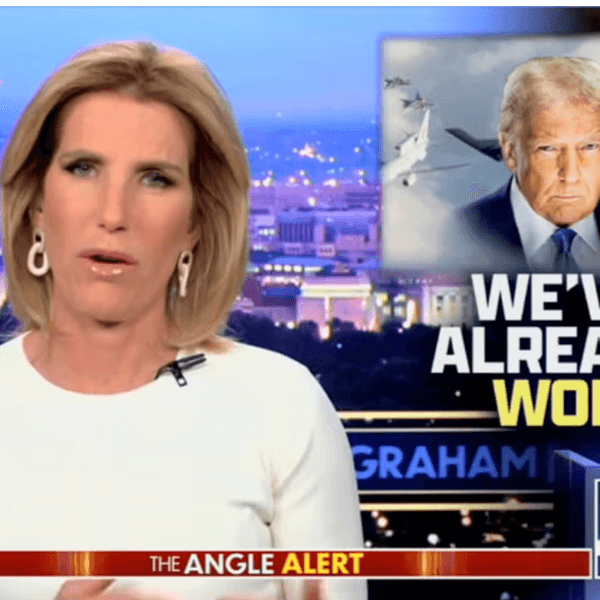
Curiously, Pirro’s former colleagues at Fox seem to be avoiding taking sides in the fracas. The network’s coverage is noticeably muted, with her former “opinion side” stablemates in particular ignoring it (or in the case of Laura Ingraham, mentioning it in passing only to mock unnamed commentators for “obsessing about things like Trump’s Reflecting Pool drama”).

Reprinted with permission from Media Matters

Shop our Store

Headlines

Editor's Blog

Trending

World