Tag: jeffrey epstein
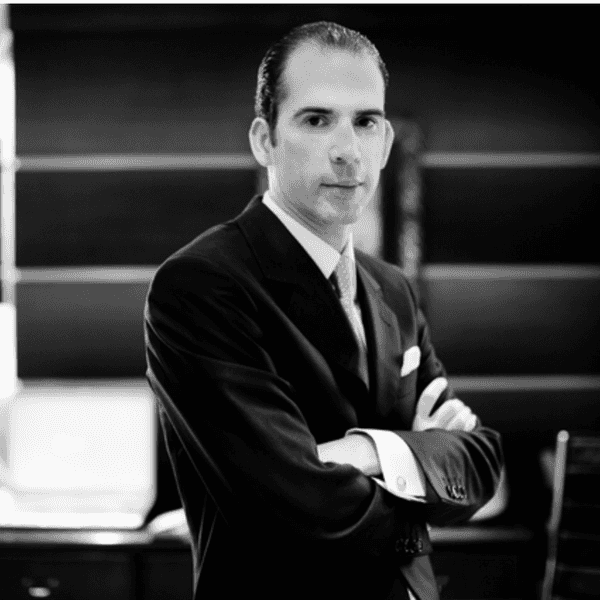
How 'Epstein Class Supervillain' Steve Bannon Still Prospers As A Fake Populist

How 'Epstein Class Supervillain' Steve Bannon Still Prospers As A Fake Populist

No Epstein class supervillain has paid any meaningful public or legal price for his crimes, other than throwing around cash settlements in exchange for silence. Evading justice is, of course, one element of supervillainy.

But there are gradations of evasion – from shamed hiding to gleeful skating.

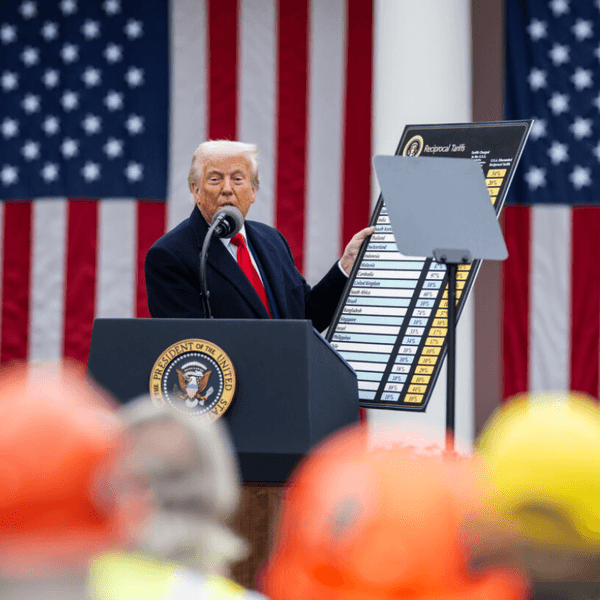
This week, we want to take another look at one Epstein fanboy still smirking under the radar. The self-described “Leninist” strategist Steve Bannon masterminded one of the greatest political tricks in years: convincing poor whites that the Republican party – the party of the moneyed, the corporations and the borderless oligarchy, led by a nepo-baby fake businessman – is the faction that really cares about the welfare of “low propensity” voters.

But the guy who made “elites versus working people” and “smash the administrative state” into right-wing rallying cries was also one of Epstein’s coziest pals in Trumpworld. In fact, DOJ records suggest that Epstein was the pivotal man in Bannon’s transformation from right-wing American douchebag with a string of failed marriages and a simmering resentment at Hollywood libs into an international man of mystery with a Bernard-Henri Lévy hairdo (maintained, on Epstein’s recommendation, with “simply silver” shampoo), cutting deals across Europe, the Middle East and Central Asia.

Bannon has so far not only avoided Epstein-related subpoenas or testimony of any kind, he has also managed to escape scrutiny from the very audience he spent years ginning up with Deep State pedo theories – an audience that Trump won over, in part, by promising to expose Epstein’s pals. He remains such an influential figure in MAGA world that he is poised to play a major role in Trump’s plan to cheat the midterms.

Besides Trump, Bannon is almost alone among exposed members of the Epstein class in remaining in good odor with the MAGAs who, a mere year ago, were demanding public shaming and legal action against all of Epstein’s pals.

The DOJ files reveal Bannon to be not just a pal of Epstein, but someone single-mindedly keyed into Epstein’s access to the global elite. Within weeks of their first meeting, Epstein connected him with influential UN diplomat Terje Rød-Larsen, who helped ease Bannon’s entry into geopolitical and financial hunting grounds like the Gulf monarchies and Mongolia, of which Bannon told Epstein, “we can make that place a crypto capital.”

Epstein seems to have advised Bannon as he broke away from Trump and set out to build his own “grassroots army.” He conferred with Bannon on launching his own dark money organization, “Citizens of the American Republic,” with $100 million in bitcoin, discussed with MIT’s Joi Ito the idea of helping Bannon finance his movement with a crypto “deplorable coin,” and encouraged Bannon to create a new “world bank of the people” for his “workers party.” Before long, Steve was hooked up with the director of Davos and moving and shaking with the sheiks.

Epstein called him “lambchop.”

The Epstein-Bannon bromance began around the fall of 2017, a few months after Bannon bottomed out of the White House. At the time, he claimed he had been liberated: “I feel jacked,” he told The Weekly Standard, “I’ve got my hands back on my [media] weapons.”

He fell even further out of favor with Trump by early 2018, when Michael Wolff quoted him calling Donald Trump Jr. “treasonous” for meeting with Russians at Trump Tower during the 2016 campaign. Bannon soon lost not just Trump but also the critical, lavish support of his eccentric billionaire patroness, Rebekah Mercer.

Enter Jeff.

The first mentions of Bannon and Epstein getting together appear in October 2017, when Wolff tells Epstein that Bannon “wants a secret meet.” Epstein was, of course, fine with secrets. He instructed Wolff to “suggest to SB that my meeting with him is just he and me. better to have total privacy on certain issues [sic].” A few days later, he cast another lure, advising Wolff, “you can tell SB , I have some ideas for him [sic]”.

The beautiful friendship kicked off with this February 2018 exchange:

Soon, Wolff was reporting that Bannon was “all hepped up on Saudi stuff.” “I told him you were the man,” Wolff wrote Epstein. “He seemed to know that.”

Within a few months, Epstein was jetting Bannon over to the Middle East to meet some of his other special friends among the Gulf oil monarchies. “All the boys are celebrating ramadan but will see you if you want,” Epstein wrote in a May 2018 text exchange. “Only there for 2 days and going out in desert with mbz [sic],” replied Bannon, referring to the leader of the United Arab Emirates.

Epstein also played sideline cheerleader as Bannon got dragged into the various 2018 congressional probes into Trump’s sleaze, urging him to “stay mentally tough” in the face of subpoenas from the House Intelligence Committee and the Mueller investigation. He even offered Bannon the surveillance-resistant safety of his mansion, which, he bragged in one email, “is similar to a SCIF.”

Bannon ultimately agreed to cooperate with Mueller, just days before his first in-person meeting with Epstein in early 2018.

Epstein’s lawyer and pal Reid Weingarten (who we covered last week) was excited about bringing Bannon into the Epstein claque. “Try to make the bannon [sic] meet happen with me there,” he wrote Epstein in early 2018. “There is play here…”

Epstein was also consulting his feminist “arch defender,” superlawyer Kathy Ruemmler, about Bannon, while looping him in on the activities of her client, Lebanese businessman George Nader. Coincidentally – or not – Ruemmler was representing Nader, a convicted pedophile, who, like Bannon, was cooperating with the Mueller investigation.

Bannon’s communications with Epstein reveal more about the behind-the-scenes geopolitical activities that involved national security, great game rivalry with China over tech, and, presumably, money.

In one lengthy May 2019 exchange – as Bannon was planning a trip to Kazakhstan arranged by Epstein – they discuss Saudi Arabia using China’s Huawei for 5G, which the U.S. felt would give China a surveillance edge in the Middle East. “You saw where they begged us to give 90 day reprieve on huawai [sic],” Bannon writes. “Yes of course,” Epstein responds. “The real game is in the shadows … as usual.” Their “game” somehow involved the Kazakh government: “kazakh daughter the key,” Epstein advised before telling him, “Im asking for a meeting with the pres and intelligence chief [sic].”

Bannon was no stranger to the dark side. He actually got his new friend Jeff quite worried about his relationship with Chinese fraudster Guo Wengui, on whose private jet Bannon flew around the country stumping for Republicans in summer 2018, possibly violating campaign finance laws. Two years later, Bannon was lolling aboard Guo’s $28 million yacht when he was arrested for defrauding small “big beautiful wall” donors. (Trump later pardoned him.)

Last week, Guo was sentenced to 30 years in prison for massively defrauding investors. But for several years, Bannon had a million-dollar consulting contract with him.

In their emails, Bannon and Epstein refer to Guo as “Kwok” – “Miles Kwok” being another name Guo used. Epstein seems to have become wise to the real Kwok/Guo before Bannon did, and he warned him repeatedly.

“Do u know my man miles kwok [sic],” Bannon texts in one thread.

Epstein cautioned that the Chinese businessman was going to get them both in trouble. “Careful,” he warned Bannon.

In the same thread, they joke about the movie Chinatown and the famous scene in which Roman Polanski slices Jack Nicholson’s nose. Jeff writes: “my very close friends as a favor , also would like you safe … if either one of us , in different investigations will need to testify publicly, it would be preferred to do it with two nostrils instead of one [sic].”

It’s not clear which of Epstein’s “very close friends” wanted Bannon “safe” – or what exactly they thought Guo could do to them.

Later in the same exchange, Epstein writes, “re kwok , honybear ok. icarus not [sic]”. “Will explain kwok later-- like trump an instrument,” Bannon responds, to which Epstein replies, “I am very well informed there. , didn’t know it was him [sic]”. (Epstein’s “honeybear” remark is a reference to Bannon’s favorite nickname for himself: “Honey Badger.”)

By December 2018, six months before Epstein’s arrest, the two men were such close buds they were yukking it up about the #MeToo movement – “so many guys caught in the me too . reaching out to me [sic],” Epstein wrote – and joking about organizing a “million man march” on Washington where everyone would wear “pink dick hats.” Another favorite target was their mutual acquaintance Donald Trump. “If you Google the word idiot, a picture of Donald Trump comes up …” Epstein texted. “Pop-up picture ---signed,” Bannon quipped back.

Bannon has recovered from his fall after Trump 1.0. His pardon in the fraud case and his stint in jail for blowing off a congressional subpoena only burnished his legend as a rebel against the Deep State. He remains extremely influential through his War Room media platform, the same platform he used for years to juice the Epstein Deep State conspiracy.

This Epstein class insider has remained a leader of the “deplorables” – perhaps not so shockingly, given that a million of them recently let Trump fleece them with his crypto coin for a reported $3.8 billion.

Bannon’s War Room doesn’t have the reach of Fox. But it is available across a wide range of platforms, including Real America’s Voice, Apple Podcasts, Rumble, Spotify, as well as X and email lists. It now functions as a powerful political organizing tool. Bannon always gives his listeners something to do: show up at school boards, pressure members of Congress, flood phone lines, organize local conventions, challenge elections, and support specific candidates.

He has kept the pedal to the metal on the 2020 election lies.

If anything, his influence is greater in the second Trump administration than it was in the first. War Room is now a key stop on the right-wing DC media circuit. And it is gearing up to serve as a critical node in the alliance between influencers, right-wing media and the White House as they prepare the vote suppression and election fraud plot to subvert the midterms.

There is one reliably incendiary topic, though, that Bannon has jettisoned along the way to his current position as the King of Fake Populists.

It begins with the letter E.

Enabling Decades Of Epstein Coverup Was A Sprawling Legal Power Network

Enabling Decades Of Epstein Coverup Was A Sprawling Legal Power Network

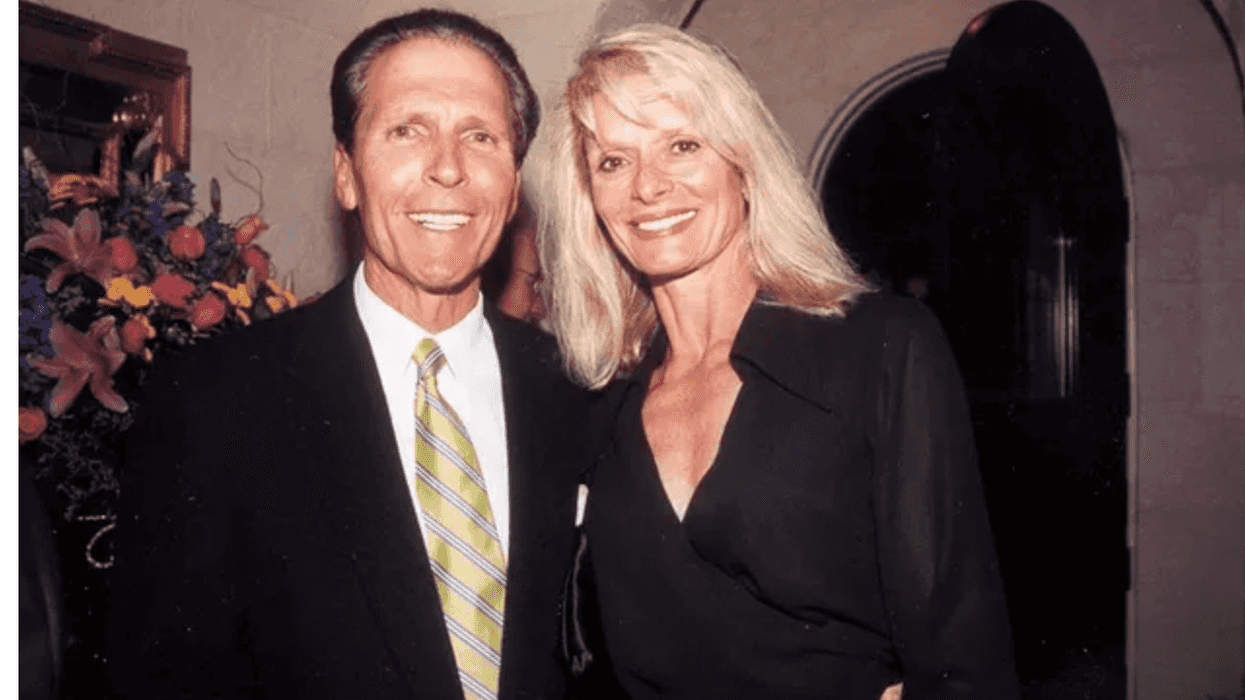
One of the unprecedented benefits of the Epstein Files Transparency Act is that the records expose how power actually works – especially among lawyers. A whale like Epstein, a locus of money and influence, attracted elite lawyers no matter how dirty a client he was. The legal circle around him was filled with insiders who began their careers wearing the white hats of federal prosecutors before switching sides to defend immense fortunes and powerful men like Leon Black, Donald Trump, and Epstein himself.

Some of Epstein’s lawyers – Alan Dershowitz, Ken Starr, Jay Lefkowitz, Roy Black – are practically household names now thanks to the infamous Palm Beach plea deal they helped craft, cutting their client loose to traffic a thousand more women and girls before his death.

Others are more private. But their names come up again and again in the Epstein files – not always actively representing him, but also chatting with, socializing with, and hanging around the sex trafficker and his johns. Some dished more passive assists to the cover-up, such as producing exonerating reports or leading Trump administration efforts to tie prominent Democrats to Epstein.

Together, these lawyers possess decades of confidential info on colossal financial (and other) crimes, matters that extend far beyond Jeff. They represent the institutional knowledge of the power networks they have served from well before the 2008 crash, through the second Epstein investigation, and into Trump 2.0’s orgy of corruption. Of course, they are masters of the fine art of the confidential settlement and NDA – the silence-for-money mechanism that the House Oversight Committee has only recently tried to peel back in its Epstein investigation.

Here we take a closer look at four lawyers who matter not just to Epstein, but to the Epstein class: DC-based white collar criminal lawyer Reid Weingarten (2285 mentions in the Epstein files); Brad Karp, former chairman of Paul, Weiss, Rifkind, Wharton & Garrison (1801 mentions in the Epstein files); Dechert LLP partner Andrew Levander, who oversaw the “independent investigation” that exonerated Leon Black; and Manhattan’s current chief federal prosecutor Jay Clayton, who never represented Epstein, but was tasked with the only Epstein-related investigation of Trump’s second term and whose office oversaw most of the Epstein file review for the Department of Justice (Clayton is also Trump’s nominee for Director of National Intelligence).

Brad Karp famously became the first Big Law leader to bend the knee to Trump’s outrageous – and ultimately illegal – threat to bar Democratic-supporting lawyers from federal court buildings. Karp lost his chairmanship of the firm as a result of his exchanges with Epstein, made public in the files.

Their communications are chummy and indeed embarrassing. Among the emails, Epstein calms Karp’s fears about some unspecified public embarrassment and recommends doctors for the attorney’s unnamed maladies.

Karp often strategized with Epstein on how to protect his client, Leon Black. “I genuinely believe that the two of us are the two people on the planet who he most trusts and who he understands try to protect him at all times,” Karp wrote to Epstein in a 2018 email.

The two also discussed whether Black was using cocaine. Epstein wondered if the drug was behind what he called Black’s “aggressiveness” and “high risk taking.” According to Epstein, Black admitted to using it in his younger days, but said he no longer did.

In a 2015 email, while brainstorming with Karp about how Black should handle a woman threatening to go public about their affair, Epstein suggested hiring either his own longtime lawyer and buddy, Reid Weingarten, or another attorney, Andrew Levander, to help.

Reid Weingarten is a former federal anti-corruption prosecutor turned white collar defense lawyer. His clients have included an Enron miscreant, two of Bill Clinton’s Cabinet Secretaries, former Goldman Sachs CEO Lloyd Blankfein post-2008 financial crash, and countless other high profile (accused) corporate fraudsters. He also represented Roman Polanski, who remains wanted in the U.S. for a decades-old charge of having sex with a 13-year-old.

A consummate Washington player, Weingarten has been involved in numerous politically sensitive cases.

In 1992, the Senate Foreign Relations Committee hired him to belatedly investigate the “October surprise” allegations, that Reagan’s henchmen had secretly cut a deal with Iran to delay the release of American hostages until after the 1980 election in exchange for weapons traded through Israel. Weingarten concluded that the prime sources for the story were “wholly unreliable” and that there was nothing to see, when in fact, as author Craig Unger has written, House investigators had already found actual receipts from the Iranian payments.

One of the key players in the nothing-to-see-here report was former federal attorney Stan Pottinger, who was himself investigated for selling arms to Iran, and a man with whom a young Epstein happened to share an office. (The Freakshow has previously uncovered evidence of Epstein’s travels to Israel timed to the Iran–Contra deal.)

Weingarten was not part of Epstein’s Palm Beach defense team, but he appears to have advised him on the wave of post-2008 civil suits brought against him by the victims. The two remained in close contact. Weingarten appears throughout the DOJ Epstein library, including in a photo sitting behind a desk surrounded by young women whose faces have been redacted. For years, Weingarten served as a sounding board for Epstein and was a frequent visitor to the New York mansion for breakfasts, lunches, and dinners. In a 2011 email, Epstein offered the frazzled attorney some signature advice: “time to relax. go get a massage.” Weingarten replied: “I wish.”

Weingarten led the defense team after Epstein’s arrest in 2019 and has indicated he believes Epstein was murdered in jail.

Andrew Levander is a straight-out-of-central-casting Manhattan white-shoe lawyer. Bowtied and bespectacled, he looks like he has an apt quote from Horace for every occasion.

But Levander has long been comfortable operating in darker company. He once served as personal attorney to legendary arms dealer Adnan Khashoggi and his relationship with Epstein was almost longer than Donald Trump’s. Epstein even once recommended Levander to Leon Black as a possible lawyer to handle a mistress who was demanding money.

As a federal prosecutor in the Southern District of New York (SDNY) during the 1980s, Levander reportedly enlisted the ambitious Coney Island thug morphing into Jeff Bondstein to help track down money related to the collapse of Drysdale Securities, according to James Patterson’s Filthy Rich. This early Epstein adventure – as a government tool of sorts – deserves further attention, which we will someday give it. It also occurred around the same time he was working for British arms kingpin Douglas Leese.

Years later, Levander was just the man for the job to produce the so-called Dechert Report, the findings of an “independent investigation” commissioned by Apollo’s Board in 2020 that ultimately exonerated Leon Black in the Epstein matter. After interviewing Black and twenty people and reviewing some financial records, Levander concluded that Black neither knew about nor participated in Epstein’s crimes against women.

Apollo and Black have leaned heavily on that report ever since – including before the Oversight Committee last week, shortly before Black walked out of the hearing.

Here are some of the risible and easily disproven statements in the Dechert Report:

Black stated that he was repulsed by the details of Epstein’s crimes … witnesses agreed that Black was shocked when the allegations became public … witnesses noted specifically that they did not believe Black would have allowed Epstein to be introduced to Black’s wife and children if Black had had any suspicion that Epstein had done anything inappropriate or illegal with girls or young women.
Dechert has seen no evidence that Black or any employee of the Family Office or Apollo was involved in any way with Epstein’s criminal activities at any time. There is no evidence that Epstein ever introduced Black, or offered to introduce Black, to any underage woman.
[See last week’s Freakshow on Black’s payments to recruiters here.]
Black viewed Epstein as a confirmed bachelor with eclectic tastes, who often employed attractive women. However, Black did not believe that any of the women in Epstein’s employ were underage. Black has no recollection of ever seeing Epstein with an underage woman at any time.
[The use of the word “underage” here hedges the fact that Epstein provided Black with a so-far unknown number of women, alluded to in this November 2016 email below.]

The word “underage” does a lot of heavy lifting for Epstein’s pals, like Black. The DOJ files are rife with evidence that Epstein introduced Black to numerous young women whose exact ages remain unknown, but who often seem to have been in their early 20s. As we’ve discussed before, the “pedo” designation for Epstein and his johns was useful for ginning up the baby-eating liberals MAGA conspiracy theories that juiced Trump’s campaigns, but it also obscures the harm done to an untold number of vulnerable young women. And it has also allowed the men Epstein was supplying with trafficked young women to skate or at least buy time.

Finally, we come to Jay Clayton.

Clayton worked for the venerable Manhattan law firm Sullivan & Cromwell until 2017, specializing in mergers and capital market offerings. During the 2008 financial crisis, he was one of the lead attorneys advising Bear Stearns and handled JPMorgan’s acquisition of the collapsing investment bank.

Clayton, a reliable friend to Wall Street and corporate America, easily sailed through his years as Trump’s first term SEC chief. “Over time, Clayton pushed through more than two dozen measures that eased regulations for corporate America,” Reuters reported.

Then, suddenly, in the fraught summer of 2020, in the midst of COVID and mere months before the presidential election, something curious happened. Just as New York federal prosecutors were preparing to take a second bite out of the rotten Epstein apple by indicting still-at-large Ghislaine Maxwell, Trump’s Attorney General Bill Barr tried to sack Geoffrey Berman, the U.S. Attorney for SDNY, and replace him with Jay Clayton.

The excuse for this odd shuffle? Barr claimed Clayton really wanted to live in New York, even as COVID was still circulating and most sentient beings with money were parked outside the city.

The timing of the switch, however, is almost comically precise as it relates to the Maxwell indictment. Between June 11-18, 2020, a draft of an indictment circulated inside the SDNY office. On June 19, AG Barr told Berman he wanted to replace him with Clayton, but Berman refused to step down. Barr then informed him that Trump would be sacking him and Berman resigned on June 20.

Democrats immediately cried foul, albeit without identifying the reason for the scheme.“Jay Clayton can allow himself to be used in the brazen Trump-Barr scheme to interfere in investigations by the U.S. Attorney for SDNY, or he can stand up to this corruption, withdraw his name from consideration, and save his own reputation from overnight ruin,” Sen. Chuck Schumer said on Twitter.

Clayton stayed in Washington. SDNY Deputy U.S. Attorney Audrey Strauss replaced Berman, and became the public face of the Maxwell case. A few days after she announced the indictment, the FBI apprehended Maxwell in her coastal mansion hideout in Maine, where she’d wrapped her phone in tinfoil in an effort to evade surveillance.

Jay Clayton remained at the SEC until the end of Trump’s first term. Soon after Biden entered the White House, Leon Black’s company hired him. A few days after Biden was inaugurated, Apollo released Andrew Levander’s “independent investigation,” which concluded that Black had no knowledge of Epstein’s crimes. Nevertheless, the now publicly known gargantuan sum he paid to Epstein for “tax and estate planning” was hurting the firm’s reputation.

In February 2021, Apollo named Jay Clayton its “lead independent director.” One month later, Black announced he would step aside as chairman and that Jay Clayton would become the “non-Executive Chairman of the Board.”

Clayton sat out the Biden years at Apollo.

Then Trump returned.

Within months of taking office, Trump appointed Clayton – Leon Black’s handpicked “non-executive” and a man who’d spent four years in the HQ of a major Epstein cover-up – as U.S. Attorney for the Southern District of New York. He took office just as Trump administration elves were poking through the SDNY’s Epstein files and finding – whoops! – Trump’s name often enough to raise panic in the White House. Clayton held onto millions of dollars in Apollo stock while overseeing the final review and redaction of the DOJ files before they were released to the public.

As Congress began digging into the case, Rep. Ro Khanna observed that the first name survivors often mention is Leon Black.

The Epstein cover-up legal revolving door has come full circle.

Nina Burleigh is a journalist, author, documentary producer, and adjunct professor at New York University's Arthur L. Carter Journalism Institute. She has written eight books including her recently published novel, Zero Visibility Possible.

Katie Chenoweth is associate professor of French at Princeton University and an investigative researcher

Reprinted with permission from American Freakshow
Linked To Epstein's Trafficking In Emails, Billionaire Black Will Soon Testify

Linked To Epstein's Trafficking In Emails, Billionaire Black Will Soon Testify

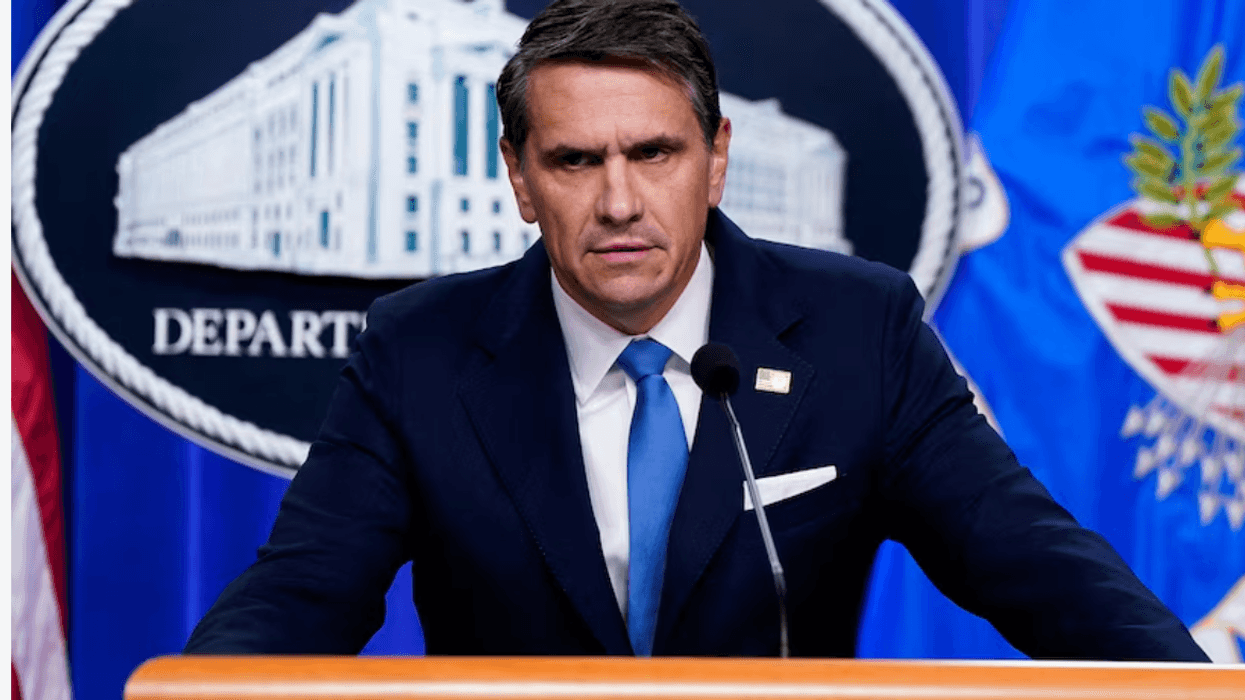
Leon Black paid an international sex trafficker with no known accounting skills $170 million between 2012 and 2017. Why – and for what – may never be definitively answered. Black’s billionaire pockets have afforded him enough top-shelf lawyers to protect his privacy as long as he lives. But the public dump of millions of pages of Epstein files has opened a window into at least some of the answers.

In a March 2026 letter sent to Black, Sen. Ron Wyden (D-OR), ranking member of the Senate Finance Committee, said: “According to federal government records reviewed by my investigators, you have made at least $8 million in payments between 2015 and 2018 to women of Eastern European origin that were potentially involved in prostitution and possible victims of Epstein’s trafficking scheme.” Wyden also suggested that Black may have used “gifts” as a way to evade taxes and that he was “surveilling and paying off” women.

We looked into some of the women who discussed Black with Epstein, who seem to have been significantly familiar with the billionaire, and who appear to have had financial dealings with and/or received gifts from him. As Black is due to testify before the House Oversight Committee later this week, we offer up the following discoveries for potential lines of questioning.

Two of the women openly emailed Epstein about recruiting for him. Both were young Russians and both received significant sums of money from – and spent considerable time with – Leon Black between 2009 and 2019, when Epstein was arrested. The women often refer to “Leon” or “L,” a designation that Sen. Wyden believes refers to Black, as do we.

The first woman we identify as Irina Chernova. She is in the DOJ files, and Wyden has stated that Black made payments directly to her between 2009-12. That allowed us to confirm that emails to Epstein during this period referencing “Leon” from “Irina” were sent by Chernova.

Chernova was born in 1984 in Krasnoyarsk, Siberia, and worked in television journalism. Based on the files, she appears to have recruited dozens of women for Epstein, and in 2011, introduced him to Karyna Shuliak, the Russian model and eventual dental student to whom Epstein later bequeathed his estate.

In one January 2011 email exchange, he pressures Chernova to bring him new girls.

Chernova was also one of the largest recipients of Leon Black’s money. According to Sen. Wyden, she received “hundreds of thousands of dollars” directly from Black’s Bank of America accounts between 2009 and 2012.

It seems Chernova was already close enough with Black in 2009 to accompany him to visit Epstein while Epstein was still under house arrest for his Palm Beach conviction. In the email arranging the trip, Irina says she plans to bring at least one [redacted] girl; Epstein replies that he will talk to Leon about the visit and says [redacted] “can bring her sister or friend” (apparently some new girls Epstein had not yet met).

In January 2010, Chernova emailed Epstein about a trip she planned to Paris and London, writing,” Leon is going to China on Feb 1 for a week.”

Two months later, she reported to Epstein that she was going to Paris, London, and then Russia for Easter, adding “It’s between us, I didn’t tell Leon about Paris, only about Russia.”

That August, after losing her phone, she asked Epstein for Leon’s number. Epstein in return asked for the number of a redacted woman. Two days later, she followed up to say he had given her Leon’s number in the Hamptons, but she wanted his cell phone number as well. In that same email, she also confirmed two appointments for Epstein with individuals whose names are redacted.

The following month, Epstein sent Chernova birthday greetings, to which she responded, “Leon just left, can you please call when you have a minute.”

In February 2012, Chernova asked Epstein to intervene and secure her “a good-bye present” from Black. Epstein assured her it would be “generous.”

Apparently, however, it was not much of a goodbye.

Five years later, Chernova wrote to Epstein that “thanks to L’s good bye gift I’ve enjoyed being a full time mom for most of this time. [We’ve been exchanging texts and planning to meet for lunch with L since I left, but we haven’t met. Yet :) Hope he’s doing good.]”

A month after that email, Epstein’s calendar showed back-to-back meetings with both Black and Chernova. Shortly afterward, Chernova emailed that she and Black were “back together” and later asked about a $100,000 payment Black had promised her. Epstein indicated that he himself had already sent her $28,000.

Another Russian recruiter appears to have also benefitted from Black’s largesse over the years that she “scouted” and introduced Epstein to women.

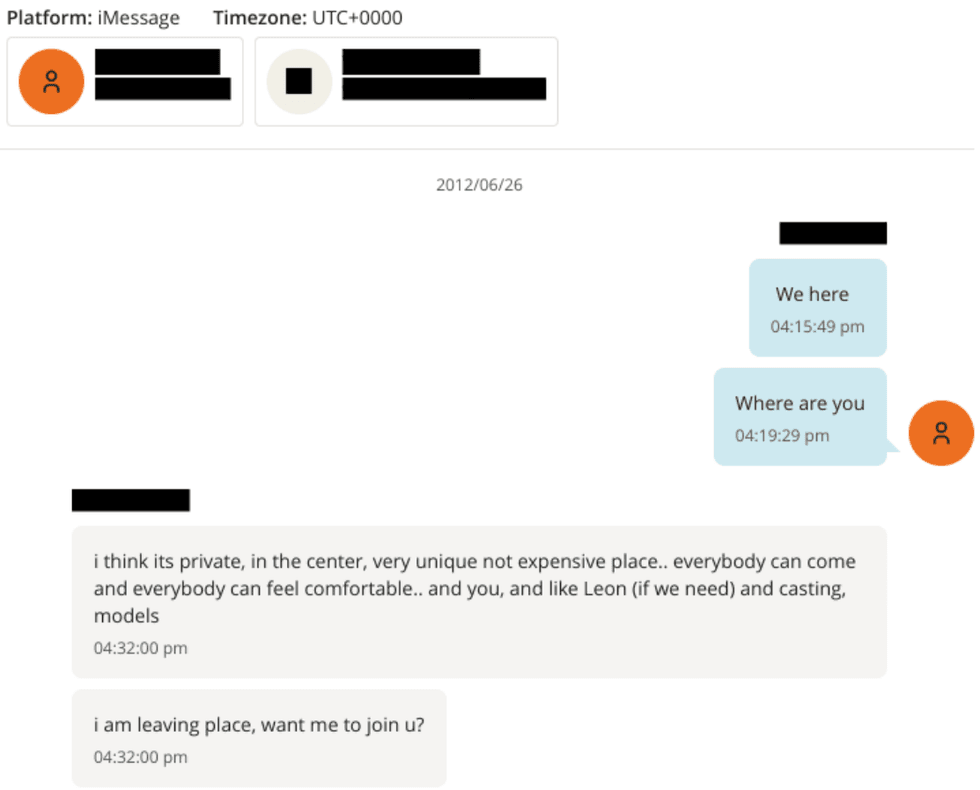
The second woman, Victoria Housez (now Victoria Ginzburg), hailed from the Russian hinterlands and attended South Ural State University before popping up in Paris on the fringes of the fashion world. Records in the DOJ files suggest Black may have gifted Housez more than $50,000 in 2011 and 2012, while she appears to have been actively recruiting girls for Epstein and looking to potentially establish some kind of larger-scale trafficking operation. After personally reading 1200 emails in the files from that time period and studying the email signatures as well as the instances in which Housez’s name is left unredacted, our analysis suggests the following exchanges can be connected to her.

Housez frequently discussed Black in emails with Epstein. At one point, she asked if Leon’s secretary could wire money to her account because she “does transfer all the time.” In the same email, she asked Epstein to share her Russian bank account information with Black because “french ask too many questions.” Epstein replied: “cannot”.

She also wrote that Black wanted to give her money to start a company – one that, based on the surrounding context, seemed to mean a modeling agency or another similar entity that could operate as a trafficking front. Epstein spent a considerable amount of time coaching her on how to deal with Black and present her case.

“Do not bother with business plans for agency,,, concentrate on deomstrating [sic] that you have an eye and can get the job done . we will have fun” Epstein wrote in one email. Housez replied: “As we agreed model business does not bring money. i can do scouting for something else … Lets have some Fun ;) as you say”.

While she tried to talk money, Epstein focused on rating the women in photos she sent him, chiding her for providing him with girls he rated at about a five out of ten, and berating her for not providing enough new girls.

A typical interaction between them involved questions of money and female flesh like this one from 2011:

VH: all the girls i just sent you till 21YO and much much more ))
JE: try to get real mnumbers 2.5 million is not realistic
VH: do you mean the number of users in 1,5 year?
JE: no dollars wanted for start up
VH: for scouting big network we need almost nothing,its already working, we could control all Russian model network and place models need numbers? but if you dont like the whole idea i will think about another one ;))) how are you today?
JE: send photos of you

These exchanges occurred while Black was publicly expanding his involvement with Russia during a period of relative economic détente, as Vladimir Putin sought greater investment from the West.

Epstein paid close attention.

In July 2011, he emailed his scheduler, Lesley Groff, with the dates of the Russian Direct Investment Fund board meeting with Putin in Sochi that Leon Black planned to attend. Epstein apparently intended to go himself.

In September 2011, Black was announced as a founding member of the Advisory Board of the Russian Direct Investment Fund, a $10 billion state fund set up to attract foreign investment in Russia. That month, Reuters reported that he attended its launch event at the International Investment Forum in Sochi and had a private, one-on-one meeting with Putin.

In July 2011, Epstein told Ghislaine Maxwell he was thinking of making Housez his “Europe asst.” In August, Housez emailed Epstein about firming up her September plans: “You said better if i contact him [Black] directly about it. will you give him my number and to me his?” As Black was being named RDIF advisor, Housez wrote to Epstein: I wanted to ask you, its normal that L. asked me bank account and nothing?”

Throughout the fall of 2011, Housez and Epstein frequently discussed Black, his whereabouts, her need for his money, and her hopes that he would set her up in a Paris apartment. She planned to ask Black “where he thinks i have to work.”

Some emails suggest a more intimate relationship between Housez and Black. For example: “I am at home all the time, Leon is very happy that i am not going out (like you said).” And then a few months later: “ready to go to ny next weekend, he is not answering, hope he still likes me :)” She also reported that she’d been going to the gym to be “in perfect shape for beginning [sic] of November,” when Black was due to be in Paris. She wondered at one point why he hadn’t been in touch: “still strange…that he doesn’t want to see me, i was good.”

It is not clear exactly what kind of work Housez thought she was doing for Black.

One March 2013 exchange is especially revealing. Housez thanked Epstein for Black (“for leon thank you, but i worked for it as well”) and defended her work record, while Epstein excoriated her, “after two years and thousands of euros. you can do better than thsi (sic).”

The files also contain multiple FBI raw interviews with redacted victims, called 302s, in which women (not minors) said Epstein introduced them to Black after telling them they would be asked to give massages. According to those interviews, Black instead became sexual.

One woman who met Black was later introduced to former Barclays CEO Jes Staley, another Epstein pal. She told investigators Staley “forcefully put her hands on his crotch area,” and the encounter ended in “rough sex” that she told Staley she did not want. (Staley has previously denied, as reported by The Guardian, any wrongdoing in connection with Epstein.) There is also a second-hand account of a woman giving Black a blowjob she didn’t want to give and being “grossed out” by it.

What does appear clear, however, is that Housez understood the work she was doing for Epstein.

On April 4, 2012, Epstein berated her in another familiar exchange: “you have produced photo s after photos. , nothing more” to which she replied, “not just photos:)) but its true didnt have conditions for this.. help me in real to have conditions and budget and i can produce more not worse then [redacted];).”

By September of that year, things were looking up. “i found super scout for you ) .. the guy serbian 25yo, doing just this, placed in ny, london,paris ),” Housez wrote to Epstein, “you will love what he has, i spoke with him for possible collaboration.” Epstein responded: “give me your bank details.”

Housez replied, “here is my bank acc !!!! THANK YOU !!! “

Asked about the relationships with Chernova and Housez, Susan Estrich, an attorney for Black, responded with this statement:

As we have said repeatedly, Mr. Black called for an independent investigation of his relationship with Epstein. The Dechert Report reviewed more than 60,000 documents and interviewed more than 20 people —including Mr. Black— without any restrictions on business and personal matters. The investigation, which was led by a former prosecutor for the Southern District of New York, found that Mr. Black paid Epstein for tax and estate planning advice for his family office and found no evidence that those payments were for anything other than those services. The investigation further found that Epstein’s work had been vetted and approved by best-in-class law and accounting firms. It also found that he had no awareness of the criminal activities that led to Epstein’s arrest in 2019.

Reprinted with permission from American Freakshow


Possible Epstein Suicide Note Looks Real -- And May Prove He Killed Himself

Possible Epstein Suicide Note Looks Real -- And May Prove He Killed Himself

A federal judge has released a scrawled “suicide note” Jeffrey Epstein’s quadruple-murder-convicted cellmate says he found in a graphic novel left behind after the sex trafficker was moved out of his cell several weeks before he died. The note has been sealed for years in a case involving that inmate and a feud between lawyers. The New York Times recently petitioned to have it released and last night the paper of record published it.

“They investigated me for months — FOUND NOTHING!!!” the note begins. “It is a treat to be able to choose one’s time to say goodbye,” the note continues.

“Watcha want me to do — Bust out cryin!!

“NO FUN,” it concludes, with those words underlined. “NOT WORTH IT!!”

Unauthenticated note allegedly found in Jeffrey Epstein's cell after his alleged suicide in the Metropolitan Correctional Centr

The Times added that the note has not been authenticated.

The “bustin out cryin’” phrase doesn’t sound at all like Epstein, and already online armchair sleuths and Epstein-ologists are declaring it fake for that reason.

But it appears to have been a pet phrase of his. We’ve found three emails in the DOJ library over the years in which Epstein talked - with a friend and with his brother - about “bustin’ out cryin.”

In a New Year’s Eve 2016 email to childhood friend Terry Kafka, in a discussion about missing their friend Warren Eistenstin, who died in 2014, Epstein wrote “Whatcha want me todo / bust out cryin” adding “I get very nostalgic and truly miss warren. On nites like tonite.”

Earlier that year in an email to his brother Mark Epstein, who informed him that their cousin had become a grandfather, he had written “whtchoo want me todo -- bust out cryin” .

Three years later in a March 2019 email to his brother, (subject line: “tits”), just a few months before his arrest, he wrote “what would you like me to say , do ? bust out cryin”

The similarity of the language and the oddness of the phrase certainly suggest that note is authentic. And in fact, Epstein was deemed suicidal by the Bureau of Prisons, had been found unresponsive in his cell and taken to the prison hospital several weeks before he was found dead in his cell.

The question of whether he was murdered or killed himself has been hanging over the saga since practically the day he was found dead, with a broken hyoid bone. The New York medical examiner officially ruled a suicide.

But Epstein’s brother Mark - among many including Epstein’s lawyers - who believed he was murdered - hired the highly regarded independent pathologist Dr. Michael Baden, who served as New York’s chief medical examiner in the 1970s and who has weighed in on high profile murders over the years.

Baden concluded that Epstein’s injuries, including fractures to his larynx and hyoid bone, were “extremely unusual in suicidal hangings” and more consistent with “homicidal strangulation.” He urged authorities to look further: “There’s evidence here of homicide that should be investigated, to see if it is or isn’t homicide,” he said.

But he admitted his observations were not conclusive. And New York Chief Medical Examiner Dr. Barbara Sampson said she stood “firmly” behind findings in her autopsy report, which ruled Epstein hanged himself and temporarily quelled much of the speculation surrounding the financier’s death.

Nina Burleigh is a journalist, author, documentary producer, and adjunct professor at New York University's Arthur L. Carter Journalism Institute. She has written eight books including her recently published novel, Zero Visibility Possible.

Katie Chenoweth is associate professor of French at Princeton University and an investigative researcher.

Reprinted with permission from American Freakshow

Shop our Store

Headlines

Editor's Blog

Trending

World