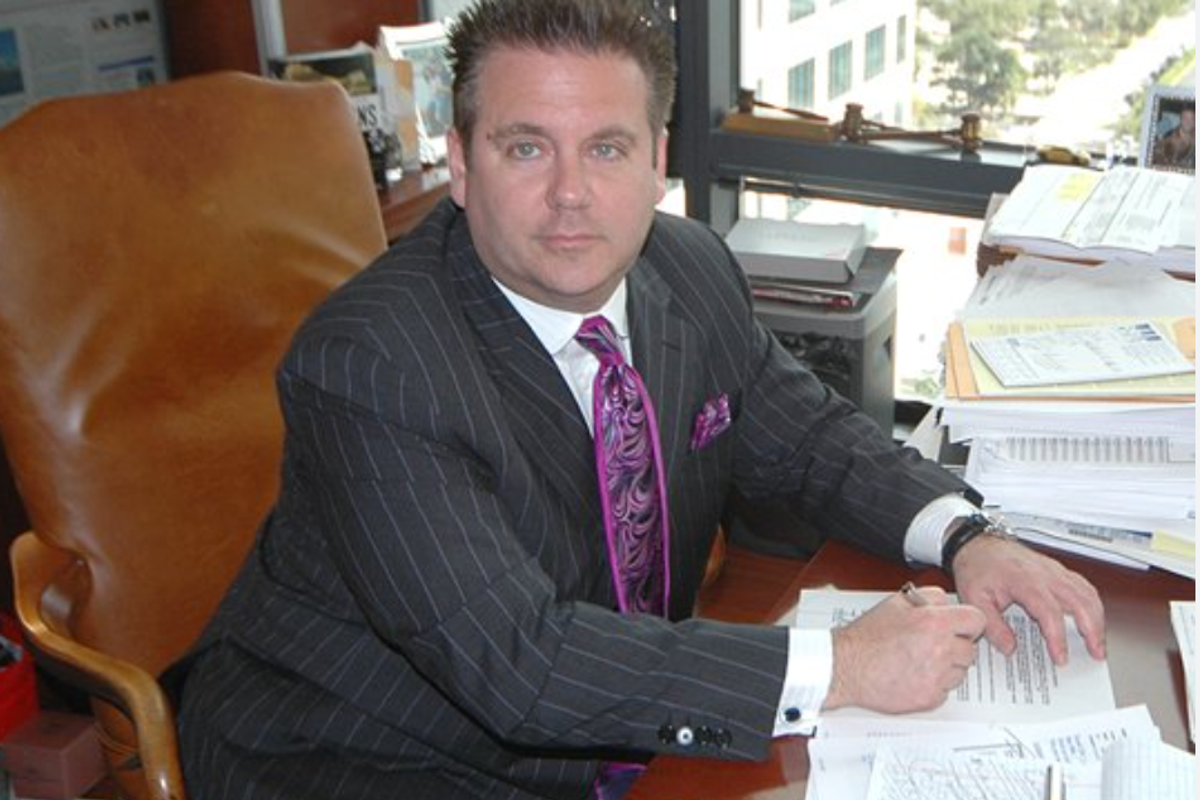
Scott Rothstein
Here at the Freakshow, we have observed that real life characters in Trumpland veer between the genres of Mario Puzo and Carl Hiaasen. There’s the New York mob boss dining out on fear and blackmail, and then there’s the Sunshine State Mar-a-Lago-faced greed-doomed, Ponzi scheming, why-read-a-book-when-you-can-golf protagonist. Often, and in the case of one man certainly, they are both.
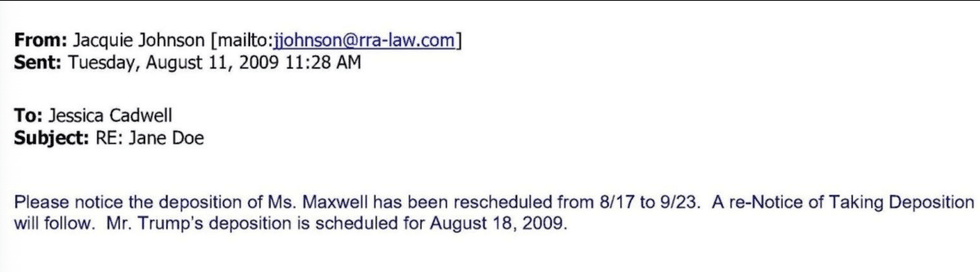
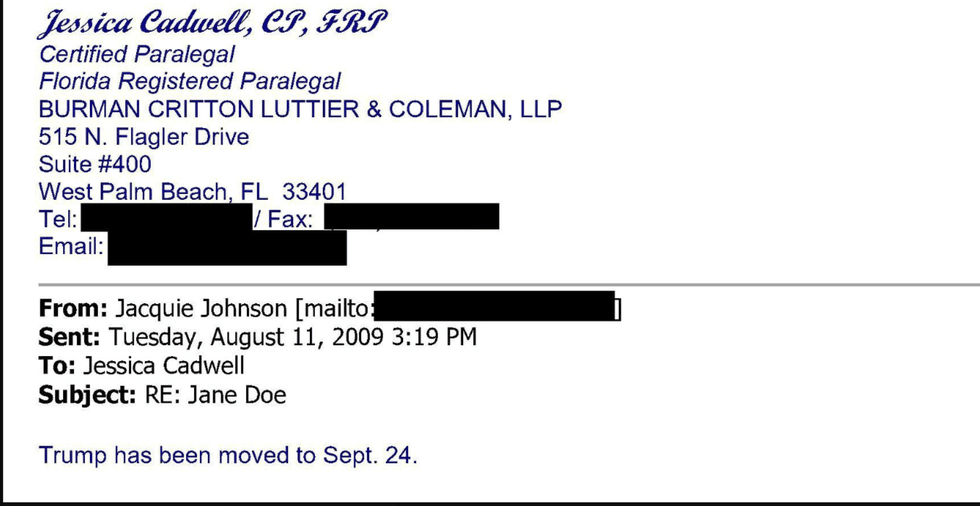
A classic Hiaasen character plays a starring role in a forgotten bit of Florida Epstein-Trumpiana, which starts with a pair of emails buried in the House Oversight Committee’s recent drop. Two Florida paralegals – one working for the firm Epstein hired and the other working for the firm representing multiple trafficked girls suing him – discuss scheduling a deposition of Donald Trump in 2009 a few weeks after Epstein concluded his Palm Beach jail sentence.
These are curious artifacts because as far as is publicly known, Trump never did get deposed in Epstein civil cases. According to Fort Lauderdale lawyer Brad Edwards, who represented – and still does – many Epstein victims and requested the deposition, Trump avoided it by offering instead a casual office chat to share everything he knew. Edwards took him up on it, possibly knowing the wily real estate hustler had never met a legal challenge he couldn’t run out the clock on.
The difference between a recorded deposition and an unrecorded “friendly” chat is, in legal terms, the difference between filet mignon and a Big Mac. A deposition is sworn and lying carries a perjury penalty. There is no record of this chat other than Edwards’ description of it in his book, Relentless Pursuit. Among other dodges, Trump claimed Epstein had dictated to him his notorious New York magazine quote about Jeff being “a lot of fun” and liking beautiful women “as much as I do and many of them are on the younger side.” Trump said Epstein had told him he “needed people to say nice things.”
In spring of 2009, Brad Edwards joined the firm of Rothstein Rosenfeldt Adler, carrying with him a pile of Epstein files. His new partner, Scott Rothstein, specialized in hawking “investments” in potentially gigantic civil settlements arranged for men just like Epstein who might rather pay off victims than face public odium. Rothstein also partnered in a two-man consulting firm with Roger Stone, and housed Edwards in an office next to him.
To Rothstein, the Epstein Jane Doe cases were less about the exploitation of minors and more a potential gold mine. Soon, Rothstein – “Scotty” to his friends – was going around telling people Epstein would pay $200 million to settle everything. Investors would share in the lawyers’ cut of this windfall. Rothstein would later confess that he regarded the case as “of potentially significant value against an extremely collectible pedophile.”
In her recent chat with Todd Blanche, Epstein’s procuress Ghislaine Maxwell claimed Rothstein’s firm demanded $10 million from her then-boyfriend billionaire businessman Ted Waite to protect her from litigation. “And that is the reason Ted and I broke up, was the basis of that,” she said, according to the transcript.
If Rothstein was blackmailing Ghislaine’s billionaire boyfriend, is it possible he was shaking down other recipients of Edwards’ deposition subpoenas? Like a certain New York businessman?
At some point Rothstein took the Epstein files out of Edwards’ office and showed them off to potential investors, even, according to court records, leaving them alone with the files for half an hour. Edwards eventually had to retrieve them from the FBI.
Edwards has always denied knowing anything about Rothstein’s scheme. Rothstein exonerated him and Edwards also won a formal apology in court years later from Epstein for claiming that he was involved in the scheme.
The coincidence is apparently just -- Florida, man.
Rothstein’s legal career ended colorfully. First he climbed into a bathtub in a business suit and held a gun to his head. Unable to pull the trigger, he absconded to Morocco with $16 million, then flew back to surrender. After Rothstein got caught, Stone wrote that his former sponsor had “ADD so severe he never finished a martini, a cigar, a thought” and – the ultimate insult from dandy Roger – he wore “garish $300 hand painted neckties.”
Rothstein pled guilty in January 2010 to running a $1.2 billion Ponzi scheme. He was sentenced to 50 years in prison, but he’d blabbed so much about an Italian mobster who liaised between the Gambinos and a family in Palermo that he was put in witness protection.
Today no one knows whether Rothstein is in a federal dungeon under a new name or on a Phuket beach chair with an umbrella drink, watching waves break – the classic final scene in every movie ever made about successful scoundrels. He has literally disappeared.
In his book, Edwards isn’t specific about the Trump chat – he just says “summer of 2009.” But the emails indicate Trump was scheduled to be deposed in late August, then moved to late September. The paralegals had him on the same deposition list as Ghislaine Maxwell, who was also busy dodging them.
Edwards has mostly made a point of praising Trump’s helpfulness, but since Trump tends to bank dirt and secrets to be used when it suits him, it’s hard to know exactly what sort of help he provided. “The only thing I can say about President Trump is that … he is the only person who picked up the phone and said ‘lets just talk, I’ll give you as much time as you want, I’ll tell you what you need to know’,” Edwards said in a 2018 interview.
Eventually, Edwards wrote, he came to think that Trump left out (surprise!) a lot. “Over the next few years, I spoke to several witnesses who told us that they had been introduced by Epstein to Trump. Some had seen him at Epstein’s office, others at one of Epstein’s homes, at parties or social events, and even on his plane… Last year, I saw a 1992 video of Epstein and Trump together, suggesting that they were closer social friends than I had been made to understand.”
While at Rothstein’s firm, Edwards interviewed Epstein’s houseman Alfredo Rodriguez, and procured from him the infamous “black book” of 1,500 names. Rodriguez circled about 50 he claimed were the “holy grail” that would crack the case. Trump was one of those circled. (In his book, Edwards states that the circled names were men Rodriguez claimed “were involved with or had knowledge of the sexual molestation operation.”)
Some Epstein civil cases have been jackpots for the attorneys, although Virginia Giuffre got a relatively paltry $500,000. In 2023, JP Morgan agreed to pay $290 million to an unknown number of Epstein trafficking victims. Standard contingency fees in such cases range from 25 percent pre-suit to 40 percent at trial. Do the math. But as Thornton Wilder observed and as Scotty, wherever he is, would surely concur, money is like manure: it should be spread around.
Nina Burleigh is a journalist, author, documentary producer, and adjunct professor at New York University's Arthur L. Carter Journalism Institute. She has written eight books including her recently published novel, Zero Visibility Possible.
Reprinted with permission from American Freakshow
- Report: FBI Told House Republicans About 'Worse' Trump Photos In Epstein Files ›
- 'Very Hostile': White House Bullies Republicans Over Epstein Files Release ›
- 'Choosing Evil': Epstein Victims Rip Trump's 'Democrat Hoax' Remark ›
- Trump Biographer: President Worrying Over Epstein Files Release ›
- Bombshell Epstein Emails Released: Trump 'Knew About The Girls' ›
- 'Narrative Jolt': Trump's Epstein Coverup Failing As White House Message Fractures ›
- Women Or Children? Epstein's Johns Aren't All Pedos, But They All Hate Women - National Memo ›
- Sex Trysts In SUV? New Details Of Epstein's Sweetheart Plea Deal In DOJ Papers - National Memo ›
- Read Jeffrey Epstein's newly released emails about Trump | PBS ... ›
- What's next now that Trump has signed a bill releasing the Epstein ... ›
- House Democrats release new Epstein emails referencing Trump ... ›
- Trump does Epstein U-turn as House Republicans prepare to spurn ... ›
- Listen To The Jeffrey Epstein Tapes: 'I Was Donald Trump's Closest ... ›