No 'Absolute Immunity' Means Minnesota Can (And Must) Prosecute Federal Agents
Even as the federal government makes grudging gestures toward slightly dialing back operations in Minnesota, it is doubling down on its insistence that it has exclusive authority of any investigation or prosecution of federal officers involved in the fatal shootings of Renee Good and Alex Pretti. That stance is likely to reach a climax in an inevitable battle over the issue of supposed federal immunity from prosecution.
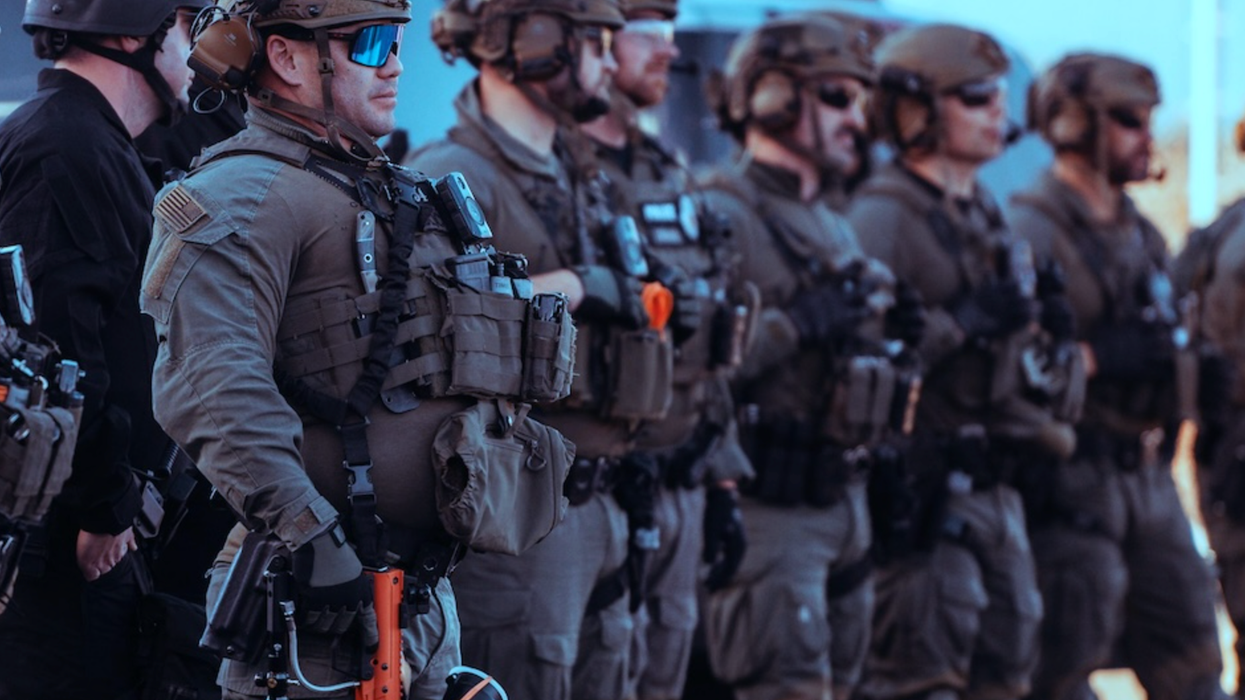
At a federal court hearing Monday, Justice Department lawyers argued that the shootings arose out of federal immigration enforcement, were carried out by federal officers performing federal duties, and therefore are exclusively federal matters. In recent days, they also denied Minnesota investigators access to the shooting scene even after presented with a state judicial warrant. The state had to go to federal court, which issued an order to preserve all evidence. That level of recalcitrance by the feds, which I have never seen, portends an upcoming campaign of defiance at every turn.
More stunning still, federal authorities are taking steps that appear designed to impede Minnesota from proceeding at all. The state’s interest here is acute: to all appearances, two of its citizens have been gunned down with no legal justification. I have worked on a number of cases involving overlapping federal and state jurisdiction, including the Rodney King prosecutions. In such cases, the federal government invariably cooperates with the state, often deferring to its initial prosecution.
Here, the template is the precise opposite. As a leading expert on police use of force told The New York Times: “Now we’re seeing not only no cooperation but contamination. That’s new territory.”
The concern is no longer merely that federal authorities are declining to assist a state investigation, but that they will assert their power in every legal way—and possibly then some—to prevent Minnesota from moving ahead at all.
Adding to that picture is the administration’s choice of emissary. Tom Homan, now replacing Greg Bovino in Minnesota, hardly signals a turn toward restraint. Homan’s public posture—and a widely reported episode involving $50,000 in cash carried in a CAVA bag—are no augury of reasonableness. They reinforce the expectation that federal resistance will be aggressive rather than accommodating.
Meet the new boss, same as the old boss.
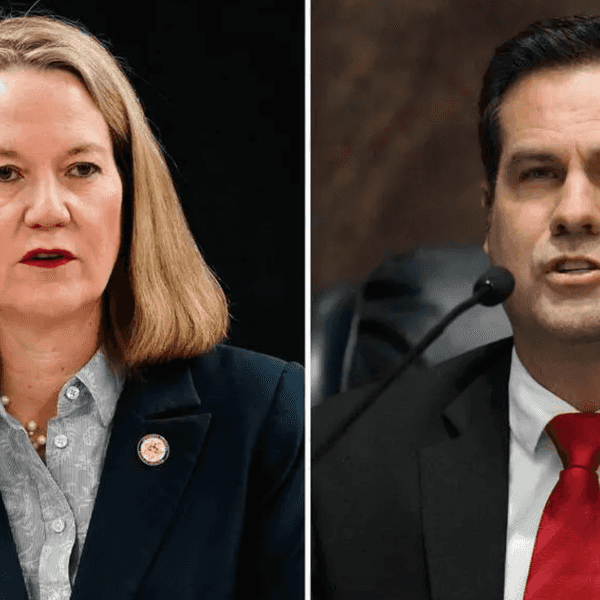
The standoff is imminent. Hennepin County Attorney Mary Moriarty put it plainly: “Our office has jurisdiction to review the matter for potential criminal conduct by the federal agents involved, and we will do so.” Minnesota Attorney General Keith Ellison told me the same thing in a conversation we had last week.
The state is asserting its lawful authority to investigate and, if warranted, prosecute. The federal government is signaling just as clearly that it will fight that effort at every turn—procedurally, jurisdictionally, and doctrinally.
In these circumstances, it is essential to have a clear-eyed view of the legal landscape and Minnesota’s authority to prosecute the killers of its citizens. It is a complicated landscape, but Minnesota is lawfully entitled to press ahead and make its case. Vice President J.D. Vance’s reflexive assertion that the officers enjoy “absolute immunity” is frivolous. (Absolutely immunity does not exist. More on that below).
This essay is the companion piece to my prior Substack examining the affirmative case in the killing of Renee Good—the evidence, as it stands, how it is developing, and why it increasingly points toward criminal liability under Minnesota law. That earlier piece focused on the prosecution’s case in chief. This one takes the next step. It assumes that investigations continue to develop, that Minnesota responds by bringing criminal charges, and that federal authorities resist at every turn, particularly by asserting that the defendant officers are immune from state prosecution. How does that play out?
I noted in my earlier essay that I would set out the range of likely defenses at trial. Those begin with case-specific factual arguments by the federal officers—arguments that, as explained below, are unlikely to be tested in court anytime soon.
In the Good case, the factual defense will revolve around a single proposition: that the officer reasonably believed he faced imminent lethal harm. The car, the defense will argue, was a deadly weapon; the officer was positioned in its path; and deadly force was a split-second response to an unfolding emergency.
That claim is the factual linchpin for everything that follows. Without it, there is no viable claim of self-defense under Minnesota law—and, spoiler alert, no plausible claim of Supremacy Clause immunity either.
The difficulty for the defense is that the evidence developed so far cuts sharply in the opposite direction. Video shows the officer approaching without visible urgency, positioning himself alongside and slightly clear of the vehicle rather than directly in front of it, and preparing his weapon before any clear escalation. Frame-by-frame analysis has called into question the assertion that Good’s car was ever on a trajectory to hit him. And the autopsy leaves little doubt that the fatal shot came after the car had turned away, with the officer firing through the driver’s side window at a time when he was under no possible threat. That leaves only the argument that less than a second had passed from the first shot and that the officer remained in the throes of fear for his life.
The Pretti case presents an even starker picture. On the facts publicly known at this stage, it is difficult to see any viable factual defense. The reflexive claims by government officials that Pretti brandished his gun and rushed officers collapse under the growing weight of the video evidence. Indeed, those official misstatements may become part of the prosecution’s case, or of Minnesota’s legal efforts to force federal authorities to stand down.
Three realities will shape how any trial defense actually plays out.
First, guilt must be found unanimously and beyond a reasonable doubt. That high bar is easy to overlook, but many excessive-force cases end in hung juries or acquittals because one or more jurors harbor reasonable doubt. Juries are often sympathetic to law enforcement and sensitive to claims of uncertainty, chaos, and split-second judgment.
Second, the defense case will vary dramatically depending on whether the defendant testifies. That choice is risky, but in a defense premised on fear of imminent deadly harm, there is no substitute for the officer’s own account. And once an officer takes the stand, the case often turns into a referendum on credibility. In the state Rodney King trial, several officers testified and the jury acquitted. In the federal prosecution, one officer testified (the other most culpable defendant did not), and the prosecution dismantled his account on cross-examination—likely driving the guilty verdict as much as the video evidence itself.
Third, and especially relevant given likely federal resistance, is whether the state can secure any cooperators. In the Pretti shooting, for example, there were seven Customs and Border Patrol officers present, and the video evidence seems to establish that all ten shots came from two officers. If Minnesota can induce one of the others on the scene to cooperate by leveraging potential charges, the case would change entirely. Likewise, in the Good case, the officer who ran up to the car screaming at Good may face exposure sufficient to induce cooperation.
That brings us to the pivotal issue in any Minnesota prosecution of either case: whether federal officers are immune from state criminal liability.
We can quickly dispense with Vance’s claim of “absolute immunity.” No such immunity exists, even for presidents. The Supreme Court recognized immunity for Trump only for official acts.
States have prosecuted federal officers for state crimes, including homicide, since the early Republic. The Constitution does not forbid such prosecutions. What it forbids is state interference with the reasonable execution of lawful federal duties.
The governing doctrine is Supremacy Clause immunity, often called “Neagle immunity.” It protects federal officers who are lawfully doing their jobs. If states could criminally prosecute officers for the reasonable execution of federal duties, federal law would not be supreme.
Under In re Neagle and its modern descendants, Supremacy Clause immunity applies only if two conditions are met: the officer was acting pursuant to federal authority, and the conduct was “necessary and proper” to carry out that authority. Courts generally emphasize that the “necessary and proper” inquiry is chiefly objective: the officer must have had an objectively reasonable and well-founded basis to believe the conduct was necessary. Although some courts have noted modest variation in how the test is framed, subjective good faith alone has never been sufficient.
The operative question for Supremacy Clause immunity in a Minnesota prosecution, then, is whether the shootings were necessary and proper exercises of federal authority.
That standard is admittedly amorphous, and reasonable judges may apply it differently. That uncertainty clouds Minnesota’s prospects. But in these cases, the standard substantially overlaps with both Minnesota self-defense law and federal civil-rights liability.
Under Minnesota law, deadly force is justified only if a person reasonably believes, under the circumstances as they perceived them, that it is necessary to prevent imminent death or great bodily harm to themselves or another.
Under 18 U.S.C. § 242, criminal liability requires proof that an officer knowingly or recklessly used force that was objectively unreasonable under the Fourth Amendment.
Under Supremacy Clause immunity, courts ask whether the officer had an objectively reasonable and well-founded belief that deadly force was necessary to perform lawful federal duties.
Different doctrines, different institutional purposes—but the same factual fulcrum: a reasonable perception of imminent lethal danger.
There is some play in the joints. Supremacy Clause immunity is decided by a judge, often early. Self-defense and civil-rights liability are jury questions. Immunity sounds in federalism rather than culpability. But where, as here, the asserted federal duty is ordinary law enforcement and the act is the use of deadly force, the “necessary and proper” inquiry largely collapses onto the same question. If a reasonable officer could not have believed deadly force was immediately required, all three defenses fail together.
What makes immunity a more imposing hurdle than a substantive trial defense is its procedural posture. An officer asserting Supremacy Clause immunity may remove a state prosecution to federal court under the federal-officer removal statute. There, immunity is litigated as a threshold issue. If established, the case is dismissed.
Removal would most likely follow the filing of state charges, though, given federal resistance even to investigation, immunity could be raised earlier. That timing would not materially alter the ultimate trajectory: immunity must be resolved once, and only once.
The rub is that immunity is, by definition, an entitlement not to stand trial. A district court’s denial is therefore immediately appealable—to the Eighth Circuit and potentially to the Supreme Court. That does not mean the kind of protracted delay seen in the Trump prosecution, where the issue was novel and the Court remanded for proceedings under a newly announced framework. There, the case took roughly seven months from district court to Supreme Court decision. More typically, immunity-based removal motions are resolved within a few months.
Federal supremacy was never meant to operate as federal impunity. The possible crimes at issue here have grown into constitutional moments. The country awaits—and demands—a full response governed by the rule of law. If federal officers can kill civilians, and federal authorities can then refuse state cooperation, defy subpoenas, and invoke federal supremacy to block investigation altogether, the problem is no longer one of immunity doctrine. It is a breakdown in the basic architecture of accountability—essential to any democracy—which cannot survive if the federal government may commit the most visible and serious abuses and then extinguish both state authority and independent scrutiny of its own conduct.