Reprinted with permission from TomDispatch.
In its latest budget request, the Trump administration is asking for a near-record $750 billion for the Pentagon and related defense activities, an astonishing figure by any measure. If passed by Congress, it will, in fact, be one of the largest military budgets in American history, topping peak levels reached during the Korean and Vietnam Wars. And keep one thing in mind: that $750 billion represents only part of the actual annual cost of our national security state.
There are at least 10 separate pots of money dedicated to fighting wars, preparing for yet more wars, and dealing with the consequences of wars already fought. So the next time a president, a general, a secretary of defense, or a hawkish member of Congress insists that the U.S. military is woefully underfunded, think twice. A careful look at U.S. defense expenditures offers a healthy corrective to such wildly inaccurate claims.
Now, let’s take a brief dollar-by-dollar tour of the U.S. national security state of 2019, tallying the sums up as we go, and see just where we finally land (or perhaps the word should be “soar”), financially speaking.
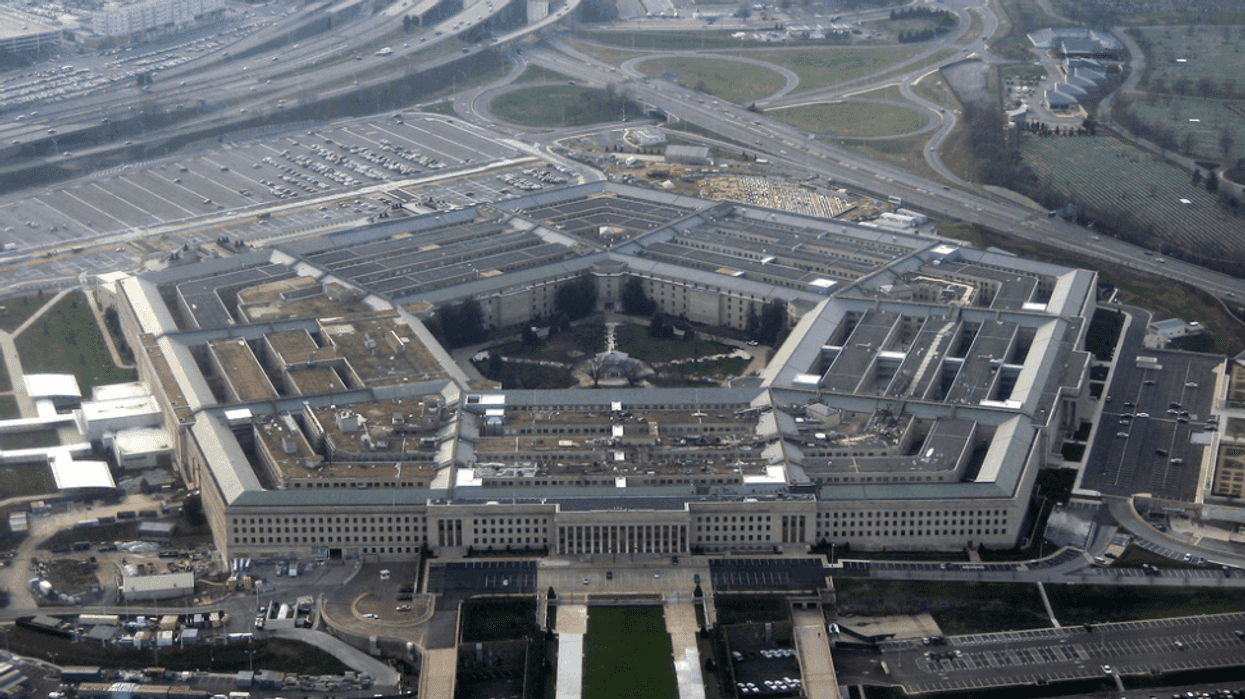
The Pentagon’s “Base” Budget: The Pentagon’s regular, or “base,” budget is slated to be $544.5 billion in Fiscal Year 2020, a healthy sum but only a modest down payment on total military spending.
As you might imagine, that base budget provides basic operating funds for the Department of Defense, much of which will actually be squandered on preparations for ongoing wars never authorized by Congress, overpriced weapons systems that aren’t actually needed, or outright waste, an expansive category that includes everything from cost overruns to unnecessary bureaucracy. That $544.5 billion is the amount publicly reported by the Pentagon for its essential expenses and includes as well $9.6 billion in mandatory spending that goes toward items like military retirement.
Among those basic expenses, let’s start with waste, a category even the biggest boosters of Pentagon spending can’t defend. The Pentagon’s own Defense Business Board found that cutting unnecessary overhead, including a bloated bureaucracy and a startlingly large shadow workforce of private contractors, would save $125 billion over five years. Perhaps you won’t be surprised to learn that the board’s proposal has done little to quiet calls for more money. Instead, from the highest reaches of the Pentagon (and the president himself) came a proposal to create a Space Force, a sixth military service that’s all but guaranteed to further bloat its bureaucracy and duplicate work already being done by the other services. Even Pentagon planners estimate that the future Space Force will cost $13 billion over the next five years (and that’s undoubtedly a low-ball figure).
In addition, the Defense Department employs an army of private contractors — more than 600,000 of them — many doing jobs that could be done far more cheaply by civilian government employees. Cutting the private contractor work force by 15 percent to a mere half-million people would promptly save more than $20 billion per year. And don’t forget the cost overruns on major weapons programs like the Ground-Based Strategic Deterrent — the Pentagon’s unwieldy name for the Air Force’s new intercontinental ballistic missile — and routine overpayments for even minor spare parts (like $8,000 for helicopter gear worth less than $500, a markup of more than 1,500 percent).
Then there are the overpriced weapons systems the military can’t even afford to operate like the $13-billion aircraft carrier, 200 nuclear bombers at $564 million a pop, and the F-35 combat aircraft, the most expensive weapons system in history, at a price tag of at least $1.4 trillion over the lifetime of the program. The Project On Government Oversight (POGO) has found — and the Government Accountability Office recently substantiated — that, despite years of work and staggering costs, the F-35 may never perform as advertised.
And don’t forget the Pentagon’s recent push for long-range strike weapons and new reconnaissance systems designed for future wars with a nuclear-armed Russia or China, the kind of conflicts that could easily escalate into World War III, where such weaponry would be beside the point. Imagine if any of that money were devoted to figuring out how to prevent such conflicts, rather than hatching yet more schemes for how to fight them.
Base Budget total: $554.1 billion
The War Budget: As if its regular budget weren’t enough, the Pentagon also maintains its very own slush fund, formally known as the Overseas Contingency Operations account, or OCO. In theory, the fund is meant to pay for the war on terror — that is, the U.S. wars in Afghanistan, Iraq, Somalia, Syria, and elsewhere across the Middle East and Africa. In practice, it does that and so much more.
After a fight over shutting down the government led to the formation of a bipartisan commission on deficit reduction — known as Simpson-Bowles after its co-chairs, former Clinton Chief of Staff Erskine Bowles and former Republican Senator Alan Simpson — Congress passed the Budget Control Actof 2011. It officially put caps on both military and domestic spending that were supposed to save a total of $2 trillion over 10 years. Half of that figure was to come from the Pentagon, as well as from nuclear weapons spending at the Department of Energy. As it happened, though, there was a huge loophole: that war budget was exempt from the caps. The Pentagon promptly began to put tens of billions of dollars into it for pet projects that had nothing whatsoever to do with current wars (and the process has never stopped). The level of abuse of this fund remained largely secret for years, with the Pentagon admitting only in 2016 that just half of the money in the OCO went to actual wars, prompting critics and numerous members of Congress — including then-Congressman Mick Mulvaney, now President Trump’s latest chief of staff — to dub it a “slush fund.”
This year’s budget proposal supersizes the slush in that fund to a figure that would likely be considered absurd if it weren’t part of the Pentagon budget. Of the nearly $174 billion proposed for the war budget and “emergency” funding, only a little more than $25 billion is meant to directly pay for the wars in Iraq, Afghanistan, and elsewhere. The rest will be set aside for what’s termed “enduring” activities that would continue even if those wars ended, or to pay for routine Pentagon activities that couldn’t be funded within the constraints of the budget caps. The Democratic-controlled House of Representatives is expected to work to alter this arrangement. Even if the House leadership were to have its way, however, most of its reductions in the war budget would be offset by lifting caps on the regular Pentagon budget by corresponding amounts. (It’s worth noting that President Trump’s budget calls for someday eliminating the slush fund.)
The 2020 OCO also includes $9.2 billion in “emergency” spending for building Trump’s beloved wall on the U.S.-Mexico border, among other things. Talk about a slush fund! There is no emergency, of course. The executive branch is just seizing taxpayer dollars that Congress refused to provide. Even supporters of the president’s wall should be troubled by this money grab. As 36 former Republican members of Congress recently argued, “What powers are ceded to a president whose policies you support may also be used by presidents whose policies you abhor.” Of all of Trump’s “security”-related proposals, this is undoubtedly the most likely to be eliminated, or at least scaled back, given the congressional Democrats are against it.
War Budget total: $173.8 billion
Running tally: $727.9 billion
The Department of Energy/Nuclear Budget: It may surprise you to know that work on the deadliest weapons in the U.S. arsenal, nuclear warheads, ishoused in the Department of Energy (DOE), not the Pentagon. The DOE’s National Nuclear Security Administration runs a nationwide research, development, and production network for nuclear warheads and naval nuclear reactors that stretches from Livermore, California, to Albuquerque and Los Alamos, New Mexico, to Kansas City, Missouri, to Oak Ridge, Tennessee, to Savannah River, South Carolina. Its laboratories also have a long history of program mismanagement, with some projects coming in at nearly eight times the initial estimates.
Nuclear Budget total: $24.8 billion
Running tally: $752.7 billion
“Defense Related Activities”: This category covers the $9 billion that annually goes to agencies other than the Pentagon, the bulk of it to the FBI for homeland security-related activities.
Defense Related Activities total: $9 billion
Running tally: $761.7 billion
The five categories outlined above make up the budget of what’s officially known as “national defense.” Under the Budget Control Act, this spending should have been capped at $630 billion. The $761.7 billion proposed for the 2020 budget is, however, only the beginning of the story.
The Veterans Affairs Budget: The wars of this century have created a new generation of veterans. In all, over 2.7 million U.S. military personnel have cycled through the conflicts in Iraq and Afghanistan since 2001. Many of them remain in need of substantial support to deal with the physical and mental wounds of war. As a result, the budget for the Department of Veterans Affairs has gone through the roof, more than tripling in this century to a proposed $216 billion. And this massive figure may not even prove enough to provide the necessary services.
More than 6,900 U.S. military personnel have died in Washington’s post-9/11 wars, with more than 30,000 wounded in Iraq and Afghanistan alone. These casualties are, however, just the tip of the iceberg. Hundreds of thousands of returning troops suffer from post-traumatic stress disorder (PTSD), illnesses created by exposure to toxic burn pits, or traumatic brain injuries. The U.S. government is committed to providing care for these veterans for the rest of their lives. An analysis by the Costs of War Project at Brown University has determined that obligations to veterans of the Iraq and Afghan wars alone will total more than $1 trillion in the years to come. This cost of war is rarely considered when leaders in Washington decide to send U.S. troops into combat.
Veterans Affairs total: $216 billion
Running tally: $977.7 billion
The Homeland Security Budget: The Department of Homeland Security (DHS) is a mega-agency created after the 9/11 attacks. At the time, it swallowed 22 then-existing government organizations, creating a massive department that currently has nearly a quarter of a million employees. Agencies that are now part of DHS include the Coast Guard, the Federal Emergency Management Agency (FEMA), Customs and Border Protection, Immigration and Customs Enforcement (ICE), Citizenship and Immigration Services, the Secret Service, the Federal Law Enforcement Training Center, the Domestic Nuclear Detection Office, and the Office of Intelligence and Analysis.
While some of DHS’s activities — such as airport security and defense against the smuggling of a nuclear weapon or “dirty bomb” into our midst — have a clear security rationale, many others do not. ICE — America’s deportation force — has done far more to cause suffering among innocent people than to thwart criminals or terrorists. Other questionable DHS activities include grants to local law enforcement agencies to help them buy military-gradeequipment.
Homeland Security total: $69.2 billion
Running tally: $1.0469 trillion
The International Affairs Budget: This includes the budgets of the State Department and the U.S. Agency for International Development (USAID). Diplomacy is one of the most effective ways to make the United States and the world more secure, but it has been under assault in the Trump years. The Fiscal Year 2020 budget calls for a one-third cut in international affairs spending, leaving it at about one-fifteenth of the amount allocated for the Pentagon and related agencies grouped under the category of “national defense.” And that doesn’t even account for the fact that more than 10% of the international affairs budget supports military aid efforts, most notably the $5.4 billion Foreign Military Financing (FMF) program. The bulk of FMF goes to Israel and Egypt, but in all over a dozen countries receive funding under it, including Jordan, Lebanon, Djibouti, Tunisia, Estonia, Latvia, Lithuania, Ukraine, Georgia, the Philippines, and Vietnam.
International Affairs total: $51 billion
Running tally: $1.0979 trillion
The Intelligence Budget: The United States has 17 separate intelligence agencies. In addition to the DHS Office of Intelligence and Analysis and the FBI, mentioned above, they are the CIA; the National Security Agency; the Defense Intelligence Agency; the State Department’s Bureau of Intelligence and Research; the Drug Enforcement Agency’s Office of National Security Intelligence; the Treasury Department’s Office of Intelligence and Analysis; the Department of Energy’s Office of Intelligence and Counterintelligence; the National Reconnaissance Office; the National Geospatial-Intelligence Agency; Air Force Intelligence, Surveillance and Reconnaissance; the Army’s Intelligence and Security Command; the Office of Naval Intelligence; Marine Corps Intelligence; and Coast Guard Intelligence. And then there’s that 17th one, the Office of the Director of National Intelligence, set up to coordinate the activities of the other 16.
We know remarkably little about the nature of the nation’s intelligence spending, other than its supposed total, released in a report every year. By now, it’s more than $80 billion. The bulk of this funding, including for the CIA and NSA, is believed to be hidden under obscure line items in the Pentagon budget. Since intelligence spending is not a separate funding stream, it’s not counted in our tally below (though, for all we know, some of it should be).
Intelligence Budget total: $80 billion
Running tally (still): $1.0979 trillion
Defense Share of Interest on the National Debt: The interest on the national debt is well on its way to becoming one of the most expensive items in the federal budget. Within a decade, it is projected to exceed the Pentagon’s regular budget in size. For now, of the more than $500 billion in interest taxpayers fork over to service the government’s debt each year, about $156 billion can be attributed to Pentagon spending.
Defense Share of National Debt total: $156.3 billion
Final tally: $1.2542 trillion
So, our final annual tally for war, preparations for war, and the impact of war comes to more than $1.25 trillion — more than double the Pentagon’s base budget. If the average taxpayer were aware that this amount was being spent in the name of national defense — with much of it wasted, misguided, or simply counterproductive — it might be far harder for the national security state to consume ever-growing sums with minimal public pushback. For now, however, the gravy train is running full speed ahead and its main beneficiaries — Lockheed Martin, Boeing, Northrop Grumman, and their cohorts — are laughing all the way to the bank.
William D. Hartung, a TomDispatch regular, is the director of the Arms and Security Project at the Center for International Policy and the author of Prophets of War: Lockheed Martin and the Making of the Military-Industrial Complex.
Mandy Smithberger, a TomDispatch regular, is the director of the Center for Defense Information at the Project On Government Oversight.
Copyright 2019 William D. Hartung and Mandy Smithberger
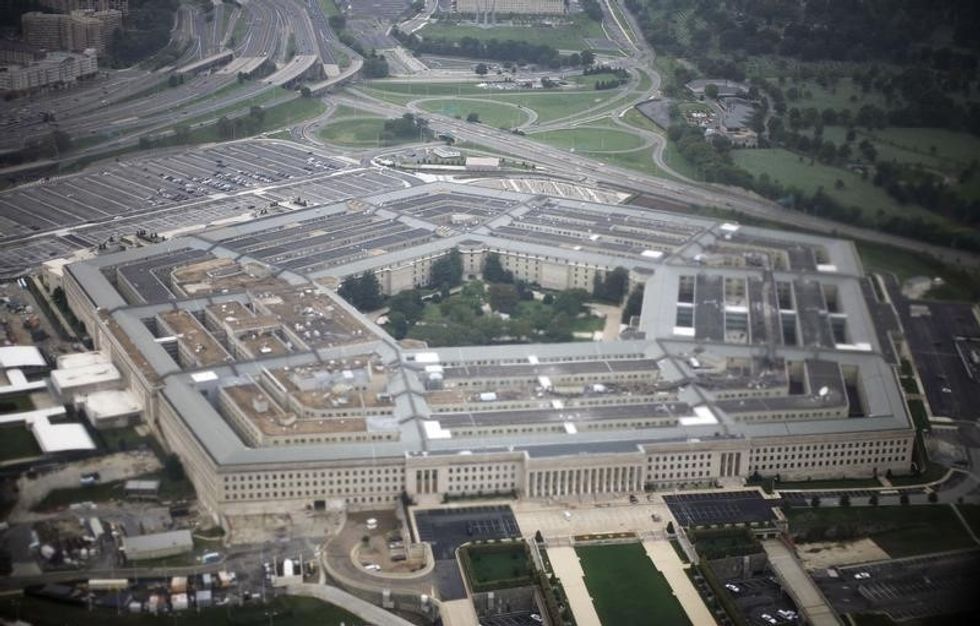
IMAGE: Aerial view of the United States military headquarters, the Pentagon, September 28, 2008. REUTERS/Jason Reed