Tag: office
President Elect Donald Trump

As Trump Takes Office, His (And Musk's) Approval Ratings Still Underwater

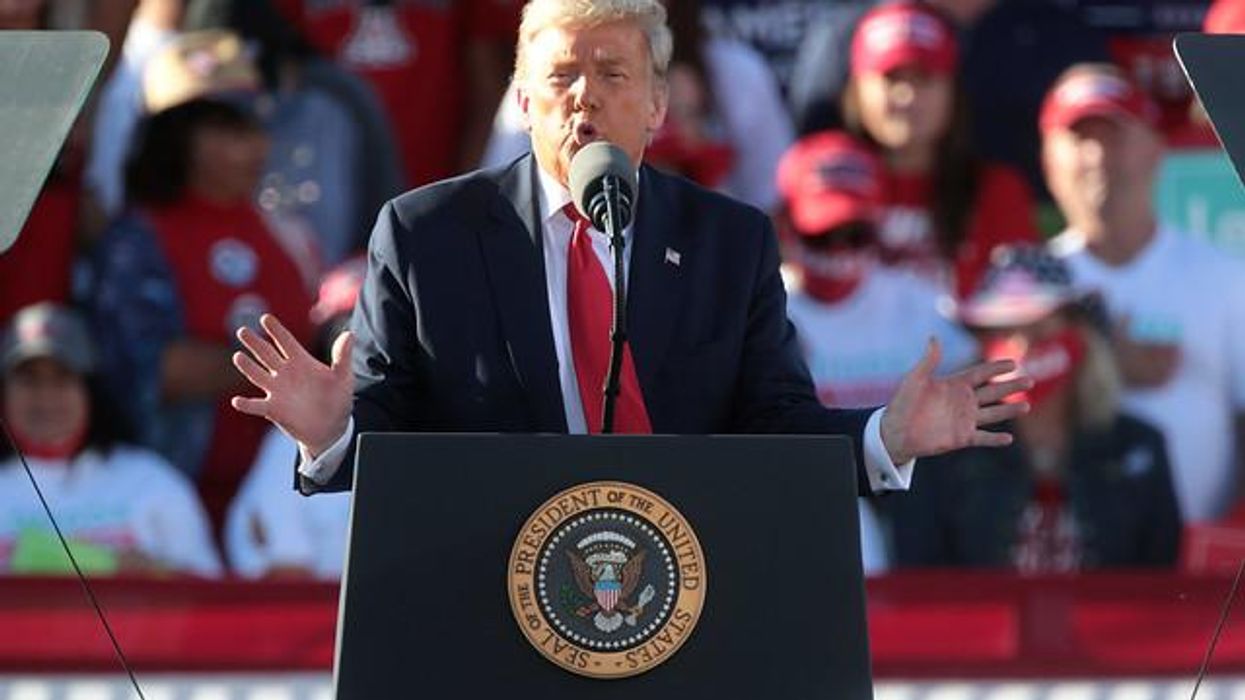
As Donald Trump prepares to take the oath of office for a second time, he claims to have a “massive” mandate to enact his destructive agenda. But new polling shows that’s far from the truth.

A NPR/PBS News/Marist College poll released Wednesday shows that just 44 percent of Americans view Trump favorably, while 49 percent view him unfavorably. That’s nearly identical to the 45 percent approval rating Trump has in Civiqs’ tracking poll.

The fact that Trump is viewed unfavorably before he even takes office is a warning sign for his tenure. The start of a presidential term is usually when a president is at their high-water mark of approval.

When President Joe Biden took office in January 2021, 51 percent of registered voters approved of the job he was doing on the transition, according to an NPR/PBS News/Marist College poll at the time.

In the first two months after Barack Obama was sworn in as president, around 60 percent of Americans approved of the job he was doing, according to 538’s historical polling average. And when he was sworn in again four years later, his approval rating was around 53 percent.

The NPR/PBS News/Marist College poll has other warning signs for Trump.

Just 31percent of Americans say the tariff policy Trump plans to enact would help the economy. That should be a flashing red warning light for Trump, showing that Americans will likely blame him if those tariffs cause prices to skyrocket, as economists expect.

What’s more, 62 percent of Americans oppose Trump’s plan to pardon people who either pleaded guilty or were convicted of crimes for their role in the insurrection at the Capitol on January 6, 2021.

It’s not just Trump who is unpopular among voters. Trump's Cabinet nominees are also underwater.

Pete Hegseth, Trump's pick to lead the Department of Defense, has just a 19 percent approval rating in the NPR/PBS News/Marist College survey. And the survey was conducted before Hegseth’s confirmation hearing, when Democratic senators laid bare the nominee’s abhorrent behavior of alleged sexual assault, womanizing, on-the-job drinking, and misogynistic remarks.

Twenty-six percent of Americans have an unfavorable view of Hegseth, with the remaining 55 percent not knowing who he is or having no opinion of him.

However, Trump’s co-president, Elon Musk, is broadly unpopular. Only 37 percent of Americans have a favorable view of him, while 46 percent view him unfavorably, according to the poll. That’s also a warning sign for Trump, who is allowing Musk to hog the spotlight and even letting the awkward billionaire occupy an office in the Eisenhower Executive Office Building, which is next door to the White House.

Ultimately, while it’s awful that Trump will be sworn in for a second time, polling suggests that he will have no honeymoon phase and that backlash to his agenda could be a serious problem for Republicans in the 2026 midterms.

Reprinted with permission from Daily Kos.
Bridge Scandal Panel Looks To Get Insider’s View Of Christie Office

Bridge Scandal Panel Looks To Get Insider’s View Of Christie Office

By Melissa Hayes, The Record (Hackensack, N.J.)

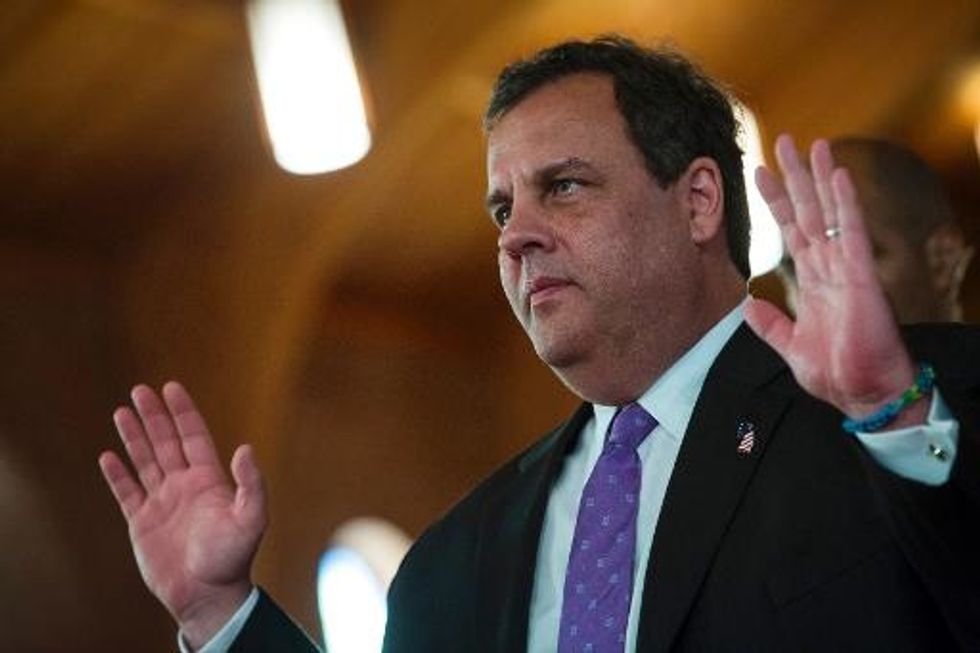
TRENTON, N.J. — A former aide in New Jersey Gov. Chris Christie’s office is scheduled to appear before lawmakers Tuesday at the first in the latest series of hearings as the investigation into the George Washington Bridge lane closures continues.

Christina Renna is expected to answer questions about her job as director of the Office of Intergovernmental Affairs, a section within the governor’s office where staff volunteered to secure Democratic endorsements for Christie’s re-election bid last year. Renna worked under Bridget Anne Kelly, the deputy chief of staff Christie fired after The Record first reported that she sent the now infamous email, “Time for some traffic problems in Fort Lee,” setting into motion access lane closures in an apparent act of political retribution against the Fort Lee mayor.

State Sen. Loretta Weinberg, co-chairwoman of the committee, said Monday that the panel is trying to determine what the atmosphere in Christie’s office was at the time of the lane closures.

Renna is the first of five witnesses being called before the New Jersey Legislative Select Committee in its latest round of subpoenas to answer questions about documents she turned over to the panel.

Assemblyman John Wisniewski, co-chairman of the committee, said Renna would also be asked about remarks she made to a team of attorneys Christie hired to lead an internal investigation into his office’s involvement in the lane closures. The attorneys from Gibson, Dunn & Crutcher released summaries of the 75 interviews last month at the request of the legislative panel.

Renna told the internal investigators that her office would receive “mandatory directives” of mayors they should not call or check in with. She said she did not know of an instance where it rose to the level of lane closures, but said not returning calls “was enough to send a message to the local elected official.”

She said intergovernmental affairs staff volunteered at Christie’s campaign headquarters in Bridgewater on Wednesdays and participated in weekend calls with campaign staff. Fort Lee Mayor Mark Sokolich was one of the Democrats targeted for an endorsement, but his name was removed from the list last April after it became clear he wouldn’t support the governor, Renna told the investigators.

Wisniewski said the difficulty will be prioritizing questions to cover everything in one day.

The panel has scheduled weekly hearings. Michael Drewniak, the governor’s press secretary, is set to appear next Tuesday. Matt Mowers, an intergovernmental affairs employee who left to work on Christie’s campaign, has been asked to testify May 20. The final hearing on June 3 will focus on the Port Authority, with Patrick Foye, the executive director, and William “Pat” Schuber, a New Jersey commissioner, scheduled to appear.

Kelly and Bill Stepien, who held the deputy chief of staff post before leaving to manage Christie’s campaign last year, have refused to provide documents citing their Fifth Amendment rights. The committee has not yet called them to testify or issued narrower subpoenas after a judge ruled the initial requests were overly broad. On Friday an attorney for David Samson, who resigned last month as chairman of the Port Authority’s board, said he would not turn over any more documents in response to the committee’s subpoena.

All three have cited the ongoing U.S. Attorney’s Office investigation into the lane closures in their refusal to provide documents. Federal authorities subpoenaed the committee, seeking all documents the lawmakers have obtained through their inquiry.

The Gibson Dunn report, which cleared the governor of any involvement, blames Kelly and David Wildstein, a former Christie appointee at the Port Authority, for carrying out the lane closures.

Wildstein was also called to testify before the committee after turning over documents, but refused to answer questions, citing his right to protect himself against self-incrimination.

AFP Photo/Eric Thayer

U.S. Attorney’s Office Creates New Section To Combat Chicago Violent Crime

U.S. Attorney’s Office Creates New Section To Combat Chicago Violent Crime

By Jason Meisner, Chicago Tribune

CHICAGO — When U.S. Attorney Zachary Fardon took his post six months ago amid pressure to curtail Chicago’s relentless street violence, he was clear that federal authorities were not going to be able to swoop in and make arrests that would suddenly solve the intractable problem.

While Fardon has downplayed expectations, the announcement Monday that he has created a new Violent Crimes section at the U.S. Attorney’s Office clearly reflects how gun violence has become a high-profile issue for an office better known for combating terrorism and public corruption.

After months of consultations on how his office spends its resources, Fardon decided to spin off 16 prosecutors from the larger Narcotics and Gangs section to focus solely on how best to use federal statutes to go after violence, said Randall Samborn, a spokesman for Fardon.

Samborn said prosecutors will use drug and gun statutes as well as extortion and money-laundering laws to go after criminal crews responsible for violent acts, including bringing conspiracy prosecutions similar to racketeering cases. While no new resources have been tapped, the restructuring will allow prosecutors to attack the problem with more agility, he said.

“This is putting a group of talented attorneys together and telling them that their mission is to help the city and the district tamp down violent crime … and to use all the tools and strategies at their disposal that are going to accomplish that mission,” Samborn said. The unit also will continue to run proven violence prevention initiatives such as Project Safe Neighborhoods.

Samborn said that, to a certain extent, the new section re-emphasizes an issue that has long been a priority of a U.S. Attorney’s Office that already allocates about a third of its resources to gang, gun and drug prosecutions.

Even the announcement itself was low-key — made without a news conference or press release on a day when Fardon was running in the Boston Marathon.

When Mayor Rahm Emanuel was asked about it Monday, he didn’t appear to have been filled in on any details.

“I don’t know whether it means more resources, I don’t know what it exactly is, but I’m pleased they’re doing it,” Emanuel told reporters.

Former federal prosecutor Jeffrey Cramer said the creation of the new unit puts a focus on the issue and allows the team of prosecutors the opportunity to take a leadership role in tackling a problem. But the overall look of the prosecutions — especially sophisticated racketeering cases aimed at gang leadership — may end up looking largely the same.

“It’s not like the office is going to start doing things tomorrow that they weren’t doing last week,” said Cramer, now head of the Chicago office of the private security company Kroll. “There is no magic pill — if there was they would have been doing it years ago.”

Picked to head the section was Assistant U.S. Attorney Ron DeWald, a former Cook County prosecutor who throughout his career has worked with Chicago police and other law enforcement agencies, Samborn said.

The move is part of a larger restructuring of the office’s approximately 160 prosecutors and $34 million budget undertaken by Fardon, who took office in October. Other changes include the creation of a specialized securities and commodities fraud section as well as stepping up efforts to combat the growing problem of cyber crime, Samborn said.

It’s not unusual for an incoming U.S. attorney to reorganize an office, finding efficiencies and shuffling priorities.

The last major restructuring came in 2002 under Fardon’s predecessor, Patrick Fitzgerald, who a year after the Sept. 11 attacks announced a new focus on terrorism cases as well as the creation of a major case squad and units on complex financial fraud and public corruption. A decade earlier, newly appointed U.S. Attorney Jim Burns brought in a key assistant to help reorganize the office in the aftermath of allegations of misconduct in the El Rukn gang prosecution.

Samborn said in the past 10 years the Narcotics and Gangs section had grown to more than 40 attorneys and become unwieldy to manage. In creating a section focused on violent crime, Fardon wanted to allow more time for strategic thinking among a smaller group of prosecutors dedicated to a single cause, he said. “What this is saying is that we are aware this is a problem and that we have a role in (fixing) it,” Samborn said.

AFP Photo

Shop our Store

Headlines

Editor's Blog

Corona Virus

Trending

World