Tag: panic
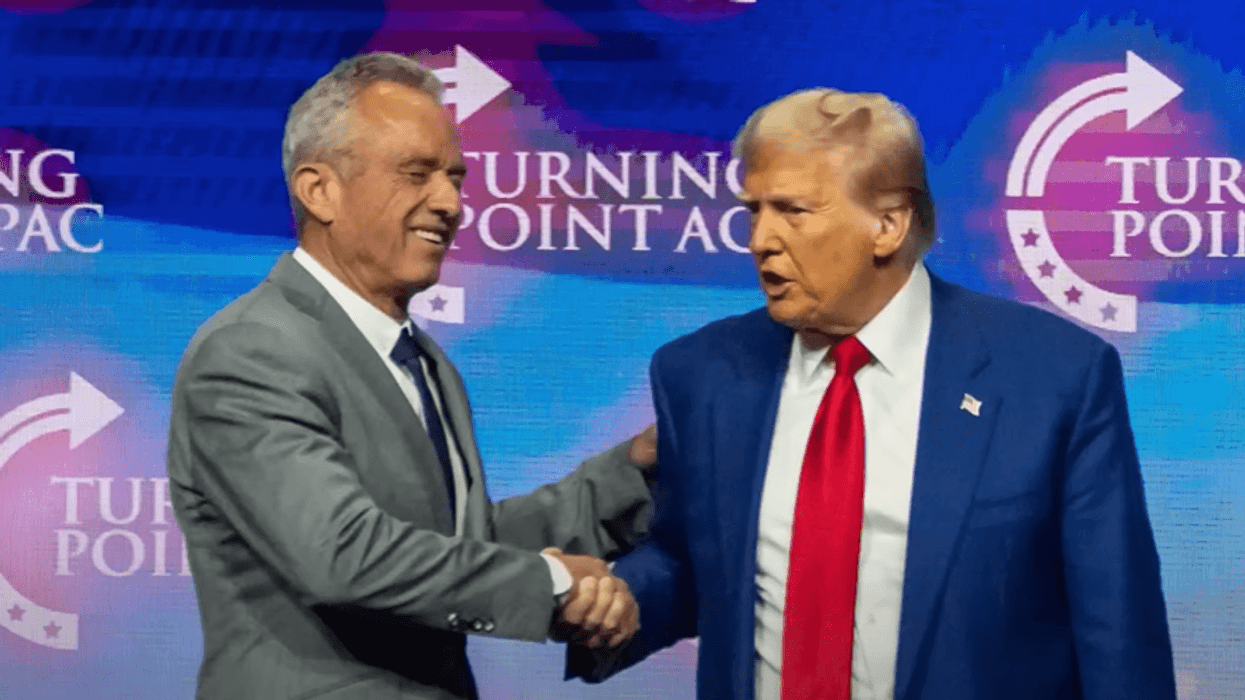
Robert F. Kennedy Jr.

Doctors And Public Health Officials In Panic Over Trump's Gag Order

Donald Trump's gag order on the country's health agencies has set off panic among public health officials and researchers.

After Trump was sworn in Monday, his administration ordered federal health agencies to cease all public-facing communication, causing public health officials to fear that they won’t be able to inform the public of viral or foodborne illness outbreaks, and that they will lose funding for everything from cancer treatments to vaccine development.

Officials at Centers for Disease Control and Prevention and the Food and Drug Administration are particularly concerned about the current bird flu outbreak, which has led to a 37 percent increase in the price of eggs from the same time last year. The bird flu poses a risk to the public, especially if the virus becomes transmissible between humans.

Similarly, doctors, scientists, and drug researchers reported that the government is canceling medical conferences and grant review panels, which could mean that they’ll lose progress on cancer research to vaccine development.

As STAT News reported:

Several meetings of National Institutes of Health study sections, which review applications for fellowships and grants, were canceled without being rescheduled, according to agency notices reviewed by STAT. A Feb. 20-21 meeting of the National Vaccine Advisory Committee, a panel that advises the leadership of the Department of Health and Human Services on vaccine policy, was also canceled. So was a meeting of the Presidential Advisory Council for Combating Antibiotic-Resistant Bacteria that was scheduled for Jan. 28 and 29.…

“Peer review via study sections is required by law in order for the NIH to disburse most of the $40 billion annual extramural budget,” said Norman E. Sharpless, a former director of the National Cancer Institute, part of the NIH. “If study sections and advisory council meetings are postponed for more than even a brief period, this will likely lead to interruptions in grant funding, which is bad for U.S. biomedical research.”

According to a document obtained by Science magazine, the gag order will end on February 1. But it’s unclear how much freedom health agencies will have to communicate with the public when it’s lifted, or whether the National Institutes of Health will continue to be able to fund drug and vaccine development.

That’s because Trump’s nominee to lead the Department of Health and Human Services is Robert F. Kennedy Jr., who is an anti-science, anti-vaccine whack job who has promoted the unsafe consumption of raw milk and disproven COVID-19 cures.

ProPublica reported that Kennedy wants to shift research away from infectious diseases and vaccines and has said that the NIH should focus half of its budget on “preventive, alternative and holistic approaches to health.”

More than 17,000 doctors sent a letter to the Senate, which has yet to vote on Kennedy’s confirmation, warning that he is dangerous and should be rejected.

“This appointment is an affront to the principles of public health, the tireless dedication of medical professionals, and the trust that millions of Americans place in the health care system,” the letter said. “RFK Jr. has a well-documented history of spreading dangerous disinformation on vaccines and public health interventions, leaving vulnerable communities unprotected and placing millions of lives at risk. His appointment is a direct threat to the safety of our patients and the public at large.”

Unless four Republicans flip their votes against Kennedy, he is likely to be confirmed.

Reprinted with permission from Daily Kos.
Donald Trump

'Empty The Coffers': GOP Panic As Trump Legal Costs Siphon Off Donations

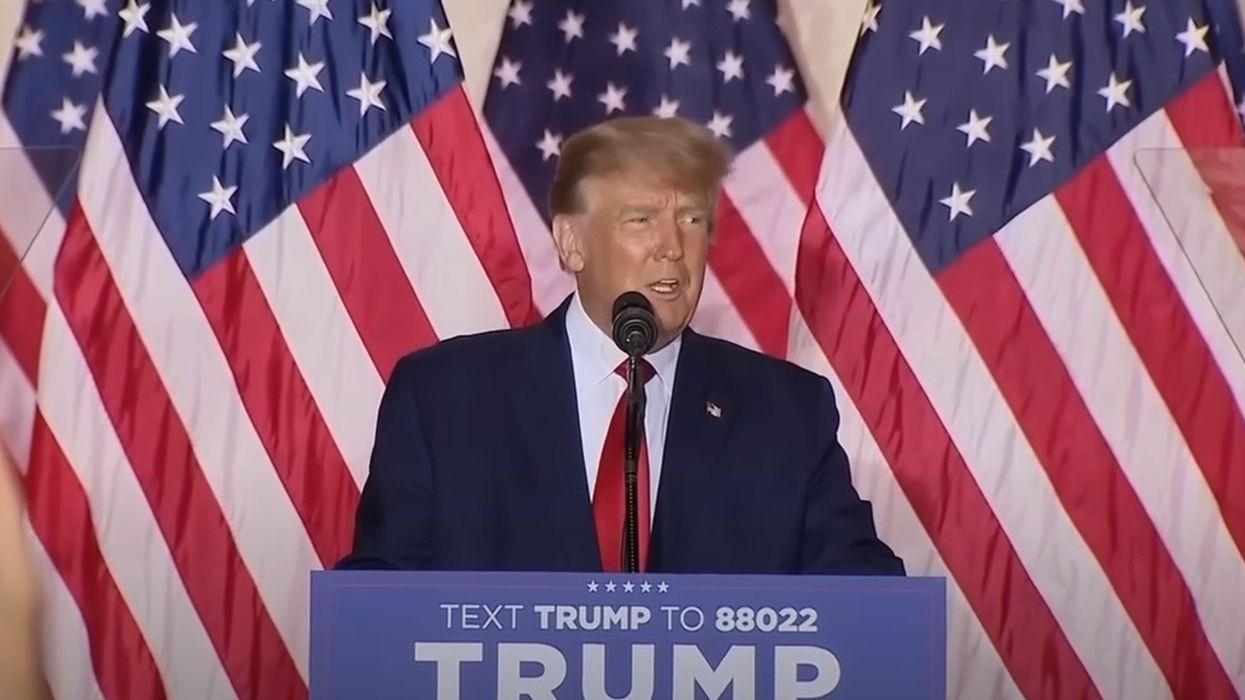
Former President Donald Trump's mounting legal bills are threatening the Republican Party's ability to fundraise ahead of a pivotal presidential election.

The Washington Post reports that the Republican National Committee (RNC) is already starting to fret about its finances given that it's trailing the Democratic National Committee (DNC) in fundraising by an almost three-to-one margin. The DNC has roughly $25 million in cash on hand, compared to the RNC's $8.7 million. And between President Joe Biden's campaign and the Trump campaign, the difference looms even larger: Biden had more than $56 million in cash available by the end of January 2024, whereas Trump had less than $31 million. At the end of 2023, Biden also led in unique donors, with 172,000 to Trump's 143,000 unique donors.

Leading GOP figures are now starting to question whether that gap can be closed at all given that Trump still needs to pay for his legal defense in four looming criminal trials this year.

"[Trump] needs to raise money. Look what Democrats are raising. I told him, they are going to empty the coffers here," Sen. Lindsey Graham (R-SC) told the Post. "It’s one of the things that concerns me."

Aside from his legal bills for defending himself from 91 felony charges, the former president has also been crushed under the weight of multiple civil judgments. Earlier this month, writer E. Jean Carroll won an $83.3 million judgment against Trump for defamation, and a New York clerk recently entered in a total cost of $454 million for Trump's civil fraud judgment, when taking interest into account. The ex-president is now facing roughly $111,000 per day in new interest until that judgment is paid, even as he appeals the verdict. The Post estimated that in 2023 alone, roughly 23 percent of all money raised by Trump's affiliated political action committees went toward paying his legal costs.

Unlike Trump, Biden and the DNC are unburdened by legal woes, and are free to spend on advertising and organizing in both competitive battleground states along with high-profile US Senate races.

"It's been a tough couple of weeks if you are Donald Trump and also like money,” Biden rapid response director Ammar Moussa told the Post. "While Trump, with the help of his ultrarich donors, burn cash paying for Trump’s... challenges, our campaign is proud of its historic war chest whose funds are going to reach the voters who will decide the election this November."

Reprinted with permission from Alternet.

Panic, If You Must, And Then Pivot

Panic, If You Must, And Then Pivot

When is the last time someone told you to calm down, and it worked?

I’m not seeing a lot of raised hands.

Having someone tell us we’re overreacting is annoying and condescending. Infuriating, even. It makes you want to blind them with the whites of your eyes as you lean in menacingly close and yell, “No, you calm down,” preferably in public. (Or maybe that’s just me.) The point is that telling us not to feel what we’re feeling seldom works, and often makes it worse because now we’re angry, too, and that is not a good look on anyone.

I want you not to panic about the novel coronavirus, but I know telling you not to panic isn’t helpful. Too much is happening — and not happening — for us to pretend this is a normal March. You might be scared, and why not? Every news update feels like another cautionary tale.

Change is all around us. The NCAA announced that its basketball tournaments would go on but with no fans in the arenas. Even if you’ve never cared about the NCAA tournaments, it’s impossible to hear that and not think something big is happening. All around the country, concerts, conferences and sporting events are being canceled. So, avoid large gatherings for now.

The president of the United States continues to falsely downplay this health crisis. Fortunately, many state and local leaders are refusing to play along. They are helping us understand there are things we can do in this frightening time to protect ourselves and others. This is the America I love.

We can’t say this enough: Wash your hands regularly, and whenever possible, use soap and water. Public health experts tell us we should do this every time for at least 20 seconds. They recommend singing “Happy Birthday,” twice, before rinsing.

There are plenty of other songs, of course, and whichever one keeps you washing is the one you should be singing. In recent days, I’ve been belting out Ethel Merman’s Still Got My Health. Sing it with me:

The hip that I shake doesn’t make people stare,

But I got such health, what do I care?

The sight of my props never stops a thoroughfare,

But I still got my health, so what do I care?

No matter how often we wash our hands, we should not touch our faces, especially when we’re out in public. This sounds simple enough until you think of all the times you’ve pulled to a stop in traffic and watched the driver in the next lane excavating his nostrils.

That would never be you, I want to make clear, but do think about that guy’s hand touching the door handle you’re about to grab. As I explained to my last class of students before the campus closed down, your face is full of portals. I repeated this to them every 10 minutes or so, after providing another update on how many of them had just touched their eyes, their noses, their mouths. Once a mom…

Because of the coronavirus outbreak, many elderly poll workers here in Ohio are opting not to work on Election Day. They are smart to avoid interacting with the public, as their immune systems aren’t as strong as they used to be.

Our secretary of state is calling for replacement workers for our March 17 primary election. Fortunately, Gov. Mike DeWine had asked that all colleges and universities close down and turn to online teaching for a few weeks. Suddenly, thousands of healthy young people are no longer attending classes. Perfect poll workers! What a great way for them to witness firsthand how democracy works and help voting be an efficient and fair process — and a safe one, too, if they remind voters to wash their hands after touching the voting machines.

That’s the other thing we can do right now: Be signs of hope.

Many hourly wage earners — such as clerks, cashiers, hospital aides and restaurant workers — have little or no paid sick leave. They are increasingly at risk of contracting the virus and spreading it because they cannot afford to stay home.

Those lucky enough to hunker down can advocate for people like them. Call and write your members of Congress, daily, and push them to take care of all Americans as we ride out this medical emergency. It’s an election year. Make them fear you.

We need one another. If we act like it, more of us are going to be OK.

Connie Schultz is a Pulitzer Prize-winning columnist and professional in residence at Kent State University’s school of journalism. She is the author of two non-fiction books, including …and His Lovely Wife, which chronicled the successful race of her husband, Sherrod Brown, for the U.S. Senate. Her novel, The Daughters of Erietown, will be published by Random House in spring 2020. To find out more about Connie Schultz (schultz.connie@gmail.com) and read her past columns, please visit the Creators Syndicate webpage at www.creators.com.

Can Obama Calm Democratic Panic?

WASHINGTON — With apologies to Winston Churchill: The talk in the political class is that this is the beginning of the end of the Obama administration, while the talk in the Obama administration is that this is the end of the beginning. Which will it be?

Last week was not exactly what President Obama hoped for when he rolled out his big jobs initiative. He expected pushback from Republicans. He did not anticipate the resistance he is getting from Democrats — or, perhaps more to the point, he did not expect the questions about the bill that might inevitably arise on his side to get quite so much attention.

The administration’s own strategy was clear enough, and for the first few days it was working as planned. By putting together a rather large but relatively uncontroversial package of measures to boost the economy, Obama sought to put the Republicans on the defensive and to rally Democrats, including his progressive critics, behind a push for action.

In a series of campaign-style rallies, Obama exuded new energy. The friendly crowds he gathered radiated with a spirit that has been largely absent since the 2008 campaign. Cries of “Pass this bill!” seemed comfortingly similar to the old shouts of “Yes, we can!” And the initial response from congressional Republicans — they pointedly did not reject all of his ideas — suggested that things just might be turning the president’s way. The poll ratings of congressional Republicans, after all, are awful. Their leaders sensed that rejectionism might not be good politics.

But then the Democrats lost two special congressional elections and the administration proposed to pay for its $447 billion jobs plan with a combination of tax increases that it had proposed before and that Congress had rejected.

The elections brought to the surface all of the anxiety Democrats feel about 2012. And while Obama’s broadly progressive set of tax increases on special interests and higher-income Americans made perfect sense on its own, it risked being picked apart by particular constituencies. Oil state Democrats will always defend Big Energy and, in any event, the package couldn’t feel like a new departure because it wasn’t.

Senate Democrats, moreover, have been a problem for Obama from Day One. Because Republicans can block almost anything with their routine abuse of the filibuster, and because key Democrats who represent very conservative states are by nature balky, assembling even a majority of Senate Democrats is always an excruciating challenge.

The administration is also suffering because of its failure from the beginning to pay enough attention to courting its own side. At a moment when Obama desperately needs Democratic solidarity, there is no reservoir of good will from which he can draw.

There are many ironies in Obama’s situation. The president’s fiery rhetoric and his challenge to Republicans directly respond to long-simmering Democratic frustration over his reluctance to confront the GOP. Yet this strategy only works if Obama can concentrate on a single political front without the distraction of dissent from his own ranks. When Republican Minority Leader Mitch McConnell can take to the Senate floor and cite Democratic criticism of the president’s jobs bill, as he did last week, it undercuts the entire campaign.

And while the president’s proposals this week for a long-term balanced budget will be more to the liking of Democrats than were the concessions he made to House Speaker John Boehner during the debt-ceiling battle (concessions Boehner turned down), some of the cuts Obama suggests will present a new target for his critics inside the party. Here again, the president’s broad idea — short-term stimulus coupled with long-term deficit reduction — is sensible. In principle, at least, it unites the center and the left. Yet if Democrats focus more on their areas of disagreement, more time will be lost and Obama’s jobs campaign will be stalled again.

Obama and his party are grappling with the “tragedy of the commons” in a classic form. Obama, who has been so happy to stay distant and above the concerns of his Democratic allies, cannot afford to lose them now. Democrats in Congress have a long list of reasons for being resentful. The special elections will aggravate their fears of embracing the president too closely.

Yet if Obama’s presidency is weakened further, the resulting damage will afflict Democrats as a whole. However justified their past grievances might be, they have a powerful collective interest in seeing the fighting Obama get his new act off the ground.

E.J. Dionne’s email address is ejdionne(at)washpost.com.

(c) 2011, Washington Post Writers Group

Shop our Store

Headlines

Editor's Blog

Corona Virus

Trending

World