Tag: paramount merger
Real Media Reform: Blocking The Paramount-Warner Merger Isn't Enough

Real Media Reform: Blocking The Paramount-Warner Merger Isn't Enough

Until a couple of months ago, we could get a dose of humor to help us get through the craziness, cruelty, and corruption of the Trump administration. But CBS pulled Steven Colbert off the air, not because of bad ratings; he had by far the most widely viewed network show at that hour.

The problem was Donald Trump is too thin-skinned to put up with a comedian poking fun at him regularly. As a result, he had Brendan Carr, his chair of the Federal Communications Commission, imply that the Ellison family’s effort to take over Paramount, CBS’s parent company, would be blocked if Colbert wasn’t fired. The Ellison family includes prominent Trumper, Larry Ellison, one of the richest people in the world, and David Ellison, his equally right-wing son who most immediately controls Paramount.

But taking over one of the country’s major broadcast networks wasn’t enough for the Ellisons. They also control TikTok, the fifth most widely used social media platform, which Trump wrestled away from a Chinese company and put in Larry Ellison’s hands.

And now, Paramount is looking to take over Warner Brothers. In addition to giving them control over two major Hollywood studios, the merger would allow Paramount to merge CBS’s newsroom with Warner-owned CNN. This would presumably mean arch-Trumper Bari Weiss would be in charge of CNN.

David Ellison put Weiss, who has long-established right-wing credentials, in charge of CBS News soon after taking over the network. In this role, she has already fired or driven away many serious reporters and repeatedly censored 60 Minutes, its highly regarded and widely watched investigative news show. We can expect more of the same at CNN if Paramount’s takeover of Warner is allowed to go through.

While Trump’s Justice Department’s antitrust division has greenlighted the Paramount-Warner merger, there is still a possibility it can be stopped. California and 11 other states sued to stop the merger on antitrust grounds. In addition to merging two of the major news networks, it would also consolidate two massive Hollywood studios.

An analysis by the Media and Consolidation Research Organization Lab, at the University of California, San Diego, found that the resulting reduction in competition would almost certainly mean fewer new movies are produced and less employment in the industry. It also would likely mean higher streaming prices for consumers. This is in addition to the problem of giving Trumpers even more control of the media.

There is at least some chance that the courts will block this merger on the merits. However, if it goes through the appellate process, the Republican Supreme Court may find the opportunity to provide another gift to Trump supporters irresistible. Still, the prospect of a years long delay could persuade Paramount to compromise and offer at least partial divestment of some of Warner Brothers holdings to facilitate the merger. In any case, the antitrust lawsuit raises the possibility of blocking the merger in its current form.

While further consolidation of the media and placing ever more of it in the hands of Trumpers is definitely bad news, it would be wrong to imagine that we previously had a golden age of media. News outlets owned and run by rich people tend to present news in a manner that is acceptable to the bosses. Stories about the upward redistribution of income over the last half-century, and anti-worker practices by businesses, tend to get short shrift. But there is no doubt they would get even less attention in a Trumper-controlled media universe.

However, we should be looking for something better. One route is a system of individual tax credits, say $100 per person, to support a person’s favorite news outlet(s). This would be a credit, not a deduction, and fully refundable, so even the poorest person would get a $100 to support the news outlet of their choice.

The model is the tax deduction for charitable contributions, except that everyone would get the same amount. There are many design issues that would have to be ironed out, but such a system could create a large pool of money to support news reporting in various forms that is not controlled by rich people.

This system also has the advantage that it can be done at the state or even local level. That means that cities run by progressives, like New York and Seattle, could pave the way by putting this sort of system in place. (Seattle’s new mayor, Katie Wilson, is a big supporter of this sort of system.)

It is hugely important to do what we can to block further consolidation of the media in the hands of the Trumpers. We also need to do other things, like reforming Section 230 to take away the special protection it gives the huge social media platforms. But the most important longer-term measure to protect a free press is to set up an alternative funding mechanism. An individual tax credit system is a promising route, but we need to get these alternatives on the table and start moving forward with them.

Dean Baker is a senior economist at the Center for Economic and Policy Research and the author of the 2016 book Rigged: How Globalization and the Rules of the Modern Economy Were Structured to Make the Rich Richer. Please consider subscribing to his Substack.
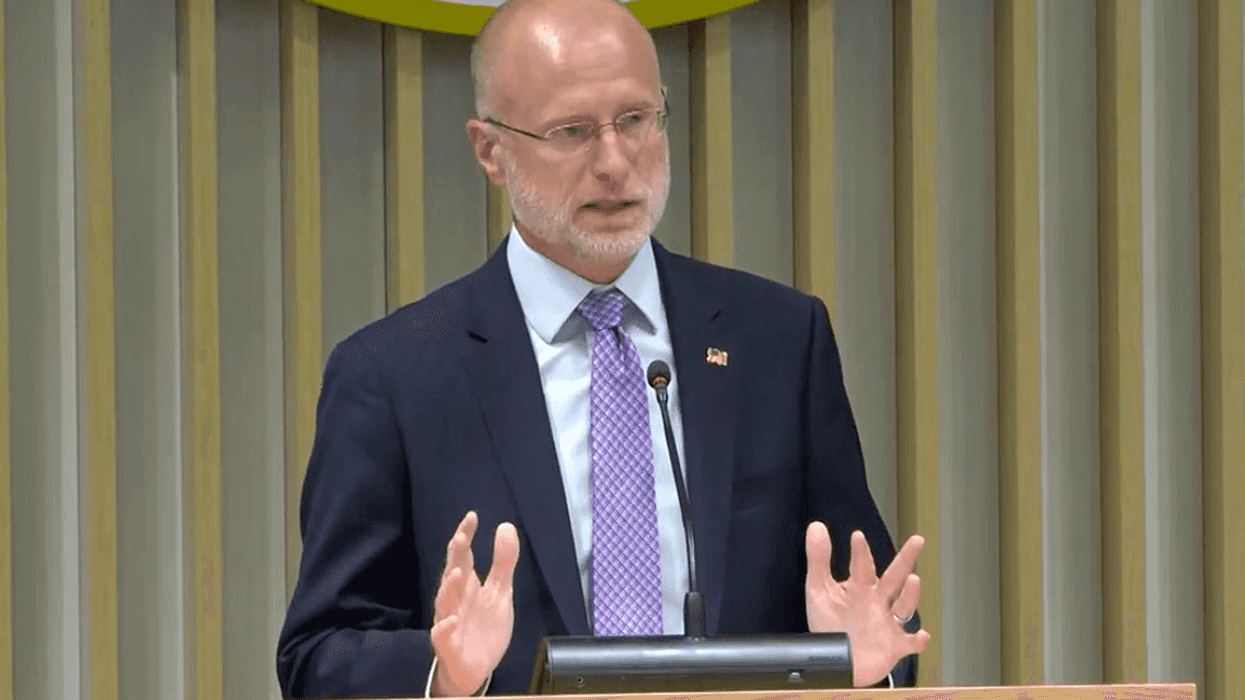

Brendan Carr

FCC Officials Took Paramount's Pricey Gifts While Company Sought Deal Approval

Reprinted with permission from ProPublica

The rich and famous who filed into the Kennedy Center’s opera house in December were there to enjoy one of the nation’s most exclusive celebrations of the performing arts: the center’s annual honors gala.

The black-tie event, hosted by President Donald Trump, prioritized tickets to people who donated more than $75,000 to the center. This year, it feted Hollywood icon Sylvester Stallone, the legendary glam rock band Kiss and the Grammy Award-winning disco pioneer Gloria Gaynor.

Among the attendees that evening were two lower-profile government officials whose regulatory decisions had been crucial to the future of the gala’s broadcast sponsor, CBS, and its parent company, Paramount.

Five months earlier, Federal Communications Commissioner Olivia Trusty cast a decisive vote approving Paramount’s historic $8 billion merger with Skydance Media. Now, the commissioner and a guest enjoyed the star-studded celebration thanks to tickets gifted to her by Paramount worth more than $12,000, according to ethics disclosure records obtained by ProPublica.

The other commissioner who approved the merger watched from a prized perch. FCC Chair Brendan Carr and his wife sat in a private skybox with Paramount CEO David Ellison and other executives from Paramount and CBS. Such seats sold for $125,000 a ticket, according to Kennedy Center guidelines.

It’s unclear if Paramount gifted Carr the premium seats because the FCC has yet to make public his financial disclosure for last year.

However, past disclosures show Carr and Trusty are among seven FCC commissioners who have accepted Kennedy gala tickets from CBS or its parent company over the last decade. Ethics experts told ProPublica this poses a blatant conflict of interest since the commission regulates the network. Carr’s previous financial statements show he has accepted tickets at least seven times since his 2017 appointment, totaling over $63,000 in gifts.

Last December’s ceremony attended by Trusty and Carr took place as Paramount was launching a hostile takeover bid for Warner Bros. Discovery, a move that would later result in a merger agreement that requires FCC approval.

Federal ethics rules ban employees from taking gifts from any entity that does business with, is regulated by or seeks official action from their agency.

Four ethics experts told ProPublica that by accepting the premium tickets Trusty and Carr compromised the FCC’s impartiality and should not take part in any upcoming decision on the merger.

“There’s no way that any top federal regulator should ever, ever accept a gift from a regulated company with interests their work will foreseeably affect,” said Walter Shaub, who led the federal Office of Government Ethics from 2013 to 2017. “The appearance of taking gifts like that is terrible. What’s at stake is nothing less than the public’s trust in government.”

Virginia Canter, who served as an ethics lawyer at the White House, Treasury Department, and Securities and Exchange Commission during the presidencies of George H.W. Bush, Bill Clinton, George W. Bush and Barack Obama, said the commissioners who accepted tickets cannot participate in this matter without damaging the integrity of the government’s decision-making process.

“This is shocking. Pretty disturbing, that’s what I would say. I just don’t understand what they were thinking,” said Canter, who now works as chief counsel for ethics and corruption at the nonpartisan government watchdog group Democracy Defenders Fund.

The FCC’s review of the merger is one of the final hurdles facing a historic $110 billion consolidation of two of the five largest film studios in Hollywood. The deal would unite Paramount Skydance with Warner Bros., bringing under the control of one company Paramount+ and HBO Max streaming services; CBS and CNN; and scores of other major broadcast channels, cable networks, and digital platforms.

The new megacorporation, which could reshape how millions will access news, movies, sports and video games, faces fierce opposition from inside and outside Hollywood. More than 5,000 actors, producers and entertainment workers — including stars such as Robert De Niro, Javier Bardem, Joaquin Phoenix and Glenn Close — signed an open letter decrying how the consolidation would eliminate jobs and compromise “the integrity, independence, and diversity of our industry.”

On Monday, California, New York and 10 other Democratic states filed a lawsuit seeking to block the merger under federal and state anti-monopoly laws.

American and international regulators are evaluating the deal for its potential national security implications and impacts to consumers worldwide. Last week, the British government signaled it planned to investigate whether the new entertainment titan that would emerge from the union would unfairly stifle competition. The FCC’s ongoing review includes examining the Middle Eastern sovereign wealth funds backing the deal, including from Saudi Arabia, Qatar and Abu Dhabi.

The FCC usually has five commissioners — all appointed by the president and confirmed by the Senate to serve five-year terms — but the agency currently has only three. Any vote by the full commission would likely be decided by Republicans Carr and Trusty over Democrat Anna Gomez. Gomez was not at the December 2025 show but has accepted tickets from Paramount in the past. Because the FCC requires a three-commissioner quorum for a vote, any recusal could leave the panel unable to decide on the merger. Carr could decide to ask staff to approve the deal rather than bring it to a commission vote, but the ethics experts said he should recuse himself from any decisions affecting the Paramount merger.

The experts warned the commissioners’ gifts might become central in legal challenges and said the Justice Department should investigate potential violations of federal rules or laws.

Neither Carr nor Trusty responded to ProPublica’s requests for comment. Gomez said in a statement that she followed agency advice when she attended the event in 2023 and 2024. Her statement did not elaborate or otherwise address why taking gifts from Paramount did not pose a conflict of interest.

An FCC spokesperson said agency ethics officers have for years cleared commissioner appearances, finding it consistent with ethics law.

“FCC Chairs and officials have attended the same event, in the same ways, consistently from the Trump Administration to the Biden Administration to the Obama Administration,” the FCC said in a statement. “There has been no change in recent years.”

Shaub called the justification outrageous.

“It’s no excuse to say that you took the gift because everyone else was doing it or that your agency has had a bad habit of indulging in gift taking for a long time,” Shaub said. “That kind of explanation doesn’t work for school children, and it sure as hell doesn’t work for government officials who are supposed to have better judgment than a fifth grader.”

Read NowShow less

Shop our Store

Headlines

Editor's Blog

Trending

World