Tag: sean hannity
Larry Kudlow

Fox Anchors' Nuclear Justification For Iran War -- And Its High Costs -- Is Collapsing

Fox pundits have repeatedly argued that the Iran war’s costs are “a small price to pay” for its supposed prevention of the imminent threat posed by Iran obtaining a nuclear weapon.

But a new U.S. intelligence assessment reportedly found that after two months of war, “the time Iran would need to build a nuclear weapon has not changed since last summer, when analysts estimated that a U.S.-Israeli attack had pushed back the timeline to up to a year,” according to exclusive reporting from Reuters.

Trump’s war of choice against Iran is now in its third month and headed for strategic defeat. While U.S. and Israeli strikes have killed Iranian leaders and severely damaged their military, the regime is intact and has established control over the Strait of Hormuz, a vital channel for global trade. Americans are seeing gas, diesel, and fertilizer prices soar as a result, and the direct cost of the war continues to grow.

Some Fox pundits, in the face of plummeting support for the war, have argued that these costs are relatively small compared to the benefit of preventing Iran from obtaining a nuclear weapon — but according to the new U.S. intelligence assessment, there was and remains no imminent threat of that happening.

Fox Business host Larry Kudlow, a former Trump economic adviser, argued in a Monday Fox appearance that skyrocketing fuel costs are “a small price to pay to stop the nuclear activity” from Iran, which he described as “the most gruesome regime we’ve seen in a hundred years” (note that this period includes Nazi Germany, the Soviet Union under Joseph Stalin, and Mao Tse-Tung’s China).

After Kudlow went on to say that “four and a half dollars gasoline — it's not a great idea, wouldn't want it forever, but it really isn't doing all that much harm,” Fox Business contributor Marcus Lemonis added, “I think you said it right, Larry. We don't want it forever, but this short-term pain has a big, big benefit to it.”

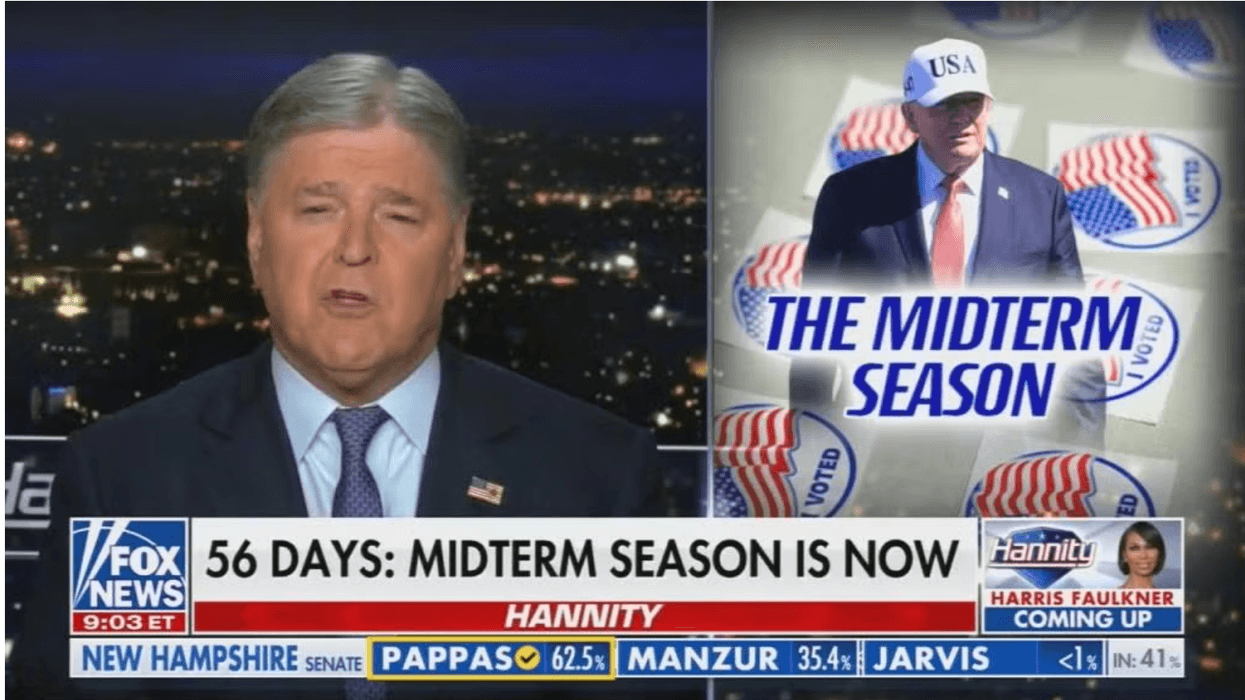
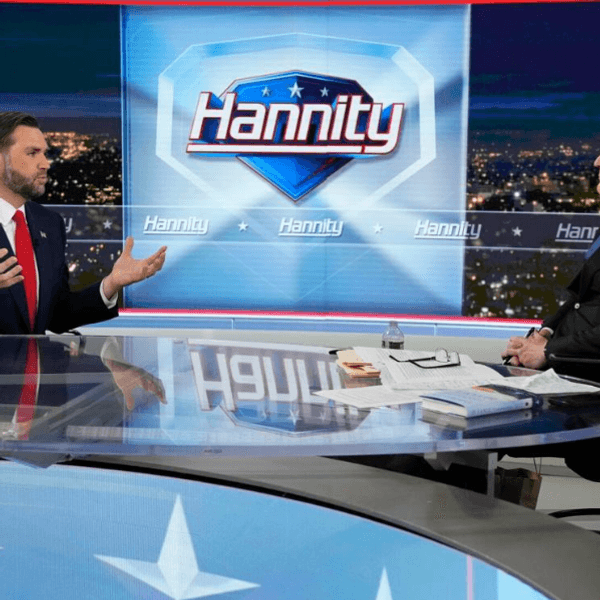
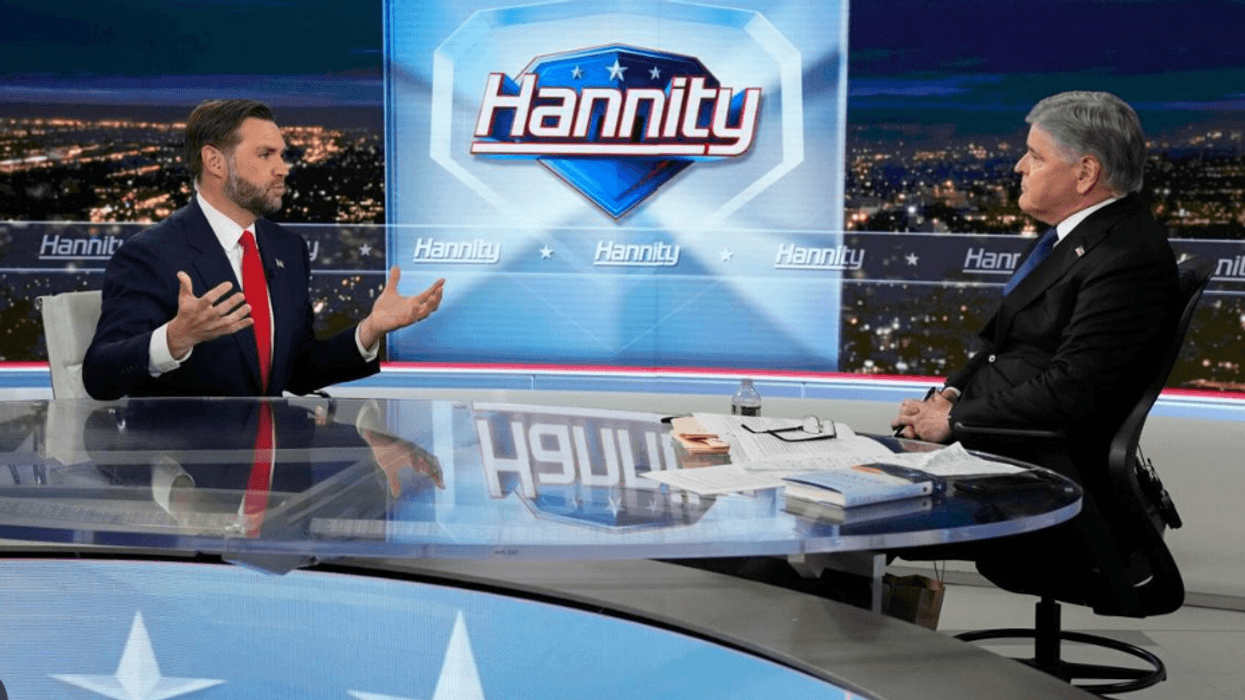
Fox host Sean Hannity, a close ally of the president and major supporter of his war, similarly claimed last week that skyrocking gas prices are merely “short-term pain” justified by preventing Iran from obtaining a nuclear bomb.

“It certainly is short-term pain,” Hannity told a guest during his April 30 broadcast. “Nobody wants to pay more for gas. Diesel is even more expensive, as you point out.”

“However, in exchange for not giving our children and grandchildren nuclear weapons, again, in the short term, I think I’d take that deal every day of the week,” he added.

And Fox host Todd Piro, during a rare mention of the $25 billion estimate a Pentagon analyst gave last week for the early cost of the war, said of that price tag, “If we are dead because Iran strikes us with a nuke, all these economic discussions are moot.”

But as Reuters reported on May 4, U.S. intelligence agencies did not assess that Iran could quickly obtain a weapon before the 2026 war began — or even before striking nuclear facilities last year — much less that the country could deploy it on U.S. soil:

U.S. intelligence assessments indicate that the time Iran would need to build a nuclear weapon has not changed since last summer, when analysts estimated that a U.S.-Israeli attack had pushed back the timeline to up to a year, according to three sources familiar with the matter.
The assessments of Tehran's nuclear program remain broadly unchanged even after two months of a war that U.S. President Donald Trump launched in part to stop the Islamic Republic from developing a nuclear bomb.

U.S. intelligence agencies had concluded prior ⁠to June's 12-day war that Iran likely could produce enough bomb-grade uranium for a weapon and build a bomb in around three to six months, said two of the sources, all of whom requested anonymity to discuss U.S. intelligence.
Following the June strikes by the U.S. that hit the Natanz, Fordow and Isfahan nuclear complexes, U.S. intelligence estimates pushed that timeline back to about nine months to a year, said the two sources and a person familiar with the assessments.

This new assessment further demolishes arguments for the war that Fox propagandists like Hannity offered after U.S. strikes began in late February.

Trump envoy Steve Witkoff, who negotiated on behalf of the U.S. in talks with Iranian counterparts in the lead-up to the war, helped fuel those arguments by claiming on Hannity’s Fox show that Iranian negotiators had admitted possessing a uranium stockpile that could be weaponized “in roughly one week” and used to build 11 nuclear bombs. Witkoff lacks prior experience in nuclear diplomacy — but he does have sizable business interests in the Gulf region, at times partnering with Trump’s family business.

Reprinted with permission from Media Matters


Trump and Jack Keane

Fox's Ultra-Hawk Military Pundit Keane Also Works For Defense Contractors

Retired Army Gen. Jack Keane is a vocal supporter of the Iran war from his perch as a Fox News senior strategic analyst, regularly arguing that the United States and Israel should escalate their joint military campaign and avoid diplomatic off-ramps. In addition to his TV gig, Keane also sits on the boards of directors of two defense contractors which potentially stand to benefit from the conflict with Iran — a fact that Fox appears not to have disclosed to its viewers since the beginning of the war.

The two contractors, United States Antimony Corp. and REalloys Inc., are both rare earths companies that provide crucial material to the Defense Department for use in weapons and other military equipment. Keane has been on the board of US Antimony since August 19, 2025, and on the board of REalloys since February 9 of this year.

Both companies tout the extensive DOD applications for their products in promotional materials and other outward facing statements. In a publicly available investor presentation from 2025, US Antimony Corp. claimed that 32% of its business comes from “military & defense,” including supplying antimony — a critical mineral — for use in “armor-piercing rounds,” “laser guided missiles,” “military electronics,” “night vision,” and other uses. The REalloys website goes into even greater detail, detailing how its products — critical minerals and magnets — can be used in everything from F-15, F-16, and F-35 fighters jets to Tomahawk cruise missiles to Predator drones and JDAM guided bombs. (The United States has used several of those weapons and platforms in the Iran war.)

As a former vice chief of staff of the U.S. Army, Keane is one of the most important and longstanding pro-war voices at Fox, having appeared on Fox News at least 44 times and on Fox Business at least 15 times since the U.S-Israeli campaign began on February 28. A Media Matters review found that Fox did not appear to mention Keane’s position on the board of directors for US Antimony Corp. or REalloys Inc. in any of those appearances. Fox News’ website also does not appear to have covered Keane’s connections to the two defense contractors, and does not list those affiliations in his official biography on the site.

The recent lack of disclosures are not the first time Keane and Fox have failed to mention his business ties and potential conflicts of interest. In 2017, Media Matters reported that Keane repeatedly called for an increase in military spending while sitting on the board of directors of General Dynamics, a major defense contractor. (Keane is no longer a board member at General Dynamics.)

Keane’s calls to escalate the Iran war and avoid a ceasefire

Even before the Trump administration began attacking Iran, Keane was on Fox downplaying the risks of a conflict.On February 27, Keane listed various examples of U.S.-led regime changes, advising that “there is always ambiguity in terms of what follows after that. And you can't let that distort what the opportunity is in front of you, here. And that's the reality of it."

On March 2, Keane cautioned against any negotiations that didn’t end in Iran’s total surrender.“The only thing we should negotiate with the Iranians is — not talking about nuclear weapons, don’t negotiate with them about ballistic missiles, don’t negotiate with them about support for proxies — we know they’ve done all of that and that’s why we’re in the war,” Keane said. “The only thing we want to negotiate with them about is surrender.”

The same day, Keane argued for a maximalist military approach that would result in regime collapse. “When you put — you're going to take that regime and put it on a pathway for its eventual collapse, and what follows after that is not particularly clear,” Keane said. “And I think that's OK.”As President Donald Trump’s war dragged on, Keane continued to agitate for a military victory rather than a diplomatic settlement.“We should not go to a ceasefire,” Keane said on Hannity on March 24. “I mean, if we go into a ceasefire it’s playing right into their hands — we want to keep the pressure on them to make a deal that makes some sense."

Keane continued to call for escalation on April 6. “What we need to do is keep our pedal to the metal here, so to speak,” he said on America’s Newsroom.“What I don’t think we should do is go to a ceasefire to get it open,” Keane argued, referring to the Strait of Hormuz. He argued that if that were to happen, Iran “will claim victory — and they’re really good at the propaganda."

Following Trump’s apocalyptic threat to destroy Iran’s “whole civilization” and the subsequent ceasefire announcement on April 7, that evening Keane said his “preference would have been to keep the war going as leverage to make that deal,” and that “we have to finish what we started."

The next morning, Keane argued to restart the war. “I wouldn't have done what we're doing,” he said, adding: “I think we should take control of the Strait of Hormuz ourselves."

Waging the kind of war Keane has advocated for costs a lot of money, and that means a big payday for the defense industry as a whole.

The Iran war could be a windfall for critical mineral weapons contractors

The war against Iran has proved costly for the U.S. government, both in terms of dollars spent and munitions used. The Pentagon told Congress that the first week of the war ran a price tag of more than $11.3 billion, and over the course of the war the military has fired more than 850 Tomahawk missiles, leading some in the Pentagon to worry about its overall stockpile. The United States and Israel may also both be running low on interceptors, which are expensive and time-consuming to produce.

To address these significant military expenditures, the Pentagon initially asked Congress for over $200 billion in addition to its annual budget, though that request is expected to be roughly cut in half following the tenuous ceasefire. Beyond that, the Trump administration is reportedly preparing to ask Congress for what Bloomberg calls a “massive” amount of new military spending for fiscal year 2027, sending the defense budget north of $1.5 trillion from its current level at just under $1 trillion.

Which specific contractors will benefit from the deluge of public money remains to be seen, and so far the war hasn’t led to an increase in defense stocks overall. The story is rosier for US Antimony Corp., however, which has seen its year-to-date stock price rise 74 percent as of April 13, significantly outperforming both the S&P 500 and the Nasdaq. (REalloys enjoyed a major rally in early March, then a steep decline before a partial rebound in April.)

Both companies have recently announced significant defense contract wins.On March 2, Reuters reported that REalloy had gotten $1.7 million from the Pentagon to “fund design of a processing facility for metals used to make magnets for weapons and electronics,” which signaled “an ⁠initial vote of confidence in REalloy's technology.”In an article highlighting rare earths companies hiring retired generals, The Wall Street Journal reported that US Antimony Corp. secured a $245 million contract a month after it brought on Keane, though he was reportedly not involved in its procurement:

Gary Evans, the CEO of U.S. Antimony, said Keane’s presence has been a boon. “We have three grant requests going to D.C. this month for different things,” Evans said in January. “So, we just felt like having someone of his caliber and his connections on our board, to give us advice, to give us direction when we need it, would be helpful."

In interviews, Evans has been open that the Iran war could be good for his business.

“We’re trying to meet the demands of the United States, not only industrial demand but the military demand," Evans told the New York Stock Exchange’s YouTube channel. “As you can see, over the last 60 days we’re using up that stuff pretty quick, when you look at Venezuela and Iran — so we anticipate this being a great business."

Evans made a similar pitch during a recent earnings call, even going so far as to name-drop Keane. “We keep a very high dialogue going on at any given time with senators, house members, governors, and as I mentioned before, General Keane is on our board, so we kinda hear what’s going on,” Evans said. “There’s a lot of need for additional munitions, as everybody knows, with the activities we’d had in Venezuela and now Iran.”

On March 11, Evans appeared on Fox Business’ Mornings with Maria Bartiromo to discuss a recent defense contract win. Neither Bartiromo nor Evans mentioned Keane or his ties to the company during the interview.

“US Antimony Corporation recently receiving a $27 million grant from the Department of War to help support domestic critical minerals used in military weaponry and other defense technology,” Bartiromo said, using the Trump administration’s name for the Defense Department.

She began the interview by asking Evans to “tell us about the grant from the Department of War and how this conflict has impacted your business."

Evan described the antimony ingots his company makes, which “go to the Department of War, the DLA [Defense Logistics Agency], to serve as inventory for wars like we’re in right now."

“We have the lowest stockpile since World War II, so we’re trying to ramp up” production “to help our military,” Evans continued. “[In] 2026, we’re expecting revenues north of $125 million, 2027, north of $200 million,” Evans said. “So we’re moving at warp speed."

The United States and Israel have killed more than 3,000 people in Iran since February 28, according to an Iranian medical official.

Reprinted with permission from Media Matters

Fox News Hosts Scapegoat NATO For Trump's Botching Of Iran War

Fox News Hosts Scapegoat NATO For Trump's Botching Of Iran War

Fox News’ MAGA stars, unable to acknowledge that the war in Iran that President Donald Trump launched with their support is spiralling into a strategic defeat, have landed on a scapegoat: NATO and its member states, which were not consulted by the United States before it joined Israel in starting the war and have since refused participation.

Laura Ingraham, Jesse Watters, and Sean Hannity respectively denounced NATO on Wednesday as “kind of a meaningless ally” that “we’ve had it with” for purportedly “abandoning us.” Hannity and Ingraham each suggested that Trump should withdraw the U.S. from the alliance (which he is barred from doing unilaterally under a bill Secretary of State Marco Rubio cosponsored in the Senate that became law in 2023).

Trump has spent the last several weeks raging over the refusal by U.S. allies to send their navies into the active war zone to escort oil tankers and other commercial ships after Iran, in an obvious strategic countermeasure to the U.S. attack, closed the Strait of Hormuz. Over the weekend, Spain, Italy, and France refused to allow their military bases or airspace to be used by U.S. or Israeli aircraft involved in the war, triggering a new wave of vitriol from the president and his top aides.

Trump claimed in a Wednesday interview to be “beyond reconsideration” of the U.S. role in NATO after “they weren’t there for us” in Iran. (NATO is a defensive alliance — in response to the 9/11 attacks, its members deployed forces alongside the U.S. military in Afghanistan but are not bound by the treaty to participate in offensive wars.) In an address from the White House that night, the president urged the “countries of the world” to “build up some delayed courage. … Go to the strait and just take it, protect it, use it for yourselves.”

The looming strategic failure of the U.S. war in Iran — its regime is intact and in control of its uranium stockpile and the strait, and altering those circumstances that would likely require a risky escalation involving American ground troops — has placed Fox’s hosts in a bind. They have assured their viewers that the war is an historic success and appear unable to break with Trump due to his support among their viewers. That makes our NATO allies an appealing target as the war grinds on.

The president regularly tunes in to Fox to guide his communication and policy decisions. If he was watching before or after his speech on Wednesday, he heard vigorous support for pivoting from his inability to defeat America’s foes to punishing its friends.

Hannity: NATO is “a one-sided alliance,” by leaving “we'll probably save a lot of money”

Hannity, of the network’s three major evening hosts, is the one most committed to the U.S. war in Iran (which he had demanded for decades), the closest personally to Trump, and the loudest voice currently denouncing NATO.

Following Trump’s speech, he panned NATO as “a one-sided alliance where we only go and protect Europe” and suggested its member states had become too culturally Muslim. In response, Sen. Lindsey Graham (R-SC) uncorked a screed in which he called for the redeployment of U.S. forces from Europe because “when we needed them the most and when the world needed them the most to stop a religious Nazi regime from having a nuclear breakout, they took a pass.”

“I think that there's going to be a reevaluation and I believe America's contribution just went down dramatically, and we'll know more in the weeks ahead as this now begins to wrap up,” Hannity replied.

Later in the broadcast, the host said it was “unimaginable to me that the NATO alliance would shatter” thanks to the purported refusal by its members to agree to what “should not be a controversial assist on their part.”

“I've got to imagine the ramifications of them abandoning us in this effort is going to — this is going to be deep, profound, and long-lasting,” he added.

Fox contributor Mike Pompeo, who served as secretary of state in Trump’s first administration, characterized NATO as “feckless, not to be able to convince their own people” of the importance of the Iran war, while retired Army Lt. Gen. Keith Kellogg, another former Trump administration figure, said the U.S. should withdraw from the alliance and form a new one.

“Yeah, I think you're right and we'll probably save a lot of money,” Hannity replied to Kellogg. “But the fact that they did not have a moral clarity when you're dealing with the No. 1 state sponsor of terror potentially this close to acquiring nuclear weapons is breathtaking to me. And this will have reverberations, I believe, going on for decades to come.”

Ingraham: NATO is “kind of a meaningless ally” due to “weakness in Europe”

Ingraham had recently warned about potential downsides of the war, but quickly pivoted back in line with her colleagues. While previewing Trump’s speech on Wednesday’s broadcast, she claimed that “NATO turned out, in this case at least, to be what Donald Trump had predicted: kind of a meaningless ally, if allies at all.”

Her guest, the Heritage Foundation’s James Carafano, responded with the evening’s most vigorous defense of the alliance. “I don't think NATO is the problem,” he said, instead pointing to “some very weak leaders inside NATO who have made some very cowardly decisions” and “look like complete yahoos.”

“What we're going to see is not NATO disbanded,” Carafano. “That's nuts. But what we're more likely to see is NATO step back up to the plate under pressure from Donald Trump, and countries throw out their own leaders because they’re weak-kneed yahoos.”

But Ingraham responded by saying that disbanding NATO should be on the table.

“Well, I'm not sure I agree with that,” she replied. “I think there's just a lot of weakness in Europe, period. Period, there's weakness. … We're so lucky we have Donald Trump as president of the United States.”

Watters: “We’ve had it with these people”

Watters joined in the NATO criticism on Wednesday, albeit in a somewhat less aggressive tone than his colleagues.

“The NATO allies, I put allies in quotes,” he said. “I mean, it's been a great alliance over the years. It's really kept the Russians off the continent until the Ukraine invasion. But it's been really one-sided, and now a lot of people are looking around at them saying no, you can't use the airspace. You can't use the base.”

“They've had it,” he added. “We've had it with these people. We love them, but we've had it.”

Reprinted with permission from Media Matters

Laura Ingraham

Fox News' United Front Supporting Trump's Iran War May Be Breaking Down

Four weeks after President Donald Trump launched a poorly conceived war of choice against Iran, the lockstep support for the conflict that has characterized coverage from Fox News’ star hosts is beginning to fray. The power struggle is significant — it is not an exaggeration to suggest the course of the war might hinge on which Fox shows the president is watching.

Trump is clearly approaching a decision point over whether to further escalate the war. U.S. and Israeli forces have done a lot of damage to Iranian military targets, but its regime is intact, still controls its stockpiles of enriched uranium, and has closed the Strait of Hormuz, threatening the global trade in oil, natural gas, and fertilizer. The Pentagon is sending thousands of troops to the region and reportedly prepping options for a “final blow” — some of which would involve deploying U.S. forces on Iranian soil.

When Trump is considering policy options, he often takes guidance from his loyal propagandists at Fox. This Fox-Trump feedback loop has in recent months played a role in the president’s decisions to send White House border czar Tom Homan to oversee immigration enforcement in Minnesota; prioritize the SAVE Act over all other legislation; order the deployment of ICE agents to airports; and start the war against Iran.

Against that backdrop, Fox News host Laura Ingraham warned on Wednesday’s show that further U.S. action could produce devastating unintended consequences and suggested that Trump should refocus his attention on the domestic economy and political situation.

“Iran knows it cannot win militarily, so it's using the leverage it has by prolonging the conflict,” she said during her monologue at the top of the show. “Now, what do they want to do? They want to inflict maximum economic pain on the region, on the U.S., [on] the global economy as much as possible until they think Trump relents. But the White House doesn't seem to be blinking.”

The host then aired a clip of White House press secretary Karoline Leavitt warning at her press briefing that day that “President Trump does not bluff, and he is prepared to unleash hell” against Iran.

Ingraham did not seem impressed by Leavitt’s rhetoric.

“Well, the problem is obviously unleashing hell means destroying infrastructure, which itself causes a series of cascading problems for the region, including maybe outside the region — political problems for the president in a midterm election year,” she said.

Her air of skepticism continued throughout the show.

While interviewing Sen. Josh Hawley (R-MO), she noted Pentagon reports of thousands of successful missions but commented, “I mean, this is a devastating blow, yet you know, we're still there.”

“It's not even a month old, obviously,” she continued, before asking, “But are you concerned about the public and people? Again, very short attention spans, very impatient for victory, as is President Trump, I might add. But in an election year, it's easy to say politics don't matter, but at some point politics do come into play.”

And in a third segment, she highlighted the disastrous polling on the Iran war, commenting, “It looks like people are pretty impatient. The American people are sending a message to President Trump that it's time to put the focus back on the home front.”

Ingraham is inching toward the type of dissent that has been virtually absent from Fox’s coverage of the war, even as the broader right-wing media has split. Her colleagues have played key roles in convincing Trump to attack in the first place and are pushing for risky escalations. Ingraham herself briefly quibbled with Trump’s handling of an apparent U.S. strike that leveled an Iranian school, killing scores of children, but had supported the war itself, which she declared three weeks ago that Trump had already won.

But if Ingraham is getting cold feet and trying to convince Trump not to escalate a war the public has soured on, she remains an outlier at the network. Indeed, if the president tuned in for the two hours following Ingraham’s program, he saw her prime-time colleagues Jesse Watters and Sean Hannity argue not only that the war is going well and that Trump will inevitably lead the U.S. to victory, but that anyone who disagrees must want America to lose the war because they hate the president.

Watters began his show with a 10-minute monologue whose thesis was that “the Iranian regime is losing leverage fast as we continue to carry out thousands of sorties over enemy airspace.” After detailing various tactical victories, he touted a potential escalation.

“[President] 47 could be eyeing a knockout — Iran's crown jewel, Kharg Island,” he said. “The Republican Guard has been preparing for battle, laying mines, booby trapping, loading up on Stingers, but retired top brass says our military is ready to shock and seize the terrain by air, by sea. We don't know if it's going to happen, but if it does happen, the Iranians won't know it's coming.”

“Iran looks like this is their last gasp, but some people would rather America lose the war because they hate Trump,” Watters concluded. “So far, this is the cleanest, most surgical and one-sided operation in American military history. Now, anything could happen, war is hell, it's unpredictable, but people in the know in Washington think we're about to close it out with a pretty big blow.”

Hannity, in his opening monologue, likewise declared: “Many on the left are now rooting for America to lose. Others seem to be hoping for another Vietnam-style quagmire. Why? Because Democrats care more about their political ambition rather than the future, safety, and security of your children and your grandchildren.”

“But tonight, President Trump is ignoring all the hysteria and pushing for peace one way or the other,” he continued. “If Iran's obliterated regime will not agree to a lasting agreement, this president has pledged he will continue to decimate their resolve through force, but that's really going to be up to them. They might unleash hell, otherwise.”

After airing a clip from Leavitt’s press briefing, Hannity added, “The message from President Trump is clear: Work with the U.S. or you will be killed.”

To which Ingraham might reply — what if killing them creates “cascading problems for the region”? As of yet, Watters and Hannity aren’t expressing any such concerns. And who the president is watching may determine the shape of things to come.

Shop our Store

Headlines

Editor's Blog

Corona Virus

Trending

World