Tag: slavery
How Liberals and Progressives Should Celebrate America’s 250th

How Liberals and Progressives Should Celebrate America’s 250th

This is the worst year—and a perfect time—to commemorate the American Revolution. The 250th anniversary of the Declaration of Independence is arriving at a political moment wholly inconsistent with the Declaration itself. Our own leader is a would-be king, responsible for “a long train of abuses and usurpations, pursuing invariably the same Object,” namely his own power and glory, which he confuses with the nation’s. “Neo-royalist” is an apt term for his conduct of the presidency and his posture toward the world.

Donald Trump has so thoroughly appropriated and degraded the celebration of the 250th that liberals and progressives may want to have nothing to do with it. But that’s a mistake. Precisely because America has strayed so far from its founding heritage, this is a perfect time to celebrate, reflect on our revolutionary beginning, and recognize what the Revolution achieved and what it didn’t.

The idea that the American Revolution wasn’t all that revolutionary has long had its advocates on both sides of the ideological spectrum. Some conservatives have argued that the Revolution aimed only to restore traditional British liberties, while some on the left have claimed that it only changed the form of government but left slavery undisturbed and even reinforced social inequalities.

Neither of those views gives the Revolution its due. Although it fell short of abolishing slavery, the Revolution did far more to advance freedom and equality than just restoring traditional liberties. It set in motion radical changes in both social life and government. This is the revolutionary heritage we should be celebrating.

The American colonies were societies of inherited rank, where a wide gulf separated the rich and well-born from commoners, and where colonists with connections to the Crown—future Loyalists—enjoyed patronage and privileges. Birth order remained a critical source of inequality: In much of colonial America, as in Britain, the eldest son in a wealthy family inherited the estate under rules of primogeniture and entail. That system of inheritance in Britain had for centuries locked up landed wealth and power in a small aristocracy.

Cherished stories about the Puritans and other early settlers have misled us about the social status of most of those who crossed the Atlantic to the colonies. Data on colonial migrants on British ships show that the great majority came in an unfree condition. Most of the unfree were enslaved Africans, but more than half the whites arriving in the colonies south of New England came as indentured servants or convicts.

Like the enslaved, they were bound to forced labor, subject to harsh control by their masters, and liable to be bought and sold. Unlike the enslaved, they were bound for a fixed period, generally five to seven years for indentured servants. At any one moment, according to the late historian Gordon Wood, about half the colonial population was legally unfree.

Revolutionary America began overturning these bases of social subordination. As Wood writes in The Radicalism of the American Revolution, “By the time the Revolution had run its course in the early nineteenth century, American society had been radically and thoroughly transformed.”

Amid all the contentious arguments about the Revolution’s impact, certain facts are beyond dispute. The reason the United States became divided between free and slave states is that the states in the North began abolishing slavery in the Revolutionary era, and Congress in 1787 prohibited slavery in the western territories north of the Ohio River. The Constitution barred titles of nobility, and the states in the following years did away with primogeniture and indentured servitude.

Instead of a society stratified by inherited rank, the America that emerged from the Revolution outside the South was unusually fluid and open to mobility. Ordinary white men had less reason to feel resigned to a status assigned them at birth. After visiting America in 1831-1832, the French aristocrat Alexis de Tocqueville reported that the equality of condition had unleashed a surge of energy, ambition, and frenetic activity in nearly every sphere, politics and civic associations as well as the economy.

Washington Irving’s 1819 short story “Rip Van Winkle” describes that postrevolutionary transformation. After falling into a deep sleep before the Revolution, Rip awakens 20 years later, enters his old village during an election, and discovers a changed world: “The very character of the people seemed changed. There was a busy, bustling, disputatious tone about it, instead of the accustomed phlegm and drowsy tranquility.”

Under modern definitions, the early American republic would not qualify as a democracy because the majority of adults still had no right to vote, but the Revolution immediately created a more popular politics. One sign was a more plainspoken, easily grasped political language. Tom Paine’s Common Sense, the February 1776 pamphlet that set the colonies on the path to independence, also set the new standard for popular persuasion, appealing to what in the 18th century was just beginning to be called “public opinion.”

The new government fostered the expansion of the press and the public through the post office. Britain taxed newspapers to make them more expensive and prevent the rise of a dangerous popular press. Congress, however, starting in 1792, subsidized the distribution of newspapers with cheap postal rates and a right for printers to exchange copies free of postal charges. That was the basis for something extraordinary for its time, indeed any time: a government-subsidized but uncensored national news network. Unlike European countries, the United States also extended post roads and post offices to small towns and villages. Many people adopted a new habit, keeping up with the news.

By changing the system of government, the American Revolution had created a new political society. Strikingly, neither the growth of the press nor the energized public life and popular politics developed at that time in Canada, the part of British North America that hadn’t joined the Revolution and instead welcomed the fleeing Loyalists. When Britain’s Parliament granted Canada independence in 1867, it described the federation’s purpose as “Peace, Order, and good Government.”

The American Declaration of Independence had spelled out a different moral theory of government: “Governments are instituted among Men, deriving their just powers from the consent of the governed” to secure men’s “unalienable Rights,” among them “Life, Liberty and the pursuit of Happiness.”

Those electrifying words, written under the immediate pressure to inspire men to risk their lives in war, did two things in the long run. They established founding principles, a founding promise. And they left America with a founding contradiction because the American republic in practice originally denied those rights to Black and indigenous people, women, and even white men without property.

Still, no matter the intent of the Declaration’s signers, their words defined the American project as many in later generations would come to understand it: fulfilling the promise and overcoming the contradiction. At Gettysburg, Lincoln said America was “dedicated” to a “proposition,” the proposition that “all men are created equal,” and that it was “for us the living … to be dedicated here to the unfinished work,” the work required for a “new birth of freedom.”

That conception of America and the continued meaning of the Declaration is not, however, universally held. Last July, JD Vance declared, “This country is not a contradiction … not some unfinished or contradictory project.” He was criticizing a post the previous day, July 4, by Zohran Mamdani, who had said: “America is beautiful, contradictory, unfinished,” words that, in the vice president’s view, showed Mamdani’s lack of gratitude to earlier generations who had “turned [America’s] wilderness into the most powerful nation in the world.”

Vance was defending a different proposition from the one that Lincoln spoke about at Gettysburg. It’s the proposition that those who count America as their ancestral homeland going back to our early history—“heritage Americans,” some call them—have a singular “claim” to the nation: “I think the people whose ancestors fought in the Civil War have a hell of a lot more claim over America than the people who say they don’t belong.”

Of course, neither Mamdani nor liberals who define the core of American identity by its founding ideals say that people whose ancestors fought in the Civil War “don’t belong.” What they say is that America still has work to do to make good on its founding promise.

Donald Trump’s monarchical presidency has made that work more urgent. Unlike originalists in the law, Trump’s governing philosophy might be described as “pre-originalist”: a return to rule by proclamation and prerogative, the very thing America’s founders abhorred and tried to prevent through constitutional restraints. This year’s anniversary ought to reawaken that foundational opposition to arbitrary, personal rule, slumbering in the hearts of the president’s supporters.

The world will surely “little note, nor long remember” what any of us say at the celebrations this July. But it will again be true that it is for “us the living” to do the unfinished work that freedom perennially requires. All those who take up that challenge can count themselves heritage Americans and celebrate the 250th in a spirit faithful to the Declaration.

Paul Starr is co-founder and co-editor of The American Prospect, professor of sociology and public affairs at Princeton University, and a winner of the Pulitzer Prize for general nonfiction and the Bancroft Prize in American history.

Reprinted with permission from The American Prospect.


'The Epitome Of Dumbness': Trump Attack On Smithsonian Is An Embarrassment

'The Epitome Of Dumbness': Trump Attack On Smithsonian Is An Embarrassment

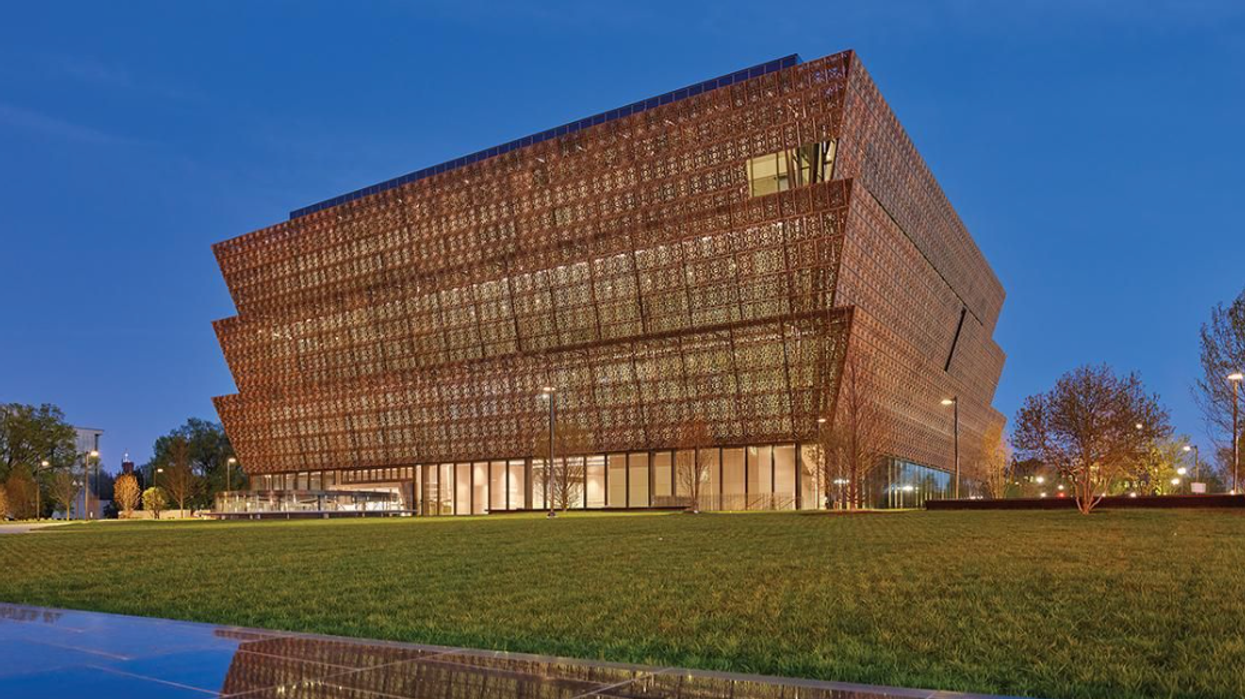
Some headlines are just too stupid to pass by. Yes, this is the Trump era, and Trump being Trump and all that. But even so, there should be some things a president doesn't say — or do. This is one.

"Trump Says Smithsonian Focuses Too Much on 'How Bad Slavery Was,'" The New York Times screamed. Yes, he really said that.

In a post on social media on Tuesday, Trump wrote:

"The Smithsonian is OUT OF CONTROL, where everything discussed is how horrible our Country is, how bad Slavery was, and how unaccomplished the downtrodden have been — Nothing about Success, nothing about Brightness, nothing about the Future. This Country cannot be WOKE, because WOKE IS BROKE. We have the 'HOTTEST' Country in the World, and we want people to talk about it, including in our Museums."

Too much on how bad slavery was? Was it better than we think? Did it not cause a civil war? Are museums supposed to show us what we need to know about our history or what Donald Trump and his white nationalist friends would like to hear?

The social media post comes a week after the Trump administration warned the Smithsonian that its museums must, within 120 days, adjust any content that the administration finds problematic in "tone, historical framing and alignment with American ideals." In his social media post, Trump said that he had instructed his lawyers "to go through the Museums, and start the exact same process that has been done with Colleges and Universities."

Could it be any worse? Do to the Smithsonian what he has done, and is doing, to America's leading educational institutions? Strip them of their independence, of their academic freedom and integrity, in the name of fighting antisemitism. As the Jewish faculty of UCLA has rightly stood up and said, "No, thanks." And double, "No, thanks" to whitewashing our history. What message does that send to a Black schoolchild who visits the museum?

"It's the epitome of dumbness to criticize the Smithsonian for dealing with the reality of slavery in America," Douglas Brinkley, one of America's most respected presidential historians, told The New York Times. "It's what led to our Civil War and is a defining aspect of our national history. And the Smithsonian deals in a robust way with what slavery was, but it also deals with human rights and civil rights in equal abundance."

The "epitome of dumbness." Trump has been there before. The effort to whitewash our history extends to other stupid things this administration and this president have done, from minimizing the contributions of Black heroes, including the Tuskegee Airmen who fought in World War II and Harriet Tubman, who led Blacks to freedom on the Underground Railroad, to advocating the return of Confederate insignia and statues honoring those who fought to preserve slavery. On Juneteenth, the celebration of the end of slavery in the United States that became a federal holiday in 2021, Trump "celebrated" by complaining that there were too many non-working holidays in America.

From the halls of the Smithsonian to the streets of Los Angeles, Donald Trump's war on diversity, equity and inclusion has morphed into a war on Black and Brown people. He makes no bones about it. He is playing to the white nationalist fringe of his MAGA movement, and it is not just dumb but ugly. And racist. The Smithsonian needs to resist, and to fight back, and it needs Congress' support, and the public's, to do so.

Susan Estrich is a celebrated feminist legal scholar, the first female president of the Harvard Law Review, and the first woman to run a U.S. presidential campaign. She has written eight books.

Reprinted with permission from Creators.

Trump Commands Smithsonian To Stop Showing 'How Bad Slavery Was'

Trump Commands Smithsonian To Stop Showing 'How Bad Slavery Was'

On Tuesday, President Donald Trump confirmed that he is going to force changes at the Smithsonian museums in Washington, D.C., including removing exhibits that talk about the ills of slavery.

Trump made the comment in a Truth Social post, in which he said that changes to the museums are part of his war on "woke”—a term conservatives can’t even define but usually refers to their anger at anything that promotes equal rights for people of color, women, and the LGBTQ+ community.

"The Museums throughout Washington, but all over the Country are, essentially, the last remaining segment of 'WOKE.' The Smithsonian is OUT OF CONTROL, where everything discussed is how horrible our Country is, how bad Slavery was, and how unaccomplished the downtrodden have been — Nothing about Success, nothing about Brightness, nothing about the Future. We are not going to allow this to happen, and I have instructed my attorneys to go through the Museums, and start the exact same process that has been done with Colleges and Universities where tremendous progress has been made," Trump wrote. "This Country cannot be WOKE, because WOKE IS BROKE. We have the 'HOTTEST' Country in the World, and we want people to talk about it, including in our Museums."

Of course, slavery was objectively bad, and remains a stain in U.S. history. Millions of African Americans were enslaved in cruel conditions, finding themselves raped and beaten at the hands of the white slave owners who reaped the economic benefits of their indentured servants.

Indeed, the impact of slavery still hurts Black people in the U.S. today—with Black communities facing economic and educational inequities that trace back to slavery and Jim Crow segregation.

What's more, other parts of Trump's idiotic Truth Social post are also false, as Smithsonian museums absolutely do feature success stories. Not to mention, Trump's claim that the museums do not contain anything about the future is also absurd, as history museums by definition focus on history, which by definition is in the past.

Ultimately, Trump’s vow to be the arbiter of what is included in Smithsonian museums is the latest way Trump is trying to rewrite history—and make the entire country view America through his racist and egomaniacal lens.

Since his first term in office, Trump has tried to whitewash the United States’ history, including when in 2020 he announced that he was creating the 1776 Commission in order to make sure kids were not being taught that the United States is “an irredeemably and systemically racist country.” The 1776 Commission ended up releasing a report in January 2021, right before Trump was booted from office, that the American Historical Association said amounted to “a screed against a half-century of historical scholarship.”

After taking office again in 2025, Trump quickly went to work to whitewash history, including stripping mentions of diversity and equity from government websites, which led to irrational things like the removal of photos of the Enola Gay B-29 bomber because it contained the word “gay.” A Defense Department tribute to Jackie Robinson, an Army lieutenant who became the first Black man to play Major League Baseball, was also removed. Additionally, articles about the Navajo Code Talkers, who in World War II used their native language to create a code that the Nazis could not understand that helped the Allied forces communicate battle strategy, were removed from the Defense website.

Trump also signed an executive order that deemed books that tell the story of slavery to be filled with “corrosive ideology,” and ordered them removed from the Smithsonian Institution and the national park system. And the Smithsonian changed an exhibit on presidential impeachment to make Trump's two impeachments look less damning.

Meanwhile, Trump is also attacking universities, threatening to pull funding if they do not bend to his will on everything from hiring decisions to admissions policies.

Trump during his first run for office declared that he “loves the poorly educated.” Now, he’s trying to ensure everyone in the U.S. is poorly educated, taught only his false and whitewashed view of history.

Reprinted with permission from Daily Kos.

Tucker Carlson's Notes On The State Of Whiteness

Tucker Carlson's Notes On The State Of Whiteness

Former Fox News host Tucker Carlson has, with the recent exposure of an unredacted text message to one of his producers, done the American people a grand favor. He has unleashed for all to see the truth behind his, and racists’ like him, devotion to white supremacy.

You have probably read about the brouhaha Carlson caused. His text was first seen by Fox executives and board members on the eve of the Dominion Voting Systems lawsuit. Their discovery set off a rapid-fire chain of events. Apparently concerned that if the lawsuit went forward, the text would be revealed in court and expose the support of Fox News for Carlson’s racism. The very next day, the network fired their most popular and lucrative host and agreed to settle the lawsuit.

Those kinds of decisions at Fox are made by one man, Rupert Murdoch. He can’t have been happy about the consequence of either decision he had to make, because both cost him hundreds of millions of dollars. The lawsuit settlement alone cost $787.5 million. Because Fox News accounts for 70 percent of the parent company’s profits, and Tucker Carlson dominated cable ratings in his hour and supported the shows on either side of him, Carlson’s firing is likely to be even more expensive for the network. Ratings during the 9 o’clock hour fell by half the day after Carlson’s show was canceled and have stayed in the tank in the days since.

What set it all off was a single sentence in the Carlson text: “It’s not how white people fight.” I’m not going to bore you by reprinting more of Carlson’s disgusting racist jeremiad, but some context is useful here. The text was sent on Jan. 7, 2021, the day after a violent mob of Trump supporters stormed the Capitol building, assaulting police officers so badly that 140 of them had to be treated for their injuries, with some hospitalized. Five officers died as a result of the insurrection.

Carlson clearly watched the coverage of the violence at the Capitol on Jan. 6, but that wasn’t what he wrote to his producer about. Instead, he recounted having seen footage of three men he described as “Trump supporters” savagely attacking “an antifa kid” at a street demonstration two weeks previously. He went on to describe how he hoped the three-man mob would “hit him harder, kill him.” He then spasmed into a moment of what for him must have been uncomfortable self-reflection, lamenting that “I shouldn’t gloat over his suffering, I should be bothered by it…. if I reduce people to their politics, how am I better than he is?”

Commentators, largely on the left, launched into insta-psychological analysis of Carlson, focusing on what they saw as a mini-crisis of conscience as he appeared to identify with the plight of the antifa kid.

But look at his concluding sentence more closely: the “he” Carlson refers to is the antifa kid, not the Trump supporters who attacked him, so it’s not the attackers he’s comparing himself to, it’s the victim. The key word in Carlson’s statement here is “better.” He’s worried that if he condones such a brutal beating, how can he be “better” than the kid, who as the victim of the attack, hasn’t done anything more than absorb the beating. As for the vicious Trump supporters, well, you can’t do any better than them.

The clear implication of Carlson’s overtly racist observation, “It’s not how white people fight,” is that Carlson believes that white men, because of their whiteness, fight better or more nobly than non-white men. Carlson is clearly implying that those to whom he is comparing White men are Black men, given Carlson’s obsession on his show with attacking not only Black Lives Matter demonstrations after the death of a Black man, George Floyd, but the sentiment and belief of the slogan itself. In Carlson’s political world, Black lives do not matter. White lives matter in his world because white people are better than Black people, especially the White men Carlson appears so worried about.

This is the essence of white supremacy. Where do these ignorant, ignoble, execrable notions come from, that white people are superior to Black people in this country?

Well, they come from none other than Thomas Jefferson himself. Not only did Jefferson write the Declaration of Independence and its words, “all men are created equal” at the same time that he owned about 200 enslaved Black people, he wrote the founding document of white supremacy, “Notes on the State of Virginia.” In his 83 years on this planet, eight of them as President of the United States, Jefferson wrote thousands of letters but only one book, commonly referred to by Jefferson scholars as “Notes.” And so, as citizens collectively descended from Jefferson’s ideas about democracy, it is incumbent upon us that we should pay his one and only book the attention it deserves.

Jefferson wrote the book in 1781, five years after he wrote the Declaration, two years before the end of the Revolutionary War, and eight years before the founding of the country with the signing of the Declaration of Independence. In his book, Jefferson attempted to set forth a description of why he thought his state was a repository of what comprises a civilized society and makes it good and worthy of enduring. He discussed his ideas of governance, including a separation of powers, individual rights, freedom of religion, and other ideas which would find their way into the Bill of Rights, which he and Madison insisted be included in the Constitution as a condition of their signing the document.

A good portion of Jefferson’s book is devoted to a chapter he calls “Laws,” in which he sets forth literal laws and punishments for breaking them, as well as a theoretical framework for solemnizing marriages, settling debts, registration of land sales, inspections of goods such as tobacco and flour and turpentine before sale, defining citizenship and other matters of state.

In a chapter of about 7,000 words, Jefferson devotes nearly 3,000 of them to the subject of slavery, emancipation, and race. Nearly the entirety of his discussion argues against emancipation. He is afraid that freeing slaves, because of the harm that had been done to them, “will divide us into parties, and produce convulsions which will probably never end but in the extermination of the one or the other race.”

He quickly moves on from the existential crisis that would be caused by freeing slaves to the reasons he feels Blacks should not be free. They are “inferior” in every way: “Whether the black of the negro resides in the reticular membrane between the skin and scarf-skin, or in the scarf-skin itself; whether it proceeds from the colour of the blood, the colour of the bile, or from that of some other secretion, the difference is fixed in nature, and is as real as if its seat and cause were better known to us,” he writes. Not done yet, he launches into as racist a description of the physical characteristic of Blackness that exists: “Is it not the foundation of a greater or less share of beauty in the two races? Are not the fine mixtures of red and white, the expressions of every passion by greater or less suffusions of colour in the one, preferable to that eternal monotony, which reigns in the countenances, that immoveable veil of black which covers all the emotions of the other race? Add to these, flowing hair, a more elegant symmetry of form, their own judgment in favour of the whites, declared by their preference of them, as uniformly as is the preference of the Oranootan for the black women over those of his own species.”

Got that? He’s comparing the preference of white people for others of similar appearance to the preference of an “Oranootan” for Black women rather than Oranootan females.

It gets worse, and yet even more familiar. Blacks are stronger, “they seem to require less sleep,” “they are more ardent after their female,” yet their “love seems with them to be more an eager desire,” as compared to, say, white people’s “tender delicate mixture of sentiment and sensation.”

And worse: Blacks are not as educable as whites. “In reason they are inferior;” “they will crayon out an animal, a plant, or a country, so as to prove the existence of a germ in their minds which only wants cultivation.” It would take mixing the races, to which Jefferson expresses strong opposition, to improve the lot of Blacks. “The improvement of the blacks in body and mind, in the first instance of their mixture with the whites, has been observed by every one, and proves that their inferiority is not the effect merely of their condition of life.” But by implication can be blamed wholly on their race.

Finally, Jefferson gets to the nub of his discussion of slavery and race. If slaves are freed, “What further is to be done with them?” He discusses how the Romans did it with their slaves, who had the advantage of being white: “Among the Romans, emancipation required but one effort. The slave, when made free, might mix with, without staining the blood of his master.” But not so Black slaves: “This unfortunate difference of colour, and perhaps of faculty, is a powerful obstacle to the emancipation of these people… with us a second is necessary, unknown to history. When freed, he is to be removed beyond the reach of mixture.”

See that? There is no hope for them because of their Blackness. Jefferson, in his time and by historians known as a man of Reason, cannot see through his own prejudice, born as he says, “of observation.” An engineer, architect, scholar, scientist, and horticulturalist among his other talents, Jefferson was convinced that while anecdotal evidence proved his racist observations, scientific studies would prove his racist theories: “To justify a general conclusion, requires many observations, even where the subject may be submitted to the Anatomical knife, to Optical glasses, to analysis by fire, or by solvents,” he wrote.

His “general conclusion” was the founding statement of white supremacy in this country: “I advance it therefore as a suspicion only, that the blacks, whether originally a distinct race, or made distinct by time and circumstances, are inferior to the whites in the endowments both of body and mind.”

Some of these ideas no doubt had their roots in systemic racism in other societies in earlier times. But Thomas Jefferson put it all down for posterity here in this country. As one of the two or three most important of our founding fathers, his words still carry great weight and can be made to affect our lives every day. The Supreme Court, for example, is in the process of tying the First Amendment, of which Jefferson was one of two authors, into a pretzel to justify discrimination against entire categories of American citizens because of religious beliefs of some.

Jefferson’s disgusting ideas about race still find an eager audience in America. Carlson and his ilk, outright white supremacists such as those Carlson went so far as to invite as guests on his show, embrace Jefferson’s ideas even to this day. Carlson may have lost his platform at Fox News, but he and his ilk are still out there pushing their ideas of white supremacy couched in intellectual batting like the so-called great replacement theory. That fact is all you need to know about the struggle ahead. To end slavery took the Civil War, and yet the war against the Tucker Carlson’s of this world and their not yet dead ideology of race is still to be fought.

Lucian K. Truscott IV, a graduate of West Point, has had a 50-year career as a journalist, novelist, and screenwriter. He has covered Watergate, the Stonewall riots, and wars in Lebanon, Iraq, and Afghanistan. He is also the author of five bestselling novels. You can subscribe to his daily columns at luciantruscott.substack.com and follow him on Twitter @LucianKTruscott and on Facebook at Lucian K. Truscott IV.

Please consider subscribing to Lucian Truscott Newsletter, from which this is reprinted with permission.

Shop our Store

Headlines

Editor's Blog

Trending

World