Tag: stanley mccrystal
Pete Hegseth

Hegseth Weakening Military Readiness With Political Purge Of Top Generals And Admirals

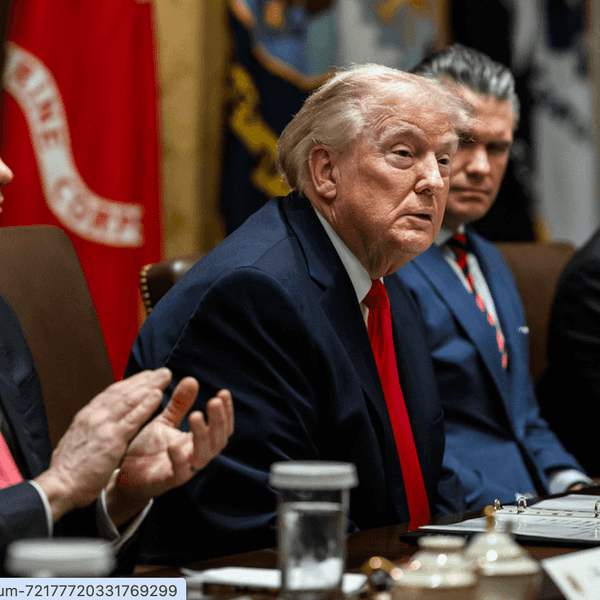
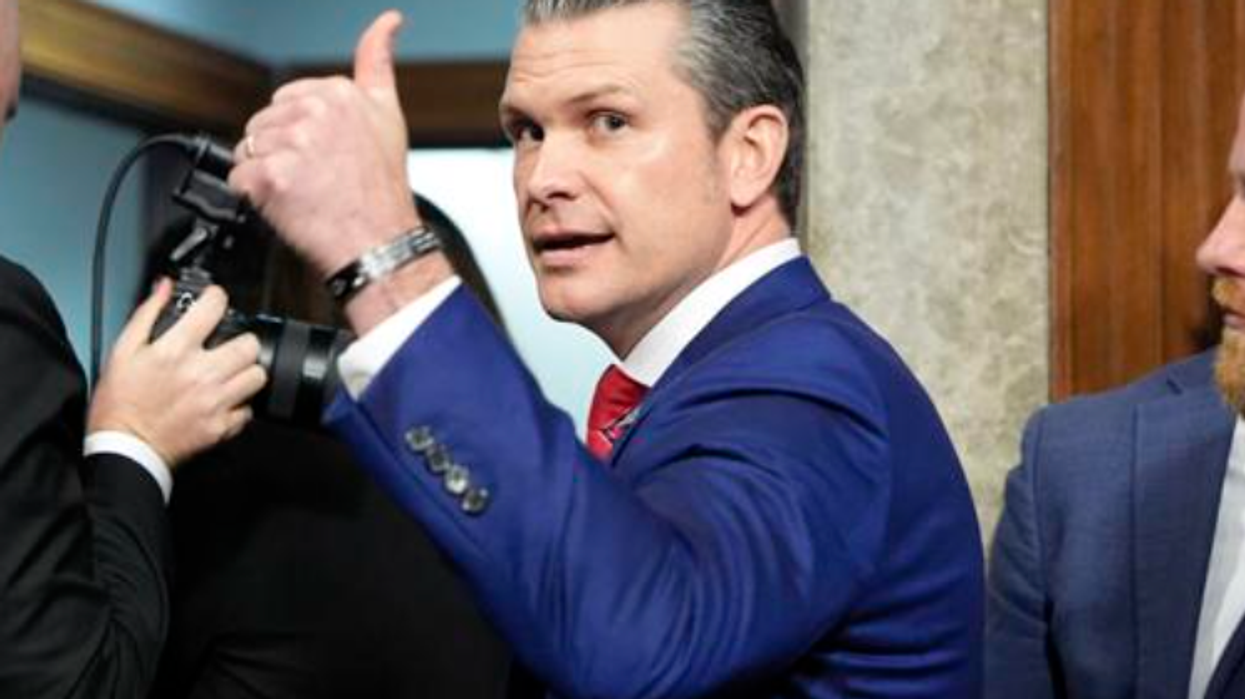
Since President Donald Trump's second term began in January, Defense Secretary Pete Hegseth has fired roughly two dozen top generals and admirals — often for political reasons.

Approximately 20 current and former military leaders recently told the New York Times that Hegseth's decisions were leading to the Pentagon having a dearth of generational experience that could take years to recover. Former National Security Council member Kori Schake said the Trump administration was "squandering an enormous amount of talent." Sen. Elissa Slotkin (D-MI), who was a CIA officer before running for Congress, referred to Hegseth's firings of three-star and four-star generals and admirals as a "purge" on her X account.

"The places where we’ve looked at these kinds of things are places like China," Slotkin said during a Senate hearing. "I used to work on Iraq. They would do the same thing."

Many top officers were fired due to their ties to General Mark Milley (Ret.), who was the United States' top military leader between in the final two years of Trump's first term and through most of former President Joe Biden's term. Milley told journalist Bob Woodward in 2024 that Trump was "fascist to the core" and "the most dangerous person to the country." The Times reported that Hegseth had delayed or cancelled the promotions of "at least four senior military officers" because they previously worked for Milley.

This includes Maj. Gen. James Patrick Work, who was set to head U.S. Central Command, which oversees military operations in the Middle East. Work served as Milley's executive officer in 2018, and his status remains in limbo despite strong backing from U.S. Army leadership.Hegseth also fired Adm. Milton Sands in August, who is the commander of the elite Navy SEALs, because he promoted diversity, equity and inclusion (DEI) initiatives within the SEALs.

Rear Adm. Michael Donnelly was nominated to become vice admiral and commander of the Navy's Seventh Fleet, which the Times reported is the Navy's largest overseas fighting force. However, Hegseth cancelled his promotion after the far-right Daily Wire reported that a sailor on the aircraft carrier Ronald Reagan performed in drag during a talent show (Donnelly was not on board the carrier at the time).

Several of the Times' sources worried that Hegseth had politicized the military, and thereby ruined its credibility among the civilian populace. Gen. Stanley McChrystal (Ret.) told the paper: "Once lost, the legitimacy of a military that reflects and represents all Americans will be difficult to recover."

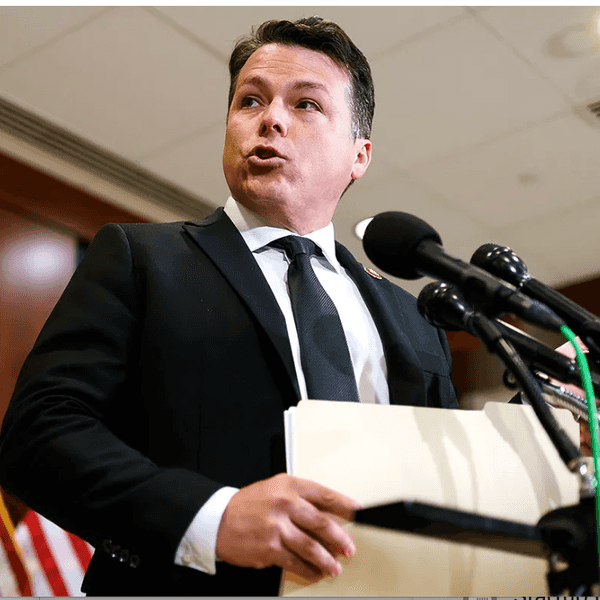
"The message being sent to those younger soldiers and sailors and airmen and Marines is that politics can and should be part of your military service," Rep. Jason Crow, (D-CO), who is a former Army Ranger, told the Times. "It’s a dangerous message."

Reprinted with permission from Alternet
Seeking Sanity On Sgt. Bergdahl

Seeking Sanity On Sgt. Bergdahl

GETTYSBURG, PA — There were many poignant moments in President Obama’s speech in Normandy commemorating the 70th anniversary of D-Day. But two sentences he spoke at what he called “democracy’s beachhead” seemed especially resonant  back home.

“Whenever the world makes you cynical, stop and think of these men,” Obama said. “Whenever you lose hope, stop and think of these men.”

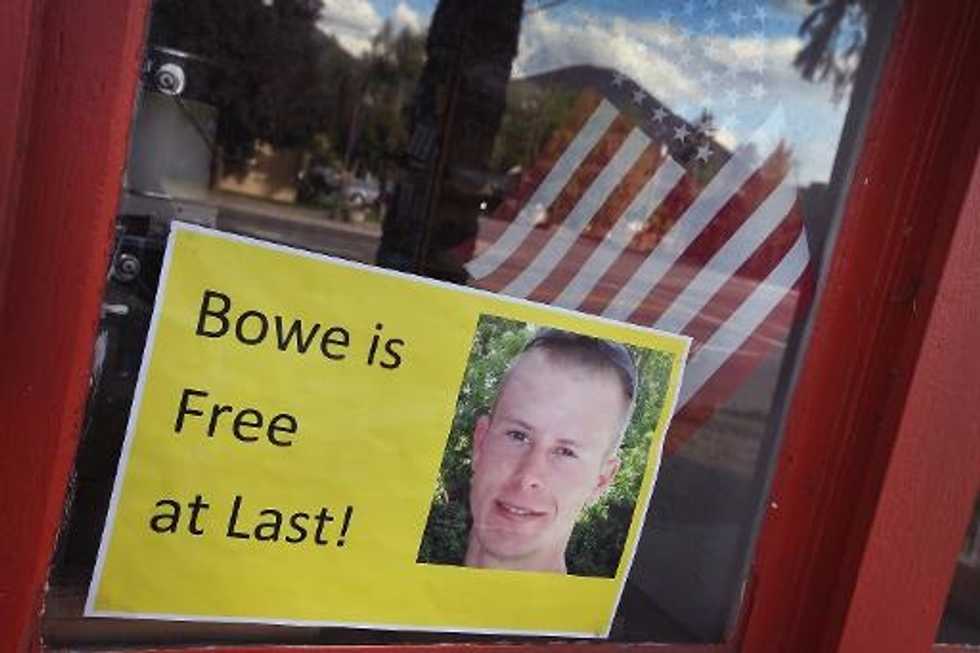
It’s hard not to be cynical after the display of rancid partisanship that greeted the release of Sgt. Bowe Bergdahl after five years as a Taliban-held prisoner of war. The Greatest Generation would not have acted this way.

Yes, Obama could certainly have handled the situation better. It’s fair to question the optics of the Rose Garden ceremony announcing Bergdahl’s freedom, to wonder why the administration did not acknowledge upfront the ambiguities surrounding his tour of duty, and to ask why Congress wasn’t alerted to the deal the administration was negotiating.

But what’s truly astounding is how many Republicans raced to turn Obama’s commitment to bringing home a POW into an outrage. It tells us something that so many GOP politicians first tweeted warmly about the good news only to take their tweets down and replace them with the party line that we never negotiate with terrorists, that Obama had endangered the nation, etc.

Four months ago, Senator John McCain said he could support the kind of trade Obama made to get Bergdahl back. When it happened, McCain declared, “I would have not made this deal.” McCain is a national hero who spent over five years in captivity during the Vietnam War. He may have let his unhappiness with Obama’s overall Afghanistan policy get the best of him.

And there is no defense for the rush to judgment on Bergdahl’s own behavior. Those who served with him and are angry that he walked away from his base have every right to challenge what Bergdahl did and insist upon accountability. But why can’t commentators safe in their studios and offices have the decency to withhold their verdicts until all the facts are in? Bergdahl volunteered to fight for his country. This should at least earn him the chance to explain himself before the pundit mob descends.

As the charges were flying, I found myself at the scene of one of our Civil War’s bloodiest and most consequential battles for a meeting of the Aspen Institute’s Franklin Project, dedicated to making a year of national service a widely accepted norm. Leading the effort is retired Gen. Stanley McChrystal, the former commander of our forces in Afghanistan. In an interview, he offered the sanest and most balanced take on this controversy I have heard.

“I think the key thing in a case like Sgt. Bergdahl’s is you first understand there’s a responsibility to our servicemembers and that’s very clear-cut and nobody should argue about that,” McChrystal said. “We know we have a responsibility to get them or their remains, and we go to great efforts to do that.

“And then, there’s a responsibility on individuals, servicemembers, back toward their nation and their comrades and we should demand that and we should check into that. But we as a nation, instead of politicizing something like this, we as a nation, should look at it and say: OK, [it’s a] complex problem, how do we handle this in a way that brings us together? Because it actually makes us look weaker to our allies, it makes us look confused to our foes, and if we were very united on something like this and we just said: ‘America doesn’t leave its people but we do have a high standard,’ then I think we’d come out better.”

Precisely right, and conservatives such as my colleagues Kathleen Parker, Charles Krauthammer and David Brooks should be saluted for breaking with the party line and defending the idea that we get our POWs back.

For there is an additional cost to the dumb and destructive partisanship we’ve seen over the last week: It discredits constructive partisanship.

As the political philosopher Nancy Rosenblum noted in On the Side of the Angels: An Appreciation of Parties and Partisanship, we’re too quick to condemn all forms of party loyalty. Parties, she writes, are “a principal source of political creativity” and “crucial for politics in pluralist societies,” challenging each other’s “principles and policies.”


But parties, she adds, are also supposed to impose “political self-restraint,” along with “mental and emotional discipline.”

In the Bergdahl episode, self-restraint and discipline disappeared.

E.J. Dionne’s email address is ejdionne@washpost.com. Twitter: @EJDionne

AFP Photo/Scott Olsen

Want more political analysis? Sign up for our daily email newsletter!

Shop our Store

Headlines

Editor's Blog

Corona Virus

Trending

World