Tag: stock market
With Courage And Grit, AI Workers Could Save Democracy

With Courage And Grit, AI Workers Could Save Democracy

The AI promoters have made grand promises about how AI will change everything and give us all happier, healthier lives. Maybe that will be proven right, but it’s fair to say they have not yet delivered.

However, AI workers may have the power to do something very important in the present, not some distant or not so distant future. They can save democracy.

Their route to saving democracy is by not doing AI, or at least not doing AI with their current employers. At the moment, AI is clearly driving the economy. Investment in data centers and the power plants to support them directly account for a large share of economic growth.

Probably even more important than the direct investment is the impact of AI on stock market wealth and thereby on consumption. We have seen a huge run-up in the stock market driven primarily by companies that are heavily invested in AI.

To take the obvious examples, Nvidia, which makes most of the key chips for AI, now has a market capitalization of almost $4.5 trillion. Its stock has risen 1500 percent in the last five years. Microsoft has a market capitalization of $3.4 trillion. Its stock price has doubled in the last five years. Apple and Meta’s stock prices have risen less dramatically, but now have market capitalizations of $3.8 trillion and $1.6 trillion, respectively.

Stock wealth translates into higher consumption as people spend annually between 2 and 3 cents on a dollar of stock wealth. In the last five years the market has added nearly $30 trillion in wealth as the market has more than doubled in value. That stock gain translates into between $600 billion and $900 billion in annual consumption spending, or 2-3% of GDP. This is clearly a huge factor in driving the economy.

If the AI bubble were to burst, this pattern of growth would come to an end. If I and many others are correct in calling AI a bubble, it will burst in any case, the only question is the timing.

One factor that could hasten the collapse would be if a substantial number of top AI researchers took a hike, and either took some time away from the industry (maybe literally take a hike) or moved into some other area of research. The big AI companies that have gone to great lengths to recruit top researchers would likely see their stock valuations plummet. This could quickly end the current AI frenzy.

How does this save democracy? In my crude analysis of our current politics, Trump has a hard-core base of around 25% of the electorate. This crew will be with Trump no matter what. As he put it some years back, he could kill someone on Fifth Avenue, and they would still support him.

Roughly 50% percent of the population oppose Trump, most of them very strongly as they see clearly the threat he poses to democracy and our fundamental rights. Then there is another 25% or so that may not really like Trump, they might even think he’s a jerk, but hey, their 401(k)s are up, the economy isn’t doing badly, so why not?

This group has been edging away from Trump in the last year, with polls showing his overall approval now hovering near 40%. But they would edge away far more quickly if their 401(k)s suddenly took a big hit and we got our second Trump recession. (The first one was in 2020, for the folks with bad memories.)

If Trump went from being slightly unpopular to being extremely unpopular, we would start to see Republican politicians in the House and Senate suddenly come back to life. Very few of this group have any real commitment to Trump. In fact, some of them were hardcore never Trumpers before he took over the party.

These politicians care first and foremost about their careers, and they will not wed themselves to a 79-year-old man whose popularity is sinking like a rock. They will start again acting like members of Congress and doing things like overseeing spending, limiting Trump’s barrage of executive orders, and reining in ICE, which Trump is using as his personal police force to terrorize the states and cities that support Democrats.

The top AI researchers have the ability to set this ball in motion. It may be some personal sacrifice, but these people’s skills will still carry enormous value a year or two from now. They will not go hungry. And if the bubble is going to burst anyhow, why not get out front and do something great for the world?

To be clear, in my view this is not an issue of doing something bad to the economy. I have written before on how it would be good if the AI bubble bursts sooner rather than later. The same was true for the 1990s tech bubble and the housing bubble in the 00s. In all these cases we would have been much better off if the bubbles had burst years earlier.

Huge amounts of resources were being misallocated. The larger the bubble, the more painful the readjustment process. And to be clear, an economy where all the consumption growth is coming from the richest 20 percent of the population is not a healthy one. Bringing that pattern of growth to an end soon looks pretty good in my book.

We know the top people in tech, folks like Jeff Bezos at Amazon and Mark Zuckerberg at Meta, are just fine with Trump’s destruction of democracy. But these are not the people who make their companies economic powerhouses. If the people who actually do the work step forward, they really can change the world. The rest of us will keep trying too.

Dean Baker is a senior economist at the Center for Economic and Policy Research and the author of the 2016 book Rigged: How Globalization and the Rules of the Modern Economy Were Structured to Make the Rich Richer. Please consider subscribing to his Substack.

Reprinted with permission from Dean Baker.

Even Fox's Maria Bartiromo Is Troubled By Trump Bullying Of Fed Chair

Even Fox's Maria Bartiromo Is Troubled By Trump Bullying Of Fed Chair

Fox Business host Maria Bartiromo is among President Donald Trump’s most zealous propagandists, so much so that he reportedly considered making her his 2024 running mate. But even she seems hesitant to fall in line with the Trump administration’s apparent effort to strong-arm Federal Reserve Chair Jerome Powell.

Powell, in an extraordinary video message released on Sunday night, said that the Fed had received Justice Department subpoenas on Friday which threatened a criminal indictment over his congressional testimony regarding ongoing renovations of its headquarters. He portrayed the move as pretextual, part of Trump’s long-running effort to pressure Powell to drastically lower interest rates and diminish the Fed’s independence.

Trump and his appointees have spent the last year refashioning the Justice Department into an institution that punishes his enemies and protects his friends, demolishing safeguards and purging dissidents along the way. The Powell investigation is in keeping with that trend, reportedly overseen by Jeanine Pirro, the longtime Fox host and fervent Trump ally whom he appointed as U.S. attorney for the District of Columbia.

Bartiromo, who typically demonstrates lockstep support for the president’s initiatives, seemed unusually skeptical of the Powell probe in a Monday morning discussion on her Fox Business show.

“It just feels like most on Wall Street do not want to see this kind of fight,” Bartiromo said. “I mean, you know, you’ve got a chairman who is at odds with the president of the United States. The president has very good points, certainly. But Wall Street doesn’t want to see this kind of investigation because it looks like the president is actually, you know, shoehorning rates, and now doing it through the DOJ.”

Bartiromo’s panelists were even more open in decrying the move.

Fox contributor Liz Peek said of the probe, “I don't like it. I think it's a unforced error by the Trump administration,” She explained that she agreed with the president on the cost of the Fed renovations and Powell’s performance, but added, “I don't really know what this is supposed to accomplish.”

“The president needs to kind of step back, quite honestly,” offered financial services consultant Kenny Polcari. “It's not in his job description to control interest rates. The Fed is an independent agency. We understand that. We know that. And I think that's what's causing a little bit of nervousness in the markets this morning, just about the fact that what could he really do, how could he really push this? I think he needs to back off and leave the Fed alone.”

Bartiromo then hedged, saying, “I know, but if he lied, he lied,” and suggesting it was important to get to the bottom of Powell’s comments to Congress.

Ken Mahoney, a financial asset manager, replied that while the cost of the renovations is sizable, this is “bad timing” given “the president’s other priorities,” noting that “most people probably wake up hoping that [Minnesota Gov.] Tim Walz was the one that was being indicted, not Jerome Powell.”

While Bartiromo’s willingness to use her Fox News and Fox Business shows to peddle insane conspiracy theories on Trump’s behalf has cost her network dearly, the president has rewarded her with multiple interviews and personal access, including an invitation to a splashy White House banquet honoring Saudi Crown Prince Mohammed bin Salman in November.

Reprinted with permission from Media Matters


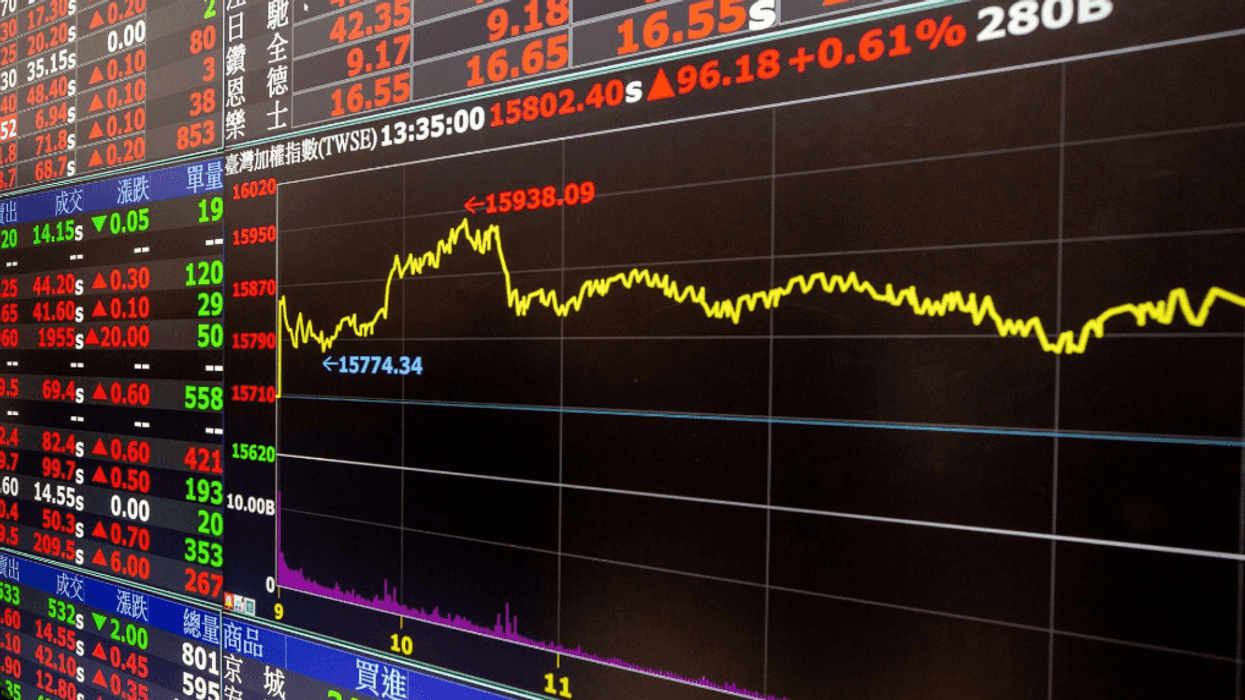
https://www.freepik.com/premium-ai-image/man-shock-as-stock-market-charts-plunge-large-monitor_341143433.htm

Bursting The AI Bubble Just Might Be Better For (Almost) Everyone

It has become common in recent months for people in the business press to note both that AI stocks seem to be in a bubble and that this bubble is driving the economy. In many ways this situation looks similar to the late 1990s tech bubble.

At that time, price-to-earnings ratios in the stock market were roughly the same as they are today. The soaring market then was also driving the economy, as people were consuming based on their new bubble-generated wealth. Also, the insane valuations of many new Internet companies was leading to an investment boom in the tech sector.

When the bubble finally burst, we got the 2001 recession. While this downturn was mild from a GDP perspective, the story was much worse if we focus on the labor market. We did not get back the jobs lost in the recession for four full years. At the time, it was the longest period without job growth since the Great Depression.

Anyhow, the immediate impact of the collapse of the AI bubble will undoubtedly be negative, but there are reasons to still think it would be good for the economy and for most workers. This is best demonstrated by a recent analysis from Moody’s which shows that all the real spending growth over the last year has come from the top quintile of the income distribution. Everyone else has been just treading water.

This fits with other data that show weakening nominal wage growth, with the wage increases for workers in the lowest paying jobs not even keeping pace with inflation. It’s not surprising that consumption for these workers would be stagnating or falling.

To see how this relates to the AI bubble, we can think of the economy as being like a huge bathtub with an open drain. We have two faucets that put water into the tub. The goal is to keep the tub filled but not overfilled. This would correspond to the labor market being at full employment and the economy operating at its capacity.

If the water flows into the tub too slowly, we have unemployment and excess capacity. We are wasting economic potential and workers are being denied the opportunity to work. If the water flows into the tub too quickly, the bathtub overflows and we get water all over the floor. This would be the inflation story.

The two faucets are labeled “rich people” and “ordinary workers.” At the moment, the rich people faucet is wide open, and the water is gushing out. This is the money generated by the AI bubble. There is just a trickle coming out of the ordinary workers faucet.

When the AI bubble bursts, the water coming out of the rich people faucet will also slow to a trickle. This means water will be draining out faster than it is flowing in, and the water level in the tub will drop. This would mean a recession, and an increase in unemployment.

That is bad news for everyone, but the lower water level in the tub means that we have the option to turn the flow from the ordinary workers faucet higher, without causing the tub to overflow. And we do know how to turn the flow higher.

The easiest route is for increasing the flow is to simply have the Federal Reserve Board lower interest rates. That will somewhat boost demand by allowing more people to buy homes and to a lesser extent cars and other big-ticket items. People will also refinance mortgages at lower rates, freeing up money to spend on other things. Lower rates will also provide a modest boost to investment.

The other route for increasing the flow from the ordinary workers faucet is to have the government increase spending. It can boost spending in areas like healthcare, education, and childcare. This would both provide real benefits to people and also stimulate the economy. It can also reestablish and enhance the subsidies for a green transition that Trump killed earlier this year. This will both create jobs and have near-term and long-term environmental benefits.

There is of course no guarantee that Congress will boost spending enough to again fill the bathtub, possibly leaving us with high unemployment for a long period of time. That was the story after both the collapse of the tech bubble in 2000-01 and the collapse of the housing bubble 2007-09.

But this is a political obstacle, not an economic one. The collapse of the AI bubble will create the room the economy needs for policies that would make the lives of tens of millions of people far better. This is why we should all be fans of the collapse and not worry that we are cheering against the home team. For the vast majority in this country, the stock market is not the home team.

Reprinted with permission from Dean Baker.

As Growth Slows, That AI Bubble Just May Burst Into Recession

As Growth Slows, That AI Bubble Just May Burst Into Recession

Gross Domestic Product grew at a 1.2 percent annual rate in the first half of the year, that is down sharply from its 2.5 percent rate in 2024. It is not hard to identify the culprits: uncertainty created by Trump’s tariff threats, the loss of workers due to mass deportation, and government cutbacks in a wide range of areas. This mix is likely to keep us on a path of weak growth through the rest of the year and into 2026, unless the stock market crashes, in which case we could fall into a full-fledged recession.

The weaker GDP growth is matched by weaker job growth. The average of 38,000 a month since April was low enough to get the BLS commissioner fired. That figure likely understates the underlying trend, but probably not by much. The pace of job growth going forward will probably be in the range of 50,000 to 70,000 a month, down from an average of 170,000 jobs a month in 2024.

To a large extent, this slower job growth is by design. The Trump administration’s immigration policy has further reduced the flow of immigrant workers into the labor force (Biden had already sharply reduced immigration in June of 2024) and likely caused many immigrants previously in the workforce to either leave the country or quit their jobs. With the baby boom cohorts retiring in large numbers, the number of native-born workers in the labor force is growing very slowly.

Slower job growth means slower growth in total wages, which in turn means weaker consumption growth. If the labor grows at a rate of 0.4 percent annually (roughly 60,000 a month), that would mean that total wage income is growing 0.4 percent, before adding in real wage growth.

It appears that nominal wage growth is slowing, at least modestly. The annual rate of wage growth during the last three months (May, June, July) compared with the prior three months (February, March, April) is 3.7 percent. Wage growth had been running at 4.0 percent rate in 2023 and 2024.

It slowed even more in the leisure and hospitality sector, which is most sensitive to the strength of the labor market. The average hourly wage for non-supervisory workers in this sector rose at just a 2.5 percent annual rate, comparing the last three months with the prior three months.

There is other evidence of a weakening labor market, notably low hire and quit rates. Also, the unemployment rate for Black and young workers has risen sharply in recent months. These groups typically feel the effects of a slowdown first.

This could mean that we will see further slowing in the pace of nominal wage growth. With inflation rising due to tariffs, real wage growth could slow to a trickle. In that case, consumption growth may be even slower in the second half of 2025 and 2026 than the 1.0 percent rate for the first half of this year.

There is not much to offset the prospect of weak consumption growth. Investment grew at a 6.1 percent annual rate in first half of the year, but it looks likely to slow in the second half. Structure investment is sharply negative, as the boom in factory construction is trailing off and investment in hotels is also slowing sharply. Equipment investment may still grow, but not especially rapidly. Investment in intellectual products is growing but this is due to strong AI driven software investment outweighing weakness in pharmaceuticals and cultural products.

Residential construction fell in both of the last two quarters. It may stabilize, but it is unlikely there will be any major turnarounds absent some big change in policy.

The government sector shrank slightly in the first half of the year, driven by cutbacks in federal spending. State and local spending is likely to weaken in the second half of 2025, as less federal money forces cutbacks. Trade will at best be a small positive factor. Fewer goods imports will mean a modest boost to domestic production, but we are also likely to see a decline in goods exports, as well as exports of services, like foreign tourism in the United States.

The overall picture is one where the economy is barely growing. Unemployment may stay low in spite of weak job growth, due to slow growth in the size of the labor force. However, workers will not feel confident in their labor market prospects and therefore unable to push for healthy wage gains to offset Trump’s tariff hikes. That is not a recession story, but one where we may not be very far from one.

What If the Stock Bubble Bursts?

That’s the positive story for 2025 and 2026, but suppose the AI driven stock bubble bursts? As many commentators have pointed out, the stock market today is starting to look a lot like it did in the late 1990s bubble, which peaked in March of 2000. It eventually plummeted with the S&P losing close to half its value by the summer of 2002.

It’s worth noting that it was not just the tech stocks that plummeted in the 2000-2002 crash. Even the stock of long-established companies like McDonalds and GM lost close to half of their value.

I am not going to try to guess the timing of a crash. I was closely following the stock bubble in the late 1990s, as well as the housing bubble in the 00s. Both bubbles lasted far longer than I would have thought possible. Big money types are able to pursue illusions for a long time, and in the case of the housing bubble, commit outright fraud in the form of mass securitization of loans they knew to be bad.

Perhaps the event will be the recognition that China seems to be well ahead of us in developing AI in important ways. It is also worth noting that the leading Chinese companies seem to have systems that use an order of magnitude less electricity in a country where it is half the cost and far more plentiful. With recent actions by the Trump administration to nix clean energy, the availability of ample low-cost electricity is likely to give Chinese AI developers a major advantage.

Anyhow, who knows what could tick off a collapse of the AI driven bubble. Even a quarter century after the fact, it would be hard to identify an event in March of 2000 that suddenly warranted an end to the Internet bubble. It is easy to speculate on the consequences. Needless to say, the boom in investment in AI would end quickly, as would the rush to build power plants to serve the electricity needs of AI.

While the size of a decline is also hard to predict, even a drop of just 15 percent would eliminate $10 trillion in stock wealth. That would be a big hit to consumption, knocking down annual consumption by as much as $300-$400 billion, which would be virtually certain to throw us into a recession. And considerably larger declines are not out of the question.

It is difficult to know all the knock-on effects of a collapse of an AI bubble. Perhaps crypto will take a huge hit as well. Maybe we will find some major financial institutions were doing very foolish things, as turned out to be the case with the Silicon Valley Bank in the spring of 2023. In any case, a recession is a far safer call if the AI bubble collapses. For now, look for a future of weak economic growth and very weak real wage and consumption growth.

Dean Baker is an economist, author, and co-founder of the Center for Economic Policy and Research. His writing has appeared in many major publications, including The Atlantic, The Washington Post, and The Financial Times.

Reprinted with permission from Substack.

Shop our Store

Headlines

Editor's Blog

Corona Virus

Trending

World