Tag: strait of hormuz blockade
Oil Shipments Can Avoid The Strait Of Hormuz, But No Sooner Than 2028

Oil Shipments Can Avoid The Strait Of Hormuz, But No Sooner Than 2028

In a recent episode of the New York Times podcast, The Daily, journalist David Sanger spoke of Iran’s two leverage points against the United States: one is the nuclear threat, and the other is the Strait of Hormuz:

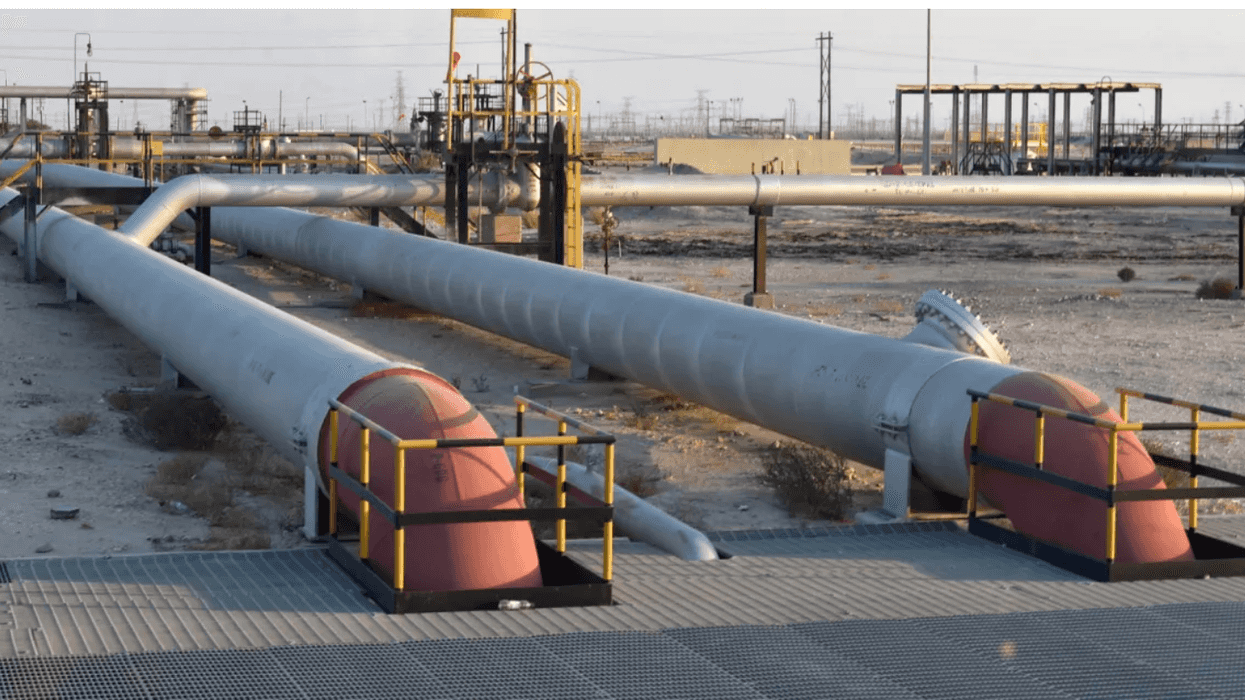
The second piece of leverage they have is the ability to cause havoc in the world economy and world energy markets…that is not necessarily a lasting power for the Iranians. You’re already seeing countries figure out how to get energy elsewhere. Over time, you’re going to see more pipelines built to avoid having to send oil across the Strait. The Saudis have already reactivated an unused pipeline they had to route around the Strait.
So the Iranians know that this is not going to be a forever weapon. But it’s pretty good for right now.

In what should go down as the more egregious missteps in the history of foreign policy, this leverage point was a gift from the Trump administration, whose unwarranted self-confidence and ignorance of the region taught the Iranian regime that they had this weapon.

But I agree with Sanger that it is not a “forever weapon.” Just like you’d learn to avoid the route to school where bullies take your lunch money, the energy exporters of the Gulf are starting to make other plans. Let’s take a brief look at what alternatives exist and when they might come into play.

BLUF: GS Research estimates “that enough pipeline capacity will likely be added in the Mideast region to insulate over 45% of the pre-war level of Persian Gulf producers’ exports by end-2027 and more than 60% by end-2028 from any potential future Hormuz shocks.”

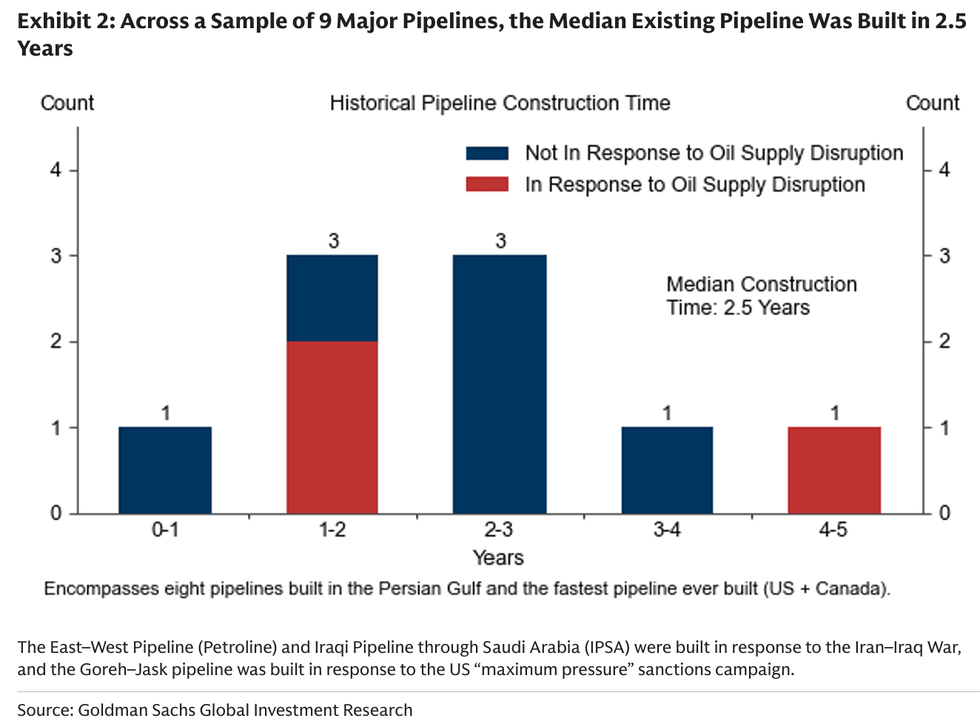
How long does it take to build a pipeline? GS doesn’t have that large a sample, but the median construction time is 2.5 years.
The researchers estimate an “accelerated scenario,” where regional producers, motivated the fact that both sides are dug in and any agreement is likely to be as shaky as the last one, step on the gas to speed up pipeline production.
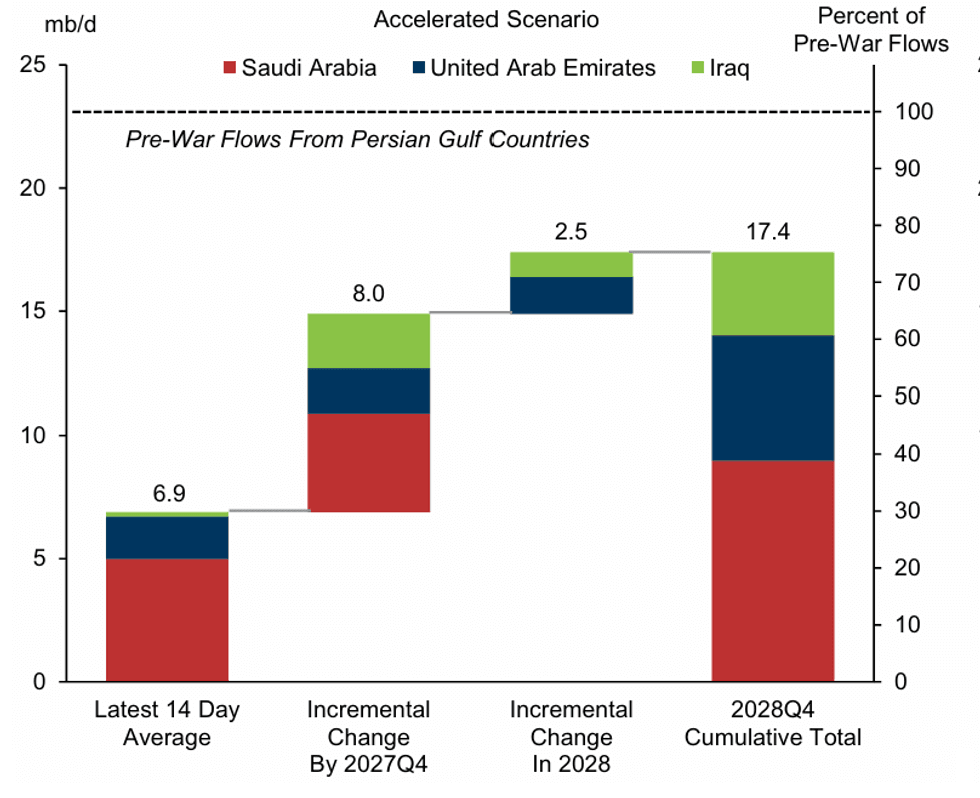
The Saudis and the UAE already are already rerouting about a third of the pre-war supply, and under this scenario, 75 percent of the flows are rerouted by the end of ‘28. Under GS’s conservative scenario, that flow share falls to 45 percent.

If you’re thinking ‘28Q4 feels far away and a lot can happen between now and then, I agree. And I’ve got another idea to help reduce Iranian leverage: shift to renewable energy sources. Every time someone presses start on their electric vehicle, it’s a blow for the oil producers and a ding to Iranian leverage in the Strait, especially, of course, if the electricity is derived from clean sources, which is fast becoming a highly viable option in terms of price-points.

But one thing I’ve learned in many years of tracking global flows is that supply chains will adapt. Now right away, and price effects arrive much sooner; in fact, they’re the motivator for the alt routs. But it’s a good example of the kind of ripple effects you get when you throw a big, dumb boulder in the water, as the Trump admin has done with this war.

Jared Bernstein is a former chair of the White House Council of Economic Advisers under President Joe Biden. He is a senior fellow at the Council on Budget and Policy Priorities. Please subscribe to his Substack, from which this is reprinted with permission.
'JD's Deal': Right-Wing Media Hawks Scapegoat Vance For Iran Crashout

'JD's Deal': Right-Wing Media Hawks Scapegoat Vance For Iran Crashout

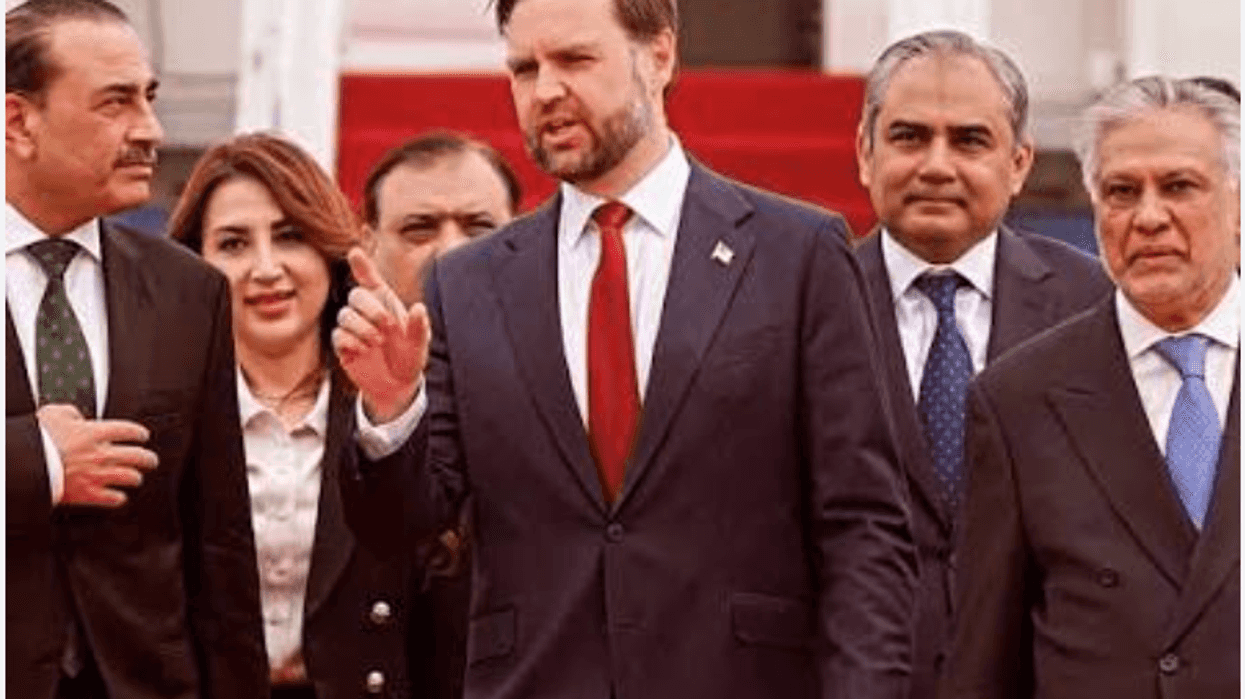
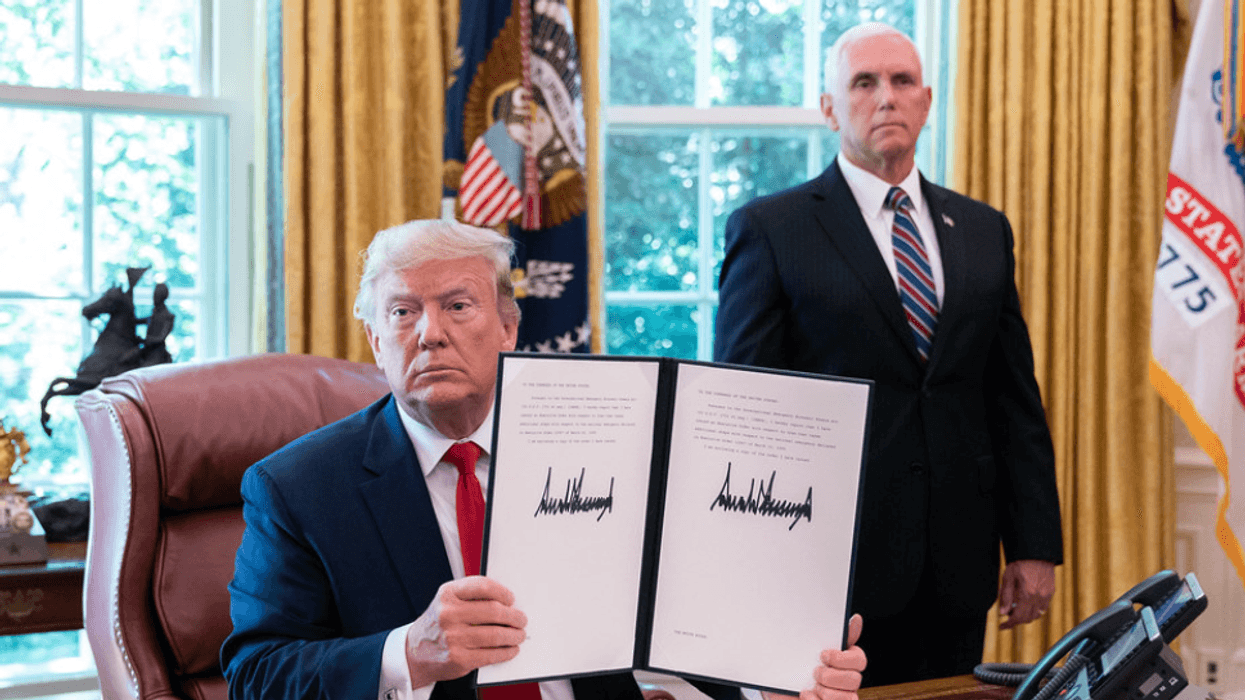
The right-wing media’s hawks recognize the reported memorandum of understanding that President Donald Trump and Vice President J.D. Vance signed with Iran on Sunday is a dog’s breakfast that fails to achieve the administration’s stated war goals and leaves the U.S. in a weaker geostrategic position than before it began. But they also understand that the cult-like structure of the MAGA movement means that criticizing Trump directly could trigger an audience revolt, and that Trump himself is unlikely to change course if he feels personally impugned.

The result is a truly pathetic effort to blame the MOU’s contents on Vance — who reportedly supported the agreement and is making the interview rounds defending it while Trump is in Europe — while absolving Trump of responsibility for the document that he signed and publicly describes as “a very strong deal.”

Fox & Friends co-host Brian Kilmeade exemplifies this approach. A longtime supporter of military strikes on Iran, Kilmeade supported Trump launching the war in February. Over the past months, he has repeatedly urged the president to undertake risky escalations to “finish the job.”

He also laid down a marker by asserting that “we can't leave this conflict with the uranium in the ground and the strait in Iran's hands.” This reported agreement plainly does not meet that standard, and unlike his primetime colleagues Jesse Watters and Sean Hannity, who are lavishing Trump with praise for the MOU, Kilmeade is responding by being forthright about his concerns.

But while Kilmeade spent much of Wednesday’s program panning the MOU’s reported contents, he repeatedly placed the blame on Vance while suggesting that Trump may have been out of the loop and deceived — and now that he’s paying attention, could ultimately decide to blow up the deal at the last moment

“All I'm going to say, the vice president was here and did a wonderful job on every outlet, including The View,” Kilmeade said near the top of the show. “But this is his deal. It's not the president's deal. And it's his deal and Steve Witkoff and Jared Kushner together. I just hope they didn't let the president down. Because the president is putting a lot of stock in them. He can't do everything himself. I just hope they didn't let him down.”

Later in the program, after enlisting Hudson Institute senior fellow Rebeccah Heinrichs to help criticize the MOU for relieving the U.S. blockade and helping to rebuild the Iranian economy while allowing Iran to implement tolls on the strait and leaving the regime in place, Kilmeade added: “Everything that you said, I think the president would say. I’m just wondering if the people that negotiated this have informed the president about what’s in the page and a half he is going to read publicly on Friday.”

He went on to say that he hoped Trump would “go in” and change the agreement to make it more favorable “in the next 24 hours.”

"It doesn't look like Iran has been brought to its knees,” Kilmeade complained in a third segment. “Iran got a lot out of it that many people weren't expecting. That's going to be the issue. And maybe the president wasn't even expecting, because he has got enough plates in the air that he can't be into every detail.”

“So, I just wonder if the vice president, who was against this by all reports, was against the conflict to begin with, maybe he wasn't the right person to bring this conflict to an end," he concluded.

In this telling, Trump — who has spent recent weeks planning a birthday bash featuring military flyovers and a UFC fight at the White House, ensuring that the bottom of the Reflecting Pool is painted “American flag blue,” and complaining about his name being removed from the John F. Kennedy Memorial Center for the Performing Arts — simply lost track of the negotiations to end the war he started, is either too lazy to read the page and a half agreement or too stupid to understand its contents, and was hoodwinked by his perfidious vice president.

And this is the story he’s telling to avoid blaming the president!

Others have similarly sought to make Vance the “Iran Deal Fall Guy,” as The Bulwark’s Joe Perticone put it after speaking to Senate Republicans like Lindsey Graham, who described the vice president as “the architect of the deal.” On Tuesday, Ben Shapiro similarly characterized it as “JD’s deal.” Vance, meanwhile, is accusing right-wing media hawks who criticize the agreement, like Fox’s Marc Thiessen and Mark Levin, of believing “Iranian propaganda,” a characterization sure to widen the split.

Ultimately, the MAGA hawks are victims of their own success and their own hubris. They got the war they demanded, only for Iran’s obvious counterstroke of closing the Strait of Hormuz to prove just as damaging as national security experts had warned. Now the incompetent president they supported is careening that war towards failure, and they can’t even manage to say that publicly without further discrediting themselves and risking their position within the movement.

Reprinted with permission from Media Matters

'Wall Street Journal' Warns Trump Against Ceasefire Bailout For Iranian Regime

'Wall Street Journal' Warns Trump Against Ceasefire Bailout For Iranian Regime

Amid reports that a new ceasefire deal is imminent, the conservative Wall Street Journal editorial board warned President Donald Trump to avoid a deal that functions as an economic bailout for Iran.

Over the weekend, Trump claimed that the U.S. and Iran were close to reaching a deal for a 60-day ceasefire in the conflict that has ravaged the world economy and sent oil prices skyrocketing. Iranian officials confirmed that talks were progressing, but stressed that major sticking points were still holding it back, adding that a deal was nowhere near as close as the president suggested. Nevertheless, news of an impending reprieve sent oil prices tumbling slightly.

In response to these reports, the Wall Street Journal board — which is commonly viewed as a major conservative voice on economic and political issues — published a new piece, warning Trump that one aspect of the supposed plan would amount to an economic bailout for Iran, and would leave the U.S. with only the most extreme leverage to get a final deal made, calling the notion a major potential "strategic setback."

In particular, the board took issue with the proposed portion of the deal that would end the U.S. blockade of Iran's port and allow them to resume selling oil to foreign markets.

"The preliminary deal, as mooted in the press, is for both sides to end their blockades, and perhaps for the U.S. to sweeten the pot financially, while talks on nuclear issues and further sanctions relief continue for 60 days or more," the board wrote. "A U.S. official says, but Iranian officials deny, that the regime gave assurances a final deal would include 'disposal' of its enriched uranium."

The end of the blockade, they warned, would destroy a key piece of U.S. leverage over Iran before its nuclear program is properly dealt with. The only remaining leverage — threatening to renew the fighting — will ring hollow after his previous backtracks.

"The basic problem lies with ending U.S. pressure before dismantling the nuclear program," the board added. "If the blockade ends and Iran can sell its oil, all that’s left to coerce it into nuclear concessions is the threat of renewed war."

It continued: "But Trump wasn’t willing to do that after Iran reneged on reopening the Strait of Hormuz and attacked U.S. forces and Gulf allies. How credible will the threat be 60 days closer to midterms, when it would trigger a new Iranian blockade of Hormuz? A pledge not to build a nuclear weapon means nothing because the regime has always said that while doing the opposite... Iran’s regime went into this war facing domestic political and economic crises. War has made these worse. Saving such a regime now with an economic bailout would be the real betrayal—of the U.S. interest even more than the Iranian people.”

Reprinted with permisson from Alternet


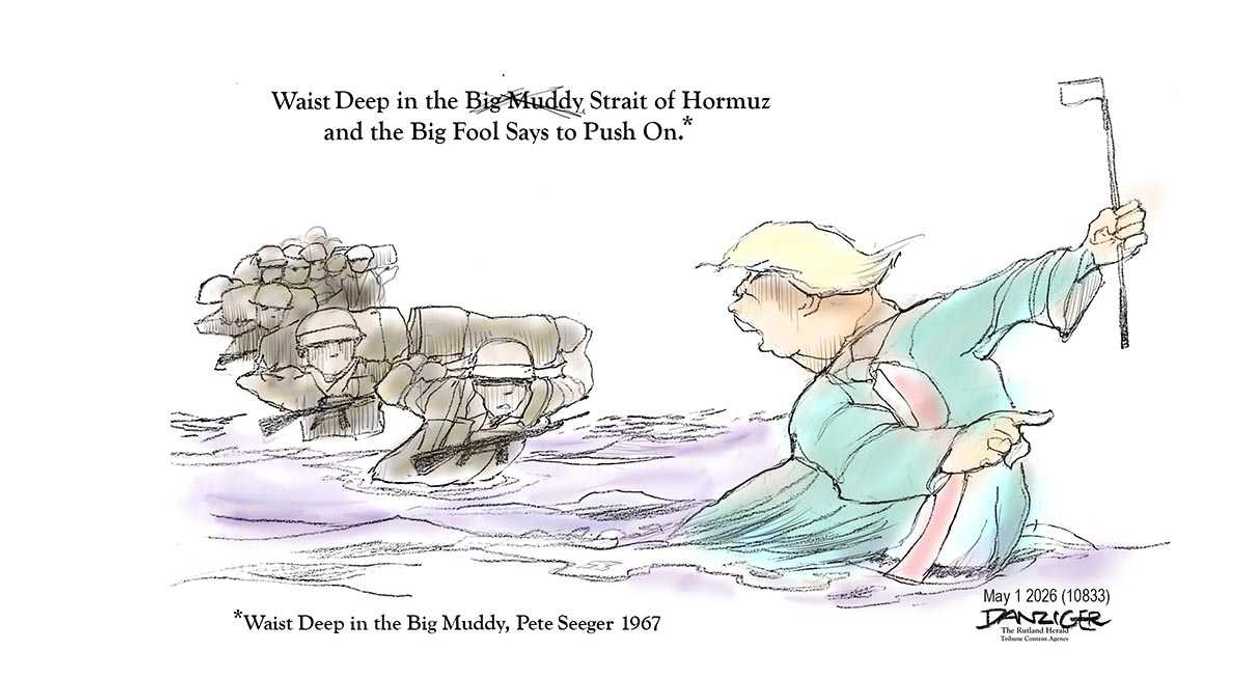
Danziger Draws

Danziger Draws

Jeff Danziger lives in New York City and Vermont. He is a long time cartoonist for The Rutland Herald and is represented by Counterpoint Syndicate. He is a recipient of the Herblock Prize and the Thomas Nast (Landau) Prize. He served in the US Army in Vietnam and was awarded the Bronze Star and the Air Medal. He has published eleven books of cartoons, a novel and a memoir. Visit him at jeffdanziger.com.

Shop our Store

Headlines

Editor's Blog

Trending

World