Tag: supply chain problems
Behind Tomorrow's Federal Reserve Decision, A Delicate Economic Balancing Act

Behind Tomorrow's Federal Reserve Decision, A Delicate Economic Balancing Act

They just keep comin.’

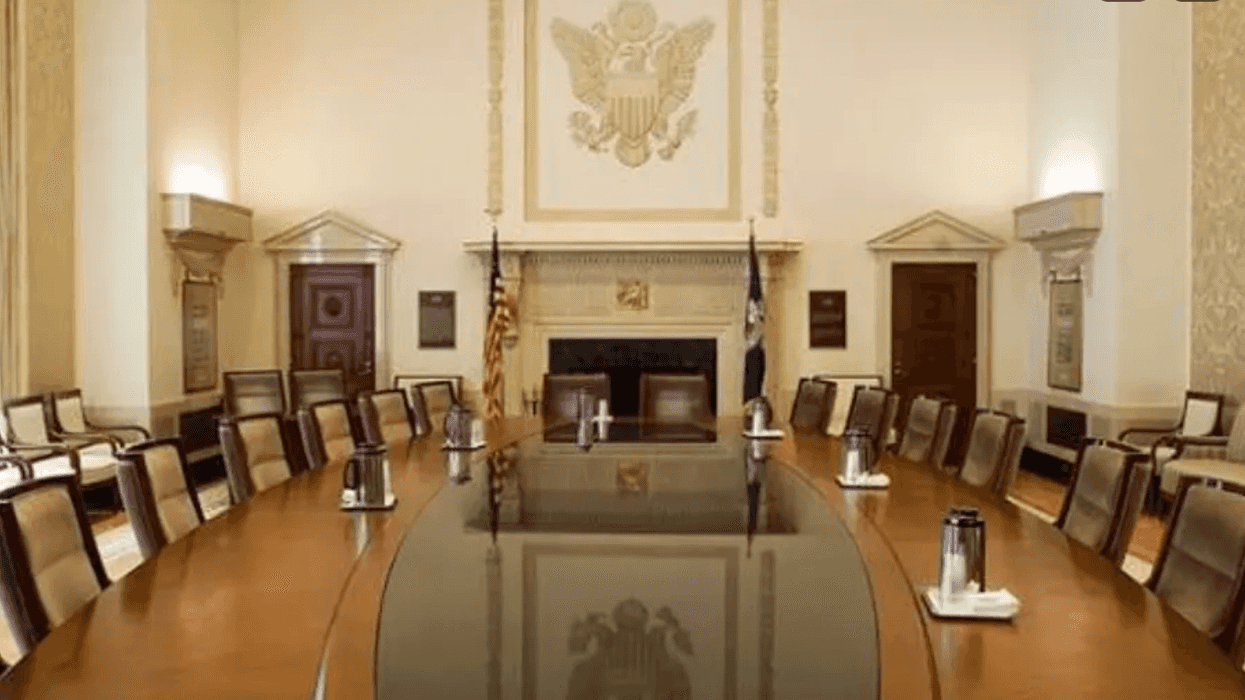
I’m talking about those FOMC (Federal Open Market Committee) meetings that take place about every six weeks in the big boardroom at the Federal Reserve’s headquarters in Washington, D.C.

The committee is meeting as we speak, and will announce their rate decision tomorrow at 2pm ET, as per usual, followed by a presser with Chair Warsh, his second since he was confirmed. Given Warsh’s campaign to do a lot less telegraphing about how the Fed is assessing the economy and the monetary policy path, there was some question as to whether Warsh would keep these every-meeting pressers going. But, at least for now, he’ll evade answer questions from the press tomorrow at 2:30.

(Note to the chair: You’re not fooling me, Kevin! Your strategy, which I grant you is clever, is to be so opaque and elusive at these pressers that the reporters give up and the markets tune out. FTR, that could work! Though it does leave a lot of investors scratching their heads in ways that seem sub-optimal to me, as I stress below.)

The big question, given inflation’s persistence above target, is will the FOMC come off of neutral and raise the interest rate they control. As I write, the market probability of a 25bps hike is 36%, up 10 ppts from a week ago.

In this brief note, I’d like to talk about the macroeconomics of the Fed’s balancing act right now, as we are in a somewhat weird macro/monetary moment. I wouldn’t call it stagnation—slow growth with high inflation—because growth is pretty good. Expectations for Q2 GDP, out later this week, are tracking around 2% (though GDPNow is at 1.6%). Job growth has picked up lately, and is probably a bit above breakeven (the number needed to keep unemployment stable). Wage growth, at around 3.5%, nominal, is a bit low relative to productivity, meaning no inflationary pressure there.

In other words, no macro overheating, yet inflation remains elevated. The figure below shows core CPI and core PCE, with a dot for the latter’s June value (also coming later this week), expected to come in at ~3%, a point above target. And that’s before energy prices, which bleed a bit into the core, picked up this month as Trump’s Iran war heated up again.
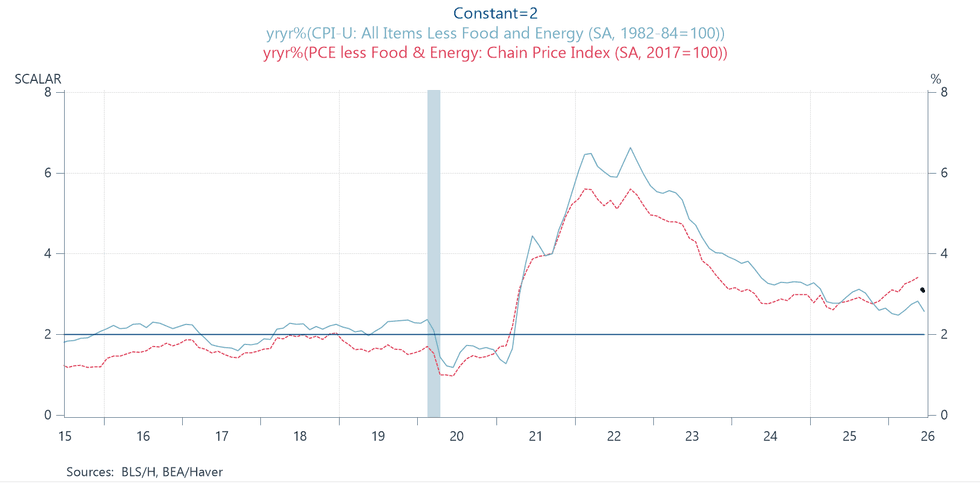
This puts us in a familiar place, one I’ve personally lived through in the Biden years, with good but not overheated growth and high inflation, in this case—a stark difference with the sitch back in my day—due mostly not to exogenous shocks (pandemic-induced supply chain disruptions), but to Trump’s inflationary policies, including tariffs and the war (there’s also demand-side inflationary pressures from AI spending).

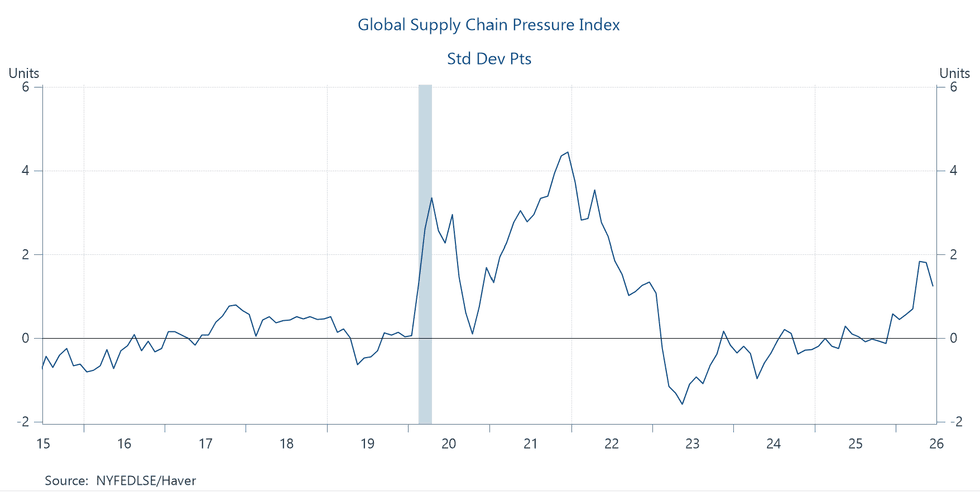
Of course, supply chains are not as battered now as they were then (see figure), but they’re clearly elevated. And isn’t the Fed supposed to “look through” that sort of thing? Doesn’t that militate against raising rates?

To an extent, yes, for two reasons. One is that such shocks tend to dissipate. Tariffs, like any tax, should give a one-time bump to the price level and then underlying inflation takes over. And the war could end. The problem with that thinking, however, is that it ignores the elephant Orange Menace in the room. Trump can’t let the tariffs rest anymore than he can extract us from his war of choice.

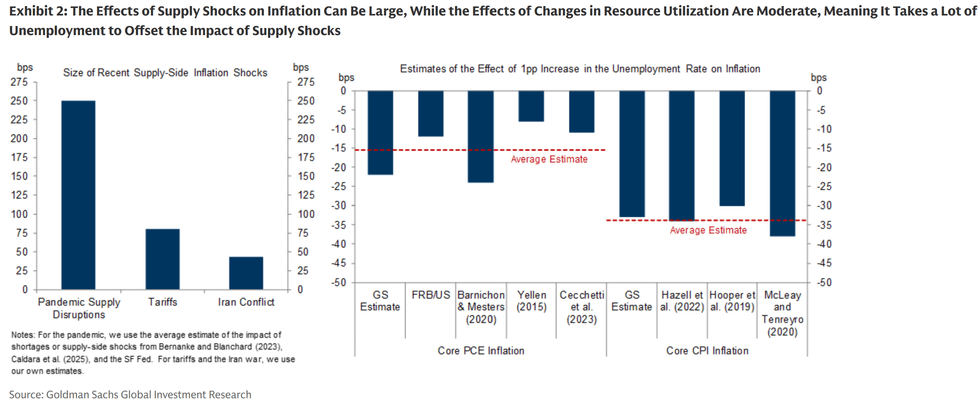
The second reason the Fed might be averse to hiking into mostly supply-shock driven inflation is that it takes too much damage to the economy’s demand side to blunt supply-side inflationary impacts. As GS recently put it: “…a key lesson of recent years is that the effects of supply shocks on inflation are often large, while the effects of changes in resource utilization [demand] are moderate.”

They cited a recent Yellen speech underscoring this point, and Janet knows a bit about this:

“Monetary policy cannot tame supply-driven inflation without exacting unacceptable unemployment costs.” Those steep costs, she added, lie behind the standard central bank wisdom that “Looking through supply shocks should remain the default strategy unless inflation expectations are at genuine risk of becoming unanchored.”

There are numbers to back up this thinking. Below you see GS’s basis-point impacts of supply shocks vs. demand shocks (a one ppt higher unemployment rate) on inflation. They’ve got the tariffs adding about 75bps and the war, about 40bps, so 1.15 ppts higher inflation. Then, on the right, they’ve got one point more unemployment reducing core PCE inflation by just 15bps, averaging over a few studies. Do the math and that’s far too much unemployment to offset Trump’s supply shocks.
But, my fellow Fed-watchers, the story does not end there. I put heavy weight on Janet’s caveat: “…unless inflation expectations are at genuine risk of becoming unanchored.”

If you’re on the FOMC, there’s no way you can be cavalier about that warning. Eyeball that first figure above and you’ll see that core inflation has exceeded the target for years. It’s fine, in specific, time-limited cases to call “supply-shock…nothing to see…move along folks.” But this isn’t that. David Mericle, GS’s Chief US economist put it exactly right in a recent podcast:

…they’re done litigating what exactly is causing inflation, asking the question of whether or not it’s appropriate to look through the different factors causing high inflation. If we continue to see high inflation, many of them feel like at this point we really need to respond to that because this has just gone on for too long, and I think everyone agrees that at some point, in principle, even if this is a long series of one-time supply shocks, it would become dangerous. It would risk making people a little bit too accustomed to high inflation and make it potentially take on a life of its own.

So, I don’t think they hike tomorrow, and based on the economic analysis above, I wouldn’t go there. But I would hope they lean into a hawkish bias in the statement. I additionally hope Warsh puts aside his man-of-mystery schtick and gives some version of the above analysis in his presser tomorrow.
GOP Politicians Complain About Supply Chain While Promoting Trucker Blockade

GOP Politicians Complain About Supply Chain While Promoting Trucker Blockade

For months, congressional Republicans have been falsely blaming troubles with international supply chains on President Joe Biden and Democratic policies. Now, as Biden's administration works to address the challenges, many of the same Republicans are urging anti-vaccine protesters to take actions to make it worse.

A group of Canadian truckers calling themselves a "Freedom Convoy" has spent the past few weeks blocking highways and bridges in the capital city of Ottawa and other places, including the Ambassador Bridge border crossing between Windsor, Ontario, and Detroit, Michigan. Their actions, they say, are in protest against COVID-19 safety mandates, including a requirement that unvaccinated truckers quarantine after reentering the country following visits to the United States.

Members of the convoy caused a shutdown of local businesses, damaged government vehicles, attempted to force an Ottawa homeless shelter to give them food, waved swastika flags, desecrated Canada's National War Memorial, and impeded border crossings. Eventually, the government stepped in and has been dispersing the wildly unpopular blockades.

Though experts say these extremists in trucks already have done significant damage to the economy and supply chains, some Republicans are openly urging American anti-vaccine activists to do the same thing at home.

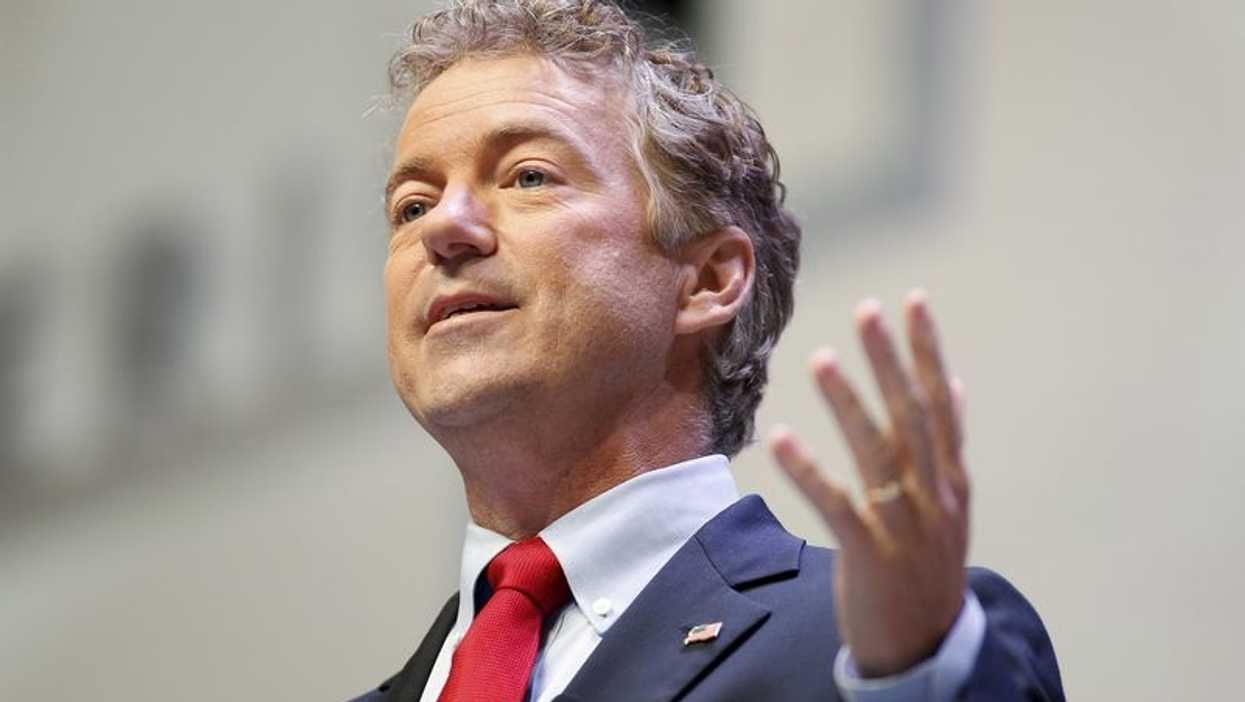
Kentucky Sen. Rand Paul told the right-wing website Daily Signal on Thursday, "It'd be great" if truckers shut down U.S. cities such as Los Angeles and Washington, D.C.

“I hope the truckers do come to America, and I hope they clog up cities," he said. "I'm all for it."

In a November op-ed for the West Kentucky Star, Paul wrote, "Lately, you might have noticed an increase in prices at the gas pump, the grocery store, and pretty much everything else you can buy. The shelves at stores are empty, employers can't find workers to fill positions, and Americans everywhere are bracing for higher taxes.

"Welcome to Joe Biden's and the Democrats' socialist America. In their America, it's seemingly okay to spend trillions of dollars, rack up copious amounts of debt, and ignore a crisis at hand."

"The United States didn't have a supply chain crisis until Joe Biden became president," Rep. Lance Gooden of Texas tweeted in October.

But Saturday, Gooden told Fox News, "I would absolutely welcome a similar pronouncement of protest in our nation's capital by truckers and anyone who wants their freedoms back."

Rep. Paul Gosar of Arizona said in December, "Our country is in the middle of a catastrophic supply chain crisis caused by Biden's incompetent administration."

On February 10 he suggested that Democratic officials easing safety mandates as the omicron waves subside might really be doing so because of what was happening in Canada.

"The Science hasn't changed, their poll numbers have. Oh and #freedomconvoy22 is making an impact. The last thing the [they] want is an American trucker convoy," he warned.

Colorado Rep. Lauren Boebert cheered on a protest against vaccine mandates by city workers that took place on February 7 in New York City, encouraging protesters to shut down American bridges.

"Freedom is contagious and there's no vaccine that can shut it down. The Canadian Freedom Convoy has sparked a fire in the hearts of patriots," Boebert tweeted on February 9. "Now the Brooklyn Bridge has been shut down with protests. Let's take our nation back from medical tyranny!"

Back in November, she tweeted, "Black Friday was better without supply chain shortages."

While Republican politicians in the United States and their Fox News allies are abandoning the pretense of wanting "law and order" and cheering on the convoy, politicians in Canada, including Conservatives, have seen enough.

Doug Ford, the premier of Ontario and a member of its Progressive Conservative Party, scolded the truckers on February 11 and told them to leave. "Your right to make a political statement does not outweigh the right of thousands of workers to make a living," he warned.

And after initially backing the protesters, the House of Commons interim Conservative Party Leader Candice Bergen also urged them to end their blockades.

"I believe the time has come to take down the barricades, stop the disruptive action, and come together. The economy you want to see reopened is hurting," she said on February10. "I believe this is not what you want to do."

Reprinted with permission from American Independent

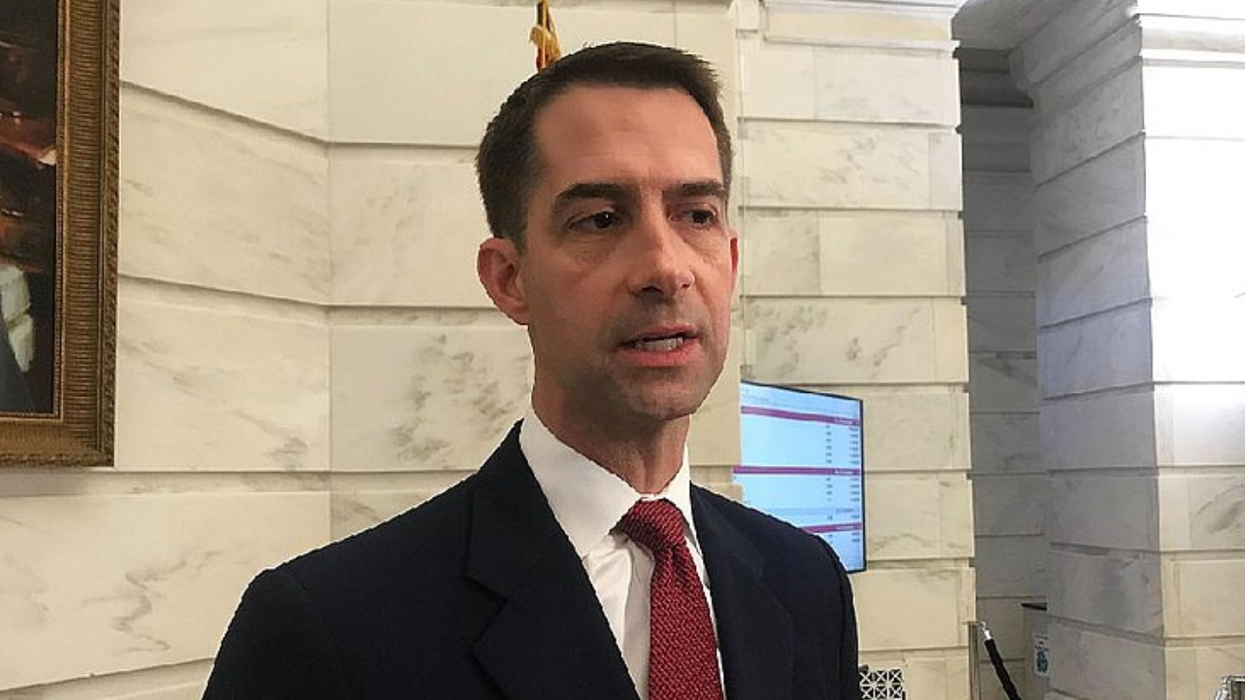
Tom Cotton

Cotton Falsely Claims Nation Had No 'Supply Chain Or Labor Shortages' Under Trump

On Monday, Sen. Tom Cotton (R-AR) claimed there were no supply chain or labor shortages in 2020 when former President Donald Trump was in office. But this is not true.

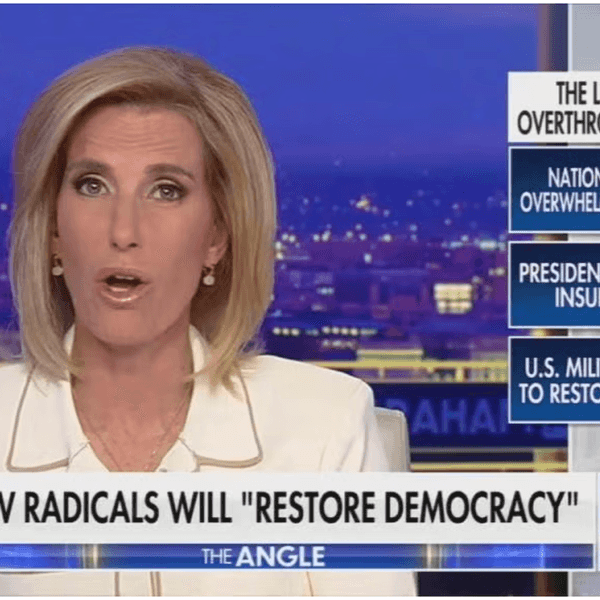
Cotton made his comments during an appearance on Fox News' Ingraham Angle hosted by Laura Ingraham.

"We've had this pandemic for two years, Laura, I don't remember inflation or supply chain shortages or labor shortages that we've seen this year in the first year of the pandemic," Cotton said. "What changed? Joe Biden and the Democrats took power in January."

But in a report his own office released in February, Cotton acknowledged supply chain problems that disrupted the distribution of personal protective equipment to doctors and hospitals.

Cotton's report, "Beat China: Targeted Decoupling and the Economic Long War," discusses actions taken by China to manufacture equipment for its virus response, which led to shortages elsewhere in the world.

"This move imperiled America's ability to procure personal protective equipment at the outset of the pandemic, likely costing American lives," the report said.


Supply chain problems became clear almost immediately after the pandemic began, forcing medical workers on the front lines of the response to reuse and ration equipment like N95 face masks. There were also more widespread supply-chain issues when Trump was in office, including shortages of groceries and consumer goods like toilet paper and diapers.

As the virus spread across the country, Trump refused to invoke the Defense Production Act to make more personal protective equipment for frontline medical workers.

"The federal government's not supposed to be out there buying vast amounts of items and then shipping," Trump told reporters in March 2020. "You know, we're not a shipping clerk."

On January 21, 2021, President Joe Biden signed an executive order invoking the Defense Production Act to get American manufacturers to produce more medical equipment.

Labor shortages also predate the Biden presidency. The percentage of workers participating in the economy fell as the pandemic began in 2020.

In a report on labor shortages, the Wall Street Journal noted in October that the percentage experienced its biggest drop since World War II "in the early months of the pandemic." Some economists have attributed the ongoing problem to lingering concerns about the virus as well as retirement schedules being accelerated.

The U.S. economy has improved since Biden took office. More than 5.5 million jobs have been added since January, and the unemployment rate has fallen from 6.3 percent to 4.6 percent.

Nevertheless, Republicans keep using Cotton's misleading line of argument. In a Fox News appearance earlier this month, former Trump senior counselor Kellyanne Conway falsely claimed that "there wasn't a supply chain crisis" when Trump was in office.

Published with permission of The American Independent Foundation.

'End Of' Story: Fox News And Other Right-Wing Outlets Fabricate Biden Gaffe

'End Of' Story: Fox News And Other Right-Wing Outlets Fabricate Biden Gaffe

Reprinted with permission from Media Matters

Right-wing media outlets have tried to manufacture a story falsely claiming that President Joe Biden misread a teleprompter — supposedly reciting an "end of quote" cue that was not meant to be read aloud. In reality, Biden was directly telling his listeners that he was ending a quote. And even after corrections have piled up, some are still trying to depict this moment as some kind of gaffe when it was nothing of the kind.

A quick Google search also shows that Biden has used the "quote … end of quote" construction before. Indeed, he had also used it just the day before, in his remarks on Monday when he nominated Federal Reserve Chair Jerome Powell for a second term.

During remarks Tuesday, Biden briefly quoted Walmart CEO Doug McMillon, who had extolled the cooperation between the government and private sector in resolving supply-chain interruptions.

Shop our Store

Headlines

Editor's Blog

Trending

World