Tag: texas democrats
The Midterms Are Democrats' To Lose -- And They May Find A Way

The Midterms Are Democrats' To Lose -- And They May Find A Way

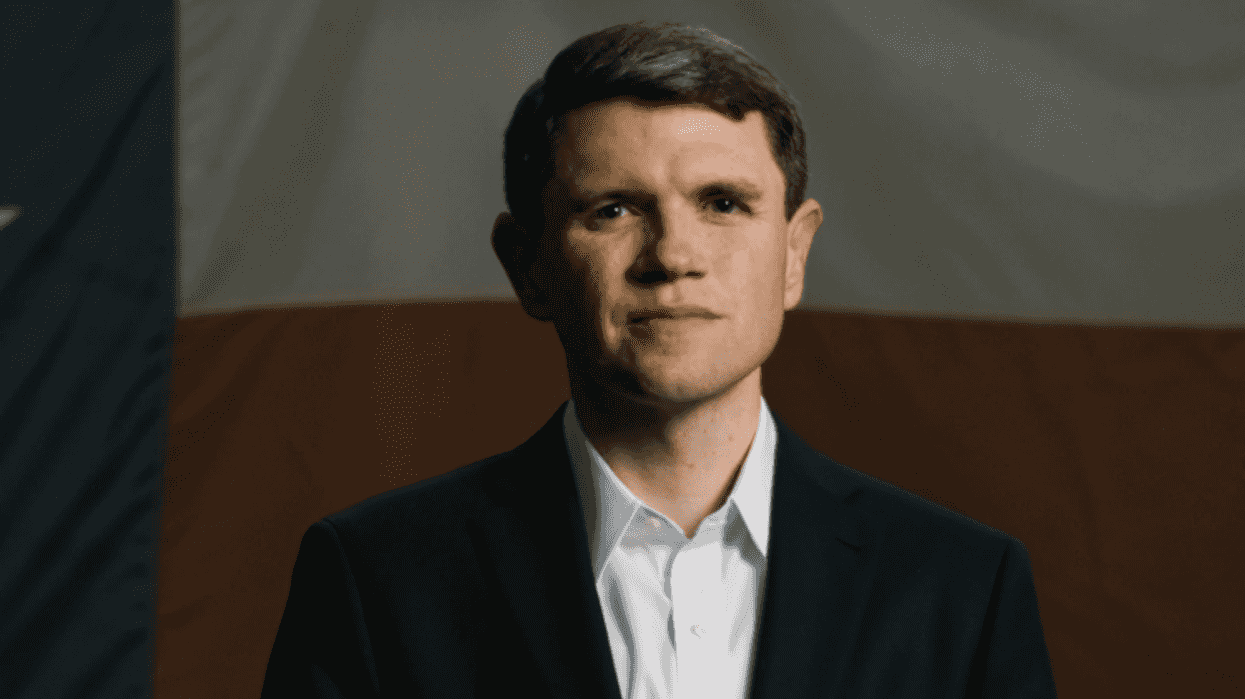
Democrats are buzzing over the surprise victory of Taylor Rehmet in a Texas state senate race. Rehmet won by 14 points in a Fort Worth-area district Donald Trump carried by 17 points in 2024.

That outcome inspired a piece by Republican strategist Karl Rove titled "Midterms Are Dems' to Lose — and They May." Rove doesn't gloss over Republicans' weak spots — the president's dismal approval ratings, falling consumer confidence and the daily churn of Trump-fueled chaos. But he also notes the Democrats' penchant for nominating far-left activists in moderate districts, candidates who inevitably lose the general.

Rove is right about it all, which leads to a question for Democrats: Have they internalized that a Democratic Socialist who wins New York City would be dead on arrival most everywhere else?

The recent unexpected Democratic wins feature a very different sort of candidate: as moderate, pragmatic and, above all, normal. Rehmet checks the boxes for a Texas Democrat. He is a labor leader who served in the Air Force. He focused his campaign on economic concerns and steered clear of the culture wars.

In his postelection interview on CNN, Erin Burnett tried to drag him into national politics. At the news channels, left or right, everything is Trump, all the time.

Burnett notes that Trump posted several endorsements of Rehmet's opponent. And she played the clip wherein Trump runs for cover. "That's a local Texas race," he said sheepishly. "I have nothing to do with it."

Rehmet didn't take the bait and make his victory a referendum on Trump. "Well, I don't believe he was able to vote in this race," he said flatly. "I was so focused on, you know, talking to the voters here and meeting with them."

Burnett then asked him to respond to a Republican spokesman's charge that Democratic moderates are "pushing the same radical socialist agenda" seen from New York to California. "What do you say to that, Taylor?"

Rehmet wouldn't go down that alley.

Thing is, New York's "socialist" mayor, Zohran Mamdani, is an outlier. Though an unusually skilled politician, he took less than 51% of the vote — despite being the official Democratic nominee in a heavily Democratic city.

And moderate Democrats have been winning mayoral races in California. San Francisco Mayor Daniel Lurie is cracking down on open-air drug markets and clearing homeless encampments. San Jose Mayor Matt Mahan opposes a referendum calling for an emergency five percent tax on billionaires' assets, noting that the top one percent already pay about 40 percent of California's taxes.

Back in Texas, Democrats prepare for another promising outcome. Two prominent Democrats are contending for the U.S. Senate seat currently held by Republican John Cornyn. One is Jasmine Crockett, the firebrand congresswoman for Dallas and its surrounding areas. The other is James Talarico, a state legislator who presents himself as a progressive Christian.

Primary polls show them neck and neck, but Republicans most fear Talarico because he is more culturally attuned to the conservative state. Crockett may be entertaining, but she'd be the weaker candidate.

Both parties drew lessons from a remarkably close special election for a House seat in a mid-Tennessee district. Trump took it by 22 points in 2024. But only a year later, Republican candidate Matt Van Epps won by only 9 points. And he was running against a community organizer backed by the Democratic Socialists. Aftyn Behn came off as kooky and even invited Alexandria Ocasio-Cortez to a rally.

The lesson for Republicans was that their party faces real trouble in the midterms. The lesson for Democrats is broader: Nominate candidates who are bad fits for their districts, then yes, they can lose — even with the Republican brand in tatters.

Froma Harrop is an award winning journalist who covers politics, economics and culture. She has worked on the Reuters business desk, edited economics reports for The New York Times News Service and served on the Providence Journal editorial board.

Reprinted with permission from Creators.
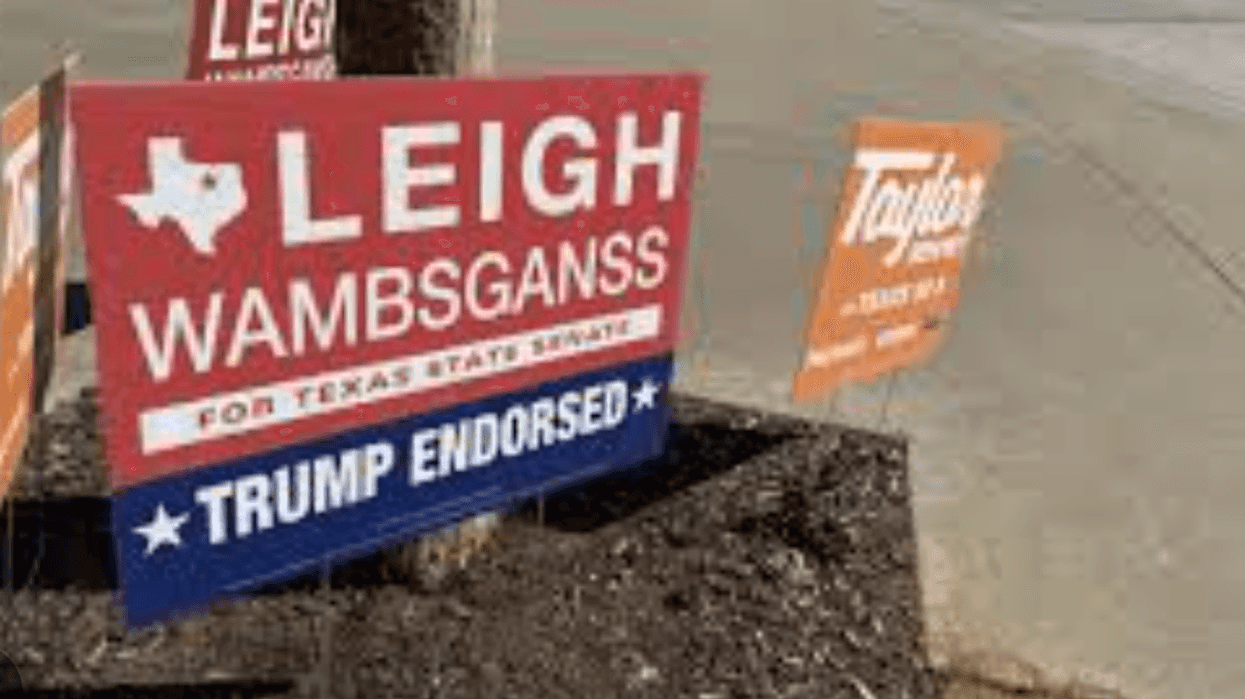
Trump Mocked For Claiming He Was "Not Involved' With Losing Texas Candidate

Trump Mocked For Claiming He Was "Not Involved' With Losing Texas Candidate

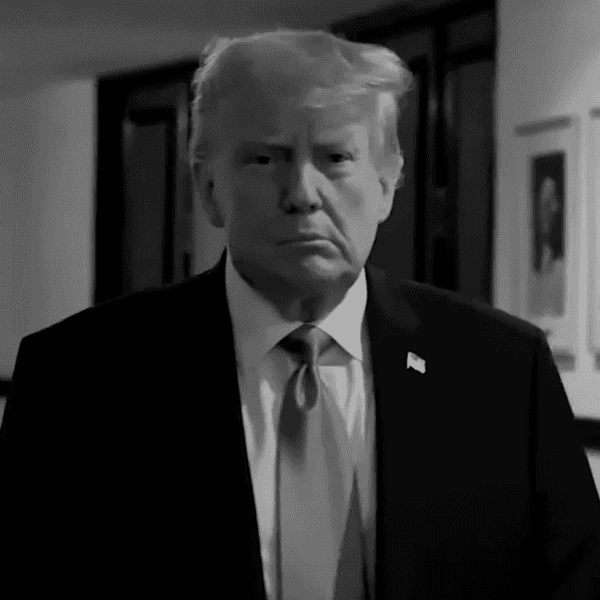
Hours after the Republican Party suffered an upset defeat in a special election in a deep-red district in Texas, President Donald Trump falsely claimed he had nothing to do with the race.

While speaking to reporters at his Mar-a-Lago resort on Sunday, Trump was asked what he made of the GOP losing a Texas state senate election in a district that he carried by 17 percentage points in 2024. Democrat Taylor Rehmet, a Machinists Union leader, won on Saturday by 57 percent to 43 percent -- a shift of more than 30 percent.

“I’m not involved in that, that’s a local Texas race,” Trump replied.

In fact, Trump endorsed losing Republican candidate Leigh Wambsganss on three separate occasions in just the last three days, including a Saturday post on Truth Social where he called her “a phenomenal Candidate” and “an incredible supporter of our Movement to, MAKE AMERICA GREAT AGAIN.”

Trump’s attempt to distance himself from someone whom he enthusiastically endorsed just one day ago elicited instant ridicule from many of his critics on social media.

“Two days ago, the president used his social media platform to endorse this ‘phenomenal candidate’ and to urge ‘all America First Patriots’ in the district to get out and vote for her,” remarked Princeton historian Kevin Kruse. “Today, he says he doesn’t know anything about it and had nothing to do with it. He’s lying or demented or both.”

Zak Williams, a political consultant at Zenith Strategies and a native Texan, wrote that Trump was “intimately involved” in the campaign, noting that Republicans outspent Democrats in the race by a margin of 10 to 1.

Joe Walsh, a former Republican congressman who left the GOP over his disgust with Trump, expressed astonishment at the president’s blatant dishonesty.

“He’s such a horrible person,” wrote Walsh. “And such a dishonest person. Yes, he was involved in that race. He endorsed the losing candidate, and she lost 100% because of him. She lost 100% because of this past year of his chaos, his cruelty, and his incompetence. Her loss was a total rejection of him.”

Journalist James Barragán of TX Capital Tonight, argued that the Wambsganss loss calls into question just how effective Trump’s endorsements will be in moving voters in the 2026 midterm elections.

“President Trump says he’s ‘not involved’ in SD-9 race where his endorsed candidate (who he boosted multiple times in the runup) lost a +17 Trump district,” wrote Barragán. “He’s either not being truthful or it makes you question how much stock people should put into his social media endorsements.”

Reprinted with permission from Alternet

Texas Republicans' Lawless Detention Of Nicole Collier

Texas Republicans' Lawless Detention Of Nicole Collier

Dustin Burrows, call your lawyer.

Burrows is the Republican Speaker of the Texas House. This week, he told all Democratic Representatives that they had to sign a permission slip to accept a 24/7 police escort if they wanted to leave the legislative chambers.

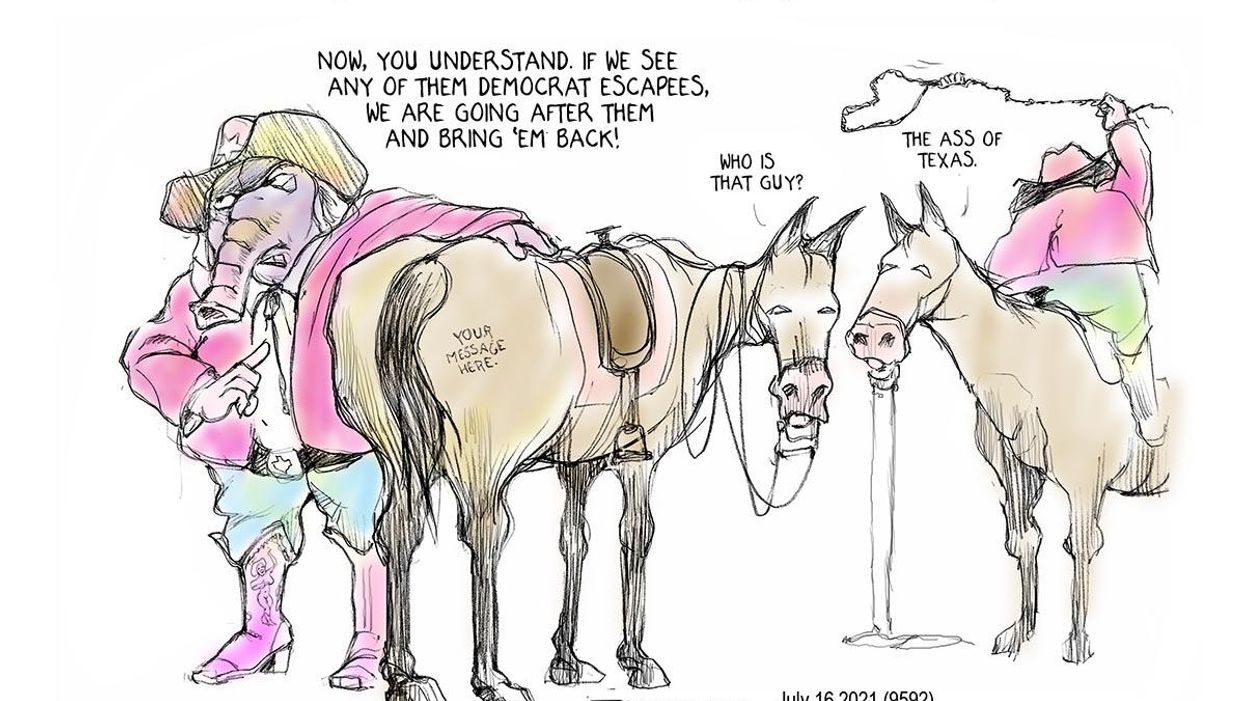
You heard that right. Democrats — but not Republicans — needed a permission slip, like schoolkids cutting class or criminal suspects. That was Burrows's heavy-handed school-principal response to the Democrats’ previous departure from the state to prevent the full legislature from passing a gerrymandered map to deliver five more Republicans to the House of Representatives.

But the Democrats had returned and were present for the new special session that Governor Greg Abbott called to ram through the new map, which was passed yesterday.

Enter Nicole Collier, a Democratic representative from Fort Worth. Collier read the form, thought about the implications, and told Burrows what he could do with his permission slip. She refused to sign and submit to having a police officer shadow her.

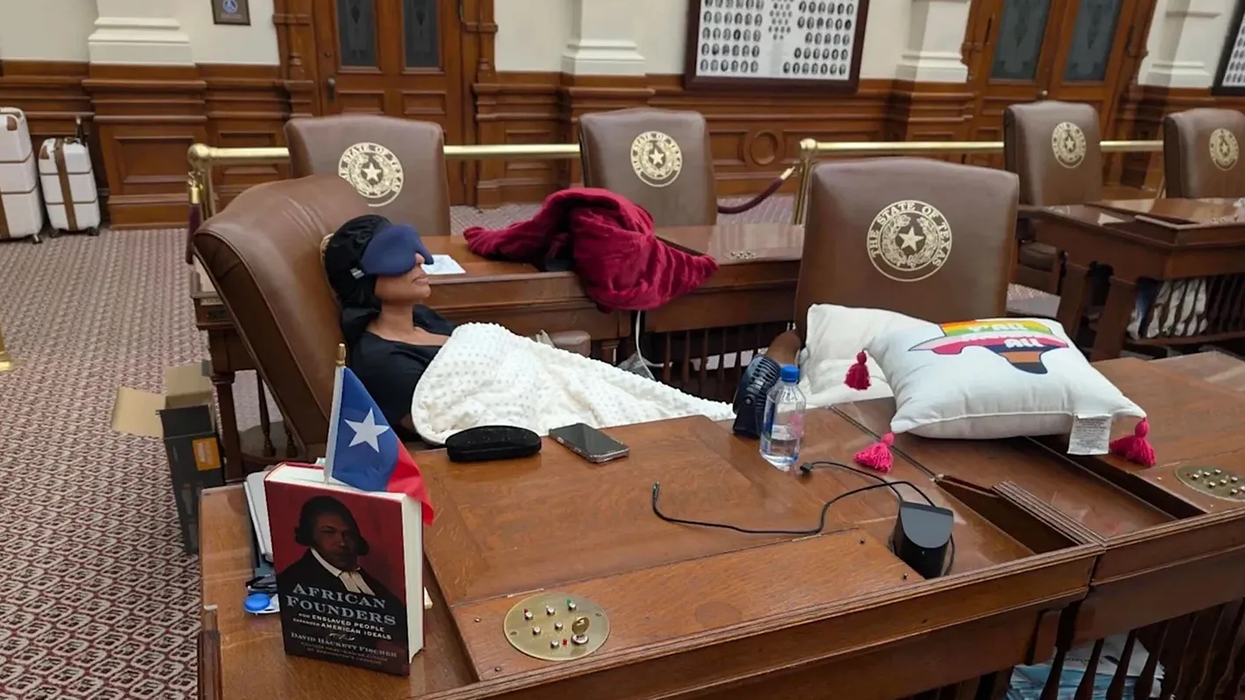
And so, under Burrows’s orders, she has been confined to the chamber itself, sleeping on chairs like a traveler abandoned in an airport terminal. She posted a photo of herself dozing on the House floor. And she’s been giving national interviews that make Burrows and his colleagues look like overbearing hall monitors who’ve stumbled into felony territory.

The twist is that Texas Democrats had already returned to Austin, clearing the way for Republicans to push through their redistricting plan — a map designed to squeeze out five more GOP seats. They only came back after California Democrats announced their own redrawn map to create five additional Democratic seats, a move the California Supreme Court has since blessed. In other words, Texas Republicans had already gotten what they wanted. Yet instead of basking in their new lines, Burrows decided to humiliate and detain a colleague in a show of brute force.

The obvious question is what authority Burrows has to keep Collier under a kind of House arrest.

The answer is: none whatsoever.

Texas House rules do include a provision that allows for a so-called “civil arrest” (a dubious category in itself — an arrest is an arrest and is subject to Fourth Amendment restrictions) of lawmakers who have fled the state to break quorum. The Texas Supreme Court upheld that power in a 2021 case, but it emphasized that House Rule 5 applies only to compel the attendance of absent members.

Collier, of course, isn’t absent. She’s sitting right there in the chamber. She hasn’t even tried to slip out a side door. That means the text of the rule gives Burrows no authority whatsoever to confine her, much less threaten her with arrest for refusing an escort.

So Collier has done exactly what the law prescribes: she’s filed a habeas corpus petition demanding her release. Habeas — the “Great Writ” — is one of the oldest protections in the Anglo-American legal tradition, and its paradigmatic use is for just this kind of moment, when an official detains someone without legal justification. By any fair reading, her petition should be an easy win.

But habeas is just the start. If Burrows’s legal cover falls away, as it should, his conduct isn’t just unauthorized — it violates any of a number of civil and criminal laws.

Start with false arrest. Under Texas law, false arrest (sometimes called false imprisonment) is simply the unlawful restraint of a person without legal justification. By the textbook definition, Collier has been arrested: a reasonable person in her position would not feel free to leave.

Then there’s the Texas crime of unlawful restraint, which the statute defines as knowingly restraining someone without consent. And “official oppression,” which makes it a crime for a public servant acting under color of law to subject another person to unlawful arrest or detention.

And it doesn’t stop at state law. There’s also federal civil rights law. Title 18, Section 242 of the U.S. Code makes it a crime for anyone acting under color of law to willfully deprive someone of their constitutional rights. Here, Burrows has deprived Collier of her liberty — and he’s done so because of her constitutionally protected political activity.

That’s the stuff of indictments, not just headlines.

To understand the brazenness here, it’s worth recalling how unusual “civil arrest” is in the first place.

Texas Republicans have reached for it before, most recently in 2021, when Democrats fled the state to block a restrictive voting bill. Back then, the Texas Supreme Court blessed the House’s power to compel absent members back to the chamber — but only absent members.

The tactic goes back even further. In 2003, when Democrats bolted to New Mexico to derail Tom DeLay’s mid-decade gerrymander, Texas officials talked tough about dragging them back, but ultimately stopped short.

The power to force attendance has always been understood as a narrow, exceptional tool. Never before has it been twisted into an open-ended license to hold lawmakers in de facto custody when they’re sitting in the chamber doing their jobs.

That’s what makes this episode different. It’s not about quorum. It’s about domination.

Burrows may think he’s projecting strength, but Collier has turned his gambit into a PR disaster.

Her decision to camp out on the House floor has generated sympathetic coverage and viral images. It’s a classic David-versus-Goliath tableau: one legislator sleeping on institutional chairs, up against the machinery of power.

And the public seems to get it. Democrats already scored a public-relations victory when they fled the state earlier this summer, leaving Republicans sputtering and powerless. Now, with Collier cast as an almost cartoonishly over-policed lawmaker, they’ve done it again.

Burrows, meanwhile, comes off as the Keystone Cop of legislative strong-arming. Instead of projecting authority, he looks petty, vindictive, and — worst of all — lawless.

Any recourse for Burrows’s lawlessness depends, of course, on whether Texas courts are willing to enforce the law as written. And whether Texas prosecutors are willing to hold Republican leaders accountable. With Governor Greg Abbott and Attorney General Ken Paxton at the helm, there’s little reason for optimism. The capture of Texas institutions by partisan enforcers is well underway.

And don’t expect relief from Washington. Pam Bondi’s Department of Justice is not about to bring a civil rights case against Texas Republicans on behalf of Nicole Collier.

Which leaves us with the broader lesson: what we’re seeing in Austin is not just local thuggery, but a microcosm of the authoritarian instinct that has infected American politics under Trump. It’s the idea that authority exists to dominate the opposition, and that the law means whatever the leader says it means.

In this sense, Collier’s stand isn’t just about Texas. It’s about the survival of the basic principle that no one, not even a legislative leader, gets to detain their political opponents at will.

Dustin Burrows thought he was flexing muscle. Instead, he’s exposed himself to civil liability, criminal prosecution, and national ridicule.

Collier has the law on her side, the courts in her corner, and the images of her “detention” circulating widely. Burrows has…a pledge form and a police escort fantasy.

If this is what passes for strength in Texas Republican leadership, it’s no wonder they’ve been reduced to cartoonish displays of power.

And if you want to see how authoritarianism takes root in America, you don’t have to look to Moscow or Budapest. Just look to Austin, where one lawmaker is being held against her will by colleagues who think power is its own justification.

Dustin Burrows, call your lawyer.

Harry Litman is a former United States Attorney and the executive producer and host of the Talking Feds podcast. He has taught law at UCLA, Berkeley, and Georgetown and served as a deputy assistant attorney general in the Clinton Administration. Please consider subscribing to Talking Feds on Substack.

Reprinted with permission from Substack.

Danziger Draws

Danziger Draws

Jeff Danziger lives in New York City. He is represented by CWS Syndicate and the Washington Post Writers Group. He is the recipient of the Herblock Prize and the Thomas Nast (Landau) Prize. He served in the US Army in Vietnam and was awarded the Bronze Star and the Air Medal. He has published eleven books of cartoons and one novel. Visit him at DanzigerCartoons.

Shop our Store

Headlines

Editor's Blog

Corona Virus

Trending

World