Tag: trump grifting
Trump Family Wins Big Again In Crypto, While Their Investors Lose Even Bigger

Trump Family Wins Big Again In Crypto, While Their Investors Lose Even Bigger

The Trump family cashed in big on a $500 million crypto deal, but their investors didn’t get so lucky.

In August 2025, Donald Trump Jr. and younger brother Eric inked a deal with Alt5 Sigma and celebrated at the Nasdaq stock exchange in New York City.

But less than 10 months later, the business that brought the first family a huge windfall is now facing closure.

With stock prices plummeting, Alt5 Sigma—now renamed AI Financial Corp.—is facing being delisted from the Nasdaq. But because of its prior purchase of $1.5 billion in crypto tokens from the Trump brothers’ trading platform World Liberty Financial, the family cashed in—despite the failure that quickly ensued for the financial technology company.

The suspicious nature of the deal prompted attorneys for Democracy Defenders Fund to urge the Securities and Exchange Commission to launch an investigation.

Attorneys warn that Alt5 Sigma had participated in “steering investor funds to entities co-owned by President Trump and his associates.”

The SEC has not launched an investigation or acknowledged the letter from the nonpartisan organization.

The Trump brothers have been heavily involved in the crypto community, building out the family empire as their father President Donald Trump slashed regulations around the highly volatile market.

Through World Liberty Financial, the Trumps have a stake in former UFC champion Conor McGregor’s business, MMA Inc., and the two brothers have made splashy appearances at a number of international crypto events.

According to CNBC, Eric boasted at a Hong Kong-based crypto conference last August that 90 percent of his time is now spent with the crypto community.

But when you look at how much the Trump family has won while those playing the crypto game have lost, the difference is stark.

When the family launched its $TRUMP meme coins, fans and investors alike jumped on the opportunity. In turn, the Trumps sat on a meme-coded pile of money that amounted to hundreds of millions of dollars.

Soon after, however, those who bought in on the investment began losing.

The Trumps have used crypto as a means to amass more wealth with little investment of their own, a Reuters investigation concluded.

According to the outlet, the president and his sons have added at least $2.3 billion to their family fortune, mainly through crypto. However, investors have taken a $2.3 billion hit.

“Under the Trump crypto playbook, the family always wins. Investors don’t,” the report concluded.

Two other ventures, like World Liberty Financial and an investment in American Bitcoin, have also resulted in pain for investors while the family raked in the profit.

Crypto platform WLF has even sparked a lawsuit for its alleged extortion of a billionaire backer.

Justin Sun, a crypto mogul who initially supported the Trump family’s efforts, sued World Family Financial after allegedly being pressured into buying more coins.

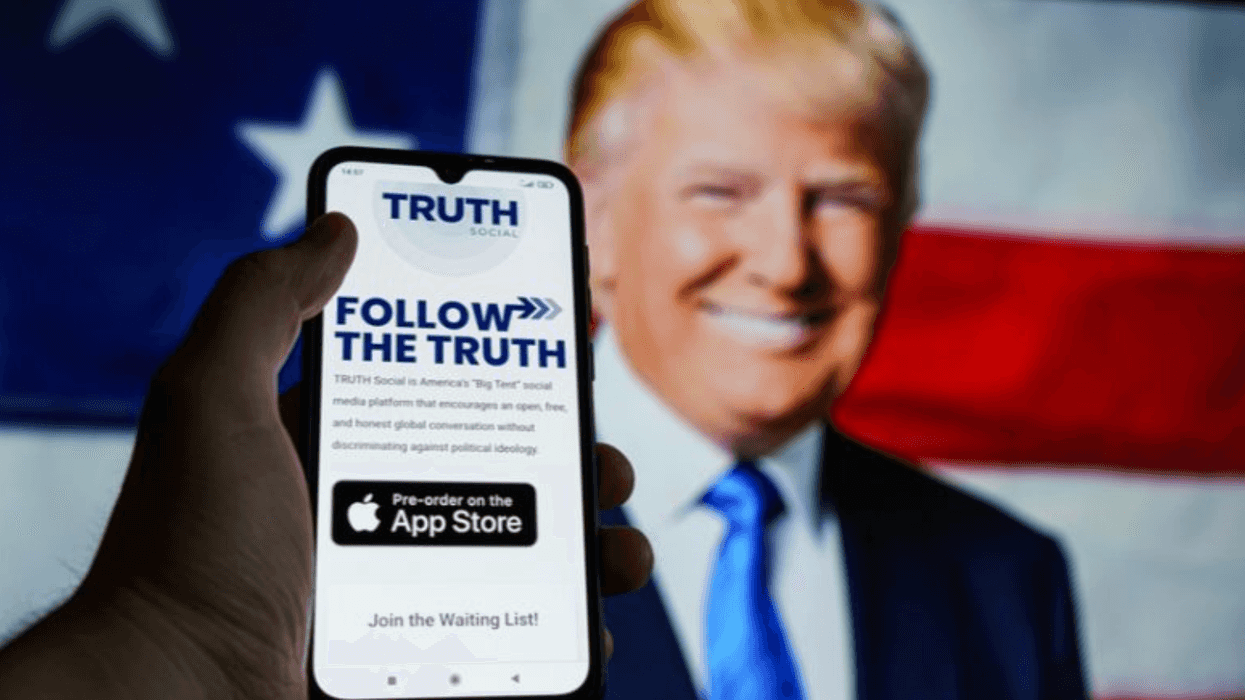
The crypto con adds to a growing list that includes Trump-branded cell phones, perfumes, sneakers, Bibles, social media apps, fin tech, and many other money grabs that have the president’s seal of approval.

Reprinted with permission from Daily Kos

Scam! Why Blanche Is Rushing To Settle Trump's Bogus $10 Billion IRS Lawsuit

Scam! Why Blanche Is Rushing To Settle Trump's Bogus $10 Billion IRS Lawsuit

I recently wrote a long piece explaining the greater importance of what looked like a routine briefing order in Trump’s $10 billion lawsuit against the IRS.

The order signaled that Judge Kathleen Williams of the Southern District of Florida was on to the administration’s scam of letting friends and allies—and maybe Trump himself—scoop up large sums of money from the treasury under the pretense of settling lawsuits that weren’t really lawsuits at all, as the court and constitution use the term.Instead, they are collusive schemes in which the United States has “jumped the v.” By that I mean that the administration has cozied up to nasty characters that the previous DOJ had charged. And they may be poised to do it on a much larger scale, including the worst January 6 offenders whose convictions they recently wiped away.

A paradigm case is the recent “settlement” with Michael Flynn. Flynn pleaded guilty twice, Merrick Garland’s DOJ won the motion to dismiss his civil suit, and Blanche’s DOJ then turned around and paid him $1.25 million anyway—unabashedly calling it a remedy for “historic injustice.” The government had already won. It paid anyway. That’s the scheme in miniature: jump the v, shake hands across the caption, and invite your pal to help himself to federal tax dollars.

The New York Times report suggests the DOJ is scrambling to settle Trump’s lawsuit against the IRS before its brief is due in Judge Williams’s court. The report raises the prospect of a relatively lowball settlement, for example, a promise to Trump that the IRS won’t audit him or his businesses going forward, and perhaps a little cash. (Note, however, that in Trump’s case, that would be worth quite a lot; a 2024 Times report found that a pending audit loss could cost Trump more than $100 million.)

Don’t let the supposed modesty of the settlement distract you. The real point of the deal is to get Todd Blanche and the DOJ out of the tight corner Williams has put them in. The low amount is to make it look palatable. It isn’t, but for different reasons.

Yes, Trump filed a $10 billion lawsuit against the IRS in January—a grandiose number premised on a real underlying wrong: Charles Littlejohn, a former IRS contractor, stole Trump’s tax returns and delivered them to The New York Times and ProPublica. Littlejohn pleaded guilty and went to prison for five years.

So unlike, for example, the Flynn lawsuit, the problem here wasn’t that the whole suit was bogus. The privacy violation was genuine. The problem, though, is that Trump was suing the government he presides over and controls with an iron fist.

For that reason, the case—filed by Trump against an agency he controls, defended by a DOJ that exists to do his bidding—is not a bona fide lawsuit in the constitutional sense. The Constitution requires a genuine case or controversy with parties on opposite sides. Here, the two parties are rowing in precisely the same direction and under Trump’s command.That’s the point that gave Judge Williams pause, and led her to order briefing on, among other questions, “whether a case and controversy exists in this matter.” Moreover, she appointed a gold-plated set of legal talent to present the other side that neither Trump nor the DOJ could be counted on to do.

That put Blanche and the DOJ firmly between a rock and a hard place. Blanche cannot credibly claim the DOJ stands in genuine opposition to Trump: his entire tenure as Acting AG has been a demonstration of the opposite. But he also cannot concede the court lacks jurisdiction, because that unravels not just this case but the Flynn settlement and every other collusive arrangement the administration has quietly stitched together (including, according to a letter Democratic Rep. Jamie Raskin of Maryland sent Blanche on Tuesday, many awards to Trump-friendly FBI agents without even going through the farce of a lawsuit.) Either answer is ruinous.

Blanche has apparently hit on a third option: turn tail and run.

The Times piece reports that the DOJ is holding internal discussions about settling the case “in the coming days,” citing three people familiar with the deliberations.

This is for a case in which the government has yet to enter an appearance or answer Trump’s complaint, and in which it previously asked for 90 days to do so. The “coming days” is the obvious reveal that it’s Judge Williams’s May 20 deadline that is driving the department’s deliberations. The deliberations have nothing to do with the merits or strategy of the case, and everything to do with avoiding the patent embarrassment of having to respond to the court.

The real prize here is escape. Escape from Judge Williams’s courtroom, from the amici she appointed, and from the likely determination that the lawsuit never presented a genuine case or controversy under Article III at all. Rather, from the jump, the case was a sham, as was the Flynn settlement and other contrived rewards to Trump’s friends.

There’s a certain irony here. The point of the lawsuit was to treat the federal court as a spot to launder a collusive deal and gain a judicial imprimatur. Now that a judge is actually doing her job, actually probing whether the whole enterprise is constitutionally void, they want to withdraw.

Williams’s hands are largely tied if the parties simply settle or withdraw before she rules. There would be nothing left on her docket to oversee. Even so, she can call it out for what it is, and receive the briefs the amici are preparing. That spotlight matters greatly in itself. And now that she’s called attention to the government’s corrupt and unconstitutional maneuvers, other judges will have occasion to pick it up in other cases.

So keep your eyes on the calendar. If a settlement materializes before May 21st—before the amici file, before Williams gets her answer—you’ll know exactly what it means. It means the DOJ assessed its options and opted to run for cover, hoping nobody notices. It means they are scared of their own shadow, and the shadow of the Constitution.

Harry Litman is a former United States Attorney and the executive producer and host of the Talking Feds podcast. He has taught law at UCLA, Berkeley, and Georgetown and served as a deputy assistant attorney general in the Clinton Administration. Please consider subscribing to Talking Feds on Substack.

Reprinted with permission from Talking Feds.

'Damning' Prosecution Memo Suggests Trump Sought Profit From Classified Papers

'Damning' Prosecution Memo Suggests Trump Sought Profit From Classified Papers

New revelations have emerged in President Donald Trump's classified documents case, per a "damning" memo obtained by MS NOW, showing that he seemingly intended to profit from illegally retaining the sensitive materials.

According to the report published Friday, special counsel Jack Smith determined that Trump had retained "secret documents that related to his worldwide business interests," revealing a key potential motive for his dogged efforts to hang onto them.

Trump held the documents, often in questionable places, at his Mar-a-Lago resort, after departing the White House in 2021, later insisting that he had the right to retain them and that he had declassified them with his mind before leaving office. He was indicted on 32 felony counts related to his retention of the materials, and an additional eight charges for conspiracy to obstruct justice, but the case was halted after his reelection.

The revelations about Trump's business motive originate from a January 2023 progress memo produced by Smith's office, though the specific businesses and how they relate to the classified information were not disclosed.

“Trump possessed classified documents pertinent to his business interests — establishing a motive for retaining them,” the memo explained. “We must have those documents.”

As MS NOW's report explained, Trump's motive for retaining the materials had, up until now, been largely uncertain. Trump himself has long insisted that he had every right to retain the documents, likening them to the materials kept on hand by his predecessors for their presidential libraries. Some reports indicated that Trump seemed to show off the documents to impress people who visited Mar-a-Lago, while other critics warned that he may have been attempting to sell the sensitive information.

"Trump’s reason for taking hundreds of pages of classified documents when he left office in January 2021 — and then concealing them when the Justice Department subpoenaed him for their return in May 2022 — has been one of the larger mysteries of the case," MS NOW explained. "FBI agents conducting an unannounced search of Trump’s Mar-a-Lago residence in August 2022 discovered hundreds more pages of top-secret records that Trump and his lawyers had failed to return to the government after claiming they had fully returned all classified materials."

Rep. Jamie Raskin (D-MD) cited this memo in a scathing letter to Attorney General Pam Bondi on Tuesday, accusing the agency of covering up Trump's misdeeds while scrambling to find incriminating evidence against Smith.

“These new disclosures suggest that Donald Trump stole documents so sensitive that only six people in the entire U.S. government had access to them, that the documents President Trump stole pertained to his business interests,” Raskin wrote “This glimpse into the trove of evidence behind the coverup reveals a President of the United States who may have sold out our national security to enrich himself.”

The congressman added: "Apparently blinded by the frenzied search to find any scrap of evidence that could be twisted and distorted to level an attack against Special Counsel Smith (despite constantly coming up empty-handed), you have, quite amazingly, missed the fact that some of the documents you provided include damning evidence about your boss’s conduct and may well violate the gag order your DOJ and Donald Trump demanded from Judge Aileen Cannon."

Reprinted with permission from Alternet


Massive Conflict: Trump Enraged By Questions Over Pardon Of Binance Mogul

Massive Conflict: Trump Enraged By Questions Over Pardon Of Binance Mogul

Just after pardoning the founder of Binance, President Donald Trump struggled to explain his decision — appearing unfamiliar with both the recipient and the legal issues surrounding the case that led to his conviction.

“President Trump has pardoned Changpeng Zhao,” The Wall Street Journal reported on Thursday, “the convicted founder of the crypto exchange Binance, following months of efforts by Zhao to boost the Trump family’s own crypto company.”

Asked on Thursday why he chose to issue the pardon, and if it had anything to do with Zhao’s involvement with the Trump family’s crypto business, the President responded, “Who is that?”

“The founder of Binance,” the reporter replied.

“The recent one, yes,” Trump said. “I believe we’re talking about the same person, ’cause I do pardon a lot of people.”

“I don’t know — he was recommended by a lot of people,” Trump continued. “A lot of people say that — are you talking about the crypto person?”

“Yes.”

“A lot of people say that he wasn’t guilty of anything,” the President declared. “He served four months in jail, and they say that he was not guilty of anything, that what he did —” Trump said before the reporter interjected.

“Well,” Trump responded, “you don’t know much about crypto, you know nothing about, you know nothing about nothing. You’re fake news.”

“But let me just tell you that he was,” Trump said, “somebody that, as I was told, I don’t know him, I don’t believe I’ve ever met him. But I’ve been told, a lot of support. He had a lot of support, and they said that what he did is not even a crime.”

“It wasn’t a crime, that he was persecuted by the Biden administration, and so I gave him a pardon at the request of a lot of very good people.”

The Wall Street Journal also reported that a “pardon will likely pave the way for Binance, the world’s largest crypto exchange, to return to the U.S. after the company pleaded guilty in 2023 to violating U.S. anti-money-laundering requirements and was barred from operating in the country.”

Reprinted with permission from Alternet

Shop our Store

Headlines

Editor's Blog

Corona Virus

Trending

World