Trump 'Settles' Bogus IRS Lawsuit For $1.8B Thug And Crony Slush Fund
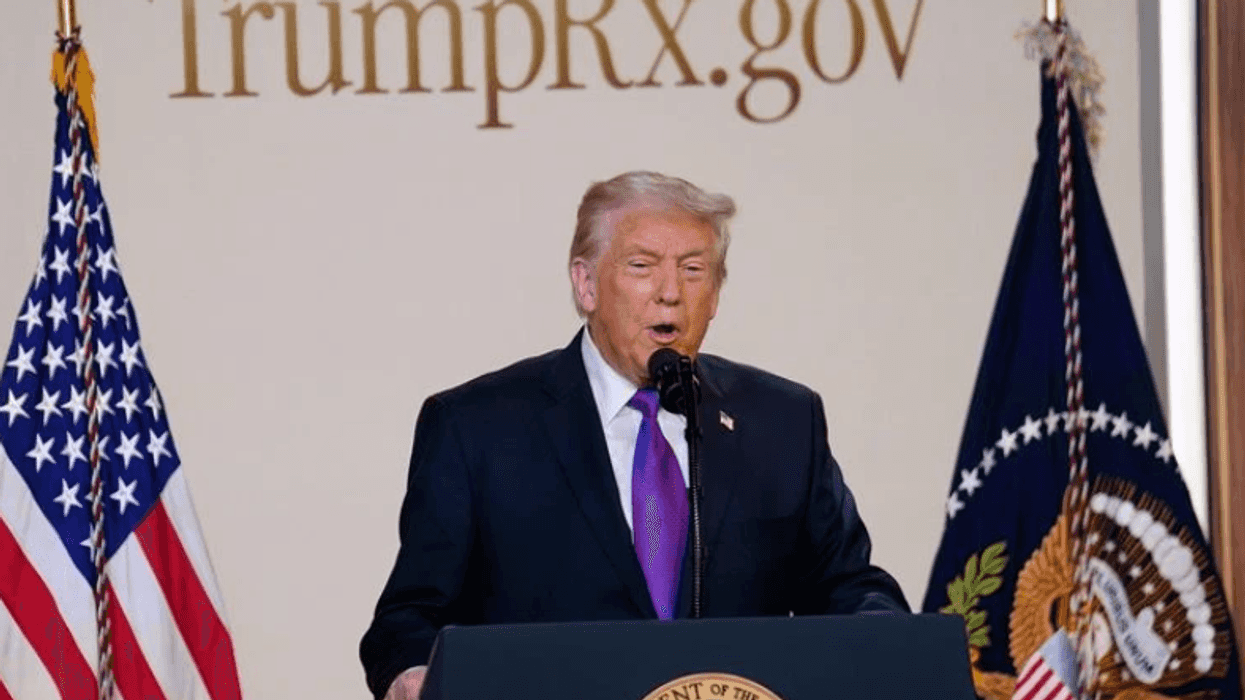
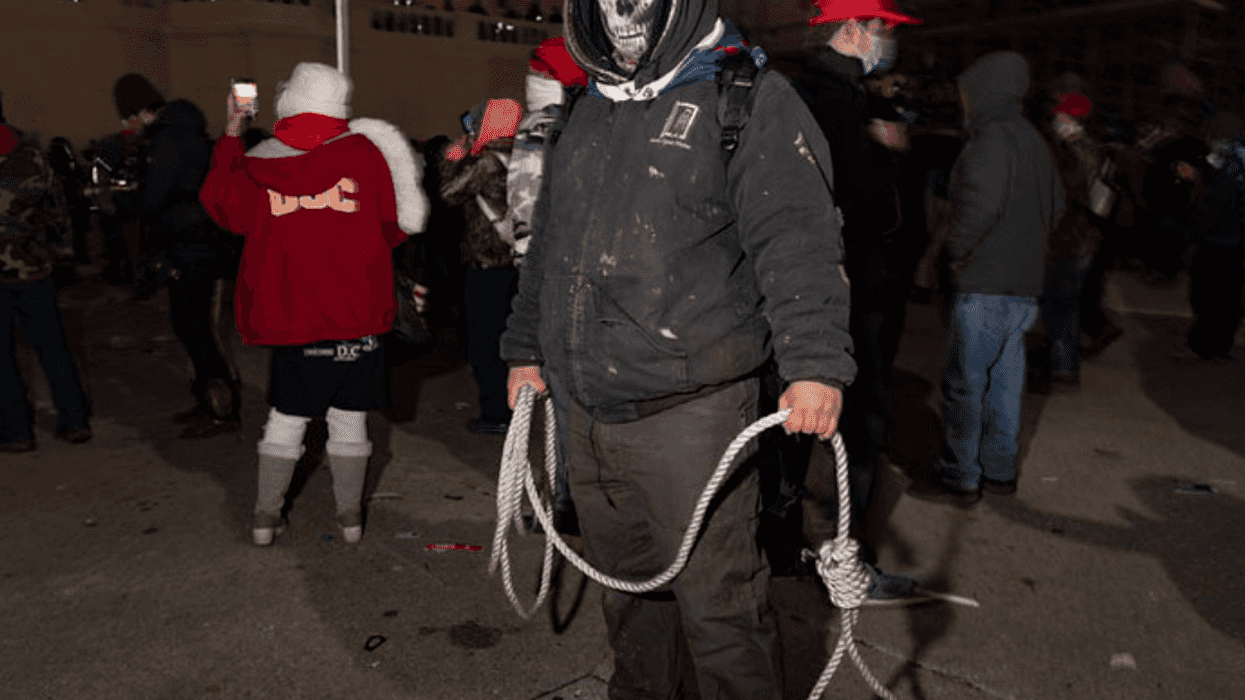
Well, it happened. President Donald Trump really did drop his $10 billion lawsuit against the Internal Revenue Service to instead “settle” for $1.776 billion (ugh) to go to Jan. 6 insurrectionists and whoever else might just have a vibe that former President Joe Biden was mean to them.
As part of this sham, Trump is also dropping his $230 million demand for how sad he was over the Mar-a-Lago documents case, a thing that resulted in no consequences for Trump whatsoever. Trump, his sons, and his family business will not receive money from the settlement, but they do get an apology.
It’s absurd that this arrangement purports to settle Trump’s claims. There is no world where Trump’s lawsuit against the IRS over the leak of his tax returns by an IRS contractor is somehow resolved by a $1.7 billion settlement going to entirely different people for entirely different things. That’s just not how lawsuits work.
The Department of Justice is calling this an “Anti-Weaponization Fund” and issued a slender little two-pager that does not at all specify who will get this money or how much money they will get. The only requirement, it seems, is that someone alleges they suffered “weaponization and lawfare.”
The attorney general gets to appoint the five people who will oversee the slush fund, though one has to be chosen “in consultation with Congressional leadership.” That’s a very weaselly way of saying the administration will only be checking in with Republicans, since they currently control both houses.
Trump can remove anyone he wants for any reason, but the replacement “must be chosen the same way as the replaced member was selected.” On the surface, that sounds like some sort of meaningful restriction on Trump until you remember that the DOJ is nothing but Trump’s puppet and personal law firm these days, so any replacement tapped by the attorney general will no doubt be Trump’s pick.
The attorney general gets to appoint the five people who will oversee the slush fund, though one has to be chosen “in consultation with Congressional leadership.” That’s a very weaselly way of saying the administration will only be checking in with Republicans, since they currently control both houses.
Trump can remove anyone he wants for any reason, but the replacement “must be chosen the same way as the replaced member was selected.” On the surface, that sounds like some sort of meaningful restriction on Trump until you remember that the DOJ is nothing but Trump’s puppet and personal law firm these days, so any replacement tapped by the attorney general will no doubt be Trump’s pick.
According to Acting Attorney General Todd Blanche, however, this is a totally normal thing the government does. The DOJ’s press release and the settlement agreement both mention the Obama-era settlement in the Keepseagle v. Vilsack matter, calling it “legal precedent” for this slush fund. Seriously?
The Keepseagle fund was set up in 2011 to resolve a lawsuit where Native American farmers sued the government, alleging longtime, systemic discrimination by the Department of Agriculture in the distribution and servicing of farm loans from 1981 to 1999. The settlement was for $760 million, or less than one-half of Trump’s little slush fund.
The settlement capped most claims at $50,000, provided up to $12,500 to the IRS on the claimant’s behalf, and forgave USDA loan debt. Farmers who provided additional documentation of damages could receive up to $250,000 and forgiveness of farm debt. Out of 3,601 eligible claimants, 3,587 were paid $50,000, with only 14 farmers eligible for the higher payout.
Moreover, the Keepseagle settlement resolved a case that had been going on since 1999, ran 52 pages, and was required to be approved by the court.
Blanche also smugly explained why the slush fund for Trump is much better than the Keepseagle settlement; any money not claimed by treasonweasels goes back to the government, where in Keepseagle, “the remaining money—which ended up being over $300 million—was distributed to the entities that had not even submitted claims.”
Blanche failed to mention that such an arrangement, known as cy pres, is a longstanding feature of class action settlements, where any money left over after all claimants have been paid can be distributed to nonprofit organizations that directly support the class of claimants. In Keepseagle, $38 million went to nonprofits supporting Native American farmers via a grant-making process, while $266 million went to a trust to fund programs supporting Native farmers for the next 20 years.
Blanche also failed to mention that the move was implicitly approved by the Supreme Court when it refused to hear an appeal over the cy pres distribution.
Similarly, the settlement in Pigford v. Glickman over discrimination against Black farmers was reached only after nearly two years of litigation and, as with Keepseagle, was approved by the court. Class members had to show the USDA discriminated against them by denying loans or providing less favorable terms than those to white farmers. Those claims were also largely capped at $50,000, and over 20,000 claimants received a portion of the $1.01 billion in the settlement.
A second lawsuit, known as Pigford II, was resolved in 2010 for $1.25 billion, with Congress passing the Claims Resolution Act by unanimous consent to appropriate $1.15 billion of the funds.
The Trump Slush Fund is nothing like these settlements. It doesn’t resolve any longstanding litigation. It won’t be approved by a court. There are no restrictions on who can receive money or caps on how much they can get. It massively dwarfs the few million dollars here and there that Trump’s DOJ has showered on Trump cronies and insurrectionists thus far.
This is nothing but a transfer of your tax dollars to the pockets of Jan. 6 insurrectionists and Trump pals, simply because Trump demanded it.
It’s getting really tiresome to say that this is not how government works, but this is really, really not how government works.