Tag: voter fraud lies
Fake Journalist Nick Shirley Recycles A Debunked 'Voter Fraud' Narrative

Fake Journalist Nick Shirley Recycles A Debunked 'Voter Fraud' Narrative

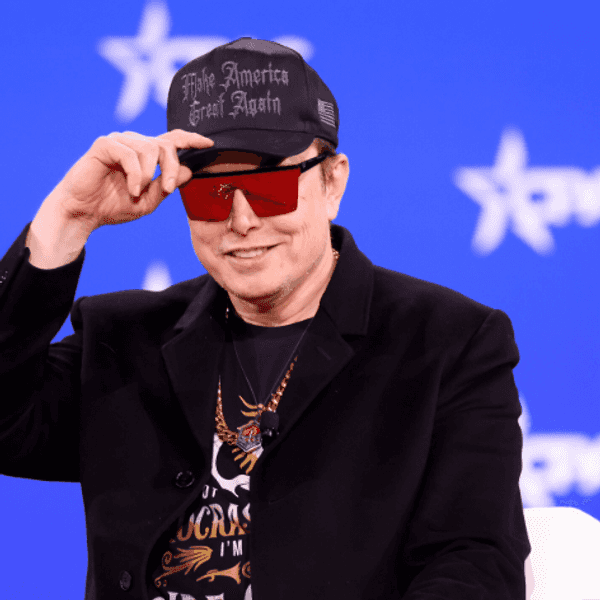
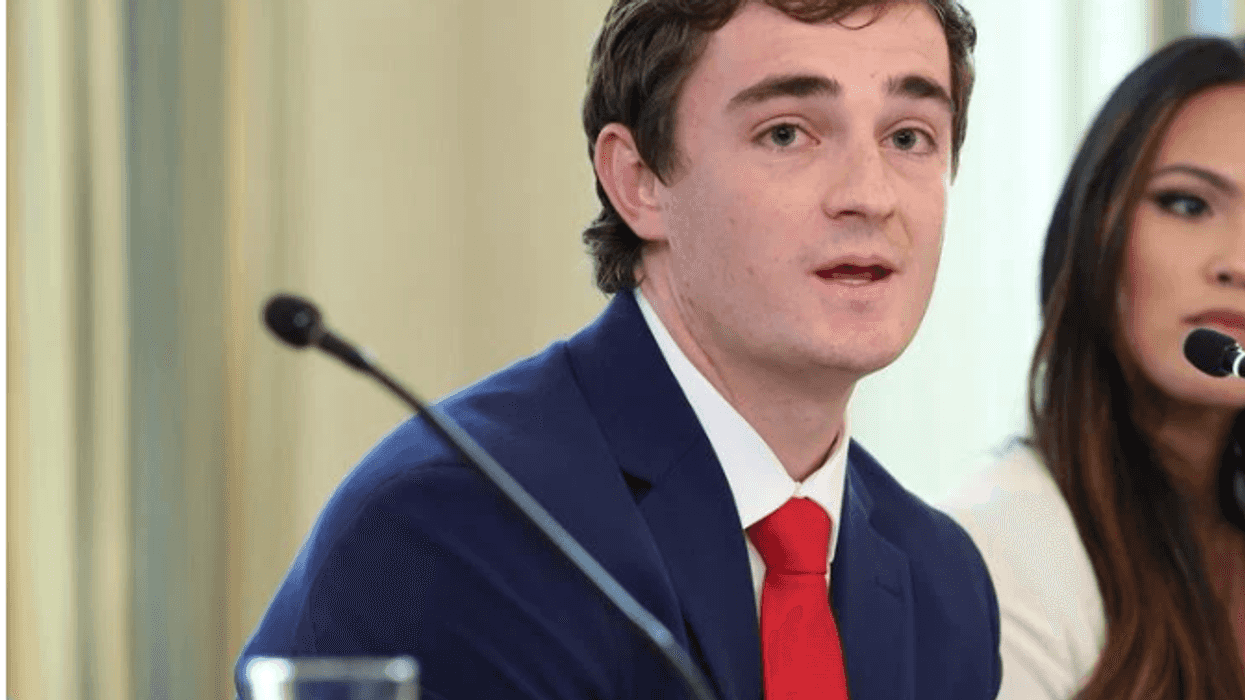
A new video by MAGA provocateur Nick Shirley purports to expose voter fraud in California, but in fact it’s little more than a repackaging of false narratives spread over a decade ago by right-wing operative James O'Keefe. In both cases, the right-wing influencers suggest that fraud could exist without actually exposing any, relying on innuendo and hypotheticals rather than evidence.

O’Keefe created the template for undercover videos meant to expose and embarrass liberal organizations and causes. His old videos, like Shirley’s new ones, were frequently debunked in real time, but they nevertheless served a role in providing fuel to conservative content creators hungry to stoke outrage about perceived liberal excesses. Shirley’s repackaging shouldn’t be surprising given the incentives for young, MAGA-aligned influencers to make a name for themselves in a crowded field. But the original claims didn't provoke any policy changes — reasonably so, given that they were bogus — so Shirley's repackaging has little to offer beyond a hope that new consumers take the bait.

Shirley gained prominence in recent months following a so-called investigation into fraud in Minneapolis day care centers. Although there were some real instances of fraud within the city’s social services, local news and prosecutors had already exposed and investigated many instances of wrong-doing. Still, The New York Times referred to Shirley as having “spurred the federal crackdown on Minneapolis.”

Once the right-wing’s most identifiable creator of sting-style — often deliberately misleading — exposés, O’Keefe’s star has since somewhat fallen. In 2010, O’Keefe founded Project Veritas, and over more than a decade the organization produced videos meant to discredit perceived liberal organizations, often through tactics such as manipulation and deceptive editing. According to Rolling Stone, in 2023 O’Keefe “either left or was pushed out of his own company … depending on whom you ask.” He has since tried to reestablish himself in the right-wing media ecosystem, including by creating an award in 2025 for the so-called citizen journalists who have followed in his footsteps. The first recipient was Nick Shirley.

Shirley, like O’Keefe, is promoting the possibility of fraud that he hasn't actually found

Shirley’s video is one of many from right-wing influencers, such as Benny Johnson, decrying supposedly rampant voter fraud in California, and it includes many examples and myths that have already been debunked. One of the most prominent narratives in Shirley’s video, which was already debunked when Johnson spread it, is that voters whose registrations list central locations, like an abandoned building, as an address are a clear sign of fraud. However, as Democracy Docket notes, California law “gives people experiencing homelessness the flexibility to use any location to register to vote. As long as unhoused residents can describe the place where they spend most of their time — whether it’s an address, a cross street, or a vacant lot — they can legally list it as their address on their voter registration form.”

Another one of Shirley's key examples of “fraud” in the video is a previously reported story about a woman who registered her dog to vote and cast two ballots for him in 2021 and 2022, only one of which was counted. The woman, a registered Republican, self-reported her crimes and is facing six years in prison.

The premise of Shirley’s 20-minute video is that there could be fraud in California without stricter voter ID laws and “with the state receiving millions of illegal migrants, the opportunities for fraud now are even higher.” California does require a valid ID or Social Security number when registering to vote or when voting for the first time after registering by mail, and extensive research has shown that noncitizen voting in U.S. elections is exceedingly rare and extremely unlikely to impact elections. Yet Shirley’s video has been picked up by others in right-wing media, including livestreamer Tim Pool, former FBI Deputy Director Dan Bongino, and conspiracy theory website The Gateway Pundit.

Had someone just awoken from a decade-long coma, they might find these types of claims quite familiar. In 2012, O’Keefe attempted to show how easy it was to commit voter fraud in a state without strict voter ID laws via a video titled “Dead people receive ballots in NH primary,” which claims that conspirators could use the names of the deceased to cast fraudulent ballots to steal an election. But, as Media Matters noted at the time, the video “actually demonstrates just how difficult it would be to pull off such a plot.”

Although it’s true that making sure ballot rolls are accurate is important, O’Keefe’s stunt only showed that without knowing how many votes were needed, the conspirators would need to engage in a massive plot and subsequent cover-up to make sure they had covered the spread. It would be an enormous undertaking. O’Keefe provided no evidence that such a scheme existed for the simple reason that there was no such plot.

In another one of O’Keefe’s “gotcha” videos on voter fraud, a Project Veritas employee almost obtains a ballot meant for registered voter Eric Holder, then the U.S. attorney general. Project Veritas marketed the video as a slam dunk, claiming it had “proven” fraud occurred while in reality no vote was cast and no fraud occurred. The manufactured stunt, like Shirley’s escapades in California, was another senseless attempt to rally people behind more restrictive voter ID laws.

Though Shirley’s claims about California include some different details from O’Keefe and Project Veritas’ claims, the gist is the same: Both attempt to prove “voter fraud” and fail to show any actual fraud being committed. Such right-wing misinformation has been debunked for years while the truth is still that fraud is just not happening at the scale they claim.

Reprinted with permission from Media Matters
Trump Republicans Are A Greater Threat To Democracy Than Trump Himself

Trump Republicans Are A Greater Threat To Democracy Than Trump Himself

Three months before the 2022 general election, momentum is tangibly growing for holding Donald Trump and Trump Republicans legally accountable for a range of criminal activities tied to their ultimately violent effort to overturn the 2020 presidential election.

But Trump’s stepchildren – scores of current candidates who won’t accept the 2020’s election’s outcome and want to control future elections – will be on this fall’s ballots, underscoring that the anti-democratic threats posed by Trump Republicans have evolved and are not over.

“It’s time for every American to pay attention,” said a July 28 update by States United Action, a bipartisan organization opposing election deniers and defending representative government. “These aren’t just fringe candidates. Election lies are showing up in the platforms of politicians with years of government service as well as candidates seeking office for the first time.”

As of July 28, 22 states and the District of Columbia have held their 2022 primaries. More than 60 percent of secretary of state contests, whose responsibilities include overseeing elections, and 40 percent of races for governor and attorney general “currently have an election-denying candidate on the ballot,” States United Action reports. Their tally does not include scores of like-minded candidates seeking state legislative races and even law enforcement posts.

“This is America versus Trumpism,” as one analyst said on a late July briefing that sought to tie the impact of the hearings by the House Select Committee to Investigate the January 6 Attack on the United States Capitol to the less-widely recognized stakes in 2022’s general election.

“Across the country, politicians who won’t accept the result of the last election are seeking control over future elections,” States United Action said. “Election Deniers are now seeking these jobs and positions across the country in a coordinated attack on the freedom to vote.”

In coming weeks, political media may begin to assess the political paradox of looming threats by GOP authoritarians to expand their gains since 2020 – which include passing 50 state laws that “politicize, criminalize, or interfere with elections” –as against the prospect that Trump and his gang may at last face criminal charges for their failed coup.

In August, numerous states will hold primaries with election deniers seeking the top statewide offices – governor, attorney general and secretary of state. Those primaries include Arizona, Kansas, Michigan, Missouri on August 2; Wisconsin on August 9; and Florida on August 23.

Shifting Opinion On Trump Coup

Meanwhile, the House Select Committee’s investigations have shifted public opinion. When the committee's series of hearings began in June, there were still questions – at least among independents and moderate Republicans – about whether Trump and his enablers had committed crimes and whether the public would pay attention. After eight hearings, which will resume in September, it is clear that growing numbers of Americans are watching, there is no doubt Trump led an ultimately violent criminal conspiracy to overturn the presidential election, and the pressing question is whether there will be accountability under state and federal criminal codes.

The momentum for accountability also can be seen in revelations that the Justice Department is questioning a larger circle of Trump allies, including former members of his cabinet. At the same time, missing texts surrounding Trump’s actions on January 6 have grown from the Secret Service guarding Trump to top Department of Homeland Security officials. In Georgia, Fulton County District Attorney Fani Willis has alerted many Trump aides and allies that they may face prosecution.

Election lawyers tracking these developments say that criminal charges are likely to be lodged first in Georgia – possibly before the general election. The DOJ is expected to act after the election (unlike 2016 when the FBI in late October reopened its inquiry into Hillary Clinton’s emails).

Polls have found that 60 percent of likely 2022 voters see Trump’s failed coup as criminal. Political independents – who vote sometimes for Republicans and sometimes for Democrats – are increasingly frowning upon Trump’s lies and tactics, expect accountability, and say they would not vote for 2020 election-denying candidates seeking office in 2022’s general election.

“Sixty percent of Americans say that they were not patriots and 63 percent say they were not bystanders,” pollster Celinda Lake said ar a late July briefing by Defend Democracy Project, a Washington-based group dedicated to the principle that voters determine election results.

2022’s Election Deniers

However, as the focus expands from holding the coup plotters accountable to countering ongoing power grabs by Trump Republicans, the challenge gets more complex.

In GOP-majority state legislatures, these authoritarians used 2020 stolen election lies and old cliches demonizing Democrats to pass new laws criminalizing small errors in the bureaucratic tasks conducted by election workers and established get-out-the-vote routines by campaign volunteers. The most common focus of the punitive laws is limiting the use of mailed-out ballots and restricting voters’ options to legally return them.

A related threat concerns a case the U.S. Supreme Court will hear this fall. It involves the radical right-wing legal theory that was at the heart of Trump’s failed coup, the so-called independent state legislature doctrine. Its most extreme version claims that the Constitution only empowers state legislatures to set election rules and run elections, overruling state constitutions, state supreme courts, gubernatorial vetoes, election boards, and citizen initiatives. (Trump’s forged Electoral College certificates in seven states sought to delay Congress on January 6 and redirect the certification of 2020’s winner to GOP-majority state legislatures that would have backed Trump.)

These new laws and legal gambits are based on old lies and partisan prejudices. Since the 1980s, Republicans have been claiming that Democrats can only win if they fabricate voters and votes – so-called voter fraud. But Trump’s stolen election lies and failed coup, which can be called election fraud, have been seized upon by GOP opportunists.

Self-appointed election integrity activists have emerged and promoted themselves to Trump’s base and right-wing media as super patriots. These posers have raised millions from Trump voters by hawking conspiracy theories that have been debunked by credible Republicans. But their bogus analysis and lies, amplified by right-wing media, have enraged Trump’s base.

The consequence is that violent threats against election officials have escalated and not abated. This targeting has roiled the previously boring and bureaucratic field of election administration, which typically are county-level operations staffed by local civil servants.

For example, on July 29, a Massachusetts man was arrested for an alleged bomb threat against the Arizona secretary of state’s office. In Wisconsin, a pro-Trump sheriff in suburban Racine County is refusing to investigate pro-Trump activists who forged online ballot requests; they wanted to show the process was dishonest but instead were caught by election officials.

“In many ways, the Republican election officials have it worse than the Democratic election officials,” said David Becker, founder of the Center for Election Innovation and Research (CEIR), a non-profit, non-partisan organization that has organized an election official legal defense network, in a late July media briefing.

“The Republican election officials know the [2020] election was secure. They did a remarkable job. Most, if not all of them, voted for Trump,” he continued. “And now they find themselves under attack and, unlike election officials in maybe deeply blue areas, when they go home at night, their own families, and friends… wonder if they helped steal an election because they have been lied to so much [by Trump and his boosters].”

Frontline Responses

Election officials have responded to this fraught new environment by tightening security and reaching out to local media and community leaders, hoping to inform the public that modern election administration is accurate and replete with checks and balances.

Numerous non-profit organizations have catalogued the danger signs and sought to respond. CEIR, for example, has organized a nationwide legal defense network to assist threatened local officials. Neal Kelley, who managed the nation’s fifth largest election district in Orange County, California, is now working with the Committee for Safe and Secure Elections, which seeks to train local police to protect election officials and voters from illegal threats and intimidation. Grassroots groups like Scrutineers, which educates activists about election administration, recently conducted non-violent conflict resolution training for election observers.

In many respects, defeating Trump Republicans in 2022’s general election is seen by these advocates of fair elections and representative government as the most tangible line of defense before the 2024 presidential election. As the House Select Committee’s disclosures continue and prosecutors move closer to indicting Trump Republicans for their 2020 offenses, the pro-democracy advocates hope Americans will put country ahead of party and vote this fall.

“An informed voter is a powerful voter,” said States United Action. “Election Deniers are on the ballot in many state primaries in August, including all 11 primaries for secretary of state. And pro-democracy candidates of both parties will be on the ballot in the general election this fall. It’s never been more important for our state leaders to believe in free, fair, and secure elections.”

Steven Rosenfeld is the editor and chief correspondent of Voting Booth, a project of the Independent Media Institute. He has reported for National Public Radio, Marketplace, and Christian Science Monitor Radio, as well as a wide range of progressive publications including Salon, AlterNet, The American Prospect, and many others.

Lawyers Seek Disbarment Probe Of Ted Cruz Over 'Leading Role' In Trump Coup

Lawyers Seek Disbarment Probe Of Ted Cruz Over 'Leading Role' In Trump Coup

A group of lawyers has submitted a 15-page ethics complaint to the State Bar of Texas demanding an investigation of Senator Ted Cruz (R-TX) for his “leading role” in the far-reaching Republican effort to keep former President Trump in power despite his reelection loss.

The complaint — filed by the 65 Project, an organization of lawyers seeking to hold attorneys accountable for lending a hand in pro-Trump efforts to overturn the results of the 2020 elections — called for an examination of Cruz’s conduct in the weeks before Election Day in 2020 and on January 6, 2021, the day of the Capitol insurrection.

The complaint honed in on Cruz’s many false assertions of widespread voter fraud after 2020’s Election Day; his participation in lawsuits falsely denying Pennsylvania’s results; and failed attempts to prevent four states from appointing electors based on the 2020 election results.

“Mr. Cruz played a leading role in the effort to overturn the 2020 elections. And while the same can be said about several other elected officials, Mr. Cruz’s involvement was manifestly different,” the complaint read, asserting that Cruz had moved “beyond simply working within the confines of Congress,” according to the New York Times.

“He chose to take on the role of lawyer and agreed to represent Mr. Trump and Pennsylvania Republicans in litigation before the U.S. Supreme Court,” the complaint continued, citing the ultimately unsuccessful roles Cruz took on. “In doing so, Mr. Cruz moved beyond his position as a United States senator and sought to use more than his Twitter account and media appearances to support Mr. Trump’s anti-democratic mission.”

The 65 Project, in its complaint, also slammed Cruz for his continued dissemination of the Big Lie, which he knew was false, and for the false allegations of bias he leveled at Pennsylvania’s state courts.

“Mr. Cruz knew that the allegations he was echoing had already been reviewed and rejected by courts,” the complaint says. “And he knew that claims of voter fraud or the election being stolen were false.”

The lawyer group wants Cruz disciplined for his failed bid to subvert the previous election, but their complaint didn’t say how, the Texas Tribune reported.

However, the filing also mentioned a New York appellate court’s suspension of Rudy Giuliani’s law license, arguing that "just as Mr. Giuliani has been disciplined for his conduct, so should Mr. Cruz,” according to the Guardian.

A spokesperson for Cruz labeled the 65 Project a “far-left dark money smear machine run by a who’s who of shameless Democrat hacks.” The spokesperson added, “They’re not a credible organization and their complaint won’t be worth the paper it’s printed on.”

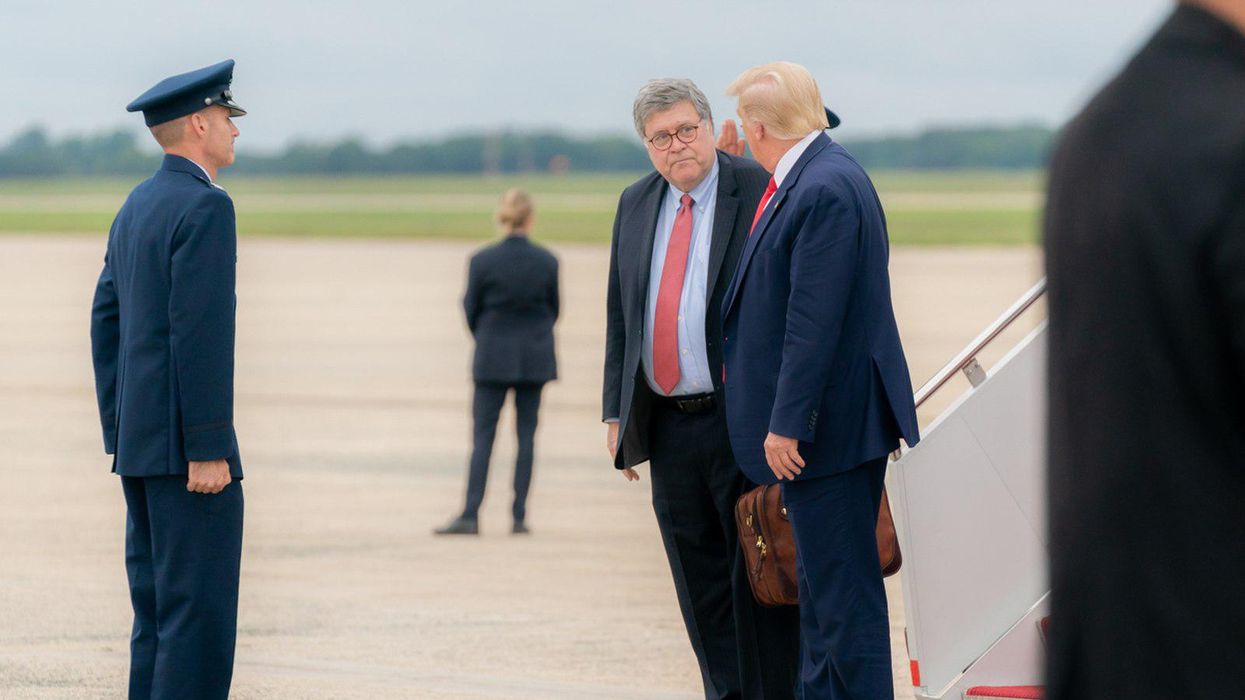
Former Attorney General William Barr, left, and former President Trump.

It's Too Late To Erase Barr’s Role In Spreading Election Lies

Reprinted with permission from Media Matters
ABC News chief Washington correspondent Jonathan Karl has made waves with his recent piece in The Atlantic, titled "Inside William Barr's Breakup With Trump," recounting the former U.S. attorney general's story of a nasty falling-out with former President Donald Trump in the wake of Barr's public admission in early December that there was no evidence of voter fraud that Trump was alleging had stolen the election from him.

USA Today also gave a deferential treatment to Barr's current telling of the story, with a write-up of Karl's piece entitled "It's just a joke': Former AG William Barr derided Trump's false election claims."

However, none of this fawning coverage did anything to provide accountability for Barr's own prominent role in helping Trump build up a false public narrative of massive fraud in the months before the election.

Indeed, right before the 2020 election, ABC News had tracked some of Barr's "unfounded argument" seeking to sow distrust in the expanded use of mail-in voting during the COVID-19 pandemic. In September, Karl had also reported on a Department of Homeland Security bulletin on Russian disinformation against mail-in voting, which sought to further spread Trump's own false claims. USA Today had also published a guest column in July by cybersecurity experts, debunking many of Barr's claims.

But now, Barr's actual record in this matter is left on the cutting-room floor.

Barr Pushed False Claims Of Voter Fraud

Karl wrote about Barr's informal review of various claims of voter fraud in the weeks following Election Day because he "knew that at some point, Trump was going to confront him about the allegations." As Barr told Karl, "If there was evidence of fraud, I had no motive to suppress it. But my suspicion all the way along was that there was nothing there. It was all bullshit."

However, Trump would have had every reasonable expectation that Barr would help him out — because throughout 2020, Barr mounted his own propaganda operation against the security of the upcoming election. Far from treating it like "bullshit," at this stage, the attorney general pushed multiple false claims that the Trump campaign would use to try and overturn the election from Election Day through January 6 — and which are even still in circulation today.

In the spring of 2020, Barr floated a conspiracy theory in an interview with The New York Times that "there are a number of foreign countries that could easily make counterfeit ballots, put names on them, send them in." He then dug in on this idea again in September, telling CNN that he was "basing it on logic."

Election experts would explain all the ways such fraud was impossible, because real mail-in ballots have individual identifiers such as barcodes and signatures for tracking and processing, and they must be correctly printed on the right kind of paper to be scanned by each local ballot machine. However, Barr's claim still lives on today, with the QAnon-linked ballot "audit" in Arizona looking for such things as rumored bamboo fibers as evidence of fake ballots being flown in or secret watermarks that were placed as part of an elaborate sting operation for false ballots.

In September, Barr also asserted that mail-in voting would destroy the protections of the secret ballot: "There's no more secret vote. … Your name is associated with a particular ballot. The government and the people involved can find out and know how you voted. And it opens up the door to coercion." (This, too, was false, as there are safeguards in place to prevent a specific person's vote from being identified at the counting stage.)

Notably, in one interview with Chicago Tribune columnist John Kass, Barr also sought to discredit the counting of mail-in votes as he painted a picture of the exact scenario that Trump and his allies would later seek to take advantage of — a "red mirage" followed by a "blue shift," in which Trump would appear to be ahead on Election Night before the counting of mail-in votes that were disproportionately cast by Democrats. "Someone will say the president just won Nevada," Barr offered hypothetically. "'Oh, wait a minute! We just discovered 100,000 ballots! Every vote will be counted!' Yeah, but we don't know where these freaking votes came from."

In the same interview, Barr also dismissed the idea that Trump would attempt to subvert the election result. "You know liberals project," Barr said. "All this bulls--- about how the president is going to stay in office and seize power? I've never heard of any of that crap. I mean, I'm the attorney general. I would think I would have heard about it." (Later, in the wake of the January 6 insurrection, Barr said in a statement that Trump's conduct that day was a "betrayal of his office and supporters.")

Nowhere in his Atlantic piece did Karl grapple with any of these statements. Instead, he simply left the reader with the impression that Barr knew after the election that claims of widespread voter fraud were "all bullshit."

Barr Said Claims Of Voter Fraud Would "Continue To Be Pursued"

At the end of his Atlantic piece, Karl gave a sympathetic slant to Barr's resignation as attorney general in late December, when Barr seemingly tried to leave on positive terms while separating himself from the disastrous efforts of Trump's inner circle to reverse the election res

Barr almost immediately began to regret his decision to stay. His statement on election fraud did nothing to deter Trump, who was now listening, almost exclusively, to Giuliani and others outside his administration. They were telling him that he was still going to win the election.
Two weeks later, Barr went down to the White House to tell the president that he planned to resign before the end of the year. It was their first meeting since their confrontation. To defuse the tension, Barr had written an effusive resignation letter, which he handed to the president when he got to the Oval Office. The letter praised Trump's record and played directly into his complaints about how he had been treated by Democrats, saying his efforts "had been met by a partisan onslaught against you in which no tactic, no matter how abusive and deceitful, was out of bounds."

To be exact, those quotes came from the second paragraph of Barr's published resignation letter. However, Karl omitted the very first paragraph of the full letter, in which Barr continued to publicly dignify Trump's efforts to sow mistrust in the election:

I appreciate the opportunity to update you this afternoon on the Department's review of voter fraud allegations in the 2020 election and how these allegations will continue to be pursued. At a time when the country is so deeply divided, it is incumbent on all levels of government, and all agencies acting within their purview, to do all we can to assure the integrity of elections and promote public confidence in their outcome.

Nowhere in that paragraph did Barr acknowledge that these allegations of fraud were all "bullshit," as he now puts it, but instead stated they would "continue to be pursued" as a valid concern for the American public.

Karl could have held Barr accountable for that opening paragraph. Instead, his piece said nothing about it.

While guest anchoring on Sunday's edition of ABC's This Week with George Stephanopoulos, Karl touted his own "amazing interview" in which Barr "talked about what he really thought of Donald Trump's claims of election fraud." (Notably, Karl also did not correct former Trump administration official Sarah Isgur's false claim during the subsequent panel discussion that the Mueller Report "for the most part" had exonerated the Trump campaign of collusion with Russia in 2016.)

Shop our Store

Headlines

Editor's Blog

Corona Virus

Trending

World