Tag: voter suppression
Why The Save America Act Could Be Political Suicide For Republicans

Why The Save America Act Could Be Political Suicide For Republicans

It's common sense, Republicans say. You have to show ID to buy a beer, board a plane, or land a job as a snow shoveler. Why not require proof of identity from those who seek to exercise our most sacred civic right, casting a vote?

According to the polls, the GOP has won the argument. Most Americans favor a voter ID law.

What Republicans are currently pressing for, the SAVE America Act, however, is not a voter ID law, a requirement that registered voters prove who they are when they go to the polls. SAVE is a "prove you're a citizen" law.

Why is the GOP pushing SAVE America? Republican voters will be hit hardest. Clearly, neither President Donald Trump nor the Republican Party knows what's good for them.

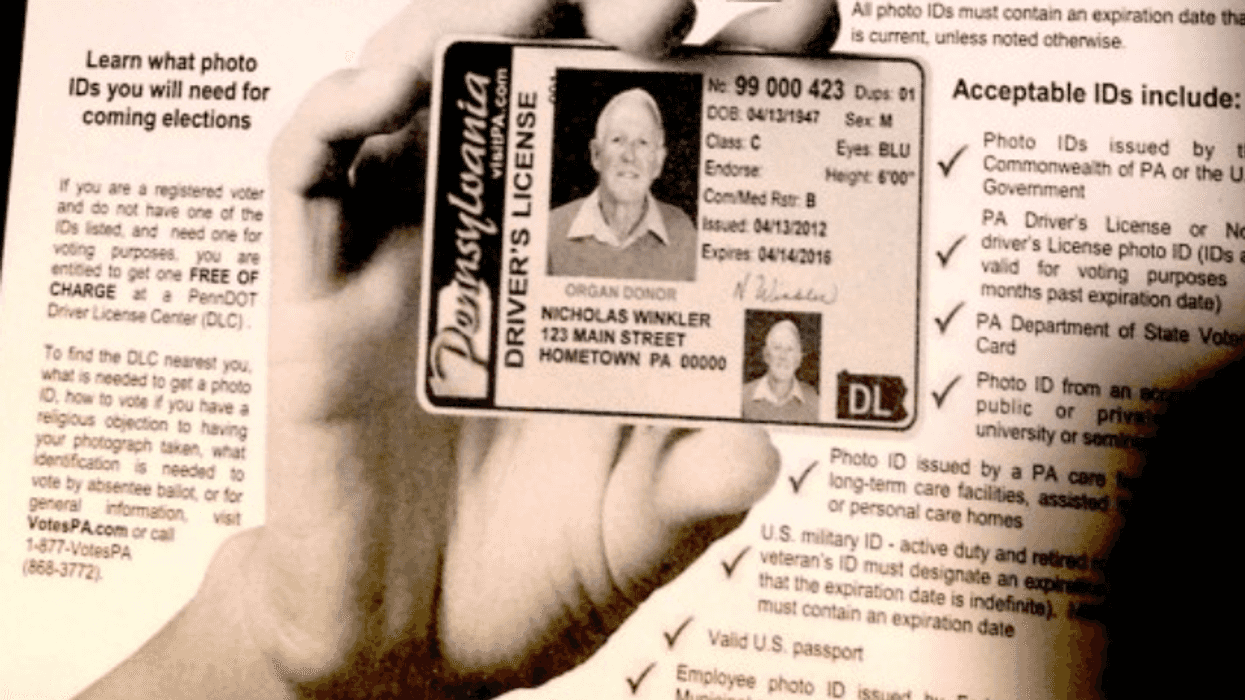
A voter ID law — something most states, especially red ones, currently have — passes the common-sense test for most Americans because it requires a form of identity nine out of 10 people have, or can obtain fairly easily, like a driver's license or non-driver's state identification card. Some states even take non-photo IDs. Voter ID laws have been promoted by Republicans primarily because they limit or eliminate mail-in voting, which they wrongly assume benefits Democrats.

The SAVE America Act goes much further than voter ID. In an attempt to improve Republican candidates' chances under the guise of protecting voting integrity, it tries to disenfranchise Democratic voters.

Ironically, it will have the opposite effect.

Voter ID attempts to verify who you are. SAVE America requires you to show proof of citizenship in the form of a passport or a birth certificate with your current name on it. (Noncitizens can get a driver's license.) Far more Democrats have proof of citizenship than Republicans.

Fewer than half of U.S. citizens hold a passport. For these elites, the SAVE America Act would be a breeze. Sixty-four percent of Americans with a household income above $100,000 have a passport, while only 21 percent of those earning under $50,000 do. Upper-middle-class white voters lean Democratic; poorer whites lean Republican.

Roughly half of 2024 Trump voters have passports, compared to two-thirds of Kamala Harris voters. The 13 states with the lowest passport rates all voted Republican in 2024. Congressional districts with low passport ownership are overwhelmingly GOP-held, rural and/or Southern. Rural voters (a GOP stronghold) face longer drives to election offices for in-person verification. Older voters, military personnel, tribal citizens and working-class Americans — Republican-leaning demographic groups — are less likely to have the required documents.

A substantial number of voters don't have a physical copy of their birth certificate. Research by the Brennan Center "indicates that more than nine percent of American citizens of voting age, or 21.3 million people, don't have proof of citizenship readily available. There are myriad reasons for this — the documents might be in the home of another family member or in a safety deposit box. And at least 3.8 million don't have these documents at all, often because they were lost, destroyed, or stolen."

Poor voters — who tend to vote Republican — live more disorganized, mobile lives. They're less likely to know where their birth certificate is or how to obtain a new one, or be motivated to find out America would effectively repeal women's suffrage. "84 percent of women who marry change their surname, meaning as many as 69 million American women do not have a birth certificate with their legal name on it and thereby could not use their birth certificate to prove citizenship," notes the Center for American Progress. "The SAVE Act makes no mention of being able to show a marriage certificate or change-of-name documentation."

Women who change their names — twice as likely to be Republican — would have to present themselves at their county board of elections office, which is only open during business hours, when most people work.

There, local election workers — overwhelmed by a sudden surge of applicants — would have to sort through each individual's marriage and divorce decrees and other miscellany to determine whether Mrs. Jane Doe, née Jane Smith, is eligible to vote. Given that SAVE America mandates a fine and prison time for an election official who wrongly allows someone to vote, even someone who is a citizen but without the right documents, the path of least resistance for a beleaguered, poorly paid local election clerk would be to reject rather than approve name-change voters, including trans people.

After decades of easing voting with same-day registration, automatic registration with driver's license renewals, early and mail-in voting, SAVE America would make voting much harder. Many people will choose not to vote rather than jump through so many bureaucratic hoops for the right to choose between a center-left and center-right party, neither of which delivers for them. Here is the purpose of SAVE America — to radically reduce the number of voters.

Most of whom, hilariously, are Republican.

It's bizarre that the right is fighting for SAVE America. Democratic worries about discouraging working-class voters are sweet but run counter to their interests. As the 2024 election proved, poor and lower-middle-class voters are no longer theirs to lose. If Democrats were smart, they'd be the party pushing the SAVE America Act — or getting out of its way.

The GOP wants SAVE America because they haven't internalized the class shifts in the American electorate. Republicans have become the party of the working poor (even if they don't care about them), while Democrats are now the party of coastal elites (though they pretend to champion Joe and Jane Sixpack).

If passed, and signed into law, the SAVE America Act is likely to backfire for its Republican sponsors in the same way that Trump's advice to MAGA followers not to use write-in ballots contributed to his loss in 2020.

Ted Rall, the political cartoonist, columnist ,and graphic novelist, is the author of the brand-new What's Left: Radical Solutions for Radical Problems. He co-hosts the left-vs-right DMZ America podcast with fellow cartoonist Scott Stantis and The TMI Show with political analyst Manila Chan. Subscribe: tedrall.Substack.com.

Courage Over Fear: Will Americans Stand Strong For Free And Fair Elections?

Courage Over Fear: Will Americans Stand Strong For Free And Fair Elections?

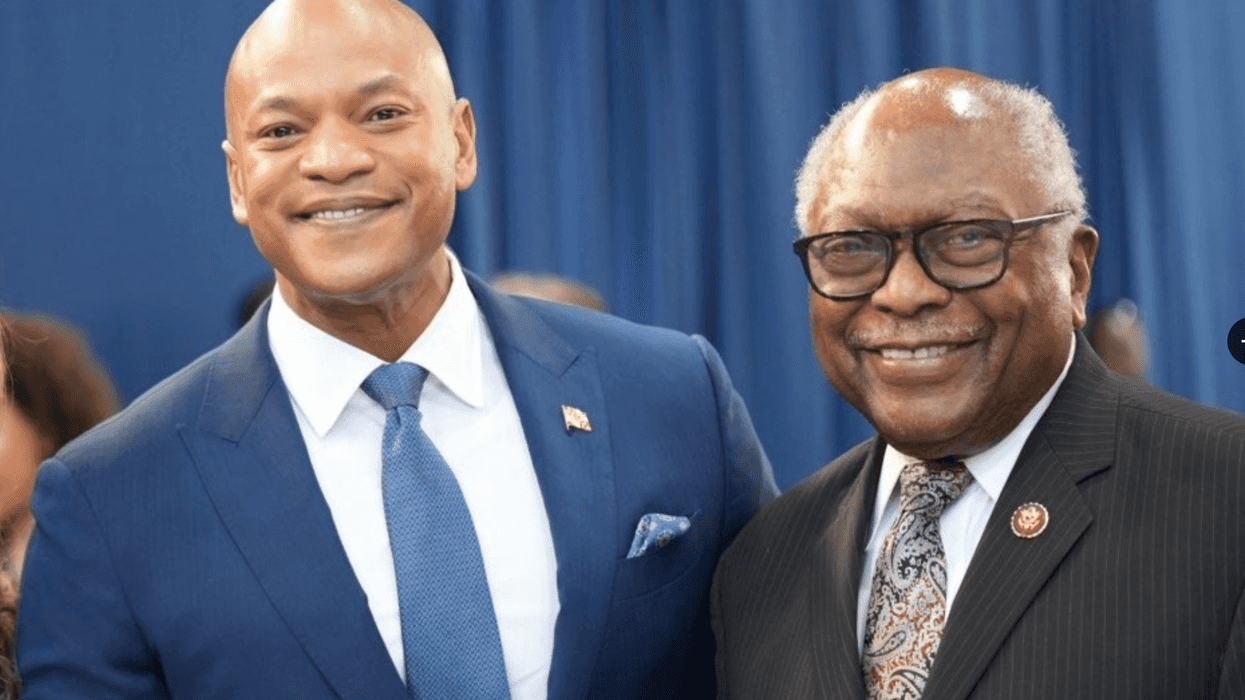
Rep. James E. Clyburn (D-SC) is the go-to for both reassurance and resolve. That makes sense, since the South Carolina Democrat is a student of history — and has lived it.

He chronicles some of the country’s past, and his own, in his book The First Eight: A Personal History of the Pioneering Black Congressmen Who Shaped a Nation, published late last year.

It’s instructive to learn about the lives of these eight and the Jim Crow discrimination that thwarted Reconstruction and the political and civil rights progress of African Americans for nearly a century during and after their time.

But that doesn’t make what they accomplished meaningless. And it’s not as though the hard work stopped in the years between the post-Civil War eight and Clyburn’s election in the 1990s.

That’s the lesson Americans who fight for justice must never forget, even when the outlook is discouraging. Clyburn is a very real symbol of how risks can turn into rewards shared by those who follow — and as we witness the current retreat from those gains, initiated at the highest levels of government, his perspective couldn’t come at a better moment.

It is a week that has seen the 61st anniversary of what has become known as Bloody Sunday, the march across the Edmund Pettus Bridge in Selma, Alabama. On March 7, 1965, state troopers violently attacked peaceful citizens seeking equal rights, particularly the voting rights denied African Americans during decades of disenfranchisement.

Many gathered this past weekend in Selma, among them Illinois Gov. JB Pritzker and Maryland Gov. Wes Moore — a Democratic presence when GOP representation at the event has been sadly shrinking with each passing year — and people from the original march.

One thing they all had in common was worry that the battle over voting rights is far from finished. “I’m concerned that all of the advances that we made for the last 61 years are going to be eradicated,” 78-year-old Charles Mauldin, beaten on Bloody Sunday, told the AP.

The Supreme Court seems primed to obliterate what remains of the Voting Rights Act of 1965, passed after the bloody sacrifice of that day shocked the national consciousness. If given the green light, Republican-led efforts could eliminate majority-minority districts that have given Black and Hispanic citizens representation and a voice in Washington.

President Donald Trump, amid an unpopular war with Iran, has found plenty of time to demand that Congress pass stricter federal voting requirements to fight nonexistent fraud.

The federal government has embarked on what seems like another wild-goose chase in Arizona, seeking records related to the 2020 election, where numerous audits and reviews have proven Trump lost — a truth the president of the United States refuses to accept.

Critical midterm elections are around the corner, with the first primary elections a week old. How certain are free and fair elections, without interference or intimidation?

It was my question during a press conference preceding Trump’s State of the Union address last month. Clyburn was joined by fellow Congressional Black Caucus member Rep. Sydney Kamlager-Dove of California to offer insight that might be missing that evening.

Does the congressman fear a weakened Voting Rights Act would spell doom for Black voters?

“A lot of things went against us before we ever got the right to vote.”

He offered a reminder of what was happening in Alabama and a host of states in the South when John Lewis and the rest of the brave men, women and children marched. Many African Americans then did not have the right to vote.

“It wasn’t lack of desire, but obstacles placed in their way,” Clyburn said, noting poll taxes, literacy tests, “the violence and intimidation meted out to anyone who would even think of trying to vote, or registering a Black person to vote.”

“Yet there they were on that bridge, fighting injustice for themselves, of course, but mostly for those who would follow.”

No matter what the Supreme Court rules, “it will not take the vote away.” And one vote could make the difference, he said.

Maybe it does take people who have lived the fight to supply a call to action to those who might be scared away by state election laws designed to confuse or by poll watchers whose goal is intimidation rather than assistance.

Folks like Clyburn and Mauldin, who remembered what it took that day in 1965: “It wasn’t that we didn’t have fear, it’s that we chose courage over fear.”

Mary C. Curtis has worked at The New York Times, The Baltimore Sun, The Charlotte Observer, as national correspondent for Politics Daily, and is a senior facilitator with The OpEd Project. She is host of the CQ Roll Call “Equal Time with Mary C. Curtis” podcast. Follow her on X @mcurtisnc3.

Reprinted with permission from Roll Call
Despite Zero Fraud, Trump's MAGA Candidates Demand End Of Mail Voting

Despite Zero Fraud, Trump's MAGA Candidates Demand End Of Mail Voting

President Donald Trump and Oregon Republican Christine Drazan have something in common: both want to curtail mail-in voting.

Drazan has served in both chambers of the Oregon state legislature and is now running in the Republican primary for governor.

Oregon is one of eight states where all voting is conducted by mail. One hundred percent of ballots cast in Oregon in 2024 were submitted via postal service or drop box. The state adopted the practice in 2000 after 70 percent of voters approved the change in a 1998 referendum.

In last month’s State of the Union address, Trump urged lawmakers to implement federal voting restrictions outlined in the SAVE Act, legislation that would eliminate most forms of mail-in voting and impose stricter ballot access requirements nationwide.

“All voters must show voter ID,” Trump said. “All voters must show proof of citizenship in order to vote. And no more crooked mail-in ballots except for illness, disability, military, or travel. None.”

Trump frequently says mail voting has led to widespread fraud in elections, but there is virtually no evidence to support these claims. A 2020 analysis by the New York Times found that states with universal vote-by-mail policies have “essentially zero fraud.”

Last year, Drazan sponsored House Bill 3872 (HB 3872), which would require most Oregonians to vote in person on Election Day. It would also require voters to present a photo ID.

Republicans in the Oregon Senate introduced an identical bill as a companion to HB 3872. The Senate bill was so unpopular that the Oregon legislative website crashed because of the volume of people logging on to express their displeasure.

Democratic state Sen. James Manning told Oregon Public Broadcasting that both legislative bills were designed to appease Trump.

“Is this an issue looking for a problem?” Manning asked. Because I don’t see it here in our state. This is something that’s a national movement to try to make something of nothing.”

Polling suggests that Trump and Drazan are out of step with what most Oregonians want. A 2018 survey by DHM Research found that 71 percent of Oregonians prefer voting by mail.

Drazan ran unsuccessfully for governor in 2022. If she secures the Republican nomination, she will face incumbent Democratic Gov. Tina Kotek in the general election.

Reprinted with permission from American Journal News

Trump Demands Passage Of Partisan Election Bill To 'Guarantee The Midterms'

Trump Demands Passage Of Partisan Election Bill To 'Guarantee The Midterms'

Politico reports President Donald Trump ordered House Republicans Monday to pass his huge partisan elections bill a third time with even more provisions, targeting mail-in voters and vulnerable minorities.

“It will guarantee the midterms,” Trump told lawmakers, according to Politico. “If you don’t get it, big trouble, my opinion.”

Provisions that Trump wants added include targeting transgender rights in addition to curbing mail voting, even though Trump himself has voted by mail. And Trump warned the GOP to pursue passage of the law even it means abandoning the rest of their legislative agenda before the November elections.

“It’s actually a matter in a serious way of national survival. We can’t have these elections going on like this anymore,” Trump said.

Trump also endorsed a push by House Republican hard-liners to attach a must-pass spy powers extension to the SAVE America legislation in a bid to pass both together. But there is a reason Trump is asking the House to pass the bill a third time: Politico reports this would create “a nightmare for House GOP leaders who already face obstacles passing either bill.

The House has already two passed versions of what is now called the “SAVE America Act,” which would create onerous new citizenship and photo ID requirements for voting. Still, Politico reports Trump is framing the voting and transgender provisions as “proven political winners” that Democrats will not easily be able to oppose.

“That should be the easiest thing to get passed that you’ve ever had,” Trump told the Republicans. “Those are best of Trump. This is the No. 1 priority, it should be, for the House.”

But Democrats have opposed the bill in unison every time Republicans tried to get it to the president’s desk, and even Republican leaders have been loath to change Senate rules to make the bill easier to pass.

Reprinted with permisson from Alternet


Shop our Store

Headlines

Editor's Blog

Corona Virus

Trending

World