That 'Seditious' Video By Six Congressional Democrats Is Accurate And Necessary
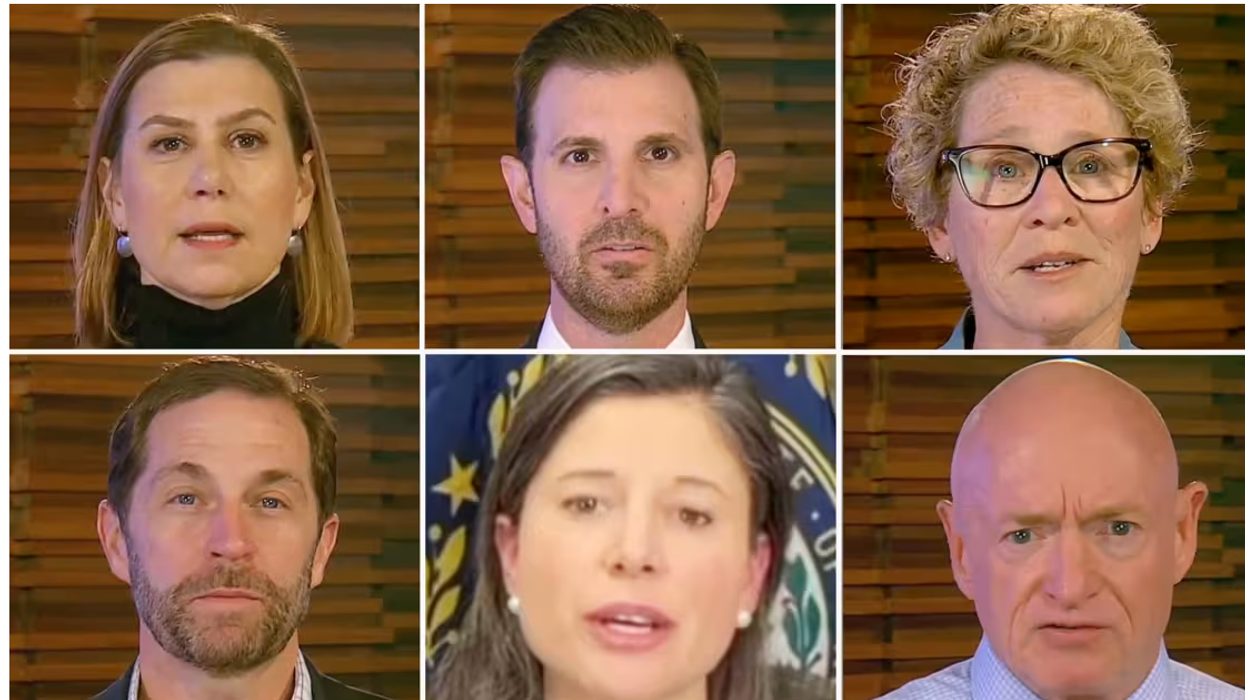
Fom top left: Sen. Elissa Slotkin, Rep. Chris Deluzio, Rep. Chrissy Houlahan, Sen. Mark Kelly, Rep. Maggie Goodlander and Rep. Jason Crow.
The crisis exposed by the Trinidad strike is not just what U.S. forces may have done in the water. It’s what the administration did on land.
The short video released last week by six current and former service members now serving in Congress was striking for its restraint. In calm, matter-of-fact tones, the six reminded their fellow service members of a bedrock rule: lawful orders must be obeyed; patently illegal orders must not be. They did not tell anyone to disobey the Commander in Chief. They did not brand any particular directive unlawful. They simply restated what every officer learns early in training: an order that directs the commission of a crime is not merely questionable — it is one a service member has an affirmative duty to refuse.
That principle is woven into the Department of Defense Law of War manual, which specifies that “responsible commanders are required to decline to carry out orders that are contrary to the law of war.” As Sen. Mark Kelly, one of the six and a former Navy combat pilot, put it plainly: “If orders are illegal, not only do they not have to follow them — they are legally required not to follow them.”
Yet for this careful and wholly orthodox reminder, the lawmakers found themselves at the center of a political firestorm. The President denounced their message as “seditious behavior” and declared—in a now-infamous social-media post—that sedition is “punishable by DEATH.” Hegseth amplified the accusation, accusing the lawmakers of endangering military discipline. And the machinery of the national-security state followed suit: Pentagon inquiries were opened, and FBI agents began conducting “knock-and-talk” visits to the members of Congress involved.
The instinct to investigate truth-tellers rather than alleged illegality has marked some of America’s darkest constitutional moments. And it is the through-line of this one.
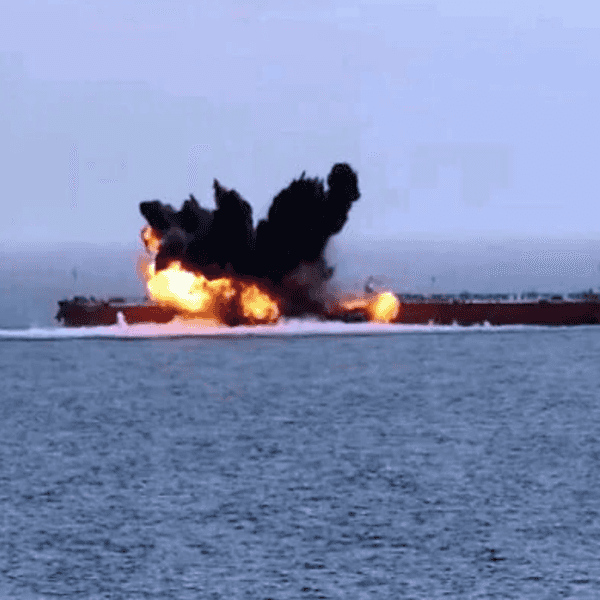
The video was not simply factually accurate but specifically pertinent in the context of the administration’s recent series of lethal strikes against small vessels in the Caribbean and the Eastern Pacific. Those strikes—now numbering more than twenty and resulting in at least eighty confirmed deaths—appear, based on public reporting, to rest on no clear statutory or constitutional authority.
The boats at issue were not warships. They were small fishing craft—peñeros—sometimes fitted with more powerful engines but otherwise indistinguishable from civilian vessels used throughout the region. As Marty Lederman has documented in a comprehensive analysis, neither the 2001 Authorization to Use Military Force nor any Title 10 operational authority plausibly applies. The designation of a Venezuelan gang as a foreign terrorist organization may trigger sanctions and material-support prohibitions, but it does not create a freestanding authority to kill suspected members on the high seas.
Nor can the administration rely on Executive Order 12333. Every administration since Reagan’s has maintained its prohibition on assassination and its understanding that targeted killing is lawful only in contexts of armed conflict or in truly unavoidable self-defense. Those conditions are plainly absent here, where interdiction and arrest have long been feasible alternatives.
In the most disturbing episode—first revealed by The Washington Post—Secretary of Defense Pete Hegseth allegedly issued a spoken order to “kill all” crew members aboard a suspected smuggling vessel. The initial strike sank the boat. A live drone feed later showed two survivors from the original crew of eleven clinging to the wreckage. According to multiple officials with direct knowledge, the Special Operations commander overseeing the operation then ordered a second strike—expressly to comply with Hegseth’s directive.
The survivors were killed.
The alleged order directly contradicts the Defense Department’s own Law of War Manual, which could not be clearer: “An order to fire upon the shipwrecked would be clearly illegal.” The Manual’s explanation reads as if drafted for this very scenario. Elsewhere, it reinforces the duty of subordinates to resist such commands: “Commanders must decline to carry out orders from a superior that are contrary to the law of war … [and] are bound to obey only lawful orders. An order that is manifestly illegal is void and must not be obeyed.”
That guidance is neither abstract nor academic. It embodies hard-won lessons from My Lai, Abu Ghraib, the CIA black sites, Korea, Vietnam, Iraq, and Afghanistan. In each episode, political appointees or senior leaders pushed aggressive, extralegal theories of force; units in the field internalized those signals; the unlawful conduct that followed fell onto the shoulders of the officers and enlisted personnel who carried it out.
Hegseth has denied ordering the second strike — describing the allegation as “fake news.” No real surprise. In any event, the strike itself, however it originated, fully justifies the Democrats’ video.
Of course, Hegseth’s reputation for veracity is far from solid. During his confirmation hearing, senators confronted him with a pattern of sweeping, false, or later-retracted claims:
- His assertion that ISIS had been “totally defeated” long before Defense Department assessments said otherwise.
- His denial that he had “ever advocated for the use of torture,” despite multiple on-air statements lauding waterboarding and “tougher” techniques.
- His shifting explanations for a negligent-discharge shooting at a veterans’ event.
- His promotion of debunked claims about migrant caravans and imaginary Antifa training camps.
- His dramatic accusation that senior military leaders were “lying to the American people” about casualty counts, which he later walked back.
Add to this the administration’s refusal to release basic targeting information—names of those killed, intelligence supporting the strikes, post-strike assessments—and the broad, unsupported claim that “every trafficker we kill is affiliated with a Designated Terrorist Organization.” No evidence has been provided to substantiate that sweeping assertion.
It’s all classically Trumpian: bold claims, confident denials, next to no actual verifiable evidence.
Speaking of which, the whole episode grows darker and more tawdry in the wake of reporting from Reuters that now-Third Circuit Judge Emil Bove, then the number-two official at the Justice Department, had earlier floated the idea that it would be “more efficient” simply to “sink the boats” rather than engage in traditional interdiction. That suggestion, witnesses said, came months before the lethal strikes began.
This is precisely the kind of political pressure—originating not with JAG officers but with senior civilian officials—that military legal doctrine is designed to resist. It’s a copycat version of the post-9/11 dynamic—in which the DOD insisted on, and received, OLC memos justifying waterboarding—a conclusion that legislators on both sides and the country as a whole firmly rejected in the calm of a retrospective look.
Assume for the moment, consistent with the overwhelming view of law-of-war experts, that Hegseth’s alleged “kill all” directive was, on its face, manifestly unlawful. The obligation of the service member could not be clearer. Under the Uniform Code of Military Justice and the Manual for Courts-Martial, the presumption that an order is lawful “does not apply to a patently illegal order.” The Defense Department’s Law of War Manual puts the point even more plainly: “Subordinates are bound to obey only lawful orders. An order that is manifestly illegal is void and must not be obeyed.”
And the courts have said the same for half a century. As the military appellate court held in the Calley case after My Lai, a soldier cannot be punished for refusing an unlawful command. Taken together, the law imposes a single, bright-line duty: a service member may not carry out an order that directs the commission of a crime. The duty to refuse is mandatory. It reflects the premise that military obedience exists within the law, not above it.
The lawmakers’ video reaffirmed this basic point. It did so without rancor, without accusation, and without politics. It simply reminded service members that they are independent moral agents—not automatons—and that the law, not the whim of a civilian appointee, determines the legality of a killing.
Far from undermining morale or discipline, such reminders strengthen them. In order to obey lawful orders without hesitation, troops must know the boundary between lawful and unlawful ones. They must trust that when senior political officials push unlawful directives, the military’s internal legal framework will hold.
Every time the United States has drifted from the “patently illegal order” doctrine, the costs have been enormous—borne disproportionately by the men and women in uniform. The stain falls not on the policymakers but on the service members who acted on their cues. The doctrine exists to prevent that cycle: to stop unlawful political directives from metastasizing into operational reality and to protect the legitimacy of American force.
Reminding service members of that line was not only appropriate. It served the service members’ own best interests, and the country’s.
EDITOR’S NOTE:
This is the first in a two-part series examining the legal and constitutional issues raised by the administration’s lethal boat strikes in the Caribbean—and its escalating efforts to investigate six Members of Congress who accurately restated the military’s own rules for dealing with patently illegal orders. Part One explains why the lawmakers’ message is legally sound, and the emerging evidence that the strike was a war crime. Part Two turns to the administration’s retaliatory response and situates it in the long American pattern of overreach in moments of perceived crisis.
Harry Litman is a former United States Attorney and the executive producer and host of the Talking Feds podcast. He has taught law at UCLA, Berkeley, and Georgetown and served as a deputy assistant attorney general in the Clinton Administration. Please consider subscribing to Talking Feds on Substack.
Reprinted with permission from Talking Feds.
- The American Pantagruel Has Allied Himself With Our Enemies ›
- Terrorists? Drug Smugglers? How Trump's Corrupt Pardon Promotes Criminal Networks ›
- Terror On The High Seas Displays Trump's Deadly Dictatorial Impulse ›
- Murder For Christmas? Hegseth And Trump Violate Decency, Morality And Law - National Memo ›
- Sorry, Pete: 'The Fog Of War' Is No Alibi For Your High Seas Homicides - National Memo ›
- Danziger Draws - National Memo ›
- Deflecting Guilt For School Bombing Won't Absolve Hegseth Or Trump - National Memo ›
- Danziger Draws - National Memo ›
- Was Trump's strike on an alleged Venezuelan drug boat legal ... ›
- Trump and Meloni give free rein to war criminals ›
- Trump's War Pardons Are Sabotaging the Military Justice System ... ›
- War crimes court condemns Trump's sanctions against its staff ... ›
- US boat strikes are crimes against humanity, says former ICC ... ›