Cornell 7: Far Right's Vengeful New Online Crusade 'Reeks Of Desperation'
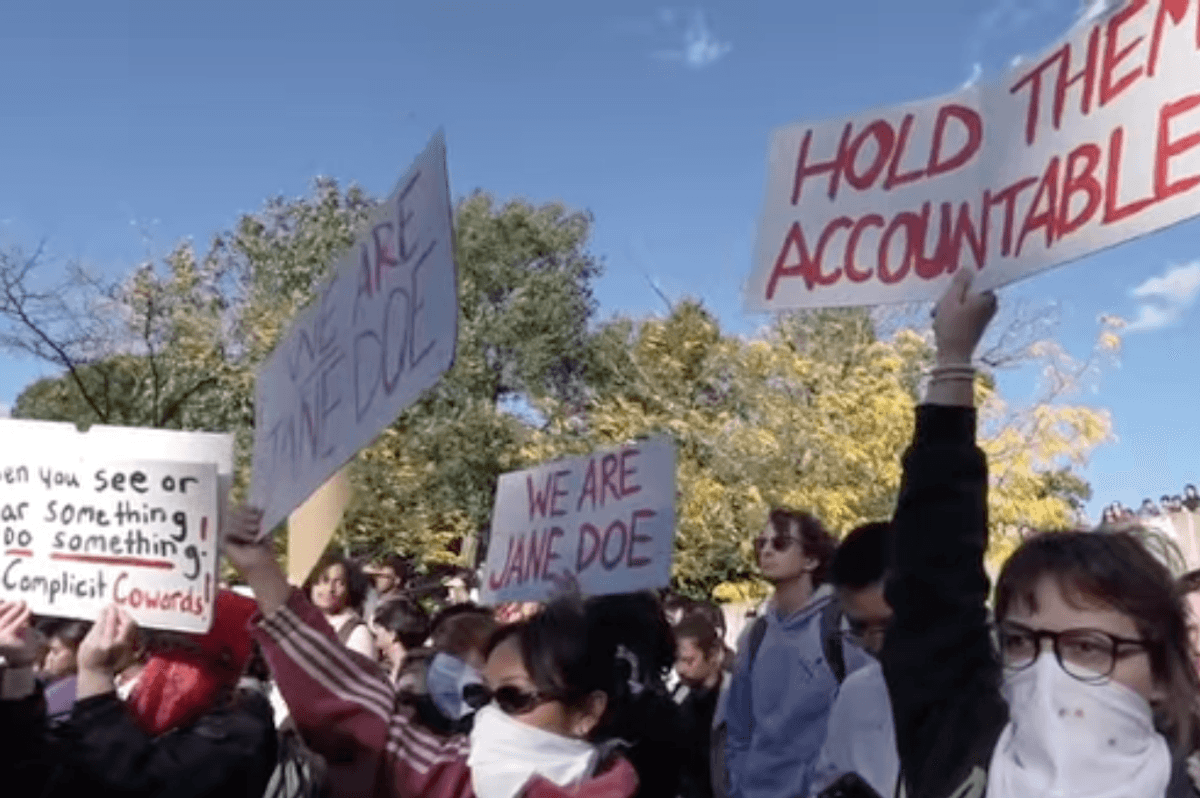
Cornell students demonstrate in support of rape victim Jane Doe on October 5, 2026
The online right-wing movement feels as energized as ever as a brand new smear campaign has rejuvenated its ranks, one expert wrote for The New York Times, but amid this new rally, the push "reeks of desperation" and stale ideas.
Nathan Taylor Pemberton is a writer and journalist who has researched modern right-wing, far-right and alt-right movements extensively in his career. On Monday morning, he published a new piece for his former employer, the Times, explaining the new energy he has seen within these movements as they mobilize to go after the Jane Doe accuser in the Cornell 7 sexual assault case. This comes after President Donald Trump's toxic second term in the White House left many of them disappointed and demoralized.
"The online right has that old spring to its step," Pemberton wrote. "The infighting brought on by Donald Trump’s chaotic second-term agenda has settled down and the anonymous accounts have been posting at a furious clip. What is the source of this newfound unity? The accusations brought by Jane Doe against seven men at Cornell have given the online right what it’s been missing most: a woman to hate on. The social-media celebrities and talking heads of the right have jumped at the chance to pick apart Doe’s allegations of a gang rape — labeling it a 'hoax' and a 'witch hunt.' Unable to dispute the basic narrative of the assault, including a lurid fraternity group chat, they’ve elected to argue that Doe is the actual aggressor, a once-willing participant in sexual debauchery now seeking vengeance against her hapless partners."
Many of these efforts to target the young woman have been commonplace among the far-right, including attempts to "dox" her by revealing her real name and address, as well as sharing photos and videos purportedly taken from her social media accounts. The campaign against her culminated in a "swatting" attack that sent law enforcement officers to her family's home.
"The onslaught against Doe and her supporters is taken directly from the playbook that established them: Gamergate," Pemberton added. "In 2014, a mostly anonymous digital horde waged a full-scale assault on women working in the gaming industry in an effort to damage their reputations and drive them from their professions. They harassed and doxxed their victims and fabricated and disseminated conspiratorial rumors about them, all at a critical moment when the online world was first starting to function like the social media-dominated internet we know today. Gamergate is a formative origin point for the alt-right, whose members and ideas have been absorbed into what is now called the new right."
Pemberton also argued that, in resorting to the movement's formative tactics, these right-wing groups are exposing how exhausted their ideas are.
"As a political tactic, resorting to a decade-old strategy of harassment should be evidence that the right’s bag of tricks is painfully meager," he explained. "It’s also a bit baffling. In the face of a midterm election that could knock Mr. Trump’s presidency down into a posture of feeble lameness, the right’s online surrogates are instead burning crucial bandwidth on a grotesque persecution of a sympathetic woman — all while pushing a scolding grievance message about sexual values that is more likely to scare away new voters than bring them into the tent."
Reprinted with permission from AlterNet
- Margie Greene Mails X-Rated Images Of Hunter Biden To Voters ›
- New Bombshell: Campaign Funds Paid For Gaetz Party With Escorts And Cocaine ›
- The Cornell Seven: What Do Men Think Women Want? ›
- 'Cornell 7' gang rape lawsuit: What we know about the allegations so far | Snopes.com ›
- The Cornell 7 case proves we’re still trapped in a rape culture déjà vu ›
- The Cornell 7 Case Demands More Than Outrage ›
- How the “Cornell Seven” Rape Case Became a National Scandal | The New Yorker ›
- District attorney reopens case of alleged Cornell University 'gang rape' - ABC News ›
- What we know about the Cornell University frat house rape investigation ›