The Debased Condition Of 'Conservative' Commentary Is Everybody's Problem
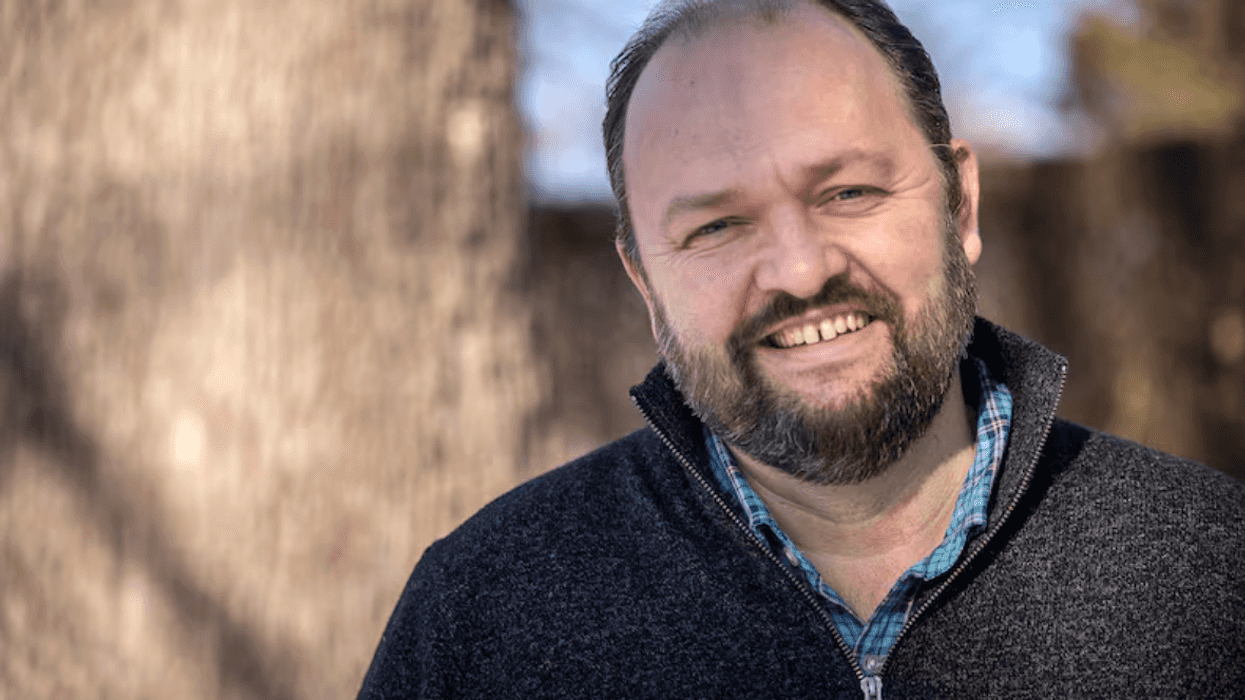
Ross Douthat
Reprinted with permission from DCReport
Readers of The New York Times who expect high-quality diversity on the opinion pages got Ross Douthat’s often lightweight, predictable, and at times logic- and fact-challenged essays. Now he’s leaving for CBS 60 Minutes.
I hope Douthat’s replacement is a first-rate conservative thinker and encourage you to embrace that view.
When self-proclaimed conservative intellectuals fail to rigorously and thoroughly challenge their own, they foster universal mental laxity among all opinion writers.
The problem is that a lot of what passes for right-side commentary focuses on enraging rather than informing, on insignificance, and on distracting from the rapid expansion of domestic surveillance and militarization under a president who claims “the right to do anything I want” under Article II of our Constitution. Of course, that’s a lie, a dangerous lie, which authoritarians on the right embrace.
Overall, right-side American opinion journalism is intellectually flimsy. It is rife with morally bankrupt ideologues who abuse numbers and other facts. At least one prominent far-right pundit, now an American ambassador, is an outright fraud, as I documented in a five-part National Memo series a dozen years ago that exposed reactionaries and radicals posing as conservatives and explained how this hurts us all.
Rigorous right-wing analysis, grounded in facts, would elevate our civic debate.
Instead, we get lightweight and alarmist right-of-center critiques over matters of no consequence, like Obama’s tan suit, that debase the quality of our public discourse. Imagine if that energy were put into dissecting flabby centrist and left columnizing, which would benefit from factual and penetrating rightist critiques.
Every day we get sane-washing of Donald Trump’s delusional, hateful, and incompetent rants, which outside of the United States are reported on in context, even in Middle East countries with dictators friendly to Trump.
What this tells us is that right-wing intellectualism in 2026 America is bankrupt. It has, for now, no ideas to offer, no insights that would open eyes and minds. That’s why we get drivel and distraction.
Journalism, both fact and opinion, should routinely examine ideas, especially those at the core of the policies and practices of our democratic and secular governments. Daily reporting needs informing context, especially its place in the framework of what America is at its core, an idea and an ideal. Opinion writing needs to provide rich depth and context to imbue current events with meaning within the larger scope of 21st century life.
Centrist and progressive op-eds devoted to knocking down silly claims and invented scandals (Obama’s nonexistent Affordable Care Act royalties) spread by far-right pundits divert public square debate from our actual problems, weakening the fabric of our Republic. But for many faux conservatives, that’s the point: make conditions worse, make government incompetent and uncaring, and in this way degrade popular support for democratic self-governance, thus encouraging authoritarianism.
A dozen years after my National Memo series ran, polls are showing just what I warned: many of the young are troubled by democracy as they know it, citing government policies that they recognize as harmful to them, but beneficial to those currently at the top in terms of economics and influence.
Earlier this year, Project Democracy found that “among Gen Z, there is a widespread lack of confidence in how democracy is actually functioning today. Many feel that the system is not meeting their needs or expectations, leading to disengagement, frustration, or even a willingness to explore extreme measures to address their concerns.”
What’s Needed
America needs thoughtful conservatism. Those who actually care about the liberties of the people—about the America that is and could be—foster ethical, honest, and serious conservatism. Doing that requires taking on the posers among their ranks.
Among liberals, we can point to the late Charles Peters, who founded The Washington Monthly, a serious public affairs magazine which broke stories sometimes decades before anyone else. In the early 1970s, for example, the magazine proposed an end to large denominational bills to thwart drug traffickers. Jim Henry, now with DCReport, wrote that piece.
Peters was always calling out his fellow liberals for not carefully thinking through what they wished for. I have yet to find a conservative counterpart to Peters.
Conservatism grounded in Enlightenment ideals of fact, intellectual inquiry, and reason would defend that which works well while vigorously resisting change. It would favor accountability— even strict accountability. It would also insist that change be preceded by pilot projects—with robustly funded evaluations—so that only proposals that have been thoroughly examined and shown to actually improve society are adopted.
Sadly, that is not what we are getting from many self-described conservatives whose bylines appear in our best publications.
Demons and Poltergeists
Consider Rod Dreher, whom I’ve interviewed and who wrote a book about his personal encounters with demons, poltergeists, etc. He continues to be treated as a serious conservative intellectual. The C.S. Lewis (Chronicles of Narnia author) Institute describes Dreher thusly:
Rod Dreher is an American author, journalist, and commentator known for his insights into culture, religion, and politics. He has written extensively for top publications like The American Conservative and National Review and is the author of several influential books, including Crunchy Cons, The Benedict Option, and Live Not by Lies. Beyond his books, Dreher has maintained a strong presence as a columnist and blogger, engaging in public discourse on a range of issues from religious freedom to cultural identity.
Just this month, on July 9, Douthat wrote a New York Times column about this delusional expatriate (Dreher moved to Hungary when Orban became its dictator) as if he were clear-headed.
Here’s a revealing part of that column, taken from Douthat’s video interview of Dreher:
Douthat: I mean, we’ve checked facts with a Ouija board on this show as a rule. But go on.
Dreher: [Chuckles.] No, but I believe that there is a world of the demonic. I’m well acquainted with exorcists and spiritual warfare, and if you know any exorcists and have spent time with them, you know how real this stuff is. I believe that A.I. is going to be used as a vector for the demonic. It’s not to say every instance of A.I. is demonic, but I believe that people will come to see it as an oracle.
Neither Normal Nor Sane
To those who care about facts, this is an insult. For sure, we ought to know how widespread such delusional thinking is, but The New York Times shouldn’t publish this without context.
Douthat, in a video with Vice President JD Vance, also described what both men said was the “miracle” in a bar when a wine glass jumped on its own, crashing on the floor as the converts discussed the attitudes of fellow Catholics toward the papacy.
Douthat is just part of a much larger problem of lightweight, fact-free, and delusional thinking pervading American conservative discourse.
From obvious lies advanced by American Enterprise Institute “scholar” James Pethokoukis to outright fraud by Brent Bozell III (whose signed columns were written by an associate), my 2014 series showed the damage inflicted on American beliefs by faux conservatism. Bozell is now our ambassador to South Africa, a Trumpian insult to the Black leadership there.
When self-proclaimed conservative intellectuals fail to rigorously and thoroughly challenge their own, they foster universal mental laxity among all opinion writers. Actual conservatives would find this appalling, but for anti-democracy radicals posing as conservatives, especially those who just make stuff up or regurgitate what a cub reporter could establish is nonsense, it’s just Tuesday dinner.
David Cay Johnston, a former columnist for The National Memo, co-founded DCReport. He is a best-selling author, investigative journalist and former reporter for The New York Times, where he won a Pulitzer Prize in 2001. He teaches law and journalism at Rochester Institute of Technology.
- Corrupted By Trump Allies, Paramount Is Mangling CBS-- And CNN May Be Next ›
- Insulting Trump Bombs At Redo Of White House Correspondents' Dinner ›
- Bari Weiss' CBS News Frames El-Sayed With Islamophobic 9/11 'Analysis' - National Memo ›
- 60 Minutes adds new correspondents and contributors after key departures | Media | The Guardian ›
- Religious Zealot Ross Douthat Unveiled as New Star of CBS ‘60 Minutes’ ›
- No TV experience? At CBS News, that’s no problem | Margaret Sullivan | The Guardian ›
- Ross Douthat leaves the New York Times for Bari Weiss’s “60 Minutes” - The Washington Post ›
- Ross Douthat joins ‘60 Minutes’ as CBS races to rebuild the show | CNN Business ›