California's Tax On Billionaires May Work -- But There's A Better Solution
A coalition of unions and other progressive groups is trying to get an initiative on California’s ballot this fall which would impose a five percent tax on the wealth of the 200-250 billionaires living in the state. The tax would be retroactive, so it applies to billionaires who lived in the state as of January 1 of this year. The supporters estimate that it could raise $100 billion, almost 30 percent of the state’s annual budget, although the tax could be paid over five years.
Many people have asked me what I thought about the tax. I confess to originally being hesitant. I have no problem with hitting billionaires with a much higher tax bill than they now face. After all, they are the ones with the money.
The right likes to push the story that billionaires won’t have incentive to become ridiculously rich if we tax them more. I always found that absurd, but even taken seriously what would it mean? Will Elon Musk spend less money and effort bribing politicians to get government contracts and favorable regulatory treatment if we tax him too much?
But that aside, I do take seriously concerns about evasion and avoidance. Billionaires care a lot about their money, and they are prepared to go to great lengths to avoid having to surrender it to the government. There clearly is some point at which we get less tax revenue by raising rates, as a result of evasion and avoidance. And that point is lower at the state and local level than the national level, since it’s much easier for billionaires to move out of New York City or California than to leave the United States.
On this point, I was influenced by research by Joshua Rauh and Ryan Shyu showing that the state lost 60 percent of the revenue anticipated by California’s 2012 Proposition 30. This raised the marginal tax rate on people earning more than $1 million a year from 10.3 percent to 13.3 percent. This suggested to me that California was very close to this tipping point. (It got closer when Trump’s 2017 tax bill limited the deduction for state and local taxes on the federal taxes.)
Rauh works at the conservative Hoover Institute, so I naturally viewed the work with suspicion, but I could not see anything wrong with it. (If anyone can tell me where they messed up, I’m all ears.)
Anyhow, recognizing that avoidance and evasion are real, I have always been cautious about efforts to whack the rich with very large taxes. I am open to the California wealth tax because its structure seems to minimize this risk.
By making the date at which the wealth tax applies in the past, rich people cannot leave going forward. I was concerned about some billionaires fleeing when the tax was being discussed in the fall, and it seems some did, but at this point that’s water under the bridge.
To be clear, I’m absolutely certain that many of the people facing the tax will do everything they can to try to escape the tax, starting with defeating the initiative, and then tying it up in the courts as long as they can. With the ultimate decision likely to rest with the Republican Supreme Court, I’m not at all confident that the state will see the money, but we can’t preemptively surrender. At this point it seems worth going full speed ahead with the initiative.
The Longer Term: Let’s Not Have Billionaires
My bigger complaint with the effort to tax back some of the billionaires’ billions is that we should be more focused on not letting them be billionaires in the first place. There is an incredibly lazy view that we just have a market sitting there, which generates inequality, and then we need the government to step in to redistribute income.
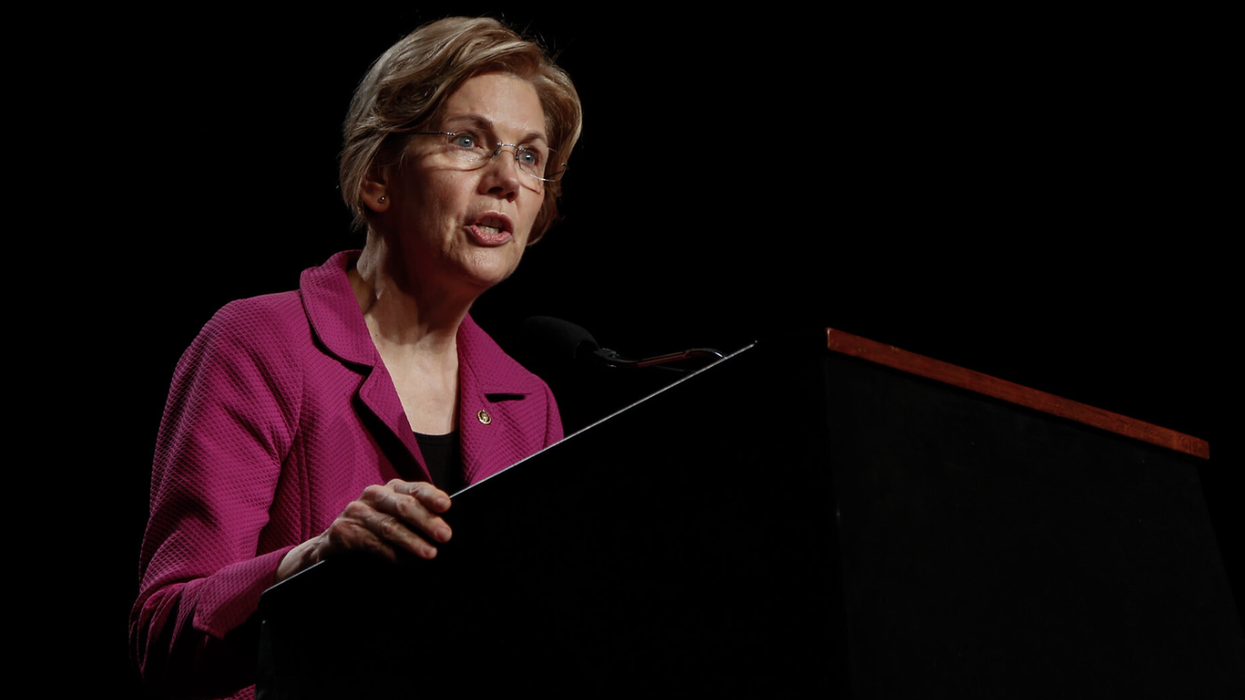
More than a decade ago, Sen. Elizabeth Warren (D-MA), who I greatly admire, did a viral video that was dubbed “you didn’t build that.” The gist of it was that the success of rich people depended on a social and physical infrastructure that was paid for by the whole of society, not just the hard work and ingenuity of the person who happened to get rich.
This is very true. To be profitable, a factory needs the roads and ports to bring their materials in and ship their finished product out. It also needs a skilled workforce to be both on the factory floor and to handle business operations. No one can get rich by themselves.
Elizabeth Warren Doesn’t Go Far Enough
But this is only part of the story. In addition to the physical and social infrastructure, we have a massive set of rules that determine who gets to keep the goodies. I keep harping on government-granted patent and copyright monopolies, both because there is a huge amount of money at stake (easily over $1 trillion a year or $8k per household) and because they so obviously could be different.
We can make these monopolies shorter and weaker, allowing their holders to profit much less from them. Also, we can rely more on alternative mechanisms, like direct public funding of research, as we do currently with more than $50 billion a year in biomedical research at the National Institutes of Health. Many of today’s yacht-loving billionaires would still be working for a living with different rules on intellectual property.
Labor law is another obvious case where governments set the rules, and they could be structured in a way far more beneficial to workers. In the early post-World War II era it was widely recognized that large corporations with monopolistic power dominated the economy, but that was not necessarily seen as a bad thing, because their workers also benefited from higher wages. This was due to the fact that they were unionized and able to demand their share of the benefits from monopolistic power.
This is much less the case today because unions are far weaker. But that is not a natural outcome, the rules on labor-management relations were written to make workers weaker. There is no natural market in this story, the government writes the rules to make them more beneficial to one side or the other.
Just to give a few examples: the prohibition on secondary boycotts in the U.S. is a regulation that unambiguously weakens unions. A secondary boycott would mean Elon Musk’s suppliers could be struck over sending him steel, if he didn’t give the auto workers at Tesla a big pay hike.
The ban on union shops (“right-to-work”) in most states, where all the workers who benefit from a union pay their share of the union’s costs, is a government intervention against freedom of contract. This also weakens workers. Restrictions or outright bans on collective bargaining by gig workers is another example. In addition, there could be serious penalties for violating labor laws, as in millions of dollars in fines from real courts, rather than joke sanctions from the National Labor Relations Board.
None of this is “the market.” This is a story of government policy designed to give more money to the oligarchs.
The list goes on. Mark Zuckerberg, and now Larry Ellison, would be much poorer without Section 230, which protects their massive social media platforms from the same sort of liability for spreading lies that print and broadcast media face. Different bankruptcy laws, that made private equity firms liable for the debts of the companies they take over and then push into bankruptcy, would likely have prevented many of today’s billionaires, as would applying a sales tax on financial transactions similar to the sales tax people pay when they buy clothes or shoes.
This is the topic of my now dated book Rigged (it’s free). The point is that the market is infinitely malleable. We can structure it in a way that leads to far more equality or in ways that gives all the money to billionaires, as we have done in the last half century.
In that context, by all means we should try to find creative ways to tax back some of the wealth we have allowed them to accumulate, but it makes much more sense, and it’s much more efficient, not to structure the market in a way that gives them all the money in the first place.
Dean Baker is a senior economist at the Center for Economic and Policy Research and the author of the 2016 book Rigged: How Globalization and the Rules of the Modern Economy Were Structured to Make the Rich Richer. Please consider subscribing to his Substack.
Reprinted with permission from Dean Baker.