Tag: church-state separation
Is Trump 'Bringing Back Religion Strongly' As He Promised Last Year? No

Is Trump 'Bringing Back Religion Strongly' As He Promised Last Year? No

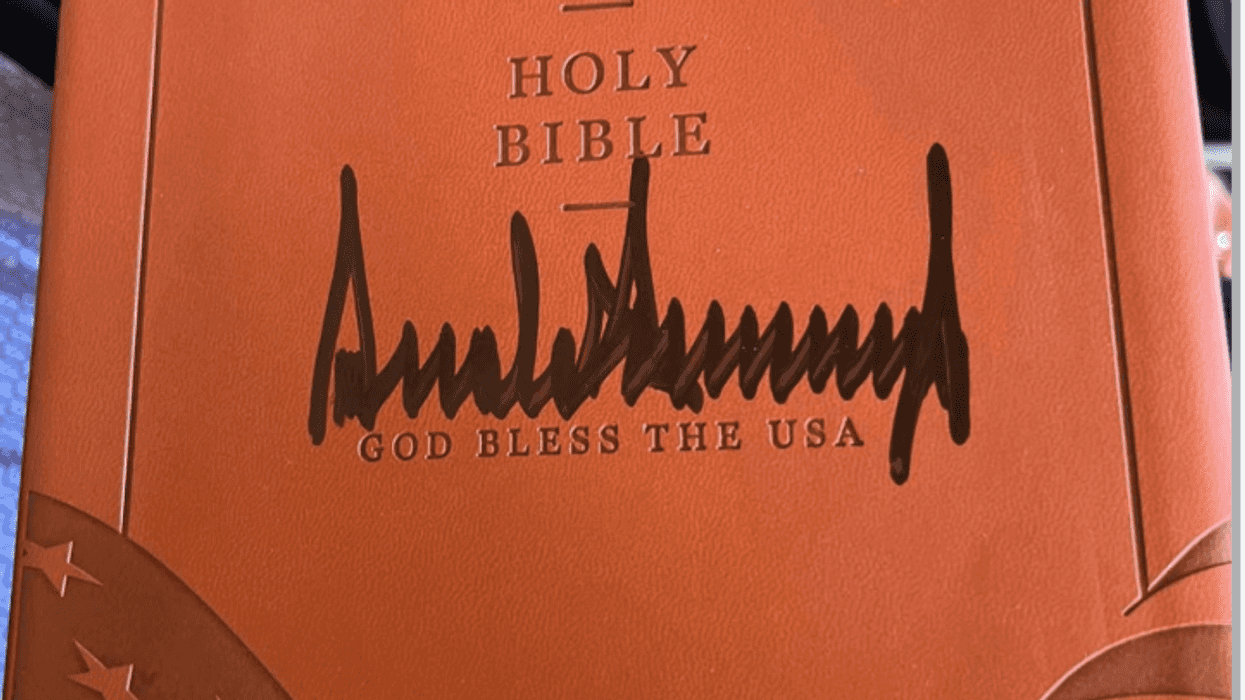
Religion News Service writer Yonat Shimron recalls President Donald Trump actively courting Christian evangelicals during his 2024 campaign and as president in 2025.

“We’re bringing back religion in our country, and we’re bringing it back quickly and strongly,” Shimron cites Trump saying at a National Day of Prayer event last year.

Since then, “many federal departments have held prayer services or Bible studies. Trump created a task force to eradicate anti-Christian bias, and his Supreme Court appointees continue to deliver for Christian conservatives and their allies,” said Shimron.

Despite all this, a new Gallup Poll, reveals no significant change in the importance of religion to Americans. Plus, church attendance continues to plummet. The percentage of Americans who classify religion as “very important” in their lives is still flat since its 2021 report, at 47 percent.

Religious service attendance, however, reveals churches are still very much in trouble, with 57 percent of U.S. residents saying they rarely or never attend religious services. Shiron said that number was only 42 percent in 1992.

“There’s nothing here that would represent any sort of major reversal or significant change in the trajectory of religion in America,” said Ryan Burge, a political scientist who is professor of the practice at the John C. Danforth Center on Religion and Politics at Washington University in St. Louis.

Most polled groups continue to experience declines in the percentage who considers religion “very important” in their lives. Among the biggest declines, according to surveys, was the percentage of Black Americans who fell from 85 percent to 63 percent since 2005. Democrats fell from 60 percent to 37 percent over the past two decades.

“Republicans experienced virtually no decline with 66 percent claiming religion was still very important to them — but Burge reported an important caveat to that info: Republicans’ self-reported church attendance dropped.

“They like the idea of religion — that hasn’t changed — but they don’t actually go as much. So it’s sort of like a symbolic religion,” Burge told Religion News Service.

Women’s growing indifference appears to be matching that of men. And with American youth rejecting religious service by 61 percent, Gallup predicted generational replacement leading to a “long-term trajectory of decline.”

Reprinted with permission from Alternet

Ensuring Separation Of Church, State

Ensuring Separation Of Church, State

By Julia Terruso, The Philadelphia Inquirer (TNS)

PHILADELPHIA — M. Kelly Tillery was a 24-year-old recent Penn law graduate in September 1979 when he heard Mayor Frank Rizzo announce on the evening news that he would build a huge cylindrical platform atop Logan Square, for Pope John Paul II to say Mass.

Tillery couldn’t believe what he was hearing. By funding the platform for a Mass, Rizzo wasn’t separating church and state — he was marrying them.

Tillery stayed up all night drafting a federal lawsuit against Philadelphia over what he considered its blatant violation of the First Amendment’s Establishment Clause.

“I had just read every First Amendment Supreme Court case ever issued,” Tillery, now 60, said. “I could not believe a mayor of a modern American city would have the audacity to say something so clearly unconstitutional. He basically said, ‘I’m going to build an outdoor church for my pope.'”

Not only did Rizzo say it — he paid it. The city dished out $205,569 ($675,710 in 2015 dollars) for the stage, its decorations and a 30-foot-high cross, now at St. Charles Borromeo Seminary.

Tillery, now a partner at Pepper Hamilton L.L.P. specializing in intellectual property law, is still known by friends as “the man who sued the pope.” That’s not quite accurate — he passed the case on to the American Civil Liberties Union — but his story reaffirms some of the reasons September’s visit by Pope Francis will not come at taxpayers’ expense.

City officials provide assurances that the estimated $45 million in expenses for the papal event will be paid by the World Meeting of Families Philadelphia 2015 — covering all religious and nonreligious aspects of the visit.

“The city is not sharing costs. We will present a bill to the World Meeting of Families, which has a plan for the events,” city spokesman Mark McDonald said. He said that bill would include costs incurred for police, fire, the Office of Emergency Management, Streets (both Sanitation and Transportation), Parks and Recreation, L&I, Health, Water, Fleet, Public Property and Information Technology.

Ken Gavin, spokesman for the Archdiocese of Philadelphia, confirmed that no public money would finance the papal event. The archdiocese has partnered with the World Meeting of Families (WMOF).

“The WMOF entity is responsible for bearing the burden of all costs associated with the events,” Gavin said. That includes all security costs. The event is a National Special Security Event, but that designation does not include any federal funding, he said.

The Philadelphia Convention and Visitors Bureau estimates the city’s economic benefit at $418 million from the World Meeting and the papal appearances.

Tillery’s first draft of the lawsuit, typed out on 8 1/2-by-14-inch paper, landed in the hands of Hilda Silverman, the then-director of the ACLU and a tireless Middle East peace activist. Silverman died in 2008.

Tillery couldn’t lead the legal challenge himself; he still was awaiting the results of his bar exam. And besides, he had another reason to distance himself — a job offer waiting at Obermayer Rebmann Maxwell & Hippel L.L.P. — where one of the senior partners was Martin Weinberg, former city solicitor under Rizzo.

Thirty years later, the case is still legendary at the ACLU Philadelphia office, where a new generation of attorneys now works.

“It was a really egregious thing at the time and it was a total snub to the populace,” said Mary Catherine Roper, the current legal director of the ACLU of Pennsylvania. She wasn’t working at the agency in ’79 but is familiar with the case.

“The problem wasn’t that the city spent money on the pope’s visit but that the city spent money specifically to build him a platform to say Mass — no one has suggested that anything remotely like that is happening this time,” she said.

Pope Francis is expected to say Mass on an elaborate, canopied altar built on Eakins Oval at the base of the Art Museum. The evening before, that space will serve as a stage for the Festival of Families entertainment.

The first step in the lawsuit proceedings was finding a plaintiff. Silverman turned to her friend and neighbor Susan Jane Gilfillan, a high school anthropology teacher from Minneapolis who had moved to the city three years earlier. Gilfillan agreed to sue, along with a second taxpayer, the Rev. Mary Anne Forehand, in what would be known as Gilfillan v. the City of Philadelphia.

Gilfillan, then 37, refers to herself as a “fallen Catholic,” and said that growing up with people from all religions inspired her to get involved.

“I was raised Catholic, went to public high school where we had Lutherans, all kinds of Protestants, some Greek Orthodox kids, a few Jewish kids — we didn’t go after each other or argue about religion, we sort of just compared.”

A lifelong activist, Gilfillan, now 74, was a teacher during the Vietnam War and pushed back on a principal who wanted to mandate the singing of the national anthem every morning. She taught evolution when parents were pulling their students out of the course for religious reasons. And she has since fought the city of Philadelphia on zoning issues in Germantown, where she lives with her husband and son.

The city didn’t just push back on the lawsuit — it fought tooth and nail, spending hundreds of thousands of dollars in legal fees to defend the cost of the altar. There was public outcry on both sides. Silverman, of the ACLU, told newspapers at the time that she had received death threats.

The city argued the stage was included in event-planning costs related to logistics and security for a dignitary or head of state. It kept the pope visible and safe. What’s more, the city argued, many of the things on the stage — from flowerpots to candles — could be reused for secular purposes.

“I don’t think their intentions were to violate a law; they just wanted a great, first-class event in Philadelphia,” said former Councilman Frank Rizzo Jr., who recalled watching with his father as Pope John Paul II celebrated Mass. “I think the decision was made more for the sake of the event than religious reasons. My dad was very, very proud.”

Washington also hosted John Paul during his 1979 U.S. visit. The Archdiocese of Washington paid for the $400,000 platform erected there.

The case was heard in U.S. District Court and the U.S. Court of Appeals for the 3rd Circuit; both courts found the city’s action was “public sponsorship of a religious service.” The city appealed to the U.S. Supreme Court, which declined to take the case. The archdiocese reimbursed the city for the cost of the altar.

This time is different from 1979.

“Here we have a circumstance 30-plus years later, in which we have a different mayor, we have a different pope, we have a different head of the archdiocese,” Tillery said. “Hopefully all of us have learned from that experience back in 1979.”

Tillery’s work in intellectual property law has led him to represent musicians ranging from Black Sabbath to Madonna. From his office, where a portrait of Abraham Lincoln hangs, he can almost peer down at Logan Square.

When it was announced that Pope Francis would visit Philadelphia, Tillery wrote a letter to Mayor Nutter, enclosing a narrative of the 1979 lawsuit he wrote for Philadelphia Lawyer magazine.

Tillery went to Jesuit High School in New Orleans, but when asked if he is Catholic, he quotes his hero: “I, like Abraham Lincoln, have never belonged to any church.”

Tillery said that if city officials say the city will be reimbursed for expenses from the Pope Francis events, he believes them. But he hopes there will be some independent audit to guarantee the payments. “There should be some independent look at this to ensure the right thing is being done,” he said. “This is going to be a remarkable event, but the First Amendment has been around a long time. Someone ought to be watching.”

(c)2015 The Philadelphia Inquirer. Distributed by Tribune Content Agency, LLC.

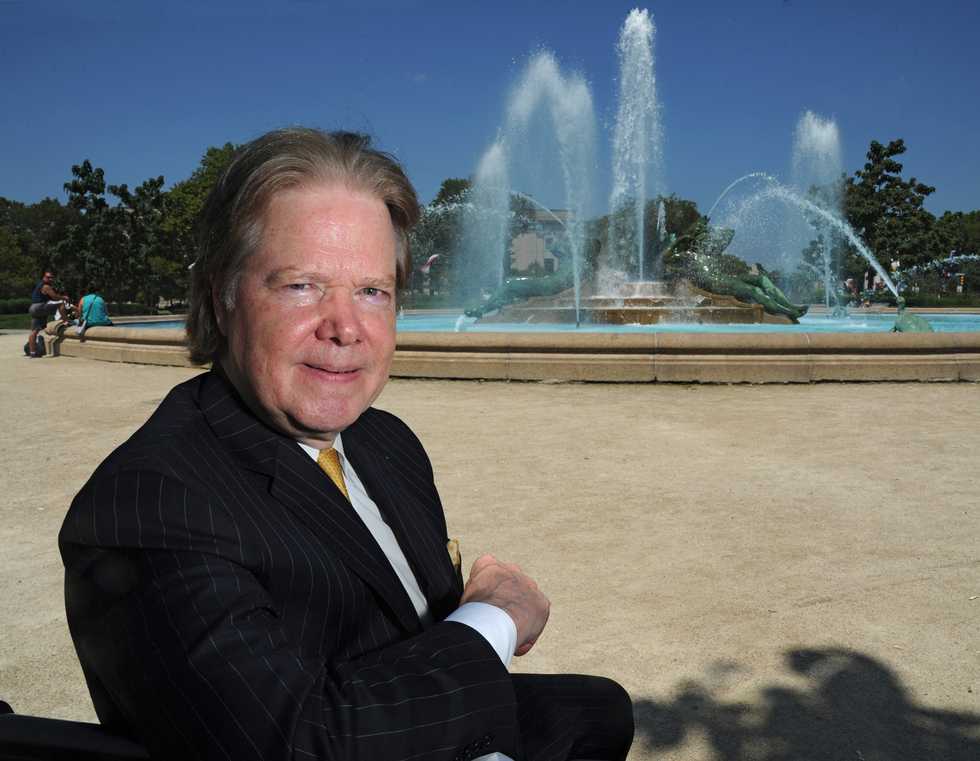
Photo: M. Kelly Tillery, 60, sits in Logan Square in Philadelphia on July 20, 2015. Tillery was a 24-year-old law student when he was the catalyst behind a lawsuit against Mayor Frank Rizzo and the City of Philadelphia over the use of public funds to build the stage where Pope John Paul II held mass in 1979. (Clem Murray/Philadelphia Inquirer/TNS)


Oklahoma’s Ten Commandments Case Is Part Of An Age-Old Battle In U.S.

Oklahoma’s Ten Commandments Case Is Part Of An Age-Old Battle In U.S.

By Natalie Schachar, Los Angeles Times (TNS)

The Oklahoma Supreme Court ruling last week that a Ten Commandments monument must be removed from the grounds of the state Capitol prompted outrage, drew praise and posed a question: Will controversy over religious displays ever end?

For many legal scholars, the outsize role that religion plays in America made the possibility unlikely.

“It’s a symbolic fight about how people understand their country,” said Charles Haynes, director of the Religious Freedom Center in Washington.

“There are very many Americans who believe that unless we acknowledge our roots and Christian tradition as a country, we will fail,” he said, pointing to Oklahoma. “This is one of a number of efforts that have been made over the course of our history to reassert that understanding of America.”

The Oklahoma case was not the first involving the Ten Commandments.

The U.S. Supreme Court has taken up the topic as well and in 2005 issued two rulings with pointedly different conclusions.

The first decision, in McCreary County vs. ACLU, concerned displays of the Ten Commandments in Kentucky courthouses. Other documents were displayed as well, such as the “endowed by their creator” passage from the Declaration of Independence. The court barred the displays, saying they clearly promoted the commandments, rather than educated viewers about historical documents.

The second decision, in Van Orden vs. Perry, found that a 6-foot-tall monument at the Texas Capitol inscribed with the Ten Commandments was constitutional.

In that case, the court said the monument, erected decades earlier, was one of 21 historical markers and 17 monuments on the vast lawns of the Capitol and, in that context, more historical than religious.

“In certain contexts, a display of the tablets of the Ten Commandments can convey not simply a religious message but also a secular moral message,” wrote Justice Stephen G. Breyer, the court’s swing vote in both 5-4 cases, in a concurring opinion.

It was that case that led Oklahoma lawmakers to believe they had leeway in building a Ten Commandments monument in Oklahoma City.

The Legislature passed a bill in 2009 calling for a 6-foot-tall monument identical in design to its Texas counterpart — one carved from granite, embellished with the Star of David and Greek letters. It would be located near monuments bearing Native American symbols.

Hiram Sasser, a defense attorney for the Oklahoma Capitol Preservation Commission, said he thought the monument was legally sound. The Legislature was aware of the narrow window opened by the Supreme Court with Van Orden allowing religious monuments in public spaces.

“Never in a million years was anyone ever anticipating they’d strike it down,” said Sasser, referring to the Oklahoma Supreme Court decision declaring the monument unconstitutional. “The only way I can put it is that I feel like I have a stack (of cases) about 10 feet high that says why this monument is OK.”

Although the Oklahoma case seemed similar to the Van Orden case, a different issue was at stake in Dr. Bruce Prescott, James Huff, Donald Chabot and Cheryl Franklin vs. Oklahoma Capitol Preservation Commission. The question was whether the Ten Commandments monument violated the Oklahoma Constitution — not the First Amendment.

Earlier rulings suggested the Oklahoma Supreme Court might call the monument constitutional. In 1959, the court allowed the use of public funds to build a chapel on government-owned property; the chapel was nondenominational, so it did not endorse a particular faith.

In 1972, the court ruled that a 50-foot-tall Latin cross installed on government property in Oklahoma City was constitutional because its placement would not benefit any particular institution.

The court did not mention either of those decisions when it ruled 7 to 2 on June 30 that placement of the Ten Commandments monument, just feet from the Capitol, violated a clause in the Oklahoma Constitution prohibiting the use of public money for the indirect or direct benefit of any religion.

“As concerns the ‘historical purpose’ justification, the Ten Commandments are obviously religious in nature and are an integral part of the Jewish and Christian faiths,” wrote the majority in their opinion.

It was a decision that highlighted an age-old controversy over religious displays, frequently played out in the courts, which have come to define American life.

Sarah Gordon, a professor of constitutional law at the University of Pennsylvania, said the political import of such displays stemmed from the Cold War, fueled in part by Hollywood.

In 1954, two words, “under God,” were added to the Pledge of Allegiance, and in 1956, “In God we trust” replaced “E pluribus unum” as the country’s motto. President Dwight D. Eisenhower enacted both changes.

After Charlton Heston starred in the Academy Award-winning epic “The Ten Commandments,” one of the most successful films of all time, the Fraternal Order of Eagles began to erect Ten Commandments monuments to deter juvenile delinquency, leaving a lasting mark around the country. According to Gordon, the political value of such monuments was clear.

“They really were very closely identified with defending conservative American values in front of radical communist threats,” she said.

The Ten Commandments monuments will remain a point of contention — intrusive religious displays to some, valuable reminders of history and culture to others.

“It’s a continuing clash of people who have diametrically opposed views,” said the Religious Freedom Center’s Haynes. “It’s not going away.”

Neither will the Oklahoma monument.

Last week, Oklahoma Attorney General Scott Pruitt, with the support of Republican Gov. Mary Fallin, filed a petition requesting a rehearing of the Ten Commandments case.

“Additionally,” Fallin said in a statement Tuesday, “our Legislature has signaled its support for pursuing changes to our state Constitution that will make it clear the Ten Commandments monument is legally permissible. If legislative efforts are successful, the people of Oklahoma will get to vote on the issue.”

In the meantime, the monument still stands as the legal wrangling continues.

(c)2015 Los Angeles Times. Distributed by Tribune Content Agency, LLC.

Photo via Flickr

A Senator’s Faith — And Humility

A Senator’s Faith — And Humility

WASHINGTON — There are few moments of grace in our politics these days, especially where conflicts over religion are concerned. Last week, I witnessed one. Perhaps it was a mere drop in an ocean of suspicion and mistrust, but it was instructive and even encouraging.

The venue, in a small meeting room at a Holiday Inn not far from the Capitol, was a gathering of members of the Secular Coalition for America whose mission is “to amplify the diverse and growing voice of the nontheistic community in the United States.” One cause of the contentiousness of our politics is that both secular and very religious Americans feel misunderstood and under assault.

Enter Sen. Chris Coons (D-DE).

The Secular Coalition invited Coons to speak because, as he said of himself last Thursday night, he is “dedicated to the separation of church and state and to the equal protection under the Constitution which I swore to uphold, whether you are religious or secular.”

More than that, Coons told the crowd that he is uneasy with “rigid certainty” on religious questions. He understands that many are skeptical of faith, both because “religion [has] come to be so closely associated with right-wing politics” and because the Bible “has been used as a document, as a foundation, to justify discrimination.” The revered text is, to some, “the basis of intolerance, based on outdated teachings and moral codes and has been a source of pain and distance and discomfort for many.”

If Coons had left it at that, this would have been another in a long series of Washington speeches in which a politician tells his allies how much he agrees with them. But as “a practicing Christian and a devout Presbyterian,” Coons had a second message.

Early on, he quoted the very Bible others find offensive, noting that Jesus’ command in Matthew 25 to feed the hungry, clothe the naked, and visit the imprisoned had “driven” him throughout his life. As a young man, he spent time in Kenya and South Africa working with the poor and with leaders of the South African Council of Churches, including Archbishop Desmond Tutu.

And then he told a story. As a Yale Law School student, he decided to pursue a separate degree from the university’s divinity school, and what he encountered was a long way from tolerance and open-mindedness.

“I was very active in the progressive community in my law school and most of my friends were politically active progressives,” he said. “But I was unprepared for their response when word started filtering out that I had enrolled in divinity school. Some of them literally disowned me; my own roommates moved out. Several folks literally stopped speaking to me, and acted as if I had lost my mind.”

His own background was thrown in his face, with friends saying: “Chris, you’re a scientist, you’re a chemist, you trained as a chemist as an undergraduate, how could you possibly believe this insane stuff?”

What he experienced, Coons said, was “real bigotry.”

“Frankly, we were a group of progressives who were really proud of how welcoming and open we were and how virtually any possible lifestyle or worldview or attitude was something we would embrace — right up until the moment when I said I believed in God.” For many progressives, “accepting someone of expressed faith was one of the hardest moments of tolerance and inclusion for them.”

Believers among you are probably cheering Coons at this point. But ever the peacemaker, he didn’t stop here. The other lesson he learned was that many nonbelievers “had personal experiences of deep pain and of alienation … that had driven a big wedge between them and religion.”

And he offered this: “When I think about this country’s founding, the central tenet of secular governance, I also think about the importance of doubt and of humility. As a person of faith, I think it’s foundational to our country that if we allow people to choose their path of faith, they must of course be also free, welcomed, celebrated, to choose not to have faith in a supreme being.”

It’s to the credit of the Secular Coalition crowd that they cheered a speech that was as challenging as it was affirming. Coons’ message was deceptively simple: that we must find ways of “getting past some of our misunderstandings of each other.” The problem: Respecting each other on matters of faith and politics seems beyond our current capacities.

E.J. Dionne’s email address is ejdionne@washpost.com. Twitter: @EJDionne. 

Photo: Wyoming_Jackrabbit via Flickr

Shop our Store

Headlines

Editor's Blog

Corona Virus

Trending

World