Tag: civil rights division
Unprecedented: Prosecutors Resign Over Trump's ICE Shooting Coverup

Unprecedented: Prosecutors Resign Over Trump's ICE Shooting Coverup

The stunning resignations on Monday of four senior career officials from the Criminal Section of the Justice Department’s Civil Rights Division confirm that DOJ has gone profoundly off the rails in its handling of what increasingly appears to be one of the gravest excessive-force cases in decades.

The resignations, an ultimate eloquent gesture, reportedly had multiple causes. The central one was the sidelining of the Criminal Section from the investigation of the January 7 fatal shooting of Renee Nicole Good by Immigration and Customs Enforcement (ICE) agent Jonathan Ross.

In any normal, professionally run Department of Justice—Democratic or Republican—a shooting that looks this serious on its face would trigger a searching civil-rights investigation by the Criminal Section, the Department’s longstanding unit for prosecuting unlawful uses of force. That has been true whether the assailant was a state officer, as in Rodney King, or—more rarely—a federal one, as at Ruby Ridge. (I served in the Department during both and worked on the King case, and I’ll be writing about some of the lessons from that case in coming Substack pieces.)

ICE has steadfastly maintained that the shooting was justified because Ross reasonably believed that Good was attempting to run him over. But multiple bystander videos and visual analyses have seriously undermined that self-serving account. I put the point in that lawyerly, hedged way because, for present purposes, it is more than enough to establish beyond any cavil that this case demands the most thorough investigation the federal government can muster.

That is the very opposite of what happened here.

First, the highest government officials circled the wagons around Ross. Donald Trump and Vice President J.D. Vance defended the agent’s actions and suggested that Good bore responsibility for her own death. Homeland Security Secretary Kristi Noem labeled the incident “domestic terrorism,” a characterization that has been widely questioned. Trump himself made inaccurate claims that Good had “run over” the ICE officer, which video evidence contradicts.

At the same time, leadership of the Civil Rights Division, under Assistant Attorney General Harmeet Dhillon, informed the Criminal Section that it would not be investigating the case at all—a spectacular departure from past practice. Multiple career prosecutors offered to go to the scene but were told not to.

It was like a fire chief watching smoke pour from a burning building and ordering the crew not to respond, even as firefighters volunteered to go in.

The resigning officials, then, were not merely objecting to a particular judgment call. In effect, they were saying that if the Criminal Section does not have jurisdiction over a case like this, its role has been reduced to near irrelevance.

DOJ instead assigned the investigation to the U.S. Attorney’s Office for the District of Minnesota. But that office lacks the expertise, experience, and institutional stature to undertake an inquiry that goes to ICE’s core mission and legitimacy.

Nor is the broader context hard to discern. A serious civil-rights investigation—or worse, a criminal prosecution—would cut directly against the administration’s signature priority: an aggressive, high-visibility immigration enforcement campaign in which forceful tactics are treated as proof of resolve rather than excess. Calling this shooting into question would not merely implicate one agent; it would threaten the legitimacy of a brute-force enforcement regime that is Trump’s pride and joy. And it would come at a moment when the president is reportedly already furious with Attorney General Pam Bondi and senior immigration officials over perceived softness and setbacks.

There is also a more calculating dimension to the assignment. Even if toothless, a federal investigation provides a ready rationale for declining parallel inquiries and resisting cooperation.

That concern is not theoretical. Federal authorities reversed an initial plan for a joint investigation with Minnesota officials, shifting the probe to exclusive FBI control and cutting off the Minnesota Bureau of Criminal Apprehension from evidence and access. State officials—including Attorney General Keith Ellison and Hennepin County Attorney Mary Moriarty—have said publicly that this move hamstrung their ability to conduct an independent investigation.

Minnesota responded Monday with a lawsuit against the Department of Homeland Security, ICE, and senior federal officials seeking to block the massive immigration enforcement surge in the Twin Cities. The complaint characterizes the deployment of more than 2,000 armed agents as an “invasion” and alleges unlawful tactics—warrantless stops and arrests in sensitive locations, racial profiling, and unconstitutional conduct that has disrupted daily life and eroded public safety. It further asserts that the campaign bears no genuine connection to its stated goals and instead reflects a retaliatory pattern of federal action aimed at Minnesota because of its political leadership and demographics.

This case is shaping up to be a scandal along the lines of the January 6 pardons and the reprisal prosecutions. Wherever its investigation is housed, it cannot be credible while it remains under the political control of an administration that has already pre-judged the case—publicly, loudly, and at the highest levels.

The feds’ normal response in a case of this gravity would be to assign the Criminal Section to conduct a vigorous, independent investigation, working in cooperation with state authorities and following the facts wherever they lead. The second defensible option would be to step aside in favor of the state, which has its own compelling interest in enforcing criminal law and protecting its citizens. Instead of either option, federal authorities are choosing to hamstring meaningful scrutiny and insulate possibly grave criminal conduct from accountability. That path is unprecedented and indefensible.

Excessive force by officers is not new. What is novel for the United States is the use of federal power afterward to stifle investigation and shield wrongdoing. That turn—from lethal force to enforced impunity—is an abuse of authority and a hallmark of authoritarian governance.

Harry Litman is a former United States Attorney and the executive producer and host of the Talking Feds podcast. He has taught law at UCLA, Berkeley, and Georgetown and served as a deputy assistant attorney general in the Clinton Administration. Please consider subscribing to Talking Feds on Substack.

Reprinted with permission from Talking Feds.
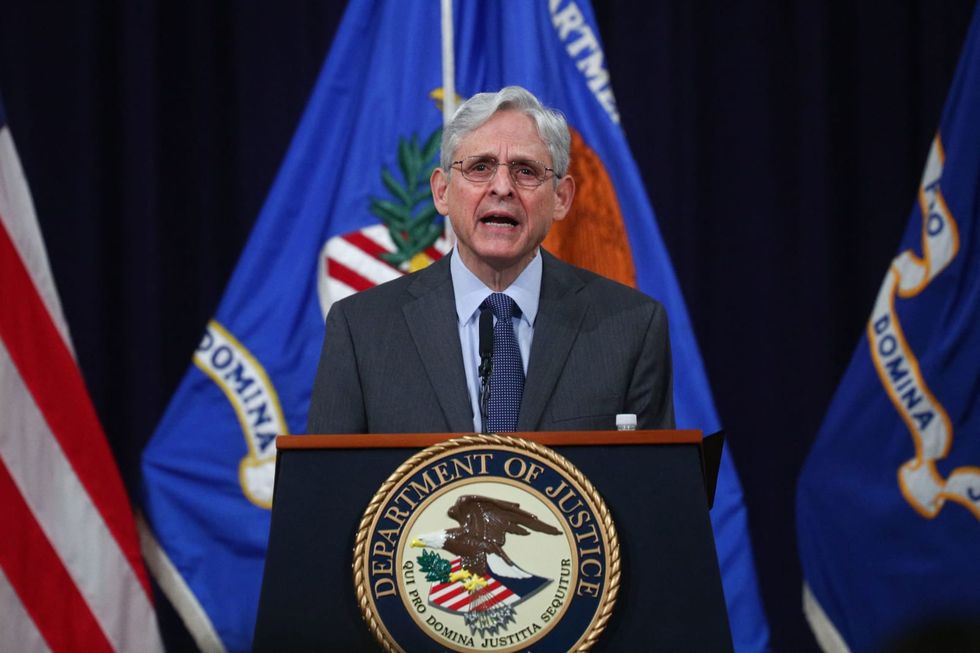
Attorney General Opens Battle Over Georgia Voter Suppression In Courts And Campaigns

Attorney General Opens Battle Over Georgia Voter Suppression In Courts And Campaigns

With a major lawsuit seeking to strike down Georgia's new elections law, the U.S. Justice Department started a long and difficult voting rights fight that will reverberate in political campaigns while winding its way through the courts. The lawsuit will face a treacherous path after the failure of a sweeping election bill backed by Democrats in the U.S. Senate and the passage of voting bills in Republican-held state legislatures across the country. The case was filed Friday, the eighth anniversary of a U.S. Supreme Court decision that scaled back the Voting Rights Act, the landmark civil right...

Senate Confirms Vanita Gupta To Civil Rights Post Despite GOP Attacks

Senate Confirms Vanita Gupta To Civil Rights Post Despite GOP Attacks

Reprinted with permission from DailyKos

After months of Republican attacks, Vanita Gupta was confirmed Wednesday afternoon as associate attorney general. Vice President Kamala Harris was available to break a tie, but Sen. Lisa Murkowski (R-AK) voted to advance Gupta's nomination to a full Senate vote earlier in the day, then followed up in making it a 51 to 49 vote to confirm. Gupta is the first woman of color and the first civil rights lawyer in this role.

Gupta is eminently qualified: She headed the Justice Department's Civil Rights Division under then-President Barack Obama and is the president of the Leadership Conference on Civil and Human Rights. But she's a woman of color who has focused her career on civil rights, which means Republicans see her as an enemy.

Gupta has been the target of nearly $1 million in attack ads by the far-right Judicial Crisis Network, and a group of Republican state attorneys general also attacked her, focusing on her work in the Obama Justice Department heading up investigations of police departments after white officers killed Black people. Those attacks came despite glowing endorsements from many law enforcement leaders. "She always worked with us to find common ground even when that seemed impossible," wrote the head of the nation's largest police union.

At her confirmation hearing, Sen. Tom Cotton (R-AR) sneeringly attacked Gupta for having the nerve to believe that implicit bias is a real thing, trying to turn it around on her by asking: "Against which races do you harbor racial bias?" Cotton also claimed that Gupta supports "decriminalization of all drugs," which she does not, and that she had misled the Senate Judiciary Committee about her stance on decriminalization, which she had not.

The Republican attacks weren't done there. On Wednesday, as the Senate moved toward a vote on Gupta's nomination, Minority Leader Mitch McConnell painted Gupta as having "a record of astoundingly radical positions." The notoriously dishonest McConnell also assailed Gupta's honesty, charging: "She's levied attacks on members of this body, and during the confirmation process, she employed the loosest possible interpretation of her oath to deliver honest testimony." The attacks on Gupta's truthfulness come essentially because she said that she would represent the Biden administration's positions, as she has in the past represented other organizations, be it the Obama Justice Department or the ACLU. This is a standard position for a nominee to take, but when it comes from a woman of color, it's portrayed as a character issue.

Gupta is far from the only woman of color whose confirmation has run into ferocious Republican attacks in recent months. Interior Secretary Deb Haaland, the first American Indian Cabinet member ever, was likewise described as a "radical" during her confirmation process, of which former Sens. Tom Udall and Mark Udall noted, "Were either of us the nominee to lead the Interior Department, we doubt that anyone would be threatening to hold up the nomination or wage a scorched earth campaign warning about 'radical' ideas."

Many of the same Republicans who managed not to hear about any of Donald Trump's most outrageous tweets for four years were extremely well-informed about every strongly worded tweet ever to come from former Office of Management and Budget nominee Neera Tanden. Her nomination was ultimately sunk by Democratic Sen. Joe Manchin, ostensibly over those tweets, though Manchin had voted to confirm full-on misogynist Twitter troll Richard Grenell as ambassador to Germany under Trump.

Most recently, Republicans pulled out pretty much the same playbook on Kristen Clarke, Biden's nominee to head the Justice Department Civil Rights Division, that they tried on Gupta: She's a radical who cares about civil rights—how dare she! In fact, she's the real racist, whether because she wrote a satire of The Bell Curve as a college student or has called for accountability in police killings of civilians.

If Republicans were distributing their venom equally across Biden's nominees, you'd say, well, they just hate all Democrats. But that's not what's happening here. There's a very clear pattern of especially fierce, personal opposition to women of color, and it doesn't seem like Senate Republicans mind how obvious it is, either.

Justice Department Precedents Support Release Of The ‘Mueller Report’

Justice Department Precedents Support Release Of The ‘Mueller Report’

Reprinted with permission from the Alliance For Justice blog Yeomans Work.

My former Department of Justice colleague, Barry Kowalski, and I have been dismayed by reports that Attorney General William Barr might rely on Justice Department practice to suppress the Mueller report. Barry handled some of the Department’s most sensitive matters, including the prosecution of police officers who beat Rodney King and a reinvestigation of the assassination of Dr. Martin Luther King, Jr. We know from our combined 57 years in the Civil Rights Division (CRT) that the Division’s practice provides all of the precedent Barr needs to release fully Mueller’s product.

Speculation abounds that Special Counsel Robert Mueller will produce a report imminently.  Even if he does, it will be a confidential report to Attorney General Barr, who will then decide how much of the substance and supporting material of Mueller’s investigation to release to Congress and the public.  During his confirmation testimony, Barr cautioned that the combination of the Special Counsel regulations and DOJ practice of not commenting on individuals who will not be charged substantially limits what he can reveal about the substance of Mueller’s investigation.  In fact, the Special Counsel regulations establish only the minimum that the attorney general must reveal, and DOJ practice fully supports sharing almost all of the contents of the report and supporting material with Congress and the public.  The practice of CRT provides ample precedent for the attorney general to release as much information from the Mueller investigation as will serve the public interest.

Many criminal civil rights investigations involve police shootings or racially motivated violence that can tear communities apart.  As a result, CRT developed a practice of writing comprehensive memoranda when closing high profile investigations without charges. These publicly available memoranda recognize the importance of assuring affected communities that a thorough investigation has been conducted and has failed to identify sufficient evidence to sustain a prosecution.

A familiar example is the 86-page memorandum detailing the investigation into the shooting of Michael Brown in Ferguson, Missouri in August 2014.  The shooting sparked civil unrest. The release of the Ferguson report, containing detailed descriptions of witness statements and forensic evidence, showed the community that the federal government had fully investigated. This practice, which has been followed repeatedly in matters involving controversial police shootings, breaks with DOJ’s standard approach of releasing little or no information at the conclusion of an investigation when no criminal charges are brought. The compelling public interest in assuring traumatized communities that justice is being pursued mandates CRT’s more transparent practice.

A second type of investigation also demonstrates CRT’s practice of disseminating the details of investigations to serve the public interest.  It involves matters of substantial public interest that traditionally fall within the department’s jurisdiction, but are unlikely to be prosecuted because the statute of limitations has run, participants and witnesses have died, or other factors have intervened.  The most prominent example of this type of investigation is the Civil Rights Division’s reinvestigation in 1998 of then-new allegations regarding the assassination of Dr. Martin Luther King, Jr.

The Office of Legal Counsel, relying on a 1976 opinion by then-Assistant Attorney General Antonin Scalia authorizing further investigation of the assassination of President Kennedy, concluded that the department had authority “to conduct an investigation the only purpose of which is to ‘detect’ the commission of a federal crime,” regardless of whether prosecution was possible.  Relying upon the OLC opinion, the Civil Rights Division investigated and issued a detailed report of its findings.

In recent years, Congress has also authorized and CRT has investigated unsolved civil rights matters occurring before 1980.  CRT has issued detailed reports to Congress and the public on over 100 of these cold cases. Because of the age of these cases, there is little expectation that prosecutions will ensue. The investigations are designed to bring some closure to families and others personally affected by the crimes. They also serve the public’s need to know that these events have been thoroughly investigated and to understand as much as possible what happened.

The OLC opinions undercut Barr’s suggestion that the failure to pursue criminal charges against President Trump and his associates will prevent disclosure of details of the investigation.  The Kennedy and King assassination reinvestigations demonstrate that it is appropriate for DOJ to investigate to allay significant public concerns and to report details of the investigation to the public, even though criminal prosecution may be impossible. The public interest in disclosure of possibly illegal conduct by a sitting President is at least as great as the public interest legitimately served by disclosures made following CRT investigations over the years.

Attorney General Barr, therefore, has longstanding Department of Justice policy and practice to draw on in sharing the details of Mueller’s investigation. The discretion rests entirely with him to do so. Hurdles remain regarding the disclosure of grand jury material, classified information, and executive privilege, but they are surmountable.

Although grand jury material is protected from disclosure by Federal Rule of Criminal Procedure 6(e), courts approved its release to Congress for impeachment purposes during Watergate and the impeachments of President Clinton and Judge Alcee Hastings. It has been and can be redacted from a public report. Classified information is routinely shared with Congress and can also be redacted from any public version of a report. United States v. Nixon provides strong authority for overcoming claims of executive privilege. The Supreme Court held that executive privilege could not block production of Watergate tapes in response to a criminal trial subpoena. The compelling interest in producing evidence that may be relevant to impeach a president should also overcome the privilege.

Much of the country believes Donald Trump has committed crimes and impeachable acts, while his core supporters accept his claim that the special counsel investigation is a witch hunt. Under these circumstances, Attorney General Barr must elevate the public interest over any reluctance to discuss matters that will not be prosecuted. Public interest in police shootings, civil rights era crimes, and assassination investigations warrants broad disclosure of information to bolster public confidence that DOJ reached proper conclusions following thorough investigation. Similarly, the evidence addressing concerns that the President, his campaign, or administration have conspired with a hostile foreign power or obstructed investigation of that conduct also merits broad public disclosure. According to DOJ practice, Barr has discretion to reveal the details of Mueller’s investigation.  He should exercise it.

Bill Yeomans is the Senior Justice Fellow  at Alliance for Justice. He previously taught constitutional law, civil rights, and legislation at American University Washington College of Law. He previousy served for 26 years in the Department of Justice, where he litigated cases involving voting rights and discrimination in employment, housing, and education, and prosecuted police officers and racially motivated violent offenders before assuming a series of management positions, including acting Assistant Attorney General. 

Shop our Store

Headlines

Editor's Blog

Corona Virus

Trending

World