Tag: dan sullivan
Dan Sullivan

Social Security Cuts? Republican Nominees Dancing On Political Third Rail

Nearly every Senate Republican facing a tough reelection fight this year has flirted with cutting Social Security, the federal program that keeps 58 million seniors out of poverty.

Polling suggests that cutting the program is deeply unpopular, which is why it is often referred to as “the third rail of electoral politics.” A recent AARP survey found that 82 percent of American adults view Social Security as “very important.” Half of those enrolled in the program say they would not survive financially if their benefits were cut.

The issue reemerged last year when Treasury Secretary Scott Bessent said the White House’s tax-deferred investment accounts for newborns, known as “Trump accounts,” were a “backdoor for privatizing Social Security.” The accounts were part of the One Big Beautiful Bill Act (OBBB), which passed the House and Senate with only Republican votes.

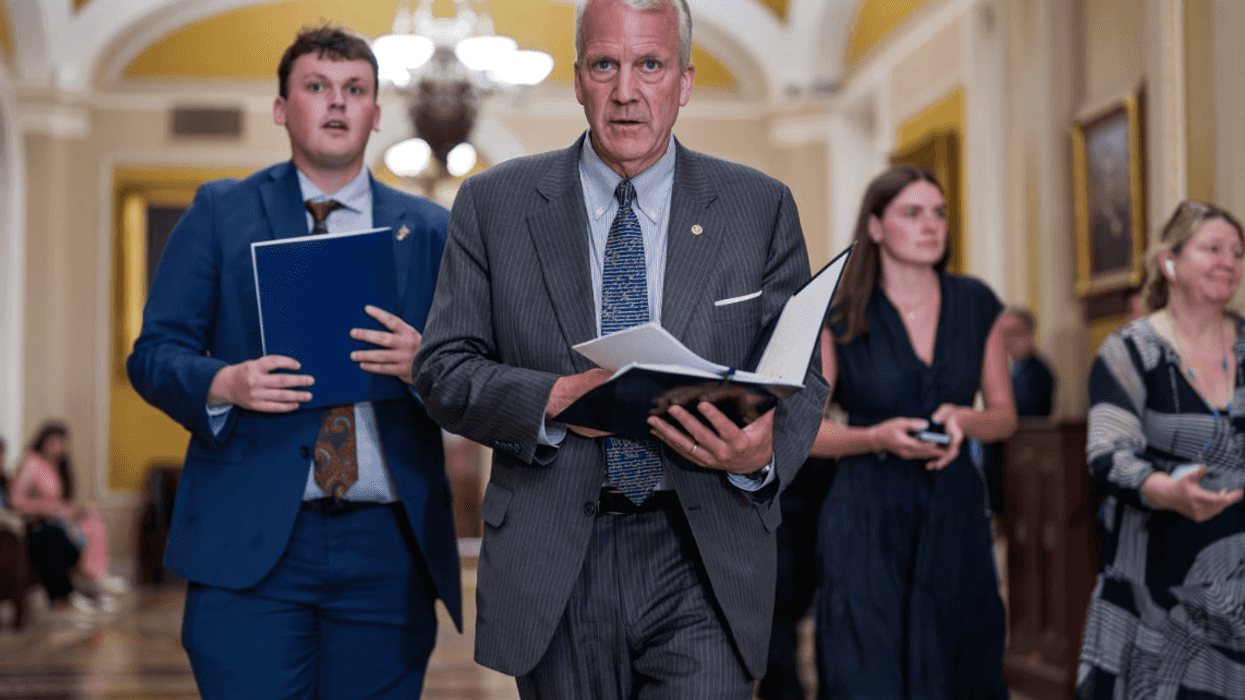
Alaska Sen. Dan Sullivan celebrated OBBB’s passage and falsely claimed that the law “doesn’t touch Social Security.” The law will cut $1 trillion from Medicaid over the next decade to fund tax breaks that primarily benefit wealthy people. Those tax breaks will create less revenue for the Social Security trust fund, speeding up the program’s insolvency.

In 2014, when he was first running for the Senate, Sullivan suggested raising the retirement age and delaying Social Security benefits for future generations. He said “a younger generation of Alaskans or Americans can accept” such a change.

Sullivan is seeking a third term this year. His Democratic opponent is former Alaska Rep. Mary Peltola.

Florida Sen. Ashley Moody called OBBB “historic” when it passed and promised “this is just the beginning, and with President Donald Trump, we will not stop pushing forward.”

Moody was also a big fan of DOGE, the White House initiative that fired 14 percent of workers at the agency responsible for administering Social Security. This led to several Social Security field offices shutting down and longer wait times for those filing claims. Moody voted against multiple budget amendments to restore this funding.

More than five million of Moody’s constituents are enrolled in Social Security. She was appointed to the Senate last year to fill the seat vacated by Secretary of State Marco Rubio. She is now running for a full term against Democratic state Rep. Angie Nixon.

Like Moody, Ohio Sen. Jon Husted also voted for OBBB and against reversing DOGE cuts. He then went a step further by proposing a constitutional amendment that would compel Congress to balance the federal budget.

Currently, Social Security is mostly funded through payroll taxes. Those funds are held by the U.S. Treasury and disbursed to beneficiaries. Any surplus funds are invested in special Treasury bonds that are drawn on when tax revenues fall short.

A balanced-budget amendment would essentially make it illegal for the federal government to spend more in a given year than it collects in revenue. If tax revenues are insufficient to fund Social Security, the government would be prohibited from drawing on the bonds to make up the shortfall. The Center on Budget and Policy Priorities says this would inevitably lead to a cut in services.

The AARP says such a plan would be “devastating for millions.”

Husted will face former Ohio Democratic Sen. Sherrod Brown in this year’s election. Brown co-sponsored the 2024 Social Security Fairness Act that increased benefits for public workers.

Maine Sen. Susan Collins did not vote for OBBB, but she did vote to allow the legislation to be debated, clearing a key procedural hurdle and setting the stage for its eventual passage. North Dakota Sen. John Hoeven said Collins was a “team player” for doing so.

Collins has cast multiple votes weakening Social Security in her 29-year career, including a 2003 vote against creating a Social Security reserve account and a 2011 vote against tabling a budget bill that proposed cutting the program.

Collins is running for reelection this year against Democratic state Sen. Troy Jackson.

The Democratic Senatorial Campaign Committee (DSCC) plans to make Republican hostility toward Social Security a major issue in the midterms.

“In November, voters will reject Republicans’ attempts to put this critical program on the chopping block by electing a Democratic Senate majority that will stand up for seniors and protect Social Security,” says DSCC spokesperson Maeve Coyle.

Reprinted with permission from American Journal News
Senate GOP Ads Broadcast Lies On Immigrants, Medicaid And Trump Budget

Senate GOP Ads Broadcast Lies On Immigrants, Medicaid And Trump Budget

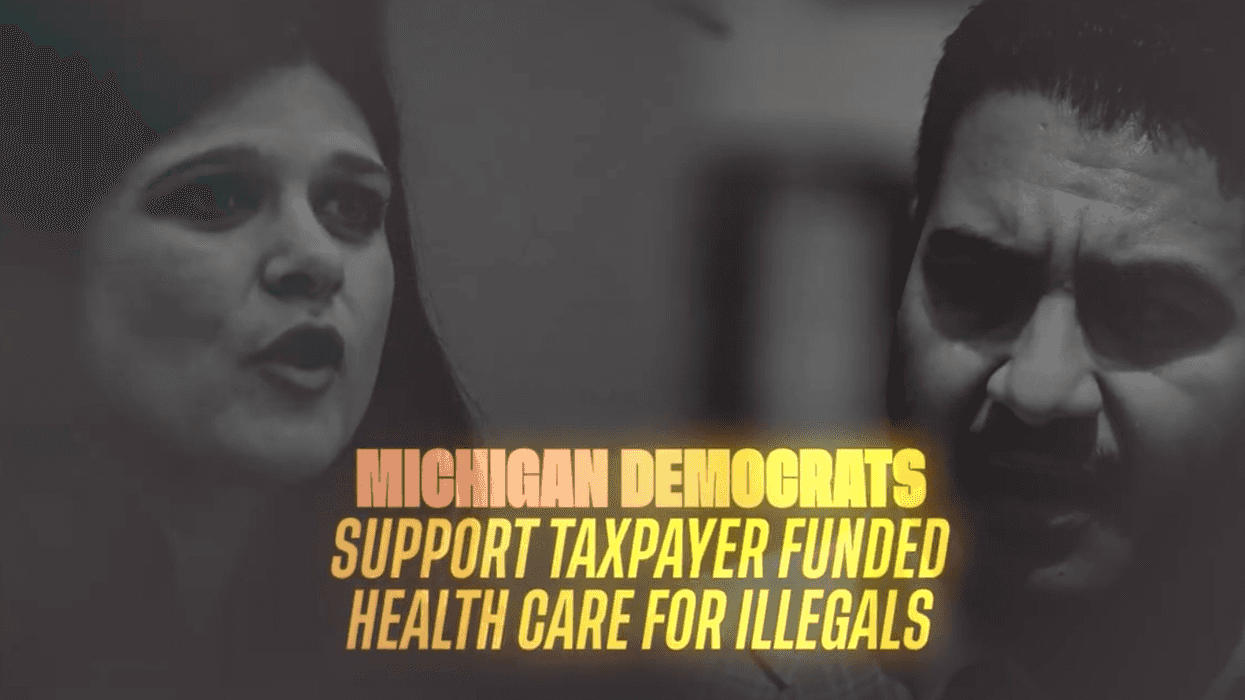
The National Republican Senatorial Committee (NRSC) is running ads in multiple states that spread disinformation about Medicaid and undocumented immigrants.

The ads target Democratic Senate candidates in Ohio, Alaska, Iowa, Georgia, New Hampshire, North Carolina, and Michigan for not supporting the One Big Beautiful Bill Act (OBBB), which the NRSC claims stopped undocumented immigrants from receiving Medicaid benefits.

This claim is false. Federal law already barred undocumented people from accessing Medicaid, Medicare, CHIP, and Affordable Care Act (Obamacare) coverage. Instances of undocumented people being erroneously enrolled in these programs are extremely rare.

Republicans have made this claim about OBBB repeatedly since the legislation was introduced. Health policy experts, including the Kaiser Family Foundation and Georgetown University’s McCourt School of Public Policy, have repeatedly debunked it.

The law does, however, make profound changes to Medicaid. OBBB will cut about $1 trillion from the health insurance program over the next decade, resulting in up to 12 million Americans losing their coverage. The bulk of those cuts will fund tax breaks that disproportionately benefit the wealthy.

Sens. Jon Husted (OH) and Dan Sullivan (AK) both voted for OBBB, as did Reps. Ashley Hinson (IA) and Mike Collins (GA), who are both running for Senate this year. Former New Hampshire Sen. John Sununu and former Michigan Rep. Mike Rogers, who are also running for Senate, have both publicly praised the law.

Michael Whatley, the Republican Senate candidate in North Carolina, said he would have voted for OBBB “in a heartbeat.”

A tracking poll by the Kaiser Family Foundation found that OBBB is deeply unpopular with voters. Sixty-four percent of respondents have an unfavorable view of the law. Among independents, 71 percent oppose it.

President Donald Trump has proposed additional tax cuts and further cuts to government programs if Republicans retain control of the House and Senate after the 2026 elections.

Reprinted with permission from American Journal News

Alaska GOP Senator's Campaigns Spent $1.5M On Golf Resorts And Luxury Lodging

Alaska GOP Senator's Campaigns Spent $1.5M On Golf Resorts And Luxury Lodging

Alaska Republican Sen. Dan Sullivan has spent more than $1.5 million worth of campaign funds at luxury hotels and restaurants, according to his financial reports.

Lawmakers are permitted to spend campaign cash on meal and travel accommodations, but federal law stipulates that these expenditures must be related to official activities and cannot be for personal use.

Sullivan’s suspicious spending encompasses nearly his entire Senate career, from 2015 to his current reelection campaign. He is seeking a third term this year and is expected to face former Rep. Mary Peltola in the general election.

The spending was spread across three groups: Alaskans for Dan Sullivan, his official campaign apparatus; Sullivan Victory, a joint fundraising committee tied to his Senate campaign; and True North PAC, a Sullivan-led group that supports other Republicans.

In the first quarter of 2026, these entities spent a combined $65,847 on food and lodging, about 92 percent of which was spent outside Alaska. This includes spending $3,500 on a stay at the Four Seasons resort in Palm Beach, FL.

In 2025, these groups spent $333,291 on lodging, meals, and catering, more than double their 2024 figure of $164,936.

Some of Sullivan’s most prominent spending over the last decade has been at hotels known for their golf accommodations. The Alaska Democrats put out a press release documenting this trend in April.

“While we’re paying $5 for a gallon of gas, choosing between paying for groceries or health care, and struggling to afford housing, Self-Serving Sullivan has literally been wining and dining Lower 48 special interest donors at luxurious golf resorts,” said Alaska Democratic Party Chair Eric Croft.

An example is the La Quinta Resort & Club in Palm Springs, CA, where Sullivan groups have reported 24 payments over the years totaling $160,737. These charges were for lodging, meals, and event space.

While La Quinta is generally considered a mid-tier hotel chain, its Palm Springs property is a palatial resort with five golf courses, sprawling rose gardens, and private swimming pools. It’s also where season 16 of The Bachelorette was filmed.

Between 2022 and 2025, Sullivan groups reported spending more than $151,000 on lodging and events on Kiawah Island, a barrier island off the South Carolina coast. Most of this was spent at the Kiawah Golf Resort, the site of the 2021 PGA Championship.

Bloomberg News reported in October 2025 that Sullivan co-hosted a fundraiser on Kiawah Island with Arkansas GOP Sen. John Boozman during a government shutdown. Boozman is an avid golfer.

Sullivan groups reported spending $21,000 earlier this year at The Phoenician in Scottsdale, Arizona, which has a golf course designed by renowned architect Phil Smith. The private resort also has a three-story spa and is known for hosting celebrity guests.

Rooms at The Phoenician can cost as much as $9,500 per night.

Between 2019 and 2025, Sullivan groups reported spending $2,441 at The Breakers resort in Palm Beach, which has an oceanside golf course and is a short drive from President Donald Trump’s Mar-a-Lago estate.

The lavish spending stands in contrast to Sullivan’s efforts to project a working-class persona, including regularly attending campaign events dressed in work boots and a Carhartt jacket.

Quiver Quantitative estimates Sullivan’s net worth to be $8.4 million.

Reprinted with permission from American Journal News
Dan Sullivan

New Research Report Accuses GOP Senate Candidates Of Self-Enrichment

A new memo from End Citizens United flags ethics concerns about five Republicans competing in marquee Senate races.

Since 2015, End Citizens United has worked to eliminate dark money in U.S. politics by calling out corruption and elevating candidates who support commonsense campaign finance reforms.

The memo alleges that Alaska Sen. Dan Sullivan, Maine Sen. Susan Collins, former Michigan Rep. Mike Rogers, former New Hampshire Sen. John Sununu, and North Carolina Republican Michael Whatley have all engaged in patterns of double-dealing and self-enrichment.

End Citizens United President Tiffany Muller says these Republicans “have spent their political careers leveraging their influence, cashing in on their connections, and abusing the public trust for personal gain instead of fighting for their constituents.”

The memo details, for example, how Sullivan has repeatedly voted to advance the interests of RPM International, a chemical manufacturing company run by his brother and in which he holds up to a $5 million stake. This includes blocking an amendment that would have allowed the EPA to crack down on cancer-causing pollutants and substances.

The memo also lays out Sullivan’s side hustle as a stock trader. He has made up to $2 million worth of trades while in office and has an estimated net worth of $8.29 million.

Collins is also a prolific stock trader, the memo says. Last year, she dodged questions from a reporter about her husband owning shares of Boeing, RTX Corporation (formerly Raytheon), and other companies regulated by Congress.

Collins claimed to have no knowledge of her husband’s financial dealings despite reporting them in her own personal financial disclosures. Both Collins and Sullivan opposed a bipartisan effort to ban stock trading by members of Congress and their spouses.

Rogers, meanwhile, left Congress a decade ago, reportedly to pursue money-making ventures. According to the memo, he leveraged his national security expertise into lucrative consulting gigs with multinational corporations, including a cell phone company that helped Venezuelan dictator Nicolás Maduro spy on civilians.

Rogers is now running for Michigan’s open U.S. Senate seat with the backing of President Donald Trump.

Sununu, another Trump-backed candidate, followed a similar trajectory. After leaving the Senate in 2009, he went to work for a lobbying firm whose clients included Pfizer, Gilead, Merck, Bayer, and Johnson & Johnson. He is now trying to return to the Senate on a platform of lowering health care costs.

Whatley also had an extensive lobbying career. He spent more than a decade advancing the interests of oil and natural gas companies. His current oil and gas investments are worth up to $1.39 million and have grown substantially as a result of the war in Iran.

“Voters expect elected officials to fight for hardworking families, not to cozy up to special interests and then walk through the revolving door to cash in,” Muller said. “We’re committed to holding these Revolving Door Republicans accountable for putting themselves and their donors ahead of the people they’re supposed to serve.”

End Citizens United has endorsed the likely Democratic candidates in these races: former Rep. Mary Peltola in Alaska, oysterman Graham Platner in Maine, Rep. Chris Papas in New Hampshire, and former Gov. Roy Cooper in North Carolina.

Michigan’s Democratic Senate candidate will be chosen in an August 4 primary.

Reprinted with permission from American Journal News

Shop our Store

Headlines

Editor's Blog

Trending

World