Tag: james clyburn
Courage Over Fear: Will Americans Stand Strong For Free And Fair Elections?

Courage Over Fear: Will Americans Stand Strong For Free And Fair Elections?

Rep. James E. Clyburn (D-SC) is the go-to for both reassurance and resolve. That makes sense, since the South Carolina Democrat is a student of history — and has lived it.

He chronicles some of the country’s past, and his own, in his book The First Eight: A Personal History of the Pioneering Black Congressmen Who Shaped a Nation, published late last year.

It’s instructive to learn about the lives of these eight and the Jim Crow discrimination that thwarted Reconstruction and the political and civil rights progress of African Americans for nearly a century during and after their time.

But that doesn’t make what they accomplished meaningless. And it’s not as though the hard work stopped in the years between the post-Civil War eight and Clyburn’s election in the 1990s.

That’s the lesson Americans who fight for justice must never forget, even when the outlook is discouraging. Clyburn is a very real symbol of how risks can turn into rewards shared by those who follow — and as we witness the current retreat from those gains, initiated at the highest levels of government, his perspective couldn’t come at a better moment.

It is a week that has seen the 61st anniversary of what has become known as Bloody Sunday, the march across the Edmund Pettus Bridge in Selma, Alabama. On March 7, 1965, state troopers violently attacked peaceful citizens seeking equal rights, particularly the voting rights denied African Americans during decades of disenfranchisement.

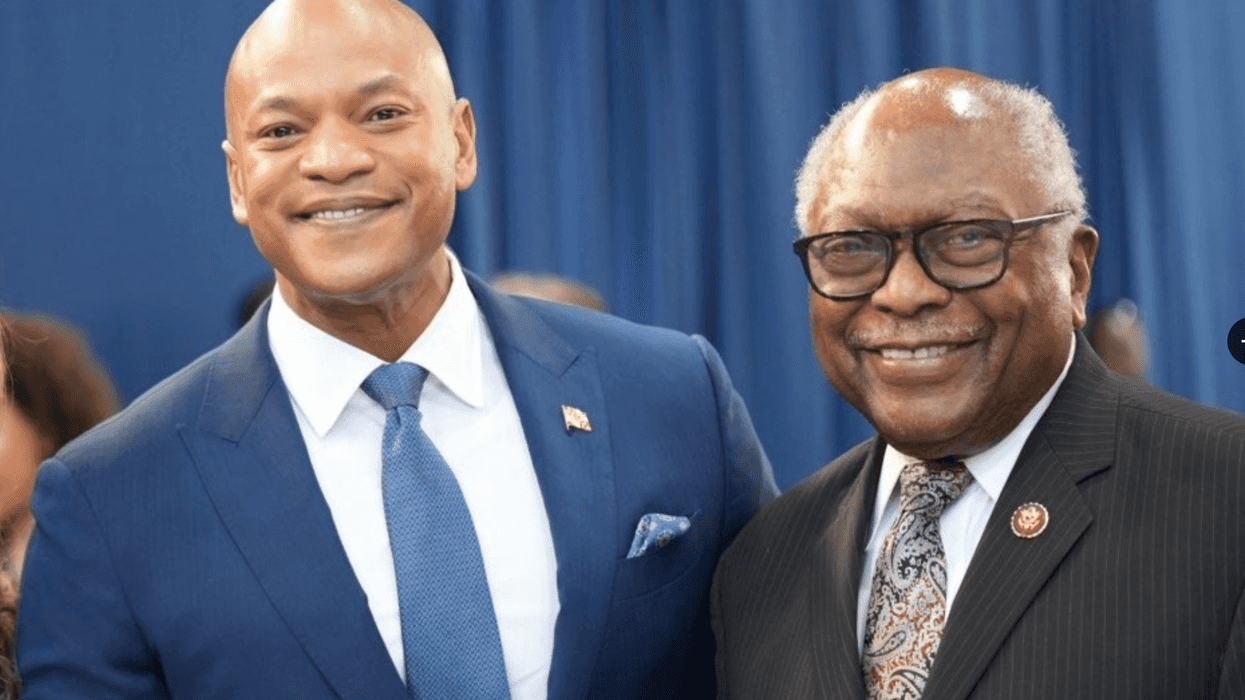
Many gathered this past weekend in Selma, among them Illinois Gov. JB Pritzker and Maryland Gov. Wes Moore — a Democratic presence when GOP representation at the event has been sadly shrinking with each passing year — and people from the original march.

One thing they all had in common was worry that the battle over voting rights is far from finished. “I’m concerned that all of the advances that we made for the last 61 years are going to be eradicated,” 78-year-old Charles Mauldin, beaten on Bloody Sunday, told the AP.

The Supreme Court seems primed to obliterate what remains of the Voting Rights Act of 1965, passed after the bloody sacrifice of that day shocked the national consciousness. If given the green light, Republican-led efforts could eliminate majority-minority districts that have given Black and Hispanic citizens representation and a voice in Washington.

President Donald Trump, amid an unpopular war with Iran, has found plenty of time to demand that Congress pass stricter federal voting requirements to fight nonexistent fraud.

The federal government has embarked on what seems like another wild-goose chase in Arizona, seeking records related to the 2020 election, where numerous audits and reviews have proven Trump lost — a truth the president of the United States refuses to accept.

Critical midterm elections are around the corner, with the first primary elections a week old. How certain are free and fair elections, without interference or intimidation?

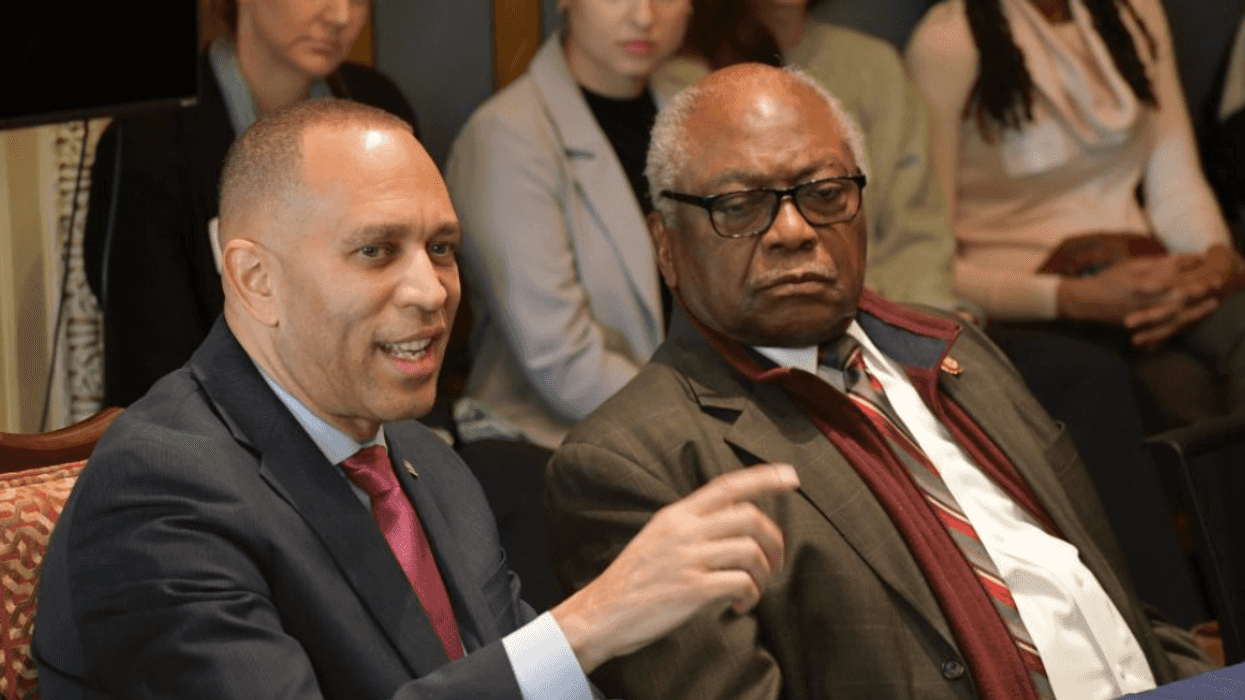
It was my question during a press conference preceding Trump’s State of the Union address last month. Clyburn was joined by fellow Congressional Black Caucus member Rep. Sydney Kamlager-Dove of California to offer insight that might be missing that evening.

Does the congressman fear a weakened Voting Rights Act would spell doom for Black voters?

“A lot of things went against us before we ever got the right to vote.”

He offered a reminder of what was happening in Alabama and a host of states in the South when John Lewis and the rest of the brave men, women and children marched. Many African Americans then did not have the right to vote.

“It wasn’t lack of desire, but obstacles placed in their way,” Clyburn said, noting poll taxes, literacy tests, “the violence and intimidation meted out to anyone who would even think of trying to vote, or registering a Black person to vote.”

“Yet there they were on that bridge, fighting injustice for themselves, of course, but mostly for those who would follow.”

No matter what the Supreme Court rules, “it will not take the vote away.” And one vote could make the difference, he said.

Maybe it does take people who have lived the fight to supply a call to action to those who might be scared away by state election laws designed to confuse or by poll watchers whose goal is intimidation rather than assistance.

Folks like Clyburn and Mauldin, who remembered what it took that day in 1965: “It wasn’t that we didn’t have fear, it’s that we chose courage over fear.”

Mary C. Curtis has worked at The New York Times, The Baltimore Sun, The Charlotte Observer, as national correspondent for Politics Daily, and is a senior facilitator with The OpEd Project. She is host of the CQ Roll Call “Equal Time with Mary C. Curtis” podcast. Follow her on X @mcurtisnc3.

Reprinted with permission from Roll Call

When Worries Haunt Jim Clyburn, It's Time To Fear For  America

When Worries Haunt Jim Clyburn, It's Time To Fear For  America

When I interviewed House Majority Whip James Clyburn in 2014 about his memoir Blessed Experiences: Genuinely Southern, Proudly Black, the South Carolina Democrat was confident in America’s ability to find its way, no matter how extreme the political swings might appear at any given time.

“The country from its inception is like the pendulum on a clock,” the congressman told me. “It goes back and forward. It tops out to the right and starts back to the left — it tops out to the left and starts back to the right.” And remember, he said, it “spends twice as much time in the center.”

I have always appreciated Clyburn’s wisdom, his passion, and his commitment to his constituents. But most of all, I have admired the optimism of this child of the South, who grew up hemmed in by Jim Crow’s separate and unequal grip, yet who believed in the innate goodness of America and its people. Clyburn put his own life on the line to drag the country — kicking and screaming — into a more just future.

He was convinced, I believe, that no matter how off balance America might become, the country would eventually right itself.

A lot has changed since that afternoon, when he sat at a long table, signing books and chatting in the Harvey B. Gantt Center for African-American Arts + Culture in Charlotte, North Carolina, right beside his beloved wife. Emily Clyburn, a passionate civil rights activist, died in 2019, though Clyburn often references her wise words.That optimism, however, has lost its glow.

Clyburn’s worries drove our conversation in July 2021, the second of two times he was a guest on my CQ Roll Call “Equal Time” podcast. The topic was voting rights, and Clyburn had opinions about the Senate procedure that would eventually stall legislation to reform those rights and restore provisions invalidated by a Supreme Court decision in 2013.

“When it comes to the constitutional issues like voting, guaranteed to Blacks by the 15th Amendment to the United States Constitution, that should not be filibustered,” he said. And about restrictive laws being passed in states? “I want you to call it what it is. Use the word: nullification. It is voter nullification.”

“This isn’t about just voting; this is about whether or not we will have a democracy or an autocracy.”

With those remarks in the back of my mind, it was still startling to hear Clyburn last week on MSNBC, talking about his GOP House colleagues, including Minority Leader Kevin McCarthy of California, and their waffling about complying with subpoenas from the House select committee investigating the January 6, 2021, attack.

When asked if the government and Capitol Hill could “be fixed,” Clyburn, known for his philosophical “this too shall pass” mantra, instead replied, “I don’t know.” He talked about threats to undermine democracy and said the country is “teetering on the edge.”

And that was before the shooting in Buffalo that claimed the lives of ten beautiful Americans doing something as routine as Saturday supermarket shopping. African Americans were targeted by an 18-year-old who wore his “white supremacist” label like a badge of honor in a heavily plagiarized racist screed, a man whose stated goal was to “kill as many blacks as possible.”

Is it any wonder Clyburn’s optimism has been waning in these times?

Among Clyburn’s current House colleagues sits Rep. Elise Stefanik of New York, the number three House Republican, whose Facebook ads echoed the “replacement” conspiracy theory swallowed hook, line and sinker by the Buffalo shooter. “Radical Democrats are planning their most aggressive move yet: a PERMANENT ELECTION INSURRECTION,” was one message shared by the once moderate congresswoman, who replaced Wyoming Republican Liz Cheney in House leadership.

Rep. Scott Perry (R-PA) has said many Americans believe “we’re replacing national-born American — native-born Americans — to permanently transform the political landscape of this very nation.”

Rep. Matt Gaetz (R-FL), someone you can always count on to say and do the very worst thing, has co-signed the near nightly rantings of a Fox News host, once tweeting, “Tucker Carlson is CORRECT about Replacement Theory as he explains what is happening to America.”

While most Republican House members skirt the edges of the most incendiary claims, you don’t hear them loudly denouncing or disavowing them.

The accused Buffalo shooter was straightforward in his intentions as he found heroes in the racist and conspiracy-driven murderers who have cut a hateful swath through Norway, New Zealand, El Paso, Pittsburgh and Clyburn’s own home state of South Carolina, at places of worship, whether they be church, synagogue, or mosque.

The problem is much deeper than the availability of guns, and it didn’t surface in just the past few years, though the Obama family in the White House woke those uncomfortable with an evolving country and President Donald Trump cannily dug into a “Make America Great Again” slogan that looked back, not forward.

An accurate reading of history might have taught the shooter that scapegoating African Americans for his own emptiness and rot is not new, and that online conspiracies crumble when bombarded with truth. But many of the same people dismissing Saturday’s planned killing spree as the aberrant act of a disaffected and deranged “youth” would replace real history with rose-colored propaganda in the nation’s classrooms. Many Americans could use an education when polls show a third of them — and nearly half of Republicans — buy into the “replacement” lie.

It was the ugly truth, not fantasy, when President Joe Biden on Tuesday became counselor in chief, a role I’m sure he wishes he never had to play. When he and first lady Dr. Jill Biden traveled to Buffalo, the president blessedly took the time to note each individual — beloved wives and husbands, daughters and sons, brothers and sisters — emphasizing the humanity a shooter wanted to erase.

“In America, evil will not win, I promise you. Hate will not prevail. White supremacy will not have the last word,” he proclaimed.

But when it’s stoked by the rhetoric of fear and blame of the other, hate too often finds a way.

Maybe that is what’s haunting Clyburn, hero and longtime fighter, because he has seen so much. Now, when democracy is at stake, where will the pendulum stop?

Reprinted with permission from Roll Call.

Mary C. Curtis has worked at The New York Times, The Baltimore Sun, and The Charlotte Observer, as national correspondent for Politics Daily, and is currently a senior facilitator with The OpEd Project. Follow her on Twitter @mcurtisnc3.


House Censures Gosar And Strips Him Of Committee Posts

House Censures Gosar And Strips Him Of Committee Posts

Reprinted with permission from DailyKos

One week after Rep. Paul Gosar posted a video depicting the murder of Representative Alexandria Ocasio-Cortez and a violent attack on President Joe Biden, the U.S. House of Representatives voted 223-207, to censure the Arizona Republican and strip him of his assignments on two congressional committees.

Gosar posted the repugnant video to Twitter and Instagram. It depicted himself killing Ocasio-Cortez, a New York Democrat, and leaping at Biden with two swords drawn. The photoshopped rendering was derived from the anime program Attack on the Titan. When Gosar posted the now-deleted tweet, he asked: "Any anime fans out there?"

Though Gosar removed the video after a firestorm of outrage and criticism, he did not issue a public apology and before the vote Wednesday, Gosar doubled down, insisting the video was mere jest.

"It was not [a threat of violence]. I reject the false narrative categorically. I do not espouse violence... it was not my purpose to make anyone upset," he said before likening himself to one of the nation's founders, Alexander Hamilton. "If I must join Alexander Hamilton, the first person to be censured by this House, so be it, it is done."

Rep. Ocasio-Cortez addressed the House before the vote, making a solemn plea for basic integrity and human decency while calling out the abdication of the leader of House Republicans, Kevin McCarthy.

"It is sad. It is a sad day in which a member who leads a political party in the United States cannot bring themselves to say that issuing a depiction of murdering a member of Congress is wrong and instead, decides to venture off into a tangent about gas prices and inflation," she said.

The incitement of violence by Gosar "trickles down," she said, urging that a line finally be drawn in the sand. Ocasio-Cortez has been the subject of much derision and has become a favorite target right wing extremists.

"This is where we must draw the line, independent of party, identity, or belief. It is about the core recognition of human dignity, of value and worth," she said.

In addition to censure, Gosar has also been removed from two committees: The House Committee on Oversight and Reform, which he sits on with Ocasio-Cortez, and the House Committee on Natural Resources.

Significantly, the censure resolution highlights the ubiquitous nature of harassment against women in office. It notes that "violence against women in politics is a global phenomenon meant to silence women and discourage them from seeking positions of authority and participating in public life, with women of color disproportionately impacted."

A 2016 survey by the Inter-Parliamentary Union found 82 percent of women legislators have experienced psychological violence and 44 percent of women have received threats of death, sexual violence, beatings, or abductions during their term.

According to the Congressional Research Service, just 23 members — before Wednesday — have been slapped with censure. Gosar's resolution highlighted how the congressman "used the resources of the House of Representatives to further violence against elected officials" and to "spread hateful and false rhetoric."

The censure resolution also laid bare a critique of McCarthy, noting the vote Wednesday followed because "the leadership of the Republican Party has failed to condemn Representative Gosar's threats of violence against the President of the United States and a fellow member of Congress."

Such videos, the resolution continues, can "foment actual violence and jeopardize the safety of elected officials, as witnessed in this chamber on January 6, 2021."

Ahead of the censure vote Wednesday afternoon, Rep. Jim Clyburn, a South Carolina Democrat and the House Majority Whip, reminded a Fox news reporter that even Rep. Gosar's own family has called for his expulsion from Congress for what his sister dubbed "sociopathic fantasies."

"His family says he should be [expelled]. And that's what I've said to the media. We're going to censure him. His family thinks he should be expelled. And I think that's up to leader McCarthy. He's the Republican leader. This man is a Republican," Clyburn said.


Shop our Store

Headlines

Editor's Blog

Corona Virus

Trending

World