Tag: john mccain
McCain

Are Americans Comfortable With The Unimaginable -- Or Have We Reached Our Limit?

As the 2008 presidential primary season was in full swing, a lineup of Republican hopefuls competed with one another on a debate stage in Columbia, S.C., each hoping to rise to the top of the primary pack by proving he was the toughest one of all.

Since it was a string of white men wearing the political uniform of dark suit and red or blue tie at that 2007 event, standing out was difficult. But that didn’t stop each one from trying to grab the spotlight, especially when the topic of a hypothetical terrorist attack was raised.

How far could one go to make a suspect talk?

Then-Rep. Tom Tancredo name-checked Jack Bauer, the fictional hero of the then-popular Fox TV series 24. Bauer was known to do whatever he deemed necessary, including utilizing every manner and instrument of torture, all to save the day before the ticking clock ran down. And — unlike in real life, according to military and intelligence professionals — the tactic always worked.

Duncan Hunter, once a congressman from California, said he would tell the secretary of defense, “Get the information,” an order Pete Hegseth, the current “secretary of War,” as it’s noted on his office door, would relish. Neither Mitt Romney, Rudy Giuliani nor anyone else objected.

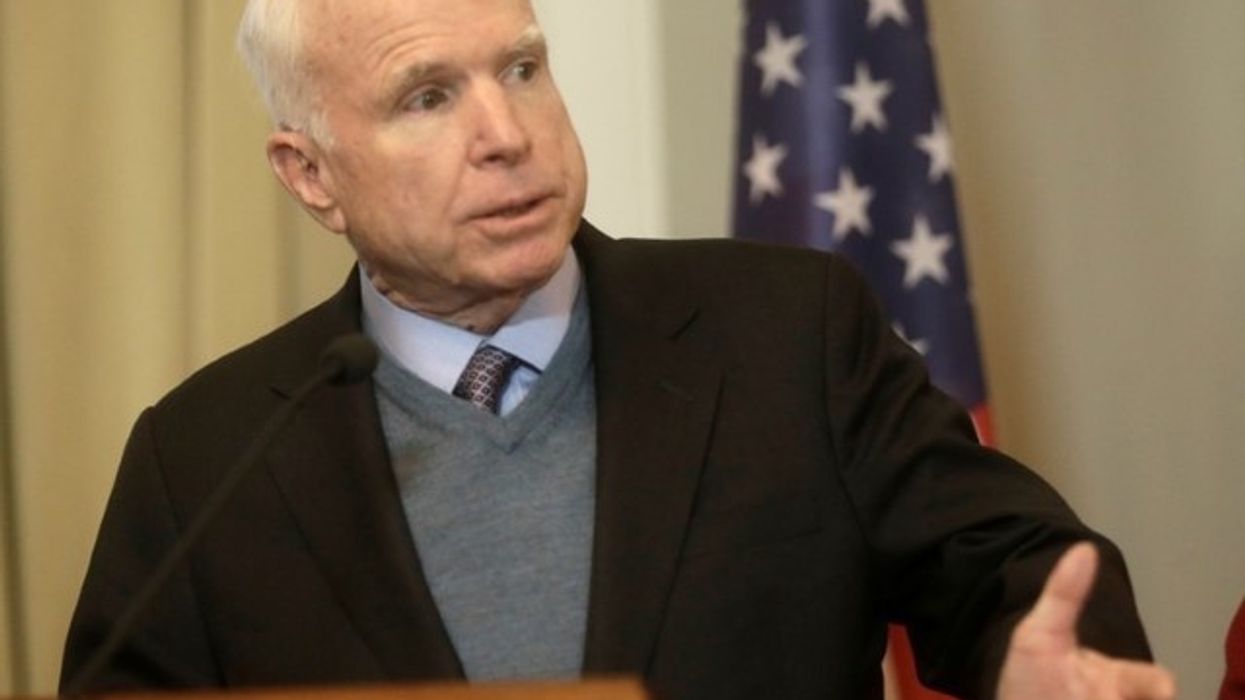
It was only the late Sen. John McCain of Arizona who offered an opposing view. “It’s not about the terrorists, it’s about us,” he said. “It’s about what kind of country we are.”

That the only one who had actually been tortured, during years in a North Vietnamese prison, condemned an “anything goes” approach impressed me, if not my fellow spectators, who held back the cheers that had greeted lusty calls for vengeance in place of justice.

The audience clearly preferred Jack Bauer, convincingly played by Kiefer Sutherland.Maybe a lot of Americans still do.

Bauer was, after all, a man of action, someone who solved big problems just after the commercial break cliffhanger. He didn’t bother with nuance, second-guessing or consideration of the stated ideals of the United States of America, which frown on such things as constitutional and human rights violations.

Much of the appeal of Donald Trump was — is — that he does things without bothering to pay attention to laws, traditions or anyone’s opinion but his own. That’s how you get a White House East Wing being gutted to make way for a ballroom. An official America that acts first and asks questions later, if at all, has been on full display.

This week, Hegseth announced six deaths, the result of U.S. weaponry hitting two boats suspected of being involved in narcotics smuggling; the death toll is now at least 76 in such strikes, all without public evidence or congressional approval.

Disturbing videos continue to come out of Illinois, where, in one of the latest incidents, a man accused ICE agents of allegedly spraying a chemical substance into his car, affecting members of his U.S. citizen family, including his 1-year-old daughter. As usual, the Department of Homeland Security disagrees.

A New York Times report, based on interviews, has described the horrific conditions in a maximum-security Salvadoran prison where the Trump administration, without details or due process, sent Venezuelan men it insisted were terrorists.

No one — not teachers, clergy carrying the Eucharist or protesters protected by the First Amendment — has been spared.

Some of the victimized may have committed crimes, as the administration asserts, although videos often contradict that claim. Doesn’t everyone deserve the presumption of innocence and, once in custody, humane treatment? That’s especially true when the perpetrators are not rogue vigilantes but supposedly trained members of law enforcement, representatives of the U.S. government, following orders and paid by taxpayers.

However, if it’s action you want, Trump is the quintessential epitome of it. And if he and his supporters in the Cabinet and Congress use the levers of government to pardon cronies and punish enemies, well, it’s easier to become a “friend” than fight back, a conclusion that many, including former foes, seem to have arrived at barely a year into an exhausting second term.

Yet there are many Americans who have misgivings and seem to have remembered those throughout the country’s history who fought against injustices when it seemed all but hopeless.

The millions who came out for last month’s “No Kings” rally expressed their “love,” not “hate,” for America, no matter what Speaker of the House Mike Johnson claimed before anyone took to the streets. Quite a few of them showed up at the polls on Election Day, giving the far-from-perfect Democrats key victories in red and blue states.

In an essay in The Atlantic, Ronald Reagan-appointed judge Mark L. Wolf explained why he was stepping down: “The White House’s assault on the rule of law is so deeply disturbing to me that I feel compelled to speak out.”

And while the president of the United States went to court to fight for the right to withhold needed SNAP benefits to those worried about feeding their kids, neighbors, food banks, restaurant owners and Americans who themselves are struggling pitched in.

It’s important to note, in the week that honors veterans who sometimes fought against long odds, that all is not rosy.

The future of affordable health insurance is uncertain, hinging on promises from a GOP that seems ambivalent, at best, when it comes to the plight of citizens without access to a fraction of the health care benefits that members of Congress enjoy.

And those federal agents, led by an administration that packages its own splashy ICE marketing videos, may be on their way to your city, especially if you elect a Democratic leader.

Maybe McCain, who seemed a lot more positive about the kind of country we are than his fellow debaters that night, might be disappointed, and shaken, to see a country and his party today, in thrall to a man who disrespected the naval aviator’s service when he was alive and only reluctantly agreed to honor his memory.

Or maybe the man, who with a “thumbs down” once quashed the Republican and Trump plan to repeal the Affordable Care Act, would have faith that Americans who are showing signs of life, and fight, will determine “what kind of country we are.”
Maricopa County recorder Stephen Richer

Arson Eyed As Arizona Mailbox Fire Damages Ballots In Democratic District

Arizona was once a deep-red state where Sen. Barry Goldwater and his successor, Sen. John McCain, were regarded by fellow Republicans as the gold standard for conservatism. But Arizona has since evolved into a swing state.

Arizona Democrats are winning a lot more statewide races than they were 30 or 40 years ago, and far-right MAGA Republicans like Kari Lake have been openly disdainful of the Goldwater and McCain conservatives who once dominated the state.

Arizona is among the battleground states where former President Donald Trump and Vice President Kamala Harris have been especially aggressive in their campaigning. And a contentious U.S. Senate race that puts Lake against Rep. Ruben Gallego (D-Arizona) will be closely watched on Election Night.

According to Phoenix's ABC 15 News, fire and police officials are investigating a fire in a U.S. Postal Service mailbox that included some mail-in ballots. Arson is suspected.

The Phoenix Fire Department, in an official statement, said, "Approximately 20 electoral ballots were damaged, along with additional miscellaneous mail.

"What led to the fire is not yet known," ABC 15 News reports, "but Phoenix Police Department says Phoenix Fire Department's Arson Investigation Taskforce is performing a criminal investigation with postal inspectors and police. ABC 15 reached out to election officials for information impacting those whose ballots may have been damaged."

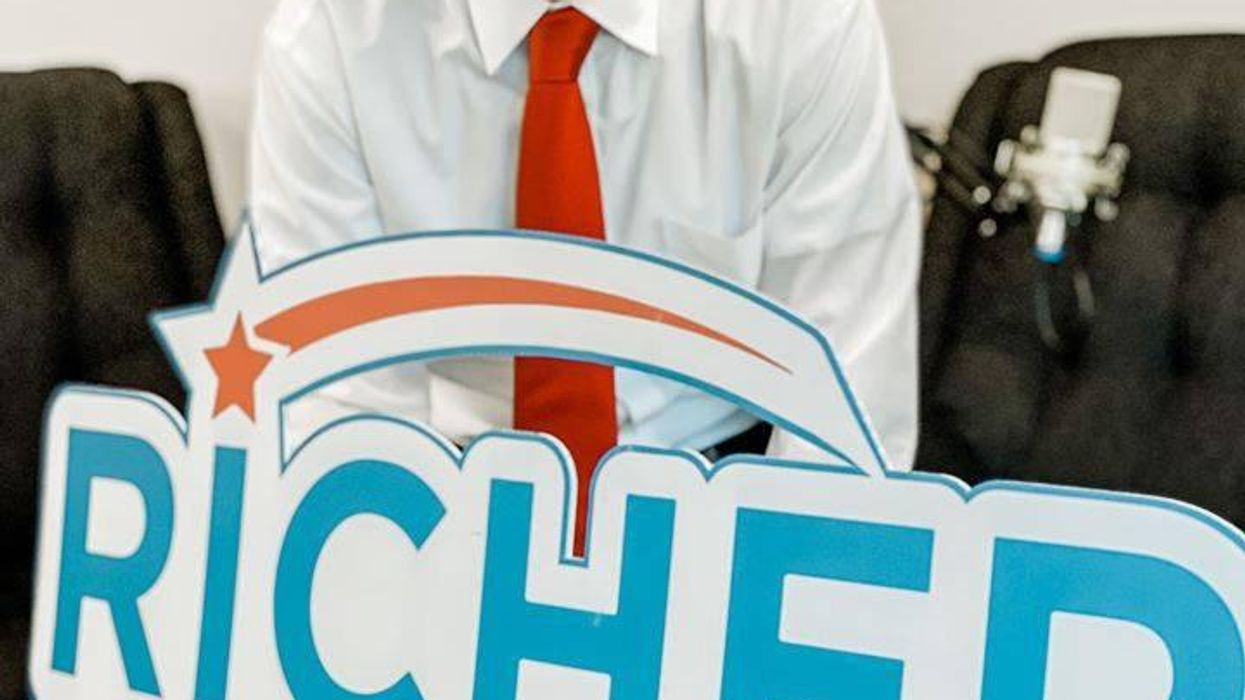
Maricopa County Recorder Stephen Richer said his office is "waiting for details from law enforcement."

Richer told ABC 15 News, "We encourage all voters who used that mail box in the last 36 hours to check the status of their ballots at https://BeBallotReady.Vote. Successful delivery is usually reflected on that website within 72 hours. Voters should be aware that tomorrow, October 25, is the last day to request a replacement ballot."

Reprinted with permission from Alternet.

late Sen. John McCain

How The Little Guys Lose Under Trump's Tax Plan

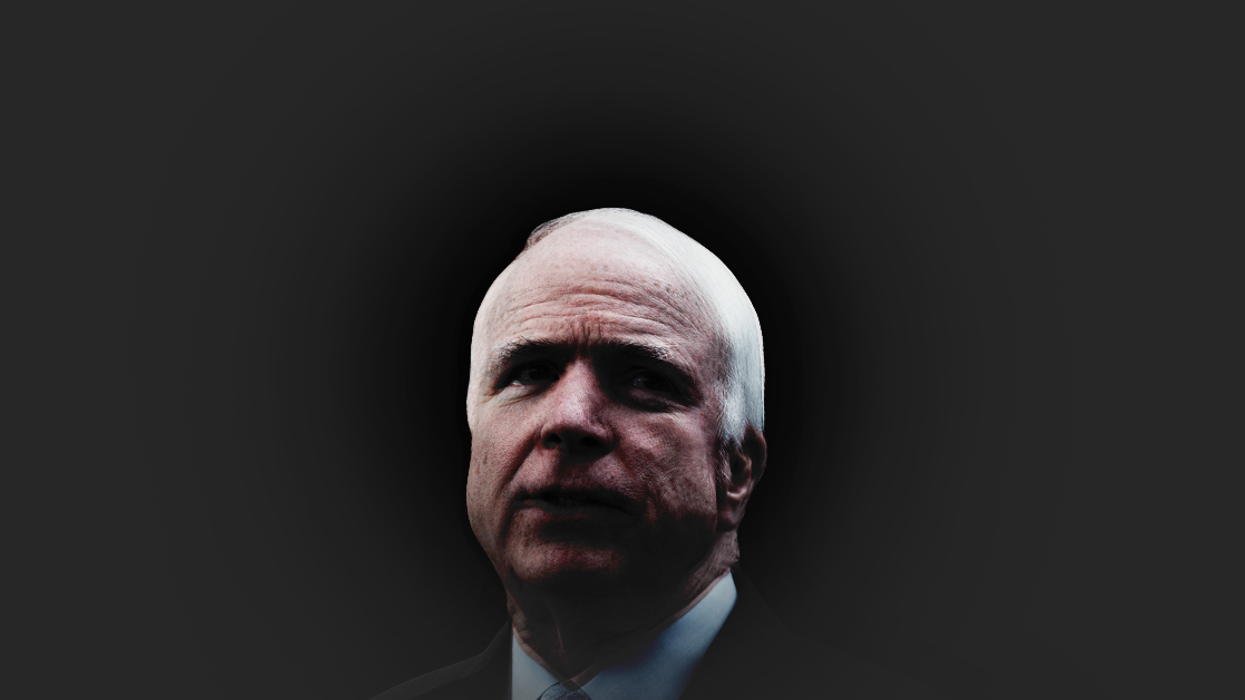
The late Sen. John McCain didn't much like Obamacare, but in 2018, the Arizona Republican pulled it out from under then-President Donald Trump's hatchet. Why? Because McCain saw the "skinny repeal" measure as a sneaky attempt to eviscerate the health coverage of little guys to free up money for tax cuts favoring the wealthy.

Hold that thought as you look upon Trump's vow to extend much of his 2017 tax cuts in a second term. Here are some shocking numbers:

Extending the tax cuts would cost $4.6 trillion over 10 years at a time of already high deficits, according to the Congressional Budget Office. And projected U.S. debt as a share of GDP would rise by 36 percentage points to over 200% by 2054, numbers from the Center for American Progress.

Of course, there's a way for that not to happen. Huge cuts could be made to Social Security, Medicare, and the Affordable Care Act. Also Defense, research at the National Institutes of Health and even farm subsidies. And then what? Trump and company will say, hey, the debt crisis has left us with a choice. Social Security is simply unsustainable. That's the plan.

Drop the baloney about the 2017 tax cuts "paying for themselves," which is how they were falsely marketed. It's true that a few changes goosed some investments, according to Harvard economist Gabriel Chodorow-Reich, but the cuts didn't come close to offsetting the cost of them. On the contrary, they were deficit-financed, and so would be their extension.

While the middle class may lose benefits long taken for granted, its members would see little in the way of reduced taxes under Trump's proposed extension. While households with income in the top one percent would enjoy an average tax cut of more than $60,000 in 2025, those in the bottom 60% would see less than $500, according to the nonpartisan Center on Budget and Policy Priorities.

As for the original 2017 tax cuts, Trump claimed they would "very conservatively" boost household incomes by $4,000. As it happened, workers who earned less than $114,000 on average in 2016 saw zero benefit from the cut in the corporate tax rate. The top tenth of the one percent did considerably better with an average after-tax boost of $252,300 in income.

Trump's vow of another payday has some Wall Street magnates and tech billionaires setting aside their previous objections to his attempt to violently overthrow the American government. Not long ago, Blackstone Group co-founder Stephen Schwarzman, a big Republican donor, wisely argued that his party should look elsewhere for leadership. Now the multi-billionaire donor is back in harness and all for Trump.

"Wall Street has never been known for high character and high values," Dan Lufkin, co-founder of Donaldson, Lufkin & Jenrette, the investment bank where Schwarzman once worked, bluntly told Bloomberg News.

Bear in mind that many Silicon Valley and Wall Street billionaires are not rising to the bait, but arguing that Trump's contempt for the rule of law is actually bad for business. Reid Hoffman, co-founder of LinkedIn, wrote that without America's predictable, rules-based environment, "New York, and America, would not have become the hubs of innovation, investment, profit and progress that they are."

And what about Joe Biden? He would keep the tax cuts for Americans making less than $400,000 a year and let most of the other provisions in the 2017 law expire on schedule.

McCain was a conservative patriot who believed America was about more than money. The billionaires slobbering for more tax cuts are all about the money.

It's OK to like money. It's not OK to take it out of the little guys' hides.

Reprinted with permission from Creators.

Don't Let Trump Distract Us From His Disqualifying Criminal Indictment

Don't Let Trump Distract Us From His Disqualifying Criminal Indictment

Within the few days, Trump has made at least five moronic, dangerous or incendiary comments. And if the past is any guide, the press and social media will be all over each of them. Some will decry his vicious allusion to John McCain's disabilities, earned in a war Trump evaded. Others will be outraged by his description of the January 6 defendants as "hostages."

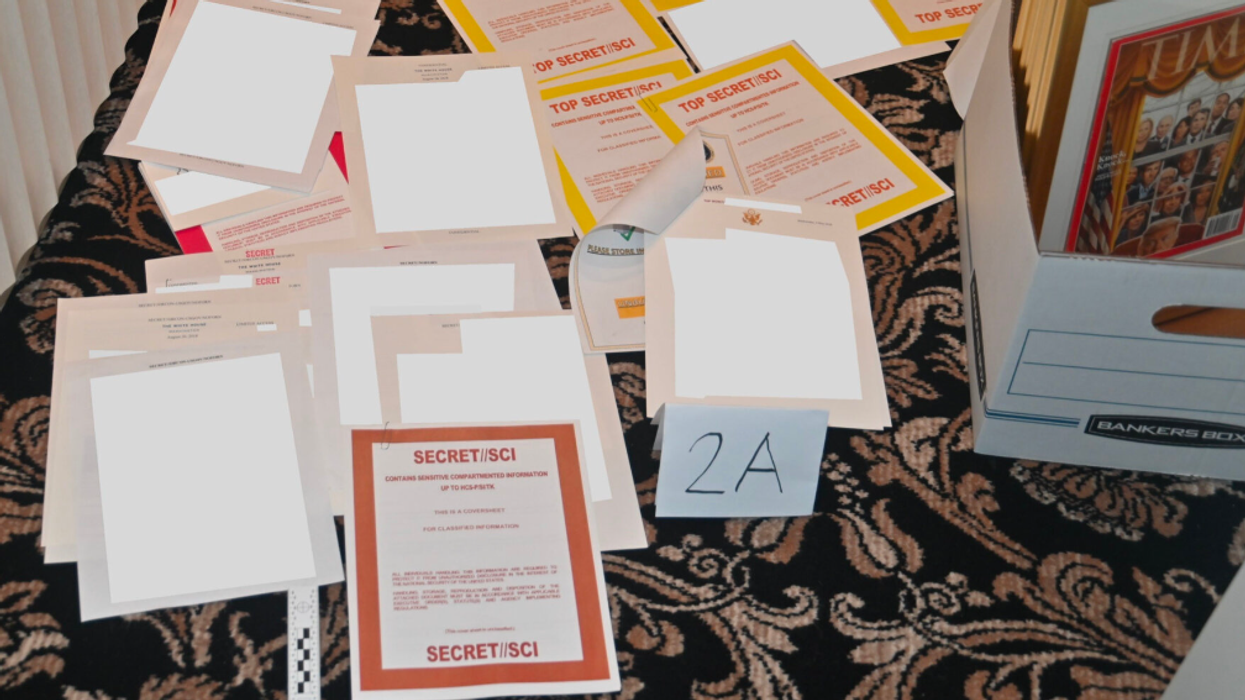
He manipulates our attention and our conversation like a skilled puppeteer. Consider that with only days to go before the first nominating contests, we are not even talking about Trump's greatest legal peril — the sweeping 37-count indictment regarding willful retention of national defense information, conspiracy to obstruct justice, corruptly concealing a document or record, and making false statements.

Admittedly, the Mar-a-Lago classified documents indictment is only the second-most disqualifying crime in Trump's roster — the first being attempting a coup — but it is the most open-and-shut and therefore the most ruinous.

Unlike the Washington indictment for attempting to overturn an election, the Florida indictment does not rely on untested applications of criminal statutes (e.g., was the riot an attempt to obstruct an official preceding?) or inquiries into Trump's state of mind. The questions of law and fact are straightforward.

Trump apologists will point to Biden, Pence and others who were found to have classified documents in offices or homes. But the indictment does not charge Trump for any documents he voluntarily returned after they were requested by the National Archives and Records Administration. No, he is charged only for the documents he hid, moved around, lied about, shared with a number of people lacking security clearances, kept in bathrooms, ballrooms, and bedrooms, and stubbornly withheld — even in defiance of a subpoena — from an increasingly alarmed federal government.

After the search of Mar-a-Lago in August 2022, Trump claimed to have declassified all of these documents before absconding with them. A sitting president does have authority to declassify, though not to take documents home as trophies. There are two problems with this justification: 1) There is zero evidence that Trump ever did declassify the relevant documents, and 2) even if he had, "willful retention of national defense information" remains a federal crime under the Espionage Act, which was passed in 1917, long before the current classification system was adopted. Others who've been charged and convicted under this statute include Chelsea Manning, Reality Winner and Edward Snowden. Less famous was Kendra Kingsbury, a former FBI analyst who pleaded guilty to taking classified documents home and was sentenced in June to three years and 10 months in federal prison.

Oh, and there's one other problem with the "Trump declassified everything" argument: His own words. The indictment includes a recording of Trump flaunting one of the documents to a writer (who had no security clearance, far less top-secret) at his Bedminster club. These were "highly confidential" and "secret," he confided, adding ''as president I could have declassified it. ... Now I can't, you know, but this is still a secret."

That would be quite enough, but there is so much more. The indictment lays out the manifold maneuvers Trump undertook to obstruct justice. After being asked to return the documents, he instructed Walt Nauta to hide 64 of the boxes in other parts of Mar-a-Lago before letting his lawyer go through the remaining 30 — letting the lawyer believe that he was seeing the complete set. After the lawyer examined the contents and found some classified material, Trump suggested that he make them disappear. He "made a plucking motion."

The superseding indictment details Trump's instructions to several Mar-a-Lago employees to destroy security camera footage — textbook obstruction of justice.

The law is clear and easy to understand. Jack Smith has the receipts. Even Trump's allies have acknowledged that the indictment is devastating. Jonathan Turley admitted that "It's really breathtaking. ... The Trump team should not fool itself. These are hits below the water line. ... It's overwhelming in its details." Bill Barr added, "I do think that ... if even half of it is true, then he's toast. I mean, it's a pretty — it's a very detailed indictment, and it's very, very damming."

This, all by itself, is utterly disqualifying for a presidential candidate. The indictment cites two instances — that Smith can prove — of Trump revealing classified information to people not authorized to have it. God only knows how many times he did it that we have no record of.

Trump got lucky in the selection of Judge Aileen Cannon, who may be a MAGA sympathizer. But let's not lose sight of his flagrant, brazen, criminal contempt for his duty. Let's keep our focus on the people whose lives he put at risk. Let's have enough self-respect to recoil at his reckless endangerment of this country. If convicted, he deserves to do prison time. Cannon notwithstanding, he may well do prison time for this. And that, not his latest stink bomb, should be front of mind as we head into the campaign.

Mona Charen is policy editor of The Bulwark and host of the "Beg to Differ" podcast. Her new book, "Hard Right: The GOP's Drift Toward Extremism," is available now.

Reprinted with permission from Creators.

Shop our Store

Headlines

Editor's Blog

Corona Virus

Trending

World