Tag: medicaid cuts
Will Surging Tide Of Uninsured And Spiking Hospital Costs Trigger A Recession?

Will Surging Tide Of Uninsured And Spiking Hospital Costs Trigger A Recession?

All of the health care sector’s major economic indicators are headed in the wrong direction.

Major hospital chains last week began reporting a substantial rise in their uncompensated care costs after millions of people dropped health insurance. The Republican Party’s refusal to retain the Biden administration’s expansion of Affordable Care Act subsidies has already forced at least three million people into the ranks of the uninsured.

Meanwhile, the Centers for Medicare and Medicaid Services under Dr. Mehmet Oz announced Friday it will grant hospitals a 2.3 percent increase for their 2027 in-patient Medicare rates. That’s well below the general inflation rate (3.5 percent over the past 12 months) and a half percentage point behind the Bureau of Labor Statistics' measure of inflation in overall medical services (2.9 percent).

If you’re sitting in the chief financial officer’s seat at one of the nation’s hospitals, the next 12 months look bleak. Private insurers have already announced they will seek double-digit rate increases for individual and family plans sold on the exchanges later this year. Those rates are usually finalized in late October, just ahead of the start of open enrollment, which this year falls on the day before the mid-term election. Rate-shock will likely force millions more people to drop coverage.

Then there’s the One Big Ugly Bill’s imposition of work requirements in Medicaid, which will go into full effect next January (some states have already begun winnowing their roles). That’s expected to lead to nearly 12 million poor people losing coverage over the next few years, mostly due to eligible enrollees’ failure to leap over the bureaucratic hurdles established by the law.

The coming huge increase in the ranks of the uninsured — the first since passage of the Affordable Care Act in 2010 — is certain to raise the uninsured rate well into double digits. It reached an historic low of eight percent during the Biden years. The accompanying sharp rise in uncompensated care delivered by hospital emergency rooms and other providers will inevitably lead to major spikes in premium costs for employer-provided health plans, which covers an estimated 160 million workers and their family members.

A recent survey of major insurers’ actuaries found the cost of employer-based health insurance prices is expected to rise nine percent on average next year. That increase — more than two percentage points greater than this year and nearly twice the rate of economic growth — will sharply increase both employer premiums and their employees’ co-premiums, co-pays and deductibles.

Given the price pressure in other household necessities, many more workers will opt for high-deductible plans to hold down their out-of-pocket expenses. Some will decide to drop out of their employers’ plans. That’s a viable if risky option for the young and healthy, who use far less health care on average than older workers. But it’s a disaster for older, sicker employees and their families, who will see their premiums rise even faster than anticipated because the young and healthy have left the pool.

Labor costs are rising

Major health care institutions are no doubt formulating plans now for how to deal with their deteriorating financial position. Given that labor costs generally account for about half of all hospital spending, hiring freezes and job cuts will probably be on the agenda.

We’ll know more on Friday this week when the July jobs report comes out. There is a high likelihood that the central role that health care has played in U.S. job creation over the past decade, and especially in the past year, is coming to an end. Should that happen due to the sudden shock to the system from the soaring uninsured rate, it could prove devastating for the rest of the U.S. economy, where job growth has slowed dramatically this year due to the Trump regime’s tariffs, the war against Iran, and government job cuts.

The overall jobs numbers tell an interesting tale if we look at the past year and compare that to the past decade. Over the last ten years, the entire health care sector added 3.1 million new jobs. That was one in every five new jobs in the economy (roughly commensurate with a health care sector that makes up 18 percent of GDP). Hospitals alone accounted for 758,000 of those new jobs or just a shade under 25 percent of the total new health care jobs.

But in the past year, the overall economy added just 506,000 new jobs as manufacturing declined (so much for Trump’s claim he is bringing back goods-making industries). Overall service job growth couldn’t keep pace. Indeed, just one sector kept the unemployment rate from leaping into recessionary territory.

What sector was that? Health care, which added 437,000 new jobs over the past year, accounting for fully 86 percent of the new jobs total. Hospitals accounted for 118,000 or 27 percent of those new jobs.

The only way hospitals have been able to keep adding jobs is by using their market power to raise prices on the privately insured. According to the most recent Kaufman Hall National Hospital Flash Report (May), hospital expenses are up seven percent from a year ago while average patient days are down two percent.

The higher expenses are being driven mostly by the need to raise pay for physicians, nurses and support staff to keep pace with inflation, which is rising at one-and-a-half to two times the rate the Federal Reserve Bank considers optimal. Yet even with those price increases (which are angering everyone), hospital margins and profitability are shrinking compared to a year ago.

Given those numbers, there’s no way that hospitals or health care will be able to maintain its recent role as the U.S. economy’s main job generator. Given the Trump regime’s mismanagement of the rest of the economy, one can’t rule out the possibility that the emerging health care financing crisis will trigger a recession.

Merrill Goozner, the former editor of Modern Healthcare, writes about health care and politics at GoozNews.substack.com, where this column first appeared. Please consider subscribing to support his work.

Reprinted with permission from Gooz News
Senate GOP Ads Broadcast Lies On Immigrants, Medicaid And Trump Budget

Senate GOP Ads Broadcast Lies On Immigrants, Medicaid And Trump Budget

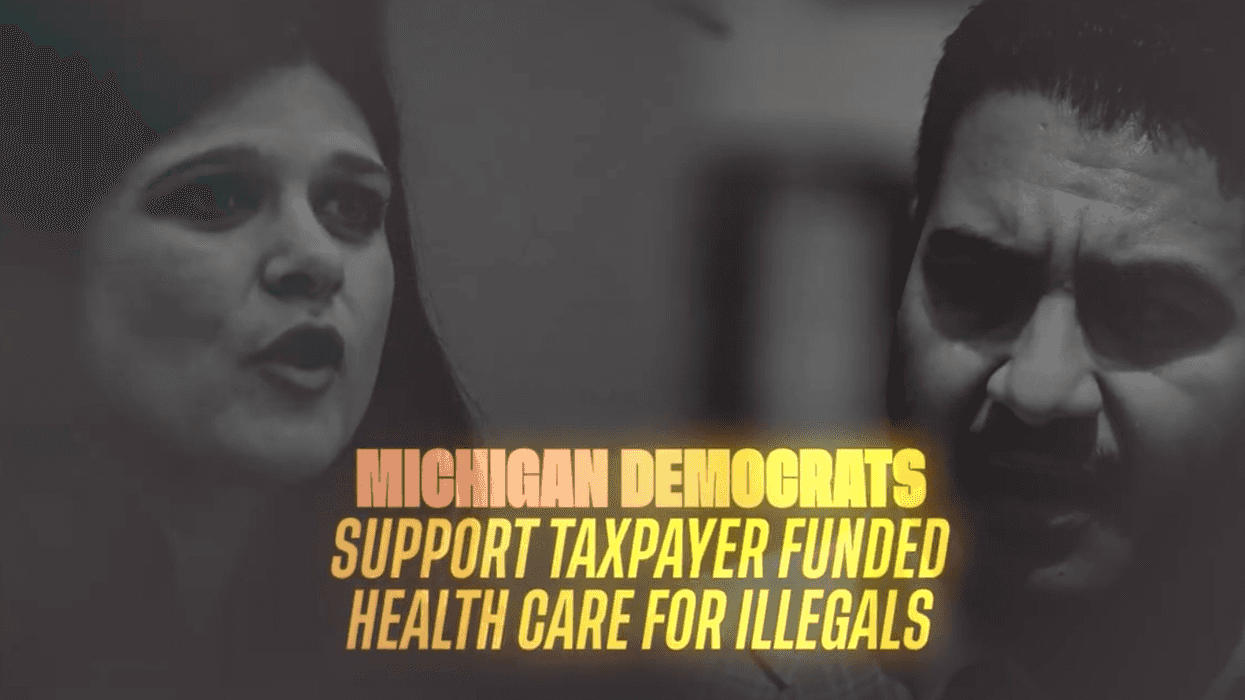
The National Republican Senatorial Committee (NRSC) is running ads in multiple states that spread disinformation about Medicaid and undocumented immigrants.

The ads target Democratic Senate candidates in Ohio, Alaska, Iowa, Georgia, New Hampshire, North Carolina, and Michigan for not supporting the One Big Beautiful Bill Act (OBBB), which the NRSC claims stopped undocumented immigrants from receiving Medicaid benefits.

This claim is false. Federal law already barred undocumented people from accessing Medicaid, Medicare, CHIP, and Affordable Care Act (Obamacare) coverage. Instances of undocumented people being erroneously enrolled in these programs are extremely rare.

Republicans have made this claim about OBBB repeatedly since the legislation was introduced. Health policy experts, including the Kaiser Family Foundation and Georgetown University’s McCourt School of Public Policy, have repeatedly debunked it.

The law does, however, make profound changes to Medicaid. OBBB will cut about $1 trillion from the health insurance program over the next decade, resulting in up to 12 million Americans losing their coverage. The bulk of those cuts will fund tax breaks that disproportionately benefit the wealthy.

Sens. Jon Husted (OH) and Dan Sullivan (AK) both voted for OBBB, as did Reps. Ashley Hinson (IA) and Mike Collins (GA), who are both running for Senate this year. Former New Hampshire Sen. John Sununu and former Michigan Rep. Mike Rogers, who are also running for Senate, have both publicly praised the law.

Michael Whatley, the Republican Senate candidate in North Carolina, said he would have voted for OBBB “in a heartbeat.”

A tracking poll by the Kaiser Family Foundation found that OBBB is deeply unpopular with voters. Sixty-four percent of respondents have an unfavorable view of the law. Among independents, 71 percent oppose it.

President Donald Trump has proposed additional tax cuts and further cuts to government programs if Republicans retain control of the House and Senate after the 2026 elections.

Reprinted with permission from American Journal News

Promoting Trump's 'Health Care Fraud Takedown,' Fox Ignores His Fraudster Pardons

Promoting Trump's 'Health Care Fraud Takedown,' Fox Ignores His Fraudster Pardons

President Donald Trump has pardoned numerous people convicted of billions of dollars’ worth of health care fraud at the end of his first term and throughout his second term so far. Yet Fox News and Fox Business failed to mention these pardons in 1 hour and 24 minutes of coverage of the Trump administration’s announcements of arrests of health care fraudsters, with some network personalities even hyping up the president and his administration’s efforts to crack down on health care fraud.

On June 23, the Justice Department announced “the 2026 National Health Care Fraud Takedown, which resulted in charges against 455 defendants, including 90 doctors and other licensed medical professionals.” According to the DOJ’s press release, these people were arrested “for their alleged participation in health care fraud and opioid abuse schemes involving over $6.5 billion in false claims and significant patient harm, including death.” Prior to this announcement, the administration had blocked more than $1 billion worth of Medicaid funding to states governed by Democrats, claiming the funds were blocked due to concerns over fraud. Minnesota Gov. Tim Walz said that the funding halt was instead part of a “campaign of retribution” against Trump’s political opponents, “weaponizing the entirety of the federal government to punish blue states like Minnesota.”

Fox treated the announcement of a health care fraud crackdown as a hit. “It may be the Minnesotan in me,” Fox Business host Brian Brenberg declared, “but I love the fraud crackdowns.” He added: “There's a lot of anti-fraud stuff going on. I think that's great. It doesn't feel like it's getting as much traction with the electorate as it ought to.” Fox & Friends likewise suggested that this issue should be an electoral winner.

Fox correspondent Bill Melugin stated that administration officials “are sending a clear message: If you put profit over patients, you should expect to be put in prison.” And Fox host Laura Ingraham touted the announcement with a graphic declaring: “Fraudsters beware.”

Yet according to a Media Matters review of this coverage of “the 2026 National Health Care Fraud Takedown,” which came to a total of 1 hour and 24 minutes over four days, Fox News and Fox Business failed to mention that Trump had previously pardoned and commuted the sentences for multiple convicted health care fraudsters in both his first and second terms.

In May, a reporter with the Minnesota Reformer called out this dissonance within the Trump administration when he asked Assistant Attorney General for the DOJ’s National Fraud Enforcement Division Colin McDonald: “President Trump has granted clemency to numerous individuals who have stolen hundreds of millions in Medicaid funds. Can we expect any of these folks to be shown the same mercy?” McDonald reportedly replied, “I’ll take a different question.”

Reporting from Kaiser Family Foundation and The American Prospect on Trump’s pardons of health care fraudsters demonstrates the extent of his protection of these people:

  • In 2021, KFF reported that Trump’s pardons at the end of his first term “included at least seven doctors or health care entrepreneurs who ran discredited health care enterprises, from nursing homes to pain clinics.” The article reported: “At the last minute, President Donald Trump granted pardons to several individuals convicted in huge Medicare swindles that prosecutors alleged often harmed or endangered elderly and infirm patients while fleecing taxpayers.” The article cited Louis Saccoccio, CEO of the National Health Care Anti-Fraud Association, who said: “These aren’t just technical financial crimes. These were major, major crimes.” [KFF Health News, 1/22/21]
  • KFF: “At least 13” of the health care fraudsters pardoned by Trump “were convicted in cases involving more than $1.6 billion in fraudulent claims filed with Medicare and Medicaid.” The article reported: “In his first and second terms, Trump has granted pardons or commutations to at least 68 people convicted of fraud crimes or interfering with fraud investigations, according to a KFF Health News review of court and clemency records, Department of Justice press releases, and news reports.” The article added: “In interviews with KFF Health News, two experts on health care fraud said that Trump’s claimed focus appears to be a pretext for slashing spending that was legally appropriated by Congress.” [KFF Health News, 4/4/25]
  • The American Prospect: An analysis shows that “Trump has issued 15 pardons in his second term to business owners, pharmacists, doctors, and health care executives, who together defrauded more than $3 billion from the U.S. government and taxpayers.” The analysis was conducted by Protect Our Care, and its director of policy programs Vaishu Jawahar said of Trump: “His war on fraud is a joke. He’s the most corrupt president in modern history.” [The American Prospect, 4/21/26]

Trump’s pardons have a cost that goes beyond exposing his supposed crackdown on health care fraud as a thinly disguised farce. A June 16 statement from the office of California Gov. Gavin Newsom explained that Trump’s pardon spree “shortchanges victims and taxpayers nearly $2 billion,” because the pardons and commutations wipe out court-ordered repayment obligations.

Methodology

Media Matters searched transcripts in the SnapStream video database for all original programming on Fox News Channel and Fox Business Network for the term “fraud” within close proximity of any derivations of the root terms “health,” “medic,” or “hospice” from June 23, 2026, when the Trump administration announced the 2026 National Health Care Fraud Takedown, through June 26, 2026.

We timed segments, which we defined as instances when the 2026 National Health Care Fraud Takedown was the stated topic of discussion or when we found significant discussion of the crackdown. We defined significant discussion as instances when two or more speakers in a multitopic segment discussed the crackdown with one another.

We then reviewed the identified segments for whether any speaker mentioned any of President Donald Trump’s pardons or commutations of health care fraudsters in either his current or past terms in office.

All times were rounded to the nearest minute.

Erupting Crisis Of Uninsurance, Created By Republicans, Will Soon Engulf US Families

Erupting Crisis Of Uninsurance, Created By Republicans, Will Soon Engulf US Families

The GOP-fostered uninsurance crisis is growing faster than a newborn volcano, one that will do grave harm to those directly affected and later this year will begin spewing its molten crap on everyone.

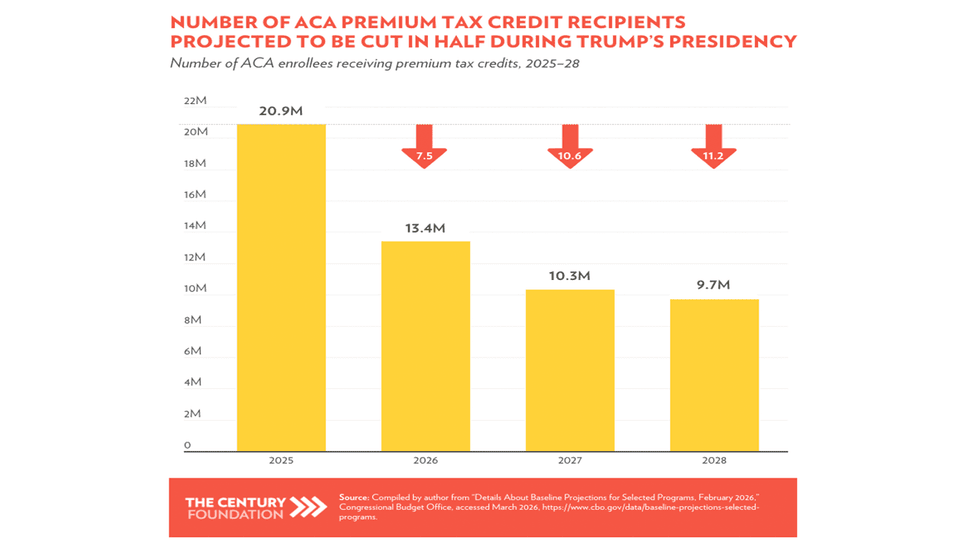
The Associated Press reported Friday that nearly 3 million people dropped Obamacare health insurance plans during the first two months of 2026. That’s a 13 percent fall from the 22.1 million people who purchased individual or family plans on the exchanges in 2025.

That’s already 40 percent of the total the Congressional Budget Office projected would drop coverage for the entire year because the GOP-run Congress refused to reauthorize those Biden-era subsidies during last year’s budget negotiations. That left millions of low-wage workers whose employers don’t provide coverage with out-of-pocket premiums they can no longer afford without the extra help.

The end to people dropping coverage is nowhere in sight. The CBO conservatively estimated 7.5 million people would drop Obamacare coverage this year. If the first quarter average holds for the rest of the year, that number will soar to more than 10 million.

Add to that the millions of people being thrown off Medicaid due to the new work requirements and bureaucratic hurdles thrown in their way, the ranks of the uninsured will likely see its largest increase in years when data for 2026 is released next year. Last May, the CDC reported 28 million people or 8.3 percent of the population did not have health insurance in 2025. With the Trump regime adding another 10 million people or more to the ranks of the uninsured, the uninsured rate is likely to jump to more than 11 percent.

(That’s my calculation: Put 38 million uninsured over a population projected to grow to 344 million this year and you get an 11 percent uninsured rate.)

How about the rest of us?

What will that mean for the 156 million or so people with employer-based coverage? Their rates will be jacked up by insurance companies to pay for the uncompensated care hospitals deliver to the uninsured in nation’s emergency rooms, where, when they get sick, they turn for care since ERs legally cannot turn them away. Moreover, they will likely be far more costly to care for since ERs are the most expensive place to get care, and they will have waited until their conditions had worsened to the point where they had to seek care.

We’re already beginning to see evidence of the premium price spikes to come. Nona Tepper of Modern Healthcare reported last week that health insurers’ preliminary filings with state regulators for individual plans sold on the exchanges will show big premiums increases next year. Employer surveys showing next year’s premiums usually aren’t released until the late fall.

Leaving people uninsured is about the stupidest and most inhumane policy any society could adopt, especially one that can afford to ensure than everyone has coverage. But, as Forrest Gump liked to say, stupid is as stupid does.

Merrill Goozner, the former editor of Modern Healthcare, writes about health care and politics at GoozNews.substack.com, where this column first appeared. Please consider subscribing to support his work.

Reprinted with permission from Gooz News

Shop our Store

Headlines

Editor's Blog

Trending

World