Tag: paul krugman
When Will Democrats Bring A Fresh Vision To Our Debate Over Health Care?

When Will Democrats Bring A Fresh Vision To Our Debate Over Health Care?

As we head toward the mid-term elections, affordability has seized center stage in the health care debate, and for good reason. Americans of every class and health status are upset about the amount of money they must shell out to buy insurance and pay the extra bills that arrive after they get sick.

The ruling Republican regime is making things worse. Not only has it launched a full-scale attack on Medicaid, which covers nearly a third of all Americans, the latest White House initiative allows the insurance industry to sell low-cost plans on the Affordable Care Act exchanges that will pay only a fraction of the bills people receive after being hospitalized. If the regime gets its way, comprehensive insurance — the previous requirement for all Obamacare plans — will become unaffordable for almost everyone but the well-to-do.

Democratic Party-oriented think tanks and commentators continue to crank out proposals for making insurance more affordable. A new report from the Searchlight Institute, first reported by Jon Cohn of The Bulwark, calls for limiting private equity’s role in health care; limiting insurers’ ability to abuse prior authorization or hide profits at their wholly-owned physician practices; and wielding antitrust law to bust up hospital and pharmacy benefit manager monopolies.

Last week, Nobel laureate and substacker Paul Krugman laid out his path forward for dealing with the affordability crisis. His three-part explainer started by laying out “why universal healthcare is a desirable objective, and why some type of government intervention is essential to achieve it.”

His second installment described the ongoing Republican assault on Obamacare and its successes. But his final piece, rather than offering a bold or unique plan, or even something like the European countries to which he unfavorably compared the U.S., repeats most Democrats’ long-standing plea for including a public option on the exchanges.

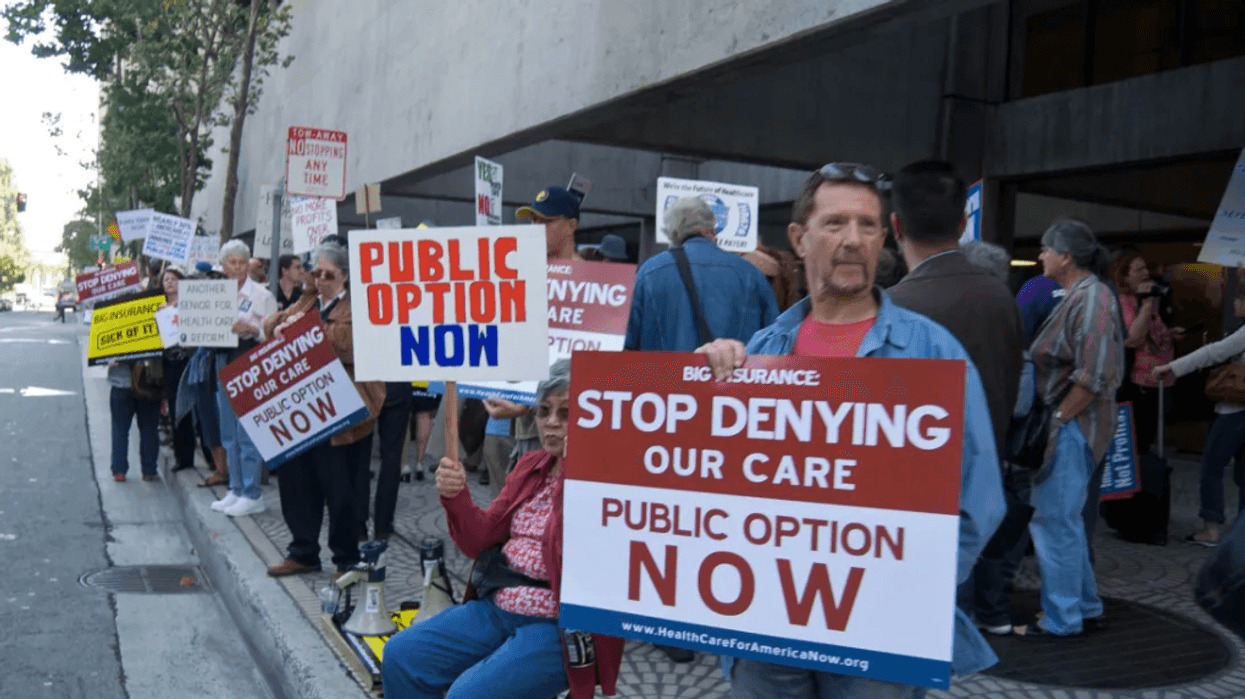
A public option would allow people to buy into Medicare. Progressive groups have been advocating this for decades. The House-backed version of the Affordable Care Act in 2009 included a public option. He imagines many employers would encourage their employees to avail themselves of this new option (presumably providing them with some or most of the cost of the buy-in). “If they like what they get, which they probably would, we could transition over time to a single-payer system without forcing Americans into it,” he wrote.

Shortcomings

Krugman fails to address the virulent opposition that would be mounted against the public option by the hospital, insurance, drug and medical device industries, and the many other types of providers (nursing homes, hospice, ambulatory surgical centers, etc.) that make up the medical industrial complex. Nor does he take into account the main reason employers resist jettisoning their role: It keeps many employees from job-hopping.

Krugman assumes public anger over rising costs will overwhelm their opposition, a dubious proposition in my view even if the Democratic Party wins control over both houses of Congress and the White House. Why do I say dubious?

It is well known that health care accounts for 18 percent of gross domestic product, far more than other industrialized countries. What is less well known is the fact that direct health care provision accounts for 12 percent of all employment in the U.S. It is the largest or second largest employer in almost every city and town. In at least one recent month, the nation would have shed jobs had it not been for growth in the health care sector.

If you throw in employment in the health insurance industry, manufacturers of drugs, medical devices and durable medical equipment, and the small army of consultants, medical educators, think tankers and other health care hangers-on, about one in six American jobs flows from our bloated health care sector. Moreover, they are evenly distributed throughout the country, constituting a powerful voice in every Congressional district.

Reformers need a way to win providers — not the hospital system administrators, not the insurance company executives, not the nursing home operators; but the physicians, nurses and nurse aides, support staff, and more — to their side.

That’s why I am committed to a strategy that provides the health care sector with an off-ramp from its unproductive and wasteful ways. The system is tremendously successful at generating new technologies and treating highly complex cases. But it stinks at almost everything else that the general population needs.

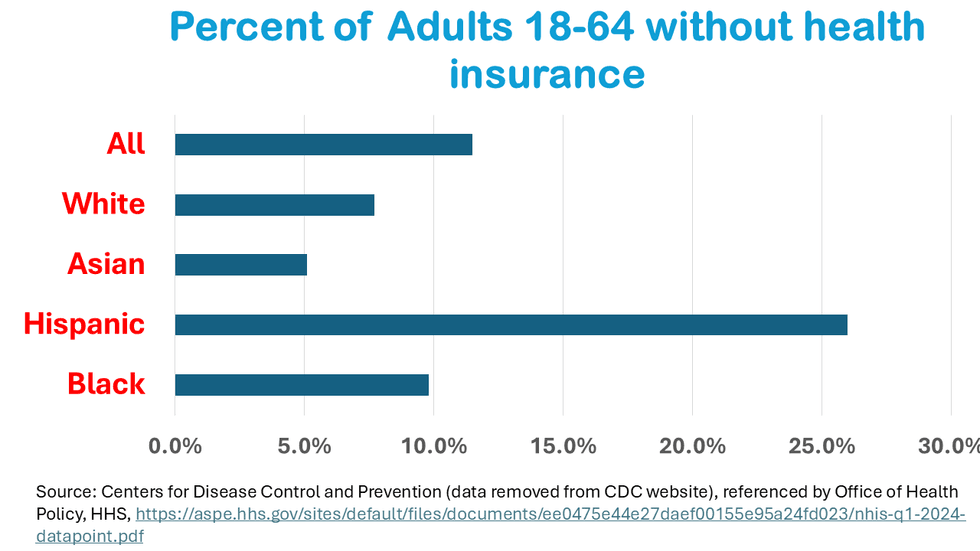
It consumes more societal resources than any country on earth. It doesn’t cover everyone. Its multi-payer complexity requires enormous administrative overhead. Its specialty-driven, fee-for-service payment system delivers more pricey tests and operations than people need. It shortchanges primary care and prevention. It generates worse outcomes than other countries whether measured by longevity, infant and maternal mortality or chronic disease levels. And those lousy outcomes are extremely unfair, with minority populations suffering far worse outcomes than their white fellow Americans. (I will address this issue in my next article.)

I agree with Krugman that the Obamacare exchanges need a public option for the uninsured and for any employer that wants to join. But the details, which he doesn’t address in his article, matter. Its pricing will have to be set at a percentage somewhat larger than what Medicare pays, which is what Washington state did when it became the first state to roll out a public option in 2021 (at 160 percent of Medicare prices). Colorado and Nevada have followed suit with their own higher-than-Medicare priced public options.

Providers need a guaranteed off-ramp. They and their millions of employees can’t absorb the sudden shock to the system required by the mass migration to the public option at Medicare rates, which, according to the Medicare Payment Advisory Commission, are somewhat below breakeven rates. Therefore, in addition to creating the public option, providers need to be regulated through government-set budgets that are set at current levels and guaranteed to grow, but only at a slower rate than the rest of the economy.

Over the past several decades, health care spending has risen faster than the rate of economic growth, ballooning from 13 percent of GDP at the start of this century to 18 percent of GDP today. If budgets are allowed to grow at one to one-and-a-half percentage points above inflation (that’s about half the economic growth rate), U.S. health care spending will gradually decline to international norms.

Invest in health

What else would guaranteed budgets accomplish? It would free hospitals, physician practices, clinics and other provider organizations from the treadmill of fee-for-service medicine, where the more you do the more you make. It would free up resources to invest in the nation’s woefully underfunded primary care and behavioral health providers.

It would encourage provider organizations to invest in community outreach to underserved populations suffering from undiagnosed and untreated diseases (think hypertension, pre-diabetes, obesity, and drug, alcohol and tobacco addiction). If we treat disease before its complications set in, people will spend less time in the emergency room, where care is costliest, and often comes too late to affect the trajectory of their chronic condition.

In short, the nation’s health care system needs to transform itself into one that promotes health, not one that profits when more people get sick. The Make American Healthy Again movement has that part right. Reformers on the left should grab that page from their playbook by providing a positive vision for how to produce healthier individuals as well as a plan to reduce how much the public has to spend.


Howard Lutnick And The Buffoonish Banality Of MAGA Evil

Howard Lutnick And The Buffoonish Banality Of MAGA Evil

There’s a longstanding tradition in American politics of what Richard Hofstadter famously called the paranoid style – a way of thinking that sees conspiracies lurking everywhere. MAGA-world is particularly riddled with conspiracy thinking – from George Soros and Jewish space lasers, QAnon and the Great Replacement Theory, to Italian satellites hacking into voting machines to deliver the 2020 election to Joe Biden.

But these are far-fetched fantasies. The truth is far more banal and shocking.

There are people in positions of great power in the U.S. government engaged in evil conspiracies against everything that is good and decent. Their conspiracies are far more extensive and damaging than almost anyone imagined. But there are no evil masterminds behind this. Only amoral, stupid grifters like Howard Lutnick.

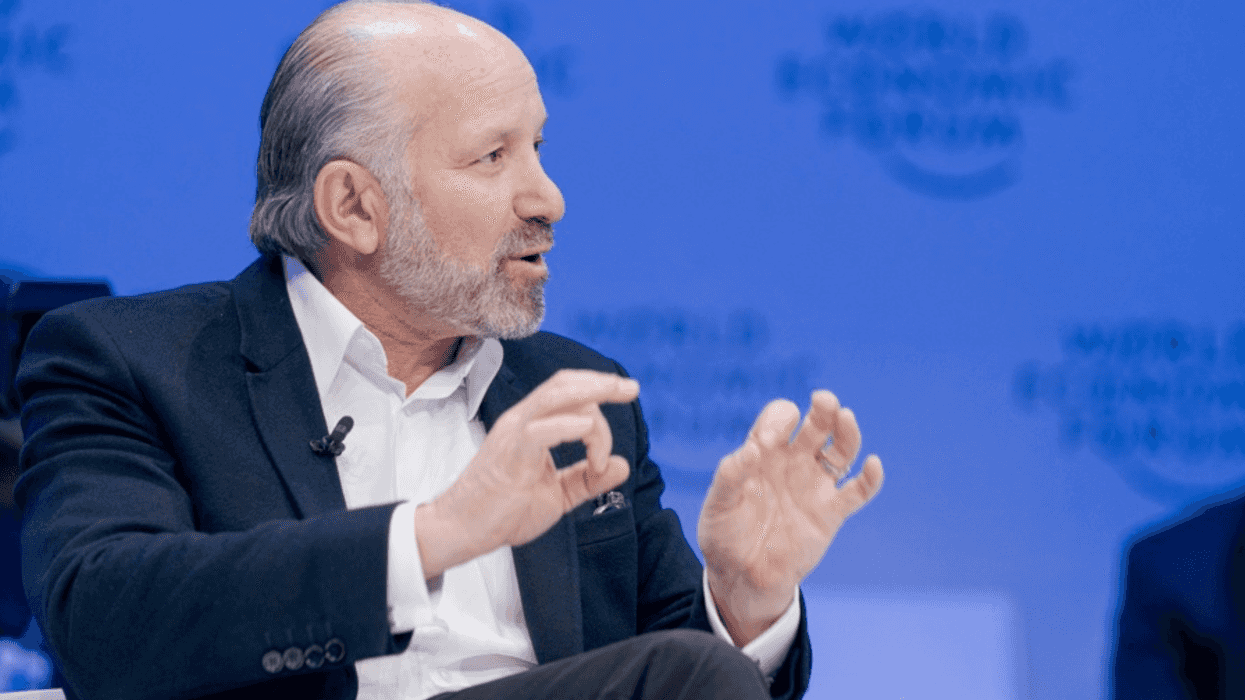
During Trump 47’s first year, Lutnick, the Commerce secretary, was an omnipresent spokesman for Donald Trump’s policies, a constant presence on TV, especially the Sunday talk shows.

He was not impressive in that role. Unlike Scott Bessent, he lacked any hint of gravitas. He doesn’t have Pete Hegseth’s hair. Moreover, Lutnick’s Trump boosterism has been consistently and embarrassingly incompetent.

The only waves he has made are a result of his exceptional combination of stupidity and offensive tone-deafness.

Thus he promised to revive U.S. manufacturing by bringing back “the work of millions and millions of human beings screwing in little, little screws.” Lutnick, a billionaire, dismissed concerns about chaos at the Social Security Administration by saying that his mother-in-law wouldn’t complain about a missed check. He gave a Europe-bashing speech to a private dinner at Davos so offensive that Christine Lagarde, president of the European Central Bank, walked out.

And in Congressional testimony today, Lutnick admitted that he visited Epstein Island, but said that he did so with his wife, nannies and children, and asserted that “We left with all of my children.”

It would be tempting to dismiss Lutnick as a buffoon. Yet despite his intelligence deficit, he sits at the intersection of not one but at least two ugly conspiracies.

Before joining Trump’s cabinet, Lutnick ran the Wall Street firm Cantor Fitzgerald — presenting a huge potential conflict of interest that he claims to have ended by turning the business over to … his sons. Cantor Fitzgerald, in turn, is intimately linked to Tether, a cryptocurrency that is highly profitable because it has become a favorite channel for money-laundering by international criminals.

Nor was money-laundering through cryptocurrency the only criminal conspiracy to which Lutnick was, at the very least, adjacent. Lutnick has in the past vehemently denied having any association with Jeffrey Epstein, insisting that he severed all contact with the pedophile ringleader in 2005. But even the highly limited, extremely redacted release of the Epstein files — everything we’ve seen reeks of a major coverup — shows that he was flat-out lying. Not only did he stay in close contact with Epstein, the two men appear to have gone into business together.

But, at this point, who could possibly be surprised? The more we learn, the more pedophilia and criminal use of cryptocurrency look related, even like different aspects of a single conspiracy. Epstein, it turns out, was a major early investor in the crypto industry. In the backrooms of MAGA-land, passing around under-age girls is a lot like passing around insider crypto deals.

In any previous administration, Lutnick’s naked conflicts of interest and his Epstein lies would have led to his immediate departure. But Trump 47 is using his position to massively enrich himself, and whatever the Justice department is hiding, what we already know about Trump’s personal history is damning — “Grab ‘em by the pussy. You can do anything.”

Lutnick may be under wraps for a while, but don’t expect him to resign. Pushing him out would be a tacit admission that huge conflicts of interest, family business that enables crime and association with sexual predators are bad. Oh, and let’s not forget jaw-dropping stupidity. Not going to happen.

While MAGA-world’s fantasy villains like George Soros are brilliant and subtle, MAGA’s real villains are uncouth and dim-witted. Yet they carry out their sinister schemes in broad daylight. For all they need to flourish is utter shamelessness, along with the backing of a corrupt administration and a corrupt political party.

So it’s worth remembering Hannah Arendt’s observations about the architects of Hitler’s genocide, which led her to coin the phrase “the banality of evil”. As Arendt noted, the horrors of Nazism were not inflicted by brilliant geniuses, but through the normalization of thoughtless, amoral behavior that eventually turned into evil. Thus while Lutnick appears on the surface like a dim-witted backroom grifter, he is a warning of something far more sinister and malign lurking below.

Paul Krugman is a Nobel Prize-winning economist and former professor at MIT and Princeton who now teaches at the City University of New York's Graduate Center. From 2000 to 2024, he wrote a column for The New York Times. Please consider subscribing to his Substack.

Reprinted with permission from Paul Krugman.
Paul Krugman

Paul Krugman Warns Trump Voters Are About To Get 'Brutally Scammed'

Although Paul Krugman retired from his New York Times column after almost 25 years, the liberal economist is still keeping busy and making media appearances — including an interview with The New Republic's Greg Sargent posted on January 14.

Trump aggressively campaigned on the economy last year. But Krugman, during an appearance on The New Republic's podcast, laid out a variety of reasons why he believes Trump voters will suffer economically after he returns to the White House.

Krugman told host Sargent, "A lot of people are going to get brutally scammed. Those are his most fervent supporters…. Probably the local business elites are the most fervent MAGA types out there — more so even than the working class, but that doesn't mean that Trump cares about their interests. Small businesspeople are the people that he's, all through his life, hired as contractors and then not (paid), right? Scamming people like that is what his whole life has been (about)."

Small businesses and consumers, the economist warned, will suffer the consequences if Trump follows through on the aggressive tariffs and mass deportations he is proposing.

"Trump has really radical policy ideas," Krugman told Sargent. "I obviously think they're terrible, but they are radical. He wants Smoot-Hawley-level tariffs. He wants mass deportations. He wants to take away the independence of the Federal Reserve. How do you justify all of that when we're pretty much a Goldilocks economy?"

Trump hammered President Joe Biden and Vice President Kamala Harris relentlessly over inflation during his 2024 campaign, but Krugman warned that the tariffs Trump is proposing will be quiet inflationary.

The economist told Sargent, "If we take the totality of stuff that Trump seems to want to do — he wants to raise tariffs but cut taxes on high incomes — it's basically working-class voters (who) are going to face higher prices and upper-income voters (who) are going to benefit from tax cuts. This really is very much contrary to their interests, then you add in all the other stuff. Even more than usual for a Republican, he appears to have an extremely regressive economic program in mind — one that really will effectively redistribute income away from working-class voters to the top."

Reprinted with permission from Alternet.

Paul Krugman Explains How France Has 'Done Better' Ecnomically During Covid

Paul Krugman Explains How France Has 'Done Better' Ecnomically During Covid

Although former President Donald Trump and his MAGA ally Steve Bannon have been enthusiastic supporters of Marine Le Pen — the far-right National Rally leader and White nationalist who lost to President Emmanuel Macron in France’s 2017 presidential election — many on America’s right have been quick to bash France over the years, including the country’s economic policies. But liberal economist and New York Times opinion writer Paul Krugman, in his January 14 column, argues that France’s economic policies during the COVID-19 pandemic have been a succ

ess.

“For as long as I can remember,” Krugman writes. “U.S. media coverage of the French economy has been relentlessly negative…. The data never actually supported this negativism. What was really going on, I believe, was that business and economic discourse in the United States is strongly shaped by conservative ideology — and given that ideology, France, with its huge social expenditure, high taxes and extensive economic regulation, should have been a basket case. So, reporting about France seized on every negative development as a sign that the long-awaited disaster was finally arriving.”

Krugman adds, however, that the French government’s economic policies have worked well during the pandemic. France, he notes, has “not only managed to avoid a huge plunge in employment, but has also surpassed its pre-pandemic level.”

“My sense is that many Americans still imagine that France suffers from mass unemployment — a vision that had some truth to it 25 years ago but has long been out of date,” Krugman writes. “And prime-age employment is where France has done astonishingly well during the pandemic…. How did it do that?”

Krugman continues, “When the pandemic forced economies into a temporary lockdown, Europe, France included, and the United States took divergent routes toward supporting workers’ incomes. We offered enhanced unemployment benefits; France offered subsidies to employers to keep furloughed workers on the payroll. At this point, it seems clear that the European solution was better, because it kept workers connected to their employers and made it easier to bring them back once vaccines were available.”

The economist notes that although France has “its anti-vaxxers,” the country has a higher COVID-19 vaccination rate than the United States. Nonetheless, Krugman points out that American liberals and progressives shouldn’t think that France is idyllic.

“I don’t want to romanticize the French economy or French society, both of which have plenty of problems,” Krugman observes. “And liberals who like to imagine that we could neutralize the anger of the White working class by raising wages and strengthening the social safety net should know that France — whose policies are to the left of U.S. progressives’ wildest dreams — has its own ugly White nationalist movement, albeit not as powerful as ours.”

The economist adds, “Still, at a time when Republicans denounce as destructive ‘socialism’ any effort to make America less unequal, it’s worth knowing that the economy of France — which isn’t socialist but comes far closer to socialism than anything Democrats might propose — is doing pretty well.”

Republished with permission from Alternet

Shop our Store

Headlines

Editor's Blog

Corona Virus

Trending

World