Tag: presidential immunity
Trump Asks Supreme Court To Vacate Verdict In E. Jean Carroll Sex Abuse Case

Trump Asks Supreme Court To Vacate Verdict In E. Jean Carroll Sex Abuse Case

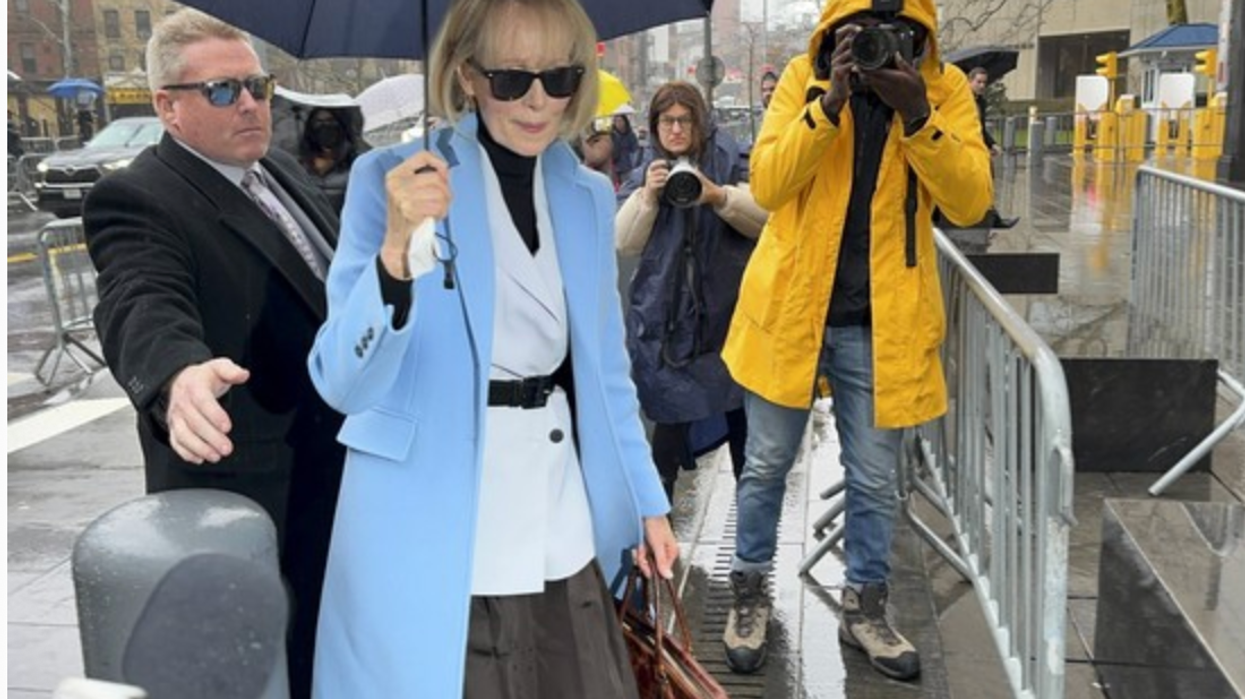
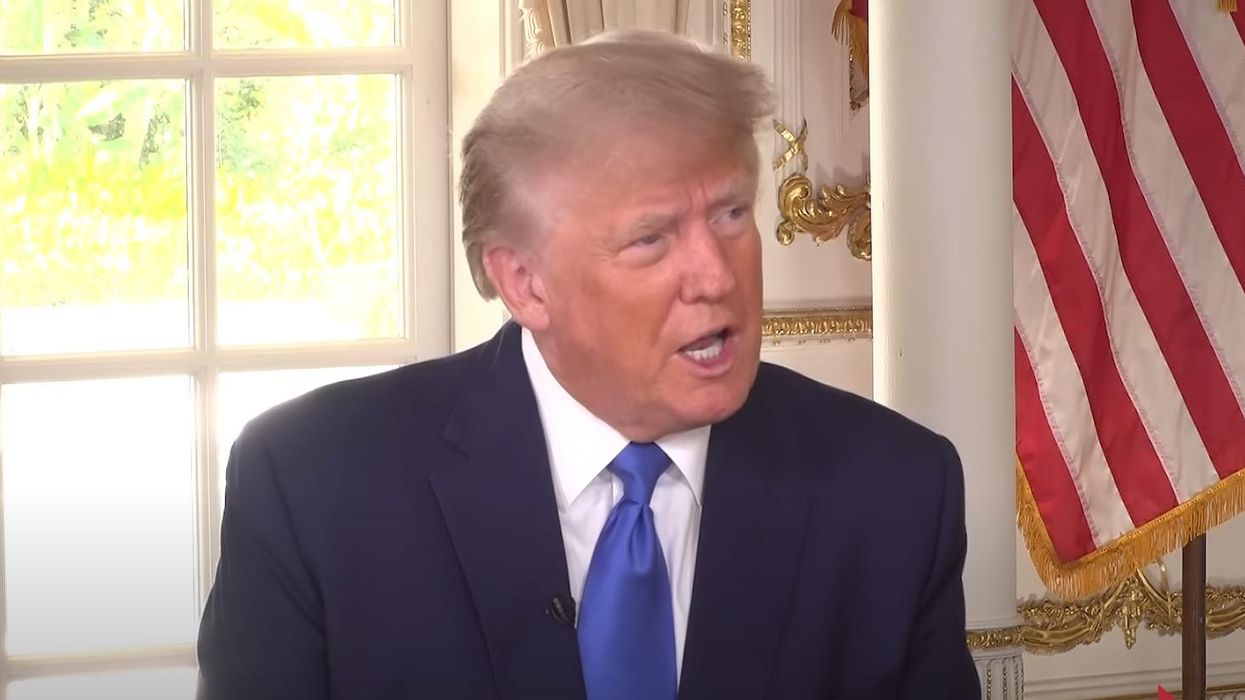
President Donald Trump has asked the Supreme Court to overturn the federal grand jury that found him liable for sexually abusing writer E. Jean Carroll.

Trump is asking the nation’s highest court to rule that the federal judge overseeing the case improperly allowed other women who accused Trump of sexual assault to testify during the trial.

In 2023, a federal jury awarded Carroll $5 million, after they found Trump liable for sexually abusing her in a department store in the 1990s. After that decision, Trump verbally attacked Carroll, who then sued him again, this time for defamation. She also won that case, in which a jury awarded Carroll a stunning $83.3 million in damages.

Trump had appealed both cases—and lost both of those challenges, with an appeals court ruling that Trump “has not carried his burden to show that any claimed error or combination of claimed errors affected his substantial rights as required to warrant a new trial.”

Trump’s appeal to the Supreme Court concerns the initial case in which he was found liable for sexualabuse. However, if the court overturns that case, it would also jeopardize Carroll's later defamation judgement.

Currently, it’s unclear whether the Supreme Court will hear the appeal. The justices will decide “early next year” whether to take the case, according to Politico.

However, the Supreme Court has run defense for Trump multiple times, ruling in his favor over and over again, sometimes without explaining their reasoning.

Most notably, the Supreme Court helped Trump avoid legal punishment for his improper handling of classified information and his efforts to overturn the 2020 presidential election by ruling that presidents are largely immune from prosecution. It was one of their most egregious decisions to date, basically declaring Trump to be a king.

But they have also used the emergency docket—which typically involves quick, unexplained rulings—to allow Trump to cancel congressionally appropriated funding for foreign aid and block transgender and nonbinary citizens from choosing their sex on their passports, among others.

 January 6 insurrectionists

Presidential Immunity Plus Pardon Power Equals Absolute Despotism

Donald Trump’s pardons of January 6 insurrectionists on his first day as president in January of this year were an admission that he instigated the assault on the Capitol, and that he approved of the way the assault was carried out, including violent attacks on police officers resulting in at least one death and leaving others with career-ending injuries.

Looked at in a different way, Trump thus pardoned himself, even though such an action was not necessary due to the incredible law-busting fact that the Supreme Court, in United States v. Trump had given him blanket immunity for virtually anything he does or did that could be defined as an “official act.”

Trump has been using the toxic combination of immunity and the pardon power in a crescendo of lawlessness that was unforeseen by the founding fathers at the time they wrote the Constitution. It’s the biggest fuck you to our democracy since its founding. In his disassembly of whole departments of government that were established in laws written by the Congress, Trump is saying to the other two branches of government, “If you don’t like it, come and get me.”

The Republican Congress, at this point a wholly owned subsidiary of Donald Trump and the Trump Organization, has sat on its hands, and individual Republican members of Congress, including the speaker of the House, have endorsed Trump’s rape of the government. Congressional Republicans, as well as conservative members of the judiciary, adhere to a royalist theory of presidential power called the unitary executive, which holds that Trump, as president, has sole authority over the executive branch, including the right to fire all appointees and executive branch officers, with or without cause.

Since taking office for a second time, Trump has tested the limits of his executive power repeatedly, eliminating entire divisions of the government such as the United States Agency for International Development (USAID) and firing directors of Congressionally created agencies that had previously been considered independent of the Executive.

Last week, the Supreme Court adopted Trump’s position on his powers by issuing an order allowing him to fire board members of the National Labor Relations Board and the Merits Systems Protection Board. The top court paused lower court orders that had allowed the two board officials to continue to serve while a lawsuit they filed makes its way through the courts. The lower courts observed that under the congressional statute establishing the boards, its members could be fired only for “good cause,” and the administration had not provided such cause.

Trump’s unilateral moves in firing government employees and disestablishing government departments have been stymied by the courts multiple times. A report by Adam Bonica on his Substack, “On Data and Democracy,” found that during the month of May, “federal district courts ruled against the Trump administration in 26 of 27 cases—a stunning 96% loss rate.” Trump lost 76 percent of the cases against him in April, and 74 percent in March.

Yesterday, Trump added to his court losses when he suffered a stinging rebuke by a federal judge who found that his moves to punish the WilmerHale law firm were unconstitutional. Other judges have struck down Trump’s similar moves against Jenner & Block and Perkins Coie. Trump had issued orders against the law firms blocking their access to federal buildings and representing clients in lawsuits involving contracts with the federal government. Trump asserted his “right” to punish these law firms and several others because of his absolute control over the federal government.

What Donald Trump has done with his 140-plus executive orders and his attempts to punish law firms and other independent businesses such as CBS and entertainment companies has been to assert authoritarian control not only over the government, but over companies that do business with the government or are subject to government regulation. This is an unprecedented assertion of presidential power. So far, the only check on Trump has been lawsuits filed one after the other by individuals, businesses, and universities affected by Trump’s orders.

Courts have rejected the great majority of Trump’s attempts at absolute control, but as the lawsuits make their way through the courts, they all have one ultimate destination: the Supreme Court. Trump appointed three arch-conservative justices to a court already dominated by Republican-appointed justices. The Supreme Court has gone back and forth with its recent orders on its “emergency docket,” ordering that migrants have rights under the due process clause of the 14th Amendment and ordering the return of at least one migrant who was wrongfully deported by Trump’s Department of Homeland Security.

But the court has so far failed to enforce its own order to return the mistakenly deported migrant KIlmar Abrego Garcia from El Salvador. So far, no court has found the Trump administration in contempt of court, but legal experts predict that such an order is inevitable in multiple cases because of the Trump administration’s refusal or inability to provide legal justification for many of the moves they have made.

If and when such a contempt order is issued against one or more of Trump’s departments, we have been told that the United States will be in the first real constitutional crisis of its history. In the past, as in the Pentagon Papers case, and in the Watergate case in which Nixon was ordered by a federal judge to produce the White House tapes, the president then in power capitulated to the court orders and a crisis was avoided.

But this time, the president in office enjoys something Nixon and other presidents never had: absolute immunity from prosecution from his acts as president. Trump also enjoys the power given him under the Constitution to pardon anyone for committing any crime. Last Friday, Trump issued a full and unconditional pardon to a man who had been convicted of several tax crimes that charged him with using his unpaid taxes to finance a lavish lifestyle and buy luxury goods, including a $2 million yacht.

The pardon was issued after the man’s mother attended a $1 million-a-head Mar a Lago fund raiser at which she spoke to Trump personally. She had been a major Republican fund raiser in the past and had contributed to Trump’s election effort in 2024, co-hosting at least three fund-raisers for Trump. In a very real sense, the mother of this tax-cheat bought a pardon for her son by paying Donald Trump directly.

Yesterday, Trump pardoned a Virginia sheriff who had been convicted on multiple counts of bribery for accepting “cash-stuffed envelopes” from wealthy people he provided with badges. appointing them as bogus “auxiliary sheriffs,” that allowed them to break the law. Along with other sheriffs, he had formed a “Protect America Now PAC” to support Trump. The sheriff was sentenced to 10 years in federal prison for his crimes. The pardon was overseen by Ed Martin, newly appointed as Trump’s “pardon attorney” in the Department of Justice in addition to being put in charge of the DOJ office of “weaponization,” intended to undo actions by the Biden administration the DOJ sees as unfairly punishing MAGA supporters of Trump.

Pardoning random MAGA supporters and people Trump wants to reward for giving him money is the least of it. The real problem is Trump’s ability to pardon anyone he orders to commit a crime in his name. For example, if a judge ends up finding an assistant U.S. Attorney in contempt of court and orders him or her fined, Trump can issue a pardon and negate the contempt finding. This will allow the Trump DOJ to go into court and lie to judges with impunity, knowing that they will suffer no consequences as long as the lies they tell are in support of Trump’s illegal actions being challenged in court.

The same would go for anyone working for Trump in his administration. If Trump orders one of his cabinet secretaries to defy a court order, or to execute an illegal act such as administratively fining a government employee for some imagined crime such as signing a document refusing to carry out an illegal order, he can simply order Pam Bondi and his DOJ not to prosecute whoever is involved. At the end of his administration, Trump can issue blanket pardons that will prevent a new administration from prosecuting crimes carried out under Trump’s orders today.

Trump’s pardons are being called “get out of jail free” cards, but they’re worse than that. By preemptively ordering that certain people not be prosecuted, they will never be charged, much less come to trial and be convicted. As he has shown with his two most recent pardons, Trump can nullify prosecutions which predated his return to office, turning the Department of Justice into an office of revenge and retribution unseen before in American history and certainly not contemplated by the signers of the Declaration of Independence, who asserted in the name of the 13 colonies and their citizens that the corruption of royal rule was being thrown off in contemplation of something better.

Speaking of the rights of “the people,” the signers declared that “When a long train of abuses and usurpations, pursuing invariably the same Object evinces a design to reduce them under absolute Despotism, it is their right, it is their duty, to throw off such Government, and to provide new Guards for their future security.”

We have entered into a new age of “absolute Despotism.” Whether we will throw off those who would impose upon us such “abuses and usurpations” as we have endured for the last four months remains to be seen.

Lucian K. Truscott IV, a graduate of West Point, has had a 50-year career as a journalist, novelist, and screenwriter. He has covered Watergate, the Stonewall riots, and wars in Lebanon, Iraq, and Afghanistan. He is also the author of five bestselling novels. He writes every day at luciantruscott.substack.com and you can follow him on Bluesky @lktiv.bsky.social and on Facebook at Lucian K. Truscott IV. Please consider subscribing to his Substack.

Reprinted with permission from Lucian Truscott Newsletter.

Judge Strikes Trump's Immunity Claim, Allowing January 6 Civil Lawsuits

Judge Strikes Trump's Immunity Claim, Allowing January 6 Civil Lawsuits

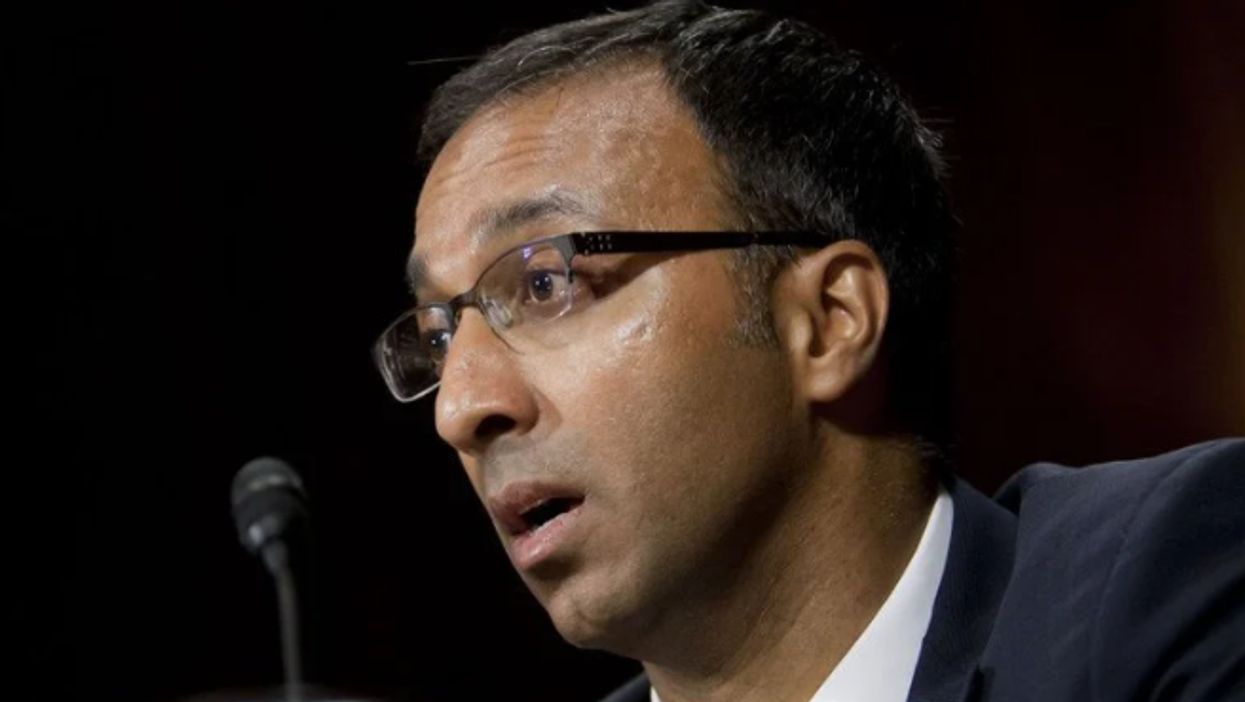
In an expansive 112-page ruling on Friday, D.C. District Court Judge Amit Mehta ruled that Donald Trump is not immune from being sued over his actions related to January 6, and that court cases against Trump—as well as members of the Proud Boys and Oath Keepers white supremacist militias—may proceed.

Dealing with a series of lawsuits as a group, Judge Mehta wrote, “The court holds that all Plaintiffs have plausibly established Article III standing, President Trump is not absolutely immune from suit …” Mehta also dismissed the idea that a lawsuit against Trump automatically became a “political question” that couldn’t be dealt with in court, as well as claims from Trump’s attorneys that he couldn’t be tried because he had been acquitted by the Senate in his impeachment trial.

Judge Mehta agreed to halt proceedings against Donald Trump Jr. and Rudy Giuliani related to the speeches they gave at the rally preceding the assault on the Capitol. The judge also offered Rep. Mo Brooks (R-AL) a prescription by which he can avoid legal repercussions from his militant speech that appeared to encourage violence. In all three cases, ruled Judge Mehta, even though the speakers used phrases that could easily be connected to later violence at the Capitol — such as Giuliani calling for “trial by combat” — everything they said was still protected under the First Amendment because they didn’t call for immediate and specific action.

That wasn’t true for Trump. Not only did Trump call for his followers to “fight,” he did so in direct connection with calling for them to march on the Capitol, and with full knowledge that he was attempting to interfere with finalizing the Electoral College vote.

Mehta made it extremely clear that he understood the consequences of this ruling, the context of the legal questions, and the scrutiny it will face.

“To deny a President immunity from civil damages is no small step. The court well understands the gravity of its decision. But the alleged facts of this case are without precedent, and the court believes that its decision is consistent with the purposes behind such immunity...”

The only section of the suits where Mehta ruled in Trump’s favor was related to a portion of the suit brought by Rep. Eric Swalwell. That section dealt with claims against Trump for his failure to take action to halt the insurgents, or to bring in additional law enforcement or National Guard to end the threat. This, ruled Judge Mehta, involved questions about Trump acting in his official capacity. As a result, these actions are immune from scrutiny in a civil suit.

That doesn’t apply to Trump’s speech on January 6. Trump’s attorneys had insisted that public speaking was a part of the role of the presidency. Mehta agreed. However …

“But to say that speaking on matters of public concern is a function of the presidency does not answer the question at hand: Were President Trump’s words in this case uttered in performance of official acts, or were his words expressed in some other, unofficial capacity? The President’s proposed test—that whenever and wherever a President speaks on a matter of public concern he is immune from civil suit—goes too far.”

In this case, Mehta focused on Trump’s insistence that his followers march on the Capitol — an action that was not included under the permit for the January 6 rally. In ordering his followers to march, and telling them to fight, Trump was telling them to violate the terms of the permit and encouraging them to engage in violence. That was particularly true because Trump had called for militia groups, like his co-defendants the Proud Boys and Oath Keepers, to come to the event and he knew they were present on that day.

Trump’s attorneys had insisted that Trump’s calls to “fight” were nullified by the single time that he mentioned that this should be a “peaceful” event. Mehta also didn’t agree with this statement.

“The President’s passing reference to “peaceful and patriotic” protest cannot inoculate him against the conclusion that his exhortation, made nearly
an hour later, to “fight like hell” immediately before sending rally-goers to the Capitol, within the context of the larger Speech and circumstances, was not protected expression.”

A ruling that any speech goes beyond First Amendment protection is extremely rare, because to do so a speech must not only encourage violence, but encourage specific and nearly immediate violence. But Mehta’s ruling states that Trump’s speech on Jan. 6 — bolstered by the pressure he had applied to get state leaders to overturn the election results, his efforts to push Mike Pence into refusing his Constitutional role, and his attempts to gather violent white supremacists to his cause — fully met that test.

“He called for thousands ‘to fight like hell’ immediately before directing an unpermitted march to the Capitol, where the targets of their ire were at work, knowing that militia groups and others among the crowd were prone to violence.”

Judge Mehta also noted that Trump’s tweets on that day appeared to “ratify” the violence, indicating that the assault on the Capitol was the outcome he had wanted. That included a message Trump sent while insurgents were inside the Capitol criticizing Pence for “not having the courage to do what should be done to protect our Country,” which encourage those already calling for Pence’s execution.

“It is reasonable to infer that the President would have understood the impact of his tweet, since he had told rally-goers earlier that, in effect, the Vice President was the last line of defense against a stolen election outcome. The President also took advantage of the crisis to call Senator Tuberville; it is reasonable to think he did so to urge delay of the Certification.”

Trump started the insurgents on their way, encouraged them when they were involved in the assault, and tried to use the assault for personal advantage.

Mehta also took note of Trump’s tweet from later that afternoon.

“And then, around 6:00 PM, after law enforcement had cleared the building, the President issued the following tweet: ‘These are the things and events that happen when a sacred landslide election victory is so unceremoniously & viciously stripped away from great patriots who have been badly & unfairly treated for so long. Go home with love & in peace. Remember this day forever!’ A reasonable observer could read that tweet as ratifying the violence and other illegal acts that took place at the Capitol only hours earlier.”

Overall, the ruling from Mehta — which is even more dismissive of the objections raised by attorneys for the Proud Boys and Oath Keepers — doesn’t just keep the door open for civil action against Trump, it’s a quick reference for what should be future criminal action.

Reprinted with permission from Daily Kos

Shop our Store

Headlines

Editor's Blog

Corona Virus

Trending

World