Tag: roy cooper
U.S. Senator Jon Ossoff (D-GA).

What Will It Take For Democrats To Flip The Senate? A State-By-State Cheat Sheet

The House of Representatives will be a Democratic-led institution after this November’s midterm elections. The big question is whether Democrats can also recapture the Senate—a chamber that, under any rational circumstances, shouldn’t be competitive.

It’s a brutal map for Democrats. Yet, thanks to President Donald Trump’s toxic incompetence and his obsequious party, it’s now in play. This is the first in a regular feature tracking the most competitive races throughout this election season.

Republicans hold 53 seats in the Senate, meaning Democrats need to net four to get past Vice President JD Vance’s tiebreaking vote.

1. North Carolina (R-open, Lean D)

Former Democratic Gov. Roy Cooper has led in every single poll so far as he faces former Republican National Committee Chair Michael Whatley in this open-seat race.

Time after time, Democrats have come close in recent Senate contests in the Tar Heel State. In 2020, the race appeared within reach until a late scandal derailed the Democratic nominee, who ultimately lost by less than two percentage points. In 2022, Republicans won again by about three points. Those margins mirror the state’s Republican lean at the presidential level, underscoring just how evenly divided North Carolina is.

Nothing can be taken for granted. But Democrats have shown they can win statewide, and Cooper remains a popular figure after two terms as governor. He also has a shockingly strong record, having run in six statewide races and won all of them.

2. Maine (R-incumbent, Lean D)

How tough is this cycle for Democrats? This is a Republican-held seat in a state won by Democratic presidential nominee Kamala Harris in 2024.

Once again, Republican Sen. Susan Collins is at the center of one of the most competitive races on the map as she seeks a sixth term in a state that consistently leans Democratic at the presidential level.

This is one of Democrats’ best pickup opportunities, but the path isn’t straightforward. Collins has survived tough races before—most notably in 2020, when she won reelection even as Joe Biden carried the state at the presidential level. Collins continues to benefit from a reputation as a moderate willing to break with her party. At the same time, she’s the only Republican senator representing a state that has largely rejected Trump in every election.

The Democratic primary is still taking shape, with Gov. Janet Mills and oyster farmer Graham Platner facing off in an establishment-vs.-insurgent battle. Emerson College’s latest poll of the race shows Platner dominating both the primary and general. But Collins is a survivor, and history says she can’t be counted out.

At this point, if Democrats can win their two best pickup opportunities, it lifts them to 49 seats in the Senate. For a majority, Democrats need to hold the next two seats, in Georgia and Michigan, and then flip two more.

3. Georgia (D-incumbent, Lean D)

Sen. Jon Ossoff is the most vulnerable Democratic incumbent on the map, defending a seat in a reddish-purple state.

Margins here are razor-thin. Ossoff won his 2021 runoff election by just over 1 point, while fellow Democratic Sen. Raphael Warnock won both his races in 2021 and 2022 by less than 3 points.

Republicans are coalescing around Rep. Mike Collins and will invest heavily. The only public poll released this year, from Emerson College, gives Ossoff a lead of 48 percent to Collins’ 43 percent. In this climate, that should be enough—but there’s little room for error.

4. Michigan (D-open, Lean D)

Democratic Sen. Gary Peters’ retirement has created an open-seat race in Michigan, one of the most important battlegrounds in the country.

The Great Lakes State has leaned Democratic in recent cycles, with the party scoring big wins in state-level races, like the governorship. But federal contests remain competitive. Trump carried the state in 2016, narrowly lost it in 2020, and won it back in 2024, the same year that Democrat Elissa Slotkin won her Senate race by 0.3 points.

Both parties have competitive primaries that won’t be settled until Aug. 4, unusually late in the cycle. Three Democrats—state Sen. Mallory McMorrow, U.S. Rep Haley Stevens, and progressive activist Abdul El-Sayed—are polling neck and neck right now. And without clarity on the candidates, this is currently Lean D, largely due to the broader political environment. It’s difficult to see a Republican fully escaping the drag of Trump’s tariffs, wars, and inflation.

If Democrats hold Georgia and Michigan, they remain at 49 seats in the Senate. But to win a majority, they need to pick up two more among Alaska, Iowa, Nebraska, Ohio, and Texas. See how tough this task is? Yet, thanks to Trump, it’s not out of arm’s reach.

5. Alaska (R-incumbent, Toss-up)

Republican Sen. Dan Sullivan is seeking reelection in Alaska, a state that defies easy categorization—solidly Republican on paper but with a strong independent streak. For example, the state legislature is run by a bipartisan coalition that sidelines MAGA hard-liners.

Alaska consistently votes Republican at the presidential level—a Democratic nominee has won it only once since it became a state—but its large independent electorate and political culture reward candidates who distance themselves from party orthodoxy. That’s helped figures like moderate Republican Sen. Lisa Murkowski repeatedly win. Ranked-choice voting also adds another layer of unpredictability.

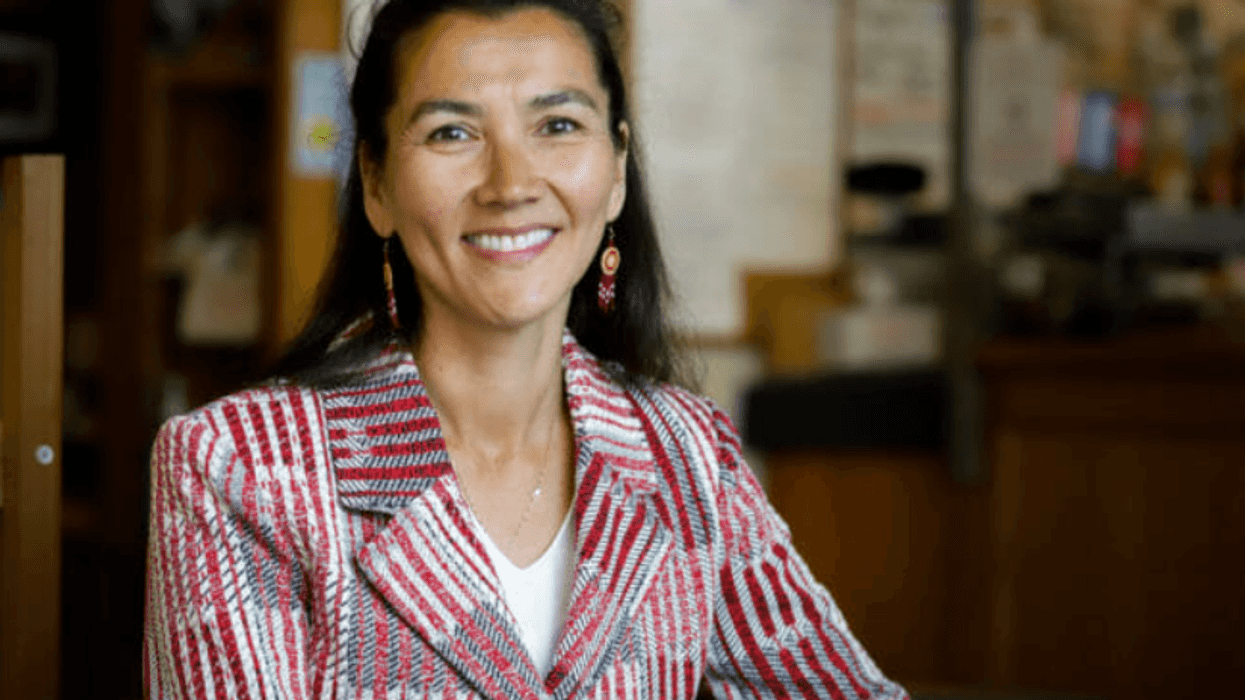
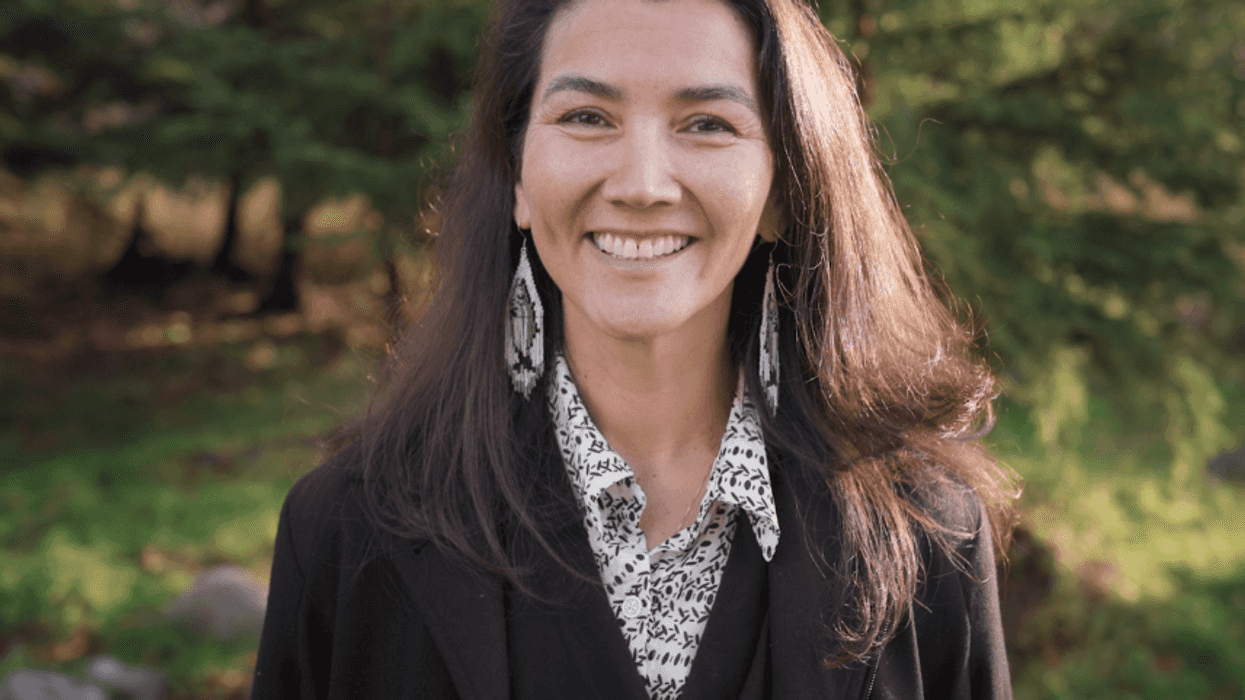
Former Democratic Rep. Mary Peltola, who defeated former Gov. Sarah Palin in Alaska’s 2022 House race, is the Democrats’ dream candidate. Public polling shows a tight race, with recent surveys giving her a narrow edge. It’s always difficult to defeat an incumbent, especially one aligned with the state’s partisan lean. But Peltola is a strong candidate, and this is a favorable climate.

6. Ohio (R-incumbent, Lean R)

Ohio shouldn’t be in play. Trump has carried this onetime battleground by eight points or more in all three of his campaigns. It was remarkable that liberal Democratic Sen. Sherrod Brown survived as long as he did, holding office for eighteen years. And even in defeat in 2024, he lost by less than four points while Trump won in the state by 11 points.

Brown is thankfully back this year, running in the special election for the seat vacated by Vice President JD Vance. His opponent is appointed Republican Sen. Jon Husted.

Husted’s lack of true incumbency, combined with Brown’s crossover appeal, gives Democrats a real pickup opportunity. Polling shows a tight race, with both candidates in the mid-40s. That’s a dangerous place for Brown since undecided voters tend to break in favor of the state’s partisan lean. He may be strong enough to defy that, and the national environment helps. But for now, this remains the GOP’s race to lose.Republican

7. Texas (R-incumbent, Likely R)

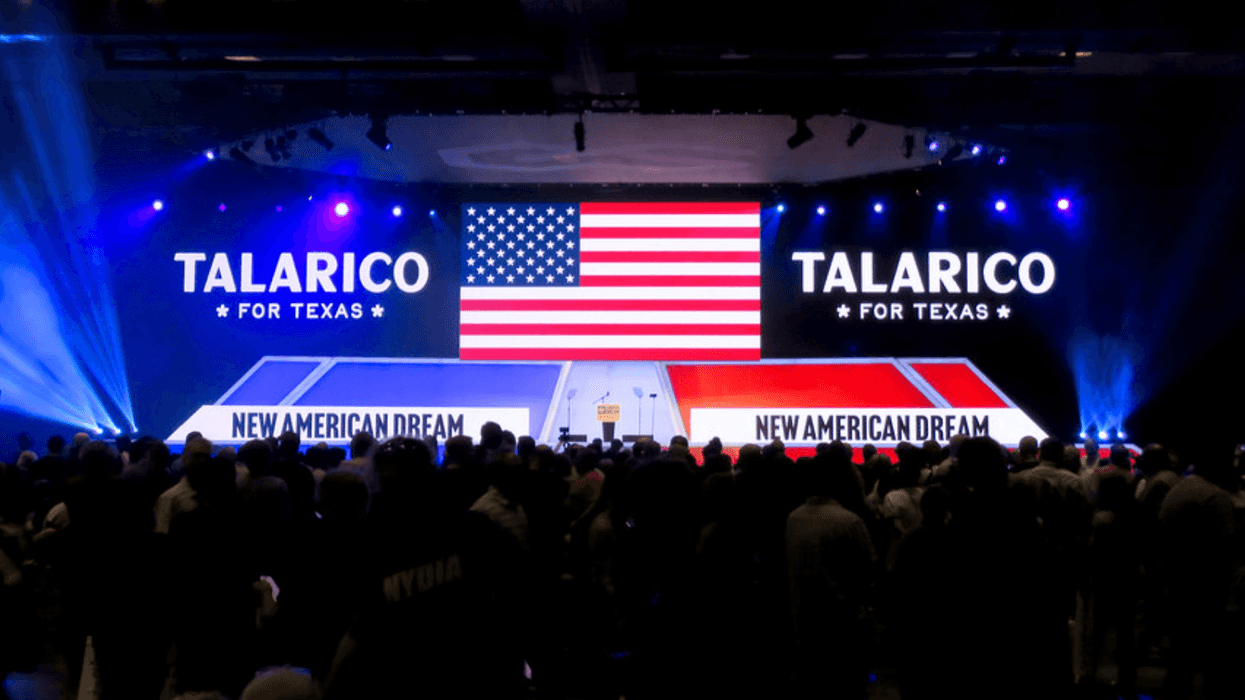
Republican Sen. John Cornyn is seeking reelection in a longtime GOP stronghold. But MAGA has a habit of sabotaging themselves, and Texas Republicans are flirting with exactly that by rallying around Ken Paxton, the unbelievably corrupt state attorney general who was impeached by members of his own party. (The state Senate acquitted him, so he has remained in office.)

Polling shows a familiar pattern: Talarico in the mid-40s. That usually means undecideds will lean Republican. The question is whether the current climate disrupts that pattern. A Paxton nomination would make that more plausible. For now, though, this remains likely Republican.

8. Nebraska (R-incumbent, Likely R)

Dan Osborn, a political independent and former union leader, nearly pulled off a shocker in 2024, coming within 7 points of upsetting Republican Sen. Deb Fischer, even as Trump carried the state by over 20 points. That’s the value of running without a “D” beside your name in a state as red as Nebraska.

Running again, Osborn faces ultrarich Republican Sen. Pete Ricketts, who is an imperfect fit in a moment defined by economic anxiety. Trump’s tariffs, deportations, and cuts are hitting rural Nebraska especially hard.

The only recent poll comes from the Osborn campaign and shows a tight race, as you’d expect it to. In 2024, undecided voters did the thing and broke toward Republicans on Election Day. Osborn faces that same challenge this year. Still, if anyone can make this competitive, it’s Osborn—and this environment gives him a shot.

Other states to watch

Republicans believe they can make the Democratic open seat in New Hampshire competitive. And there’s a plausible scenario where Iowa joins this list as well.


Michael Whatley

GOP's North Carolina Senate Pick Backed By Election Denier, Alleged Spouse Abuser

Republican Michael Whatley is turning to election deniers and alleged domestic abusers to help raise money for his U.S. Senate campaign in North Carolina.

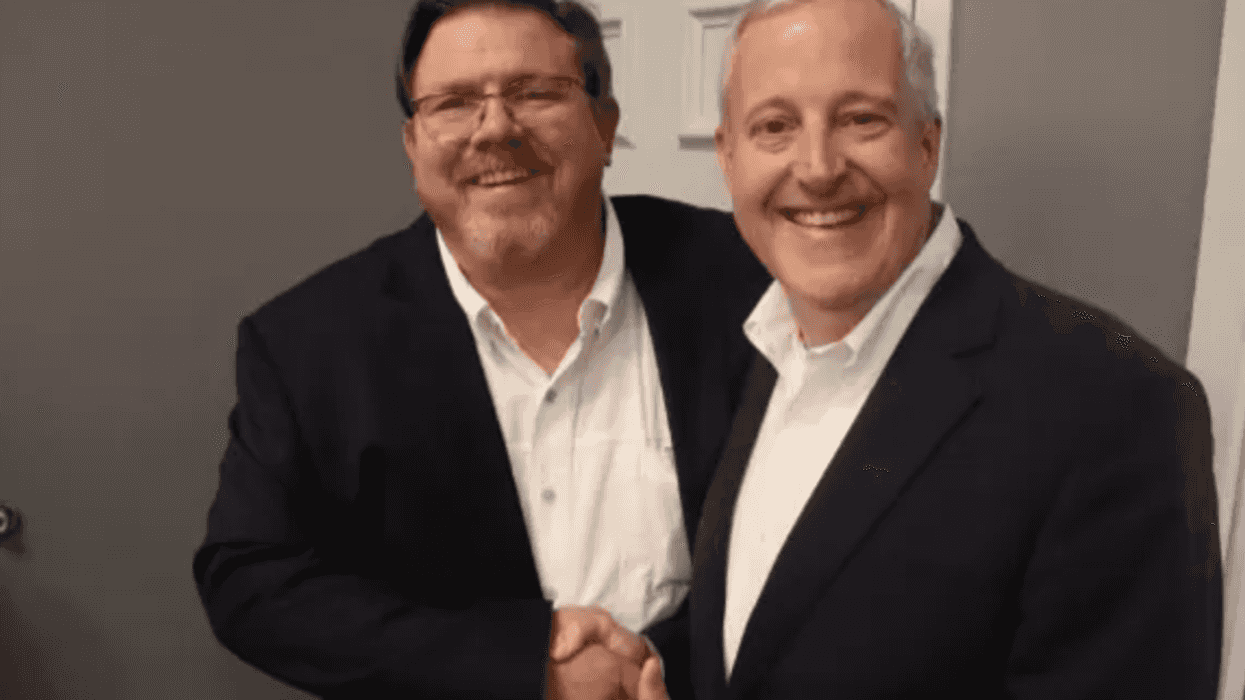
According to an invitation posted on Instagram, Whatley will headline a September 25 fundraiser in Pinehurst, NC, co-hosted by Mike Hardin, the District Attorney of Moore and Hoke Counties who has been accused of emotionally and physically terrorizing his estranged wife.

Victoria Hardin said in May 2024 court filings that her husband pushed her to the ground and bruised her arm a few weeks after she asked him for a divorce. She also alleged that he hacked into her password-protected electronic devices, impersonated her in text messages, and withdrew $173,000 from their joint bank account without consent.

“Ms. Hardin had hoped that the parties would be able to resolve the legal matters arising from their separation privately and cooperatively,” Victoria Hardin’s attorney told the news outlet The Assembly. “Unfortunately, that was not possible. The pleadings and motions Ms. Hardin filed speak for themselves.”

Mike Hardin denies all of the allegations.

Another co-host of the fundraiser is Cleta Mitchell, an attorney who advised President Donald Trump on his efforts to overturn the 2020 presidential election. Mitchell reportedly participated in a phone call in which Trump asked Georgia Secretary of State Brad Raffensperger to “find” 11,780 ballots that would change the election results in that state.

In 2021, Mitchell was forced to resign from her law firm because of the call. The call was central to a criminal indictment brought against Trump in August 2023.

Whatley served as chairman of the Republican National Committee from March 2024 to August of this year. It is widely believed that Trump handpicked Whatley for that role because of his willingness to embrace election fraud conspiracies.

“Regardless of how these lawsuits come out around the country with the presidential race, we do know that there was massive fraud that took place,” Whatley said in a November 2020 radio interview. “We know that it took place in places like Milwaukee and Detroit and Philadelphia.”

The fundraiser will also feature Republican Rep. Richard Hudson, who currently serves as chair of the National Republican Congressional Committee. Both Hudson and Whatley have come under fire for supporting odious figures in the past, most notably failed gubernatorial candidate Mark Robinson, who has a long record of racist and misogynistic remarks.

Tickets for the fundraiser range in price from $250 to $14,000.

Whatley’s likely Democratic opponent is former Gov. Roy Cooper. An Emerson poll from August found Cooper leading Whatley 47 percent to 41 percent with 12 percent undecided. It is expected to be one of the most expensive U.S. Senate races ever.

Reprinted with permission from American Journal News.

Is Purple North Carolina Turning Florida Red? The Mouse Wants To Know

Is Purple North Carolina Turning Florida Red? The Mouse Wants To Know

North Carolina is a state on the verge. Of what? Well, that depends on whom you ask. Some residents are thrilled that the state seems to be politically falling in line with a bunch of its neighbors to the south, most recently with an abortion bill. Others, particularly those who felt protected in relatively progressive urban bubbles, aren’t happy with the shift and are vocalizing their displeasure.

To back up a bit, in the past few years, the state’s tint could reasonably have been described as a reddish shade of purple. You could see it in its Democratic governor, Roy Cooper, with moderate policies and a calm demeanor that shielded his resolve, and a competing state legislature with a Republican majority big enough to flex its muscles but still subject to a veto when it pushed too far right.

There were the occasional cautionary tales, as in 2016, when then-Republican Gov. Pat McCrory signed the infamous HB2, or as it was nicknamed, the “Bathroom Bill.” It was the state GOP’s response to a Charlotte anti-discrimination ordinance, particularly the part that said people could use the bathroom for the gender with which they identified.

That installment in the ever-present rural vs. urban culture clash attracted the national spotlight as well as late-night comics’ jokes. Both proved harsh.

When concerts — including “The Boss,” Bruce Springsteen — and beloved basketball tournaments were canceled, once-bold politicians backtracked and McCrory lost his reelection race to Cooper, who is now approaching the end of his second term.

But memories are short, especially after the 2022 midterms, when the stars and voters aligned for North Carolina Republicans.

While Democrats did better than expected nationally, Republicans held their own and even made gains in North Carolina. Ted Budd, who as a House member voted against certifying Joe Biden’s 2020 presidential victory, won the U.S. Senate seat of the retiring Richard Burr, one of the seven GOP senators who voted to convict Donald Trump on an impeachment charge of inciting an insurrection.

That’s a philosophical, if not party, change.

In the state General Assembly, Republicans won a veto-proof majority in the state Senate and came one vote short in the House. The state’s Supreme Court changed as well, with a 4-3 Democratic majority shifting to a 5-2 Republican advantage.

When Democratic state Rep. Tricia Cotham, months after her election in a blue district, donned a red dress for her April announcement of a switch to the GOP, any gubernatorial veto became vulnerable to an override.

A word about Cotham: Shocked constituents and folks who knew her when — meaning: all her political life — asked how someone who campaigned with support from those who supported LGBTQ rights, someone who spoke of her own abortion when she stood firm in support of reproductive freedom a few short years ago, who had said, as The Charlotte Observer pointed out, she would “stand up to Republican attacks on our health care” as well as “oppose attacks on our democracy, preserve fundamental voting rights, and ensure all voices are heard” could turn on a dime? Well, she explained, Democrats hurt her feelings; many feeling burned by the bait-and-switch are not quite buying it.

Attention, though, is now focused on a GOP agenda in overdrive, mirroring moves in Ron DeSantis-led Florida, with a few extras.

Why the rush, in a state with registered voters roughly split into thirds among Democrats, Republicans and the unaffiliated, and where elections up and down the ballot are always close?

Because Republicans can.

GOP fever dream

Top of the list, of course, of proposals and bills rushing through the state House and/or Senate with minimal debate, were those that targeted transgender young people, restricting gender-affirming care and prohibiting transgender girls from joining female sports teams in middle school, high school and college. Never mind that fewer than 20 transgender athletes have been approved to play high school sports in the state this year, and just two were trans girls.

Opponents worry about the effect on public schools if North Carolina’s Opportunity Scholarship Program of vouchers is expanded, as the Republican majority favors. It makes public money available to everyone, regardless of income, for any school, which includes private institutions and those with religious affiliations. For those already able to afford private schools, this would be a nice bonus; and the money comes with no strings, no need to follow state standards.

Headlines of gun violence have not deterred efforts to loosen the state’s gun laws. And would any red-state agenda be complete without bills meant to soft-pedal any mention of racism in the teaching of American history? Cooper has been on a travel and media blitz trying to convince Cotham and perhaps other Republicans to change their minds and their votes after, as expected, he vetoes the recently passed 12-week abortion ban, which also includes other restrictions, like an extended waiting period and new requirements for clinics.

Few, including the demonstrators outside the Capitol building in Raleigh, expect minds to change. North Carolina, with a 20-week ban, had been a refuge for those in the South. Perhaps not for long.

With the new GOP majority on the state Supreme Court, the electoral future looks rosy for Republicans. This court has already ended voting rights for some former felons, reinstated a voter-ID law a trial court had ruled was infected by racial bias and overturned a ruling on gerrymandering. With the legislature able to draw new lines, the seven-seven balance in the state’s U.S. House delegation may not survive.

Is the GOP’s fever dream of an 11-3 advantage possible? We’re about to find out.

The test of whether North Carolina will go full DeSantis will come in 2024, with the race for governor. Cooper, no doubt exhausted by constant sparring with the legislature that has worked to diminish the powers of his office from Day 1, is term-limited. Though the field is far from set, voters will have a clear choice.

Front-runners include state Attorney General Josh Stein, a Democrat, who stood with those protesting the abortion ban and, on the Republican side, Mark Robinson, who has carved out a distinct national profile with his divisive rhetoric on gun laws, his support of some far-right conspiracy theories, and his hateful dismissal of LGBTQ citizens and their rights.

Let’s just say, when Disney’s making that list of states where the mouse might find a new home, for now there’s an asterisk next to North Carolina.

Reprinted with permission from Roll Call.

Postmaster General Louis DeJoy

FBI Probing Trump’s Postmaster Over Possible Campaign Finance Violations

Reprinted with permission from Daily Kos

One of Trump's most loyal saboteurs still remaining in office might not be able to hold that distinction for a whole lot longer. Postmaster General Louis DeJoy is under FBI investigation for campaign finance activity according to the Washington Post. The New York Times advances the reporting by confirming "Mr. DeJoy has received a grand jury subpoena for information connected to the investigation, according to a person familiar with the investigation who was not authorized to talk about information related to the grand jury."

That makes the very careful, very precise statement from DeJoy spokesman Mark Corallo to the Washington Post, confirming the investigation, just a little bit incriminating: "Mr. DeJoy has learned that the Department of Justice is investigating campaign contributions made by employees who worked for him when he was in the private sector," Corallo said. "He has always been scrupulous in his adherence to the campaign contribution laws and has never knowingly violated them." He has never knowingly crimed? He might have accidentally crimed? Seems like now would be a really good time for DeJoy to leave that office, either voluntarily or by having the newly complete Board of Governors fire his ass.

The investigation stems from reporting from the Post last September, detailing how DeJoy's former company, New Breed, was at the center of what looked to be an illegal straw donor scheme to pump more than $1 million to Republican candidates from 2000 to 2014. During that period, DeJoy became a major donor to the GOP in North Carolina and nationally.

The Post investigation found contributions from 124 New Breed employees to Republican candidates and quoted current and former employees who said that managers "received strongly worded admonitions" to give to DeJoy's fundraisers. DeJoy's executive assistant also "personally called senior staffers" to make sure they were attending or to make contributions to Republican candidates. The employees then received bonuses that matched their political donations, which sure looks like an illegal scheme—both federal and state—to funnel corporate money into campaigns and evade campaign finance laws. In April, District Attorney Lorrin Freeman in Wake County, North Carolina, announced she would not pursue an investigation because the matter would be better handled by federal authorities. Who are now, in fact, on it.

What's unclear from the Post's reporting is whether the FBI is also looking into further irregularities in donations in subsequent years surrounding the same company, which was bought out by XPO Logistics in 2014. DeJoy retired from his executive position at the company in 2015, but was then appointed to the board of directors and served there until 2018. The Campaign Legal Center, an advocacy organization, filed a complaint with the Federal Election Commission alleging that the pattern of straw donations continued after New Breed was acquired by XPO, and highlighting donations from employees and from DeJoy's family that look awfully suspicious.

The group alleges that from 2015 to 2018, it found "several instances of XPO employees contributing to the same candidate or committee, during the same period of time, and often in similar amounts," and that "DeJoy family members, including DeJoy's college-aged children, also made contributions on the same day or in the same period as those employees." By 2018, DeJoy had become a Trump donor and former deputy finance chair of the RNC.

During a congressional hearing in September, Rep. Jim Cooper, a Tennessee Democrat, pressed DeJoy about whether he engaged in these campaign-finance irregularities. DeJoy—under oath—denied the claims. Cooper asked DeJoy about his fundraising for the Trump campaign, saying: "you were picked along with Michael Cohen and Elliott Broidy, two men who have already pled guilty to felonies, to be the three deputy finance chairmen of the Republican National Committee."

He asked straight up: "Did you pay back several of your top executives for contributing to Trump's campaign by bouncing or rewarding them?" DeJoy vehemently denied the allegation. Technically, DeJoy's denial of this might not be a lie because the Post'sreporting predates the Trump campaign. It alleges that DeJoy did precisely this, but for other Republican candidates. That's not to say that DeJoy kept up the practice after the XPO Logistics acquisition of New Breed (and by the way, XPO has been under investigation for exceedingly lucrative contracts with the USPS).

Precisely what the FBI and the grand jury are investigating isn't clear. The felony statute of limitations on campaign finance violations is five years, so the initial allegations from the New Breed era, which ended in 2014, are likely not it, though the Post suggests those employees have been interviewed. That could be to establish a pattern that continued through DeJoy's tenure at XPO and clear up until he was donating hundreds of thousands to Trump's 2020 convention. Before he was tapped to head the USPS in May 2020, of course.

This should finally be enough. DeJoy crippling the Postal Service should have been enough. The weeks-long delays in mail delivery should be enough. All of it should finally be enough for the USPS Board of Governors and for President Joe Biden. DeJoy has got to go.

Shop our Store

Headlines

Editor's Blog

Corona Virus

Trending

World