Tag: scott bessent
'No No No No!" Treasury Secretary Roasted For Denying Inflation Under Trump

'No No No No!" Treasury Secretary Roasted For Denying Inflation Under Trump

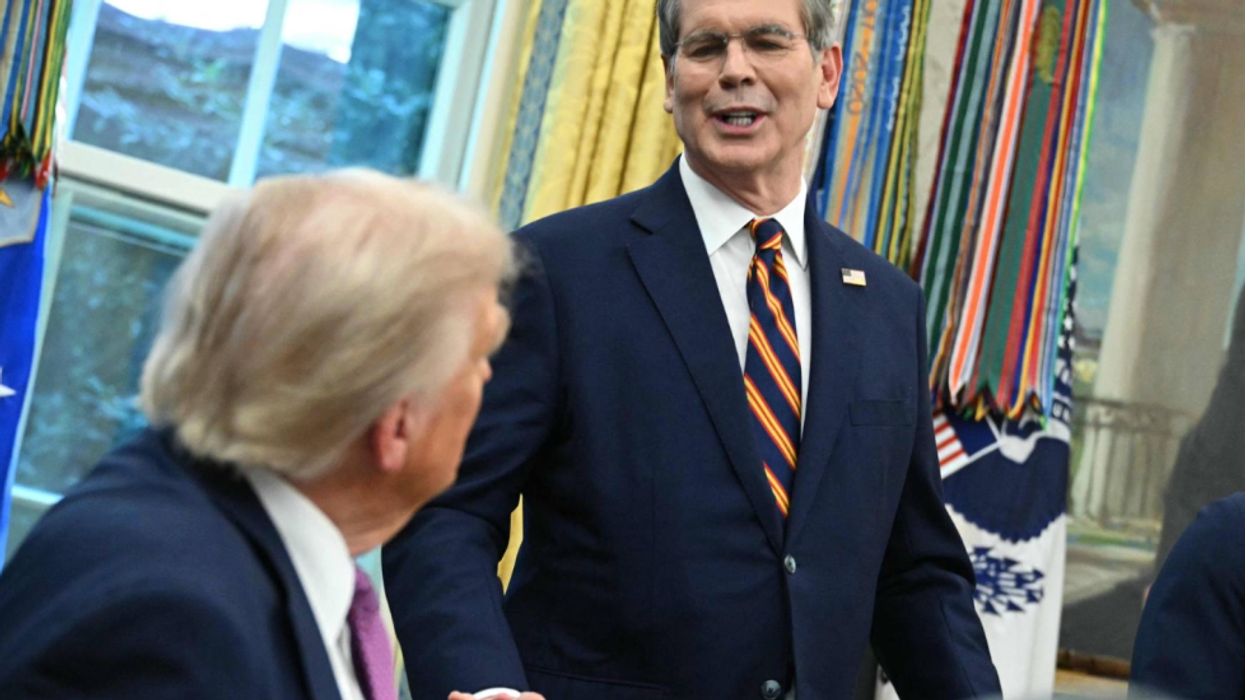
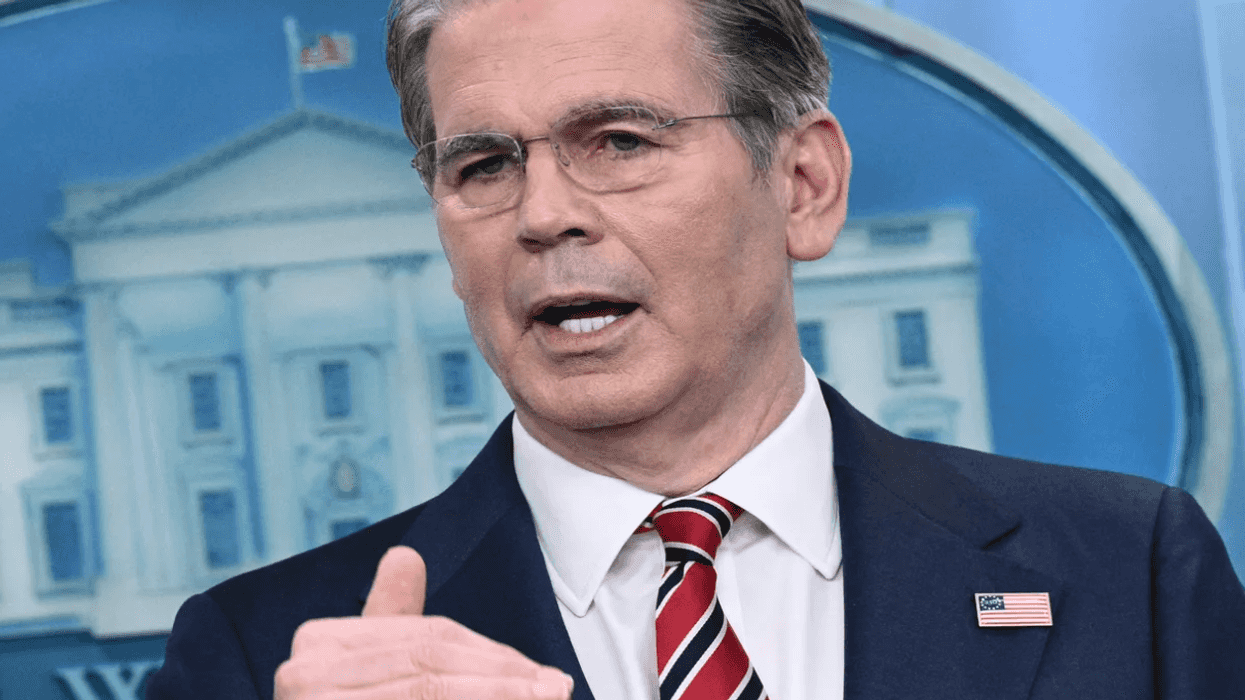
Treasury Secretary Scott Bessent on Sunday refused to admit inflation has gone up for Americans after NBC Meet The Press host Kristen Welker confronted him with the numbers.

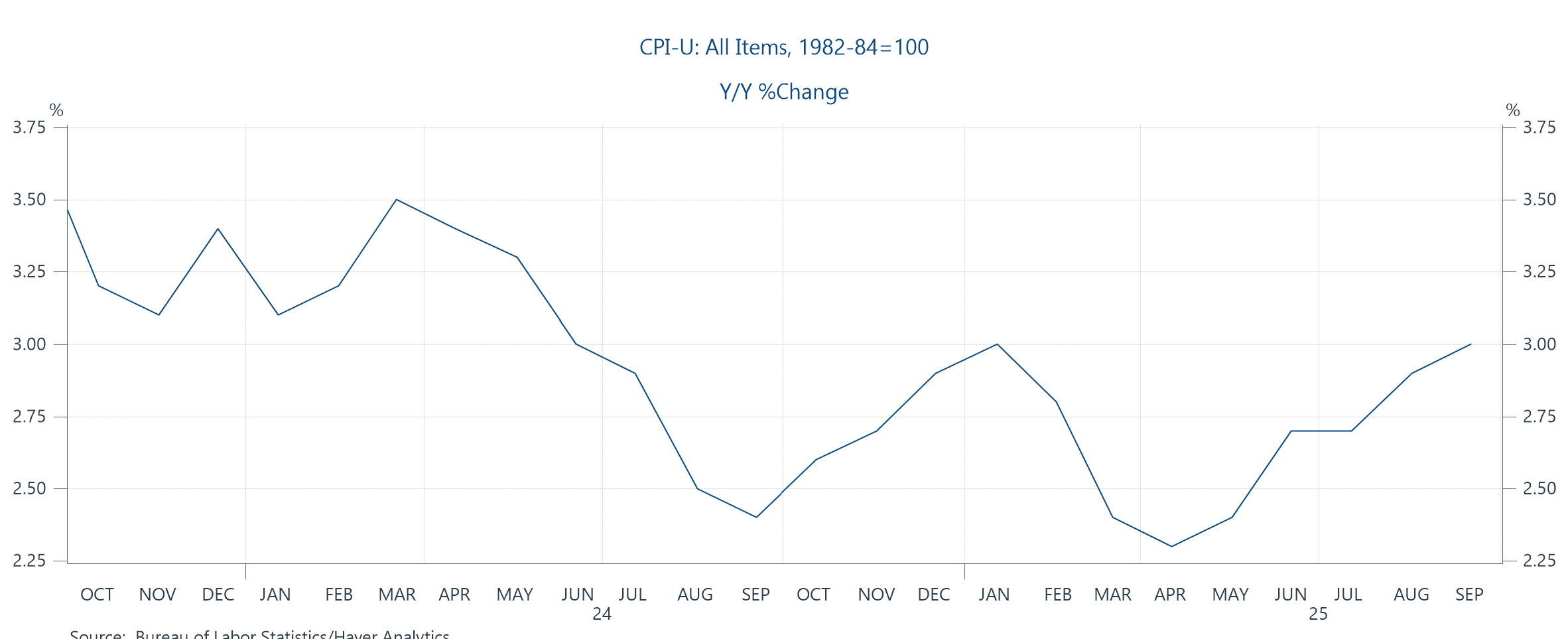
"Inflation has gone up,” Welker said Sunday. “It's at three percent now up from two percent in April when the tariffs were imposed.”

“No, no no no,” Bessent replied. “So, inflation hasn't gone up. The one thing we're not gonna do is do what the Biden administration did and tell the American people they don't know how they feel. They are traumatized."

Bessent’s remark sparked outrage from observers who noted President Donald Trump’s administration is doing the same thing it accused its predecessor of doing — telling consumers not to believe their own pocketbooks.

As policy analyst Evaristus Odinikaeze posted on X, “the inflation went from 2 percent to 3 percent, literally and no amount of ‘no, no, no’ changes basic math.”

“Telling Americans inflation hasn’t risen right after tariffs pushed prices higher is the same gaslighting they accused others of,” Odinikaeze continued. “You don’t fight economic anxiety by denying lived reality. You solve it. But instead, Trump’s making it worse and lying about it.”

Bulwark Deputy Digital Director Evan Rosenfeld likewise argued, “Trump and Republicans have learned nothing from how badly Joe Biden and the Democrats bungled inflation.”

“Instead they’re repeating some of the same mistakes,” Rosenfeld wrote on X.

Bessent also drew condemnation after offering advice for Americans feeling the pain from Trump’s economic policies.

"You know the best way to bring your inflation rate down? Move from a blue state to a red state. Blue state inflation is half a percent higher,” Bessent told Welker.

“Scott Bessent cannot stop staying really stupid things,” journalist John Harwood said of Bessent’s suggestion.

TreasyReprinted witih permission from Alternet


When Scott Bessent Claims Trump Is Making Life Affordable, Who Believes Him?

When Scott Bessent Claims Trump Is Making Life Affordable, Who Believes Him?

When it comes to the economy, the thing American households care most about by far these days is affordability, aka the cost-of-living, aka what things cost.

Note that while, of course, inflation is related to this concern, it is by no means the same thing. Telling people who want lower prices that they’ve got slower inflation is a slight-of-hand that they interpret as gaslighting. They want lower prices; you’re (falsely, as shown below) claiming that you’re delivering slower-growing prices.

Treasury Secretary Scott Bessent has been on a campaign to convince people that life is a lot more affordable under his boss, despite the fact that this is false and people know it’s false. The fact that his boss and party are refusing to reconsider their policy to make health-coverage premiums rise sharply for tens of millions of Americans just makes their affordability falsehoods that much more transparent.

First, here’s Sec’y Bessent on Face the Nation last Sunday:

MARGARET BRENNAN: [Americans] are seeing prices still high on furniture, energy, gardening, lawn care, apparel. Do you expect these things to cool off and when?
SEC. BESSENT: Well, it is cooling off because the core inflation number that you referenced was 0.2% which is down the- from the previous sequence over the previous months. And you listed the things that are up, but we’re seeing plenty of things that are down, whether it’s energy and rents.

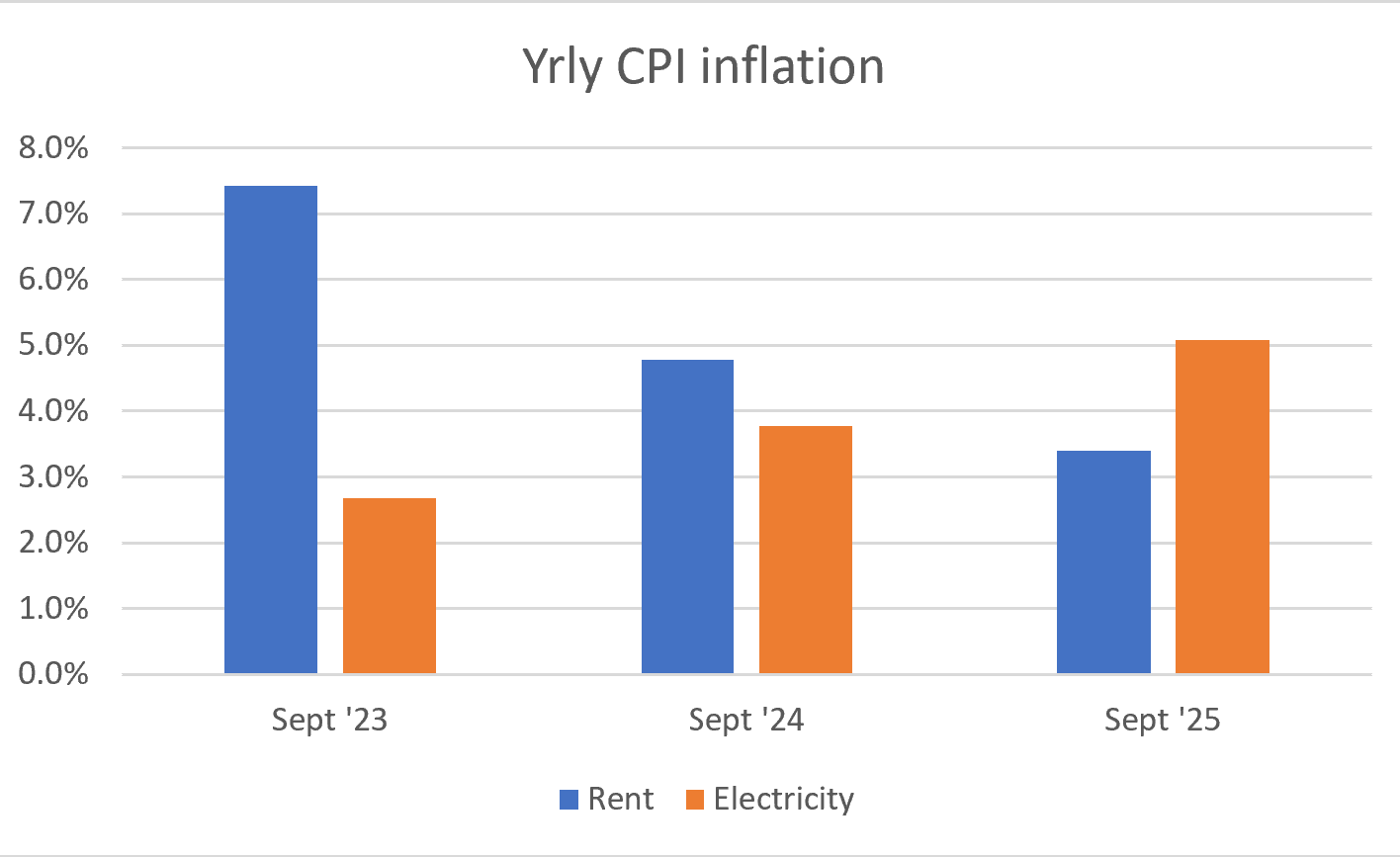
The gas price is down, as I’ll show in a moment, and that’s certainly a price people notice, but electricity prices are way up. CPI rents are up, not down, though the Zillow rent index is down $50 over both the past month and the past year. Rental inflation is, in fact, consistently down as shown in the figure below. It started falling in the spring of 2023, but again, that just means average rents are growing more slowly. Electricity prices are not just up, they’re accelerating (figure), in part due to data-center demand, meaning consumers in states like mine (VA) are getting hit with spillovers from insatiable data-center energy draws. No one’s loving that, either.

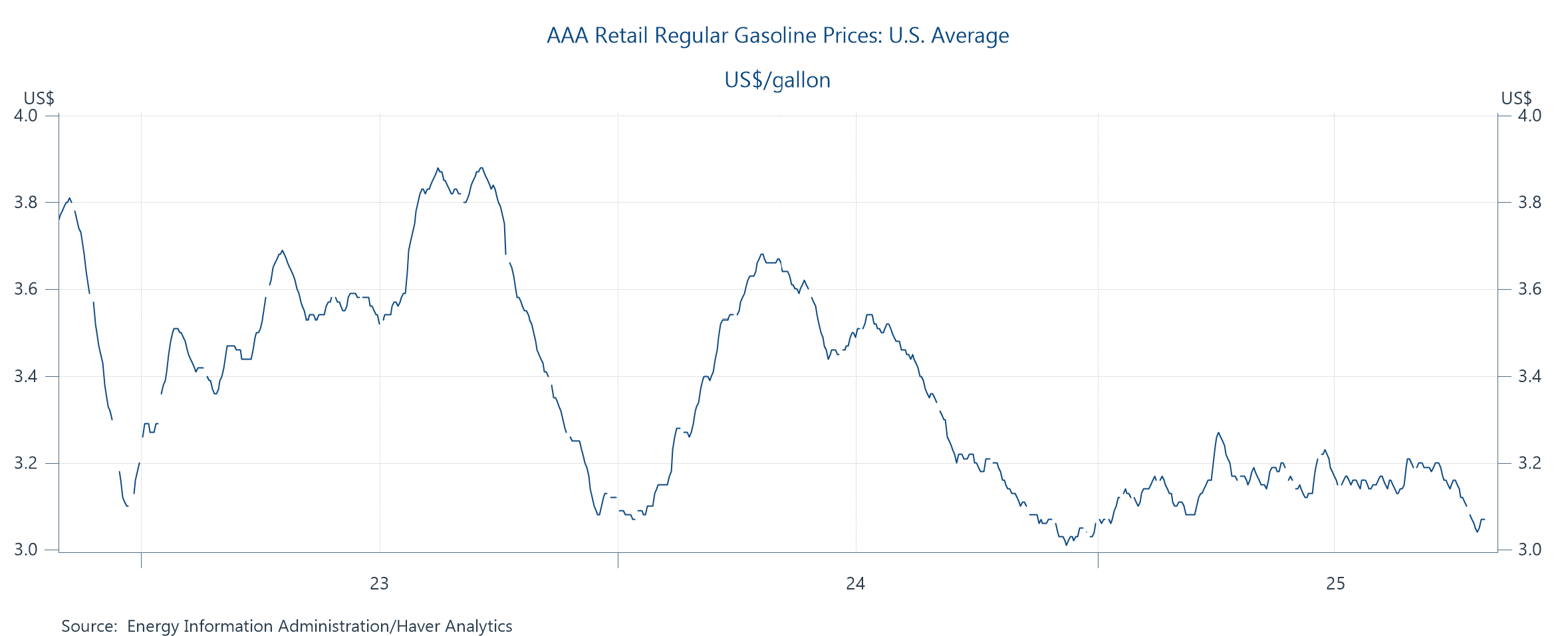
Gas is down—the figure shows the per gallon price from AAA—to about where it was in late 2024. You might think that boosted people’s economic vibes back then but it failed to do, much as it’s failing to do so now. Consumer sentiment is at or below recessionary levels.

Bessent went on to correctly point out that the mortgage rate is down, from about seven percent when Trump took office to just above six percent now, which is good news for home buyers and refi-ers. But while housing prices have flattened, they’re not coming down and they’re up by more than 50 percent since the pandemic (Case-Shiller index). When more than a third of Americans are “housing cost burdened,” meaning it takes at least 30 percent of their income to pay rent or mortgage, dismissing housing affordability is not your best play.

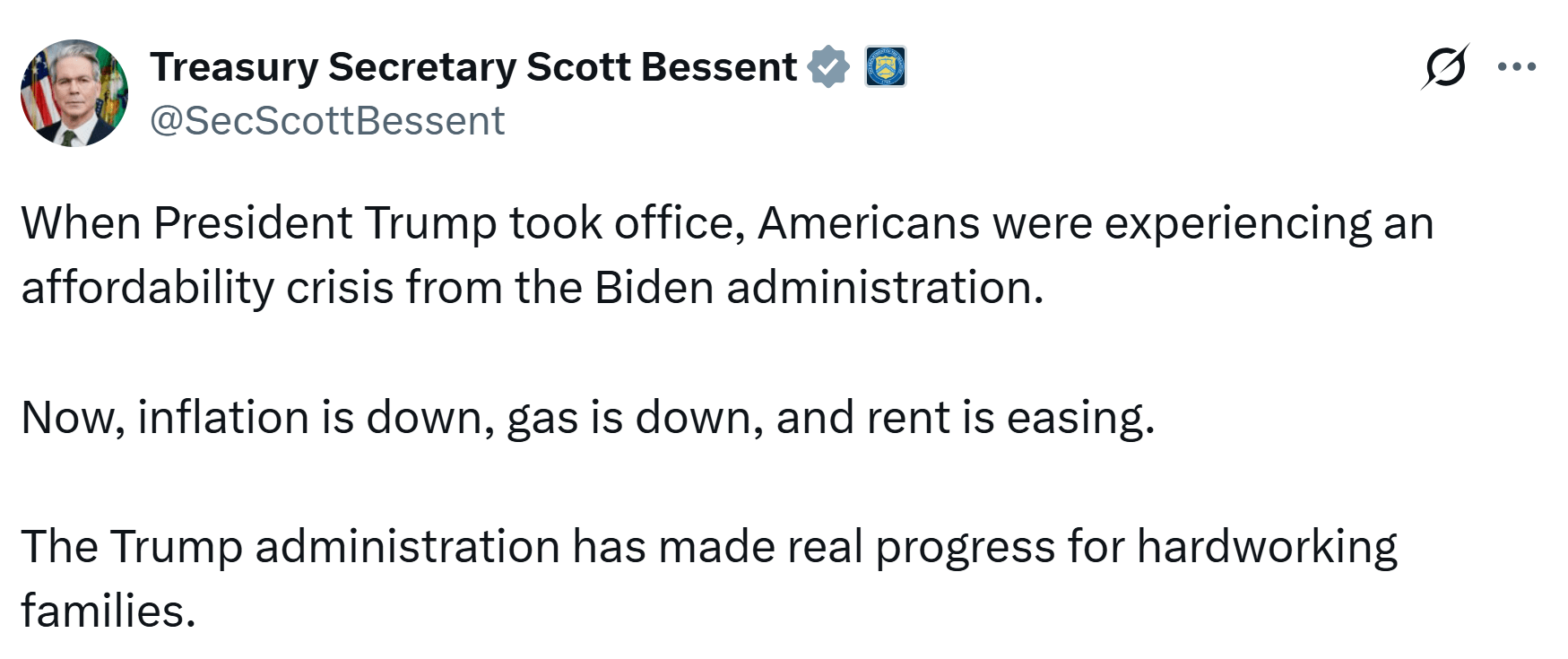
But, as is their wont, Bessent doubled down on X:

Inflation is down?? Yearly CPI inflation was ~2% in April and its ~3% now. We’ve got a pocketful of receipts on this one! As noted, some prices are down, but the rise in the average price level, i.e., inflation, is not in question. In every inflation report, you’ll always find some prices down and more prices up, but to claim “inflation is down” when it’s up over the past few months is not credible.

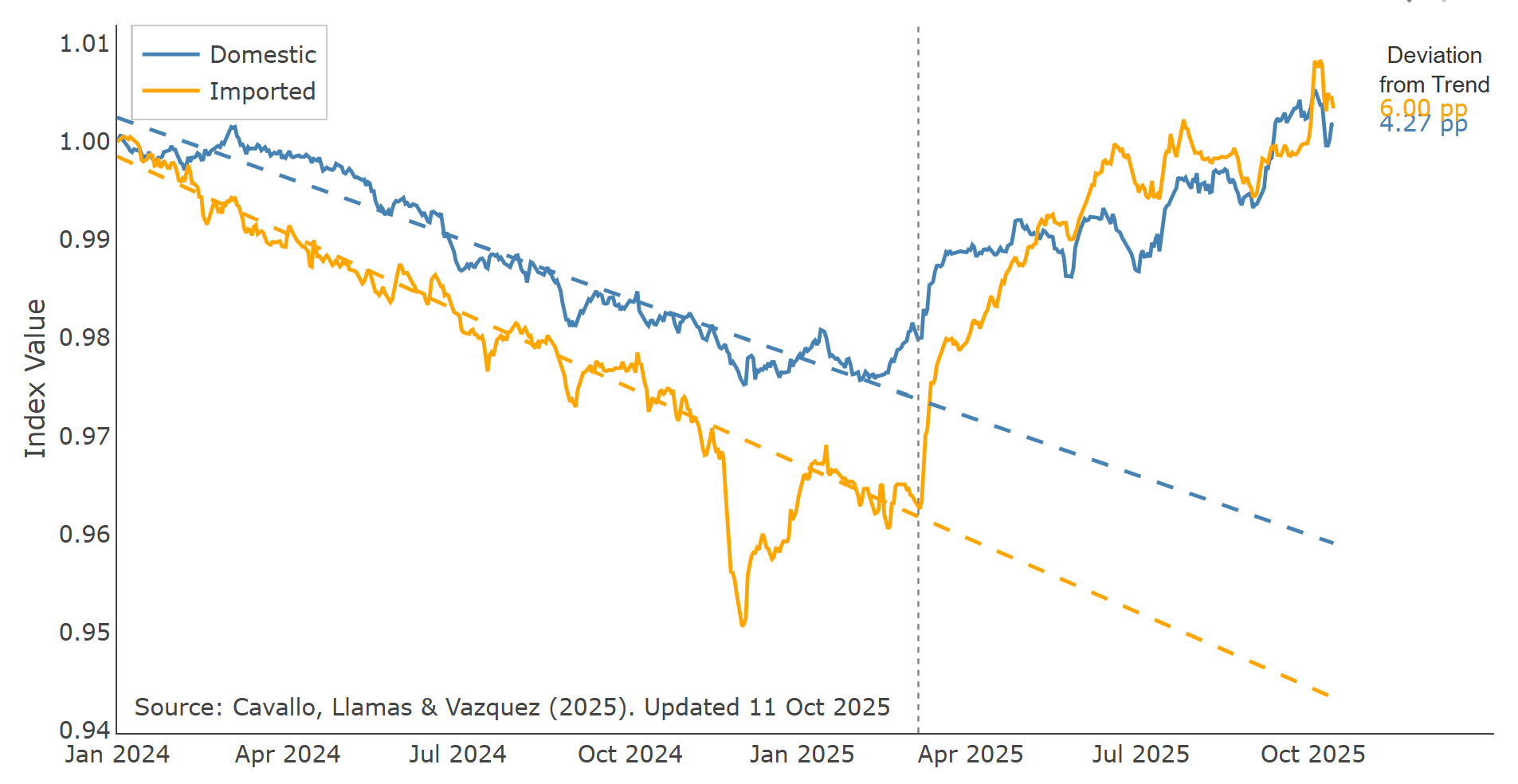
Moreover, tariffs are part of the reason inflation is up. I’ve shown this for goods prices in a recent post, but here’s the latest update from Cavallo et al, who have been tapping their unique dataset of five major retailers (the vertical line is when Trump’s tariffs were introduced):

Closer to home, and I mean your home and my home, where the day does not begin without an excessively large cup of coffee, Trump’s 50 percent tariff on Brazilian coffee is partially responsible for that price rising 19 percent over the past year (it’s not just tariffs; droughts have pushed up both coffee and beef costs). Some commentators responded to Bessent’s tweet above with pictures of what they were paying for groceries.

With all these mostly-up price movements going on in the background, the Trump administration and Congressional Rs voted to make health coverage a lot more expensive for over 20 million people by ending subsidies that were offsetting that cost.

Given those facts on the ground, Mr. Sec’y, here’s some free advice: Stop trying to convince people life is more affordable than they believe to be the case. You’ve got to know that average prices almost always go up, unless there’s a deep depression upon the land. So, BS’ing people that they can have their old prices back is, as noted, just feckless gaslighting.

Instead, you need to explain what you’re doing to make life more affordable, which has two broad policy thrusts: supporting real income growth and helping to offset the high costs of key sources of price pressures, including housing, groceries, health care, child care, utilities (e.g., electricity) costs. Neale Mahoney and I explain the policy framework and give some policy examples here; Chao and Konczal go deep here.

But before you can pursue policies to help with affordability, you’ve got to stop making the problem worse. That means unwinding tariffs and restoring health coverage subsidies.

On the income side, you’ve also got to start worrying about the unusually low-hire job market, which, unlike the booming stock market, is where the people most concerned about affordability get their income. For them, it’s paychecks, not portfolios.

So, when the Wall Street Journal reports the following…:

American employers are increasingly making the calculation that they can keep the size of their teams flat—or shrink them through layoffs—without harming their businesses. Part of that thinking is the belief that artificial intelligence will be used to pick up some of the slack and automate more processes. Companies are also hesitant to make any moves in an economy that many still describe as uncertain.

…you need to get the team thinking about ways to help restart the job-growth engine, which, for the record, isn’t tariffs, deportations, or Fed harassment. It is, in part, restored business and consumer confidence, less chaos and uncertainty, and standing up policies that nudge AI-use to upweight labor complementarity and down-weight labor substitution. I grant you, this is hard policy work, but it’s the only honest way forward.

I know—free advice, worth what you pay for it. But I learned much of the above the hard way. And for all the endless noise your boss generates, all the breaking of norms and laws, at the end of the day, affordability, as prosaic as may sound relative to reshaping everything from trade to immigration to the rule-of-law to the White House itself, is what people really need your help with.

Telling them that’s what you’re doing when in fact you’re doing the opposite won’t cut it.

Jared Bernstein is a former chair of the White House Council of Economic Advisers under President Joe Biden. He is a senior fellow at the Council on Budget and Policy Priorities. Please consider subscribing to his Substack.

Reprinted with permission from Econjared.

One Big Problem With Trumponomics: The President Can't Do Arithmetic

One Big Problem With Trumponomics: The President Can't Do Arithmetic

It is striking that many people feel the need to claim that Donald Trump has some coherent economic plan for the country. It’s understandable that Trump’s team likes to pretend that his random ramblings and angry acts of revenge are all part of some grand strategy, but why would anyone not on his payroll play along with this obvious absurdity?

To anyone paying attention, it should be pretty clear that Donald Trump is clueless about the economy. Just to take an obvious example to make the point: Trump has repeatedly promised to lower drug prices by 800, 900, or even 1,500 percent. As he rightly says, no one thought it was possible.

It wouldn’t be a big deal that he got confused once or twice and forgot that you can’t lower prices by more than 100 percent, unless you envision drug companies paying people to use their drugs. But Trump has done this repeatedly, over many months.

This tells us two things. First, he really doesn’t have even a basic understanding of arithmetic and percentages. That would be bad in and of itself. After all the president is sometimes directly negotiating deals and it would be bad if he agreed to something and then had to call back his negotiating partner and tell them he didn’t understand what he had agreed to.

But the other issue is even more serious. Surely people like Treasury Secretary Scott Bessent and Kevin Hassett, Trump’s National Economic Advisor, understand percentages. But apparently, they are too scared of Trump to explain how they work. Instead, they let him go out week after week and make a fool of himself by making nonsensical promises on lowering drug prices.

This fact is crucial if we are trying to assess whether Trump has a coherent economic strategy. The point is he is obviously confused about many things when it comes to the economy. He seems to think that other countries pay tariffs and send the U.S. checks. He also seems to think that wind and solar power are very expensive sources of energy. And he seems to think that the economy was collapsing when he took office.

All of these claims are 180 degrees at odds with reality, but it is extremely unlikely that his aides would be able to correct him on these or other absurd views that Trump seems to hold. Given how out of touch Trump is with reality and the inability of his aides to correct him on anything, why would anyone think that he has a coherent economic strategy?

As many of us have pointed out, even most hard-core free traders will concede tariffs can serve a useful purpose. They can be used strategically to build up important industries. This is what Biden tried to do when he used tariffs, along with subsidies and regulatory changes, to promote domestic production of advanced computer chips, electric vehicles, batteries, and wind and solar and other forms of clean energy.

But what is the coherence in a tariff policy when some of the highest tariffs, like Trump’s 50 percent tariff on imported steel, are reserved for intermediate goods that are inputs for other manufacturing industries? How does it make sense to impose an extra 10 percentage point tariff on imports from Canada because Trump didn’t like a television ad they ran during the World Series? And India got whacked with a tariff of 50 percent on its exports because its president would not support Trump’s drive to get a Nobel Peace Prize.

Anyone trying to weave together these and other tariff decisions by Trump, along with many other economic decisions he has made since taking office, is really stretching if they think they can find anything coherent. It is bad for the country and the world that policy in the United States is being determined by a man child who has no idea what he is doing beyond stuffing his pockets, but that is the reality.

There may be a market for thoughtful pieces describing the grand Trump strategy in major intellectual outlets, but that is yet one more example of market failure. There ain’t nothing there.

Dean Baker is a senior economist at the Center for Economic and Policy Research and the author of the 2016 book Rigged: How Globalization and the Rules of the Modern Economy Were Structured to Make the Rich Richer. Please consider subscribing to his Substack.

Reprinted with permission from Dean Baker.

Waking Up? Argentina Bailout Bares Trump's Contempt For Rural America

Waking Up? Argentina Bailout Bares Trump's Contempt For Rural America

Is rural America starting to fall out of love with Donald Trump?

Policy wonks like me have spent decades pointing out that if rural Americans voted based on their informed self-interest, they would be supporting Democrats, not Republicans. Republicans are constantly trying to eviscerate Democrat-supported programs that benefited rural states like Medicaid spending, SNAP (the supplementary nutrition program formerly known as food stamps), and school lunches. Trump is also cutting subsidies for green energy programs like solar farms and wind turbines – subsidies that disproportionately went to red states. Iowa gets 63 percent of its electricity from wind!

Moreover, these programs in effect subsidize rural areas with dollars earned in urban areas: because rural areas have lower incomes than urban areas, rural Americans pay relatively little of the taxes that finance these programs. So Democratic “big government” is highly beneficial to the heartland.

Yet economic self-interest has been swamped by “rural consciousness.” This consciousness rests on a belief that highly educated urban elites don’t understand or value rural culture and rural lives. And I will admit that this belief contains a grain of truth. Urban elites are unlikely to fully understand the attachment of rural Americans to a particular place and its time-worn rhythms of life. Ensconced in salaried jobs, urban dwellers are unfamiliar with the constant anxiety of being a farmer or a small business owner in the heartland.

Decades of being battered by the economic changes -- deindustrialization, farm consolidation and corporatization, depopulation, loss of community ties, along with the loss of jobs, particularly “male-coded” jobs – have left rural Americans feeling adrift, marginalized and resentful.

And this created an opening to be exploited by the right wing. Much like how Trump peddled fantasies of a manufacturing resurgence or the return of coal-mining jobs, MAGA leveraged the deep discontent within rural America to inculcate the belief that only Republicans, and Trump in particular, respect rural voters. But this is false: MAGA actually holds its most loyal voters in contempt.

And the reality of this contempt is starting to show through — not, at least so far, via the One Big Beautiful Bill’s savage cuts to health care, which will be especially devastating to rural areas, but via the Trump administration’s bizarre fixation on aiding President Javier Milei of Argentina.

The truth is that rural America is even more dependent than urban America on the programs now on the chopping block. The nonpartisan Economic Innovation Group has mapped out where in America people depend for a large share of their income on government transfers: the counties where a lot of income comes from government programs, indicated in yellow, are overwhelmingly in rural areas, while the places where such aid plays a relatively small role (light blue) mainly correspond to major metropolitan areas:

Why has rural America become increasingly dependent on government aid? The main answer is declining economic opportunity, which has led to an exodus of young people, leaving behind an older population that relies on Social Security and Medicare. Even younger rural residents have low incomes that make them eligible for mean-tested programs, above all Medicaid and food stamps.

There shouldn’t be any shame about the fact that rural America is subsidized by more affluent parts of the nation. That is, after all, what a national social safety net is supposed to do. But it should make rural voters oppose politicians who support Project 2025-type plans to rip up that safety net, which will deeply impoverish already poor regions and degrade life even for those not personally receiving aid — for example, by leading to the closure of many rural hospitals, making health care inaccessible even to those who still have health insurance.

Yet rural voters went overwhelmingly for Trump last year. Why?

Many clearly felt that educated urban elites don’t understand their lives and values — which is true. Most people in New York or Los Angeles don’t have a good sense of what life is like in rural America. But the reverse is also true: Many, perhaps most rural Americans imagine that the surprisingly safe and livable city where I’m writing this is a crime-ridden hellscape, that Chicago and Portland are “war zones,” and so on.

Rural voters may also have imagined that they would be protected from the harsh treatment being meted out to blue cities. After all, our political system gives rural voters disproportionate influence. Wyoming and the two Dakotas combined have roughly the same population as Brooklyn, yet they have six senators while Brooklyn has to share two senators with 16 million other New Yorkers.

For both reasons, rural voters either tuned out or refused to believe warnings that a Trump victory in 2024 would be catastrophic for the heartland, that crucial programs would be eviscerated and the agricultural economy would be devastated by Trump’s trade wars.

I thought that rural voters might finally start to realize that they have been taken for a ride when the cuts began kicking in. This will begin to happen next month, when the 22 million Americans, many of them in rural areas, who receive subsidies to help buy health insurance under the Affordable Care Act will see their premiums soar, on average by more than 100 percent. It will happen even more dramatically late next year (after the midterms), when the big cuts to Medicaid and food stamps kick in.

An aside: When I went to the relevant government page to look up food stamp data, I was confronted by this banner:

This is not how government for the people is supposed to work, and we shouldn’t lose our sense of outrage.

But back to a possible rural awakening: It may be starting ahead of schedule, thanks to, of all things, the Trump administration’s efforts to bail out Argentina’s Javier Milei.

The attempt by Trump and Scott Bessent, the Treasury secretary, to rush $20 billion to Argentina isn’t a big deal compared with the planned savage cuts to crucial programs. But it’s a graphic demonstration of the administration’s hypocrisy. After all the America First rhetoric, all the insistence that spending must be slashed, suddenly we’re sending lots of money to a foreign nation in which we have no real interest except for the fact that its president is a MAGA favorite. I don’t know how many voters are aware that these moves are in large part an attempt to bail out Bessent’s hedge-fund buddies, but I think the sense of something wrong and corrupt is leaking through.

Furthermore, from farmers’ point of view, Argentina is a rival — a big soybean exporter at a time when Trump’s trade war has locked our own farmers out of China’s market.

And as emphasized in a recent conversation between Greg Sargent and a rural Democratic activist, farmers have been shocked and outraged by Trump’s casual suggestion that he might start buying Argentine beef to sell in the U.S. market. That conveys the impression that Trump doesn’t care at all about his most loyal followers — an impression that is completely correct.

We shouldn’t expect rural America to suddenly do a 180 and abandon Trump. Sargent sends us to a lament from one rancher who calls the idea of buying Argentine beef an “absolute betrayal” — but begins by saying to Trump, “We love you and support you.” The sheer extent to which rural Americans have been hoodwinked will make it hard for them to admit their error.

But there are at least hints of a rural awakening. And for the sake of the nation urban and rural Americans share, it can’t come fast enough.

Paul Krugman is a Nobel Prize-winning economist and former professor at MIT and Princeton who now teaches at the City University of New York's Graduate Center. From 2000 to 2024, he wrote a column for The New York Times. Please consider subscribing to his Substack.

Reprinted with permission from Paul Krugman.

Shop our Store

Headlines

Editor's Blog

Corona Virus

Trending

World