Tag: trump slush fund
As Trump Retreats From Slush Fund, Judge Must Probe This Bogus Scheme

As Trump Retreats From Slush Fund, Judge Must Probe This Bogus Scheme

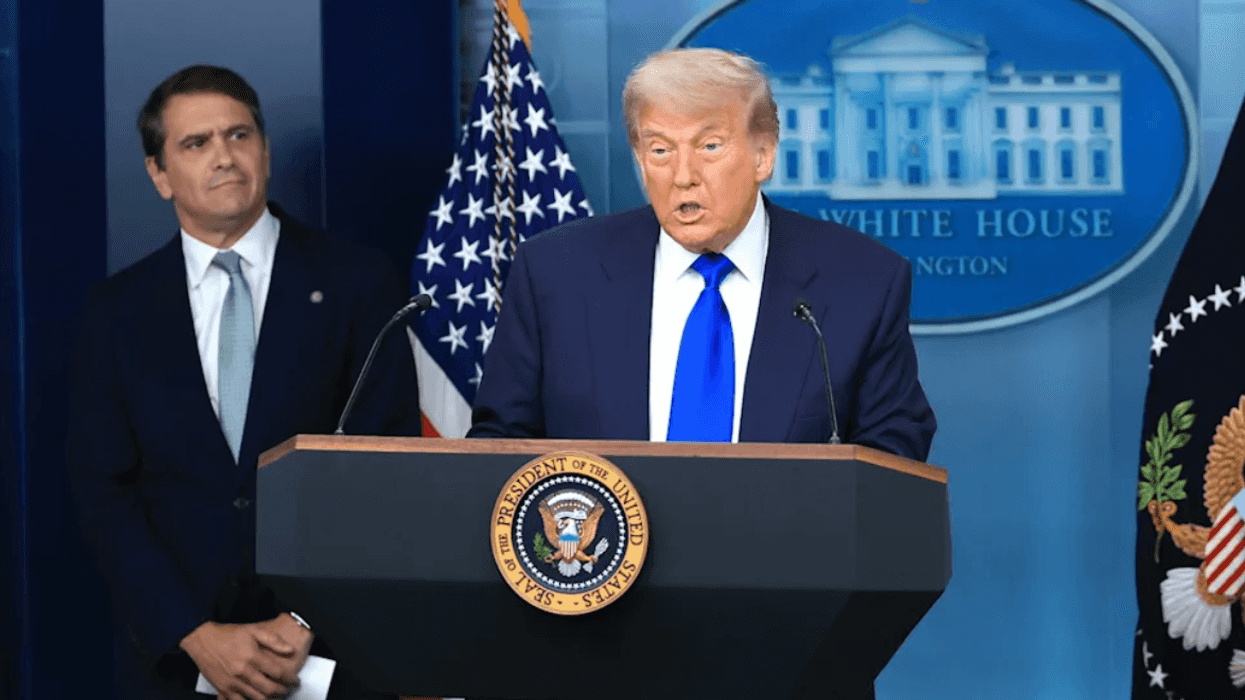
As of this afternoon, President Trump is retreating from the $1.8 billion Anti-Weaponization Fund, according to The New York Times and multiple other reports. The White House communicated the decision to Republican leaders on Capitol Hill today. The decisive moment came earlier Monday, when Speaker Mike Johnson met with Trump and told him bluntly that the fund was torpedoing the $70 billion immigration enforcement bill—the centerpiece of the administration’s legislative agenda.

That conversation, a source says, is what finally convinced the president to drop it. Senate Majority Leader Thune had already told reporters that changes were a “safe bet” and that “the best way to handle it is if the administration decides to shut it down themselves.” House Republicans had been actively looking for ways to kill the fund, and the Senate was already in open revolt—with more than a dozen Republican senators, including Lindsey Graham, privately urging Trump to pull the plug.

Trump and the DOJ waged a similar, strategic retreat a few weeks ago, when his lawyers filed a panicked voluntary dismissal two days before they would have had to walk into Judge Williams’s courtroom and explain, under the solemnity of federal proceedings, how Donald Trump suing an agency he controls, defended by his own former personal criminal defense lawyer, constituted a genuine adversarial lawsuit. Pinned between a rock and a hard place, he bolted.

So Trump blinked. Again. And on an ill-advised move—bogus and illegal on multiple fronts—on which he nevertheless had fully staked his diminishing political capital.

DOJ issued a statement today that it would “abide by the Court’s ruling”—meaning Judge Leonie Brinkema’s temporary restraining order out of Virginia, which froze the fund Friday, not Judge Kathleen Williams’s order reopening the settlement, about which more below.

The DOJ statement defended the fund, said nothing about it being permanently dead, and left conspicuously open the question of whether it could be revived.

So the parameters of the retreat remain unclear as of this writing. It may be a full capitulation. It may be a tactical pause dressed up as a concession. Either way, as a matter of political reality, it is a humiliation—the administration’s biggest self-inflicted wound of Trump 2.0, now compounded by a very public retreat.

In my dispatches on this scandal going back to February, and in my conversations with Representative Jamie Raskin and others, I argued that while the legal avenues for challenging the fund were real but difficult—standing problems, appropriations law hurdles, the fund’s architecture designed specifically to be unreachable—the political blowback would ultimately be too powerful to ignore.

That was because the emotional and political core of the entire scheme was the proposition that the January 6 rioters were victims—“patriots” at a “love-in,” not insurrectionists at a riot designed to hijack the Constitution—entitled to taxpayer-funded compensation. That core was part and parcel of Trump’s relentless and corrupt effort to whitewash history and his own role in trying to steal the 2020 election.

And the political winds, in fact, proved too strong to ignore. The moment Republican Senators and House members had to confront the question—do you support giving money to the people who beat police officers on January 6?—the fund became politically radioactive. Ted Cruz called a meeting with Blanche and Senate Republicans last week one of the roughest he had seen in his Senate career. Another attendee called it the toughest grilling of any administration official they had ever witnessed. Lindsey Graham, of all people, privately urged Trump to drop it.

Thune told reporters that “the best way to handle it is if the administration decides to shut it down themselves.” And Johnson, in his Monday meeting with Trump, delivered the message that finally landed: The fund was killing the immigration bill, and House Republicans were looking for ways to stop it with or without the White House.

Senate Democrats twisted the knife further today, with Schumer releasing a “Dear Colleague” letter vowing a coordinated multi-front assault—floor votes, oversight, appropriations fights—and Senators Schiff, Kelly, and Slotkin introducing the Drain the Slush Fund Act to bar any payouts to those convicted of crimes or connected to January 6. They might not have been positioned to stop the arrangement legally, but they were able, with the foreseeable aid of Republican defectors, to keep the spotlight turned up high enough to make it impossible to look away, as the White House plainly was hoping.

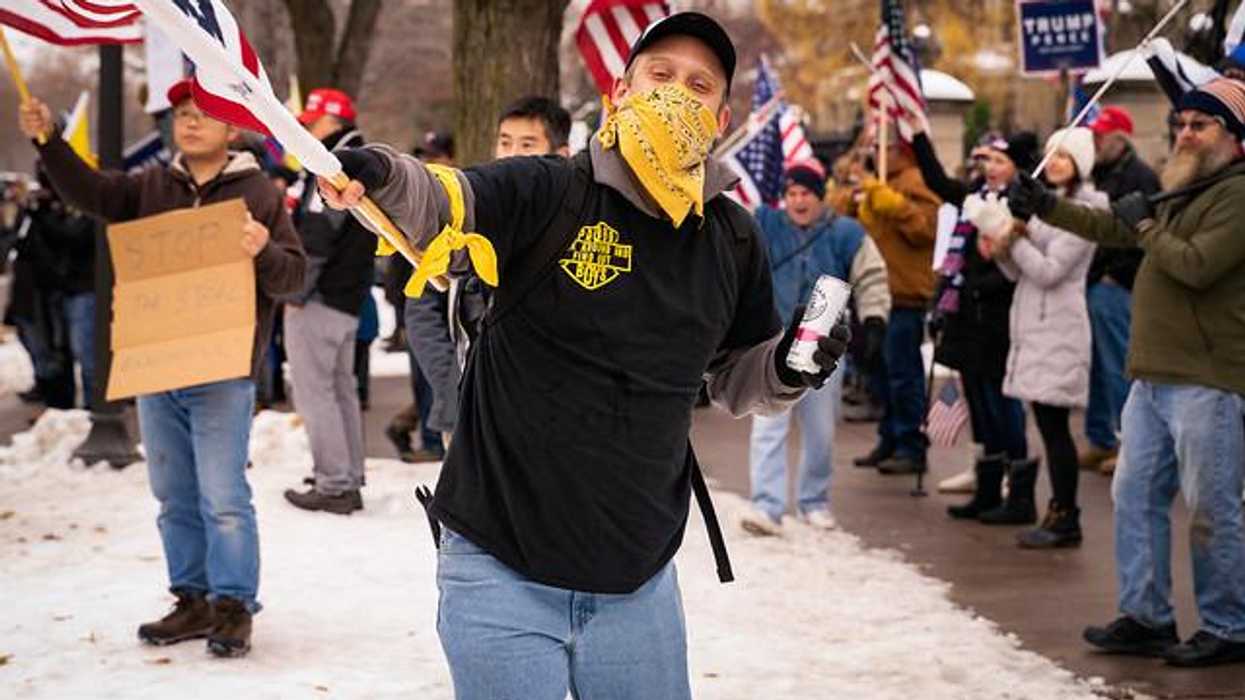
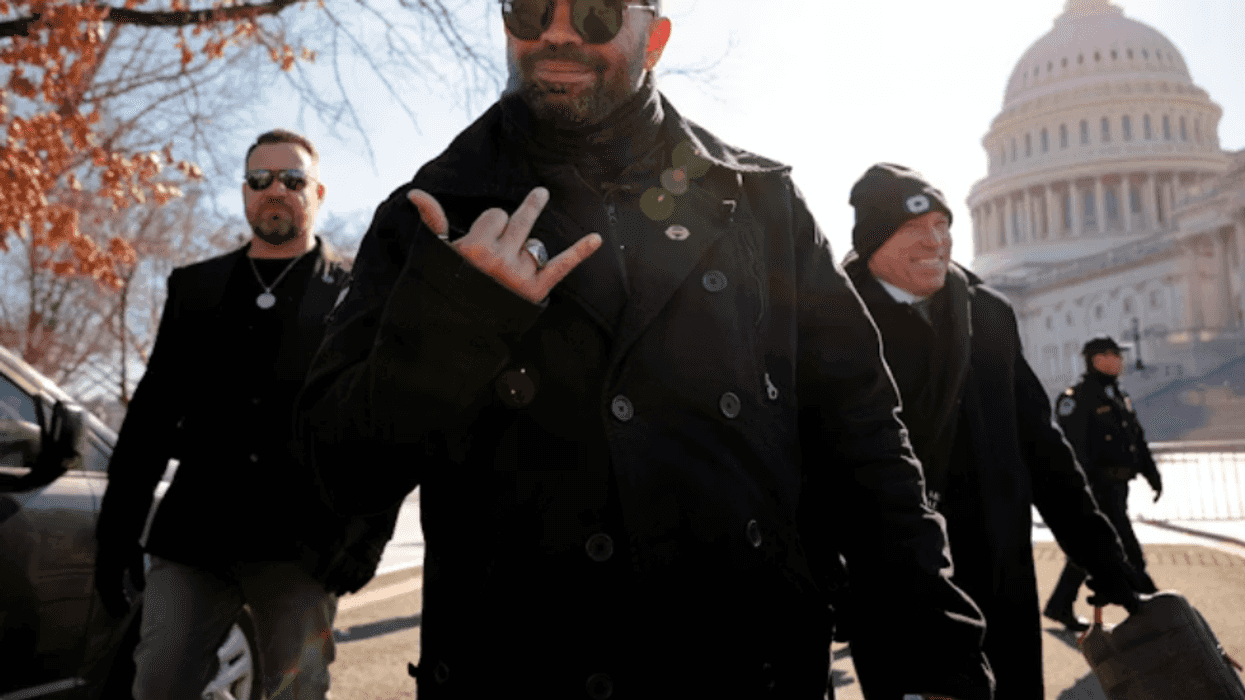
Trump will now take serious lumps from the MAGA base—far more than if he had never embarked on this asinine detour in the first place. The pardoned rioters who were salivating over their anticipated windfalls are going to be furious. Brandon Fellows, who spent three years in prison for his January 6 conduct, had already sought $30 million from DOJ before the fund was even announced and told CNN he was “feeling confident.” The Proud Boys leader expected a $2 to $5 million personal payout. Robert Gieswein—who marched with the Proud Boys, sprayed aerosol irritant at Capitol Police officers, threw a punch at another officer, and served four years in prison—told The Free Press he wants up to $10 million, though he’d be willing to settle for less.

It looks as if all of them, and the roughly 1,600 other January 6 defendants, are going to be left empty-handed and enraged. More, Trump is backing down precisely because the politics of supporting them became untenable—it is they whom Trump is plainly abandoning. All of that amounts to a richly deserved comeuppance for Trump’s staggering audacity in trying to make the American people not just pardon but financially reward the most serious assault on American democracy since the Civil War.

But if Trump, Blanche, and the attorneys involved in the original scheme—including Associate Attorney General Stanley Woodward and Trump private attorney Boris Epshteyn—think that retreat puts an end to the prior misconduct, they may be in for a rude surprise.

Whereas Brinkema’s order froze the fund’s operation going forward, Williams is asking a fundamentally different question: What already happened in her court? She is not interested in where the fund goes from here. She is interested in whether she was deceived, whether her court served as an instrument of fraud, and whether the lawyers who were involved in the bogus settlement violated their most basic obligations to the tribunal.

Last week, a bipartisan group of 35 former federal judges filed a motion urging Williams to reopen the case under Federal Rule of Civil Procedure 60(b)(4). Their filing was blunt: “The Court was deceived.” They argued that Trump and his co-plaintiffs deliberately withheld any mention of the settlement from their dismissal notice—timing the withdrawal to outrun Williams’s scrutiny—and that the resulting arrangement “is a product of collusion and is itself a fraud on the Court.”

Williams did not hesitate to act on the suggestion. On Friday, she issued an order reopening the case, invoking Rule 11—which requires attorneys to certify that any filing serves a legitimate purpose—and citing extensive case law for the proposition that a court may raise Rule 11 violations on its own initiative and that a party cannot avoid sanctions simply by voluntarily dismissing the case.

I expect the administration to try the same move with Williams that it just tried with the fund itself: a strategic retreat dressed up as compliance. He and Epstheyn may try to elude her order altogether, or failing that, to submit on June 12 a filing that treats the whole reckoning as moot: the case is closed, the voluntary dismissal is self-executing under Eleventh Circuit precedent, there is nothing left for her to adjudicate. It is the legal equivalent of a stiff arm: not quite refusing to respond, but responding with nothing of substance.

Williams is unlikely to find that satisfying. We have seen this movie before—most vividly in the Boasberg-Bove-Rao confrontation over deportation flights, where the administration’s combination of contempt and foot-dragging met a judge who simply would not stand down. I don’t think that a dismissive June 12 filing will cause her to close up shop. Nor should it: the retreat from the fund is completely separate from the past potential abuse of the court.

If Williams insists on getting to the bottom of what happened, the various lawyers and participants will look like flies on flypaper, trying to wriggle away from the consequences of their conduct. That would presumably include Trump and the administration’s tried-and-true technique of seeking emergency review in the Eleventh Circuit, and if that fails, the Supreme Court (where the circuit justice for the Eleventh Circuit is Clarence Thomas). But in effect, they’d be doubling down on the whole dubious wager, and risking even greater humiliation.

Williams is not done. She has the record, the legal tools, and clearly the will to press forward, and the 35 former judges have handed her both the doctrinal roadmap and the judicial mandate to act. Political retreat does not erase a fraud on the court. The lawyers who engineered this heist still have a June 12 deadline, and a federal judge waiting for their answer.

The fund may be withering. But the investigation and accountability of the overall constitutional swindle may just be getting started.

Harry Litman is a former United States Attorney and the executive producer and host of the Talking Feds podcast. He has taught law at UCLA, Berkeley, and Georgetown and served as a deputy assistant attorney general in the Clinton Administration. Please consider subscribing to Talking Feds on Substack.

Reprinted with permission from Talking Feds.

Perps, Not Victims: The Big Lie At The Heart Of Trump's Slush Fund

Perps, Not Victims: The Big Lie At The Heart Of Trump's Slush Fund

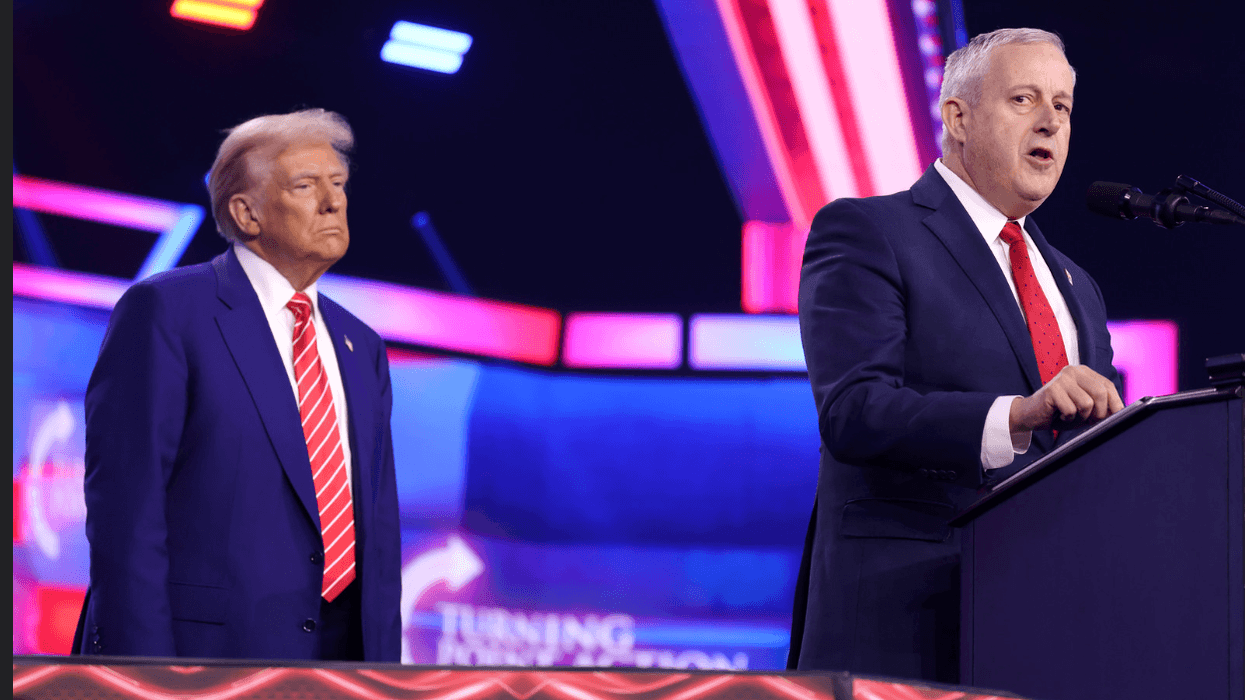
The Orwellian 'Anti-Weaponization Fund' Trump has created — the legal equivalent of twirling the combination lock on Fort Knox and driving off with gold bars — purports to be righting a wrong. The bogus (and badly written) "settlement agreement," which is laughable as there was no true lawsuit, claims to be compensating those who were victims of the "sustained use of the levers of government power by Democrat elected officials." It goes on like that, accusing Democrats of "lawfare" and "weaponization."

Even more than usual with Trump, this foul fund represents a total inversion of reality. It's as if he's trying to create a handy shorthand for projection. Trump, after more than a year of subjecting his critics and opponents to wrongful prosecution, firing and other harassment, now insists that he and his allies have been the victims of lawfare and weaponization. It's upside down.

When asked whether convicted rioters from January 6 should be eligible for taxpayer dollars, Trump responded with his familiar drivel about how "horribly they've been treated," about how their lives had been destroyed, about their legal bills, and closed with, "And they were right!"

No, they were fed a damnable lie and acted upon it. Millions of other Americans were credulous enough to believe the lie, too, but they didn't fly to D.C. to erect gallows and hunt for Nancy Pelosi and Mike Pence. That required a certain criminal disposition. Dozens of the insurrectionists had prior records of criminal violence, and scores have been rearrested since receiving Trump's January 2025 pardon. One "patriot," Andrew Paul Johnson, was arrested in October 2025 for sexually abusing two children (one was 11). Confident in the character of the president for whom he climbed through a broken window on Jan. 6, Johnson somehow came to believe he was owed $10 million as part of his pardon, and used that anticipated windfall to try to buy the silence of one of his victims.

In no way were the January 6 rioters victims of "lawfare" or politicized prosecution. They assaulted Capitol and D.C. Metropolitan Police officers, causing five deaths and at least 150 injuries, including concussions, traumatic brain injuries, cracked ribs, heart attacks, spinal damage, loss of an eye, stab wounds, taser burns, and other severe trauma.

For Trump, it wasn't enough that even the most violent received unconditional pardons. No, now he proposes to enrich them with taxpayer funds. Those deserving of punishment get rewarded. The victimizer becomes the victim. The criminal becomes the patriot.

Letitia James, New York's attorney general, was indicted on mortgage fraud charges just a couple weeks after Trump publicly called for her to be charged with something. (She had successfully sued him for civil fraud.) It should go without saying that presidents are never supposed to demand that individuals be charged with crimes, far less those against whom the president has a personal vendetta.

Needless to say, the evidence was extremely thin, but neither a judge nor jury got the opportunity to rule on that. After U.S. Attorney Erik Siebert apparently signaled that he wouldn't pervert justice by bringing the politically motivated sure loser of a case, Trump replaced him with the inexperienced, hapless Lindsey Halligan — but did so illegally. Case dismissed. Undaunted, the Justice Department then attempted two more times to bring charges against James but was thwarted by grand juries who refused to indict.

Halligan, during her illegal tenure as a federal prosecutor, also indicted former FBI Director James Comey on the dubious charge of lying to Congress. When that case too was thrown out due to Halligan's illegitimate appointment, the Justice Department returned to the well and indicted him for threatening the life of the president — by posting a photo of seashells. If eye-rolling were a crime, every judge in America would be guilty.

Jerome Powell, former chairman of the Federal Reserve Board, was subjected to a criminal investigation due to ... cost overruns during a building renovation. Any high schooler could tell you that the true reason for the investigation — and the accompanying stress, expense and distraction — was Powell's refusal to set interest rates to serve Trump's short-term political agenda. (See also Erika McEntarfer, the head of the Bureau of Labor Statistics, who was fired when her agency reported accurate jobs numbers that displeased the president.)

Speaking of the Federal Reserve, let's not forget that Trump attempted to fire Fed governor Lisa Cook, again on charges of mortgage fraud (the projection is almost too obvious to point out — almost). She fought back, and her case is before the Supreme Court. A decision is expected by June.

Sometimes the lawfare goes the other way. Trump directed that all charges be dropped against former New York Mayor Eric Adams, though the prosecution had him dead to rights. One of the top prosecutors in the case resigned, alleging a direct quid pro quo between the decision to drop charges and Adams' newfound willingness to use city resources to support Trump's political agenda.

Trump has also used the withdrawal of security clearances as a form of weaponization of government. Leading law firms need those clearances to represent clients, as do any number of former government officials. Among those who were targeted: the firms of Covington and Burling, Paul Weiss, Perkins Coie, and Wilmer Hale. Among the individuals whose credentials were pulled were Joe Biden, Kamala Harris, Hillary Clinton, Mark Milley, James Clapper, and Sam Vinograd, among many others.

Trump has attempted to use the Federal Communications Commission to silence critics. It's Weaponization 101. When Jimmy Kimmel made a tasteless joke about Charlie Kirk's death, the FCC strong-armed ABC into firing him. Only a public backlash persuaded Disney (ABC's owner) to reverse course.

Kimmel came out fine, arguably stronger, from that brush with authoritarian government. Larry Bushart had a much tougher time. A 61-year-old former Tennessee law enforcement officer, Bushart posted a couple of Kirk-related items to social media, including reposting a quote from Trump after a school shooting, "We have to get over this." Bushart was arrested and held in jail for 37 days. Dozens of people were fired and several were prosecuted for saying the wrong things in the wake of Kirk's murder. The perpetrators of this lawfare were not Trump officials, but they were MAGA-adjacent and egged on by Vice President JD Vance.

The list of Trump critics or adversaries who've been investigated, indicted or fired in the past 18 months is staggering.

Who can forget "sandwich guy," who was charged with a felony for tossing a Subway sandwich at a National Guard member? Or the FBI officers fired for having participated in the search of Mar-a-Lago and other Trump cases? Or the widow of Renee Good, who was investigated after Good was shot and killed by ICE? Or Cassidy Hutchinson, the star witness in Trump's second impeachment, under investigation as of April 2026 by the Justice Department's Civil Rights division? There are hundreds more.

That is what lawfare and weaponization look like. Trump's fund is not just blazingly corrupt and unjust, it is also a massive exercise in gaslighting. Trump and his followers are not victims, they are perpetrators.

Mona Charen is policy editor of The Bulwark and host of the "Beg to Differ" podcast. Her new book, Hard Right: The GOP's Drift Toward Extremism, is available now.

Reprinted with permission from Creators

January 6 rioters assault police

Federal Judge Halts Justice Department From Enacting January 6 Slush Fund

An order from a federal judge in Virginia has temporarily blocked President Donald Trump's $1.8 billion slush fund.

Last week, Trump came to an "agreement" with the Justice Department that a fund would be set up to give settlements to those who felt they'd been wronged by the government. It prompted a lot of questions from members of Congress about whether taxpayer dollars would be given to those who staged a violent attack on the U.S. Capitol, tearing apart the historic building, terrorizing lawmakers and staff and beating police officers. Trump then withdrew his $10 billion lawsuit against the IRS.

By Friday, the federal judge paused his new "fund."

"Because full briefing of the issue will enhance the ability of the Court to make a sound decision, plaintiffs Expedited Motion, is DENIED and defendants' request for additional time is GRANTED; however, to ensure that no funds are irreversibly disbursed from the Anti-Weaponziation Fund while plaintiffs' Motion is pending it is hereby ORDERED that defendants be and are ENJOINED from taking any further action pursuant to the creation or operation of the Anti-Weaponization Fund, which includes the transferring of money to the Fund; the consideration of any claims submitted to the Fund; and the dispersing of any funds from the Fund..." the order says.

A footnote also reads, "It is important that the status quo be maintained until plaintiffs' pending Motion has been resolved, especially as plaintiffs allege in their Expedited Motion that defense counsel 'was unable to provide assurances of how long [the] status quo would last' and declined plaintiffs' 'request that the government commit to not transferring money to the Fund or processing or paying claims until at least June 19 to allow for less compressed briefing in this case.'"

Judge Leonie Brinkema, an appointee by former President Bill Clinton, is presiding over the case in the Eastern District of Virginia.

The hearing is set for June 12, where Brinkema will hear arguments about whether the pause will last longer.

Reprinted with permission from Alternet

With Slush Fund, Trump And Blanche Conjured A Metastasizing Scandal

With Slush Fund, Trump And Blanche Conjured A Metastasizing Scandal

Editor’s Note: This is the second part of a two-part essay on the Trump administration’s $1.776 billion “Anti-Weaponization Fund”—the administration’s most grave dereliction of duty since the January 6th pardons themselves. Part One catalogued the multiple layers of legal violation: the collusive non-lawsuit, Judge Williams’s declaration that no settlement exists, the Judgment Fund statutes and DOJ regulations trampled, and the administration’s cynical bet that the corrupt architecture is legally unreachable. This part details the most recent developments in what has now become a full-blown scandal, analyzes the gravest injury of all—the one done directly to the American people—and ends by discussing possible lines of resistance to the whole racket.

Trump and Blanche are betting they can get away with the IRS settlement and its $1.8 billion fund, but they already are facing a rip current of resistance.

The bet is that the heist is politically outrageous but legally stitched up: file an unconstitutional lawsuit, then voluntarily withdraw it before the judge could rule; bury a billion-dollar fund in the fine print of a phony settlement; count on a compliant Republican majority to swallow the violations of congressional appropriations law without a word. One or two news cycles, then move on.

But it’s not working out that way so far.

The scandal is metastasizing.

The days since Acting Attorney General Todd Blanche announced and defended the agreement have been brutal—for Blanche in particular.

Trump has left Blanche to take the heat, claiming on Monday that he knows “very little about it” and “wasn’t involved in the creation of it.” This from the man who said he was “supposed to work out a settlement with myself” and instructed the Treasury Secretary to “tell ‘em to pay me.” The president who openly boasted about controlling both sides of his own lawsuit suddenly has no idea how the resulting $1.776 billion fund came to exist.

It falls to Blanche to defend this toxic waste dump, and he has jumped to the task with his characteristic eagerness to please the man who controls his future at DOJ. Blanche has repeatedly suggested that the arrangement is not unprecedented and that Trump “isn’t taking a dime.” Both arguments have been blown out of the water.

The New York Times reported Wednesday that career lawyers at the IRS last month prepared a 25-page memorandum laying out multiple defenses to Trump’s lawsuit and recommending the Justice Department move to dismiss it, as it had done in other similar cases. It identified two likely winning arguments, including one that DOJ successfully advanced in another case with the same facts.

That puts the lie directly to Blanche’s suggestion that the “settlement” here is basically business as usual—unless he means business as usual for Trump, who, of course, calls the shots. Instead of the vigorous defense the case demanded, DOJ rolled over in a lawsuit its own client agency had told it was meritless and should be dismissed.

The day after the settlement was announced, DOJ quietly expanded the agreement with a further sweetener: the IRS will forgo any audits of Trump, his family, and related entities. IRS procedures require an annual audit of the president’s tax returns. A 2020 New York Times investigation found that a loss in one pending audit could cost Trump more than $100 million. That $100 million is a personal benefit to Trump, funded directly by taxpayers, on top of the more than $20 each of the 84.2 million American families are already absorbing to pay for the $1.8 billion fund.

That makes Blanche’s assurance to the Senate that “President Trump isn’t taking a dime” comically misleading. Trump and his family have effectively been handed a blank check on tax evasion and tax fraud—written by all of us. Recall that when we finally got a glimpse of Trump’s taxes, they revealed a shocking pattern of dubious deductions and past losses. This add-on guarantees that scrutiny of exactly that kind of conduct is now permanently off the table.

As I wrote in Part One, this scandal has layers, and each one is more rotten than the one beneath. The multiple legal violations have been well-catalogued. The fundamental illegal core is that the purported settlement was of a collusive lawsuit that couldn’t be brought in federal courts and couldn’t lawfully be the basis of an expenditure from the congressional Judgment Fund. But cataloguing the legal violations risks becoming a fog that obscures something simpler and more fundamental.

Imagine Trump had brought, and voluntarily dismissed, the sham lawsuit, and rigged a bogus settlement for $5,000. It would have been obnoxious. It would have been legally defective in every way described in Part One. But it would not have been the most serious political scandal of Trump 2.0. The scale and the identity of the beneficiaries are what elevate it to one.

That is because the deepest offense here is not the legal violations—grave as they are—but the unconscionable affront to the American people. That affront operates on two distinct levels.

The first is financial. Trump “settled” a case worth nothing at all—a case the judge declared left no settlement of record, that could not be heard in the federal courts, and that his own agency’s lawyers said should be dismissed. Moreover, Trump’s underlying claims, even if they could be brought, were worth at most a few thousand dollars under the governing statute, which caps damages at $1,000 per unauthorized disclosure. In return, the public pays as much as $2 billion or more for the dismissal of a worthless lawsuit. That dwarfs the payouts in the Teapot Dome scandal—where, moreover, the government at least got some oil in return. The art of the deal, indeed.

The second offense is moral and civic. The American people are being compelled to fund—and by funding to implicitly endorse—a bounty for the people who stormed the Capitol, beat police officers, and tried to stop the peaceful transfer of power. All of us are, in effect, being conscripted into Trump’s campaign to rewrite the history of January 6th. The message the fund sends—that the rioters were victims, that their convictions were injustices, that the government owes them not accountability but a check—is sent in all of our names, with all of our money. We are being made, without our consent, co-signatories to the biggest lie of Trump’s presidency.

Outgoing Republican Sen. Thom Tillis put the case in exactly those terms: “I think it’s stupid on stilts,” Tillis said. “When you take money from me to give to a purpose that I vehemently disagree with, that’s tyranny.”

At the Senate hearing, Sen. Jeff Merkley (D-OR) asked Blanche directly: “Do you feel they should get compensation after being convicted of violent acts against police officers?” Blanche’s demurral—“My feelings don’t, don’t matter, Senator”—was as revealing as any direct admission.

The notorious offenders who will soon be lining up for their millions have confirmed the worst expectations about the fund’s intended uses. A lawyer representing January 6th defendants declared that “everybody’s very excited about it.” Tommy Tatum, charged with civil disorder for interfering with police, hailed the fund as historic: “This is the UNITED STATES DEPARTMENT OF JUSTICE acknowledging the possibility that Americans were targeted through political abuse of government power.” Pardoned rioters are already discussing how to spend their anticipated windfalls: new cars, new houses, money to scrub their names from Google. One pardoned rioter charged with child molestation allegedly promised to pay off his victim with the payout he was certain was coming.

Trump and Blanche are trying to divert focus from the prototypical beneficiaries by suggesting the fund is nonpartisan. At his Senate hearing, Blanche blithely asserted that the fund is for “anybody... It’s not limited to Republicans.” But a few surprising beneficiaries can’t alter the fundamental character of Trump’s largesse with the public’s money. And in any event, we won’t even know who gets the money. The identities of recipients and the amounts they receive are to remain confidential, known only to the attorney general. The claim of evenhandedness is unverifiable by design.

The beneficiaries will not consist solely of the 1,600 January 6th defendants. Many others who took up Trump’s corrupt fight will surely line up at the trough: the fake electors from seven states; Trump aides who paid legal fees responding to Jack Smith’s grand jury; Republican members of Congress whose phone records were seized; One America News, which settled defamation suits for promoting 2020 election lies and is “seriously considering” filing a claim; and MyPillow’s Mike Lindell, who claims $400 million in losses from “weaponization.”

How’s that for a parade of horribles? It’s like a remake of Night of the Living Dead.

Trump and Blanche designed this to be legally unreachable. Taxpayers generally cannot sue to contest specific government expenditures. Members of Congress face enormous standing hurdles. Judge Williams’s courthouse door is closed. Even if enough Republicans join Democrats for a counteracting law, Trump will veto it. The architecture is built to be beyond the reach of the law.

I will be writing more about these obstacles, and whether and how they might be overcome. The take-home point is that the pushback must be immediate, impassioned, and countrywide.

The scheme already has generated the biggest Republican pushback of Trump 2.0. Capitol Hill Democrats are up in arms, which Trump probably expected, but Republicans are adding their dissent to Tillis’s tart comment. Just yesterday, Republicans abandoned plans to take up an immigration bill out of reported deep concerns about the $1.8 billion fund, a development the New York Times called “stunning.”

More ominously for Trump, Senate Majority Leader Thune told reporters that “there are and will continue to be a lot of questions that the administration is going to have to answer.” Senator Mitch McConnell lamented, “So the nation’s top law enforcement official is asking for a slush fund to pay people who assault cops? Utterly stupid, morally wrong—take your pick.” Pennsylvania Congressman Brian Fitzpatrick went further, telling reporters he “100%” wants to prevent the fund. He has sent a letter to DOJ demanding answers and is already drafting legislative text to stop it. Look for him to have company in his party before too long.

The task now is to keep these fires burning. All of us need to keep the issue front and center through the midterms and beyond, when, if the Democrats take the House, it will be time to consider impeachment.

We have to make the case, in every forum, including the office and the kitchen table, that this grotesque scheme is a bridge too far. Every Blanche appearance should include a demand to make public the identities of the fund’s beneficiaries. Every Republican member of Congress should be asked at every town hall whether they support giving taxpayer dollars to the people who beat police officers on January 6th. The Democrats should bring up any procedural device to force Republicans to state their position about the fund on the record. And every Republican who voices support should be made to answer for it on the ballot in November 2026.

Trump’s presidencies have been defined by self-dealing, but never as raw and consummate as here—a barely disguised, immense enrichment of himself and his allies that would make Putin and Orbán proud. He has pushed democracy to the precipice.

Harry Litman is a former United States Attorney and the executive producer and host of the Talking Feds podcast. He has taught law at UCLA, Berkeley, and Georgetown and served as a deputy assistant attorney general in the Clinton Administration. Please consider subscribing to Talking Feds on Substack.

Reprinted with permission from Talking Feds.
Shop our Store

Headlines

Editor's Blog

Corona Virus

Trending

World