Tag: wes moore
Courage Over Fear: Will Americans Stand Strong For Free And Fair Elections?

Courage Over Fear: Will Americans Stand Strong For Free And Fair Elections?

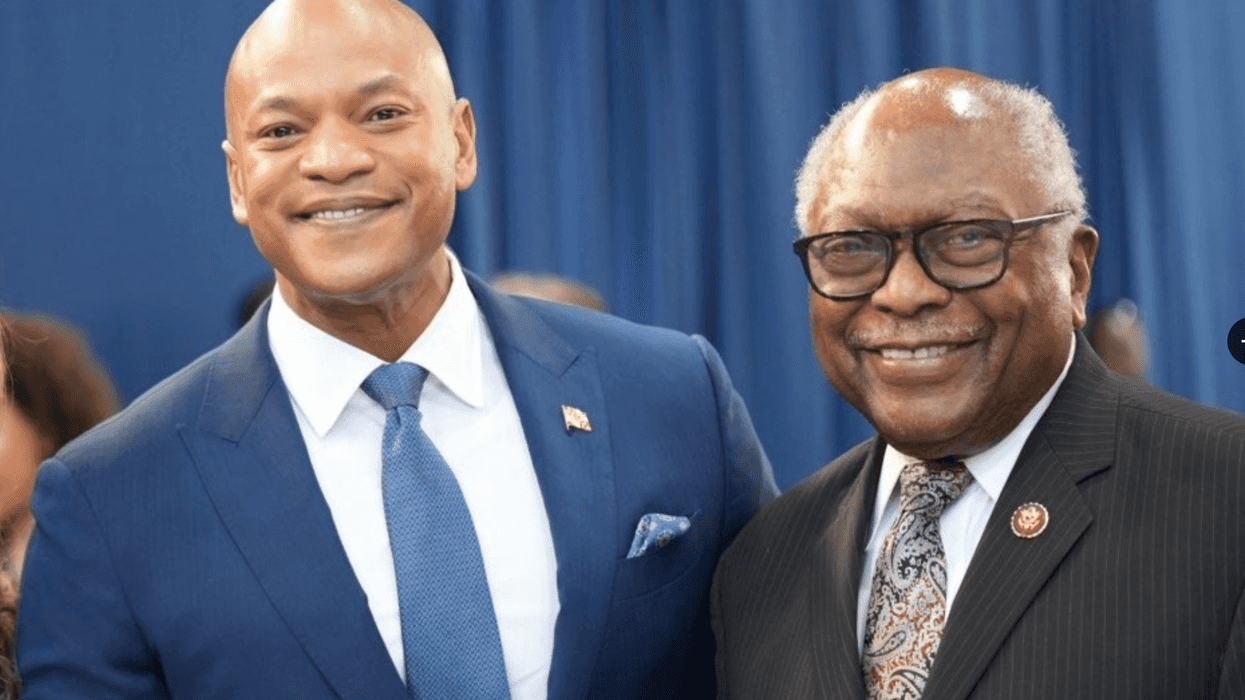
Rep. James E. Clyburn (D-SC) is the go-to for both reassurance and resolve. That makes sense, since the South Carolina Democrat is a student of history — and has lived it.

He chronicles some of the country’s past, and his own, in his book The First Eight: A Personal History of the Pioneering Black Congressmen Who Shaped a Nation, published late last year.

It’s instructive to learn about the lives of these eight and the Jim Crow discrimination that thwarted Reconstruction and the political and civil rights progress of African Americans for nearly a century during and after their time.

But that doesn’t make what they accomplished meaningless. And it’s not as though the hard work stopped in the years between the post-Civil War eight and Clyburn’s election in the 1990s.

That’s the lesson Americans who fight for justice must never forget, even when the outlook is discouraging. Clyburn is a very real symbol of how risks can turn into rewards shared by those who follow — and as we witness the current retreat from those gains, initiated at the highest levels of government, his perspective couldn’t come at a better moment.

It is a week that has seen the 61st anniversary of what has become known as Bloody Sunday, the march across the Edmund Pettus Bridge in Selma, Alabama. On March 7, 1965, state troopers violently attacked peaceful citizens seeking equal rights, particularly the voting rights denied African Americans during decades of disenfranchisement.

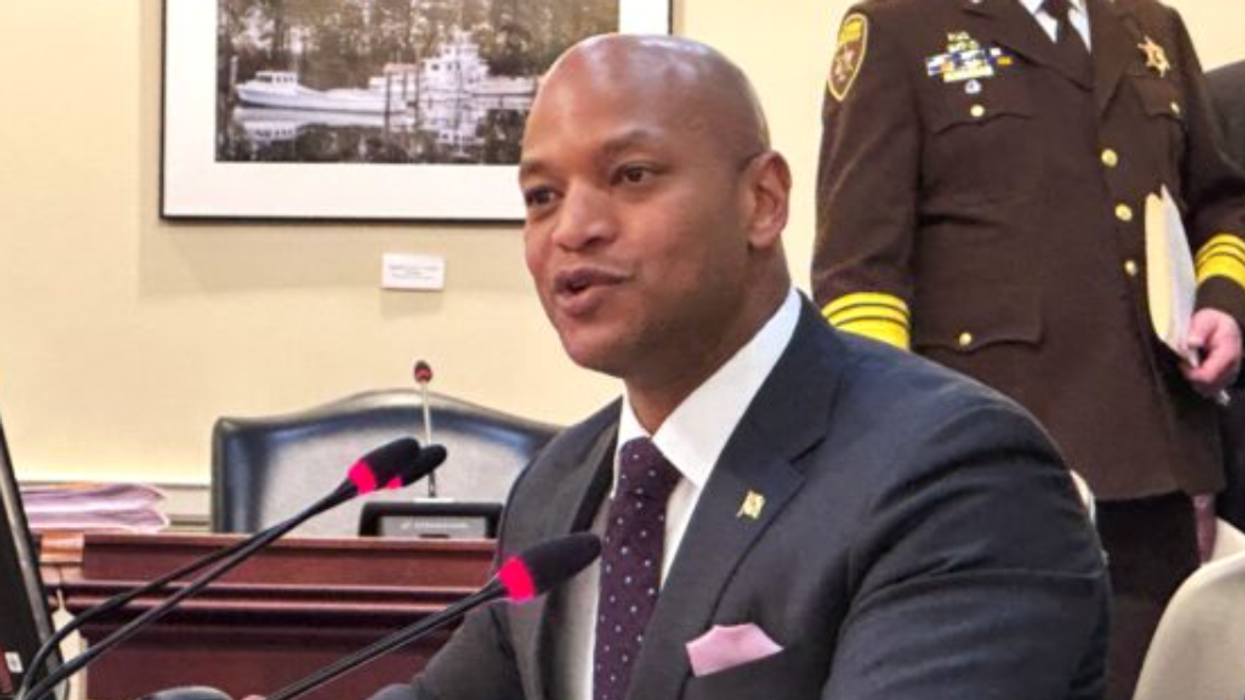
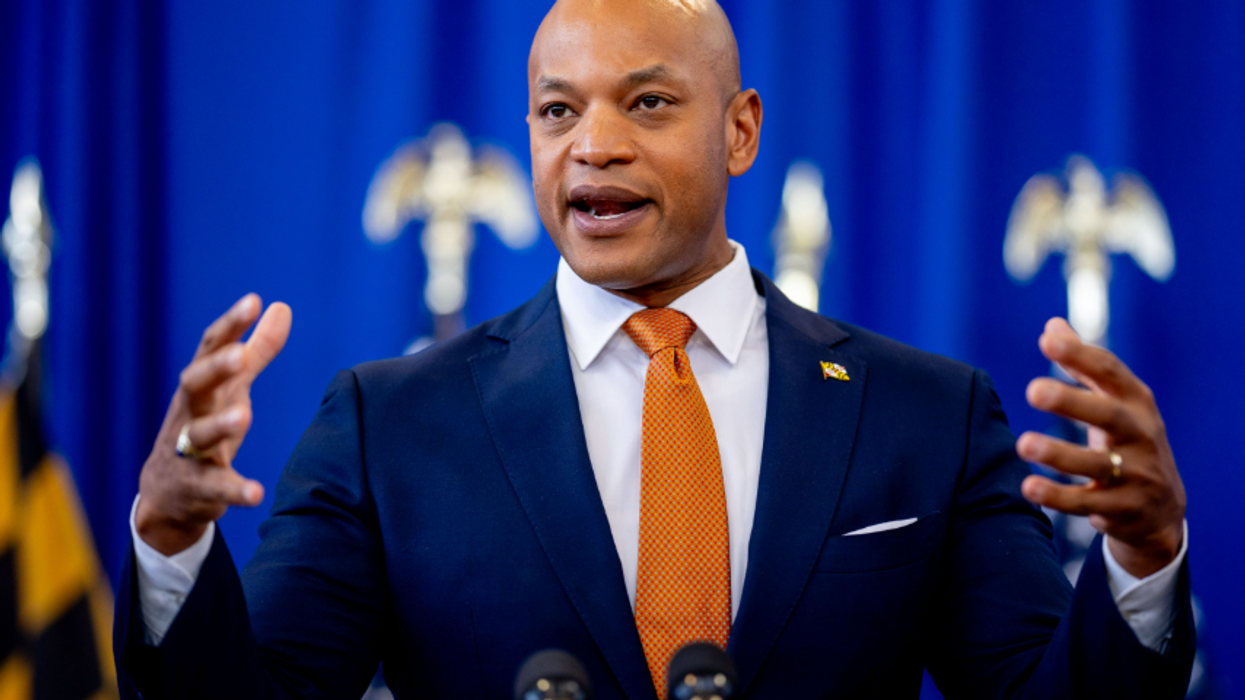
Many gathered this past weekend in Selma, among them Illinois Gov. JB Pritzker and Maryland Gov. Wes Moore — a Democratic presence when GOP representation at the event has been sadly shrinking with each passing year — and people from the original march.

One thing they all had in common was worry that the battle over voting rights is far from finished. “I’m concerned that all of the advances that we made for the last 61 years are going to be eradicated,” 78-year-old Charles Mauldin, beaten on Bloody Sunday, told the AP.

The Supreme Court seems primed to obliterate what remains of the Voting Rights Act of 1965, passed after the bloody sacrifice of that day shocked the national consciousness. If given the green light, Republican-led efforts could eliminate majority-minority districts that have given Black and Hispanic citizens representation and a voice in Washington.

President Donald Trump, amid an unpopular war with Iran, has found plenty of time to demand that Congress pass stricter federal voting requirements to fight nonexistent fraud.

The federal government has embarked on what seems like another wild-goose chase in Arizona, seeking records related to the 2020 election, where numerous audits and reviews have proven Trump lost — a truth the president of the United States refuses to accept.

Critical midterm elections are around the corner, with the first primary elections a week old. How certain are free and fair elections, without interference or intimidation?

It was my question during a press conference preceding Trump’s State of the Union address last month. Clyburn was joined by fellow Congressional Black Caucus member Rep. Sydney Kamlager-Dove of California to offer insight that might be missing that evening.

Does the congressman fear a weakened Voting Rights Act would spell doom for Black voters?

“A lot of things went against us before we ever got the right to vote.”

He offered a reminder of what was happening in Alabama and a host of states in the South when John Lewis and the rest of the brave men, women and children marched. Many African Americans then did not have the right to vote.

“It wasn’t lack of desire, but obstacles placed in their way,” Clyburn said, noting poll taxes, literacy tests, “the violence and intimidation meted out to anyone who would even think of trying to vote, or registering a Black person to vote.”

“Yet there they were on that bridge, fighting injustice for themselves, of course, but mostly for those who would follow.”

No matter what the Supreme Court rules, “it will not take the vote away.” And one vote could make the difference, he said.

Maybe it does take people who have lived the fight to supply a call to action to those who might be scared away by state election laws designed to confuse or by poll watchers whose goal is intimidation rather than assistance.

Folks like Clyburn and Mauldin, who remembered what it took that day in 1965: “It wasn’t that we didn’t have fear, it’s that we chose courage over fear.”

Mary C. Curtis has worked at The New York Times, The Baltimore Sun, The Charlotte Observer, as national correspondent for Politics Daily, and is a senior facilitator with The OpEd Project. She is host of the CQ Roll Call “Equal Time with Mary C. Curtis” podcast. Follow her on X @mcurtisnc3.

Reprinted with permission from Roll Call
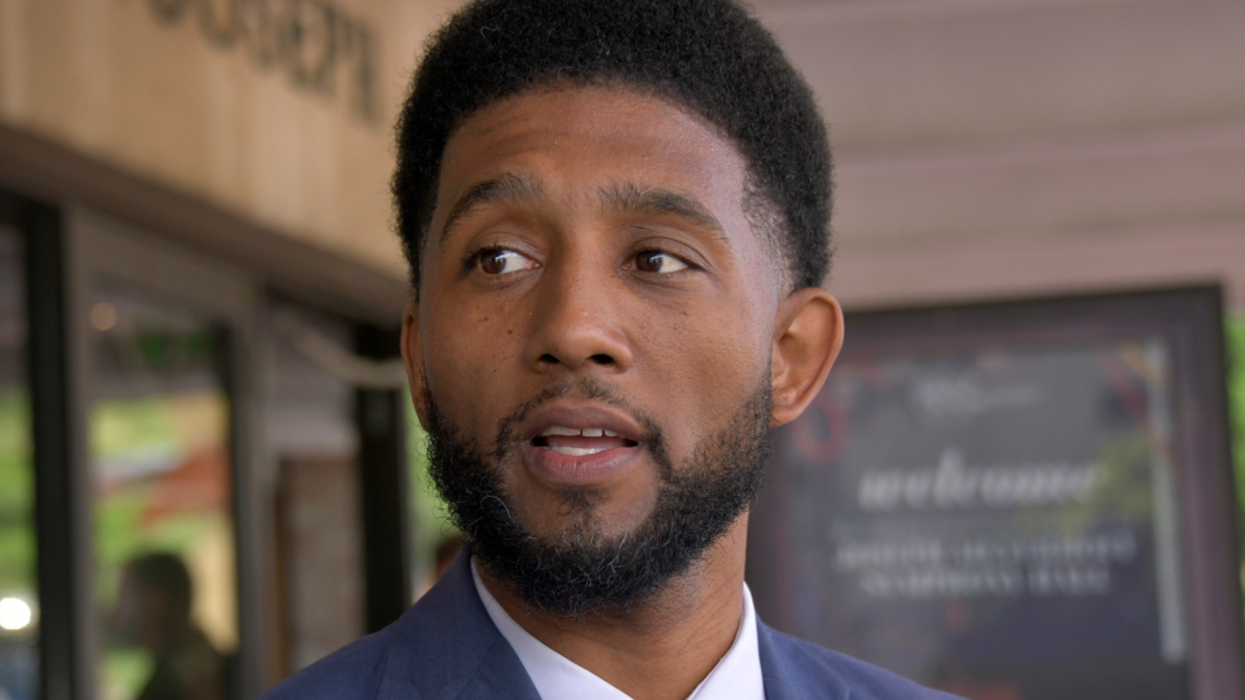
Our Inner Cities Deserve Respect -- And Anti-Crime Policies That Work

Our Inner Cities Deserve Respect -- And Anti-Crime Policies That Work

“Of course, Baltimore,” said Donald Trump when ticking off the list of cities that required federal forces to quell the hordes of violent urban criminals who live in the president’s head, if not in reality.

It’s clear he never bought into the nickname coined to counter the city’s negative image. No “Charm City” for a man who fails to see any positives in a place he recently called a “hellhole,” and not for the first time.

Right now, the administration’s attention has turned to Chicago, likely the next target of his plan to interfere with law enforcement operations — and whatever else he can get away with — in cities led by Democrats.

Trump, always spoiling for a fight, is ready to take on a federal judge’s ruling of overreach in Los Angeles, not to mention Illinois Gov. JB Pritzker and Chicago Mayor Brandon Johnson (who fits the profile).

However, the president would never leave out his go-to for all things dysfunctional in a blue city led by a Black mayor, in Baltimore’s case Brandon Scott. That’s the same man some Republicans blamed when a cargo ship crashed into the city’s Francis Scott Key Bridge, casting Baltimore’s mayor and Maryland Gov. Wes Moore as both incompetent and all-powerful.

Then again, it’s easy to spew nonsensical contradictions, along with every inner-city and racist trope, when you don’t see citizens who live in certain parts of certain cities as human beings.

You only had to listen to Trump’s answer to an invitation by Moore to walk the city’s streets, to actually learn something about the places and the people he so glibly and destructively malign. He only sees teenage “thugs” to be put behind bars, charged as adults and thrown into prisons, places where you don’t have to attend school but where you learn plenty.

“I’m not walking in Baltimore right now. Baltimore is a hellhole,” Trump said. “This guy, I don’t even think he knows it.” Yes, “this guy,” not “Governor Moore,” the better to disrespect a state leader who happens to be Black.

To be fair to the president, he is not alone in the judgments he makes from afar.

As someone who grew up in West Baltimore, I am well aware of the city’s reputation.

Even people who should know better seem both surprised and disappointed when, instead of sharing tales of being a child lookout for drug dealers, in a scenario straight out of The Wire, I talk about my less dramatic reality of backyard birthday parties, trips to the library, and doing chores for neighbors.

That’s not to say the neighborhood of my youth was crime-free. And that was before a drug epidemic rendered too many familiar row houses vacant shells I see on visits to relatives.

Unfortunately, I have seen more than one childhood friend caught up in addiction or one mistake that landed them in the system instead of a counseling or treatment center the well-heeled on the other side of town always seemed to have access to.

But I never forgot the people they were or could be still if they had the support, programs, and, yes, luck that blessed me.

People get a lot wrong when judging inner cities across America.

Its residents crave attention from law enforcement and their government. They pay their salaries, and they are outraged when everything from medics to 911 seems to lack a sense of urgency when responding to their emergencies.

In my experience, they just want to be treated fairly and respectfully, to be on the other end of that mission “to protect and serve.” They would welcome after-school programs and community violence-prevention strategies more than troops, tanks, and National Guard members from Tennessee and Mississippi who may see them as perps rather than people trying to live safe and productive lives.

And they have learned to be very suspicious of politicians who say things they obviously don’t mean. Donald Trump isn’t serious about “law and order,” not when one of his first acts as president was pardoning criminals who attacked the Capitol on January 6, 2021 and injured more than 100 law enforcement officers.

If the Trump administration and its compliant allies in a GOP-controlled Congress really wanted to help rather than dominate the Americans in the cities he dismisses, they would just support the policies that have been proven to bring crime rates down.

But then they would have to admit they could learn a thing or two from those Democratic Black mayors.

Johnson does not downplay Chicago’s gun violence, which, while decreasing, still left 58 people shot over the holiday weekend. He said at a news conference that many of those guns on the city’s streets are trafficked to Illinois from nearby states, including GOP-led Indiana. “Chicago will continue to have a violence problem as long as red states continue to have a gun problem,” Johnson said.

“If the president was absolutely certain,” he said on NPR, that “driving violence down in the city of Chicago and cities across America was his actual goal, he would not have taken over $800 million away from violence prevention efforts.”

In an interview on NPR, Baltimore’s Scott talked about what has brought down violence in his city, one that as of July had seen 84 homicides, the fewest recorded in more than 50 years, one of many hopeful statistics Trump refuses to acknowledge or believe.

“We actually go to those who are most likely to be the victim or perpetrator of gun violence. They get a letter directly from me. We knock on their door and say, ‘We know who you are. We know what you do. Change your life. We’ll help you do it. But if you don’t, we’re going to remove you via law enforcement,” Scott said.

“Those who have taken us up on change in their life — over 90 percent of them have not reinjured, revictimized, or recidivated in crime.”

It makes perfect sense, to nurture people with hopes and dreams who need guidance and a pathway to success. But first you have to see those kids, and yes, many are kids like I once was, as human beings worth investing time and money in, as young people worth saving.

Mary C. Curtis has worked at The New York Times, The Baltimore Sun, The Charlotte Observer, as national correspondent for Politics Daily, and is a senior facilitator with The OpEd Project. She is host of the CQ Roll Call “Equal Time with Mary C. Curtis” podcast. Follow her on X @mcurtisnc3.

Reprinted with permission from RollCall.

No Lie: Wes Moore Indeed Earned A Bronze Star For Afghan Heroism

No Lie: Wes Moore Indeed Earned A Bronze Star For Afghan Heroism

A false claim that Maryland Gov. Wes Moore never earned a Bronze Star for his military service in Afghanistan is being repeated by far-right pundits and media.

It has been alleged that Moore lied about receiving the honor on a 2006 application for a White House fellowship and has since failed to correct media reports that repeated the claim.

But there’s nothing to correct. At the time he submitted the application, Moore had been told by his commanding officer, Lt. Gen. Michael Fenzel, that he had been approved to receive the honor. The medal itself was not awarded until December 2024 because of a paperwork delay—a common occurrence in the military.

“I don’t know how many times since I’ve retired that I’ve [had] people come to me trying to get an award that they told me that they had been recommended for that they never got,” General Stanley McChrystal told the New York Times last year.

The Bronze Star is awarded for heroism in combat zones. Moore joined the Army in 2004 after receiving a master’s degree from Oxford. He was deployed to Afghanistan from 2005 to 2006 with the 82nd Airborne Division.

Fenzel personally recommended that Moore receive the honor and was not aware of the delay until it became a source of controversy. Fenzel ensured that the paperwork was corrected.

“Moore was tireless in his efforts to engage villages and tribal leaders to receive the most relevant and important messages associated with reconstruction, development, and stabilization,” Fenzel said at the belated award ceremony. “Through innumerable trips outside the wire and into Afghan communities, Wes Moore consistently demonstrated courage and skill in [a] wartime environment.”

An officer evaluation report from Moore’s time in the military described him as “a top 1% officer” and “the best lieutenant I’ve encountered during Operation Enduring Freedom.”

Moore told the New York Times that he never personally inquired about the award because he felt it would be disrespectful.

“You don’t do that,” he said. “I’m not going in and asking, ‘Well, what about this award or that award?’ I’m grateful that I’m home.”

Moore received other military honors, including the Combat Action Badge, the National Defense Service Medal, the Afghanistan Campaign Medal, the Armed Forces Reserve Medal, the Army Service Ribbon, and the Parachutist Badge.

Reprinted with permission from American Journal News.

Maryland Governor Mocks President 'Bone Spurs' In Social Slapdown

Maryland Governor Mocks President 'Bone Spurs' In Social Slapdown

President Donald Trump spent early-morning hours scrolling the internet for ammunition to use against his latest political enemy, the Daily Beast reports

Democratic Maryland Gov. Wes Moore has been publicly ragging the president over his faulty recall of their interactions as part of his attack on Trump’s gerrymandering and threats to deploy National Guard tropps to blue states.

The Beast reports Trump responded over the weekend with a social media rant in which he threatened to pull federal funding from Baltimore. This prompted the governor to mock the president’s physical ability and lack of military service.

“President Bone Spurs will do anything to get out of walking — even if that means spouting off more lies about the progress we’re making on public safety in Maryland,” Moore posted on social media. “Hey Donald, we can get you a golf cart if that makes things easier. Just let my team know.”Moore is a combat veteran who served in the U.S. Army, while Trump received five military draft deferments and did not serve.

In response to the dig, Trump made an inexplicable claim earlier this week that Moore had called him the “greatest president of my lifetime” when they met in 2024. Moore quickly dispelled that claim. On Wednesday, he also slammed Trump’s “absolutely comical memory,” a label that Trump apparently took seriously enough to research a response on hours later. The Beast reports that just after 2 a.m. that night, Trump reposted a year-old article from The Hill about Moore apologizing for mistakenly claiming on a 2006 White House Fellowship application that he had received a Bronze Star.

“But is that the end of his political career. He was very disrespectful to the Office of the President!” Trump complained in a Truth Social post.

Moore was deployed to Afghanistan from August 2005 to March 2006, and had listed the Bronze Star on his application among his many other honors, despite never having received that particular award.

Moore called it an “honest mistake” on social media, saying: “My deputy brigade commander felt comfortable with instructing me to include the award on my application for the Fellowship because he received confirmation with the approval authority that the Bronze Star was signed and approved by his senior leadership. In the military, there is an understanding that if a senior officer tells you that an action is approved, you can trust that as a fact.”

Reprinted with permission from Alternet

Shop our Store

Headlines

Editor's Blog

Corona Virus

Trending

World