Revelations Of 9/11 Toxic Toll Inflicting Fresh Damage On Giuliani's Reputation
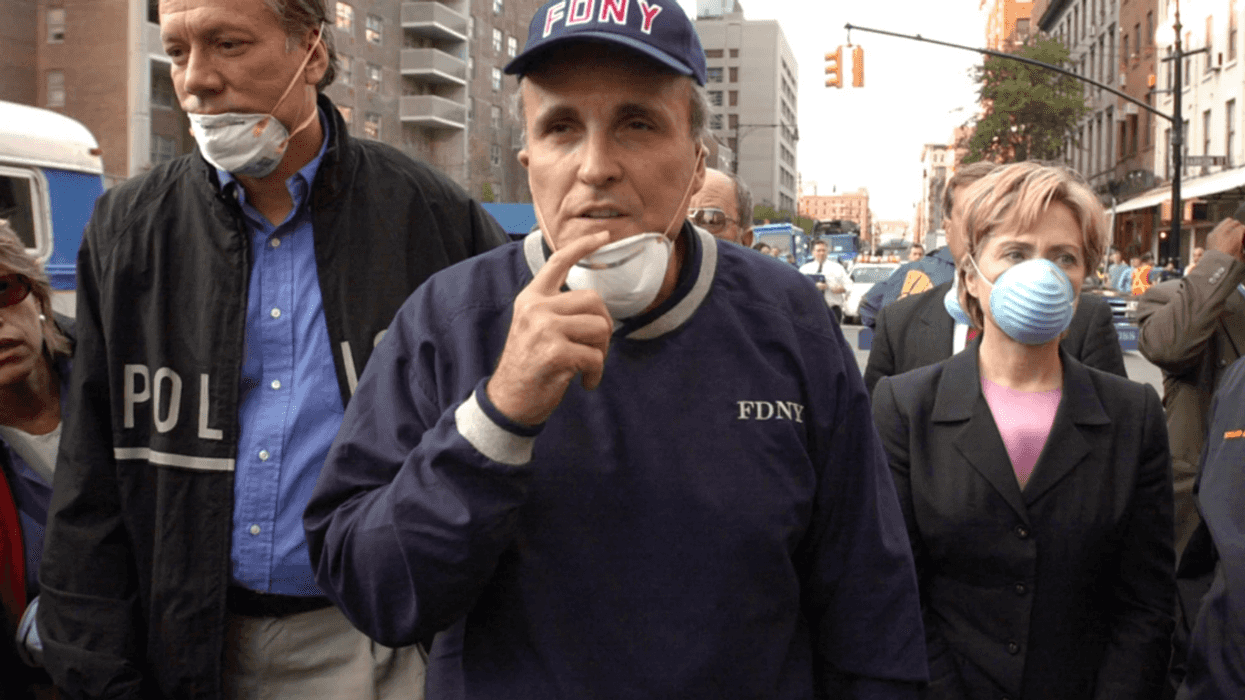
Gov. George Pataki, Mayor Rudolph Giuliani, and Sen. Hillary Clinton on September 12, 2001
I'm not a big fan of New York Mayor Zohran Mamdani, but this week, he did something important that his predecessors had refused to do. On the eve of the 25th anniversary of 9/11, New York City released over 170,000 pages of documents about the toxic air quality levels after the September 11, 2001, attack on the World Trade Center.
The numbers are stunning: more people have died from the toxic effects of 9/11 than from the plane crashes and building collapses on September 11. More than 140,000 people from all 50 states have enrolled in the World Trade Center Health Program; 49,000 have been diagnosed with certified WTC-related cancers, according to the 9/11 Memorial. And more people are eligible but, according to Mayor Mamdani, now live outside New York and have not received any outreach.
The numbers of illnesses and deaths among firefighters are particularly tragic. According to the World Trade Center Health Program, 343 FDNY firefighters died on 9/11; almost twice as many have died since because of post 9/11 related illnesses. Most striking: According to ABC-TV in New York, almost a quarter of all 12,000 certified FDNY members have been diagnosed with a 9/11-related cancer or respiratory conditions.
The real significance of this week's disclosures is not the troubling numbers, but the lies by public officials behind them. We were lied to, openly and blatantly. Rep. Jerrold Nadler (D-NY) has been pushing for years for the truth about who knew what and when to come out. A multi-year lawsuit finally led to the internal memos coming out.
The newly released documents include records of then-Mayor Rudolph Giuliani and other city officials repeatedly telling residents and first responders that the air was safe, when their own data said it wasn't. Mayor Michael Bloomberg, who succeeded Giuliani, said, "Every test that has been done says the air quality was in acceptable limits. I think some people are just never going to believe that." They shouldn't. Children went back to school under toxic clouds that could kill them later.
In one example, cited by CNN, on October 6, 2001, an internal memo written by Associate Health Commissioner Kelly McKinney on October. 6, 2001, warned that "air quality (for asbestos) at these locations is not yet suitable for reoccupancy." That memo was from the same day that Mayor Giuliani told the public that the air was safe and they should return to normal life.
It wasn't just the asbestos in the air. The government covered up major lead contamination at the Department of Transportation headquarters building and discouraged the use of respirators among first responders. According to the records, residents "returned to their ash-filled apartments because they were 'lulled by reassuring statements'" from Giuliani and EPA Administrator Christie Whitman; many of them developed "severe, persistent health problems," including nosebleeds, rashes, headaches, asthma and coughs from inhaling "the highly alkaline, caustic dust."
All of this has left New Yorkers rightly angered that it has taken 25 years, an outspoken Congressman, and a wide-ranging lawsuit for the truth — that we can't trust public officials -- to come out. It also leaves those of us who lived through the Los Angeles fires and heard the repeated exhortations of public officials that all was fine, the smoky air was safe, the soil ready for new building, and it was time to return to normal. Was it? Is it? Will we have to wait 20 more years to learn the truth, the way New Yorkers did?
On September 11, we will remember the heroes of 9/11, the innocent passengers, the sacrifices of the firefighters, the thousands who suffered later and are suffering still. And we will remember what else we lost — trust in our government and our public officials.
Susan Estrich is a celebrated feminist legal scholar, the first female president of the Harvard Law Review, and the first woman to run a U.S. presidential campaign. She has written eight books.
- 25 Years After 9/11, Questions Persist Over FBI Pursuit Of Saudi Suspects ›
- What We Never Learned From 9/11 Now Jeopardizes Our Security Every Day - National Memo ›
- Health Effects of 9/11 Dust Exposure for Survivors & First Responders ›
- The Lethal Dust of 9/11 - The New York Times ›
- What we know about NYC’s newly released 9/11 records revealing officials misled public about air safety | CNN ›
- New Yorkers were 'lied' to about toxic air after 9/11 attacks, says Mamdani ›
- Toxins and Health Impacts: Health Effects of 9/11 - WTC Health Program ›