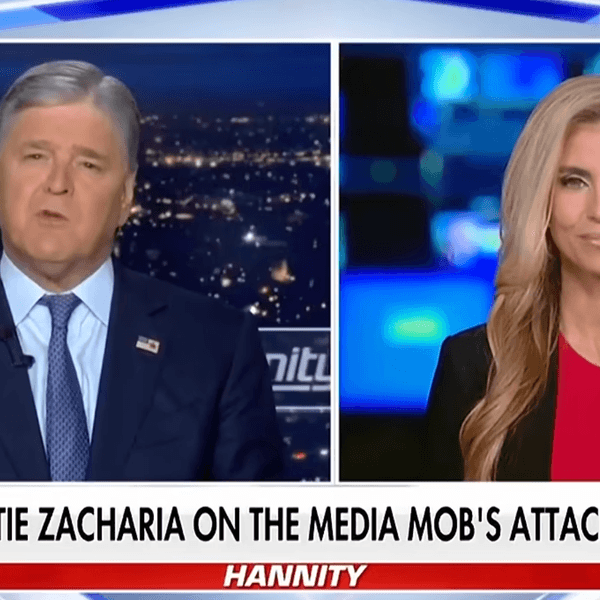
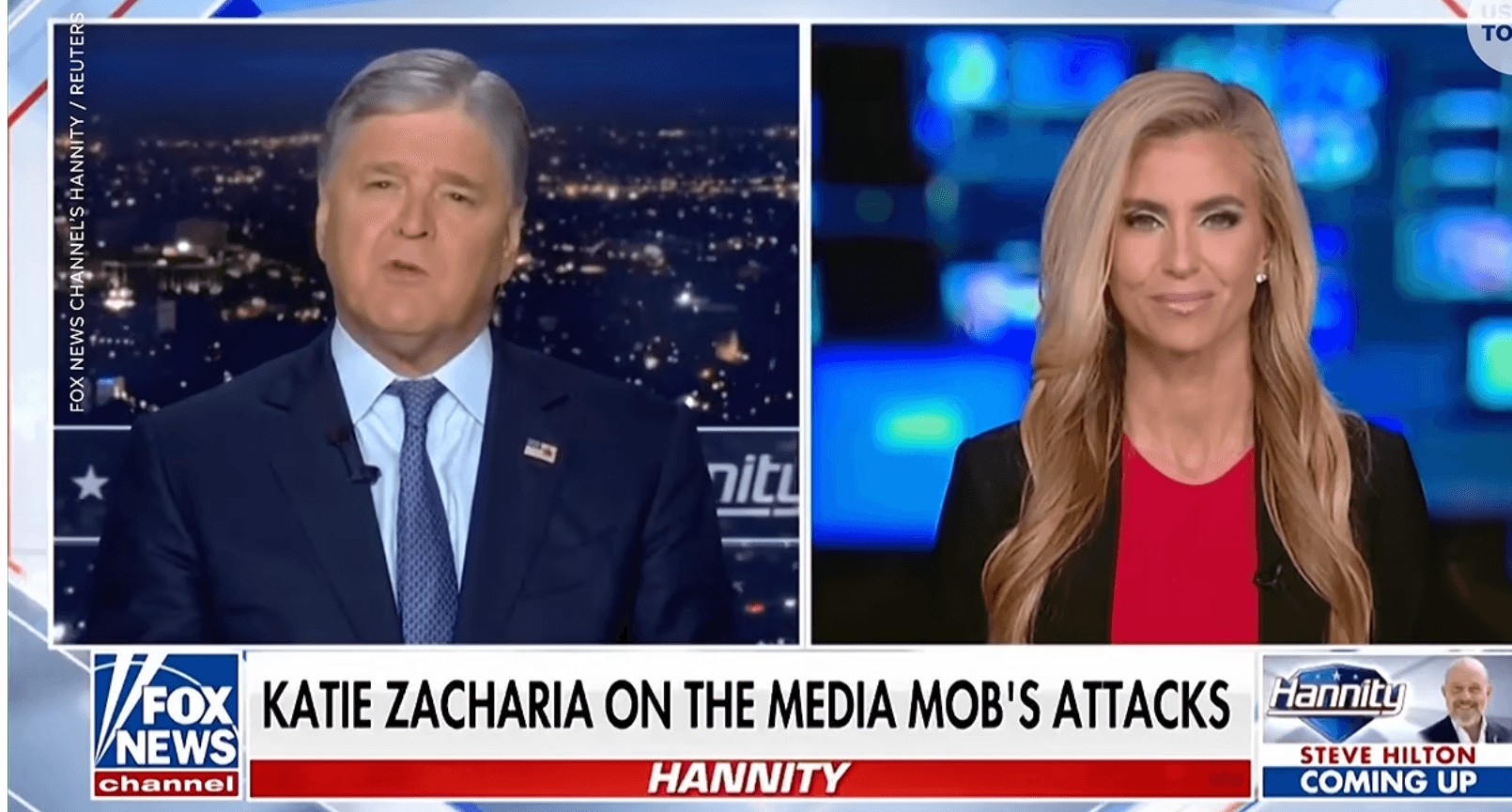
Former White House press secretary Katie Zacharia, who was removed from her role after only five days following a shaky maiden voyage and inconsistencies concerning her legal background, said she is still surprised at the Sean Hannity interview that may have been the final nail in her short career at the White House
“I'm just as perplexed about what happened specifically with Sean Hannity,” Zacharia told Newsmax host Rob Finnerty Tuesday night.
She added that even though Hannity’s fatal scrutiny of her legal background may have been the break-point where Trump reconsidered her hiring, she said Hannity's team had made overtures to her about a job spot earlier in the year.
“I got a phone call from them asking me if I would consider being Sean's California man on the street, basically asking Californians what they thought of Gavin Newsom ahead of potentially a presidential run that Gavin Newsom might make,” Zacharia said. “So Sean Hannity's team, after being on with him a number of times and having a great rapport with Sean, thought that I would be a valuable asset to be continuing a relationship and in the press for him on his show.”
“Isn't that interesting? So, he thinks you were good enough to work on his show, but not to be press secretary,” quipped Finnerty, “and I doubt that he had any interest in your educational background at that point when you had that call. Is that accurate? Is that fair?”
“We never had a conversation about my educational background,” Zacharia answered. “They were excited that I was someone who could be able to deliver fun, fast, exciting, interesting on the street. … But because I had had a very friendly rapport with Sean and he had even made very backing statements about me on Tuesday, October 13th, really coming to my defense, I was not prepared for the hostility that I received.”
Zacharia left the administration in disgrace earlier this month after she was accused of falsifying her law background and flopping her first press conference, but she was still groveling to stay in Trump’s good graces Tuesday night.
“I still am irritated to this day and angry that the mainstream media will not give [Trump] positive coverage of what he's doing,” she told Finnerty. “We have never seen a president work this hard for midterm elections, and yet the Wall Street Journal writes just recently, maybe a day or two ago, writes this very, very disgusting piece about how the rallies aren't that packed.”
“This is just a personal tour,” Finnerty said, explaining the smaller crowds.
Reprinted with permission from AlterNet
- How Top Fox News Propagandists Are Covering 2026 Senate Races ›
- Left To Perish On Trump's Death Plane, Leavitt Gives Notice As Press Secretary ›
- Who Are The Real Sexual Predators? There's A List ›
- Behind Steve Bannon's Election Unreality Show, A Gang Of Supervillains ›
- White House Help Wanted: White Blonde Female (In Stilettos) Preferred ›
- When Fox News Featured The Legal Clowning Of 'Attorney' Katie Zacharia ›
- Sean Hannity grills Katie Zacharia over her law credentials amid scrutiny - YouTube ›
- Katie Zacharia unfollows Sean Hannity on social media after interview helped cap off her disastrous week | The Independent ›
- Katie Zacharia faces sharp questions from Fox News hosts about rocky start - POLITICO ›
- Katie Zacharia grilled by Trump ally Sean Hannity, adding to rough start ›
- Sean Hannity grills Katie Zacharia on legal credentials, White House briefing ›
- Katie Zacharia’s firing was foreshadowed by a chilly Fox News reception | CNN Business ›
Start your day with National Memo Newsletter
Know first.
The opinions that matter. Delivered to your inbox every morning