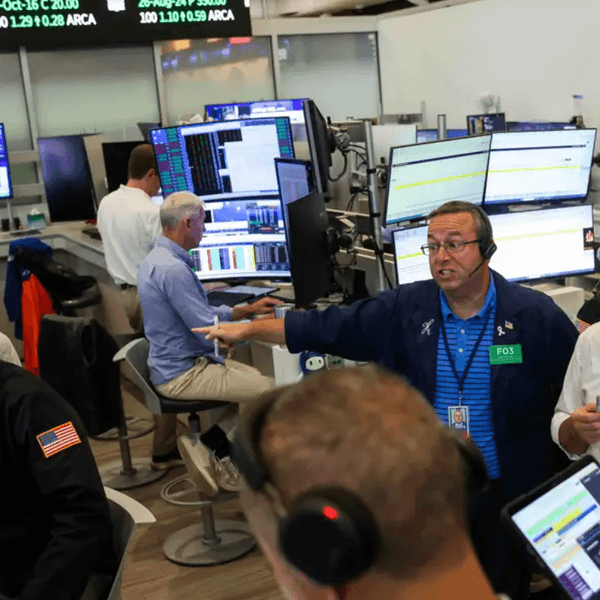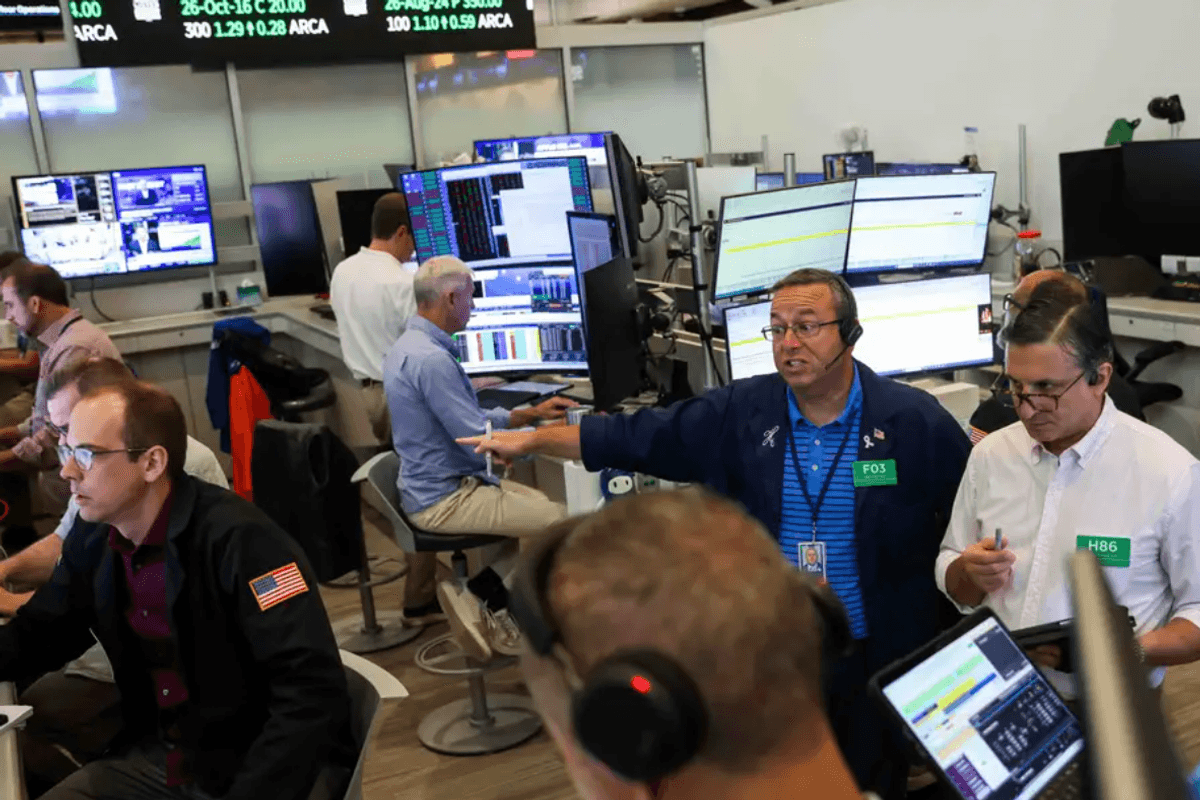
Even while the underlying economy is strong and possibly even heating up, there are a number of conditions in key sectors that are, to use the technical term, nerve-wracking. (It is of great concern that the gap between macro—how the overall economy is doing—and micro—how regular folks are experiencing that economy—is wider than ever, a topic of great interest up in here. But not today.)
The most prominent place to see this is the bond market, which has been above-the-fold news for days now. Remember when that tanker, the Ever Given, got stuck in the Suez Canal? If you’re not in the cargo business and you know the name of a specific tanker, it’s because something bad happened. Same with the bond market. It’s supposed to be boring. When it repeatedly leads the news…not good.
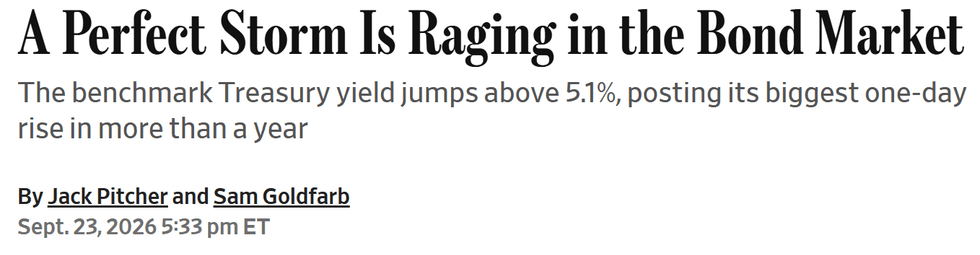
This Wall Street Journal headline screaming at me today feels a bit overheated, but it’s directionally correct.
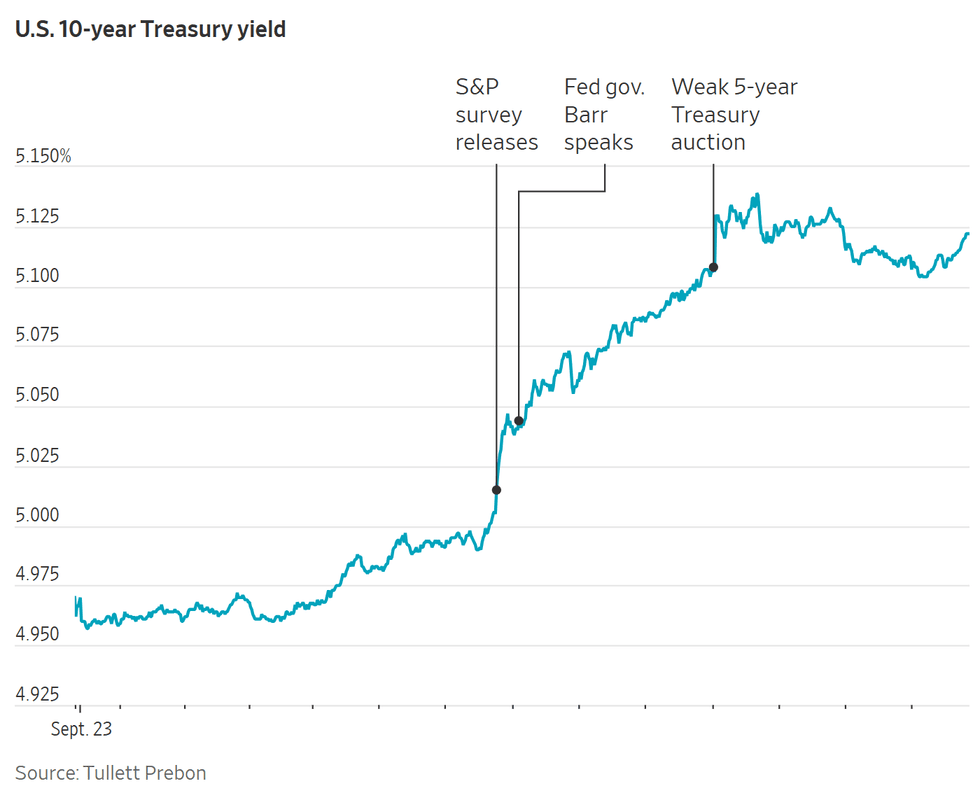
Yesterday’s selloff (bond yields rise when their price falls) was a play in three acts, shown below.
 Source: Tullett Prebon
First, a composite index of the manufacturing and service sectors for September showed a spike in both growth and prices. As you see below, the index kinda correlates with Gross Domestic Product.
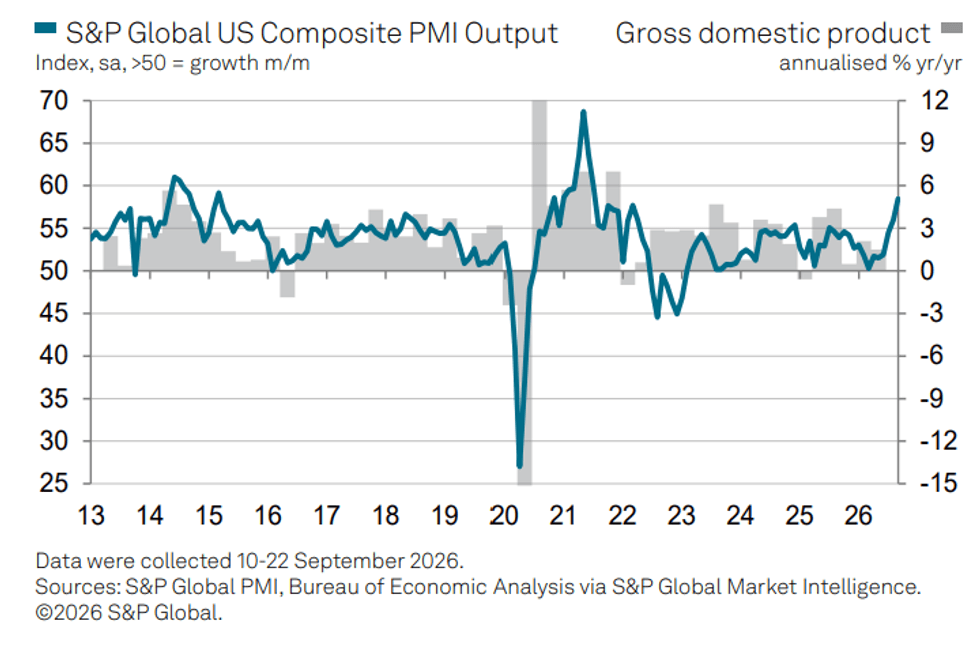
There are two relevant parts to this particular push-factor on yields. First, this release rarely gets this sort of attention, and thus underscores a key fragility: Investors are nervous and looking for reasons to be more so (I worry about this risk here). Second, if you give this monthly result more weight than you should, in my opinion, you’ll conclude the Fed will need to keep raising rates, and this time for less controversial reasons. That is, if it’s just tariffs and the war pushing on inflation, there’s not much the Fed can do, but stronger demand pushing up inflation—that’s wheelhouse dynamics for them.
Which is why Act Two featured Fed governor Michael Barr saying something to this effect in a speech yesterday, also juicing rates.
Act Three followed:
Then at 1 p.m., the federal government’s auction of fresh 5-year Treasury notes was met with weak demand. The notes were sold at a yield well above what traders had anticipated, and bond dealers that are required to bid at auctions were forced to take down an unusually large share, pointing to a lack of interest from other potential buyers.
Investors had little interest buying bonds right when their prices were tumbling. The poor result only caused more alarm, driving yields still higher.
Why is this happening?!
The usual suspects have been trotted out, including by yours truly, so I’ll tick them off without comment, though I’ll add weights of a sort.
—Government competing with AI firms for credit investors (high); the USG will borrow ~$2 trillion this year; AI’s borrowing maybe ~$1t. That $3t is nine percent of GDP, i.e., big potatoes.
—The war and its inflationary impact (high); this shows up in higher short term rates, which reflect expectations about where the Fed is going, which is up.
—Our unsustainable fiscal path (medium); it’s in the background, and as I and others have stressed, it’s more of a future than a current problem, though the more we ignore it in the present, the bigger the future headache. That said, recall the Goldman Sachs quote I had in my recent New York Times oped: “Higher debt increases vulnerability to unfavorable surprises.”
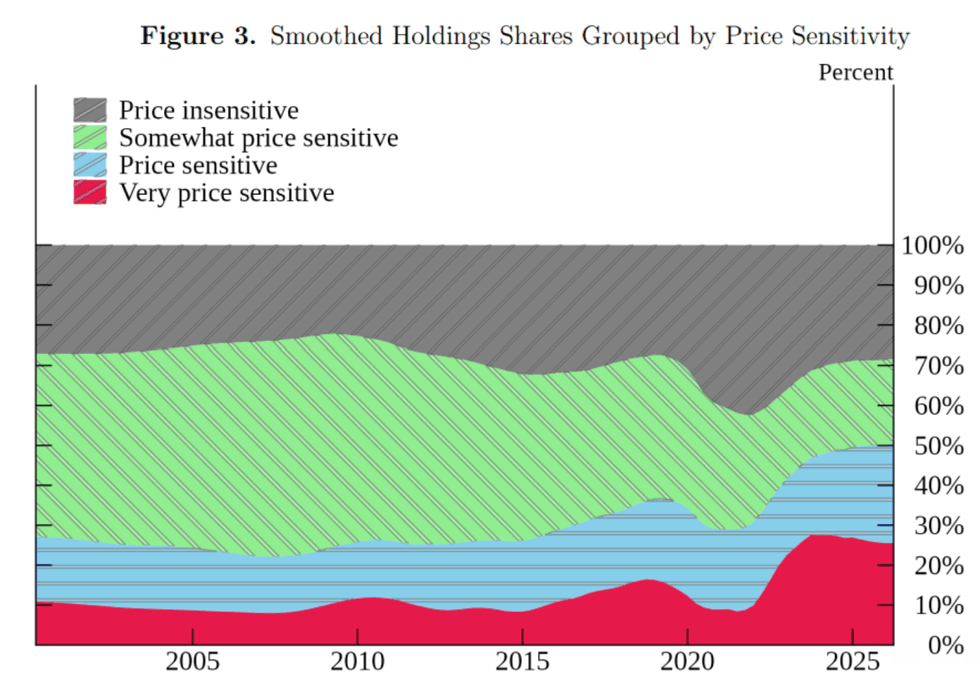
—This one’s a bit new. There’s evidence that bond-buyers, i.e., lenders to the US government, may be more price sensitive, meaning quicker to dump Treasuries if they get spooked, feeding the selloff. This is partly a shift from more patient foreign and domestic institutional lenders (e.g., pension funds) to more active debt holders (hedge funds).
 Source: Board of Governors of the Federal Reserve System International Finance Discussion Papers Number 1447
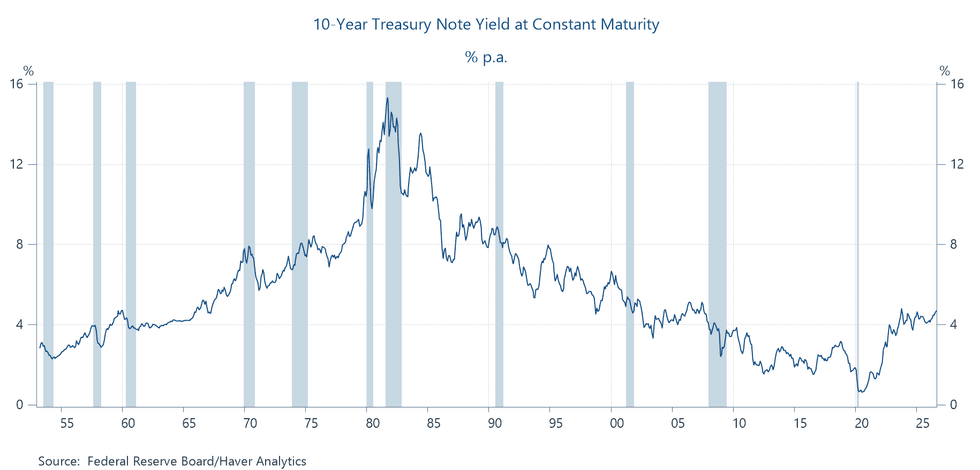
So, with all this mishegoss in play, why did I call the Journal’s headline overheated? Two reasons. One, better to be historical than hysterical. Readers well know that I’m not at all downplaying the recent rise in the 10-year yield shown at the end of the figure below. But in historical level terms, rates are not high; the exceptional period is the one of very low rates that prevailed roughly from 2010-2022. Second, as I discussed in my recent r* post, higher rates also reflect expectations of higher growth.
 Source: Federal Reserve Board/Haver Analytics
Which brings me to AI, a key source of the growth optimism. In my and Ryan Cummings view, it’s a little more complicated than that. There’s a good chance that AI will eventually have tangible, positive impacts on US productivity and growth (who benefits from that growth is not at all clear and our prior is that, absent policy guardrails to explicitly avoid this outcome, it will exacerbate already high levels of wealth inequality).
But as we will show in a forthcoming post, our AI-is-probably-a-bubble call is alive and well. The gap between their very high valuations/spending on one side, and their very low profitability—actual and expected—on the other, remains wide and concerning, especially given the contribution from this source to GDP growth, through both the investment and “wealth-effect” ($1 extra of stock-market wealth yields $0.03 in added consumer spending) channels. If we’re right, and this bubble deflates, that has significant negative growth implications.
Jared Bernstein is a former chair of the White House Council of Economic Advisers under President Joe Biden. He is a senior fellow at the Council on Budget and Policy Priorities. Please subscribe to his Substack, from which this is reprinted with permission.
- Pause From Doomscrolling -- And Be Hopeful As MAGA And Trump Swirl The Toilet ›
- How Warsh May Infect The Federal Reserve With Trump's Rampant Corruption ›
- Trump's Iran War Pushing Up Interest Rates And Stifling Housing Starts ›
- Dumping American Stock: Why Doing Good May Also Be Doing Well ›
- Will Bond Market Yields Force Trump To End His Blundering Iran War? ›
- Why bond yields are rising and why everyone should care - Los Angeles Times ›
- THE CLOSING BELL: Pressure from the bond market hits a new level, and US stocks slide on worries about inflation | WPTF FM 92.9 / AM 680 ›
- Pressure from the bond market hits a new level, and US stocks slide on worries about inflation | AP News ›
- Pressure from the bond market hits a new level, and U.S. stocks slide on worries about inflation ›
- Don’t Panic About a Bond Market Selloff. It Could Be a Sign of Economic Strength | Morningstar ›
- The bond market is signaling trouble ahead. This is why you should pay attention ›