Trump Built His Slush Fund 'Settlement' On A Lie -- And An Impeachable Offense
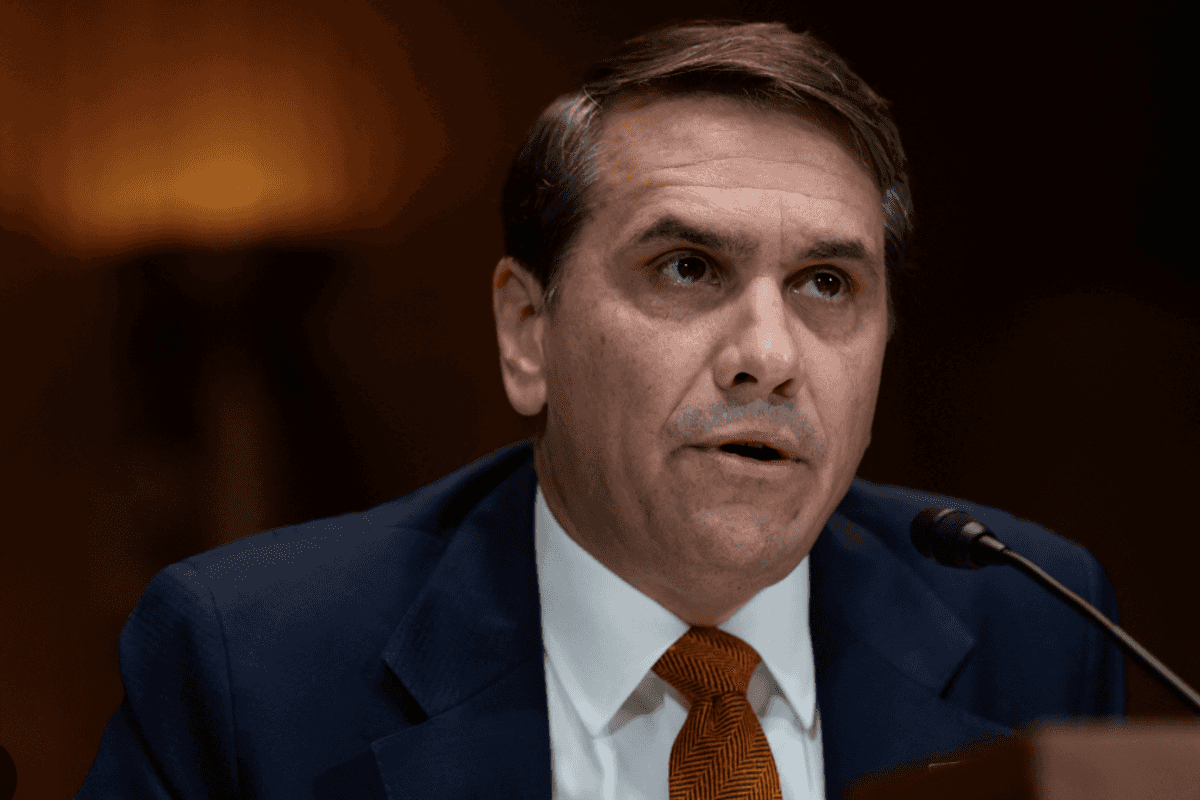
Acting Attorney General Todd Blanche testifies in Senate Appropriations Committee on May 20, 2026
Editor’s Note: The creation of a $1.8 billion fund for supposed victims of (nonexistent) weaponization of the Department of Justice in the last administration is the most grave dereliction of duty in Trump 2.0, save only the pardons of the January 6 offenders. Trump and Blanche are attempting to bypass the constitutional responsibilities of all three branches. At the same time, they are trying to force the American people to pay a wholly undeserved bounty to perpetrators of some of the most perfidious crimes against the nation in our history.
This is a two-part essay. Today’s part canvases the multiple legal violations and anomalies of the scheme to settle a bogus lawsuit in exchange for creation of the fund. Part Two will focus on the ultimate victims—the American people—as well as discuss what can be done going forward to try to blunt or nullify the outrageous swindle.
The most corrupt president in the nation’s history has managed to reach a new low.
Not in terms of sheer violence to the country: that dubious distinction remains with his repugnant pardon of the January 6th offenders. But for layer upon layer of corruption—abuse of every branch of government, the Constitution itself, and the American people—the bogus “settlement” and creation of a $1.776 billion fund for supposed victims of Biden’s weaponization is a new nadir.
Imagine that Trump had simply announced the creation of a $1.8 billion fund, drawn from general DOJ funds, to compensate Proud Boys, Oath Keepers, and everyone else who claims they were victimized by Biden’s weaponization of the justice system.
The political uproar would have been immediate and thunderous. Trump’s allies in Congress would have buried their heads deep in the sand while Democrats went on the political warpath, promising, among other things, a thorough investigation and challenge if they regain the House, including a possible impeachment inquiry.
Yet what Trump and the administration—which is to say, Trump and Trump—in fact did was much worse: a raw violation of his constitutional duty to faithfully execute the laws, an abuse of every branch of government, and a sizable shakedown of the public’s money. All of it by subterfuge: using a sham lawsuit, a rigged settlement, and a voluntary dismissal timed to outrun a federal judge who was closing in on the scheme.
This scandal has layers, and each one is more rotten than the one beneath it. With the exception of the January 6th pardons themselves, it is the most glaring violation of the public trust in Trump 2.0—and that is a crowded field.
I have been writing about Trump’s IRS lawsuit since February—calling it what it is: a collusive non-lawsuit in which Trump controlled both sides. He sued the IRS and Treasury, agencies he runs with an iron fist, defended by a DOJ led by his own former personal criminal defense lawyer, Todd Blanche, who declared at his first press conference, “I love working for President Trump.”
As I explained in prior pieces, this fails the Constitution’s basic requirement that federal courts only hear genuine cases or controversies between adverse parties. You don’t have a lawsuit when the plaintiff tells reporters he is going to “work out a settlement with myself” and instructs the Treasury Secretary to “pay me.” Asked about it at the White House on Monday, Trump said he knows “very little about it” and “wasn’t involved in the creation of it.” The man who said “tell ‘em to pay me” suddenly knows nothing about it. Which tells you much of what you need to know.
Judge Kathleen Williams of the Southern District of Florida saw it too. She ordered briefing on the collusion question and appointed a gold-plated set of amici—former federal judge and legendary AUSA John Gleeson, former Solicitor General Donald Verrilli, and Faith Gay—to present the arguments that neither Trump nor his captive DOJ could be trusted to make. That filing was supplemented by a brief on behalf of 93 members of Congress arguing flatly that the court lacks jurisdiction because the lawsuit is collusive.
Two weeks ago, I predicted that DOJ would run rather than face that hearing. They did, filing a notice of voluntary dismissal just two days before they would have had to choose between two untenable alternatives: either concede the DOJ stands in genuine opposition to Trump, a position the entire record belies, or admit it does his bidding—which would be a confession that the lawsuit was a constitutional nullity from the start. They chose an off-ramp instead.
The dismissal instructs Judge Williams that there was nothing left she could do, but that’s not quite right. It’s true that Judge Williams had to accept Trump’s voluntary dismissal: the Eleventh Circuit has held that such a notice is self-executing and strips the district court of jurisdiction. But Judge Williams put down a marker in her order granting the dismissal, and it’s going to continue to have a legal and political impact on the pushback against the fund.
After canvassing the law strongly indicating that Trump v. IRS was a collusive suit, i.e., a constitutional nullity, Judge Williams wrote that because the notice of voluntary dismissal “does not reference or include a stipulation of settlement, there is no settlement of record.”
Read that again. There is no settlement of record before her court. The entire settlement agreement, which says up front it is settling the case before Judge Williams, is built on a lie, and the parties know it. The agreement declares that the United States—you and I—receive the benefit of the dismissal of Trump’s lawsuit. But a lawsuit that is unconstitutional and cannot be brought in federal courts is of zero value. You cannot settle something that never existed. The consideration on the government’s side of this transaction is pure air.
Williams expressly tied the statement of no settlement to the “outstanding question as to whether an actual case or controversy existed.” That means, at a minimum, that the unconstitutionality of the original case, which is the only even purported consideration for the creation of the fund, is in serious doubt.
Worse, as Williams made plain, the DOJ under its own regulations has “an independent obligation to uphold the public’s strong interest in knowing about the conduct of its Government and expenditure of its resources”—and it filed nothing to fulfill that obligation. Not a word in court to justify spending $1.776 billion of public money. (Note the cute nod to 1776, just months before the semiquincentennial, as if by a feat of patriotic magic that’s the fair value) And how could there be? The administration is creating a huge slush fund to benefit some of the most perfidious offenders against the Constitution in our history, in exchange for the dropping of an unconstitutional non-lawsuit.
This is not a settlement. It is a money grab. It’s a party for all of Trump’s fellow travelers who claim the Biden administration weaponized the DOJ and harmed them, featuring a piñata with $1.8 billion that Trump will let fly. And who will oversee the distribution of the booty? Five commissioners appointed by Blanche and serving at Trump’s pleasure. The fix is in up and down and side to side.
Stuart Rhodes, five million? Sounds about right. Steve Bannon, thirty million? Why not? Every January 6th offender—people who together committed the most serious assault on American democracy since at least the Civil War, and who have already had their entirely fair convictions swept away by pardon—can dip into the cookie jar.
And, another of the cascading outrages of the whole setup, the agreement provides that the names of people who get payouts and the amounts they draw from the honeypot are to remain confidential, provided only to the attorney general.
Oh, and one more thing added this morning as if by afterthought. The DOJ has beneficently appended a promise that the IRS will not pursue any claims it may have against Trump and his family over unpaid taxes. That significantly increases the enormous price tag to the public of the deal, in exchange for, well, nothing.
Blanche reaches for Keepseagle v. Vilsack as legal cover. That Obama-era settlement came after eleven years of genuine adversarial litigation by Native American farmers proving decades of documented discrimination—a payout representing 98 percent of what plaintiffs could have won at trial. This case started and ended in four months, with the government never filing a single word in defense. The analogy doesn’t limp. It doesn’t walk at all.
The arrangement is also a direct affront to Congress, and a rank violation of the law governing disbursement of money Congress has allocated.
Congress has set aside money in the Judgment Fund precisely for bona fide settlements of actual or imminent litigation against the United States. The GAO has explained that the Fund “is limited to litigative awards, meaning awards that were or could have been made in a court.” The law that Blanche invokes—28 U.S.C. § 2414—requires the same: it authorizes settlements only for suits against the United States, not for separate free-standing compensation funds paying unnamed future claimants who have filed nothing and sued nobody.
Rep. Jamie Raskin (D_MD) —who, as ranking member of the House Judiciary Committee, may be leading the charge against this whole foul arrangement—threw down the gauntlet Monday. Only Congress has the power to appropriate federal dollars, he said, and Congress never authorized a nearly $1.8 billion political slush fund for aggrieved MAGA foot soldiers and sycophants. Sen. Ron Wyden (D-OR), the ranking member of the Senate Finance Committee, was even more pointed: he called it the most brazen theft and abuse of taxpayer dollars by any president in American history.
In Blanche’s Senate testimony today before the Appropriations subcommittee on the overall DOJ budget request, he evaded answering whether January 6 offenders who had attacked Capitol police officers would be eligible for a bounty. He adopted the all-purpose deflection that he was not going to be one of the Commissioners.
During the same hearing, Democratic Senators said they expected there to be a vote on the slush fund as part of the “vote-a-rama” later in the week. More about that in Part 2, which will explore possible lines of future resistance.
And then there is DOJ itself—an institution with its own independent obligations, which this arrangement completely compromises.
Federal statute limits the attorney general’s settlement authority to “compromise settlements of claims…for defense of imminent litigation or suits against the United States.” 28 U.S.C. § 2414. The Judgment Fund regulation at 31 C.F.R. § 256.1 likewise requires that payments be for “actual or imminent litigation” and comply with “the statutory and regulatory requirements that authorize the award or settlement.” DOJ’s own settlement policies prohibit paying claims of parties who were never before the court.
The Anti-Weaponization Fund violates every one of these requirements. It pays future claimants who were not parties to Trump v. IRS, who have no pending litigation against the United States, and whose claims do not yet exist. Blanche’s own letter concedes as much, stating that the corpus “does not represent the value of any current claim by Plaintiffs.” He intends that as an explanation. It reads as a confession.
It also sets up a minefield for some unlucky Executive Branch official to navigate. Someone will have to certify that the funds are spent in compliance with 28 U.S.C. §1414, which governs the DOJ’s settlement authority. But that statute specifies that the funds can only be used for defense of “actual or imminent litigation.” As the brief filed for 93 members of the House explains, “There must be a legitimate dispute over either liability or amount.” After all, “the Judgment Fund is limited to litigative awards, meaning awards that were or could have been made in a court.” (quoting GAO report and CRS article on Judgment Fund; emphases in brief).
That may explain the report in this morning’s Wall Street Journal of the abrupt resignation of the general counsel of the Treasury Department, which will bear responsibility for approving the use of the government’s judgment fund. Brian Morrisey is a highly credentialed lawyer, a former clerk to Justice Clarence Thomas who left a partnership at the white shoe firm of Sidley & Austin to take the plum government job. The Journal report leaves the conspicuous implication that Morrisey’s exit was to avoid having his fingerprints on the programmatic approvals going forward.
You can bet that many more government officials will be taking cover before the radioactive fallout from this constitutional meltdown has run its course. In the second part of this essay, I will analyze the grave injury to the American public and sketch possible lines of legal and political resistance to the whole debacle.
- GOP, Trump Political Operation Paid Millions To January 6 Organizers ›
- Right-Wing Lawyers Are Already Squabbling Over January 6 'Slush Fund' Spoils ›
- Trump 'Settles' Bogus IRS Lawsuit For $1.8B Thug And Crony Slush Fund ›
- Looting America: Trump's Corruption At The Point Of No Return ›
- Nine Americans Who Actually Deserve Money From That Trump Slush Fund - National Memo ›
- With Slush Fund, Trump And Blanche Conjured A Metastasizing Scandal - National Memo ›
- Federal Judge Temporarily Forbids Justice Department From Enacting Trump Slush Fund - National Memo ›
- Perps, Not Victims: The Big Lie At The Heart Of Trump's Slush Fund - National Memo ›
- As Trump Retreats From Slush Fund, Judge Must Probe This Bogus Scheme - National Memo ›
- Danziger Draws - National Memo ›
- Danziger Draws - National Memo ›
- Trump's Gigantic Increase In Military Spending Dwarfs Everything Else - National Memo ›
- Parachuting Into The Slush Fund Case, Blanche Proves DOJ Colluded With Trump - National Memo ›
- Why legal experts say Trump's new 'anti-weaponization' fund is unprecedented | PBS News ›
- Following Trump’s Efforts to Steal $1.8 Billion from U.S. Treasury for MAGA Slush Fund, Ranking Member Raskin Introduces Legislation to Block Fraudulent Abuse of Federal Settlement Funds | U.S. House Judiciary Committee Democrats ›
- Trump’s ‘slush fund’ deal came with some newly disclosed fine print about his tax returns ›
- Opinion | Trump’s Slush Fund Will Reward Criminals. Americans Will Pay for It. - The New York Times ›
- J6 Police Officers Sue To Block Trump’s $1.8 Billion Slush Fund | Crooks and Liars ›
- Trump’s $1.8 Billion Slush Fund Is Worse Than Stealing - The Atlantic ›