Tag: 2026 kansas senate race
gina hinojosa

How The Blue Tsunami Shifted 2028 -- And Voting Rights -- Toward Democrats

After the midterms, Democrats are now in a much better position to protect voting rights and ensure fair elections in most of the states that are likely to decide the 2028 presidential election.

Republicans have spent years rewriting election laws in key presidential battleground states, making it harder to vote under the pretense of fighting “voter fraud” that has never been proven to actually exist.

In Georgia, Republicans shortened the window for requesting absentee ballots, imposed new voter ID requirements, restricted ballot drop-off sites, and infamously banned volunteers from distributing food and water to voters waiting in long lines.

In North Carolina, Republicans implemented voter ID requirements, eliminated the grace period for mail-in ballots that arrive after Election Day, and transferred control of state election administration from the Democratic governor to the Republican state auditor—the only statewide office still held by the GOP.

Arizona Republicans have also enacted restrictions on voting and election administration, while Wisconsin Republicans have fought to limit absentee voting and ballot drop boxes.Now Democrats have severely curtailed the GOP’s ability to create havoc in these key battlegrounds. But they’ll also have the power to do something even more important: reverse some of the damage.Here’s how:

Democrats have new trifectas

Democrats now have control of the governorship and both legislative chambers in the battleground states of Arizona, Michigan, Nevada, Pennsylvania, and Wisconsin.That means that they can do more than block new GOP voting restrictions; they can begin dismantling existing barriers, expanding access to mail-in ballots, making ballot drop boxes more widely available, giving voters more opportunities to correct errors on their ballots, and making it easier to register and vote early.

In states like Wisconsin, where Democratic Gov. Tony Evers spent years vetoing Republican attempts to restrict voting, Democrats can finally go on offense.

Democrats swept statewide offices

Democrats won the electorally significant secretary of state and attorney general offices in Arizona, Georgia, Michigan, Nevada, and Wisconsin.Those offices matter.

In most states, secretaries of state play central roles in election administration, while attorneys general can defend voting rights and legitimate election results. Their specific powers vary by state, but Democrats will have considerably more influence over how elections are conducted and protected.

And while no election official can prevent President Donald Trump from making another unsuccessful phone call demanding someone “find 11,780 votes,” Democrats will have far more officials in place to resist efforts to overturn the will of voters.

However, Democrats did come up painfully short in two key states.

Georgia Democrats will be just one vote shy of a trifecta, with Republicans hanging on to a 29 to 27 state Senate majority.

And in North Carolina, Democrats won the state House, but control of the Senate hinges on the 24th District, where the Republican leads by just 268 votes, 50.24 percent to 49.76 percent, which is within the margin for an automatic recount.

But we can finish that job in 2028.

To recap, Republicans can’t enact any new voting restrictions across any of the traditional presidential battlegrounds. And in five of those states, Democrats can actually expand voting access ahead of 2028.

But hey, those are just the traditional battlegrounds. We’ve learned this week that Democrats can think much bigger.

Democrats won big in Texas

Yes, Texas.

The Democrats’ great white whale has finally been bested! After Tuesday, Democrats hold all statewide offices and the state House.But more importantly, Democrats have shown that they can win the state again.

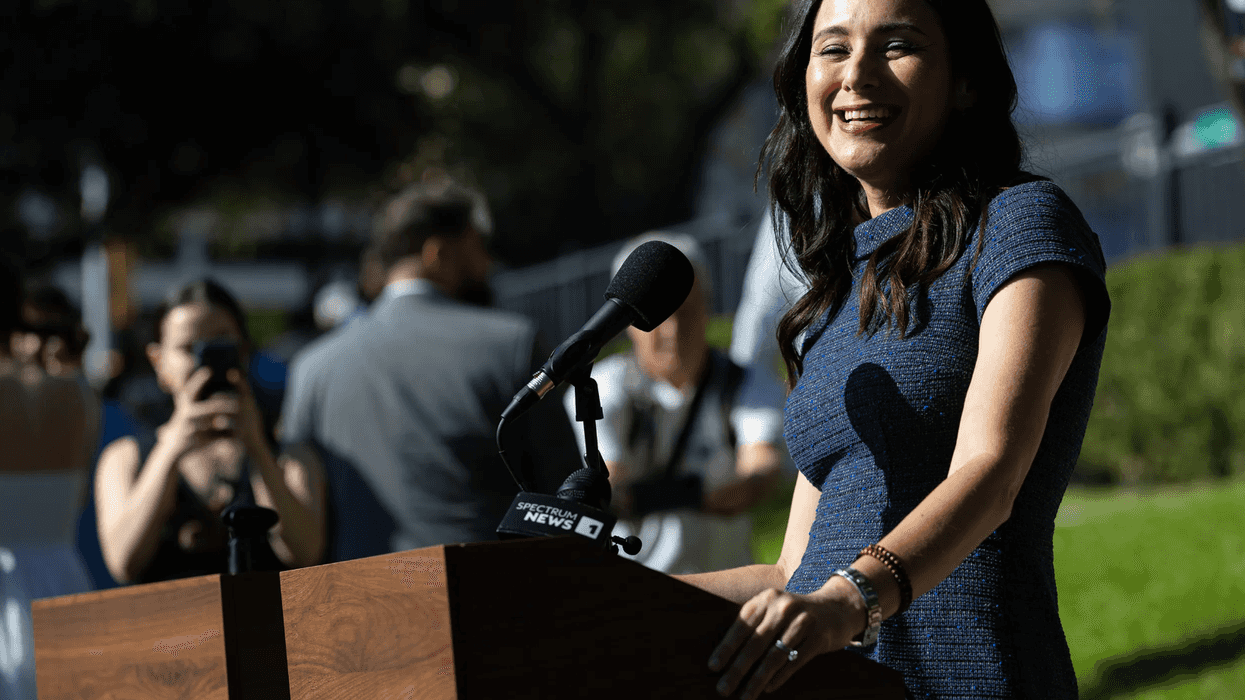
Sure, Sen.-elect James Talarico won by more than 12 points, but the more impressive result was Gina Hinojosa’s seven-point victory in the governor’s race.

Texas’ GOP Senate candidate Ken Paxton was uniquely flawed and odious—not even Trump could bring himself to say nice things about him without taking shots at how he dressed, looked, and acted.

But Texas Gov. Greg Abbott was a conventional Republican with three terms under his belt and no comparable personal scandals to drag him down. Yet voters sent him packing too.

Texas has long had the demographics of a potentially competitive state. Now Democrats have demonstrated that they can actually assemble a winning statewide coalition.And while Republicans still control the state Senate, Democrats can use their newfound executive power to block additional voting restrictions in a state where the GOP has spent years making voting more difficult.

Texas is no longer merely a tantalizing Democratic fantasy; it’s a genuine presidential battleground.

And finally …

Democrats won in Kansas

Yes, Kansas.

The Sunflower State has been a bit of a political anomaly for some time. Of the 20 states with the highest percentage of college graduates, only two are currently Republican—Kansas (#20) and Utah (#15).

Educational attainment has become one of the strongest predictors of partisan affiliation. Voters with college degrees—particularly advanced degrees—have increasingly gravitated toward Democrats, while Republicans have consolidated their advantage among voters without degrees.The numbers from Tuesday tell the story.

In the national House exit poll, Republicans won voters with a high school education by 10 points, 54 percent to 44 percent. Meanwhile, Democrats won voters with bachelor’s degrees, 60 percent to 38 percent, and voters with graduate degrees, 68 percent to 31 percent.

Kansas has a relatively educated electorate, and its recent political history has offered hints of Democratic potential. Voters rejected an anti-abortion constitutional amendment in 2022, and they’ve now elected a Democratic governor three cycles in a row—despite the state’s strong Republican lean in presidential elections.

On Tuesday, Democrats kept the governorship and flipped the attorney general’s office, ousting the odious Kris Kobach.Does that make Kansas a top-tier presidential battleground? Not yet. But it’s another reminder that the electoral map isn’t necessarily as fixed as political conventional wisdom would have us believe.

Democrats didn’t just have a great election on Tuesday; they strengthened their position in the states most likely to decide the next presidential election, gained the power to protect and expand voting access in crucial battlegrounds, and demonstrated that the map itself may be much bigger than anyone expected.

Including Texas.

And there’s no Electoral College map in existence where Republicans can realistically win the White House without Texas.

Markos Moulitsas is founder and editor of the blogging website Daily Kos and author of three books.

Reprinted with permission from Daily Kos. Please consider subscribing or donating to Daily Kos here.
Giving Up On North Carolina, Senate Republicans Scramble To Save Kansas Seat

Giving Up On North Carolina, Senate Republicans Scramble To Save Kansas Seat

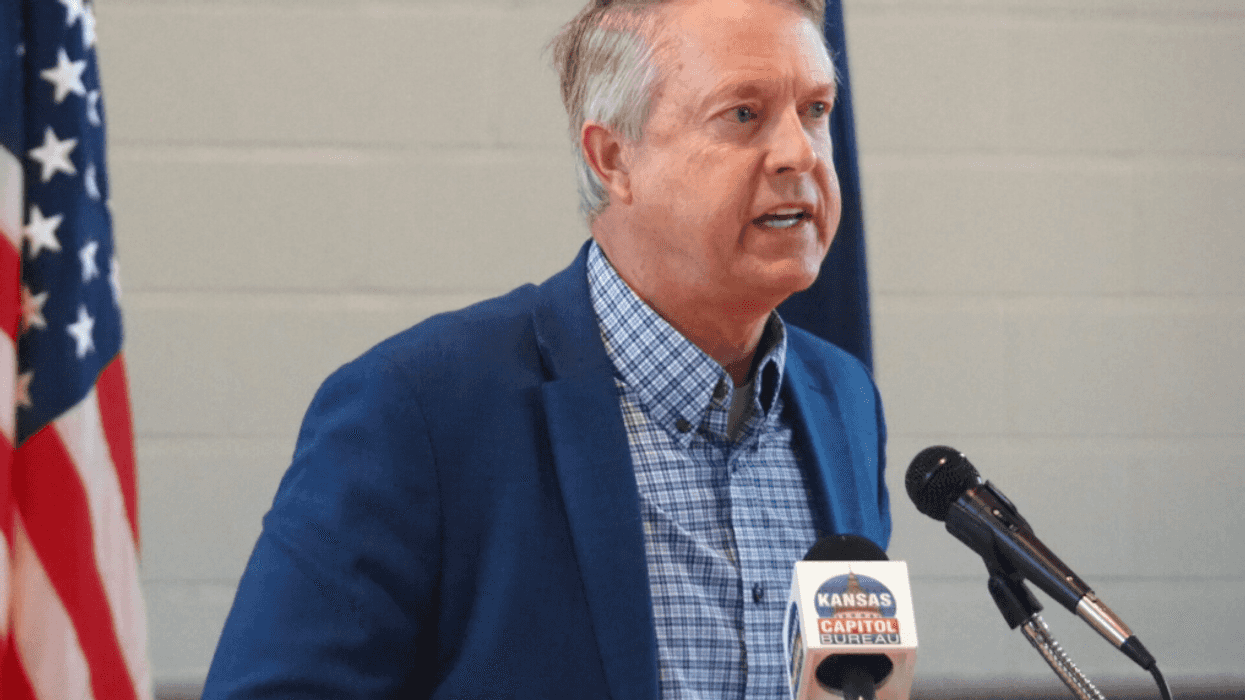
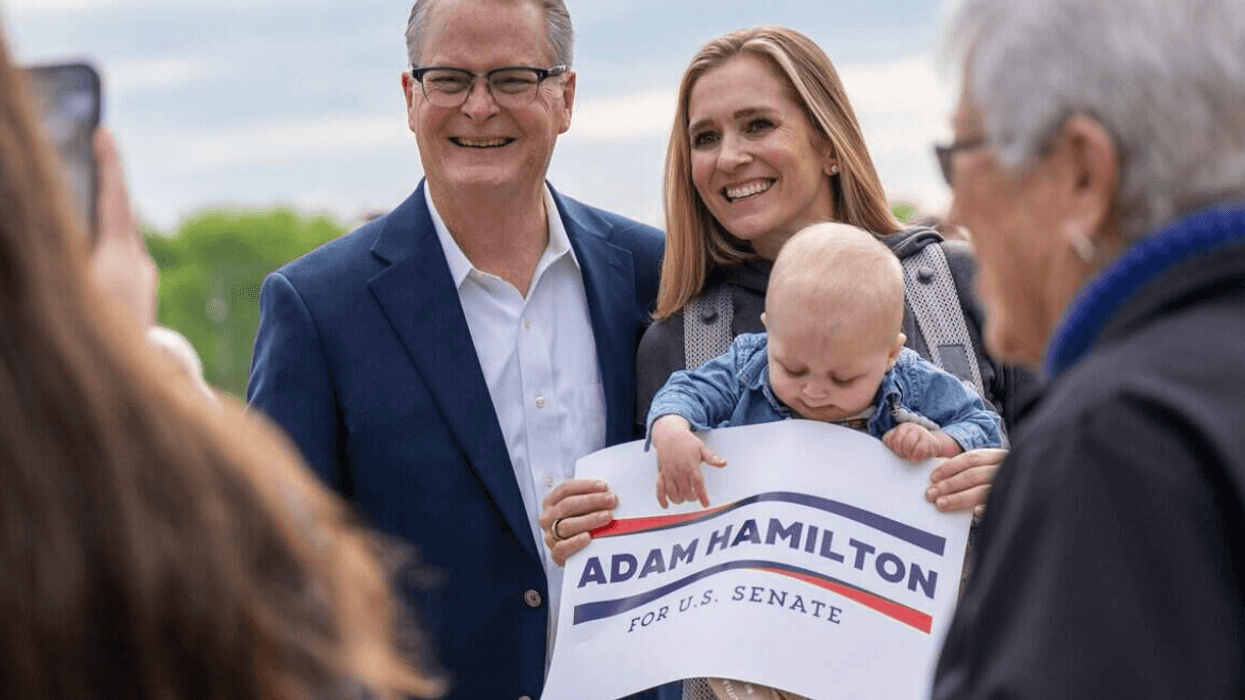
Kansas is not a place Republicans are accustomed to spending heavily to save a Senate seat. But with just weeks to go before the midterms, the party’s biggest Senate super PAC is now putting seven figures into the state to help Republican Sen. Roger Marshall fend off Democrat Adam Hamilton, a notable investment in a state where Democrats have not won a Senate election since 1932.

The Senate Leadership Fund is launching the new Kansas ad campaign while putting additional spending in North Carolina on hold, Semafor reported Friday. The group has already spent more than $30 million trying to elect Republican Michael Whatley over former Democratic Gov. Roy Cooper in North Carolina.

Now, some of that attention is moving somewhere Republicans once had little reason to worry about.

Hamilton, a longtime Methodist pastor making his first run for political office, has turned what once looked like a routine reelection campaign for Marshall into a genuine fight.

A September Emerson College Polling/Nexstar Media survey found Hamilton at 45 percent and Marshall at 43 percent, with Libertarian David Graham at 4 percent and another eight percent of likely voters undecided. The difference between Marshall and Hamilton was within the poll’s 3.6-point credibility interval.

The numbers are especially unusual in Kansas.

No Democrat has won one of the state’s U.S. Senate seats in 94 years. According to Emerson, Hamilton is also finding considerable support among independents, leading Marshall 42 percent to 27 percent with those voters in its September survey.

The economy could help explain why the race has tightened. Nearly half of voters in the same poll, 48 percent, called it their most important issue, far ahead of health care, housing affordability, immigration and other issues. President Donald Trump’s approval rating among Kansas likely voters stood at 40 percent, while 53 percent disapproved.

Republicans are now spending money to make sure Hamilton does not turn that opening into an upset. The Senate Leadership Fund’s new ad attacks Hamilton as a “two-face extremist,” challenging the centrist image he has presented to voters and tying him to prominent national Democrats.

At the same time, the group is changing course elsewhere. It has recently boosted spending in Ohio and Iowa as Republicans decide where their money can make the biggest difference.

“SLF’s job is to maintain the majority and this move reflects the most effective and efficient use of resources to do exactly that,” a person familiar with its plans told Semafor.

Republicans hold 53 Senate seats and Kansas was never supposed to be one of the places where they had to spend heavily to protect that majority. With Election Day approaching, it is now expensive enough that the party’s most powerful Senate super PAC has decided it cannot simply leave Marshall on his own.

Reprinted with permission from AlterNet


adam hamilton

What's The Matter With Kansas' Senators? Republicans May Soon Find Out

The home of Dwight Eisenhower and Amelia Earhart is rarely part of the national conversation — but that could be about to change. It is becoming clear that the race for Senate this year could be a huge upset. In the 19th century, Kansas was the scene of violent clashes over slavery, which temporarily earned it the moniker "bleeding Kansas," and in the 20th it was the birthplace of Brown v. Board of Education, one of the most consequential Supreme Court cases in American history.

But in recent decades, it's been a backwater, mostly due to its size (a bit under three million people) and political lopsidedness. Kansas has gone red in every presidential contest since 1968 and hasn't sent a Democrat to the Senate since 1932.

In light of that history, it would be foolish to get one's hopes up too much about the Senate contest there this year. After all, the Republican incumbent, Roger Marshall, won his 2020 race by more than 11 points. But he isn't sounding confident. At a recent debate, he bellowed over boos from the crowd, "What you're going to get from me — you may not agree with me on everything — but you're going to know exactly where I stand." That sounds like someone who feels trapped and is making a virtue of necessity.

Marshall is trapped. Like nearly all Republicans, he has lashed himself to Trump as Odysseus bound himself to the ship's mast. He has bowed and scraped to MAGA with the best of them, even going so far as to praise Robert F. Kennedy Jr.'s cracked Make America Healthy Again agenda while measles deaths mount — and now he cannot escape.

Midterm elections are nearly always referenda on the sitting president. You can track the out party's likely performance by knowing the popularity of the incumbent president. Though Kansans have a higher opinion of Trump than most of the country, his standing in the state has eroded. At the start of his second term, 60 percent of Kansans had a favorable opinion of Trump. Today, only 47 percent do. Among independents, 59 percent disapprove.

Like the rest of the country, Kansas has been burdened by high costs, but it's been particularly hard hit by Trump's trade and immigration policies. A Wichita State professor of international business estimates that Kansas is one of the most trade-dependent states in the country. One in six jobs in the state is directly tied to exports. Some tariffs might temporarily boost prices for some domestic products, like beef (which helps ranchers), but the chaotic implementation of the tariffs vitiated even that scant benefit.

After imposing tariffs on imported beef, Trump repeatedly withdrew or weakened them, only to announce in August that the United States would suspend quotas on up to 660 million pounds of imported ground beef in an effort to reduce prices at the supermarket. As Americans have fully digested by now, tariffs are taxes that raise the prices of things we buy.

Agriculture Secretary Brooke Rollins, whose last foray into helping consumers was a recommendation that we all raise chickens in our backyards, seems unwilling to acknowledge the inevitable conflict between pandering to producers and pandering to consumers. She announced that the new policy would "protect the American rancher" and "the American consumer." This was tough for both of Kansas' Republican senators to swallow (as it were). Marshall said he was "frustrated" by the president's actions, while Terry Moran, apparently asleep for the past 10 years as Trump has flattened every laissez-faire principle imaginable, urged the president to "let the free market work."

Kansas' beef with the administration goes beyond cattle. Kansas is the largest wheat-producing state in the union, and the twin blows of record-high diesel fuel prices and rising costs of fertilizer due to the closure of the Strait of Hormuz have been painful. This year, farmers are in doubt about how much to plant as export markets have been thrown into turmoil by Trump's trade wars. Marshall bleats wanly that "the tariffs are working," but tariffs on steel and aluminum have damaged the state's large aviation industry, and as one small business owner observed sourly, her fertilizer bill has tripled this year and her diesel bill has doubled.

One of Kansas' largest employers is the Canadian aviation firm Bombardier, which employs more than 1,500 people (and 2,000 more in other states). While slapping Canada around, Trump has name-checked Bombardier, saying their products are not "good enough" and threatening to ban sales of their products in the United States. (If their products are so bad, why are people willingly buying them?) Employees at one of Bombardier's Wichita plants were rattled.

One told a Washington Post reporter, "This is ridiculous. We have thousands of Americans working here." The Post delicately added that the employee used a profanity. Kansas' two Republican senators are looking at their shoes and kicking sand, though Marshall did post that "I'm going to fight to keep Bombardier's over 1,200 Kansas jobs. I've already taken that concern inside the Oval Office."

How reassuring that must be.

Here's another reason Marshall has cause to feel trapped: The Democrats have chosen a fantastically appropriate challenger. No DSA-adjacent progressive here. Instead, they nominated Adam Hamilton, pastor of the Church of the Resurrection, the largest Methodist congregation in the United States.

Hamilton is an articulate moderate, author of 30 books, who agrees that the border was out of control under Biden but notes that the indiscriminate meat cleaver approach to immigration enforcement under Trump is damaging both economically and morally. "So right now, when you travel to southeast, southwest Kansas, you're talking to people in the meatpacking industry, the cattle industry, and they're saying, 'Forty percent of our workforce are immigrants, and we need them, and we care about them.'"

Later he continued, "Stop demonizing them. Figure out a plan to bring immigrants in where it's legal for them to be here, and where we can welcome them instead of [them] having to live in fear in our businesses or our communities."

Hamilton's statistics are accurate, or perhaps a bit understated. Without those immigrant employees at meat processing facilities, prices of meat will climb even higher, to say nothing of the cruelty of uprooting families with long ties to the community and no criminal offenses of any kind.

Hamilton calls Trump's tariffs "a disaster for everyone across the state of Kansas," and hits the corruption theme hard. That's exactly the kind of Democrat a Republican state demands.

Kansas is red, it's true. But it has often chosen Democrats for governor, including incumbent Laura Kelly. So it isn't as if Kansans' fingers just can't check off a Democratic box. After Hamilton won the primary, the Cook Political Report moved the race from "solid" to "likely" Republican. It is probably still Marshall's race to lose, but the tailwind for Hamilton reflects just how badly Trump has betrayed his own base as well as the opportunities that open up when a) there's a wave building, and b) the nominee matches the constituency.

Mona Charen is policy editor of The Bulwark and host of the "Beg to Differ" podcast. Her new book, Hard Right: The GOP's Drift Toward Extremism, is available now.

Reprinted with permission from Creators


Agriculture Secretary Brooke Rollins, whose last foray into helping consumers was a recommendation that we all raise chickens in our backyards, seems unwilling to acknowledge the inevitable conflict between pandering to producers and pandering to consumers. She announced that the new policy would "protect the American rancher" and "the American consumer." This was tough for both of Kansas' Republican senators to swallow (as it were). Marshall said he was "frustrated" by the president's actions, while Terry Moran, apparently asleep for the past 10 years as Trump has flattened every laissez-faire principle imaginable, urged the president to "let the free market work."

Kansas' beef with the administration goes beyond cattle. Kansas is the largest wheat-producing state in the union, and the twin blows of record-high diesel fuel prices and rising costs of fertilizer due to the closure of the Strait of Hormuz have been painful. This year, farmers are in doubt about how much to plant as export markets have been thrown into turmoil by Trump's trade wars. Marshall bleats wanly that "the tariffs are working," but tariffs on steel and aluminum have damaged the state's large aviation industry, and as one small business owner observed sourly, her fertilizer bill had tripled this year and her diesel bill had doubled.

One of Kansas' largest employers is the Canadian aviation firm Bombardier, which employs more than 1,500 people (and 2,000 more in other states). While slapping Canada around, Trump has name-checked Bombardier, saying their products are not "good enough" and threatening to ban sales of their products in the United States. (If their products are so bad, why are people willingly buying them?) Employees at one of Bombardier's Wichita plants were rattled. One told a Washington Post reporter, "This is ridiculous. We have thousands of Americans working here." The Post delicately added that the employee used a profanity. Kansas' two Republican senators are looking at their shoes and kicking sand, though Marshall did post that "I'm going to fight to keep Bombardier's over 1,200 Kansas jobs. I've already taken that concern inside the Oval Office."

ADVERTISING

How reassuring that must be.

Here's another reason Marshall has cause to feel trapped: The Democrats have chosen a fantastically appropriate challenger. No DSA-adjacent progressive here. Instead, they nominated Adam Hamilton, pastor of the Church of the Resurrection, the largest Methodist congregation in the United States.

Hamilton is an articulate moderate, author of 30 books, who agrees that the border was out of control under Biden but notes that the indiscriminate meat cleaver approach to immigration enforcement under Trump is damaging both economically and morally. "So right now, when you travel to southeast, southwest Kansas, you're talking to people in the meatpacking industry, the cattle industry, and they're saying, 'Forty percent of our workforce are immigrants, and we need them, and we care about them.'" Later, he continued, "Stop demonizing them. Figure out a plan to bring immigrants in where it's legal for them to be here, and where we can welcome them instead of (them) having to live in fear in our businesses or our communities."

Hamilton's statistics are accurate, or perhaps a bit understated. Without those immigrant employees at meat processing facilities, prices of meat will climb even higher, to say nothing of the cruelty of uprooting families with long ties to the community and no criminal offenses of any kind.

Hamilton calls Trump's tariffs "a disaster for everyone across the state of Kansas," and hits the corruption theme hard. That's exactly the kind of Democrat a Republican state demands.

Kansas is red, it's true. But it has often chosen Democrats for governor, including incumbent Laura Kelly. So it isn't as if Kansans' fingers just can't check off a Democratic box. After Hamilton won the primary, the Cook Political Report moved the race from "solid" to "likely" Republican. It is probably still Marshall's race to lose, but the tailwind for Hamilton reflects just how badly Trump has betrayed his own base as well as the opportunities that open up when a) there's a wave building, and b) the nominee matches the constituency.

ADVERTISING

Mona Charen is policy editor of The Bulwark and host of the "Beg to Differ" podcast. Her book, "Hard Right: The GOP's Drift Toward Extremism," is available now.

Photo credit: chris robert at Unsplash

Explore Morepowered byHeadlines PlusArticle thumbnailTrump's Corruption Could Be His Undoing, by Mona Charen | Creators SyndicateArticle thumbnailThe Truth about the Forever War, by Susan EstrichArticle thumbnailTrump Avoiding Repeating History in Iran, by Michael Barone | Creators SyndicateArticle thumbnailTrump's War Psychology, by Mona Charen | Creators SyndicateHeadlines Plus article thumbnailIran Sets 7 Conditions as US Tensions Escalate Headlines PlusHeadlines Plus article thumbnailMarkets Fall on Tariff and Iran Tensions Headlines PlusADVERTISINGExplore Morepowered byHeadlines PlusArticle thumbnailWin, Lose or Draw, I Have No Regrets Over Supporting the Iran War, by Ruben NavarretteArticle thumbnailThey Will Try to Steal the 2026 Elections, by Mona CharenArticle thumbnailThe 3 Big Lies About the Iran War, by Ben Shapiro | Creators SyndicateArticle thumbnailTrump Finally Gets Smart on Iran War -- But Can He Follow Through?, by Ruben Navarrette | Creators SyndicateArticle thumbnailIran Is Losing. Why Pretend Otherwise?, by Ben Shapiro | Creators SyndicateHeadlines Plus article thumbnailIran War: Latest News and Coverage Headlines PlusHeadlines Plus article thumbnailTrump: Oil Prices Won't Drop Until After Midterms Headlines PlusHeadlines Plus article thumbnailTrump Approval Rating Hits Record Low in New Poll Headlines PlusHeadlines Plus article thumbnailIran Attacks US Carrier and Destroyer; Tensions Escalate Headlines Plus

Like it? Share it!

  • 0

opinion conservative government politics senate kansas democrat republican senator mona charen
Mona Charen

About Mona Charen
Read More | RSS | Subscribe

Show Comments

YOU MAY ALSO LIKE...

  • Betsy McCaughey
    Betsy McCaughey
  • Thomas Sowell
    Thomas Sowell
  • Laura Hollis
    Laura Hollis
  • Adriana Cohen
    Adriana Cohen

Designed and developed by New & Co.

Creators Syndicate, Inc. © 2026

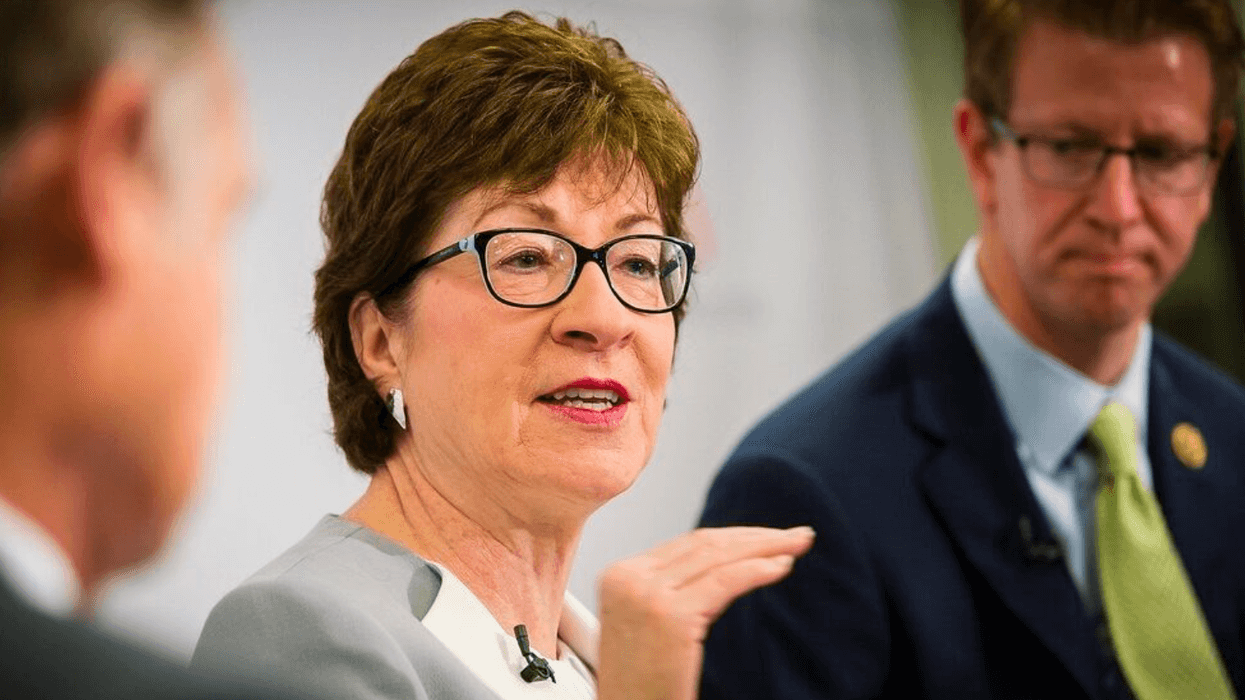
Susan Collins

Trump's Canada Tariffs Endangering GOP Senate Seats In Maine And Kansas

President Donald Trump's ongoing battle with Canada is now starting to hurt Republican candidates with just 55 days until the November 3 election.

The Hill reported on Wednesday that Trump's ongoing trade war with Canada appears to be helping Democrats more than they hoped for by putting vulnerable Republican Senate candidates in yet another bind.

Trump's tariffs on Canada began on Tuesday, prompting several Republicans to speak out against Trump publicly. These exposed Republican are now being forced to defend Trump while his policy threatens jobs in their states.

For Republican Sen. Roger Marshall in Kansas, it was revealed Tuesday that his state could lose 1,200 jobs as Trump threatened to go after Canadian aircraft manufacturer Bombardier.

Marshall said he raised the issue with Trump while still endorsing the goal of bringing more manufacturing to Wichita. However, his statement drew criticism online and prompted CNN analysts to assert that vulnerable Republicans must now distance themselves from Trump’s trade war. Other Kansas Republicans, including GOP Sen. Jerry Moran, also urged Trump to offer exemptions, but commentators warned they'll still face voters’ anger over tariffs, rising costs and threatened jobs.

In Maine, Trump's decision is putting Republican Sen. Susan Collins in further political peril. Despite her loyal Trump voting record, she is now also trying to distance herself from his tariffs.

“There’s no one who has been more vocal than I have against Canadian tariffs,” she told reporters, according to The Hill. “I voted against them on the Senate floor months ago when the president was first proposing that there be tariffs."

She went on to say she spoke briefly to the Trump trade representative about the impact these decisions will have on Maine.

“Take something like road salt, we get all of our road salt from Canada,” said Collins. She went on to claim that Trump's tariffs could increase costs for some small towns by as much as $10,000 a year just for road salt. Maine’s close economic and cultural ties with Canada, including lumber, fisheries and tourism, make the trade war particularly politically sensitive.

Professor emerita of political science at the University of Maine, Amy Fried, told The Hill, “Maine and Canada have had very close relations over the years. There’s a lot of different ways in which the Maine and the Canadian economies have intersected. It affected the lumber industry, there have been fisheries issues, a lot of tourism back and forth.”

“A lot of Maine people feel an attachment to Canada and have benefited from those relationships, and Sen. Collins is trying to separate herself from it by saying she doesn’t approve of the tariffs, but Troy Jackson is also talking about it,” she added.

Meanwhile, Democrats are tying Collins to Trump's actions.

“Clearly, the economy in Maine is affected by tariffs,” Fried said. Indeed, Maine has a lot of Canadian tourism, to the tune of $500 million annually, according to the Portland Press Herald.

The state isn't the only one to face tourism problems. Just one month into Trump's second term, Canadian tourists began canceling trips to the U.S. Just after one year, U.S. businesses lost $4.5 billion in tourism just from Canadians.

Reprinted with permission from AlterNet

Shop our Store

Headlines

Editor's Blog

Trending

World