Trump's Canada Tariffs Endangering GOP Senate Seats In Maine And Kansas
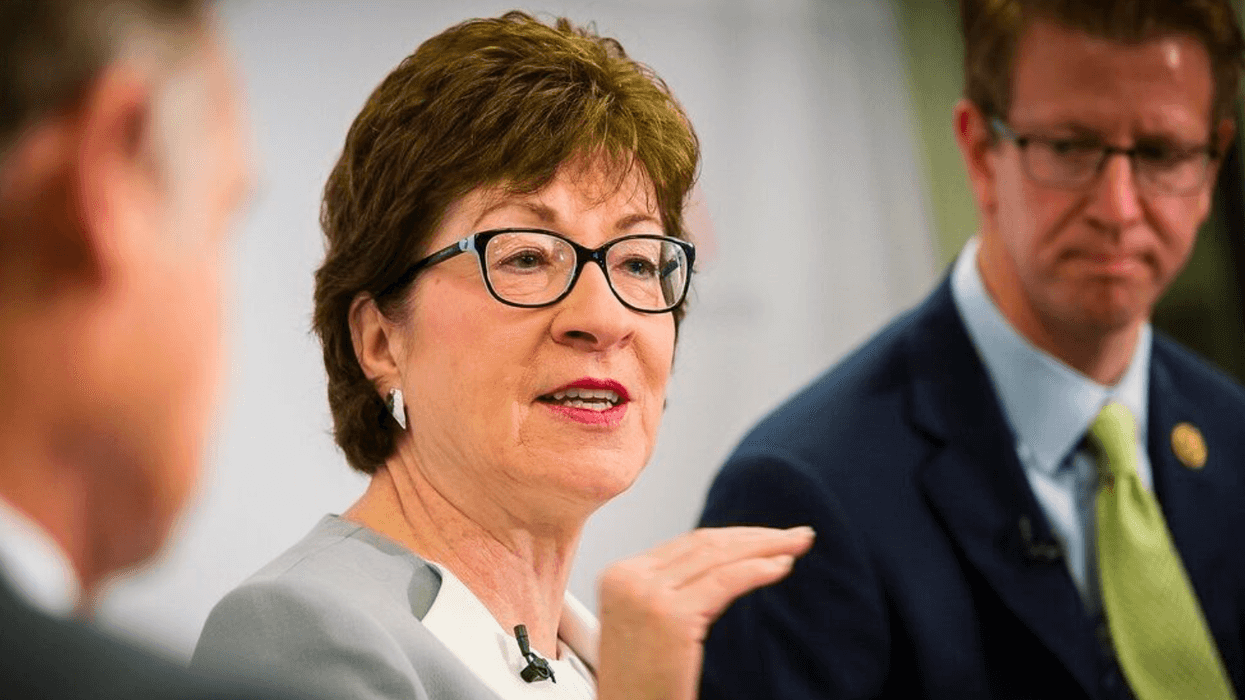
Sen. Susan Collins
President Donald Trump's ongoing battle with Canada is now starting to hurt Republican candidates with just 55 days until the November 3 election.
The Hill reported on Wednesday that Trump's ongoing trade war with Canada appears to be helping Democrats more than they hoped for by putting vulnerable Republican Senate candidates in yet another bind.
Trump's tariffs on Canada began on Tuesday, prompting several Republicans to speak out against Trump publicly. These exposed Republican are now being forced to defend Trump while his policy threatens jobs in their states.
For Republican Sen. Roger Marshall in Kansas, it was revealed Tuesday that his state could lose 1,200 jobs as Trump threatened to go after Canadian aircraft manufacturer Bombardier.
Marshall said he raised the issue with Trump while still endorsing the goal of bringing more manufacturing to Wichita. However, his statement drew criticism online and prompted CNN analysts to assert that vulnerable Republicans must now distance themselves from Trump’s trade war. Other Kansas Republicans, including GOP Sen. Jerry Moran, also urged Trump to offer exemptions, but commentators warned they'll still face voters’ anger over tariffs, rising costs and threatened jobs.
In Maine, Trump's decision is putting Republican Sen. Susan Collins in further political peril. Despite her loyal Trump voting record, she is now also trying to distance herself from his tariffs.
“There’s no one who has been more vocal than I have against Canadian tariffs,” she told reporters, according to The Hill. “I voted against them on the Senate floor months ago when the president was first proposing that there be tariffs."
She went on to say she spoke briefly to the Trump trade representative about the impact these decisions will have on Maine.
“Take something like road salt, we get all of our road salt from Canada,” said Collins. She went on to claim that Trump's tariffs could increase costs for some small towns by as much as $10,000 a year just for road salt. Maine’s close economic and cultural ties with Canada, including lumber, fisheries and tourism, make the trade war particularly politically sensitive.
Professor emerita of political science at the University of Maine, Amy Fried, told The Hill, “Maine and Canada have had very close relations over the years. There’s a lot of different ways in which the Maine and the Canadian economies have intersected. It affected the lumber industry, there have been fisheries issues, a lot of tourism back and forth.”
“A lot of Maine people feel an attachment to Canada and have benefited from those relationships, and Sen. Collins is trying to separate herself from it by saying she doesn’t approve of the tariffs, but Troy Jackson is also talking about it,” she added.
Meanwhile, Democrats are tying Collins to Trump's actions.
“Clearly, the economy in Maine is affected by tariffs,” Fried said. Indeed, Maine has a lot of Canadian tourism, to the tune of $500 million annually, according to the Portland Press Herald.
The state isn't the only one to face tourism problems. Just one month into Trump's second term, Canadian tourists began canceling trips to the U.S. Just after one year, U.S. businesses lost $4.5 billion in tourism just from Canadians.
Reprinted with permission from AlterNet
- Trump's State Media Struggling To Justify His Economic Failure ›
- Wall Street Blaming Bessent And Warsh For Trump's Economic Chaos ›
- newsmax - National Memo ›
- Pollster Warns Furious MAGA Voters Want First-Term Trump Back — Or Else ›
- Iowa Dogfight: Trump's Ruinous Policies Shaking Up Ruby-Red State ›
- GOP Insiders Fear Trump Economy Is 'Ticking Timebomb' For Midterm ›
- New Polling Indicates A Blue Wave Building Toward 2026 Midterms ›
- The Democrats' Opportunity, If Only They Can Seize It ›
- Fox News Spinning Madly To Make Sense Of Trump's 'Affordability' Message ›
- Enraged By Rate Hike, Trump Threatens To Expand Trade War Again (Huh?) - National Memo ›
- Giving Up On North Carolina, Senate Republicans Scramble To Save Kansas Seat - National Memo ›
- Republicans were already nervous about November. Then Trump restarted his trade war. - POLITICO ›
- Wisconsin cheese, Maine seafood, Kentucky appliances: Trump's Canada tariffs punch swing states just before the midterms | Fortune ›
- We asked: Are tariffs on voters' minds ahead of the U.S. midterm elections? | CBC.ca ›
- How will tariffs affect the midterms? In this Michigan border town, it's complicated : NPR ›
- Republicans are furious that Trump has revived tariff drama — just in time for the midterms | CNN Politics ›
- Republicans will pay for Trump’s tariffs in the midterms ›