Tag: birthright citizenship
Why Birthright Citizenship Is Central To American Democracy -- And Our Future

Why Birthright Citizenship Is Central To American Democracy -- And Our Future

Now that we've completed our celebration of America's 250th birthday, it's time to prepare for the 300th — the tricentennial. I will not live to see it, but I hope the nation will.

At least, I hope a certain kind of America will celebrate its 300th year — one that has regained its moral equilibrium and turned its back resoundingly on illiberalism in all its ugly forms. If the United States does not reverse its current retreat from the principles and traditions that ennobled it, if it becomes the kind of predatory, grubby and aggressive nation that Donald Trump champions, or if it becomes the socialist shambles that a growing number on the left envision, then it will not deserve to celebrate a tricentennial.

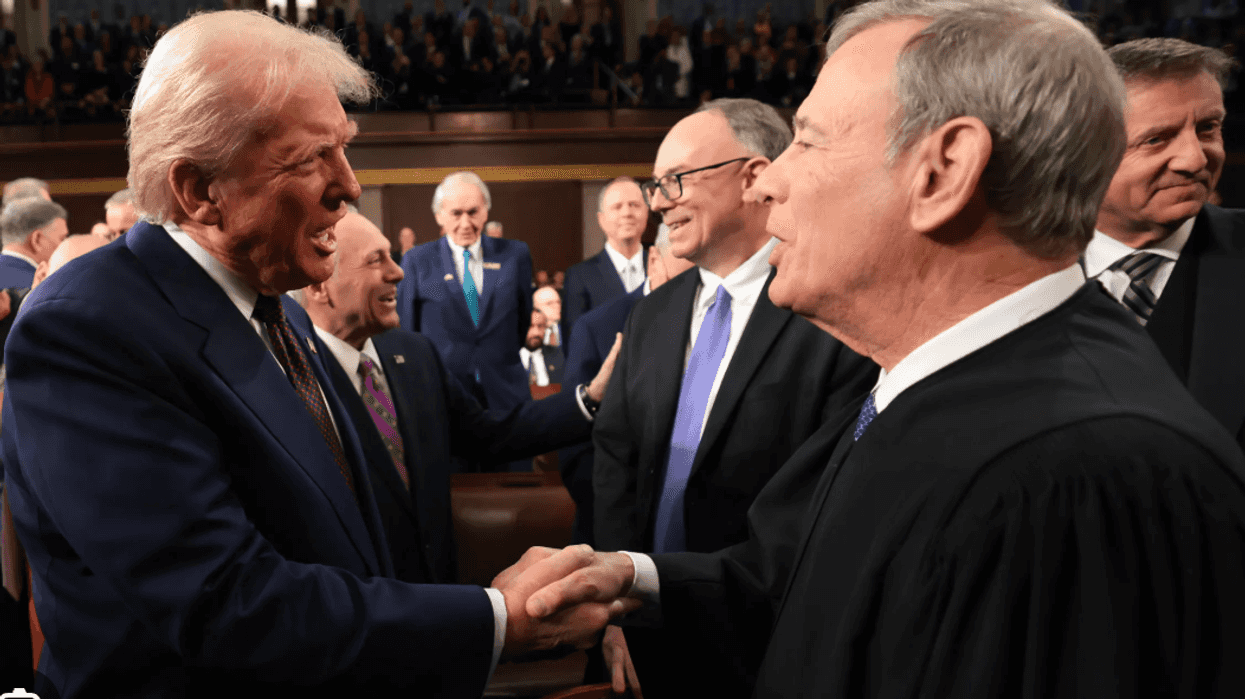
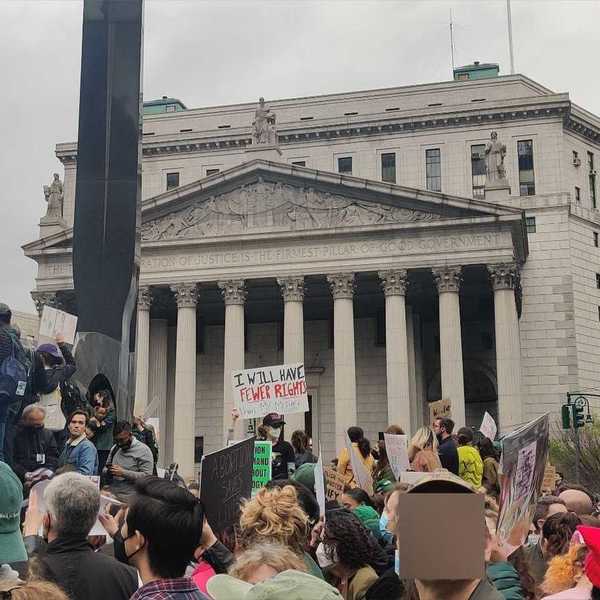
How do we find our footing in the face of these challenges to liberalism? Well, the Supreme Court just helped us. Though the court has done its share to deform our constitutional structure recently, it also gave us a gift for the 250th anniversary of the Declaration. That gift was the birthright citizenship case, Trump v. Barbara.

Yes, it would have been more bracing if the court's decision had been 9-0. But on the key concepts, the majority affirmed a principle that is foundational to our republic: equality. And by affirming that citizenship belongs to (nearly) every child born on American soil, the court also tipped the scales on another argument currently roiling our republic, namely whether we are a creedal nation or one of blood and soil.

That's not how this works. Once the Supreme Court rules on the constitutionality of a matter, that's the final word. It takes it out of the hands of the elected legislatures. Remember all the hullabaloo about Roe v. Wade? You can look it up. The court could change its mind in future years (as it did in the Dobbs decision), or Congress and the states could amend the Constitution. But ordinary legislation? No.

By reaffirming birthright citizenship, the court upheld a pillar of equality in America. We are not guaranteed equality of outcomes, but we are all equal citizens. That is part of what the Revolutionary War achieved. It overturned centuries of deference, subordination and caste to create a new republic based on equality. While it's true that only land-owning white males were initially counted for voting, the ideas the revolution spawned made the extension of rights almost inevitable.

As the late historian Gordon Wood put it, "Equality was in fact the most radical and most powerful ideological force let loose in the Revolution. ... Once invoked, the idea of equality could not be stopped, and it tore through American society and culture with awesome power. It became what Herman Melville called 'the great God absolute! The centre and circumference of all democracy!'"

Before the revolution, students were instructed in how to bow to upperclassmen and professors, church pews were assigned "on the basis of family heads' age and social position," and land was inherited by primogeniture. Post-revolution, all of that changed. Handshaking, between men on equal footing, replaced bowing. Cap-doffing went out of fashion, and many other signifiers of rank and position were eliminated. The Constitution decreed that, "No Title of Nobility shall be granted by the United States," nor by any state.

Birthright citizenship is a constitutive part of this democratic philosophy.

Think about what the United States without birthright citizenship would look like. What is the bedrock upon which our citizenship would rest? Would it be race, religion, ethnic background, family history, wealth or some other criterion? JD Vance is already flirting with hierarchies of Americanness. He has referred often to the seven generations of his ancestors who are buried in Kentucky. "Now that's not just an idea, my friends," he insists, "that is a homeland."

Vance adds that he looks forward to resting there himself when his time comes, as will his children. But his children are the product of a marriage between himself and the daughter of recent immigrants. Her ancestors are buried in India. Is that their "homeland"? Are his children less American than he?

Abraham Lincoln would like a word. In a July 10, 1858 speech, he said:

"We have besides these men — descended by blood from our ancestors — among us perhaps half our people who are not descendants at all of these men, they are men who have come from Europe — German, Irish, French and Scandinavian — men that have come from Europe themselves, or whose ancestors have come hither and settled here, finding themselves our equals in all things. If they look back through this history to trace their connection with those days by blood, they find they have none, they cannot carry themselves back into that glorious epoch and make themselves feel that they are part of us, but when they look through that old Declaration of Independence they find that those old men say that 'We hold these truths to be self-evident, that all men are created equal,' and then they feel that that moral sentiment taught in that day evidences their relation to those men, that it is the father of all moral principle in them, and that they have a right to claim it as though they were blood of the blood, and flesh of the flesh of the men who wrote that Declaration, and so they are (my emphasis). That is the electric cord in that Declaration that links the hearts of patriotic and liberty-loving men together, that will link those patriotic hearts as long as the love of freedom exists in the minds of men throughout the world."

The Stephen Millers and Tucker Carlsons of the world are not Lincolnites. They emphatically endorse exclusive citizenship. Last year, Carlson hosted a Blaze Media figure who touted the superiority of "Heritage Americans," i.e., those who can trace their ancestry back to the Civil War. America, the guest claimed, is not "a collection of abstract things agreed to in some social contract" but a particular ethnocultural group that possesses the "Anglo-Protestant spirit" and "a tie to history and to the land. If you change the people, you change the culture." Carlson agreed.

If we were to confine citizenship to those who can trace their ancestry back to the Civil War, we would disenfranchise tens of millions, including the families of Antonin Scalia, Frank Sinatra, Jonas Salk, Barack Obama and, yes, Donald Trump, not to mention Sergey Brin, Elon Musk, Marco Rubio, Ted Cruz, Steve Jobs, Andrew Grove and so many others.

As Justice Horace Gray put it in the majority decision in Wong Kim Ark: "To hold that the Fourteenth Amendment of the Constitution excludes from citizenship the children, born in the United States, of citizens or subjects of other countries would be to deny citizenship to thousands of persons of English, Scotch, Irish, German, or other European parentage who have always been considered and treated as citizens of the United States."

Does this spirit require that we open our borders to all comers? Obviously not. Does it mean we must tolerate "birth tourism"? That point — raised in oral argument by the government's lawyer, D. John Sauer — is less than compelling. Sauer claimed that birthright citizenship "has spawned a sprawling industry of birth tourism as uncounted thousands of foreigners from potentially hostile nations have flocked to give birth in the United States in recent decades, creating a whole generation of American citizens abroad with no meaningful ties to the United States." But when pressed by Roberts about how big a problem this is, Sauer admitted that "no one knows for sure." OK, then.

Do immigrants know that once they have a child in the United States, that child is a U.S. citizen? Of course. But has this given rise to a flood of pregnant women at ports of entry? No. The Niskanen Institute examined the Center for Immigration Studies' widely cited estimate of 33,000 births to tourists per year and found it completely wrong. The CIS, to its credit, issued a retraction. Niskanen estimates that the true number may be closer to zero. But even the inflated CIS estimates would yield less than 1% of births, and there are border controls and other methods short of changing the Constitution (or other proposals peddled by MAGA influencers) that can reduce that number.

There is nothing novel about xenophobia in America, but it has always been outweighed by our dedication to the idea of America as a "shining city on a hill." That gets expressed in both our openness to immigrants and our unstinting grant of citizenship to those born here. The xenophobes object that birthright citizenship is rare in the world, which is true, though it's not true that we are alone in this policy. Several Latin American countries also grant birthright citizenship.

But that rare openness to newcomers is one reason why America has been so much more successful in assimilating immigrants than other nations. As Ronald Reagan said in 1989: "We lead the world because, unique among nations, we draw our ... strength from every country and every corner of the world. And by doing so we continuously renew and enrich our nation."

From the very beginning, we were a multiethnic, multireligious society, bound by place, yes, but much more by commitment to liberty and democracy — to the words and ideals spelled out in the Declaration and the Constitution. Even in the earliest days of the republic, America was composed of the descendants of English, French, German, Scandinavian, African, Dutch, Scottish, Irish, Swedish, Finnish, Jewish, Swiss and Native Americans. At the time of the revolution, there were whole swaths of Pennsylvania in which only German was spoken. (Frankly, Benjamin Franklin was quite ungracious about it, though he later softened.)

Uniting disparate people into a cohesive whole is not natural. Look around the globe. Ethnic, racial and religious conflict is the way of the world. Our ability to transcend those differences is one of the triumphs of our republic. As we look ahead to that celebration 50 years from now, let us hope that Trump v. Barbara restores essential ballast to the hull of our storm-tossed ship of state.

Mona Charen is policy editor of The Bulwark and host of the "Beg to Differ" podcast. Her new book, Hard Right: The GOP's Drift Toward Extremism, is available now.

Reprinted with permission from Creators


Despite the claims of anti-immigrant fanatics, the legal basis of birthright citizenship has hardly been contested in American history. As Chief Justice John Roberts' majority opinion noted, the practice was embedded in common law and then codified in the 14th Amendment. Neither politicians nor legal scholars thought the amendment's phrase "subject to the jurisdiction thereof" was ambiguous. It excluded only the children of diplomats, children born to invading soldiers (thankfully not a big problem), and certain native tribes. The court affirmed that interpretation in its 1898 Wong Kim Ark decision.

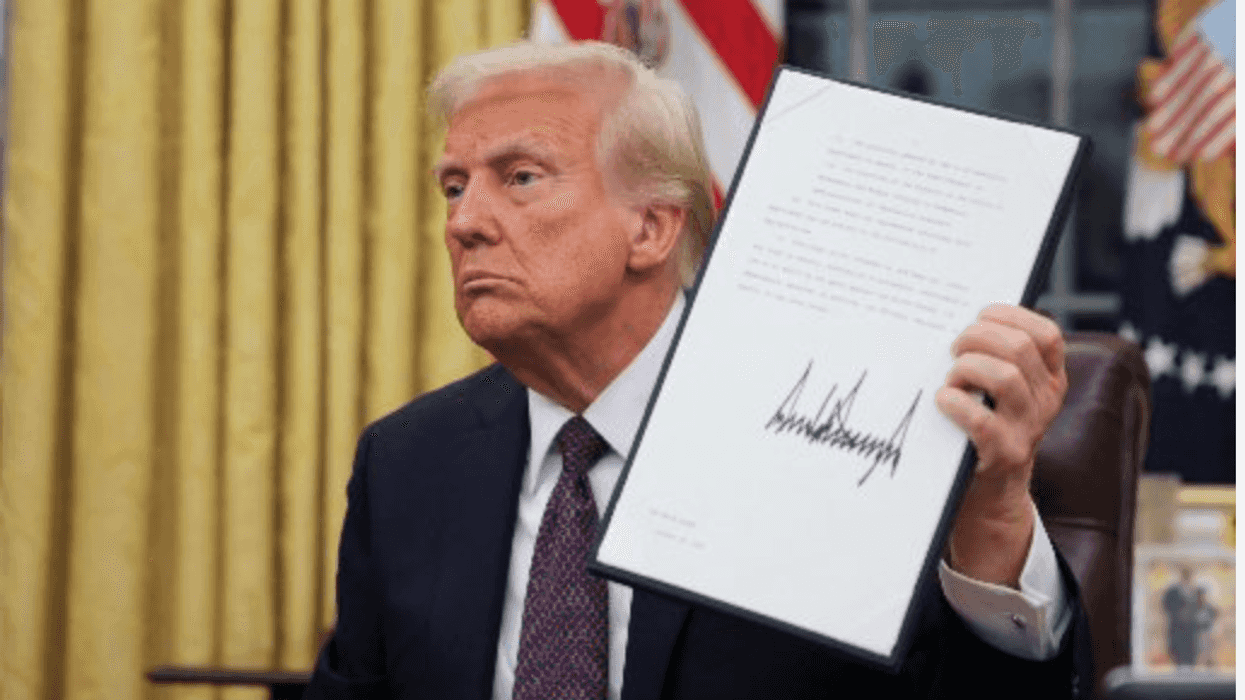
Five of the six justices who voted to strike down Trump's executive order ending birthright citizenship last week did so on constitutional grounds. Yet we live in an age of optional realities, so the president, perhaps not understanding how the Constitution works, posted that Republicans could "easily" reverse the Supreme Court's decision "through Legislation. ... No long and unwieldy Constitutional Amendment is necessary!" Speaker Mike Johnson, who may understand how the Constitution works but is required by his Trump servitude to pretend otherwise, said that he was very disappointed in the ruling and that "we'll have to deal with it as Congress."

The Supreme Court Rebuked Trump On Birthright Citizenship, But That’s Not The Real Story

The Supreme Court Rebuked Trump On Birthright Citizenship, But That’s Not The Real Story

By Monday evening, the storyline had already solidified: a mixed bag for Trump at the Supreme Court. A split verdict on executive power. The Wall Street Journal had the Court “expanding presidential authority” in one breath and “rejecting” Trump’s bid to fire a Fed governor in the next. Trump himself, never one to undersell, called it a “tremendous loss” on the mail-in ballot case and a “BIG WIN” on the firings, and even that whiplash got reported straight, as if he were just providing the scoop—a president taking his lumps along with his victories, proof the system is working as designed.

Don’t believe it. The last two days of decisions only advance the actual storyline: a radically conservative court consolidating its constitutional overhaul and leaving open the prospect of further radical changes to come.

Set against the real stakes of the cases the Court decided this week, this was a week to leave conservatives celebrating, topping off a term that was a conservative juggernaut. And the single most important thing that happened, by a wide margin, isn’t the birthright citizenship case that dominated the headlines. It’s the essential consummation of a project this Court has been working on for sixteen years: the dismantling of the structural architecture that has insulated huge swaths of the federal government from raw presidential control.

Start with Trump v. Slaughter. Read the first paragraph of most of the coverage, and you’d think it was a wash—the Court let Trump fire an FTC commissioner, but it stopped him from firing a Fed governor in the companion case. Tossup, right? Wrong. Slaughter isn’t one beat in an even trade. It’s the demolition, and Cook is the small, fragile thing sitting, illogically, in the rubble.

For ninety years, Humphrey’s Executor v. United States—a unanimous, 9-0 decision, the kind of case first-year law students learn as black-letter, foundational, not-up-for-debate—held that Congress could protect FTC commissioners from being fired without cause. That single case has been the load-bearing wall underneath the entire modern administrative state: the NLRB, the SEC, the Federal Reserve itself before this term, dozens of agencies built by Congress specifically to operate at one remove from whoever happens to be sitting in the Oval Office.

Slaughter lays waste to this entire project on a straight 6-3 ideological vote.

Steve Vladeck called Slaughter “the most important separation-of-powers ruling of the twenty-first century,” and I don’t think that’s hyperbole. It embraces the closest thing to an absolutist version of the unitary executive theory that has been a hobbyhorse on the right for two generations.

Let’s now turn to Trump v. Cook, in which the Court declined to lump the Federal Reserve in with all the other agencies whose wings the Court and Trump now have clipped. It’s the other side of the supposed “split verdict” the Court delivered to the President. In fact, that emerging view both overstates the importance and understates the incoherency of the case.

Five justices—with Roberts and Kavanaugh reversing their positions from the Slaughter case—held that the Fed’s unique historical lineage, tracing back to the First and Second Banks of the United States, exempts it from the unitary executive logic that governs everything else.

The Court didn’t carve out a coherent doctrinal exception for the Federal Reserve, and it’s hard to see what principle of executive power would exempt the Fed. The muddle presented Sotomayor with a field day in her dissent, which she read from the bench. Why do the distinctive characteristics of the Fed amount to a constitutional argument, overcoming the force of Article II, that Congress can insist on the president’s having a good reason for firing Fed governors? The majority’s attempted proffer of historical analogues or influence of monetary policy feels like the sort of makeweight distinction for exempting the Fed, when the real reason is that giving the president the same controlling power could wreak havoc on the national and international economies. Whatever else that is, it is not a constitutional argument.

Properly understood, the Cook decision only underscores the weakness of the Court’s entire line of cases aggrandizing the president and eliminating Congress’s ability to provide for agency independence.

The “balance” narrative the press is running with gets this exactly backwards. The Fed carve-out doesn’t prove the Court is being moderate or restrained. If anything, it underscores just how contingent and unpersuasive the other cases are. In Cook, the majority essentially invents a bespoke, ad hoc exception out of whole cloth for reasons that make eminent sense but don’t stand up alongside the Court’s overall project of taking a wrecking ball to the administrative state.

The stakes of the Court’s arch-reactionary project—wiping the books clean of nearly 100 years of canonical constitutional law—are easy to underappreciate. The dozens of agencies that the Court now has gutted have played a huge role in American life since the New Deal, comprising more or less every area of health, safety, and well-being. The modicum of independence that Congress has provided has meant that they go about their work with an emphasis on expertise and political nonpartisanship.

The independence Congress built into the FTC, the NLRB, the Nuclear Regulatory Commission, the Consumer Product Safety Commission, and dozens of other agencies was salutary and beneficial. Each time, Congress concluded that some questions are better answered by people with expertise and some distance from whoever just won an election than by political appointees taking orders from the West Wing. These agencies bring exactly that—expertise, continuity, nonpartisanship—to decisions that are, quite literally, life-and-death: whether a drug is safe, whether a nuclear plant is sound, whether the money supply is being managed honestly.

Conservatives have long insisted that independent agencies constitute a “headless” fourth branch of government that cuts against the grain of the tripartite constitutional scheme. Nobody has pressed that argument longer, or more patiently, than John Roberts himself. As a young Reagan White House lawyer in 1983, he wrote that “the time is ripe to reconsider the constitutional anomaly of independent agencies.”Two decades later, newly installed as chief justice, he began laying the groundwork to get there, writing in a 2010 case that without unrestricted removal power, “the President could not be held fully accountable for discharging his own responsibilities; the buck would stop somewhere else.” Seila Law followed a decade after that. On Monday, from the center seat, he finished the job he started forty years earlier, declaring flatly: “If anything more is left of Humphrey’s, we overrule it.”

It’s the same kind of strategic patience that produced his slow-motion dismantling of the Voting Rights Act—wait for a reliable majority, chip away case by case, and fully swing the hammer once the votes are no longer in doubt.

Justice Elena Kagan, almost certainly the Court’s preeminent expert in administrative law, has most carried the project of explaining the fundamental flaws and real-world damage of the Court’s evisceration of agency independence. She wrote the principal dissent in Selia Law in 2020, when the Court carved the CFPB’s single director out of Humphrey’s protection. Kagan argued, presciently, that the majority’s supposed “exceptions” to presidential removal power were, in her words, “made up for the occasion,” gerrymandered to reach the result the Court wanted. She joined Breyer’s dissent in Collins the next year, when the Court extended that same logic to the Federal Housing Finance Agency. And now she’s joined Sotomayor’s dissent in Slaughter, as the Court finally erased the unanimous decision in Humphrey’s Executor.

Six years ago, Seila Law arrived as a sort of exception eating the rule, one bite at a time. Now there’s no rule left to eat, just a poorly reasoned carveout of the Fed.

It’s important as well to assess the breadth of the damage to the administrative state that the Court now has green-lighted. It’s not just a matter of the firings that will actually happen, though there will be plenty of those: nothing excites Trump more than the power of saying “you’re fired.”

But the impact will be broader and more corrosive. An expert at the Nuclear Regulatory Commission deciding whether a reactor is safe, an economist weighing a rate decision, a scientist evaluating a vaccine—all of them now know that the “wrong” finding, the politically inconvenient one, can get them sacked at will, no cause required. You don’t have to fire very many people to make everyone else flinch. That’s the thumb on the scale: toward partisan convenience and away from independent expertise, exactly the trade the people who built these agencies thought they had foreclosed for good.

I want to close with a word on the term-ending decision in the birthright citizenship case, Trump v. Barbara, because it is of a piece with the more accurate narrative of the executive power cases. The case is likely going to get covered today as the big Trump rebuke of the term, and on one level, that’s fair. Roberts wrote for five justices holding that children born here to parents who are undocumented or here temporarily are citizens, full stop, exactly what the text of the Fourteenth Amendment says.But it’s stunning and stomach-turning that four justices were ready to say otherwise.

Thomas, in a cribbed, nasty opinion, argued the Fourteenth Amendment was really only ever about overruling Dred Scott and doesn’t mean what it plainly says. And Kavanaugh, presenting himself as the careful institutionalist, concurred in the judgment but argued the real problem is only statutory—that Congress could amend the citizenship statute tomorrow to carve out children of undocumented parents, fully consistent with the Constitution as he reads it. But there is no such position consistent with the Constitution: the question is always, and only, whether people are born here and are subject to the jurisdiction of the United States. If so, they are citizens by the plain command of the constitutional text

Trump noticed within hours, taking to Truth Social, announcing that “no long and unwieldy Constitutional Amendment is necessary,” that Congress should “start TODAY” on legislation ending birthright citizenship, with his “Complete and Total Support.” That’s not freelancing. That’s Trump reading Kavanaugh’s opinion correctly and picking up exactly the tool the Court left sitting on the table for him.

So yes, we dodged a bullet. But it landed in the vicinity, close enough to feel the whistle of it. A case this easy, this dictated by text, this nearly self-evident—and four members of the Supreme Court were willing to read it the other way. That’s in many ways the bigger story.

It’s in fact the same story, told twice in two days: a court inclined to bend toward the administration’s preferred outcome whenever doctrine gives it the slightest room to do so, and restrained by margins more thin, fragile, and narrow than the headlines suggest.

Harry Litman is a former United States Attorney and the executive producer and host of the Talking Feds podcast. He has taught law at UCLA, Berkeley, and Georgetown and served as a deputy assistant attorney general in the Clinton Administration. Please consider subscribing to Talking Feds on Substack.

Reprinted with permission from Talking Feds.

Beyond Birthright Citizenship, Justices Prove Case For Supreme Court Reform

Beyond Birthright Citizenship, Justices Prove Case For Supreme Court Reform

He still hasn't given up. In the wake of the 6-3 decision of the Supreme Court tossing out his Executive Order abolishing birthright citizenship, President Donald Trump was back at it, insisting that Congress should act. He cared enough about the case that he took the unprecedented step of attending the oral argument. But he brushed off the historic loss in the Court.

He posted on Truth Social: "The Supreme Court upheld Birthright Citizenship, which is too bad for our Country, but we can easily make it up in Congress through Legislation, with the support of the President ... No long and unwieldy Constitutional Amendment is necessary! Congress should start TODAY to work on ending expensive and unfair to our Country, Birthright Citizenship. They will have my Complete and Total Support!"

In fact, according to five of the six Justices in the majority, a long and unwieldy process would be required because Trump's Executive Order violated the Fourteenth Amendment. The Constitution specifically provides: "All persons born or naturalized in the United States, and subject to the jurisdiction thereof, are citizens of the United States." All persons born in the United States are citizens. It couldn't be clearer, which hasn't stopped Trump from harping on it for the last decade.Two-thirds of both houses of Congress must pass a proposal to amend the Constitution, then ratified by the legislatures of three-fourths of the states. It is a cumbersome process and rightly so, certainly in this case.

The argument — or maybe the polemic — against birthright citizenship focuses on what are called the "anchor babies" — the children of illegal immigrants who are born here and then used to secure legal residence for their families. It's mostly a myth: the anchor babies have to wait until they are 21 to sponsor their parents for green cards, which then becomes a nightmare because they have to return to their home country and wait years to complete the process — and the fear that, if they leave, they will not be permitted re-entry into the country.

There will be bills introduced in Congress, but they should go nowhere. The constitutional obstacle, which had been assumed, has now been established. It's one of Trump's two big losses — the other being tariffs — before a conservative Court that has mostly done his bidding.

The Supreme Court also ended its term, ending the careers of transgender girls in school sports across the country and allowing political parties to pour even more money directly into candidate campaigns, taking the swamp that is electoral politics and just expanding it.

The issue of transgender girls in sports may be ahead of its time, as the late Barney Frank suggested, but the individual stories of girls being forced to give up their passion to satisfy politicians are compelling.As for the freedom of the political parties to pour more money into the process, is that even possible? The answer to the question is yes, and the reflecting pool turned green because that is the color of money, and since the landmark Supreme Court decision in Citizens United, there is no stopping the corruption of the system.

The landmark 2010 decision struck down restrictions on independent political spending by corporations, labor unions, and other organizations, allowing them to spend unlimited amounts of money on elections. The Super PACs came next, and the expansion goes on. The Republicans went to the Court for this one because their party committees have more money set aside. This committee will spend hundreds of millions alone; no wonder so many people are voting to get the bums out, even the bums they agree with.

And no wonder constitutional law scholar and Congressional leader Jamie Raskin has his eye on restructuring the Supreme Court.

Susan Estrich is a celebrated feminist legal scholar, the first female president of the Harvard Law Review, and the first woman to run a U.S. presidential campaign. She has written eight books.

Shop our Store

Headlines

Editor's Blog

Trending

World