Tag: chinese communist party
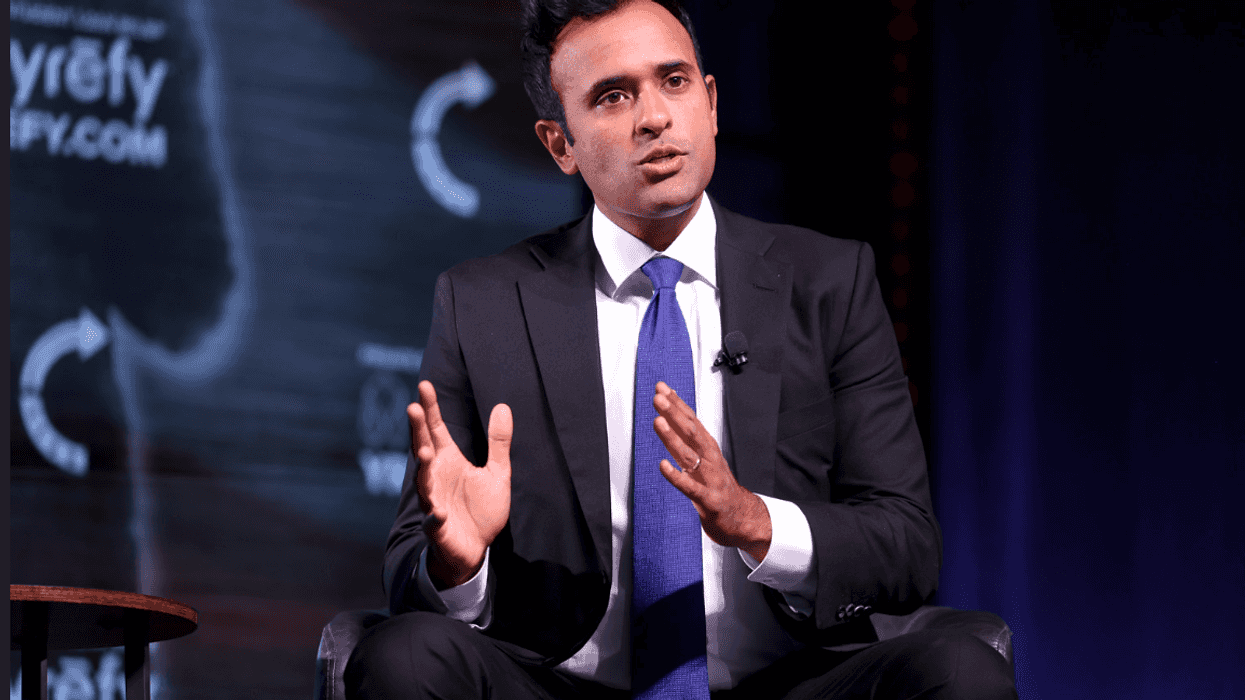
Vivek Ramaswamy

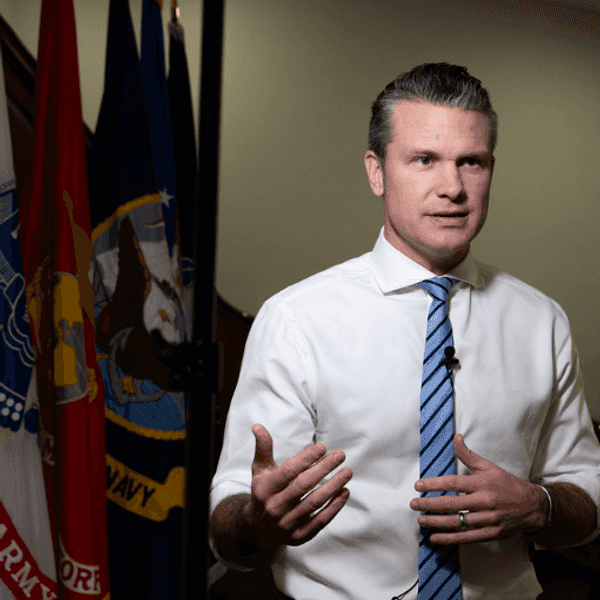
'Anti-Communist' Ramaswamy Did Business With Firm Owned By Beijing's CCP

Republican Vivek Ramaswamy did business with entities tied to the Chinese Communist Party. He’s now running for Ohio governor as an opponent of China and communism.

Ramaswamy founded the biotechnology company Roivant Sciences in 2014 and served as its CEO until 2021. The company develops medicines through specialized subsidiaries.

One of those subsidiaries is the Shanghai-based Sinovant, launched in 2017. The company was partially financed by CITIC Private Equity (CITICPE), an investment firm that is part of a web of state-owned enterprises in China that are under the sway of the Chinese Communist Party.

A state-owned entity in China can be wholly or partially owned by the government. The Chinese Communist Party wields influence over these entities by setting national economic priorities, making leadership appointments, and setting strategic directions.

When Sinovant launched, CITICPE was the investment arm of CITIC Securities, which was an offshoot of the state-owned CITIC Group.

CITICPE spun off from CITIC Securities in 2018 and became CPE, but the firms remained tied through jointly managed investment funds, according to the Prague Security Studies Institute. CITICPE also retained its longtime CEO, Lieu Lefei, who is a prominent “princeling,” a term ascribed to the children of high-ranking communist officials.

Lefei’s father, Liu Yunshan, was reportedly involved in censoring online information about the Uyghur ethnic cleansing campaign.

Ramaswamy partnered with CITICPE again in 2018 to launch Cytovant Biotechnology, a Sinovant subsidiary that is also domiciled in China.

A Federal Communications Commission (FCC) report from 2021 identified national security concerns involving Pacific Networks and ComNet, two subsidiaries of CITIC Group. This followed previous reporting in 2017 that CITIC Group had provided Iran with a $10 billion line of credit. The U.S. government designates Iran as a state sponsor of terrorism.

Roivant divested from Cytovant in July 2022. As of 2023, Ramaswamy was still the sixth-largest shareholder in Roivant.

Earlier this month, Ramaswamy said his 2026 race is “probably the most important election for governor” Ohio has ever seen and that his victory would signal “success over communism, success over socialism.”

Ramaswamy’s Democratic opponent is former Ohio Department of Health Director Amy Acton. Recent polls show a neck-and-neck race.

Reprinted with permission from American Journal News
Poison Podcasting: Why Democrats Should Avoid Hateful Hasan Piker

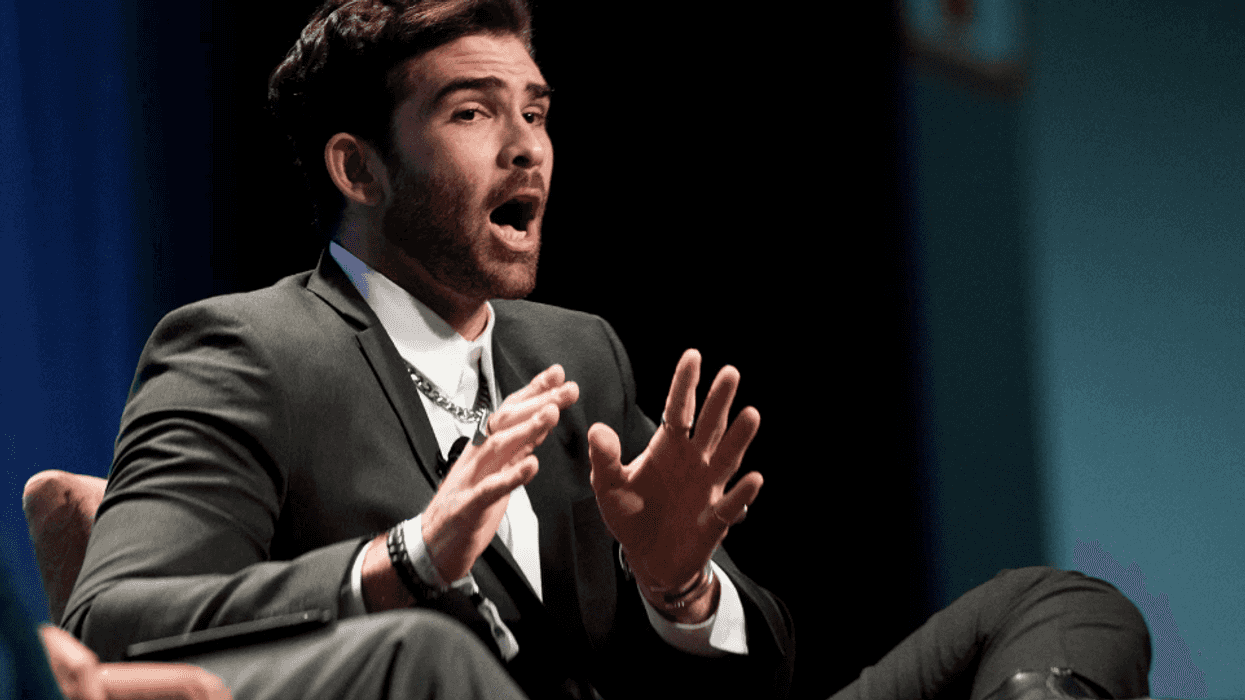
Poison Podcasting: Why Democrats Should Avoid Hateful Hasan Piker

Hasan Piker, the far-left streamer, is having a bit of a moment. Democrats are quarreling over whether he should be kept at arm's length.

What kind of opinionator is Piker? He said in 2019 that the United States "deserved 9/11." When someone challenged him online about his anti-Israel rants, Piker replied with vituperation: "You f——-g baying pig. You f——-g bloodthirsty violent pig dog." In the same clip, referring to Rep. Dan Crenshaw (R-TX), Piker praised the Al Qaeda terrorist who disfigured him. "What the f—k is wrong with this dude? Didn't he go to war and like literally lose his eye because some mujahideen — a brave f——-g soldier — f——d his eye hole with their d—k?"

Frankly, that should be enough right there to exclude that person from polite society. Some of us knew in 2015 that Donald Trump was a sociopath. We knew because he said things that were cruel, crude and demeaning to other people. If the Republican Party and the country had drawn a line against him then, for mocking a handicapped reporter, making light of rape, disparaging the heroism of John McCain or vowing to commit war crimes, we would have spared ourselves the current debacle.Speaking of making light of rape, Piker did precisely that regarding the conduct of Hamas on October 7. "It doesn't matter if f——-g rapes happened on October 7," Piker said. "That doesn't change the dynamic for me."

He has repeatedly praised the Chinese Communist Party, claiming it's the country from which we have the most to learn. He justified Russia's annexation of Crimea: "I call it a part of Russian territory, b—-h. I call it Crimea River, a Russian river." His level of concern for the suffering that communist regimes have inflicted is summed up in his commentary regarding a Vietnamese woman who testified about what she endured: "F—k you, old lady. Shut the f—k up you stupid f——-g idiotic old lady. Suck my d—k, old lady. Goddam. F—k this refugee."So that's who we're talking about. Now to the matter of antisemitism.

There are two arguments advanced for why Democrats should campaign with Piker — as Abdul El-Sayed, candidate for U.S. Senate in Michigan plans to do — and appear on his show. One is that he is reaching an angry audience that Democrats should want to tap. The other is that Piker has a fair point, that he's right to hate Israel and that it's time Democrats dropped their even-handedness.

My colleague Tim Miller made both of these points recently. Israel, he asserted, is a "malign influence in the world." And he went further, essentially endorsing an antisemitic trope: "If you had said a few months ago that 'Israel is going to drag America in a war that has nothing to do with us based on their influence over our political leaders,' that would have been called antisemitic and yet that is what happened."There are a few disheartening lapses here. The first is that Trump must own his own choices. Tim didn't patronize Trump in this way when he repeatedly bent over for Vladimir Putin, or when he did extraordinary favors for the Gulf states, or when he intervened repeatedly to prop up Viktor Orban. Why, in this case, is the fault for Trump's notorious suggestibility not on Trump?

Benjamin Netanyahu may have been successful in playing upon Trump's vanity, and damn him for that if you like, but the people who put such an emotionally unstable person in the White House deserve a far larger share of blame.

The second lapse is Tim's suggestion that the war with Iran "has nothing to do with us." I think this war is a disaster, but it's just not the case that the United States has nothing at stake here. To sum up 50 years in a few sentences: The Islamic Republic of Iran has been making asymmetric war on the United States since its inception. A thorough list of the hijackings, kidnappings, assassinations and other terrorist attacks against Americans and American interests can be found here.Finally, Tim makes the pragmatic point that many people, particularly young men, are angry about the war and looking for leaders who will channel their rage. For Democrats to blackball Piker, he argues, is political malpractice.

That's doubtful. Ignoring hateful people is a good policy. And if Democrats pander to the bigots and haters on the left, as Republicans have done with the bigots and haters on the right, there will be nothing left of the pro-democracy movement. It will be red shirts versus brown shirts, as in Weimar Germany.

Finally, Tim argues that Democrats will be helped electorally by appealing to angry constituencies such as those who tune into Piker. On the contrary, Democrats need to win over people who previously voted for Trump but are more moderate in outlook, as Tim has often argued in the past.

As Gov. Abigail Spanberger, who defeated her opponent in 2025 by 15 points, admonished a few years ago, the words "defund the police" had badly damaged Democratic candidates. She continued, "We need to not ever use the word 'socialist' or 'socialism' ever again. ... We lost good members because of that." As it happens, Piker is a fan of "defund the police."The public doesn't need persuading that the war was a huge mistake. They already believe that. Democrats need not flatter Piker or his audience in order to win elections. On the other hand, if they taint themselves with his hateful rhetoric and extremist views, they will be making a moral and strategic mistake.

Mona Charen is policy editor of The Bulwark and host of the "Beg to Differ" podcast. Her new book, Hard Right: The GOP's Drift Toward Extremism, is available now.

Reprinted with permission from Creators

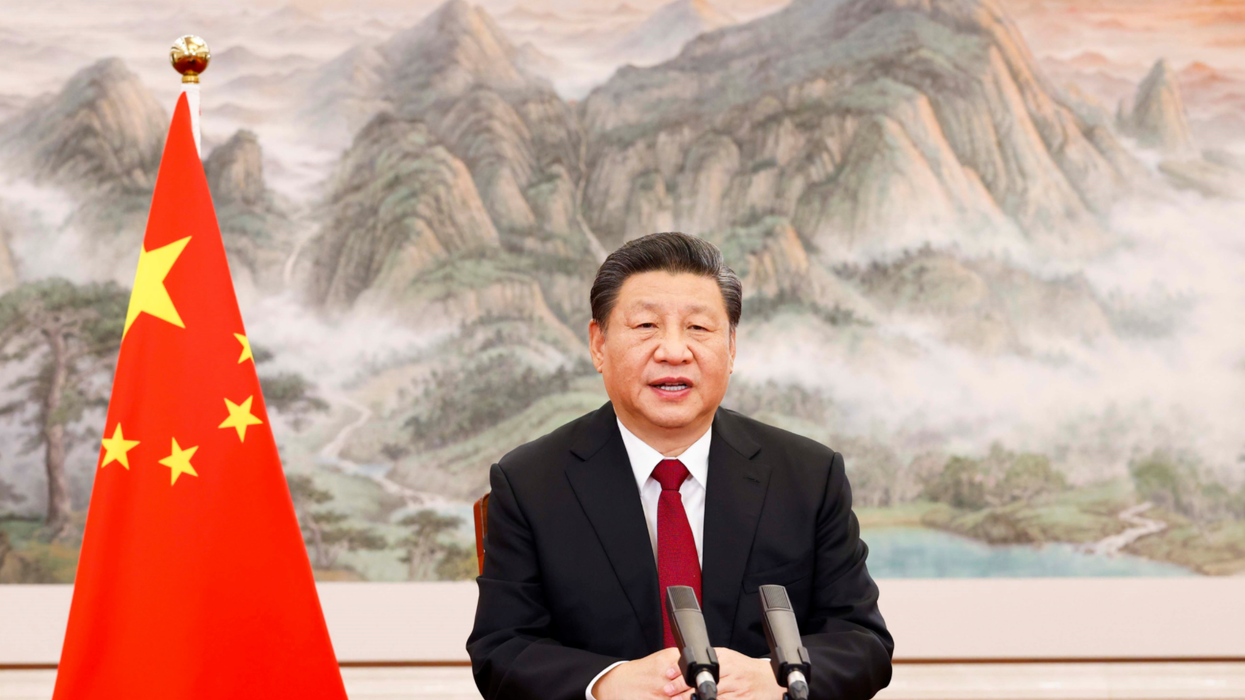
Beijing Olympics Highlight Shattered Hopes For A Freer China

Beijing Olympics Highlight Shattered Hopes For A Freer China

China is one of the greatest success stories of the past century. It is also one of the greatest tragedies. The 2022 Winter Olympics in Beijing are a vivid illustration of how far the country has come from what it was in the 1960s and '70s — and how badly it has diverged from its promising course of two decades ago.

Even before the fall of the Berlin Wall in 1989, freedom and democracy were on the march around the world. One dictatorship after another came tumbling down under popular pressure, including Spain, the Philippines, Chile, and South Korea. Between 1974 and 1990, the number of democracies in the world doubled — a rise that continued in the 1990s.

It was reasonable to think that in due time, China would join the parade. It had already achieved a miraculous reversal from the chaos, famine and savage repression it endured under Mao Zedong. Thanks to major economic reforms and the loosening of state control over its citizens, the country underwent a massive transformation for the better.

Economists at the World Bank wrote in 2002, "China has seen the most spectacular reduction in poverty in world history." The government allowed citizens greater freedom to move about the country, travel abroad and start businesses. Local governments incorporated elements of democracy. Censorship eased, foreign movies and TV shows were allowed and a modest space opened for political dissent.

The nation was on the same path taken by other countries, which became freer and more democratic once they reached a certain level of wealth and prosperity.

"Either China will remain relatively poor and authoritarian, or it will become rich and pluralistic — and it seems to have chosen the latter path," wrote Henry Rowen, a scholar at Stanford University's Hoover Institution, in 1996. He went so far as to predict a date when China would become a democracy: 2015.

Bad guess. Instead of reforming, the Beijing government has reverted: clamping down hard on opposition, censoring online and print media and subjecting its people to relentless surveillance.

For the past seven years, the human rights group Freedom House ranked China "the world's worst abuser of internet freedom." In his 2021 book, China's Leaders: From Mao to Now, George Washington University's David Shambaugh wrote, "Since coming to power (President) Xi Jinping has unleashed a sustained reign of repression and comprehensive controls on China not seen since the Maoist era."

Xi has also mounted a ferocious campaign against the Muslim Uyghurs (pronounced "we-gers") in the Xinjiang region, whom they see as a separatist threat. The offensive, says Freedom House, includes "the forced relocation of rural residents, the forced sterilization of Uighur women, the mass detention of Uighurs in 'political reeducation' centers, and the imprisonment of tens of thousands of others by the courts."

As many as two million Uyghurs have been imprisoned since 2017. A British human rights tribunal concluded that Beijing's policy amounts to genocide.

Hong Kong used to be an oasis of freedom. In 2020, though, China imposed a new "national security" law that drastically curtailed freedom of speech, press and assembly in the former British colony. Human rights activists have been locked up, and organizations that once took part in mass protests have closed down.

The Olympics were supposed to be a chance for the Beijing government to impress the world. But the games have brought attention to the very things that have made China a human rights pariah.

The United States, along with nine other countries, is refusing to send official representatives because of the "ongoing genocide and crimes against humanity in Xinjiang and other human rights abuses," said White House press secretary Jen Psaki. Robert Ross, a China scholar at Harvard and Boston College, told me such scrutiny was "a price China was willing to pay. I don't think Xi Jinping cares."

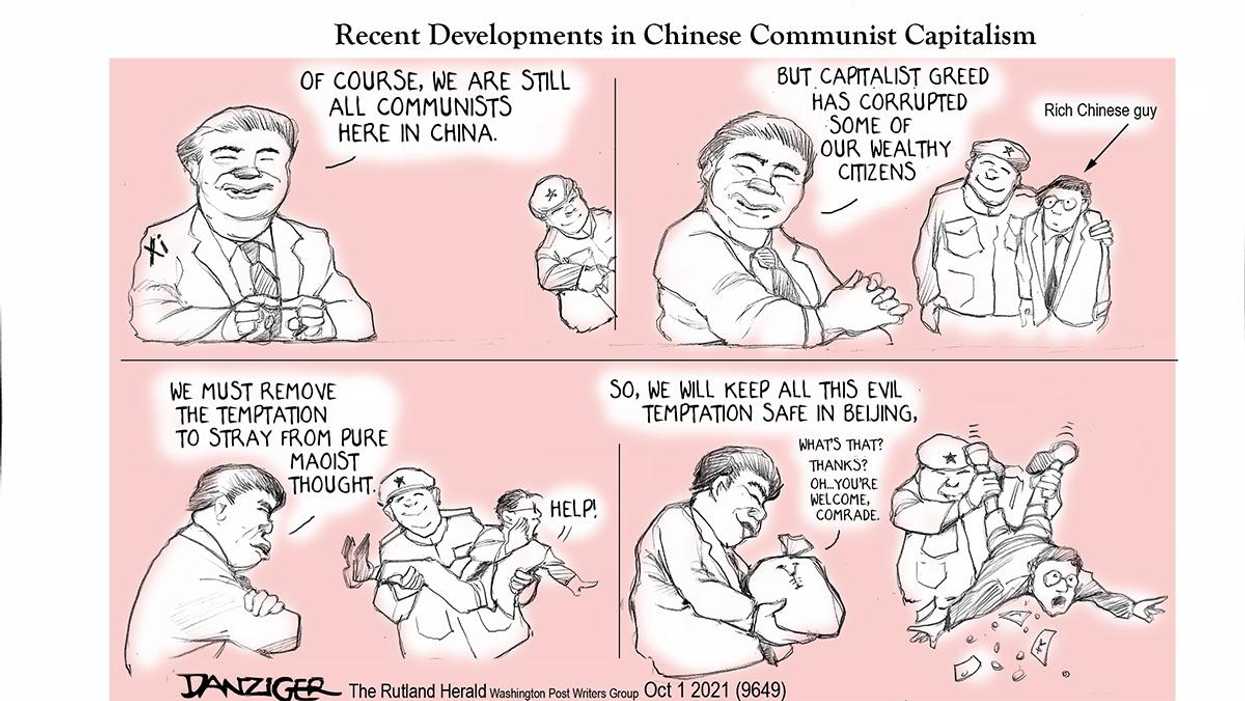
Somehow China, unlike so many other countries, has managed to achieve prosperity without having to allow liberalization. One reason is that the rulers in Beijing learned from the Soviet Union and other dictatorships the dangers of relaxing their grip over political matters.

For the Chinese Communist Party, economic reform was a way to strengthen its dominant position. The paramount goal all along, says Hoover Institution scholar Michael Auslin, has been "to make the world safe for the party." So far, it has succeeded.

When China hosted the 2008 Summer Games, there were still grounds to believe it would soon evolve into a more civilized and humane country. The Olympics are back in Beijing, but that hope is gone.

Follow Steve Chapman on Twitter @SteveChapman13 or at https://www.facebook.com/stevechapman13. To find out more about Steve Chapman and read features by other Creators Syndicate writers and cartoonists, visit the Creators Syndicate website at www.creators.com.

Shop our Store

Headlines

Editor's Blog

Trending

World