Tag: gdp growth
Third-Quarter Growth Driven By AI Bubble Still Leaves Economy Vulnerable

Third-Quarter Growth Driven By AI Bubble Still Leaves Economy Vulnerable

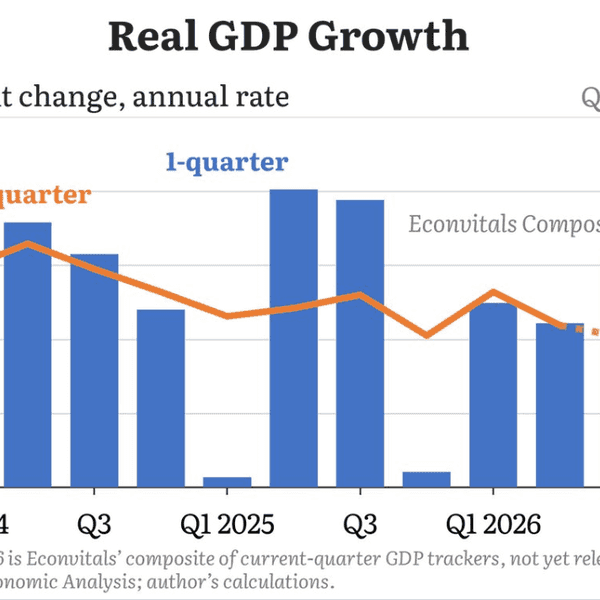
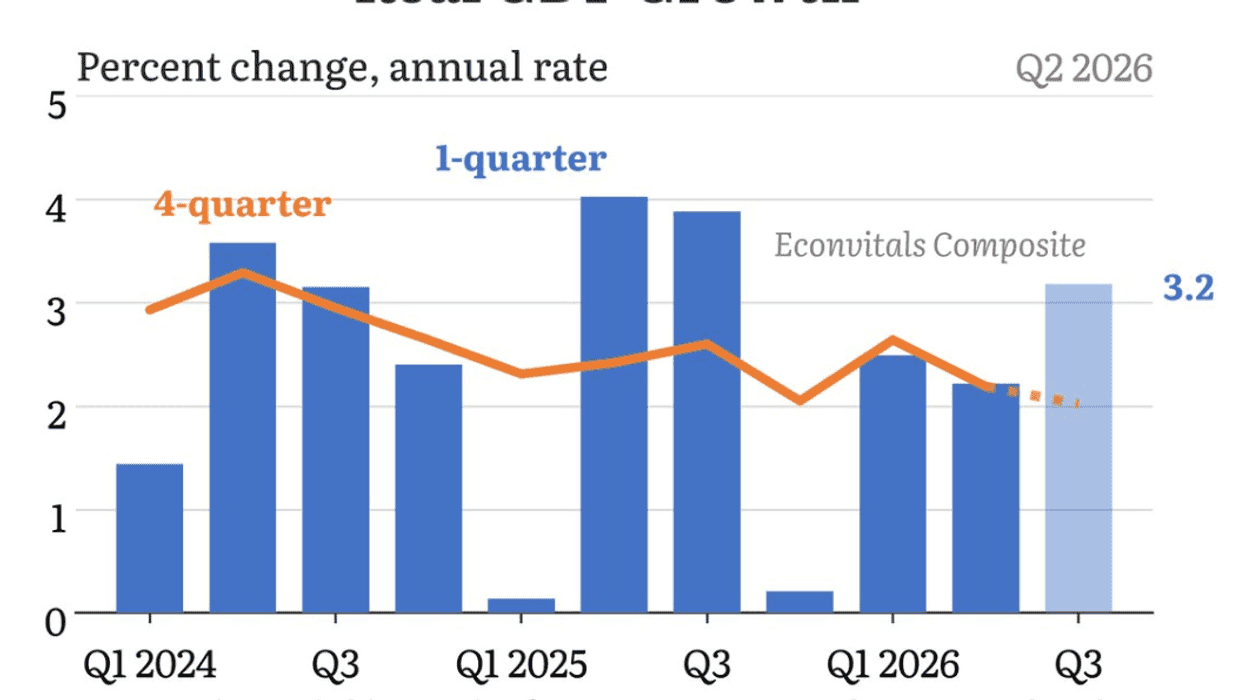
The 3.4 percent GDP growth for the third quarter was largely in line with expectations. The biggest factors driving growth were a 12.7 percent increase in investment and a 3.8% rise in consumption. Both were driven largely by AI. This leaves the economy vulnerable to a collapse of the AI bubble, but still, it was a good growth number.

Here are my five biggest takeaways from the report:

Thanks for reading! Subscribe for free to receive new posts and support my work.

1) Investment growth is almost entirely an AI story;

2) Consumption growth is strong, but is driven by stock gains;

3) The trade deficit is soaring due to AI-related imports;

4) Housing construction continues to fall;

5) The Iran War is leading to double-digit growth in military spending;

6) State and local government spending is stagnating.

Investment Is AI

It is fair to say that AI is crowding out investment in other areas. The generally accepted view is that the AI spending accounts for the bulk of the roughly 1.0 percentage point rise in the 10-year Treasury rate over the last year. (I’m not sure I agree with that. An alternative explanation is that investors now believe that the Fed will have higher federal funds rates for the near-term future.)

Interest rates are probably the less important factor in crowding out at this point. The AI boom is directly pulling away real resources from other forms of investment. In the case of structures, there are widespread reports of businesses being unable to get construction workers in different parts of the country. (The deportation of many workers has not helped.) Structure investment outside of data centers has been falling since the start of last year.

The demand for computer chips and related technology has sent prices for these items soaring. Prices for computers and related equipment rose at a 13.1% rate in the third quarter. They had been falling for decades until the AI boom. Real spending on other types of equipment investment has barely risen in the last two years.

Consumption is Growing, Wages Are Not

The 3.8% pace of consumption growth in the quarter is solid by any measure. But this growth is clearly not driven by wages. The nominal wage bill has risen just 4.2% over the last year, implying a real rise of 0.6% over this period. Real compensation has risen slightly faster, but still just increased 0.9% over the last year.

That sort of wage growth cannot support the sort of strong consumption growth we have been seeing. To some extent, people are dipping into savings, but more importantly, higher-income households are likely spending based on stock gains in the last few years.

By category, health care services continue to account for an outsized share of growth. Real spending rose at a 4.9% annual rate in the quarter while nominal spending rose at a 7.4% annual rate. Real spending on restaurants rose at an 8.8% annual rate. Real spending on prescription drugs and pharmaceuticals rose at a 12.2% annual rate. Some people apparently feel like eating out more, although even spending on fast-food restaurants rose in the quarter.

Spending on housing services increased at just a 1.1% annual rate, as vacancy rates increased in the quarter. Real beef consumption rose in the quarter but is still 13.6% below the level in the fourth quarter of 2024. Real spending by foreign tourists traveling in the United States fell at a 16.7% annual rate, despite the World Cup taking place in July. It is now 13.7% below its level in the fourth quarter of 2024.

The Trade Deficit Rose to Near Record Levels

The real trade deficit increased to $1,320.3 billion in the third quarter. This is only slightly below the record $1,352.7 billion deficit hit in the first quarter of 2025, as people were stocking up in anticipation of the Trump tariffs. (The nominal deficit was larger in the third quarter.)

Most of the story of the trade deficit is soaring imports of computer chips and related products, as real imports increased at a 19.7% rate in the quarter. However, a 5.4% decline in exports also contributed to the rise in the trade deficit. Exports declined in a number of categories, including agricultural products and motor vehicles, as well as the drop in foreign tourism noted earlier. (Foreign tourism is a service export.)

High Interest Rates Continue to Depress Housing Construction

Mortgage rates have risen by more than a percentage point in the last year, with most of the increase taking place in the last two months. As a result, housing construction fell at a 3.3% rate in the third quarter, more than offsetting a 2.8% rise in the second quarter. Housing construction has now fallen in six of the last seven quarters. It seems virtually certain that construction will continue to fall in the fourth quarter as builders adjust to the rise in interest rates in the last two months. That is not good news for people hoping for lower housing costs.

The Iran War is Causing Military Spending to Soar

Defense spending rose at an 11.7% annual rate in the third quarter, driven by war-related expenses. This increase mostly reflects an increase in supplies to service members. It is not a good measure of the cost of the war. Most of the economic cost to the military will take the form of depleted weapons systems, as well as base destruction, which will be replaced in future years.

There is not much publicly available information on the size of these expenses yet, although the Trump administration has requested an appropriation of $1,500 billion for the military for fiscal 2027. This would be almost a 70% increase from the spending levels in the last Biden budget.

State and Local Government Spending is Stagnating Due to Federal Cutbacks

State and local spending fell at a 0.1% rate in the third quarter. It has increased just 1.0% over the last year. This is a sharp slowing from the 4.0% rate in 2024. Most state and local government spending goes to education and health care. With health care costs far outpacing overall growth, this pace of spending growth implies large cuts in these areas.

Overall Picture: Positive, but Precarious Growth Story

The 3.4% growth number is solid by any standard, as is the strong investment growth. But it is clear it rests on the AI boom. If that continues, the overall economy will be reasonably strong, but workers are not getting their share of these gains.

It is worth noting that we will likely see a modest upturn in productivity growth for the quarter to a number slightly over 2.0%. That’s a good story, but far from the sort of massive increase advertised by the AI proselytizers. It’s still well below the pace of the 1990s tech boom or the long post-World War II Golden Age.

No Contest: Under Trump, China's Growth Hugely Outpaced The United States

No Contest: Under Trump, China's Growth Hugely Outpaced The United States

I will be the first to admit that comparing GDP growth across countries is generally a silly exercise. We care about how people are living: can they afford the necessities of life, do they have time to be with family and friends, are they healthy? These are the issues that matter, and they are only loosely related to GDP.

But hey, that’s the game for the big boys and girls in Washington, so let’s play ball! Here’s what real GDP growth looks like in the United States and China since Donald Trump came into the White House.


To briefly explain what these numbers are, this is GDP measured in purchasing power parity terms by the I.M.F. This compares GDP in different countries using the same set of prices for all goods and services. This means that cars, television sets, heart surgery, and haircuts are all priced the same across countries. Naturally, this process is not perfect (the items are not identical), but it does give us a ballpark number.

I then adjusted the numbers for inflation. (The International Monetary Fund gives the data in nominal terms.) I couldn’t find a proper deflator for international dollars, so I just assumed a 3.0 percentinflation rate. The true number is likely somewhat higher, but this should be close enough.

I then took three-quarters of the growth reported for the period from 2024 to the projected number for 2026. This is because Trump only came into office in January of 2025. That might overstate the growth under Trump slightly, since the economy was growing more rapidly in the second half of 2024 than it has been in the quarters since then.

It also gives both countries credit for the full second quarter, even though we are only halfway through the quarter. Also, these are projections, not actual growth data, but they likely should be close.

The basic story of China’s economy growing by $2.8 trillion, with the U.S. economy growing by a bit less than $1 trillion, should not be surprising. China’s economy is roughly one-third larger than the U.S. economy, and it’s growing 4-5 percent a year, compared with roughly 2.0 percent annually for the U.S. This means both that China is #1 and its margin over the U.S. is increasing.

There’s nothing wrong with being the world’s second-largest economy. Our political leaders should be focused on ensuring that people in the United States have good living standards. But if they are looking for something to boast about, they should find something other than being the world’s largest economy.

Dean Baker is a senior economist at the Center for Economic and Policy Research and the author of the 2016 book Rigged: How Globalization and the Rules of the Modern Economy Were Structured to Make the Rich Richer. Please consider subscribing to his Substack.

Kevin Hassett

As Trump Recession Looms, Fox Hastily Rewrites Economic History

During a March 12 appearance on Fox, National Economic Council Director Kevin Hassett rosily predicted strong growth for the American economy in the first quarter of 2025 and dismissed consumer confidence surveys indicating fears of a looming recession. Hassett boldly stated: “I'll give you an expectation that GDP growth is going to be 2-2.5% in the first quarter, at least,” even as the Federal Reserve Bank of Atlanta’s GDPNow estimate at the time predicted a contraction.

Now that the Bureau of Economic Analysis’ advance estimate has shown that GDP “decreased at an annual rate of 0.3 percent in the first quarter of 2025,” Fox anchor Sandra Smith has acknowledged that it was “a reversal from 2.4% growth in the fourth quarter [of 2024].”

However, Smith also downplayed the contraction, saying, “Some might say that wasn’t as big a drop as anticipated considering the sharp change in policies.”

Yet, as University of Michigan economist Justin Wolfers noted on April 21, dozens of economic forecasters had been consistently downgrading their expectations of economic growth since President Donald Trump took office in January.

Reprinted with permission from Media Matters.

Joe Biden

Wake Up And Look At What's Really Happening In The Biden Economy

You may have noticed in recent weeks that alarming headlines about inflation – specifically, those ubiquitous stories about the cost of gasoline, or eggs, or other household goods – have vanished. Media outlets no longer feature those fearsome charts with arrows zooming skyward, or video loops displaying the latest eye-popping gas station signage.

Much as the mainstream media seemed to enjoy scourging President Joe Biden with the bad news about raging hikes in the price of everything, that depressing theme has disappeared because inflation is falling.

In October, what economists describe as “core inflation,” meaning the price of goods and services other than food and energy, declined to 2.0 percent – the target set by the Federal Reserve. And what they understandably call “headline inflation,” the more volatile measure of prices that include all consumer purchases, including groceries and gas, dropped on a monthly level to zero.

Got that? Zero. Year over year, the rise in personal consumption expenditures has plummeted to three percent.

So encouraging were those numbers to the financial sector – and presumably the central bankers at the Federal Reserve – that some now forecast a cut in interest rates. Dropping rates would likely prevent the recession that has been forecast (with glee) by many Republicans – and bring America in for a “soft landing” from the pandemic recovery.

Will Biden get any credit for this improvement? Not from most media organizations, nor from pundits who wrongly blamed him for the inflation spurt in the first place, when they knew that other countries were suffering much worse price increases in the pandemic’s wake. Indeed, too many outlets are barely even noting that inflation has collapsed.

At the same time, the president’s “Bidenomics” program has brought continued steady growth and strong employment, with the annualized gross domestic product topping 5.2 percent in October – and unemployment steady at 3.9 percent. Economists have long tended to view a four percent jobless rate as “full employment,” essentially the best that can be achieved in a capitalist system without spurring inflation. Our current unemployment level is among the lowest in the G-20 industrialized countries.

The reason is so simple that even a wingnut can understand: Under this president, the United States has seen an unsurpassed record of job creation, with 14 million new positions since he took office, far more than the last three Republican presidents combined. The social impact of high employment is profound, which is why traditional Democrats like Biden consistently promote infrastructure, education, environmental, and income support policies that boost jobs. As California Democratic Gov. Gavin Newsom explained during this week’s Fox News debate with Republican Gov. Ron DeSantis (whom he crushed), the nation is now seeing the lowest rate of poverty in our history, as employment among Blacks, Hispanics, and women have reached new peaks.

Are you starting to see a fuller picture here? Let’s add a few more features: Personal income rose over five percent in the first quarter of this year and contined to go up into the second and third quarters. Consumer spending rose 3.6 percent, while housing investment increased to 6.2 percent, almost half again what had been predicted.

You may well retort that polling consistently shows – and the media persistently emphasize – that most Americans say they are unhappy with the economy and blame the president, resulting in poor approval ratings and endangering Biden’s reelection prospects. And that’s undeniably true, as far as it goes. But more than one expert now wonders why, if so many of our neighbors feel pessimistic and even angry, they keep buying stuff as if everything is working out just fine.

Economist Dean Baker suspects the influence of slanted news coverage and can imagine a very different political scenario. “If we had the exact same economy, and Donald Trump was in the White House,” Baker says,”Trump would be endlessly saying ‘greatest economy ever.’ Every Republican politician in the country would be amplifying the claim and all the political pundits would be writing that the strong economy will make Trump almost a sure bet for re-election.”

Sooner or later, the majority of Americans will wake up and realize that Joe Biden has not only protected us from recession but has created the conditions for a generation of prosperity. Let’s hope they figure that out before it is too late – and vote to defend the future from Trump’s madness.

Shop our Store

Headlines

Editor's Blog

Trending

World