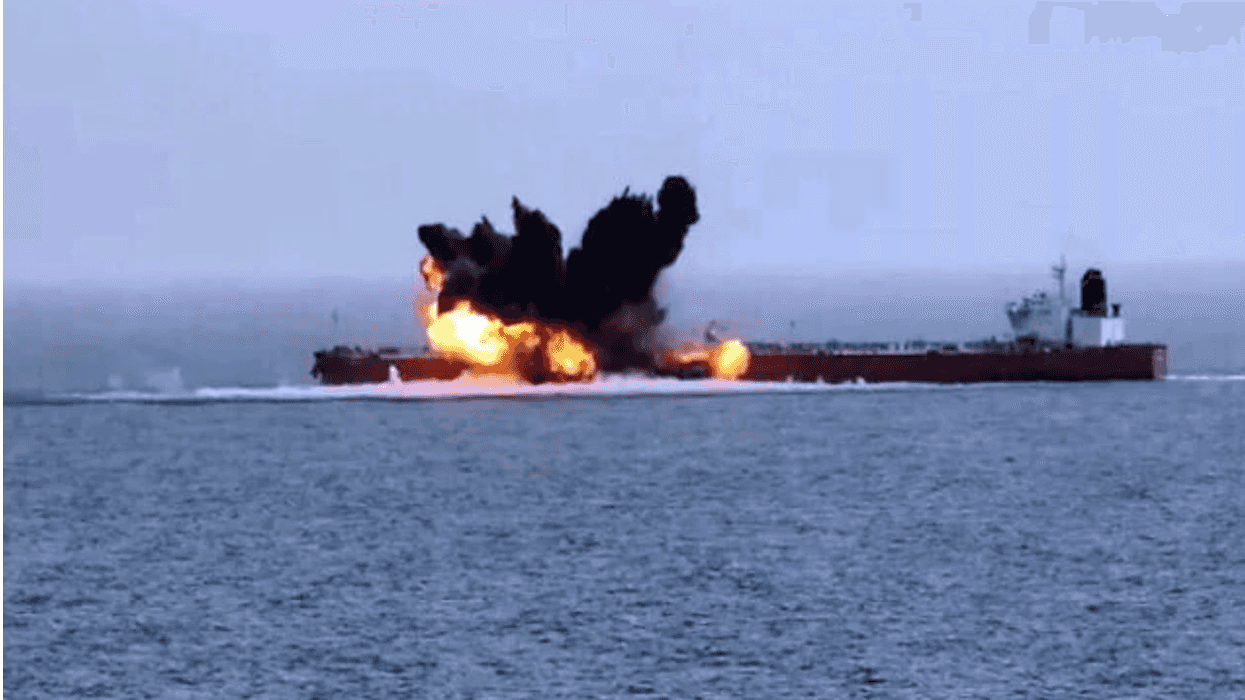
Tag: houthi rebels
'Fox & Friends' Keeps Pushing Trump To Expand Iran war To Yemen

'Fox & Friends' Keeps Pushing Trump To Expand Iran war To Yemen

Fox & Friends host Brian Kilmeade has repeatedly advocated for attacking the Houthis in Yemen in what would amount to a significant expansion of the simmering Iran war.

The Houthi movement, known officially as Ansar Allah, has been in a protracted war with Saudi Arabia since 2015. The two parties established a fragile ceasefire in 2022, which the Saudis broke in July of this year when they bombed the airport in Sanaa, Yemen, to prevent an Iranian plane from landing. Both the Biden and Trump administrations waged unsuccessful bombing campaigns against the Houthis for blockading the Red Sea in protest of Israel’s genocide in Gaza.

Recently, the Houthis captured the key port city of Mokha and Perim Island, a crucial staging ground giving them near total control over the Bab al-Mandab Strait. Roughly 12% of global shipping travels through the strait, and although the Houthis have said they are only blockading Saudi ships, the effect on worldwide energy markets has been significant. Additionally, Saudi officials blamed an Iranian-backed militia in Iraq for an attack that destroyed parts of their East-West pipeline, and accused Houthi militants of aiding in the strike. Saudi Crown Prince Mohammed bin Salman reportedly asked President Donald Trump to bomb the Houthis in retaliation, but Trump denied him.

Kilmeade, one of Fox News’ loudest supporters of the U.S.-Israeli war on Iran, has responded to these developments by urging the Trump administration to come to Saudi Arabia’s defense.

“Let's talk about the Houthi rebels,” Kilmeade said on September 14. “They contacted the president and say look, my problem is not with you guys — don't bomb us. My problem is with the Saudis and the Yemeni government.”

“Well, that’s too bad, it is our problem — you are shutting down that other strait on the Red Sea, stopping oil from flowing while blowing up the Saudi pipeline which was redirecting oil out of the strait,” Kilmeade continued. “So it is our problem.”

The next day, Kilmeade was more explicit in calling for aid to the Saudis following a report on the Houthis’ “rapid gains” in Yemen. “I don't know why we just don't back the Saudis,” he said. “They are our ally.”

On September 16, Kilmeade again advocated for escalation. “Does it seem like we're leaving the Saudis out to dry?” Kilmeade asked.

“Why wouldn't we help an ally like Saudi Arabia being that they are bombing — they’re shutting off a strait that’s affecting our oil prices and they’re bombing a pipeline that’s affecting our oil prices?” he added.

On September 17, Kilmeade criticized opening diplomatic talks with the Houthis.

“U.S. officials met with Houthi representatives in Oman over the weekend and they’re reaching out to us trying to say hey, my problem is not with you,” he said. “But our problem is with them, because they've basically shut down the Bab al-Mandab Strait, which has 12 percent of the world's oil, which is rocketing up our price of oil. Are we really buying this line that they're not causing us a problem?”

The Trump administration’s bombing campaign against the Houthis in 2025 — most memorable to U.S. audiences for Secretary of Defense Pete Hegseth’s “Signalgate” scandal — failed to meaningfully diminish the Houthis’ military capacity.

But when the Trump administration and the Houthis agreed to a ceasefire in May of that year, several voices at Fox News celebrated their supposed demise nonetheless.

Fox News host Sean Hannity said of the Houthis, “They seem to have now just given up and given in.”

Fox contributor Hugh Hewitt claimed: “The Houthis have thrown in the towel after President Trump turned up the heat.”

Fox contributor Marc Thiessen, who has reportedly advised Trump on the Iran war, said, “Iran has lost all of its terrorist proxies. Trump has pummeled the Houthis.”

On Jesse Watters Primetime, former House Speaker Kevin McCarthy said at the time that Trump had “taken the Houthis out.”

As the journalist Spencer Ackerman recently chronicled, Ansar Allah has withstood a decade of war, and any simplistic calls to defeat them with a bombing campaign are likely futile on their own terms.

Even some people at Fox News acknowledge that fact. On September 15, Fox News anchor Martha MacCallum noted “the resilience of the Houthis, who have been in this battle for a long time, and we have tried to sort of intervene over different administrations — but they still seem to have gas in the tank, to put it one way.”

Whether MacCallum realized it or not, having gas in the tank separates Ansar Allah from a growing number of people in the United States. Kilmeade, as a host of the president’s favorite morning show, seems determined to expand the war that has already cost so much.

Reprinted with permission from Media Matters
As Houthi Attacks Persist, Hegseth's Main 'Signalgate' Defense Fails

As Houthi Attacks Persist, Hegseth's Main 'Signalgate' Defense Fails

In their quest to undermine the scandal about key Trump administration national security officials discussing detailed military attack plans on a commercial messaging app, President Donald Trump and his media propagandists repeatedly claimed that the uproar was a minor sideshow that paled in comparison to the fact that the mission had been a resounding military victory.

“The mission in Yemen was operationally a complete success,” Fox News host and sometime Trump adviser Sean Hannity proclaimed on his show. “Why focus on the successful military operation when you can trash Donald Trump and people that work for him?”

But that defense of the administration has withered under scrutiny in the intervening weeks. Any tactical victory achieved during the initial March 15 attack has not fulfilled the intended U.S. goal of curbing Houthi attacks on shipping in the Red Sea, a major international trade route.

When The Atlantic’s Jeffrey Goldberg revealed that he had been inadvertently added to a Signal group chat where Vice President JD Vance, Defense Secretary Pete Hegseth, national security adviser Mike Waltz, and other senior officials discussed a planned attack on the Houthis, the MAGA commentariat scrambled to respond.

Trump’s media allies lashed out at Goldberg and sought to downplay the importance of his reporting, even as stunned experts pointed out that Hegseth’s sharing the exact strike times and the weapons packages to be used hours before their deployment over an insecure channel put U.S. forces at risk.

As part of their PR strategy, Trump’s Fox News propagandists instead touted the effectiveness of the strike on the Houthis — then stopped talking about the campaign. But two weeks after Goldberg published the administration’s messages, and nearly a month after the first bombs fell, U.S. forces are still embroiled in an open-ended air war in Yemen that has reportedly cost nearly $1 billion, with no conclusion in sight.

Trump, Fox hosts declare U.S. strikes on Houthis “successful”

Trump sought to downplay the scandal, in part by driving attention toward the purportedly effective strikes he claimed had received insufficient coverage.

“The main thing was nothing happened, the attack was totally successful,” the president told reporters on the afternoon of March 25. He said during a media availability the next day the press coverage of the Signal saga was “a witch hunt,” adding that “the attacks were unbelievably successful, and that’s ultimately what you should be talking about."

Hannity, the Fox star and Trump political operative, apparently heard his music. He lashed out at “the state-run legacy media mob” on his March 25 broadcast, claiming that “perhaps most importantly, something they'll never think about, the military mission thankfully was a complete success.”

Hannity added that “the outrage from the left over a reporter accidentally being added — a one-off, one-time, minor accident that did not impact the operation — to a White House group chat about a successful strike on Yemen is just a political show” by people who “want to smear Donald Trump and the White House” and claim “any political scalp they can get.”

“The mission in Yemen was operationally a complete success,” the Fox host said the next night. “It can’t get any more successful.”

After airing footage of Trump saying that “the result” of the strikes “is unbelievable” because the Houthis now “want to negotiate peace,” Hannity asked viewers, “Why focus on the successful military operation when you can trash Donald Trump and people that work for him?”

Several of Hannity’s colleagues followed suit over the same two-day period.

“What the media will not and cannot address is that the mission to destroy key Houthi targets was itself a huge success,” claimed Fox host Laura Ingraham. “So I think we should judge a policy by its outcome, not by an unintended error in transmission.”

“The strikes were successful,” according to Fox host Jeanine Pirro.

“The mission was a success,” said Fox host Jesse Watters.

“Nothing happened other than a successful military operation was executed,” offered Fox host Will Cain, adding that those who argue otherwise are “playing politics, not principles.”

And with that, they declared the Signalgate story was over — and stopped discussing the U.S. military strikes in Yemen on their shows.

None of the hosts mentioned the conflict between March 27 and April 2, when Hannity asserted that “just recently, when European trade routes were blocked off by the Houthi rebels, well, we were the ones that delivered a massive blow to Iran's proxy. Looks like we might be giving another one.”

None of them have mentioned it since.*

In Yemen, an open-ended U.S. air war without a plan for victory

Recent reporting contradicts Trump’s Fox-echoed claims of success in Yemen, finding instead that the U.S. is engaged in a costly fight that has had little impact on Houthi attacks and with little apparent strategy for victory. “In closed briefings in recent days, Pentagon officials have acknowledged that there has been only limited success in destroying the Houthis’ vast, largely underground arsenal of missiles, drones and launchers, according to congressional aides and allies,” The New York Times reported on April 4.

The officials briefed on confidential damage assessments say the bombing is consistently heavier than strikes conducted by the Biden administration, and much bigger than what the Defense Department has publicly described.

But Houthi fighters, known for their resiliency, have reinforced many of their bunkers and other targeted sites, frustrating the Americans’ ability to disrupt the militia’s missile attacks against commercial ships in the Red Sea, according to three congressional and allied officials, speaking on the condition of anonymity to discuss operational matters.

According to the Times’ sources, the “total cost could be well over $1 billion by next week,” and the military is going through munitions so quickly that “some Pentagon contingency planners are growing concerned about overall Navy stocks.” CNN likewise reported on April 7 that “the senior echelon” of the Houthis’ “military and political leadership appears intact,” and the group continues to fire ballistic missiles at U.S. targets in the region.

“The Houthis have been bombed tens of thousands of times over the past decade and remain undeterred,” Yemen expert Elisabeth Kendall told CNN. “So one is left thinking that the bombing is largely performative: let’s show the world - we’ll do it because we can.”

*Based on a Media Matters review of Fox transcripts in the Nexis database for references to “Yemen” or “Houthi.”

Reprinted with permission from Media Matters.

Why The Trump War Plans Leak Is So Much Worse Than What Hillary Did

Why The Trump War Plans Leak Is So Much Worse Than What Hillary Did

Even in a political environment marked by daily scandal and outrage, the revelation of a reckless and stupid security breach by Trump’s top cabinet members exploded yesterday. The potentially catastrophic leak of a top-secret military operation showed why President Trump’s cabinet choices were so dangerous – as many seasoned experts warned when he named them. Only by sheer luck was a disaster avoided.

It was a simple but stunning story: The Atlantic magazine’s editor-in-chief Jeffrey Goldberg, as reported by him and his staff, had been included by National Security Adviser Mike Waltz in a supposedly secret mid-March group text chat -- along with Vice President J.D. Vance, Defense Secretary Pete Hegseth, Secretary of State Marco Rubio, Director of National Intelligence Tulsi Gabbard, and more than a dozen other high-ranking officials. A Pentagon spokesman confirmed that the chat, convened on the encrypted app Signal, was authentic.

The chat messages conveyed highly sensitive military and diplomatic information, including “precise information about weapons packages, targets, and timing” that occurred two hours after he received a message on March 15.

Hegseth’s feeble attempt to deny that any “war plans” had been disclosed can only be added to the long roster of lies from him and other administration officials. A former Fox News personality and the target of numerous warnings against his arrogance, drunkenness, and inexperience before his confirmation, the defense secretary ironically assured the group chat that “We are currently clean on OPSEC" -- the military acronym for operational security.

“Under the previous administration, we looked like fools,” Hegseth recently boasted. “Not anymore.” Hegseth, Waltz, and the rest of the participants in those fateful discussions should soon become subjects of a national security investigation, during which they will presumably be wired up to polygraph machines, just as Hegseth has sternly prescribed for all suspected Pentagon leakers.

As soon as she read the news, former Secretary of State Hillary Clinton took to social media. “You’ve got to be kidding me,” quipped the irrepressible Democrat, daring her critics to bring up the old matter of “her emails” and the alleged scandal that probably cost her the presidency in 2016.

Despite Republican bleats of indignation, and angry posts urging her to “sit down” or worse, it is instructive to contrast what Hegseth and company did with Clinton’s own exhaustively investigated actions.

As reported in this space three years ago – and confirmed in a subsequent investigation by Washington Post reporter and fact-checker Glenn Kessler – Clinton actually disclosed no classified information in those fabled emails or her home server. Her innocence was confirmed not only by the Justice Department and the FBI (under Republican James Comey, who sank her campaign with his own unethical conduct), but in two subsequent State Department probes during the first Trump administration.

Among the Clinton emails that Comey used to tar her before the election, none disclosed national security information or were classified before she sent them. A typical example was a message from an aide, reminding her to send a condolence note to the president of Malawi.

Such innocuous and outdated information contrasts sharply with the real-time disclosure of a bombing mission which, if exposed, could jeopardize its success and the lives of the pilots and other military and intelligence personnel.

Sen. Jack Reed (D-RI), the ranking member on the Senate Armed Services Committee, described the Signal chat as “one of the most egregious failures of operational security and common sense I have ever seen.”

Joining many other Democrats and some dismayed Republicans, as well as a platoon of retired military and defense experts, Reed said, “Military operations need to be handled with utmost discretion, using approved, secure lines of communication, because American lives are on the line. The carelessness shown by President Trump’s Cabinet is stunning and dangerous.”

Rep. Pat Ryan (D-NY), an Army veteran and member of the House Armed Services Committee, offered an even more pithy reaction. “If House Republicans won’t hold a hearing on how this happened IMMEDIATELY, I’ll do it my damn self,” he wrote on X. “Only one word for this: FUBAR,” a military acronym that means “fucked up beyond all recognition.”

Which aptly expresses the condition of American national security under Donald Trump and his incompetent and highly suspect minions.

Joe Conason is founder and editor-in-chief of The National Memo. He is also editor-at-large of Type Investigations, a nonprofit investigative reporting organization formerly known as The Investigative Fund. He is the author of several books, including The Raw Deal: How The Bush Republicans Plan To Destroy Social Security and the Legacy of the New Deal. His latest book is The Longest Con: How Grifters, Swindlers and Frauds Hijacked American Conservatism.

Reprinted with permission from Creators.

Saudi Brigadier General Discusses Arab Coalition’s Fight In Yemen

Saudi Brigadier General Discusses Arab Coalition’s Fight In Yemen

By Alexandra Zavis, Los Angeles Times (TNS)

RIYADH, Saudi Arabia — Every evening since a mostly Sunni Arab coalition led by Saudi Arabia began airstrikes against Shiite Muslim rebels in Yemen, journalists have been invited into an air base in the Saudi capital for a briefing on the day’s battlefield developments.

The made-for-TV event features models of Saudi military hardware and grainy cockpit video of missiles hitting military bases and ammunition stockpiles held by the Iranian-allied rebels known as Houthis and troops still loyal to Yemen’s deposed strongman, Ali Abdullah Saleh.

Despite nearly two weeks of airstrikes, fierce clashes persist between these insurgents and forces loyal to the country’s exiled president, Abdu Rabu Mansour Hadi, fueling speculation that the coalition may decide to send in ground forces.

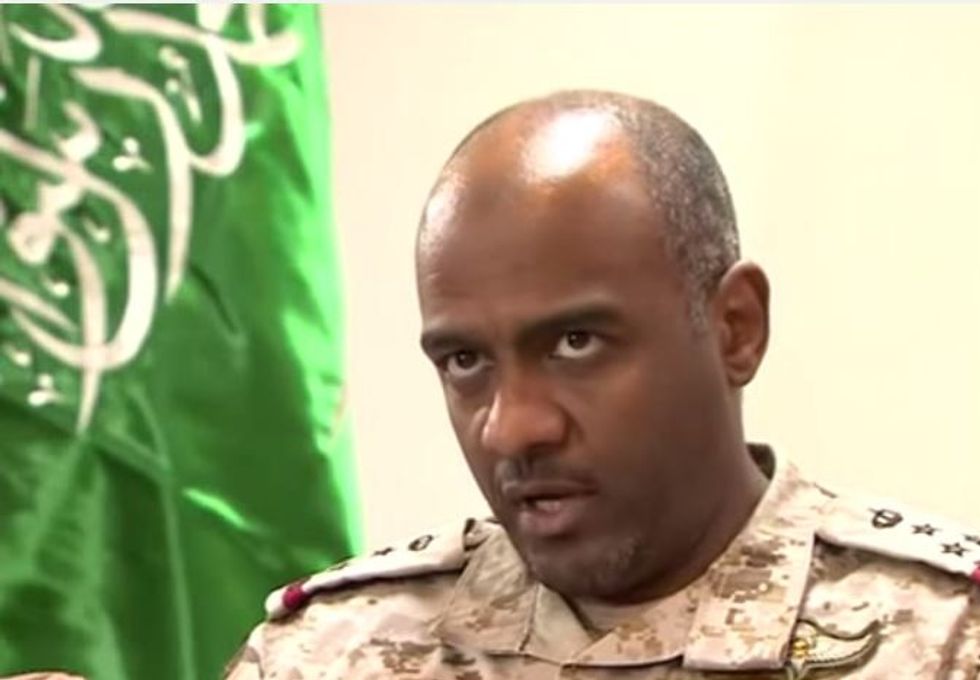
Brig. Gen. Ahmed Asiri, who presides over the nightly news conferences, has said that the coalition’s priority is the security of the Yemeni people and neighboring countries, including Saudi Arabia, which shares a long border with Yemen. The Los Angeles Times sat down with Asiri after a recent briefing to ask him what the coalition plans to do next.

The interview has been edited for length and clarity.

Question: We are now nearly two weeks into the air campaign in Yemen, and the Houthi militias show no sign of abandoning their advance across the country. How much longer do you expect the campaign to continue and under what conditions would you consider sending in ground troops?

Answer: We knew before we started the campaign that we will have a very hard task. When you address a regular army, you know where are its logistics, where are its units, where are its command and control (centers). But you cannot attack a hotel because in its basement there are munitions or there is a communications center.

The Americans, they spent 11 years in Afghanistan, plus NATO, plus all the supporters. At the end of the day they left, and the Taliban is still working in Afghanistan. So we have very clear objectives. The first is to support the legitimate government when they asked for help. Second, to make sure that those militias do not have capabilities to harm the population. The third objective is that the neighbors of Yemen, the borders, will be safe.

We (accept) as a country to have a neighbor with a very strong regular army. But we do not accept to have militias using Scud missiles and having fighter jets, and having cannons, artillery. They are not a state.
Tomorrow when one of those fighter jets flies from (Yemen’s capital) Sana toward a country and hits a building, what are we going to say? This is why Saudi Arabia and those countries joined the coalition, to make sure that threat will be addressed.

Q. Is it possible to achieve your security objectives solely through military action?

A. Military action is a part of the political process. The choice to go to war is not an easy choice, but sometimes it’s important to make sure that your opponent understands what you are trying to do. The armies, they are created for this, to set the conditions, to help the political part of the process. But who refused to talk? It was the (Houthi) militias and their allies.

The militias are a group that try to implement their agenda by force. When we ask them, do not go to Sana, they go to Sana. We ask them, do not dismantle the government, they do it. They put the legitimate president in jail. When he left Sana, they used fighter jets and they bombarded his house. We cannot accept this in the 21st century.

Q. How much longer can the campaign go on?

A. We are working in Aden to make it safe, so the government can get back to work. Once they are able to run the country, there is no more threat coming from those militias, I think it’s done.

(The conversation shifts to the role of Iran, Saudi Arabia’s rival.)

In Lebanon, they create militias. In Syria, they help (President Bashar Assad) to kill the Syrians. In Iraq, they create militias. In Yemen, they create (militias). You remember, once the (Houthis) got control of Sana, they signed a contract with an Iranian airline, 14 flights a week. To do what? We did not know that there was tourism coming from Yemen to Iran or from Iran to Yemen. They bring a lot of armaments, of explosives, of missiles.

Q. Iran denies this. What evidence have you seen that Iran is sending large quantities of weapons to support the Houthis in Yemen?

A. The Yemeni government, they showed for all the media a ship with Iranian weapons. We have Saudi intelligence.

These are the militias, not the army. If the army does this, this is their right. But militias creating a ballistic missile site, bringing artillery? You know, before we started two weeks ago, they were doing a military exercise, a big military exercise. Do you think any country can accept that a militia has an exercise at their border?

Q. There are people in Yemen who are against the Houthi militias, but who say they can’t support a president who brings foreign troops into their country. Are you worried that you might be turning the population against President Hadi?

A. Even in democratic countries, you can never have 100 percent (support). Always people are divided according to their interests. But they elected Mansour Hadi, so we should respect the majority choice. Mansour has the responsibility to protect Yemen and the population against these militias, and he called for help. History will show the Yemenis that when they were hijacked by the militias, their brother Arab countries for once said no, we will go and help Yemen to get out of this situation.

The States joined the first and second world wars, not because they asked the European population for their opinion, but because they found out that the international order and the national security of the states and their allies was in danger.

Q. Al-Qaida, a Sunni Muslim extremist group, appears to be taking advantage of the situation to seize more territory in Yemen. Is the coalition willing to intervene against their forces as well?

A. Al-Qaida is operating in this area since a long time. Unfortunately, the international community didn’t help to get those terrorists out even when we are sure that most of the operations conducted by al-Qaida are coming from Yemen. The dismantlement of the government by the Houthis made the government very weak against al-Qaida. So if we create a very strong Yemeni government, they can address this kind of challenge.

Q. So you aren’t considering helping them with that objective?

A. We are examining the situation, but for the time being we are focusing on our objectives.

Q. What do you say to those who see this as a sectarian fight?

A. It is easy to make this kind of (claim against) the Saudis or the coalition. But no one in all these years can give us any evidence that we created a militia in other countries. More than $10 billion of our aid went to Yemen. We never said this is for Sunnis. We gave it to the government. Who created the situation of sectarianism? The Iranians. They created the militia in Lebanon, Hezbollah; they created the militias in Iraq. They are using this leverage to promote an ideology which they have. So I think it is a very weak argument that the Iranians use, actually.

(c)2015 Los Angeles Times, Distributed by Tribune Content Agency, LLC

Image: Brigadier General Ahmed Asiri of the Saudi led coalition. Screenshot via YouTube

Shop our Store

Headlines

Editor's Blog

Trending

World